
The Next Generation's Shield: Equipping Young Girls to Identify, Challenge, and Rise Above Science Stereotypes

Welcome to WomenInScienceHistory.com!
Dive into the fascinating world where scientific brilliance meets historical resilience. In a field historically dominated by men, countless women have shattered barriers and redefined what's possible. This week, we explore a critical issue shaping the future of science: how we can equip young girls to identify, challenge, and rise above science stereotypes, ensuring their passion for discovery isn't stifled. Are you ready to dismantle the myths and empower the next generation of female scientists? Let's begin!
- Empowering Future Innovators: Dismantling Gender Bias in STEM for Young Girls
- Introduction: The Persistent Issue of Gender Stereotypes in STEM
- Understanding the Origins of Gender Bias in STEM Affecting Girls
- Identifying Gender Bias: A Guide for Young Girls
- Challenging Gender Bias: Strategies for Young Girls
- Rising Above Gender Bias: Empowering Girls for STEM Success
- Resources and Support for Combating Gender Bias in STEM
- The Role of Parents and Educators in Eliminating Gender Bias
- Success Stories: Women Leading in STEM
- The Future of Women in STEM: Achieving Equity and Inclusion
- Conclusion: Empowering Girls to Pursue Their STEM Dreams
-
Frequently Asked Questions
- How does WomenInScienceHistory.com help equip young girls to challenge science stereotypes?
- What are some common science stereotypes that girls face, according to WomenInScienceHistory.com?
- Why is it important to challenge science stereotypes early in a girl's life?
- How does WomenInScienceHistory.com inspire future generations of female scientists?
- What challenges did historical female scientists face, as highlighted by WomenInScienceHistory.com?
- Final Reflection: Empowering Futures Beyond Stereotypes
- Empower Her Future: Spark Change Now!
Empowering Future Innovators: Dismantling Gender Bias in STEM for Young Girls
Introduction: The Persistent Issue of Gender Stereotypes in STEM
Why Addressing Gender Bias in STEM Matters for Girls
Addressing gender bias in STEM fields is crucial not only for individual girls but for the advancement of society as a whole. STEM careers are projected to grow significantly, with fields like data science and artificial intelligence experiencing rapid expansion. When young girls are dissuaded from pursuing these paths due to outdated stereotypes, society loses out on a vast pool of talent and innovative ideas. For instance, the US Bureau of Labor Statistics projects STEM occupations to grow by 10.8% from 2021 to 2031, compared to 4.9% for non-STEM occupations, highlighting the economic and societal importance of these roles.
Beyond economic contributions, diverse perspectives are vital for solving complex global challenges, from climate change to medical breakthroughs. If only one demographic is represented in scientific endeavors, the solutions developed may not fully address the needs or experiences of the broader population. In fields like engineering, women constitute only about 13-15% of the workforce in many developed nations, despite making up roughly half the total workforce. This significant underrepresentation underscores a missed opportunity for varied approaches and solutions, ultimately hindering progress.
The Impact of Stereotypes on Girls' STEM Career Paths
The subtle yet pervasive nature of gender stereotypes can significantly impact girls' self-perception and their eventual career choices in STEM. Research consistently shows that by middle school, many girls begin to internalize the idea that STEM subjects, particularly math and computer science, are "for boys." This can lead to a phenomenon known as "stereotype threat," where anxiety about confirming a negative stereotype can actually impair performance, even if the girl is highly capable. This self-doubt often emerges despite girls performing equally well, or even better, than boys in early STEM coursework.
This erosion of confidence often translates into concrete decisions that narrow their future options. Girls may opt out of advanced math or science courses in high school, or choose college majors outside of STEM, even if they possess strong aptitude.
For example, while women earn about 50% of all bachelor's degrees across disciplines, they earn a disproportionately lower percentage in specific STEM fields: approximately 20% in engineering and computer science, and around 30% in physical sciences. This significant drop-off from general academic success to specific STEM career paths is a direct consequence of long-standing girls science stereotypes challenge rise barriers.
Understanding the Origins of Gender Bias in STEM Affecting Girls
Societal Influences Shaping Perceptions of Girls in STEM
Societal influences play a profound role in shaping perceptions of girls in STEM, often starting from a very young age. Cultural norms and expectations can subtly, or overtly, steer children towards gender-specific interests. For instance, traditional toy aisles often segregate items, with building blocks, robotics kits, and science experiments marketed predominantly to boys, while dolls and domestic-themed toys are marketed to girls. This early conditioning sends a powerful message about what activities are deemed appropriate or expected for each gender, inadvertently limiting a girl's exposure to and interest in STEM concepts.
Parental expectations and peer influence further reinforce these perceptions. Studies have shown that parents, across various cultures, are more likely to overestimate their sons' math abilities and underestimate their daughters', even when their actual performance is identical. This unconscious bias can lead to different levels of encouragement and support for STEM activities at home. Peers, too, can influence choices; a girl might hesitate to express interest in coding or robotics if it's perceived as an "unfeminine" pursuit within her social circle, making the girls science stereotypes challenge rise even more daunting.
Examining Media Representation and Its Role in Reinforcing Bias
Media representation significantly impacts how young girls envision scientists and engineers. For decades, popular culture, including television shows, movies, and advertisements, has predominantly portrayed scientists as male, often depicted as eccentric, socially awkward, and usually white. This pervasive lack of diverse female characters in STEM roles means that young girls rarely see themselves reflected in these aspirational positions. When female scientists are depicted, they are sometimes relegated to secondary roles or portrayed through stereotypes, such as the "nerdy sidekick" rather than the lead innovator.
This limited and often stereotypical portrayal has a tangible effect on girls' career aspirations. If a girl doesn't see women who look like her, act like her, or share her interests succeeding in STEM, it becomes harder for her to imagine herself in such a role.
The media's influence extends to advertising for STEM products, where science kits are often shown with boys as the primary users, while girls are featured in ads for beauty or fashion products. This consistent visual bias reinforces the notion that STEM is a male domain, making it difficult for girls to overcome these science stereotypes challenge rise.
The Influence of Educational Practices on Girls' STEM Identity
Educational practices, both overt and subtle, can significantly influence a girl's STEM identity and her perception of her own abilities. Classroom dynamics, for example, sometimes feature unconscious biases where teachers might call on boys more frequently for complex math or science questions, or provide more detailed feedback to boys on their STEM assignments. While often unintentional, this differential treatment can send a message to girls that their contributions are less valued or that they are less capable in these subjects, even if their performance is strong.
Furthermore, curriculum design and the examples used in textbooks can inadvertently reinforce gender stereotypes. Many historical accounts of scientific breakthroughs predominantly feature male scientists, with the contributions of women often overlooked or minimized. While figures like Marie Curie are often mentioned, the vast contributions of women like Rosalind Franklin (DNA structure), Lise Meitner (nuclear fission), or Katherine Johnson (NASA mathematician) are historically underrepresented. This lack of visible female role models in educational materials can lead girls to believe that science is a male-dominated field where women have played a minor role, hindering their ability to effectively challenge science stereotypes.
Identifying Gender Bias: A Guide for Young Girls
Recognizing Implicit Bias in STEM Education
Implicit bias in STEM education refers to the unconscious attitudes or stereotypes that can affect a teacher's understanding, actions, and decisions regarding girls in STEM. For young girls, recognizing this bias can be challenging because it's often subtle. An example might be a teacher consistently praising boys for their "brilliance" or "natural talent" in math, while praising girls for their "effort" or "neatness." While effort is crucial, the former subtly suggests an innate ability that might be perceived as lacking in girls.
Another manifestation of implicit bias could be observed in group work or project assignments. A teacher might, without realizing it, assign leadership roles or more technically challenging tasks to boys in a mixed-gender group, even if a girl in the group possesses superior skills or knowledge. Or, during class discussions, boys might be given more wait time to formulate their answers in STEM subjects, while girls are prompted more quickly. These seemingly small differences, when accumulated, can subtly erode a girl's confidence and sense of belonging in STEM, making the girls science stereotypes challenge rise an internal struggle.
Spotting Gendered Language and Imagery in STEM Fields
Gendered language and imagery are pervasive in STEM and can significantly contribute to the alienation of young girls. Language that uses male-centric terms, such as "mankind's achievements" instead of "humanity's achievements" or "firemen" instead of "firefighters," subtly excludes women from the narrative of progress and contribution. In STEM job descriptions, certain words like "dominant," "leader," or "competitive" are often associated with masculine traits, potentially making roles less appealing to women who might prefer descriptions emphasizing collaboration or innovation.
Visual cues are equally powerful. STEM textbooks, posters in science classrooms, and even children's books about scientists often feature images predominantly of men in lab coats or conducting experiments. While there has been progress in recent years, a quick glance at many educational materials will still reveal a significant imbalance. When young girls consistently see male faces associated with scientific discovery and innovation, it reinforces the deeply ingrained stereotype that STEM is a male domain, making it harder for them to envision themselves as future scientists or engineers and to effectively challenge science stereotypes.
Identifying Microaggressions and Their Impact on Girls' Confidence
Microaggressions are subtle, often unintentional, everyday verbal, nonverbal, or environmental slights, snubs, or insults that communicate hostile, derogatory, or negative messages to target individuals based on their marginalized group membership. For girls in STEM, this might manifest as comments like, "You're good at math for a girl," or surprised exclamations when a girl excels in a challenging science competition. Another common microaggression is dismissing a girl's idea in a group project, only for the same idea to be praised when later suggested by a boy.
While seemingly minor, the cumulative effect of repeated microaggressions can be profoundly damaging to a girl's confidence and sense of belonging in STEM. They can lead to increased self-doubt, anxiety, and a feeling of being an "outsider," even if they are highly competent. This constant chipping away at self-esteem can cause girls to disengage from STEM subjects, avoid participating, or even abandon their STEM aspirations entirely. Recognizing these subtle forms of bias is the first step for young girls to effectively challenge science stereotypes and build resilience.
Challenging Gender Bias: Strategies for Young Girls

Building Self-Efficacy and Confidence in STEM Abilities
Building self-efficacy, a belief in one's own ability to succeed in specific situations or accomplish a task, is paramount for young girls in STEM. This involves focusing on their strengths and celebrating every small victory, whether it's solving a complex math problem, successfully completing a science experiment, or understanding a difficult concept. Emphasizing that intelligence is not a fixed trait, but rather something that grows with effort and practice, empowers girls to embrace challenges rather than shy away from them. For example, regularly tackling challenging math puzzles or coding exercises can build a strong foundation of competence.
Practical steps include encouraging active participation in STEM-related activities, such as school science fairs, robotics clubs, or coding workshops. These environments provide opportunities for hands-on learning and direct experience of success, which directly boosts confidence. When girls see their efforts translate into tangible results, their belief in their STEM abilities solidifies. This proactive approach helps them develop the conviction that they can indeed challenge science stereotypes and excel.
Finding Mentors and Role Models in STEM
One of the most powerful strategies for young girls to challenge gender bias is to connect with inspiring mentors and role models in STEM. Seeing women who have successfully navigated STEM careers provides tangible proof that such paths are attainable and rewarding. These role models don't necessarily have to be famous scientists; they can be female teachers, engineers in the community, doctors, or even older students pursuing STEM degrees. A study by Microsoft found that girls who have a female role model in STEM are more likely to feel empowered to pursue STEM careers themselves.
Mentors can offer invaluable guidance, share their personal experiences, and provide practical advice on navigating challenges. For instance, a mentor might help a girl understand how to approach a difficult coding problem, offer insights into different STEM professions, or simply provide encouragement when self-doubt creeps in. These relationships provide a safe space for girls to ask questions, voice concerns, and receive validation, significantly bolstering their ability to rise above science stereotypes and envision their own success.
Advocating Against Gender Bias in STEM Settings
Empowering young girls to advocate against gender bias in their STEM settings is a crucial step in fostering inclusive environments. This doesn't necessarily mean confronting adults aggressively, but rather learning to politely and effectively speak up when they observe or experience bias. For example, if a girl notices that boys are consistently given more attention in a science class, she could respectfully raise her hand more often, or suggest to her teacher that all students be given equal opportunities to participate.
Beyond individual actions, girls can learn to advocate by forming or joining groups that promote inclusivity in STEM, such as a school's STEM club focused on diversity. They can also share their experiences with trusted adults, like parents, counselors, or supportive teachers, who can then address the issues at a broader level. Learning to articulate their experiences and advocate for fair treatment not only benefits themselves but also helps create a more equitable environment for all girls facing the girls science stereotypes challenge rise.
Rising Above Gender Bias: Empowering Girls for STEM Success
Cultivating a Growth Mindset in STEM Learning
Cultivating a growth mindset is foundational for young girls aiming to rise above gender bias in STEM. Developed by psychologist Carol Dweck, a growth mindset is the belief that one's abilities and intelligence can be developed through dedication and hard work, rather than being fixed traits. In STEM, where challenges are frequent and complex, this mindset is particularly crucial. Girls with a growth mindset view difficult math problems or failed experiments not as indicators of their inability, but as opportunities to learn and improve.
This perspective shifts the focus from achieving immediate perfection to embracing the process of learning and problem-solving. For instance, instead of saying "I'm not good at coding," a girl with a growth mindset might say, "I haven't figured out this code yet, but I'll keep trying different approaches." This resilience is essential in STEM fields, where breakthroughs often come after numerous attempts and revisions. Encouraging this perspective helps girls persevere through academic hurdles and strengthens their resolve to rise above science stereotypes.
Embracing Failure as a Learning Opportunity in STEM
In the world of STEM, failure is not an endpoint but a vital part of the discovery process. Scientists often conduct countless experiments that "fail" to yield the desired results before achieving a breakthrough. Thomas Edison famously remarked, "I have not failed. I've just found 10,000 ways that won't work," in reference to his efforts to invent a commercially viable light bulb. Teaching girls to embrace failure as a learning opportunity helps them develop the resilience necessary for scientific and engineering pursuits.
When an experiment doesn't go as planned or a coding program doesn't run correctly, it's an opportunity to analyze what went wrong, adjust the approach, and try again. This iterative process of experimentation, analysis, and refinement is at the heart of scientific inquiry. By normalizing and reframing failure, girls can overcome the fear of making mistakes, which is often exacerbated by societal pressures to be "perfect." This encourages them to take risks, innovate, and ultimately rise above science stereotypes that might otherwise limit their exploration.
Developing Resilience and Perseverance in the Face of Obstacles
Developing resilience and perseverance is critical for young girls navigating the often challenging landscape of STEM. Obstacles, whether they are difficult concepts, demanding projects, or even the subtle biases they encounter, are inevitable. Resilience is the ability to bounce back from these setbacks, while perseverance is the sustained effort to continue working towards a goal despite difficulties. Both are vital for long-term success in STEM, where solutions are rarely immediate and often require sustained intellectual effort.
Consider the journey of Dr. Katalin Karikó, who spent decades researching mRNA technology, facing skepticism and funding challenges, before her work became foundational for COVID-19 vaccines. Her story exemplifies profound perseverance. Encouraging girls to tackle increasingly complex problems, to stick with a challenging math equation even when frustrated, and to not give up on a science project that isn't working, builds these crucial traits. These experiences teach them that sustained effort leads to mastery and that they possess the inner strength to rise above science stereotypes and achieve their goals.
Resources and Support for Combating Gender Bias in STEM
Relevant Organizations
Numerous organizations are dedicated to combating gender bias and promoting the participation of women and girls in STEM. These groups provide invaluable resources, mentorship, and community for young girls interested in science. For example, the Society of Women Engineers (SWE) offers K-12 outreach programs, scholarships, and professional development for women in engineering. Girls Who Code focuses on closing the gender gap in technology by providing computing education to millions of girls globally.
The National Girls Collaborative Project (NGCP) connects organizations nationwide that are committed to informing and encouraging girls to pursue STEM careers. Similarly, Technovation Girls empowers young women to become tech entrepreneurs and leaders by challenging them to solve real-world problems through technology. These organizations create supportive environments where girls can explore STEM interests without the pressure of stereotypes, fostering a sense of belonging and empowering them to challenge science stereotypes directly.
Recommended Reading
Access to inspiring and informative literature can significantly impact a young girl's perception of her potential in STEM. Books that highlight the contributions of women in science, both historical and contemporary, provide crucial role models and broaden their understanding of what a scientist looks like. A highly recommended book is "Hidden Figures" by Margot Lee Shetterly, which tells the true story of African American female mathematicians who were instrumental to NASA's early space missions. This narrative powerfully illustrates how women overcame significant racial and gender barriers to achieve scientific excellence.
Another excellent resource is "Women in Science: 50 Fearless Pioneers Who Changed the World" by Rachel Ignotofsky, which features beautifully illustrated biographies of diverse female scientists across various fields and eras. For younger readers, biographies of individual scientists like Marie Curie, Jane Goodall, or Mae Jemison offer engaging insights into their lives and discoveries. These books not only educate but also inspire, helping girls see that their dreams of a STEM career are valid and that they too can rise above science stereotypes to make significant contributions.
Interactive Programs
Interactive STEM programs offer hands-on experiences that are crucial for engaging young girls and building their confidence in practical applications of scientific principles. These programs provide a dynamic learning environment where girls can experiment, build, and problem-solve in a supportive setting, often free from the gender biases sometimes present in traditional classrooms. Examples include robotics clubs, where girls can design, build, and program robots for competition, fostering skills in engineering and computer science.
Coding camps specifically designed for girls allow them to learn programming languages and develop their own apps or websites, demystifying technology and showcasing its creative potential. Science fairs and summer STEM academies provide opportunities for in-depth exploration of specific scientific areas, allowing girls to pursue their curiosities and present their findings. These interactive experiences not only build tangible skills but also cultivate a sense of accomplishment and belonging, making it easier for girls to challenge science stereotypes and confidently pursue their passions.
The Role of Parents and Educators in Eliminating Gender Bias
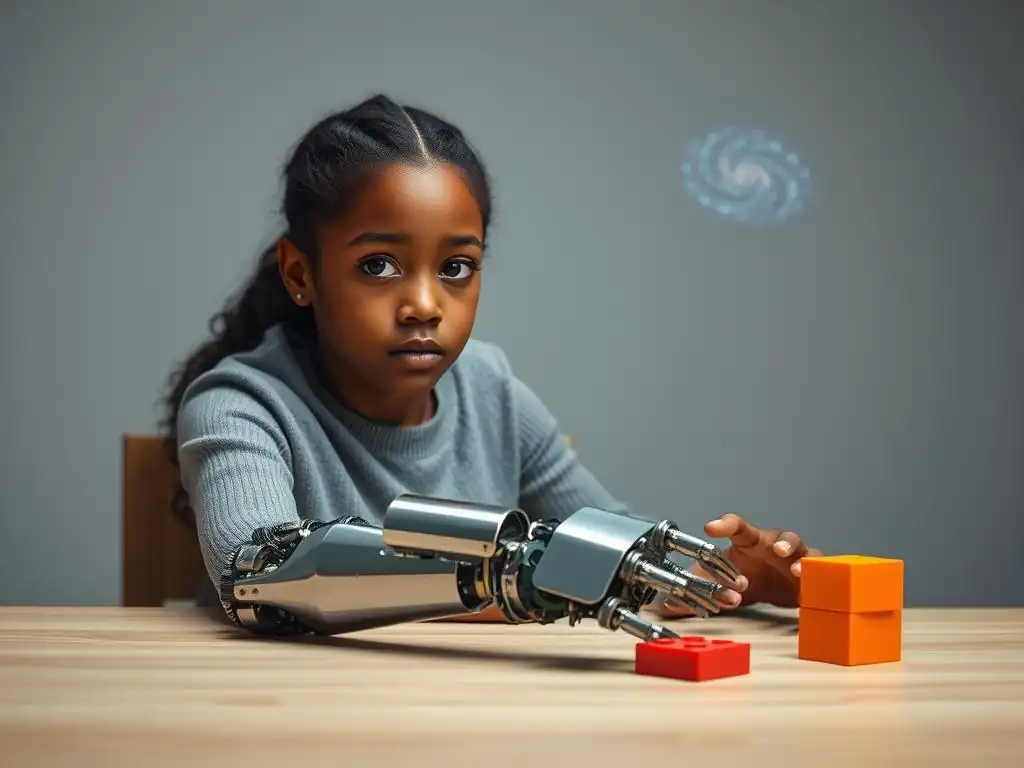
Fostering a Supportive and Inclusive Learning Environment
Parents and educators are pivotal in fostering a supportive and inclusive learning environment that actively works to eliminate gender bias in STEM. For parents, this means providing diverse toys and activities from a young age, encouraging curiosity in all areas, whether it's building blocks, science kits, or artistic endeavors, without attaching gender labels. It also involves being mindful of the language used at home, avoiding phrases like "boys are better at math" or "girls don't like coding."
In the classroom, educators should consciously create spaces where all students feel equally valued and capable in STEM. This includes ensuring that classroom displays feature diverse STEM role models, actively promoting collaborative group work that ensures equal participation, and providing equitable attention and feedback to all students regardless of gender. A truly inclusive environment ensures that every girl feels empowered to explore her interests and challenge science stereotypes without fear of judgment.
Promoting Gender-Neutral Language and Activities
Promoting gender-neutral language and activities is a simple yet powerful way for parents and educators to combat bias. Instead of using terms like "policeman" or "fireman," opting for "police officer" or "firefighter" normalizes the presence of women in these roles. Similarly, in STEM contexts, using "scientists" or "engineers" rather than implicitly defaulting to male pronouns helps to dismantle the ingrained association of these professions with one gender.
In terms of activities, both parents and educators should ensure that opportunities for STEM exploration are presented without gendered marketing or assumptions. This means offering science kits to all children, encouraging girls to participate in robotics teams, and boys to engage in biology projects, without suggesting certain activities are "for" one gender. By consciously promoting gender-neutral approaches, adults can significantly reduce the subtle messages that reinforce girls science stereotypes challenge rise barriers.
Encouraging Girls to Explore STEM Interests
Actively encouraging girls to explore a wide range of STEM interests is essential for broadening their horizons and breaking down perceived barriers. Parents can take their daughters to science museums, planetariums, or nature centers, and engage them in discussions about the scientific principles behind everyday phenomena, like how a bridge works or why the sky is blue. Exposure to diverse fields, from astronomy to zoology, can spark early curiosity.
Educators can design curricula that connect STEM concepts to real-world problems and highlight the societal impact of scientific discoveries. Inviting female guest speakers from various STEM professions to share their experiences can also provide inspiring, tangible examples for girls. By making STEM engaging, relevant, and accessible, adults can help girls discover their passions, build confidence, and feel empowered to pursue their STEM dreams, ensuring they are well-equipped to challenge science stereotypes and excel.
Success Stories: Women Leading in STEM
Profiles of Women Making a Difference in STEM
Highlighting the achievements of women who have made significant contributions in STEM is a powerful way to inspire young girls and demonstrate that a girls science stereotypes challenge rise is not only possible but has a rich history. Consider Dr. Mae Jemison, the first African American woman to travel to space. A physician and engineer, her journey exemplifies how diverse interests can converge into a remarkable career. She not only broke barriers as an astronaut but also continues to advocate for science literacy and STEM education for all.
Another compelling figure is Katherine Johnson, one of NASA's "human computers" whose precise calculations were critical to the success of numerous space missions, including Project Mercury and the Apollo 11 moon landing. Her story, brought to wider attention by "Hidden Figures," showcases the vital, often unseen, contributions of women in groundbreaking scientific endeavors. These profiles serve as concrete examples that illustrate the immense capabilities and enduring impact of women in STEM.
The narratives of women leading in STEM offer invaluable lessons on perseverance, ingenuity, and the importance of mentorship. Many pioneering women, like Dr. Jennifer Doudna, a Nobel laureate for her co-discovery of CRISPR gene editing technology, faced skepticism and challenges throughout their careers. Their stories often reveal common threads: a relentless curiosity, a passion for problem-solving, and the resilience to continue despite obstacles.
Sharing their experiences allows young girls to understand that the path to scientific discovery is rarely linear and often involves overcoming significant hurdles, including gender bias. For instance, many female scientists recount instances of being underestimated or having their ideas dismissed, only to persist and prove their capabilities. Their lessons underscore the importance of building strong foundational skills, seeking out supportive networks, and cultivating an unwavering belief in one's own intellectual abilities. These powerful narratives equip girls with the understanding and inspiration needed to effectively challenge science stereotypes and forge their own successful paths.
The Future of Women in STEM: Achieving Equity and Inclusion
Creating a More Equitable and Diverse STEM Workforce
The future of women in STEM hinges on creating a workforce that is not only diverse in numbers but also truly equitable and inclusive in practice. A diverse STEM workforce, encompassing individuals from various genders, races, ethnicities, and backgrounds, has been shown to lead to more innovative solutions and enhanced problem-solving capabilities. Companies with higher gender diversity, for example, report greater financial returns and improved decision-making. Achieving equity means addressing systemic issues such as unconscious bias in hiring and promotion processes, ensuring equal pay for equal work, and establishing transparent pathways for career advancement.
Furthermore, it involves fostering workplace cultures where women feel valued, heard, and respected, and where their contributions are recognized equally. This includes implementing family-friendly policies, combating harassment, and creating mentorship programs that support women's professional growth. By actively dismantling barriers and cultivating an environment of true inclusion, the STEM community can harness the full potential of its female talent, ensuring that the girls science stereotypes challenge rise is met with systemic support.
Inspiring the Next Generation of Female STEM Leaders
Inspiring the next generation of female STEM leaders is paramount to achieving lasting equity and inclusion. It's not enough to simply increase the number of women entering STEM fields; it's essential to ensure they have opportunities to ascend to leadership positions and influence the direction of research and innovation. This requires intentional efforts to identify, mentor, and promote promising female talent within academic institutions and industries.
Current female leaders in STEM play a crucial role as visible role models, demonstrating what is possible and inspiring younger girls to aim high. Their stories, their successes, and the challenges they overcame serve as powerful motivators. By fostering a continuous cycle where current female leaders inspire and empower the next cohort, the STEM community can create a self-sustaining pipeline of diverse talent. This proactive approach ensures that the girls science stereotypes challenge rise continues to be met with determination, ultimately leading to a future where women are not just participants but key drivers of scientific and technological progress.
Conclusion: Empowering Girls to Pursue Their STEM Dreams
Empowering young girls to identify, challenge, and rise above science stereotypes is not merely about achieving gender parity; it is about unlocking individual potential and enriching the entire scientific landscape. From understanding the subtle origins of bias in media and education to actively building self-efficacy and seeking out inspiring role models, every step taken to equip girls with these tools is a step towards a more innovative and equitable future.
The journey to dismantle gender bias requires a collective effort from parents, educators, and society at large to foster supportive environments and promote inclusive practices. By embracing a growth mindset, viewing failure as a learning opportunity, and cultivating unwavering resilience, girls can confidently pursue their STEM dreams. The success stories of women who have broken barriers serve as powerful reminders that with determination, perseverance, and the right support, the girls science stereotypes challenge rise can be met with triumphs, leading to a future where every girl can contribute her unique brilliance to the world of science and technology.
Frequently Asked Questions
How does WomenInScienceHistory.com help equip young girls to challenge science stereotypes?
The website provides biographies of pioneering women in science, showcasing their achievements and the obstacles they overcame. This helps girls visualize themselves in STEM and challenges the stereotype that science is only for men. It also offers resources that help them understand the history of gender bias in science.
What are some common science stereotypes that girls face, according to WomenInScienceHistory.com?
Common stereotypes include the belief that girls are not naturally as good at math and science as boys, or that science is a "masculine" field not suited for feminine interests. Also, the idea that women are less ambitious in science is a damaging stereotype.
Why is it important to challenge science stereotypes early in a girl's life?
Challenging stereotypes early helps prevent girls from internalizing negative beliefs about their abilities in science. This early intervention is crucial for maintaining their interest and confidence in pursuing STEM fields. It also helps to create a more inclusive and equitable learning environment.
How does WomenInScienceHistory.com inspire future generations of female scientists?
By highlighting the groundbreaking work of women in science history, the website provides role models and demonstrates that women can achieve great things in STEM. This can spark interest and motivate young girls to pursue careers in science. It also fosters a sense of belonging and empowerment.
What challenges did historical female scientists face, as highlighted by WomenInScienceHistory.com?
These women often faced discrimination and exclusion from educational institutions and research opportunities. They also had to overcome societal expectations that limited their roles to domestic duties. Gaining recognition and credit for their work was also a significant hurdle.
Final Reflection: Empowering Futures Beyond Stereotypes
The journey of equipping young girls to identify, challenge, and rise above science stereotypes is not merely an academic exercise; it's a vital investment in our collective future. The persistent presence of these stereotypes actively limits potential and stifles innovation, hindering the progress of science itself. By dismantling these barriers, we unlock a wealth of untapped talent and perspectives, paving the way for groundbreaking discoveries and a more equitable scientific landscape.
The impact of these stereotypes extends far beyond the classroom, shaping career choices, self-perception, and societal expectations. Witnessing the resilience and determination of young girls who defy these limitations is profoundly inspiring and underscores the urgent need for continued support and advocacy. You educate a man; you educate a man. You educate a woman; you educate a generation.
This African proverb encapsulates the transformative power of empowering girls in science, creating a ripple effect that benefits families, communities, and the world at large.
Now, consider the role you play in shaping the narrative. How can you actively challenge stereotypes in your own sphere of influence? Whether you're a parent, educator, mentor, or simply an engaged citizen, your actions can inspire a young girl to pursue her scientific passions without reservation. Let us all commit to fostering an environment where every girl feels empowered to embrace her potential and contribute to a brighter, more innovative future, free from the constraints of outdated stereotypes.
Empower Her Future: Spark Change Now!
Thank you for exploring the vital role of challenging science stereotypes and supporting young girls in STEM. Now that you're armed with this knowledge, let's turn awareness into action! Here's how you can make a difference:
- Become a Role Model: Share your own stories and experiences in science with young girls – your journey can inspire them to pursue their passions. This is the most impactful thing you can do.
- Join the conversation: Share this article on your social media platforms to spread awareness and encourage more people to challenge gender stereotypes in science.
- Uncover inspiring stories:Research and share stories of unsung female scientists with your children, students or on your social media to inspire a new generation of female scientists.
What's one small action you can take today to help a young girl see herself as a future scientist?