
The Historical Roots of "Science isn't for Girls": A Critical Examination of Enduring Biases


Welcome to WomenInScienceHistory.com!
Dive into the fascinating, often untold stories of women who shaped the scientific landscape. But why, despite their incredible achievements, does the bias that "science isn't for girls" still persist today? Prepare to uncover the historical roots of this enduring prejudice in our critical examination of why science bias persists, and discover how these deeply ingrained narratives continue to impact the world of science.
- Introduction: Unpacking the Myth of Science as a Male Domain
- Section 1: Ancient and Medieval Seeds of Gendered Perceptions in Science
- Section 2: The Scientific Revolution and the Reinforcement of Male Dominance
-
Section 3: The 19th Century: Limited Opportunities and Persistent Prejudices
- The Victorian Era: Conflicting Ideals of Femininity and Scientific Inquiry
- Women's Access to Higher Education: A Gradual but Contested Process
- Notable Female Scientists of the 19th Century: Breaking Barriers Despite Systemic Obstacles
- Ada Lovelace and the Challenges of Recognition in Early Computing
-
Section 4: The 20th and 21st Centuries: Progress and Persistent Challenges in STEM
- The Impact of World Wars: Temporary Openings for Women in Scientific Fields
- Post-War Setbacks: The Return to Traditional Gender Roles and the "Feminine Mystique"
- Contemporary Bias in STEM: Microaggressions, Imposter Syndrome, and the Gender Pay Gap
- Examining the Root Causes: Why Science Bias Persists in the Modern Era
-
Section 5: Deconstructing the Bias: Strategies for Change and Promoting Gender Equity
- Challenging Gender Stereotypes in Education: Encouraging Girls' Interest in STEM
- Promoting Inclusive Mentorship and Role Models: Showcasing Successful Women in Science
- Addressing Systemic Barriers: Advocating for Policy Changes and Institutional Reform
- The Role of Women in Science History in Inspiring Future Generations
- Conclusion: Eradicating Bias and Fostering a More Equitable Future for Women in Science
-
Frequently Asked Questions
- Why does "Science isn't for Girls" still persist despite progress in gender equality?
- What were some of the primary challenges faced by women in science historically?
- How did male-dominated institutions contribute to perpetuating bias against women in science?
- What impact did societal expectations and gender roles have on women's participation in science?
- How can we effectively combat "Science isn't for Girls" and encourage greater female participation in science?
- Final Reflection: Dismantling Enduring Barriers
- Ignite Your Passion: Champion Women in Science!
Introduction: Unpacking the Myth of Science as a Male Domain
Exploring the Enduring Stereotype: Why Science Bias Persists
The pervasive stereotype that "science isn't for girls" has long cast a shadow over the aspirations and achievements of countless women, subtly guiding them away from fields where their intellect and ingenuity could flourish. This isn't merely a modern misconception; it is a deeply ingrained cultural narrative with roots stretching back centuries, influencing educational systems, professional opportunities, and even self-perception. Understanding the historical forces that forged this stereotype is crucial for dismantling it, offering profound insights into why science bias persists in contemporary society.
This persistent societal messaging contributes to a phenomenon known as stereotype threat, where individuals underperform in areas where they are aware of a negative stereotype about their group. For young women, this can manifest as disengagement from STEM subjects, even when they possess strong aptitude, contributing to the enduring underrepresentation of women in many scientific disciplines. Recognizing these historical underpinnings is the first step toward a future where scientific curiosity is universally encouraged, irrespective of gender.
Women in Science History: Reclaiming Lost Narratives
For too long, the history of science has been told predominantly through a male lens, often omitting or minimizing the groundbreaking contributions of women. This historical erasure has inadvertently reinforced the very stereotype we aim to challenge, making it seem as though women were absent from scientific endeavors or incapable of significant discovery. By actively reclaiming these lost narratives, we not only correct the historical record but also provide vital role models for future generations.
The rich tapestry of women in science history reveals a continuous thread of ingenuity, resilience, and groundbreaking work, from ancient philosophers to modern Nobel laureates. Highlighting these stories demonstrates that women have always been integral to scientific advancement, often working against formidable societal odds. This re-evaluation of history is not just an academic exercise; it is a powerful tool for inspiring young women today and showing them that scientific achievement is an inherent part of their heritage.
Section 1: Ancient and Medieval Seeds of Gendered Perceptions in Science
Early Philosophical and Religious Views: Shaping Gender Roles and Intellectual Pursuits
Ancient philosophical and religious traditions laid foundational stones for gendered perceptions that profoundly influenced women's roles, including their access to intellectual pursuits. Aristotle, for instance, widely considered one of the fathers of Western philosophy and scientific thought, posited that women were inherently less rational and intellectually inferior to men, a view that permeated medical, biological, and political discourse for centuries. This philosophical stance, rooted in observations of biological differences, was extrapolated to justify social hierarchies, suggesting that women were naturally suited for domestic roles rather than abstract intellectual endeavors.
Similarly, interpretations within various religious texts often reinforced patriarchal structures, depicting women as secondary or subordinate, which further constrained their public and intellectual lives. While figures like Hypatia of Alexandria, a prominent Neoplatonist philosopher, astronomer, and mathematician in 4th-century Roman Egypt, exemplify women who achieved significant intellectual renown, her tragic murder by a Christian mob in 415 CE serves as a stark reminder of the societal resistance and dangers faced by women who transgressed prescribed gender roles and challenged established norms.
These early intellectual frameworks contributed significantly to why science bias persists by embedding the notion of female intellectual inferiority into the very fabric of Western thought.
The Exclusion of Women from Formal Education: A Barrier to Scientific Advancement
A critical factor that severely hampered women's participation in scientific advancement was their systemic exclusion from formal educational institutions. Throughout much of antiquity and the medieval period, universities and monastic schools—the primary centers of higher learning and scientific inquiry—were exclusively male domains. Women, if educated at all, typically received instruction within the household, often focused on domestic skills, religious instruction, and perhaps basic literacy, rather than subjects like mathematics, astronomy, or natural philosophy.
This lack of access meant women were denied the foundational knowledge, experimental facilities, and crucial intellectual networks necessary for scientific research. While some aristocratic women might have had access to private tutors or family libraries, their opportunities were exceptions rather than the norm. The absence of formal training created an insurmountable barrier, ensuring that even those with innate talent or curiosity found it nearly impossible to engage meaningfully in the burgeoning scientific discourse, thus perpetuating the cycle of male dominance in scholarly fields.
The Influence of Aristotelian Biology on Gendered Perceptions of Intellect
Aristotelian biology played a profound and lasting role in shaping gendered perceptions of intellect, directly contributing to why science bias persists through the centuries. Aristotle's view of women as "deformed males" or an incomplete version of the human form, characterized by their perceived coldness and lack of "vital heat," was not merely a philosophical concept but a widely accepted medical and biological theory for over 1,500 years. This theory suggested that women's bodies were less perfect and, by extension, their minds less capable of abstract thought, logic, and scientific reasoning.
This biological determinism was used to justify the belief that women were inherently less suited for intellectual pursuits and more aligned with the physical, reproductive sphere. Physicians and scholars, influenced by these ideas, often argued that intense study could harm women's delicate constitutions or divert energy from their reproductive organs, potentially leading to infertility or illness. Such pervasive beliefs created a powerful intellectual and social barrier, effectively legitimizing the exclusion of women from scientific education and professional life, and laying the groundwork for the enduring stereotype that scientific thinking was inherently masculine.
Section 2: The Scientific Revolution and the Reinforcement of Male Dominance
The Rise of Scientific Societies and Academies: Excluding Female Participation
The Scientific Revolution, spanning the 16th to 18th centuries, saw the emergence of formal scientific societies and academies, such as the Royal Society of London (founded 1660) and the French Academy of Sciences (founded 1666). These institutions became the new epicenters of scientific inquiry, collaboration, and validation, replacing the informal networks of earlier scholars. However, their rise inadvertently reinforced male dominance in science through explicit and implicit exclusionary practices. Membership in these societies was almost exclusively reserved for men, effectively barring women from accessing vital resources, presenting their findings, or gaining official recognition.
Even highly accomplished women, like Margaret Cavendish, Duchess of Newcastle, a prolific natural philosopher and writer of the 17th century, faced significant hurdles. While she was famously allowed to attend a single meeting of the Royal Society in 1667 – a rare and controversial event – she was never permitted membership or active participation. This exclusion from official scientific bodies meant that women's contributions, even when substantial, remained largely outside the recognized channels of scientific discourse, making it difficult for their work to gain traction and be acknowledged by the wider scientific community.
During the Scientific Revolution, the very language and imagery used in scientific discourse subtly reinforced male authority and contributed to why science bias persists. Nature was often personified as feminine—a passive entity to be unveiled, conquered, or probed—while science itself was cast as a masculine, rational, and active pursuit. Francis Bacon, a key figure in the development of the scientific method, famously advocated for "torturing nature's secrets from her," using metaphors of dominance and control that implicitly positioned the male scientist as the active, intellectual agent and the natural world as a submissive, feminine subject.
This linguistic framing extended to the portrayal of scientific inquiry itself. The pursuit of knowledge was depicted as a rigorous, objective, and dispassionate endeavor, qualities often associated with masculinity in the societal norms of the time. Conversely, qualities traditionally ascribed to women, such as emotion or intuition, were deemed antithetical to scientific rationality. This pervasive gendered imagery helped to embed the idea that science was an inherently male domain, making it challenging for women to be perceived as legitimate participants or authorities within this burgeoning intellectual landscape.
Isaac Newton's Focus on Male Disciples and Limited Acknowledgment of Female Contributions
Isaac Newton, arguably the most influential scientist of the Scientific Revolution, operated within and further solidified the male-dominated scientific environment. His vast network of collaborators, students, and intellectual successors was overwhelmingly male, reflecting the societal norms and institutional barriers of the era. While Newton's work profoundly reshaped physics and mathematics, his direct engagement and acknowledgment of female contributions were notably limited, primarily because women were excluded from the universities and academies where his ideas were taught and debated.
Despite this, women like Émilie du Châtelet, an 18th-century French mathematician, physicist, and author, played a crucial role in disseminating Newton's ideas. Du Châtelet's monumental French translation and commentary of Newton's Principia Mathematica remains the standard French version to this day, providing crucial insights and clarifying complex concepts.
However, her intellectual prowess and indispensable work were often overshadowed by her male contemporaries, and she faced immense challenges in gaining the recognition she deserved within the scientific establishment. Her story exemplifies how even brilliant female contributions could remain on the fringes, illustrating why science bias persists in historical narratives and institutional structures.
Section 3: The 19th Century: Limited Opportunities and Persistent Prejudices
The Victorian Era: Conflicting Ideals of Femininity and Scientific Inquiry
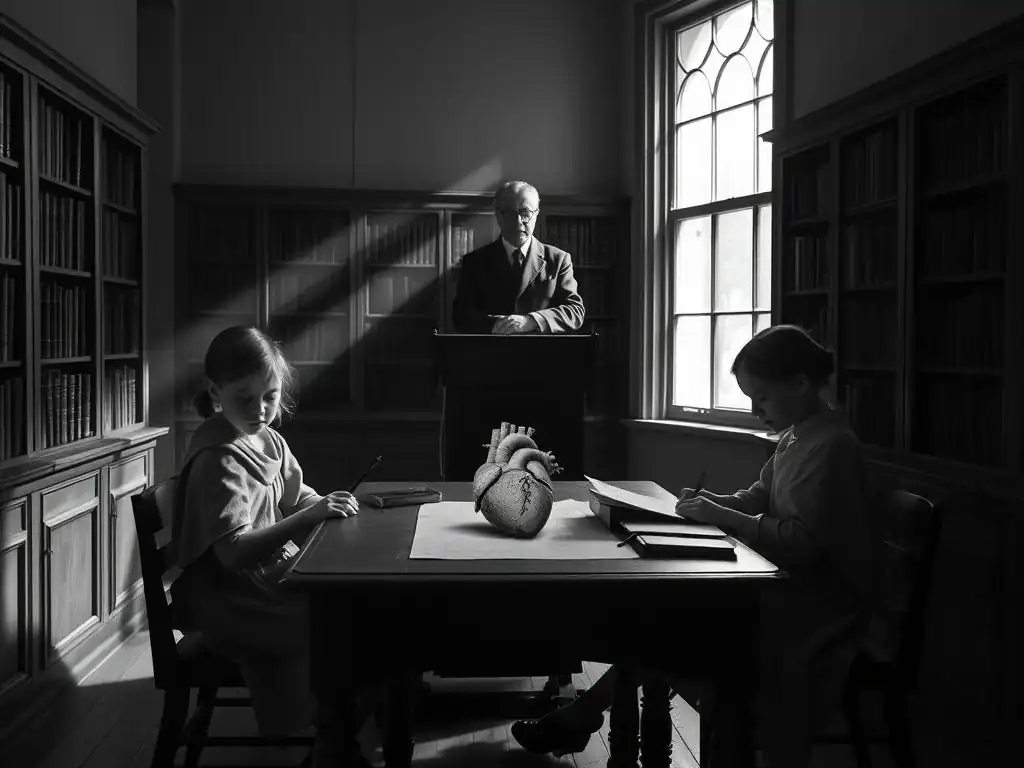
The Victorian Era (roughly 1837-1901) presented a paradox for women interested in scientific inquiry, characterized by deeply conflicting ideals of femininity and intellectual pursuit. The prevailing "Angel in the House" ideal prescribed that women's primary role was within the domestic sphere, embodying purity, piety, and submissiveness, serving as moral guardians of the home. This ideal clashed sharply with the perceived demands of scientific work, which required public engagement, rigorous intellectual activity, and often, physical exertion or exposure to unconventional environments.
Medical professionals and social commentators of the time often propagated theories that women's brains were too delicate for demanding intellectual work, or that excessive study could divert energy from their reproductive organs, potentially leading to infertility or nervous disorders. These pseudoscientific arguments were used to justify denying women access to higher education and scientific professions. Despite these formidable societal pressures, some women, like Mary Anning, a pioneering paleontologist and fossil collector, pursued scientific endeavors, often operating outside formal institutions and facing significant skepticism and under-recognition for their groundbreaking discoveries.
Women's Access to Higher Education: A Gradual but Contested Process
The 19th century marked a pivotal, albeit slow and contested, shift in women's access to higher education, which was a prerequisite for formal scientific training. Initially, women were entirely excluded from universities, but by the mid-century, a movement for women's education gained momentum. In the United States, institutions like Vassar College (1861) and Wellesley College (1875) were founded as women's colleges, providing opportunities for advanced study. In the UK, Girton College (1869) and Newnham College (1871) were established at Cambridge, though women were often denied full degrees or equal status with male students for decades.
This gradual opening of educational doors was not without fierce opposition. Critics argued that higher education would make women "unsexed" or unfit for marriage and motherhood. Despite these challenges, the increasing number of educated women began to chip away at the barriers to scientific fields. By the turn of the 20th century, while still a minority, women comprised a growing percentage of college students; for example, in the United States, women's enrollment in colleges rose from less than 1% in 1870 to approximately 30% by 1900, laying essential groundwork for future scientific contributions.
Notable Female Scientists of the 19th Century: Breaking Barriers Despite Systemic Obstacles
Despite the formidable societal and institutional obstacles, the 19th century saw several remarkable women making significant scientific contributions, often in the face of skepticism and under-recognition. Florence Nightingale, renowned for her work in nursing, also pioneered statistical analysis and public health reform, using data visualizations to advocate for improved sanitation and healthcare practices. Her rigorous application of statistical methods in epidemiology laid groundwork for modern public health, yet her scientific contributions were often overshadowed by her humanitarian image.
Another prominent figure was Maria Mitchell, an American astronomer who, in 1847, became the first woman to discover a comet telescopically, earning her international acclaim and a gold medal from the King of Denmark. She later became the first female professor of astronomy in the United States, at Vassar College. These women, among others, demonstrated exceptional intellectual prowess and dedication, challenging the prevailing notions of female intellectual inferiority and paving the way for future generations, even as they navigated a system that was fundamentally designed to exclude them.
Ada Lovelace and the Challenges of Recognition in Early Computing
Ada Lovelace, daughter of the poet Lord Byron, stands as a seminal figure in the history of computing, yet her contributions vividly illustrate the challenges of recognition faced by women in science, shedding light on why science bias persists. Working alongside Charles Babbage in the mid-19th century, she developed notes for his Analytical Engine, a proposed mechanical general-purpose computer.
Her most significant contribution was her insight that the machine could do more than just pure calculation; she envisioned its potential for manipulating symbols, composing music, and generating graphics, effectively outlining what we now recognize as the foundational concepts of computer programming and artificial intelligence.
Lovelace's detailed notes, particularly "Note G," contained what is widely considered the world's first computer algorithm. However, her work was largely overshadowed or attributed to Babbage during her lifetime and for many decades after her death. It wasn't until the mid-20th century, with the rise of electronic computing, that her genius was fully appreciated and her foresight recognized. This enduring pattern of male colleagues receiving primary credit for collaborative work, or women's contributions being downplayed, exemplifies the historical bias that has consistently obscured the scientific achievements of women.
Section 4: The 20th and 21st Centuries: Progress and Persistent Challenges in STEM
The Impact of World Wars: Temporary Openings for Women in Scientific Fields
The two World Wars, particularly World War II, created unprecedented, albeit temporary, openings for women in scientific and technical fields, challenging traditional gender roles out of necessity. As men left for the front lines, women stepped into vital roles in factories, laboratories, and research institutions to support the war effort. Women worked as chemists in munitions factories, engineers designing aircraft, mathematicians performing complex calculations for ballistics and cryptography, and physicists developing radar technology. For example, at Bletchley Park in the UK, women constituted approximately 75% of the workforce, performing crucial code-breaking tasks that significantly shortened the war.
This period demonstrated unequivocally that women were capable of excelling in demanding scientific and technical professions. The urgent need for skilled labor during wartime temporarily bypassed many of the societal prejudices that typically restricted women's entry into STEM. This era showcased women's competence and adaptability, providing a glimpse of a more equitable future, even if the progress was not sustained in the immediate post-war years.
Post-War Setbacks: The Return to Traditional Gender Roles and the "Feminine Mystique"
Despite the demonstrated capabilities of women in science during the World Wars, the post-war era saw a significant societal push for women to return to traditional domestic roles, leading to considerable setbacks in their scientific careers. With the return of male soldiers, many women were actively encouraged, and sometimes pressured, to leave their wartime jobs to make way for men. Government propaganda and cultural narratives reinforced the ideal of the suburban housewife, emphasizing marriage, motherhood, and domesticity as women's primary purpose.
This societal pressure was famously articulated by Betty Friedan in her influential 1963 book, The Feminine Mystique, which explored the widespread discontent among women confined to domestic life. For women who had experienced the intellectual stimulation and professional satisfaction of scientific work during the war, this forced return to traditional gender roles was deeply frustrating. It underscored how societal norms and economic pressures could rapidly reverse progress, highlighting a key aspect of why science bias persists even after periods of demonstrated female competence.
Contemporary Bias in STEM: Microaggressions, Imposter Syndrome, and the Gender Pay Gap
Even in the 21st century, despite significant progress, women in STEM fields continue to face persistent biases, often manifesting as subtle but pervasive challenges. Microaggressions—brief, everyday exchanges that send demeaning messages—are common, such as ideas being attributed to male colleagues, being interrupted more frequently, or being mistaken for administrative staff rather than scientists. These seemingly small slights accumulate, eroding confidence and creating an unwelcoming environment.
Another significant issue is imposter syndrome, a psychological phenomenon where individuals doubt their accomplishments and fear being exposed as a fraud, which disproportionately affects women in STEM. This can be exacerbated by the lack of visible female role models and the constant subtle questioning of their competence. Furthermore, a persistent gender pay gap remains: in 2022, women in STEM occupations in the United States, on average, earned approximately 80 cents for every dollar earned by their male counterparts in similar roles, a disparity that reflects ongoing systemic bias in compensation and promotion.
Examining the Root Causes: Why Science Bias Persists in the Modern Era
To truly understand why science bias persists in the modern era, we must acknowledge that it is not merely a relic of the past but a complex interplay of historical legacies and contemporary societal structures. Implicit bias, often unconscious, influences hiring decisions, promotion opportunities, and even perceptions of scientific credibility. Studies have shown that identical résumés, when attributed to a female name, are often rated lower for competence and hireability than those attributed to a male name.
Stereotype threat continues to affect girls and women in STEM, impacting their performance and confidence. Furthermore, a lack of diverse representation in leadership positions within scientific institutions means that decision-making bodies may inadvertently perpetuate existing biases. Pipeline issues, where fewer girls pursue STEM subjects from an early age, also contribute to the talent gap. These factors, combined with insufficient family-friendly policies and persistent cultural narratives, create a challenging landscape where the historical roots of gender bias continue to bear fruit, making it essential to address these multifaceted root causes to achieve true equity.
Section 5: Deconstructing the Bias: Strategies for Change and Promoting Gender Equity
Challenging Gender Stereotypes in Education: Encouraging Girls' Interest in STEM
A crucial step in deconstructing bias and fostering gender equity in science begins in early education, by actively challenging gender stereotypes and encouraging girls' interest in STEM. This involves providing girls with diverse role models from an early age, using gender-neutral language and examples in classrooms, and ensuring that STEM subjects are presented in engaging and accessible ways. Programs like "Girls Who Code," which introduces young women to computer science, demonstrate the effectiveness of targeted initiatives in building confidence and skills.
Research indicates that girls often show equal or even higher aptitude in math and science in elementary school, but their interest can significantly decline by middle school, often due to societal messaging and a lack of encouragement. Educators and parents play a vital role in counteracting these trends by fostering curiosity, celebrating girls' achievements in STEM, and providing opportunities for hands-on exploration. By dismantling the "science isn't for girls" narrative from kindergarten onwards, we can ensure a more robust and diverse pipeline of future scientists.
Promoting Inclusive Mentorship and Role Models: Showcasing Successful Women in Science
Promoting inclusive mentorship and showcasing successful women in science are indispensable strategies for fostering gender equity and dismantling the lingering effects of bias. Young women entering STEM fields often face a lack of visible female leaders and mentors who can guide them through career challenges, share experiences, and provide encouragement. The presence of diverse role models demonstrates that success in science is attainable for women and helps to normalize their presence in fields where they are still underrepresented.
Mentorship programs specifically designed for women in STEM can provide invaluable support networks, helping to navigate microaggressions, combat imposter syndrome, and foster a sense of belonging. Websites like WomenInScienceHistory.com directly contribute to this by highlighting the achievements of pioneering female scientists throughout history, offering tangible examples of resilience and brilliance. By celebrating these historical and contemporary figures, we inspire future generations and provide concrete evidence that women have always been, and continue to be, integral to scientific progress.
Addressing Systemic Barriers: Advocating for Policy Changes and Institutional Reform
To truly eradicate gender bias in science, it is imperative to address systemic barriers through policy changes and institutional reform. This requires a multi-faceted approach, including implementing blind review processes for grant applications and publications to mitigate unconscious bias, and mandating comprehensive anti-bias training for hiring committees and leadership. Institutions must also commit to equitable hiring, promotion, and salary practices, actively working to close the persistent gender pay gap.
Furthermore, advocating for family-friendly policies, such as extended parental leave, affordable childcare options, and flexible work arrangements, is crucial for retaining women in STEM, particularly during critical career stages. Data reveals that while women constitute roughly 48% of the global workforce, they represent only about 30% of researchers worldwide, and even fewer hold senior leadership positions or receive major awards. Addressing these disparities requires a concerted effort to dismantle the structural inequalities that have historically marginalized women in scientific careers.
The Role of Women in Science History in Inspiring Future Generations
The study and celebration of women in science history play an unparalleled role in inspiring future generations and providing a powerful counter-narrative to enduring biases. By delving into the lives and accomplishments of trailblazing female scientists, we reveal that women have always been at the forefront of discovery, often overcoming immense societal and institutional obstacles. These narratives are not just historical curiosities; they are sources of resilience, intellectual courage, and pioneering spirit.
Understanding the challenges faced by figures like Marie Curie, Rosalind Franklin, or Katherine Johnson provides context for the ongoing struggles for equity, while their triumphs offer tangible proof of what is possible. For young women contemplating a career in STEM, seeing themselves reflected in the historical record—seeing women who defied expectations and achieved greatness—can be a transformative experience. It fosters a sense of belonging, validates their aspirations, and equips them with the knowledge that they are part of a rich and often overlooked legacy of female scientific brilliance.
Conclusion: Eradicating Bias and Fostering a More Equitable Future for Women in Science
The Ongoing Need for Critical Examination and Activism
The journey to eradicate gender bias in science is far from over, necessitating an ongoing commitment to critical examination and persistent activism. While significant strides have been made, particularly in the 20th and 21st centuries, the historical roots of bias continue to manifest in subtle ways, from implicit biases in hiring to microaggressions in the workplace. These enduring challenges underscore that complacency is not an option; vigilance and active intervention are required to ensure that progress is sustained and accelerated.
This critical examination involves not only scrutinizing current practices within STEM institutions but also continuously re-evaluating historical narratives to ensure that the contributions of women are fully acknowledged and celebrated. Activism, in its myriad forms—from advocating for policy changes and challenging stereotypes in education to mentoring young girls and amplifying female voices—is essential to dismantle the structural and cultural barriers that still impede full gender equity in scientific fields.
Celebrating the Contributions of Women in Science: A Call to Action
Celebrating the profound and often overlooked contributions of women in science is more than an act of historical correction; it is a powerful call to action for a more inclusive and equitable future. From the ancient world to the cutting edge of modern research, women have consistently pushed the boundaries of knowledge, often against formidable odds. Their stories are a testament to intellectual prowess, unwavering dedication, and remarkable resilience.
By actively promoting these narratives, we inspire future generations, challenging the outdated notion that "science isn't for girls" and demonstrating that scientific curiosity and capability know no gender. This celebration of women in science is an invitation to all—educators, policymakers, scientists, and the public—to foster environments where talent can flourish unimpeded by bias. It is a collective commitment to ensuring that every aspiring scientist, regardless of gender, has the opportunity to contribute their unique insights to the grand tapestry of human discovery, enriching science for the benefit of all.
Frequently Asked Questions
Why does "Science isn't for Girls" still persist despite progress in gender equality?
The bias persists due to deeply ingrained historical stereotypes and cultural narratives that associate science with masculinity. These are reinforced by unequal representation in media and educational materials.
What were some of the primary challenges faced by women in science historically?
Historically, women faced exclusion from formal education, limited access to resources, and discrimination in professional settings. Societal expectations often prioritized domestic roles over scientific pursuits, hindering their advancement.
How did male-dominated institutions contribute to perpetuating bias against women in science?
Male-dominated institutions frequently created a hostile environment for women, marked by lack of mentorship opportunities and unequal recognition for their contributions. This discouraged women from pursuing or remaining in scientific careers.
What impact did societal expectations and gender roles have on women's participation in science?
Societal expectations often steered women towards traditional roles like nursing or teaching, limiting their access to and interest in STEM fields. This created a perception of science as a masculine domain.
How can we effectively combat "Science isn't for Girls" and encourage greater female participation in science?
We can combat this bias by promoting inclusive educational practices, highlighting female role models, and actively working to dismantle systemic barriers within scientific institutions and society at large.
Final Reflection: Dismantling Enduring Barriers
The historical analysis presented throughout this article underscores a crucial point: the pervasive myth that "science isn't for girls" is not a natural phenomenon, but a deeply ingrained societal construct. Understanding these historical roots is not merely an academic exercise; it's essential for dismantling the biases that continue to limit women's participation and advancement in STEM fields today.
This ingrained bias has profoundly shaped, and sadly continues to shape, the cultural landscape. The subtle and not-so-subtle messages women receive from childhood – about their capabilities, their interests, and their place in the world – contribute to a self-perpetuating cycle of underrepresentation. This cycle is not just a loss for women; it's a loss for science itself. As Marie Curie so eloquently stated: I am among those who think that science has great beauty. A scientist in his laboratory is not only a technician: he is also a child placed before natural phenomena which impress him as though they were fairy tales.
We must ensure that all children, regardless of gender, have the opportunity to experience this wonder and contribute to scientific discovery.
Therefore, let us not simply acknowledge the historical roots of this bias, but actively work to uproot them. Reflect on the messages you internalize and perpetuate, and challenge the stereotypes that limit potential. Let us create a future where every girl feels empowered to pursue her scientific passions, knowing that her contributions are not only welcome, but essential to a more innovative and equitable world.
Ignite Your Passion: Champion Women in Science!
Thank you for delving into the history and biases that have shaped the landscape for women in science. You've gained valuable insights, now it's time to turn that knowledge into action.
Here's how you can contribute to a more equitable future:
- Amplify Untold Stories: Nominate a groundbreaking, yet lesser-known, woman scientist for a feature on WomenInScienceHistory.com to help us bring her story to a wider audience.
- Share this article to spark conversations about gender equality in STEM with your friends, family, and colleagues.
- Research local initiatives supporting girls and women in STEM and volunteer your time or donate to their cause.
What small step will you take today to challenge biases and empower the next generation of women in science?