Global Perspectives on Women in Science: A Journey Through Diverse Histories
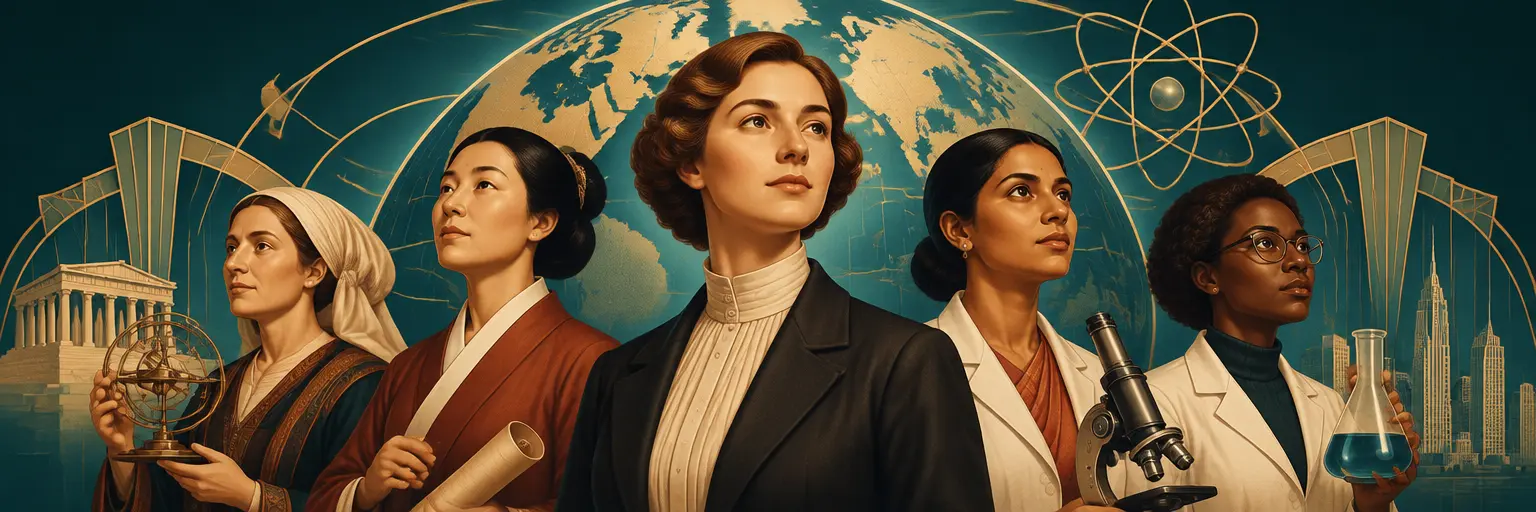
Welcome to our dedicated space on Global Perspectives on Women in Science, a subcategory within our Historical Context archive. Here, we transcend borders to examine how culture, geography, and politics shaped the scientific contributions of women worldwide. From the cloisters of medieval Europe to the research institutes of modern Asia, this collection reveals a rich tapestry of achievement often missing from mainstream history. Explore how pioneering women navigated unique societal constraints, making discoveries that resonate today, and discover why a multifaceted view is essential for understanding the true scope of scientific progress.
🌍 Regional Pioneers: Breaking Barriers Across Continents
This section highlights women like Marie Curie (Europe), Wang Zhenyi (China), and Maryam Mirzakhani (Iran), whose work was deeply influenced by their local environments. You’ll learn how regional educational systems, religious norms, and colonial histories either hindered or accelerated their careers. For example, the Enlightenment-era salons of Paris offered informal networks, while the isolationist policies in 18th-century China forced women to rely on family tutorials. These contextual differences are crucial for understanding not just their discoveries, but also the innovative strategies they employed to overcome exclusion from formal academies.
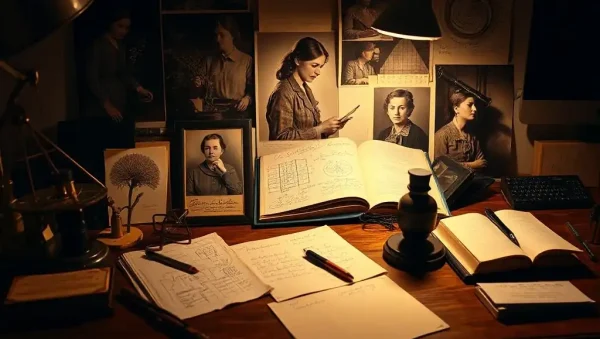
Expect detailed case studies that compare the professional trajectories of women in Scandinavia versus South Asia, showing how legal frameworks like the Swedish Higher Education Act of 1909 contrasted with British informal mentorship. We analyze primary sources, including personal letters and lab notebooks, to reconstruct daily realities. By examining these regional contrasts, we reveal how a woman’s scientific identity was frequently negotiated against prevailing cultural expectations. This ensures that the history of science becomes a truly inclusive narrative, moving beyond a Western-centric lens to embrace global achievements and struggles alike.
🔬 Cross-Cultural Exchange: Collaboration and Knowledge Transfer
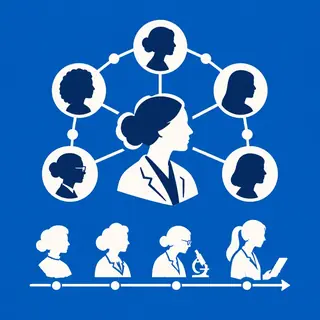
Here, we explore how female scientists facilitated the flow of knowledge between disparate cultures, often acting as translators, field researchers, or international delegates. Figures like Annie Jump Cannon (USA) collaborated with observatories in South America, while Asima Chatterjee (India) bridged traditional Ayurvedic practices with modern chemistry. This section uncovers the networks of correspondence and joint publications that connected women across borders, sometimes decades before formal international bodies admitted them. Their ability to share data and methodologies was often undervalued, yet proved vital for advancing fields like astronomy, botany, and epidemiology.
Through interactive timelines and digitized archives, you’ll see how these exchanges were not merely professional but also deeply human, involving shared challenges of childcare and workplace bias. We feature digitized correspondence between women in colonial Africa and their European mentors, highlighting the power dynamics at play. By focusing on these collaborative bridges, we reframe the global history of science as a web of mutual influence rather than isolated national achievements. This perspective is essential for scholars and enthusiasts who seek a holistic understanding of how scientific ideas traveled and transformed across the globe.
📚 Indigenous Knowledge and Women’s Roles in Science
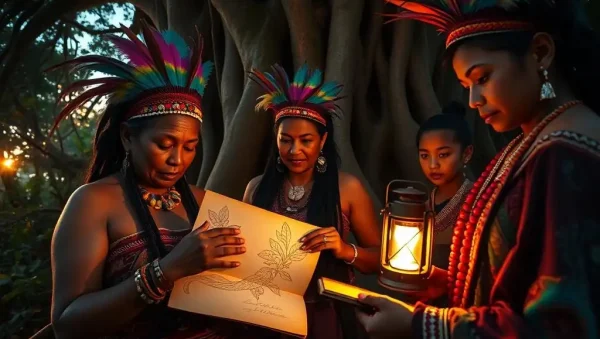
Many scientific practices originated within indigenous communities, where women were custodians of botanical, astronomical, and ecological wisdom. This section honors figures like Dona Maria (Bolivia) and Nora Marks Dauenhauer (Alaska), whose knowledge of local flora and celestial navigation was essential for survival and later validated by mainstream science. We delve into the often-overlooked narratives of women healers, midwives, and agricultural innovators, demonstrating that their systematic observations predated many Western discoveries. By reclaiming these contributions, we challenge the colonial notion that science solely emerged from European laboratories.
Expect detailed commentary on how colonial expansion disrupted these traditions, yet how some women preserved their knowledge through oral histories and adaptation. We investigate the ethical dimensions of using this knowledge in modern bioprospecting, promoting respectful partnerships. This subcategory also highlights contemporary efforts to revitalize and document indigenous scientific practices, often led by women scientists themselves. Through multimedia interviews and interactive maps, you’ll gain a profound respect for the sophistication of indigenous systems, positioning them as vital parts of global scientific heritage rather than footnotes to Western progress.
🚀 Modern Global Networks: The 20th and 21st Centuries
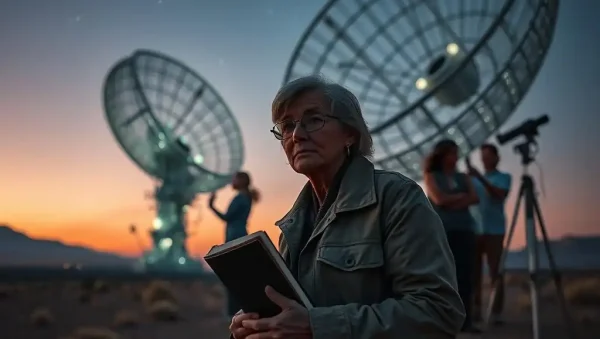
As international organizations like UNESCO and the UN began promoting gender equality, women scientists formed powerful advocacy networks. Here, we profile pioneers such as Dr. Fumiko Yonezawa (Japan) and Dr. Margaret Beryl Ogunlesi (Nigeria), who leveraged new platforms to fund research and mentor younger generations. This section explores the rise of global conferences, international exchange programs, and digital collaborations that have helped level the playing field. You’ll learn about the Women in Science and Technology (WISAT) initiatives and the formation of regional academies, which together have fostered a new era of solidarity and visibility.
We analyze data—from citation patterns to leadership roles—to show how global networks have improved career longevity and research output for women, though significant disparities remain. Real-world examples illustrate how diaspora communities have supported female scientists in their home countries through virtual mentoring. We also examine the impact of social media movements like #WomenInSTEM, which have amplified voices in real-time. By tracing these modern networks, we offer actionable insights for current professionals and students, demonstrating that global solidarity is not just an ideal but a practical tool for advancing scientific careers and achieving systemic change.
🕰️ Historical Erasures and Contemporary Reclamation
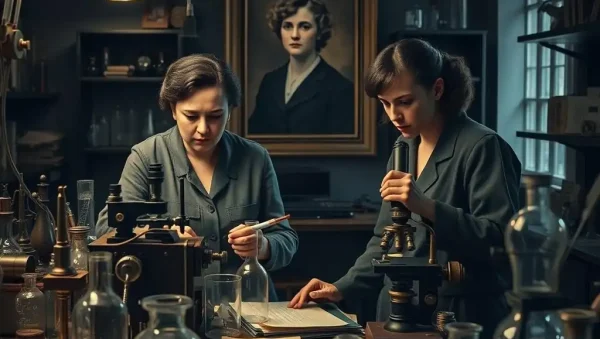
This section critically examines the biases that have systematically omitted women from global scientific records, from misattribution in colonial archives to deliberate exclusion in national histories. We honor women like Rosalind Franklin (DNA structure) and Chien-Shiung Wu (parity violation), whose contributions were initially credited to male colleagues. By analyzing institutional archives, we uncover patterns of neglect and deliberate obscurity, offering clear examples of how historians can re-evaluate primary sources to restore rightful recognition. This is not just about correcting past wrongs but about creating rigorous methodologies for future research.
Expect proposals for inclusive historiographical approaches, including oral history projects and community-led archiving. We feature successful reclamation efforts, such as the Royal Society’s 2010 inclusion of female fellows and the Google Doodle tributes to lesser-known scientists. Through case studies of recent biographic dictionaries and museum exhibitions, we demonstrate the power of active remembrance. This subcategory empowers readers to challenge incomplete narratives, offering practical tools for identifying and celebrating overlooked contributions. By understanding how erasure happens, we can build more accurate and equitable scientific histories for generations to come.
Frequently Asked Questions
Who is considered the first globally recognized female scientist?
Hypatia of Alexandria (c. 370–415 CE) is often cited as one of the first globally recognized female scientists. She was a mathematician and astronomer in Egypt, known for her teaching and commentary on classical works. However, her recognition is based on limited records, highlighting the challenges of verifying ancient history. Her story inspires modern debates on historical visibility.
How do global perspectives change our understanding of women in science?
A global perspective reveals that women’s scientific contributions are not a monolithic story. Different regions experienced varying barriers and opportunities, influenced by religion, politics, and colonial history. For instance, women in pre-revolutionary China often worked within family networks, while their European counterparts used salon gatherings. This diversity enriches our overall understanding of scientific progress and innovation.
What roles did indigenous women play in scientific discovery?
Indigenous women were often chief botanists and astronomers, documenting medicinal plants and celestial events for centuries. Their empirical knowledge was crucial for survival and trade. While rarely credited in Western records, their systematic observations are now being recognized as valid scientific practice, influencing modern fields like ethnobotany and climate science.
Why are some female scientists still missing from major historical accounts?
Many were omitted due to systemic biases in male-dominated institutions, plus social norms that discouraged public recognition. In colonial archives, their work was often attributed to male relatives or supervisors. Also, their contributions were sometimes informal or in applied fields, which were historically undervalued. Ongoing archival research is uncovering these hidden stories daily.
How can I use this information for educational purposes?
Educators can use our profiles to illustrate diversity in STEM, showing students that scientific achievement knows no gender or geographic boundaries. Activities include comparing regional experiences or analyzing primary sources like letters. For self-learners, our timelines and reading lists offer structured pathways. We also encourage educators to modify curricula to include these global narratives.