
Resisting Erasure: Strategies Women Used to Preserve Their Scientific Legacies Globally

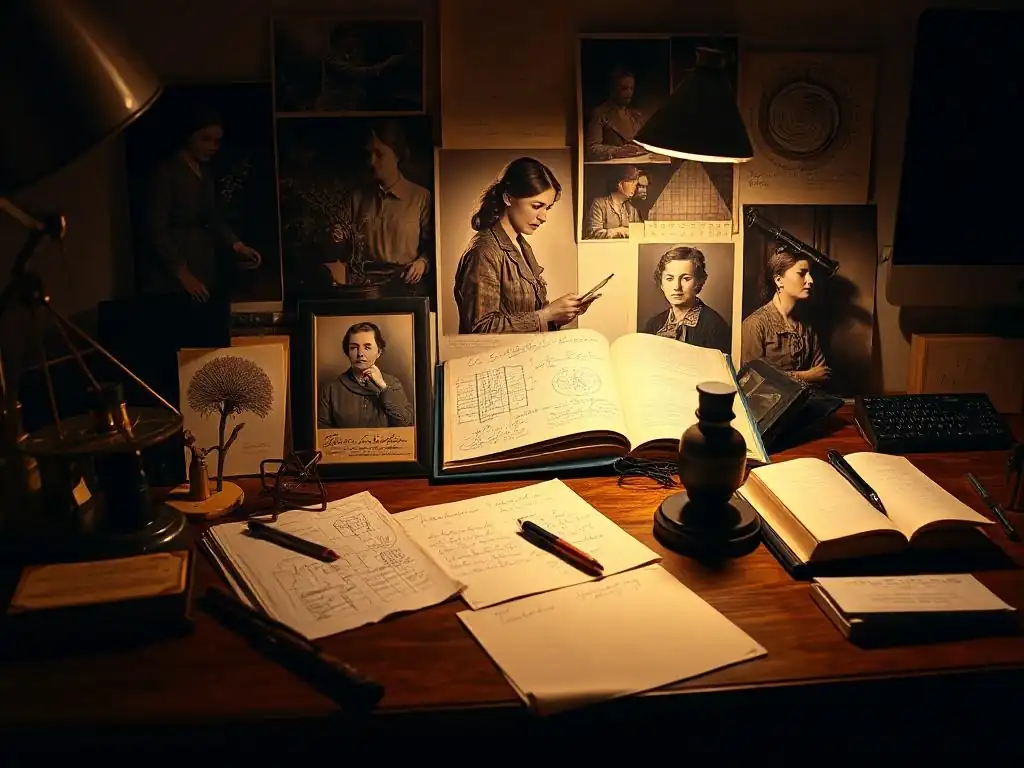
Welcome to WomenInScienceHistory.com!
Delve into the captivating world where scientific brilliance meets historical resilience. This site is dedicated to uncovering the untold stories of women who shaped the landscape of science. Today, we explore a crucial aspect of their journey: Women scientists legacy preservation strategies. But how did these remarkable women, often facing systemic barriers, ensure their groundbreaking work wouldn't be lost to time? Discover the ingenious methods and powerful networks they employed to resist erasure and solidify their place in history – a story that's as informative as it is inspiring.
- Introduction: The Enduring Impact of Women in Science and the Threat of Erasure
- Documenting and Archiving: Proactive Measures for Legacy Preservation
- Collaborative Networks: Amplifying Voices and Sharing Knowledge
- Publication and Dissemination: Making Scientific Contributions Visible
- Challenging Historical Narratives: Reclaiming Their Place in Scientific History
- Education and Outreach: Inspiring Future Generations
- Case Studies: Examples of Successful Legacy Preservation Strategies
- The Role of Technology in Modern Legacy Preservation
- Conclusion: Empowering Future Generations to Protect Women Scientists' Legacies
-
Frequently Asked Questions
- How did women scientists historically combat erasure from scientific records?
- What role did mentorship play in preserving the legacies of women scientists?
- How did the male-dominated scientific community contribute to the erasure of women's scientific contributions?
- What preservation strategies are currently being used to highlight the contributions of women scientists?
- Why is it important to focus on women scientists' legacy preservation strategies?
- Final Reflection: Amplifying Voices, Preserving Legacies
- Preserve Her Legacy: Become a Champion of Women in Science!
Introduction: The Enduring Impact of Women in Science and the Threat of Erasure
Why Preserving the Legacies of Women Scientists Matters
The contributions of women to science throughout history have been monumental, yet their stories have often been relegated to the footnotes of textbooks or entirely omitted. Preserving the legacies of women scientists is not merely an academic exercise; it is a critical endeavor that shapes our understanding of scientific progress and inspires future generations.
When the pioneering work of figures like Mary Anning, who made significant fossil discoveries in the early 19th century, or Nettie Stevens, who discovered sex chromosomes in the early 20th century, is acknowledged, it provides a more complete and accurate historical record, demonstrating that scientific brilliance knows no gender.
Furthermore, ensuring the visibility of these achievements provides crucial role models for young women and girls considering careers in STEM fields. By highlighting the ingenuity, perseverance, and groundbreaking discoveries of women from diverse backgrounds, we combat the stereotype that science is a male-dominated pursuit and demonstrate the vast potential for all individuals to contribute. This proactive approach to women scientists legacy preservation strategies helps to dismantle historical biases and fosters an inclusive environment where talent is recognized regardless of gender.
Defining Erasure: The Systemic Challenges Faced by Female Scientists
Erasure, in the context of women in science, refers to the systematic process by which the contributions, achievements, and even the very presence of female scientists are overlooked, minimized, or attributed to their male counterparts. This phenomenon has manifested in various forms throughout history, from outright exclusion from scientific societies and institutions to the failure to credit women as authors on research papers, a common occurrence in the early 20th century when many women worked in labs but received no formal recognition.
The "Matilda effect," coined by historian Margaret W. Rossiter, specifically describes this tendency to deny or downplay the contributions of female scientists, often attributing their work to male colleagues.
These systemic challenges were deeply rooted in societal norms and institutional structures that favored men in academia and research. Women often faced significant barriers to education, funding, and professional advancement, making it exceptionally difficult to establish independent research programs or gain public recognition. The lack of formal recognition, coupled with the informal practices of exclusion, meant that many women scientists' legacy preservation strategies had to be ingenious and often subversive to ensure their work was not lost to history.
Documenting and Archiving: Proactive Measures for Legacy Preservation
The Importance of Personal Archives: Diaries, Letters, and Research Notes
Personal archives, such as diaries, letters, and meticulously kept research notes, have proven to be invaluable resources for preserving the scientific legacies of women. These intimate documents often contain detailed accounts of experiments, observations, hypotheses, and collaborative discussions that were never formally published or publicly acknowledged. For instance, the extensive laboratory notebooks of Marie Curie, though radioactive and now carefully preserved, offer a profound insight into her groundbreaking work on radioactivity, detailing her experimental methods and intellectual journey in ways that published papers alone cannot.
Moreover, letters exchanged between female scientists or with their male colleagues frequently reveal the intellectual exchanges, challenges, and support networks that shaped their careers. These correspondences can shed light on instances where credit was withheld or where women provided crucial intellectual input behind the scenes.
The personal papers of Cecilia Payne-Gaposchkin, housed at the Harvard University Archives, include correspondence that details her struggles for recognition in astrophysics and her groundbreaking work on the composition of stars, providing a rich narrative of her scientific life and the obstacles she overcame. Such personal records are foundational to understanding the true scope of women scientists' contributions and are vital for effective women scientists legacy preservation strategies.
Establishing Institutional Records: Fighting for Recognition within Scientific Organizations
The struggle for recognition within scientific organizations was a significant battle for many pioneering women, and the establishment of accurate institutional records became a crucial aspect of women scientists legacy preservation strategies. Historically, many scientific bodies, universities, and research institutions were reluctant to admit women as members, faculty, or even students, let alone formally acknowledge their research contributions. Early efforts involved women fighting for admission to academic programs, like Elizabeth Blackwell, who gained admission to Geneva Medical College in 1847, paving the way for future female physicians.
Even when admitted, their work was often undervalued or not properly cataloged. Therefore, women and their allies often had to actively campaign for their work to be formally recorded, their names included in official publications, and their roles in discoveries acknowledged in institutional histories.
For example, while many early female "computers" at observatories performed critical calculations that led to major astronomical discoveries, their names were often omitted from publications, with credit given solely to male astronomers. Later efforts, often by dedicated historians and archivists, have meticulously gone through institutional records to re-attribute credit, ensuring that the critical data processing work of figures like Henrietta Swan Leavitt and Annie Jump Cannon at the Harvard College Observatory is now widely recognized.
Creating Independent Foundations and Trusts: Ensuring Long-Term Support
Recognizing the systemic barriers within traditional institutions, some women, or their supporters, took the proactive step of establishing independent foundations and trusts dedicated to supporting women in science and preserving their intellectual heritage. These entities provided alternative avenues for funding, research, and recognition, operating outside the conventional, often male-dominated, academic structures. Such initiatives ensured that resources were specifically allocated to foster female talent and safeguard their contributions for posterity.
A notable example, though not solely for women, is the early support provided by philanthropic organizations like the Carnegie Institution or the Rockefeller Foundation, which sometimes provided grants directly to individual researchers, including women, when university positions or funding were scarce. More specifically, in later periods, foundations were established to promote the visibility of women in STEM.
While not a historical foundation created by a woman scientist, the establishment of entities like the Association for Women in Science (AWIS) in 1971, though not a trust in the traditional sense, serves a similar function by advocating for and supporting women in science, and by extension, helping to preserve their ongoing and historical legacies. These organizations actively work to document and promote the achievements of women, serving as crucial elements in comprehensive women scientists legacy preservation strategies.
Collaborative Networks: Amplifying Voices and Sharing Knowledge
Mentorship and Knowledge Transfer: Passing Down Skills and Expertise
Mentorship played a pivotal role in the professional development and legacy preservation of women scientists, especially in eras when formal educational and employment opportunities were limited. Senior female scientists, often having navigated significant systemic barriers themselves, provided crucial guidance, training, and encouragement to younger women entering the field.
This informal, yet powerful, knowledge transfer ensured that valuable skills and research methodologies were passed down, circumventing the often-closed circles of male academic networks. For example, Margaret Floy Washburn, the first woman to earn a Ph.D. in psychology in the U.S. (1894), went on to mentor numerous female students at Vassar College, many of whom became prominent psychologists themselves, thus ensuring the continuity of her intellectual lineage and approach to experimental psychology.
Beyond direct scientific instruction, mentors often provided vital emotional support and strategic advice on navigating institutional biases, securing funding, and publishing work. These relationships fostered a sense of community and solidarity, helping to counteract the isolation many women experienced in male-dominated scientific environments. The informal networks created through mentorship were fundamental in sustaining women's involvement in science and allowing their ideas to evolve and persist, contributing significantly to robust women scientists legacy preservation strategies.
Building Communities of Support: Counteracting Isolation and Bias
In the face of widespread institutional bias and social isolation, women scientists often formed their own communities of support, which were instrumental in sustaining their careers and ensuring the survival of their intellectual contributions. These networks provided a crucial space for intellectual exchange, collaboration, and mutual encouragement, counteracting the exclusion from mainstream scientific circles.
For instance, the "ladies' scientific societies" and informal groups that emerged in the late 19th and early 20th centuries, such as the Women's Medical College of Pennsylvania, fostered environments where women could pursue medical research and practice independently, often publishing their own journals and sharing patient cases.
These communities extended beyond formal organizations to include informal salons, correspondence networks, and even shared living arrangements among female scholars. The "seven sisters" colleges in the United States, established to provide higher education for women, became vibrant hubs where female faculty and students could collaborate and support each other's scientific endeavors, leading to significant research in various fields. Such collective efforts were vital for fostering resilience and ensuring that women's scientific work, even if initially marginalized, had a foundation from which to grow and eventually gain recognition, serving as powerful women scientists legacy preservation strategies.
Forming Alliances with Male Allies: Leveraging Influence for Recognition
While much of the struggle for recognition fell to women themselves, alliances with male colleagues, mentors, or even family members sometimes played a crucial role in amplifying women's voices and securing their scientific legacies. These male allies, often in positions of authority or influence, could lend credibility, provide access to resources, or advocate for women's inclusion in ways that were otherwise impossible.
A prominent example is the support given by renowned astronomer Edward Pickering to the "Harvard Computers," a group of women including Annie Jump Cannon and Henrietta Swan Leavitt, whose meticulous work in cataloging stars revolutionized astronomy. While he initially hired them for low wages, his decision to employ them allowed their crucial discoveries to be made, and he acknowledged their contributions, though not always as fully as deserved.
However, the nature of these alliances was complex and often fraught with the risk of co-option or misattribution. Despite these challenges, instances where male allies genuinely championed women's work, ensuring their names appeared on publications, recommending them for positions, or defending their findings against skepticism, were invaluable. For example, some progressive male academics in the early 20th century actively pushed for the inclusion of women in scientific societies or university faculties, providing a necessary bridge for women to enter and gain recognition within established scientific structures, thereby aiding in women scientists legacy preservation strategies.
Publication and Dissemination: Making Scientific Contributions Visible
For many women scientists, the act of publishing under their own names was a significant battle for authorship and credit, a core component of women scientists legacy preservation strategies. In an era where women's intellectual contributions were often dismissed, subsumed under male colleagues' names, or published anonymously, asserting individual authorship was a powerful declaration of intellectual ownership.
Early female scientists often faced resistance from journal editors or societal norms that discouraged women from public intellectual life. For instance, some women initially published using only initials or male-sounding pseudonyms to avoid prejudice, only later revealing their true identities once their work had gained traction.
The fight for full recognition involved persistent efforts to ensure their names appeared prominently on research papers, patents, and scientific reports. Lise Meitner, for example, published numerous papers with Otto Hahn on nuclear physics, and while her name appeared, the ultimate Nobel Prize for nuclear fission was awarded solely to Hahn, highlighting the ongoing struggle for equitable recognition even when authorship was shared. The proactive choice to publish under one's full name, despite potential backlash, was a critical strategy for establishing a clear record of contribution and ensuring that their scientific heritage was not lost to history.
Popularizing Science: Reaching Broader Audiences Through Writing and Public Speaking
Beyond academic journals, many women scientists employed the strategy of popularizing science through accessible writing and public speaking to disseminate their findings and ensure their work reached a broader audience. This approach not only educated the public but also cemented their intellectual authority outside the often-exclusive academic circles. Mary Somerville, a self-taught Scottish polymath in the 19th century, wrote highly influential books like "On the Connexion of the Physical Sciences" (1834), which translated complex scientific ideas into understandable language, making her work widely read and respected by both scientists and the general public, including Charles Darwin.
Similarly, Rachel Carson's "Silent Spring" (1962) transformed public understanding of environmental science and the dangers of pesticides, sparking the modern environmental movement. Her accessible yet rigorously researched writing reached millions, ensuring her scientific insights had a profound and lasting impact far beyond academic publications. By engaging directly with the public, these women solidified their intellectual contributions and ensured that their scientific legacies were not confined to specialized niches but became part of the broader cultural consciousness, effectively implementing robust women scientists legacy preservation strategies.
Utilizing Alternative Publishing Platforms: Circumventing Traditional Gatekeepers
When traditional publishing avenues proved inaccessible or biased, some women scientists ingeniously utilized alternative publishing platforms to disseminate their research, effectively circumventing established gatekeepers and ensuring their work saw the light of day. This often involved self-publishing, creating private presses, or circulating manuscripts within specific networks. For example, in the early modern period, some women scholars, like Margaret Cavendish, the Duchess of Newcastle, published their philosophical and scientific works independently, often at their own expense, to ensure their ideas were shared despite societal prohibitions against women's public intellectual roles.
In later centuries, the use of institutional reports, internal memoranda, or even informal newsletters became crucial. While not always widely accessible at the time, these documents often served as the primary record of a woman's work.
The meticulous lab notes and internal reports produced by Rosalind Franklin at King's College London, which documented her X-ray diffraction images of DNA, were critical in establishing the structure of DNA, even though her direct contributions were not fully recognized in the initial Nobel Prize. These unconventional dissemination methods, though perhaps less prestigious, were vital for creating a tangible record of their scientific contributions, proving to be essential women scientists legacy preservation strategies.
Challenging Historical Narratives: Reclaiming Their Place in Scientific History

Correcting Misattributions and Misrepresentations: Setting the Record Straight
A crucial aspect of women scientists legacy preservation strategies has been the deliberate effort to correct misattributions and misrepresentations of their work in historical narratives. For decades, the contributions of many pioneering women were either attributed to male colleagues or downplayed to the point of invisibility.
The most famous example is perhaps Lise Meitner, whose theoretical explanation of nuclear fission was essential to Otto Hahn's experimental discovery, yet she was notoriously excluded from the 1944 Nobel Prize in Chemistry awarded solely to Hahn. Subsequent historical research and advocacy by physicists and historians have worked tirelessly to set the record straight, highlighting her indispensable role.
Another poignant case involves Rosalind Franklin, whose critical X-ray diffraction images (specifically Photo 51) provided key insights into the structure of DNA, without which Watson and Crick's model would have been incomplete. Her work was largely unacknowledged during her lifetime, and she died before the Nobel Prize was awarded.
It has been through meticulous biographical work and historical scholarship that her vital contribution has been fully recognized and integrated into the narrative of DNA discovery. These ongoing efforts to re-evaluate historical records and challenge established, often biased, narratives are fundamental to ensuring a more accurate and inclusive history of science.
Writing Biographies and Memoirs: Telling Their Own Stories
Writing biographies and memoirs, either by the women scientists themselves or by dedicated biographers, has been a powerful strategy for reclaiming their place in scientific history and ensuring their stories are told accurately. When women wrote their own memoirs, they provided invaluable first-hand accounts of their scientific journeys, challenges, and triumphs, often filling gaps left by official histories. For instance, Maria Goeppert Mayer, a Nobel laureate in physics, detailed her struggles to secure a faculty position despite her brilliance, working for years in unpaid or poorly paid research roles, illuminating the systemic barriers faced by women in academia.
Posthumous biographies have also been instrumental in bringing forgotten or marginalized figures to light. Biographers have meticulously researched archival materials, personal correspondence, and scientific papers to reconstruct the lives and contributions of women whose work was previously overlooked. The proliferation of biographies on figures like Hypatia of Alexandria, Caroline Herschel, and Emmy Noether has significantly enriched our understanding of their scientific achievements and the historical contexts in which they operated. These narrative efforts are vital components of women scientists legacy preservation strategies, ensuring that their complex and inspiring lives are fully understood and celebrated.
Engaging with Historians and Scholars: Collaborating on Research and Interpretation
Direct engagement and collaboration with historians and scholars have become an increasingly vital component of modern women scientists legacy preservation strategies. This partnership allows for rigorous academic research into primary sources, re-evaluation of existing narratives, and the development of nuanced interpretations of women's scientific contributions. Historians of science, particularly those specializing in gender studies, have played a crucial role in uncovering previously unacknowledged work, analyzing the systemic barriers women faced, and integrating their stories into the broader historical tapestry of science.
For example, scholars have delved into university archives, personal papers, and scientific society records to uncover the hidden contributions of women who worked as "computers," illustrators, or laboratory assistants, often without formal titles or recognition. Their research has led to the publication of books, articles, and documentaries that challenge long-held assumptions and provide evidence of women's profound impact. This collaborative scholarly effort ensures that the process of reclaiming women's place in science is based on solid evidence and rigorous analysis, moving beyond anecdotal accounts to establish a robust and permanent record of their achievements.
Education and Outreach: Inspiring Future Generations
Developing Educational Programs: Integrating Women's Contributions into Curricula
A crucial long-term strategy for women scientists legacy preservation involves developing and implementing educational programs that integrate women's contributions directly into science curricula at all levels. Historically, textbooks and educational materials predominantly featured male scientists, perpetuating the misconception that women played a minimal role in scientific advancement.
By actively revising curricula to include the stories and discoveries of pioneering women, educational institutions can ensure that future generations receive a more accurate and inclusive understanding of scientific history. For example, many K-12 science programs now incorporate lessons on figures like Mae Jemison, the first African American woman in space, or Marie Curie, beyond her Nobel Prizes, to discuss her perseverance against sexism.
This integration goes beyond merely adding names; it involves presenting their scientific methodologies, the challenges they overcame, and the broader societal impact of their work. Universities are increasingly offering courses on the history of women in science, and professional organizations are developing resources for educators to highlight female role models. These proactive efforts ensure that the scientific heritage of women is not an afterthought but a fundamental part of learning about science, thereby securing their legacies for the long term and inspiring a new generation of scientists.
Mentoring Young Women in STEM: Encouraging Future Scientists
Direct mentorship of young women in STEM fields is a powerful and ongoing strategy for legacy preservation, as it not only supports current talent but also ensures a future generation equipped to continue the work of recognition and advancement. By providing guidance, support, and practical advice, experienced female scientists and educators empower aspiring women to pursue scientific careers, navigate challenges, and ultimately contribute to the scientific body of knowledge.
Programs like "Girls Who Code" or university-sponsored summer research opportunities specifically target young women, connecting them with female mentors who can share their experiences and demystify the path to a STEM career.
These mentorship relationships are critical for building confidence, fostering a sense of belonging, and providing role models that demonstrate what is possible. When young women see successful female scientists, they are more likely to envision themselves in similar roles. This direct engagement ensures that the torch of scientific inquiry and advocacy for women in science is passed down, creating a continuous chain of individuals committed to both making scientific discoveries and preserving the history of women's contributions. These efforts are central to maintaining robust women scientists legacy preservation strategies.
Public Lectures and Presentations: Sharing Their Work with the World
Public lectures and presentations have served as effective platforms for women scientists to share their work directly with the world, democratizing scientific knowledge and ensuring their contributions gained wider recognition beyond academic circles. From the late 19th century onwards, as public scientific discourse became more common, women seized opportunities to speak to general audiences, often overcoming societal expectations that women should not speak publicly.
For instance, in the early 20th century, scientists like Ellen Swallow Richards, a pioneer in sanitary engineering and home economics, frequently gave lectures on public health and environmental issues to community groups and women's clubs, directly impacting public policy and awareness.
In contemporary times, women scientists continue to use public speaking, including TED Talks and university outreach programs, to disseminate their research and inspire others. Dr. Jane Goodall, for example, has spent decades delivering lectures worldwide, sharing her groundbreaking primatological research and advocating for conservation, ensuring her scientific legacy and environmental message resonate globally. These public engagements are vital for extending the reach of women's scientific achievements, making their work accessible and celebrated by a broad audience, and solidifying their place in the collective scientific memory, thereby contributing to strong women scientists legacy preservation strategies.
Case Studies: Examples of Successful Legacy Preservation Strategies
Case Study 1: Lise Meitner and the Fight for Recognition of Nuclear Fission
Lise Meitner, an Austrian-Swedish physicist, played a pivotal role in the discovery of nuclear fission, yet her contribution was largely overlooked in the 1944 Nobel Prize in Chemistry, which was awarded solely to her long-time collaborator Otto Hahn. Meitner, a Jewish woman, had to flee Nazi Germany in 1938, continuing her research by correspondence with Hahn.
It was Meitner and her nephew Otto Frisch who provided the theoretical explanation for fission, calculating the immense energy released, a concept Hahn initially found difficult to grasp. Her crucial intellectual input, including the coining of the term "fission," was undeniably central to the discovery.
The fight for Meitner's recognition has been a sustained effort by historians of science, physicists, and feminist scholars. Posthumously, numerous articles, books, and documentaries have detailed her essential role, meticulously analyzing her correspondence and scientific papers. Element 109 was named "Meitnerium" (Mt) in her honor in 1997, a significant symbolic recognition of her scientific legacy. This ongoing corrective effort highlights how active historical re-evaluation and public education are vital women scientists legacy preservation strategies, ensuring that even decades after a snub, justice can begin to be served.
Case Study 2: Rosalind Franklin and the Importance of Archival Access
Rosalind Franklin, a British biophysicist, produced critical X-ray diffraction images of DNA, most notably "Photo 51," which were instrumental in James Watson and Francis Crick's elucidation of the DNA double helix structure. Despite her meticulous experimental work and the groundbreaking nature of her images, her contributions were not fully acknowledged by Watson and Crick in their seminal 1953 Nature paper, and she died in 1958, four years before the Nobel Prize for DNA was awarded to Watson, Crick, and Maurice Wilkins.
The preservation of Franklin's legacy has heavily relied on archival access and detailed biographical work. Her laboratory notebooks, personal correspondence, and the original X-ray images themselves, preserved in various institutional archives, have been meticulously examined by historians.
Biographies, such as Anne Sayre's "Rosalind Franklin and DNA" (1975) and Brenda Maddox's "Rosalind Franklin: The Dark Lady of DNA" (2002), drew heavily on these primary sources to reconstruct her scientific journey and highlight the extent of her contribution. This case underscores how crucial the careful preservation and later accessibility of personal and institutional archives are for establishing accurate historical records and implementing effective women scientists legacy preservation strategies.
Case Study 3: Barbara McClintock and the Power of Independent Research
Barbara McClintock, an American cytogeneticist, conducted groundbreaking research on maize genetics in the mid-20th century, discovering "jumping genes" or transposons – sequences of DNA that can move around within the genome. Her work, initially published in the 1950s, was met with skepticism and largely ignored by the scientific community for decades because it challenged prevailing notions of genetic stability. Despite the lack of immediate recognition, McClintock persisted with her independent research, continuing to refine her theories and collect extensive data.
McClintock's steadfast commitment to her own research, often conducted in relative isolation at the Cold Spring Harbor Laboratory, proved to be a powerful strategy for legacy preservation. She meticulously documented her experiments and observations, building an undeniable body of evidence.
Decades later, with the advent of molecular biology techniques, her work was vindicated, and she was awarded the Nobel Prize in Physiology or Medicine in 1983, nearly 30 years after her initial discoveries. Her story exemplifies how unwavering dedication to scientific inquiry, even when initially unappreciated, combined with thorough documentation, can ultimately lead to profound and lasting recognition, showcasing a unique aspect of women scientists legacy preservation strategies.
The Role of Technology in Modern Legacy Preservation
Digital Archives and Online Resources: Expanding Access to Information
The advent of digital technology has revolutionized women scientists legacy preservation strategies by dramatically expanding access to historical information and making once-obscure documents widely available. Universities, libraries, and scientific institutions are increasingly digitizing their collections of papers, photographs, correspondence, and research notes related to women scientists. Online platforms like the Smithsonian Institution Archives, the National Library of Medicine's "Profiles in Science," and various university digital collections now host vast amounts of primary source material, allowing researchers, educators, and the public to access historical data with unprecedented ease.
These digital archives transcend geographical barriers, enabling global access to documents that were previously only available to a select few. For example, the digitization of the papers of influential figures like Marie Curie or Florence Nightingale allows scholars worldwide to delve into their original writings, fostering new research and deeper understanding of their contributions. This widespread accessibility is critical for ensuring that the stories and achievements of women in science are not lost to time but rather continually rediscovered, analyzed, and celebrated, reinforcing their place in history.
Social media platforms and online communities have emerged as powerful tools for modern women scientists legacy preservation strategies, enabling the rapid dissemination of information and fostering engagement with a global audience. Platforms like Twitter, Instagram, and Facebook are used by museums, academic institutions, and individual advocates to share historical facts, celebrate anniversaries of discoveries, and highlight the biographies of forgotten or overlooked women scientists. Hashtags such as #WomenInSTEM and #HistoryOfScience frequently trend, bringing these narratives to millions of users who might not otherwise encounter them.
Online communities, including dedicated forums, blogs, and Wikipedia editing projects, also play a crucial role. These spaces allow enthusiasts, researchers, and the general public to collaborate on documenting and promoting the achievements of women in science. For instance, initiatives like "WikiProject Women in Red" actively work to increase the number of Wikipedia biographies about notable women, including scientists, addressing historical gender imbalances in online encyclopedic knowledge. This collective, digitally-driven effort ensures that the stories of women scientists are not only preserved but actively amplified and discussed across diverse global networks.
Crowdsourcing and Citizen Science: Engaging the Public in Research
Crowdsourcing and citizen science initiatives are innovative technological approaches that engage the public directly in research and data collection, significantly contributing to women scientists legacy preservation strategies. These projects leverage the collective power of numerous individuals to transcribe historical documents, analyze vast datasets, or contribute to ongoing scientific research, often leading to the discovery of previously unacknowledged contributions by women. For example, projects like the "Smithsonian Transcription Center" invite volunteers to transcribe digitized historical documents, including the papers of pioneering women scientists, making them searchable and accessible for scholarly analysis.
In citizen science, projects might involve public participation in data collection or analysis, implicitly or explicitly connecting participants to the historical context of scientific inquiry, including the contributions of women. While not exclusively focused on historical preservation, these platforms foster a broader appreciation for scientific processes and the diversity of individuals involved throughout history. By decentralizing the work of archiving and analysis, crowdsourcing and citizen science empower a wider community to contribute to the preservation of women's scientific heritage, ensuring that more voices are heard and more stories are uncovered.
Conclusion: Empowering Future Generations to Protect Women Scientists' Legacies
The Ongoing Fight for Recognition and Equity
The history of women in science is a testament to extraordinary resilience and intellectual brilliance in the face of systemic barriers and pervasive erasure. While significant progress has been made in recent decades to highlight the contributions of pioneering women scientists, the fight for full recognition and equity is far from over.
Many stories remain untold, and even well-known figures still contend with incomplete or biased narratives in mainstream historical accounts. The "Matilda effect" continues to manifest in subtle ways, affecting contemporary women in science through issues like unequal authorship credit, lower citation rates, and fewer awards compared to their male counterparts, even for comparable work.
Therefore, continuous vigilance and advocacy are essential to ensure that the scientific legacies of women are not only preserved but also fully integrated into the historical canon and celebrated without reservation. This ongoing effort requires a multi-faceted approach, from meticulous historical research and archival preservation to proactive educational reforms and sustained public outreach. Recognizing the historical struggles and triumphs of women in science provides crucial context for addressing persistent gender disparities in STEM fields today, emphasizing that the past informs the present and shapes the future of scientific equity.
The Importance of Continued Vigilance and Advocacy
The preservation of women scientists' legacies is not a static endeavor but an ongoing process that demands continued vigilance and advocacy from individuals, institutions, and society at large. Historical records can be incomplete, biased, or even lost over time, necessitating continuous efforts to uncover, verify, and disseminate accurate information. This includes critically examining existing historical narratives, identifying gaps, and actively seeking out primary sources that illuminate the contributions of women who might have been overlooked.
Advocacy plays a crucial role in ensuring that these historical insights translate into tangible change. This means campaigning for greater representation of women in science curricula, pushing for equitable recognition in awards and honors, and supporting initiatives that promote diversity and inclusion in STEM fields. By actively championing the stories of women scientists, we not only honor their past achievements but also inspire future generations to pursue scientific careers and challenge existing biases. The commitment to continued vigilance and advocacy forms the bedrock of effective women scientists legacy preservation strategies.
Call to Action: How You Can Help Preserve the Legacies of Women in Science
Preserving the rich and diverse legacies of women in science is a collective responsibility. Here are ways you can contribute to these vital women scientists legacy preservation strategies:
- Educate Yourself and Others:
- Seek out books, documentaries, and articles about women scientists.
- Share their stories with friends, family, and on social media.
- Advocate for more inclusive science curricula in schools.
- Support Archival Efforts:
- Learn about local archives and libraries that preserve scientific history.
- Support initiatives that digitize historical documents related to women in STEM.
- If you have personal papers or artifacts from women scientists, consider donating them to appropriate institutions.
- Engage with Online Communities:
- Participate in Wikipedia editing projects to create or improve biographies of women scientists.
- Join online forums and discussions dedicated to the history of women in science.
- Use social media to promote content celebrating women's scientific achievements.
- Mentor and Inspire:
- If you are a woman in STEM, consider mentoring younger women and girls.
- Encourage young people, especially girls, to explore science and engineering.
- Be a role model by pursuing your own scientific interests and sharing your journey.
- Advocate for Recognition:
- Support organizations that champion women in science and advocate for equity.
- Challenge misattributions or omissions of women's contributions when you encounter them.
- Nominate deserving women scientists for awards and honors, both historical and contemporary.
By taking these actions, you contribute directly to ensuring that the groundbreaking work and inspiring lives of women in science are forever recognized, celebrated, and continue to inspire generations to come.
Frequently Asked Questions
How did women scientists historically combat erasure from scientific records?
Women often employed strategies like maintaining detailed personal notebooks, cultivating strong mentorship networks with other women, and actively publishing their findings, despite societal barriers.
What role did mentorship play in preserving the legacies of women scientists?
Mentorship provided crucial support and visibility. It allowed senior female scientists to advocate for their mentees, ensuring their work was recognized and continued.
How did the male-dominated scientific community contribute to the erasure of women's scientific contributions?
Bias and discrimination led to women's work being attributed to male colleagues, their publications being overlooked, and their access to funding and positions being limited.
What preservation strategies are currently being used to highlight the contributions of women scientists?
Current strategies include archival projects, digital humanities initiatives dedicated to creating online databases, and the creation of biographies and documentaries focusing on their lives and work.
Why is it important to focus on women scientists' legacy preservation strategies?
It is essential to rectify historical injustices, inspire future generations of female scientists, and ensure a more complete and accurate understanding of scientific progress.
Final Reflection: Amplifying Voices, Preserving Legacies
The stories shared throughout this article highlight a crucial truth: the fight to recognize and preserve the scientific contributions of women is far from over. Erasure, subtle or overt, continues to plague the historical record, demanding continued vigilance and proactive strategies to ensure these invaluable legacies are not lost to time. The urgency of this task resonates deeply in a world still grappling with gender disparities in STEM fields.
The impact of these forgotten figures extends beyond mere historical accuracy; it shapes the aspirations of future generations. By uncovering and celebrating the ingenuity and perseverance of women scientists, we empower young girls and women to envision themselves as leaders and innovators in science. Until lions have their own historians, tales of the hunt will always glorify the hunter.
This African proverb underscores the importance of women controlling their own narratives and actively participating in the preservation of their scientific legacies.
Let us all commit to becoming active participants in this vital work. Seek out the untold stories of women scientists in your own communities, support initiatives dedicated to preserving their legacies, and challenge the biases that perpetuate their erasure. The future of science depends on the full inclusion and recognition of all its contributors. Let us ensure that the brilliance of women scientists shines brightly for generations to come.
Preserve Her Legacy: Become a Champion of Women in Science!
Thank you for exploring the inspiring stories of women who fought to preserve their scientific contributions. You've gained valuable insights into their resilience and resourcefulness. Now, it's your turn to take action and ensure their legacies continue to inspire future generations.
Here's how you can help:
- Actively share stories of these remarkable women. Amplify their voices by sharing this article on your social media platforms and with your networks.
- Delve deeper:Nominate a pioneering woman scientist from your region to be featured on WomenInScienceHistory.com, ensuring diverse representation and global recognition.
- Start a conversation: Organize a book club or discussion group focusing on biographies of women in science, fostering a deeper understanding of their struggles and triumphs.
Which unsung woman scientist’s story will you champion today?