Women in Science: The Crucial Role of Female Scientists in World War I & II
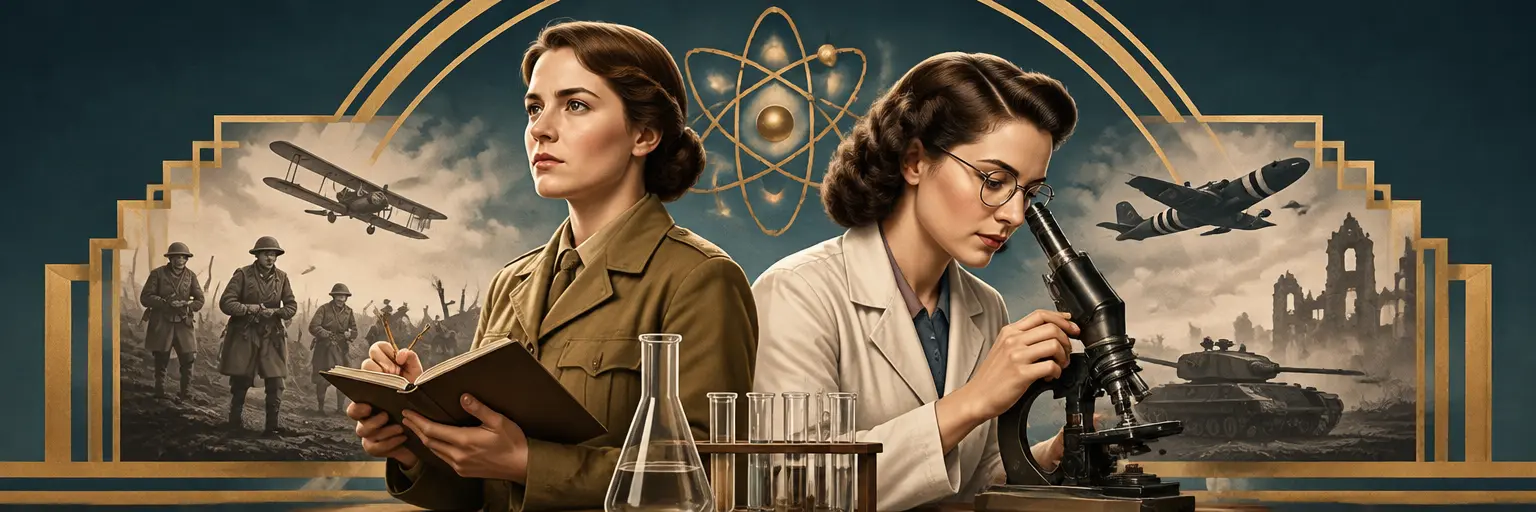
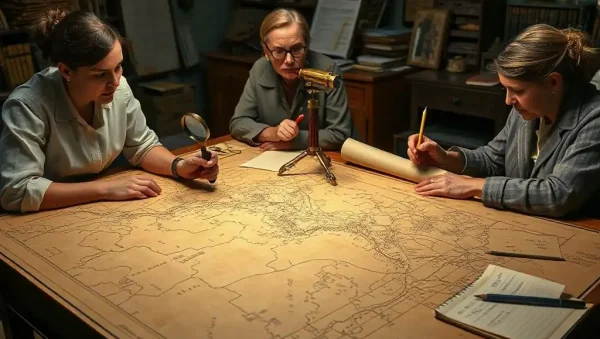
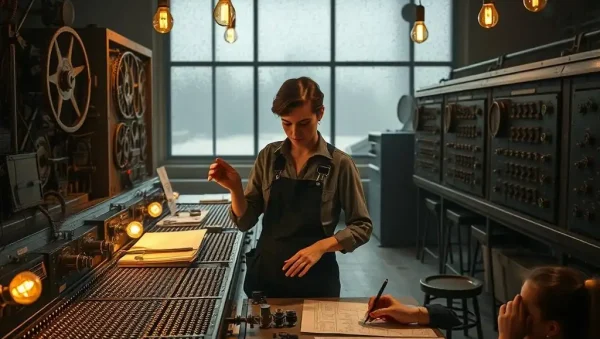
When the world plunged into the chaos of the two World Wars, the scientific community faced an unprecedented demand for innovation, medical breakthroughs, and technological advancement. With millions of men conscripted for military service, women stepped into laboratories, observatories, and research facilities like never before. This subcategory delves into the extraordinary stories of female scientists who not only filled critical roles but also transformed their fields through wartime contributions—from developing radar technology and deciphering enemy codes to creating life-saving vaccines and pioneering new treatments for wounded soldiers. Their work not only helped win the wars but also shattered many of the glass ceilings that had long kept women out of professional science.
💡 Breaking Barriers: How World Wars Changed the Role of Women in Laboratories
Before 1914, women in science were largely confined to teaching or domestic roles, with many universities outright banning them from advanced degrees. The outbreak of World War I forced a radical shift, as governments desperately needed chemists, physicists, and biologists to support the war effort. Female scientists like Marie Curie became iconic figures, developing mobile X-ray units, known as "petites Curies," which were mounted in trucks and used on the front lines to locate shrapnel and fractures in wounded soldiers. Her daughter, Irène Joliot-Curie, also worked as a nurse-radiographer, marking the beginning of a new era where women's technical skills were not merely accepted but actively sought after.
By World War II, the demand for women in science had grown exponentially. The American government launched campaigns to recruit women into fields like chemistry and physics, leading to a 200% increase in female science graduates between 1940 and 1945. Programs like the Manhattan Project employed women mathematicians as "computers," many of whom performed the complex calculations needed for nuclear physics under extreme pressure. This period didn't just provide temporary jobs; it created lasting institutional changes, including the establishment of women's research fellowships and the normalization of women in technical roles that would continue well into the postwar era.
🔬 Wartime Medicine: Female Innovators in Vaccines, Blood Transfusions, and Trauma Care
The carnage of the World Wars created a public health emergency that demanded immediate scientific solutions. Female researchers rose to the occasion with remarkable innovations. Dame Janet Vaughan, a British physician and hematologist, pioneered the development of large-scale blood transfusions during the Blitz, establishing the first mobile blood donation units that saved countless lives. Her work laid the foundation for modern blood banks. Meanwhile, Frances Kelsey, who would later gain fame for banning thalidomide, began her career during WWII by studying the effects of quinine on malaria, a disease that was decimating troops in the Pacific theater.
The vaccines developed during this era were equally transformative. Women like Alice Evans, a bacteriologist, fought for years to prove that brucellosis was transmissible from animals to humans, a finding that ultimately led to the pasteurization of milk and the prevention of disease among soldiers. The wartime effort also saw women like Gerty Cori, a future Nobel laureate, researching metabolic pathways that would help treat burn victims. These contributions not only reduced triple-digit mortality rates but also established women as vital players in medical research, shifting the mindset of university faculty who had previously dismissed their intellectual capabilities.
📡 Codebreakers and Physicists: Women Who Won Invisible Wars
World War II was famously dubbed the "War of the Physicists," and women were at its technical forefront. At Bletchley Park in Britain, thousands of female mathematicians and linguists operated the Enigma machines and developed early computing methods to crack German codes. Joan Clarke, a brilliant cryptanalyst, was instrumental in breaking the Enigma cipher used by the German navy, a feat many consider crucial to ending the war two years earlier than anticipated. In the United States, Kathleen Lonsdale, a crystallographer, used X-ray diffraction to study explosive molecules, while Dora Goldstein worked on proximity fuses that allowed shells to detonate near their targets.
The physics community also saw transformative female participation. Lise Meitner, though her name was unjustly omitted from the Nobel Prize, co-discovered nuclear fission, a concept that would become the basis for both atomic weapons and nuclear energy. During WWII, women like Maria Goeppert-Mayer, who later won a Nobel Prize, worked on the separation of isotopes for the Manhattan Project. These women didn't just participate; they made irreversible contributions to mathematics, encryption, and nuclear physics, often without official recognition. Their stories highlight a grim irony—their country valued their brains in times of crisis but frequently erased their contributions once peace returned.
👩🔬 Facing Adversity: Discrimination, Patriotism, and Scientific Careers
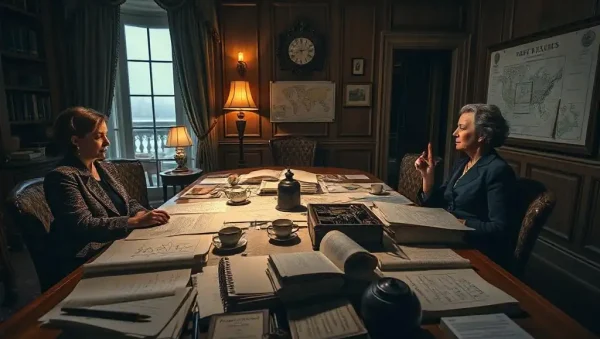
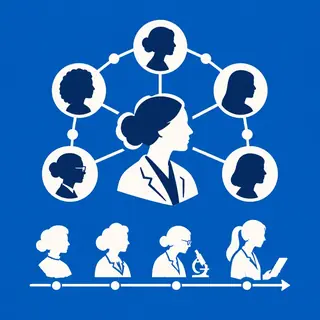
Despite their indispensability, women in wartime science faced persistent discrimination. Institutional policies often classified them as "temporary helpers," with pay rates significantly lower than their male counterparts. For example, at Bletchley Park, women were explicitly told they were only employed because of the "abnormal circumstances," and many were denied the official titles or promotions they had earned. The scientific community mirrored larger societal norms, forcing women to prove their competence in environments hostile to their presence. Yet, many found creative ways to navigate these barriers, forming informal networks of mentorship and peer support that sustained their ambitions.
The post-war period brought additional challenges, as returning servicemen reclaimed jobs and women were pushed back into domestic roles. Many female scientists, however, refused to fade into obscurity. Some, like Chien-Shiung Wu, who worked on the reduction of uranium into isotope-235 for the Manhattan Project, continued their research and later became renowned professors, challenging systemic bias with sheer brilliance. The wartime generation left a dual legacy: they demonstrated that women were entirely capable of solving the most complex problems, yet they also exposed the deeply entrenched sexism that would fuel the second wave of feminism in the 1960s, as activists drew direct parallels between their wartime contributions and their postwar marginalization.
🌍 Global Impact: How Wartime Science Shaped Modern Academic Opportunities
The long-term impact of women's wartime work was monumental and global. After WWII, institutions like the National Science Foundation and the Institute for Advanced Study began being pushed to include more women, although progress was painfully slow. Programs like the IBM Watson Scientific Computing Laboratory hired women for advanced computational roles, building a pipeline from wartime work to postwar career advancement. The United Nations Educational, Scientific and Cultural Organization (UNESCO), founded in 1945, explicitly included women in its charter for science as a human right, marking a formal international commitment to gender equality in research.
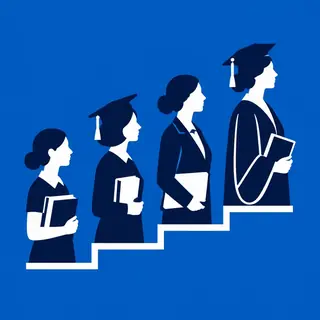
In nations like Australia and Canada, female scientists who had contributed to wartime robotics, agriculture, or electronics often transitioned to university positions, becoming professors and research directors. By the 1950s, many of these veterans of the war era were elected to national academies, including Academy of Sciences posts that had previously been exclusive men's clubs. Their presence normalized women in senior academic roles, inspiring subsequent generations like Dorothy Hodgkin, who won the 1964 Nobel Prize in Chemistry. The war time produced not only extraordinary achievements but also an irreversible shift in the consciousness of the public and universities because they had seen, with their own eyes, what women could achieve under the most extreme circumstances.
Frequently Asked Questions
What were the most common scientific fields women entered during the World Wars?
During WWI, many women worked in chemistry for producing explosives and in medicine for X-ray radiology. In WWII, the highest numbers entered physics (for radar and atomic research), mathematics (as human computers), and biology (for vaccines and penicillin mass production). The fields were dictated by urgency, not by biology, proving women excelled in every area they were given access to.
Did any female scientists receive official recognition for wartime work?
Some did, like Marie Curie who received a second Nobel Prize in 1911 for her earlier work, but most wartime contributions went uncredited for decades. Joan Clarke's codebreaking was kept secret until the 1990s. The National Women's History Museum has since campaigned to honor these women, with many receiving posthumous medals and tributes from military and scientific bodies.
How did women get into the Manhattan Project without being physicists?
Many were hired as "computers" due to their extraordinary mathematical skills, often recruited straight from undergraduate math programs. They performed differential equations and nuclear calculations without knowing the project's purpose. Others worked as technicians on uranium refinement. Their essential work was declassified in the 1970s, shedding light on their critical role.
What percentage of women were in science before the wars versus after?
Prior to 1914, women represented roughly 1-2% of scientific researchers in most countries. By 1945, that figure had risen to nearly 10-15% in the US and UK. After 1945, it partially receded, but by 1960, thanks to wartime gains and advocacy, it had grown to around 20% and has steadily increased since.
Why are these women often omitted from standard history textbooks?
Historians traditionally focused on political leaders and military generals, and most science history was written with a male-centric bias. Many wartime projects were classified, and women were told to forget their work. It wasn't until the 1980s feminist scholarship movement that researchers began re-examining archival records, veterans' recollections, and family papers to reconstruct this hidden history.