Pioneering Programmers: The Women Who Wrote the Code for Cold War Supremacy
🌟 Discover the trailblazing women programmers of the Cold War era, whose ingenuity and resilience in writing Cold War code helped shape…
Read article
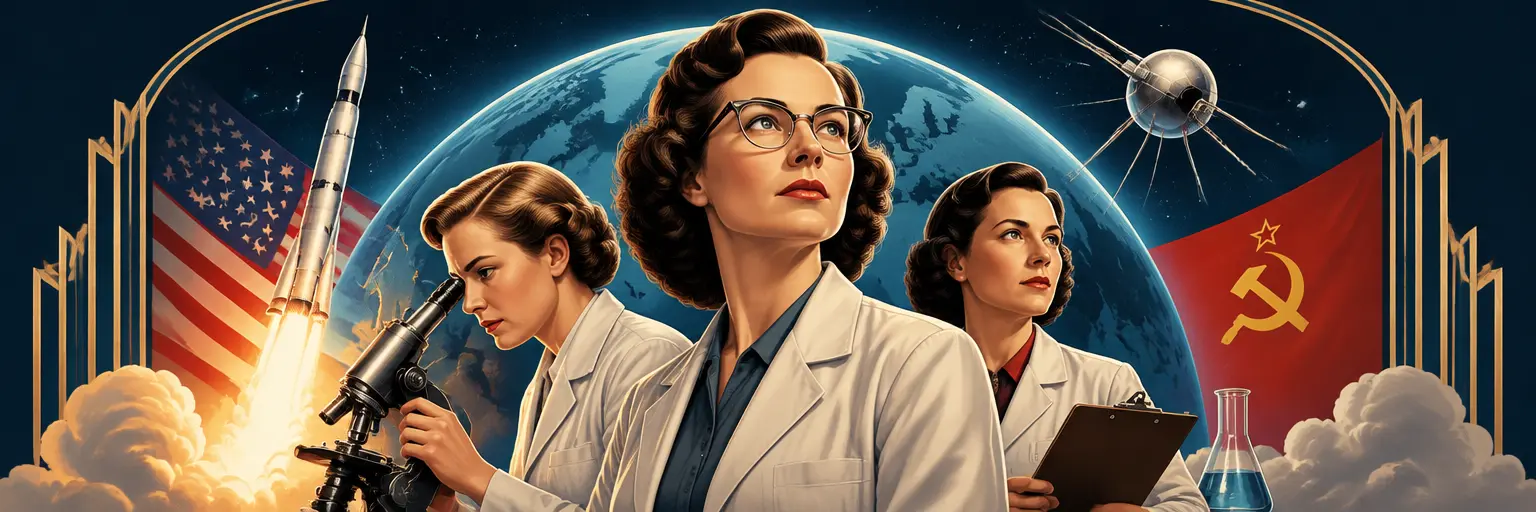
During the tense decades of the Cold War and Space Race, science became a geopolitical battleground—and women were quietly rewriting its rules. 🌍🚀 While history often spotlighted male astronauts and generals, brilliant female scientists, mathematicians, and engineers made critical contributions to rocketry, nuclear physics, computing, and aerospace medicine. From calculating orbital trajectories to designing life-support systems, these pioneers worked behind the scenes in labs, observatories, and mission control, often without credit or equal pay. Their stories reveal a fascinating paradox: even as nations raced for the stars, women struggled for a seat at the table. This unique era saw both breakthroughs in technology and quiet revolutions in gender norms, as women like Katherine Johnson, Mary Sherman Morgan, and Valentina Tereshkova broke barriers that echoed far beyond the launchpad. Explore how the urgency of the space age inadvertently accelerated women’s entry into STEM fields, challenged stereotypes, and set the stage for modern science.
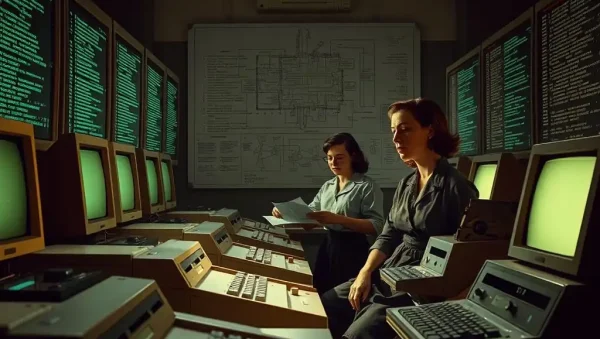
🌟 Discover the trailblazing women programmers of the Cold War era, whose ingenuity and resilience in writing Cold War code helped shape…
Read article
🌟 Discover hidden narratives of women in Cold War science as newly uncovered archives reveal their groundbreaking contributions, challenging stereotypes and inspiring…
Read article
🔍 Discover the hidden stories behind Women’s Cold War scientific secrets, showcasing pioneering women whose groundbreaking contributions shaped history. This article celebrates…
Read article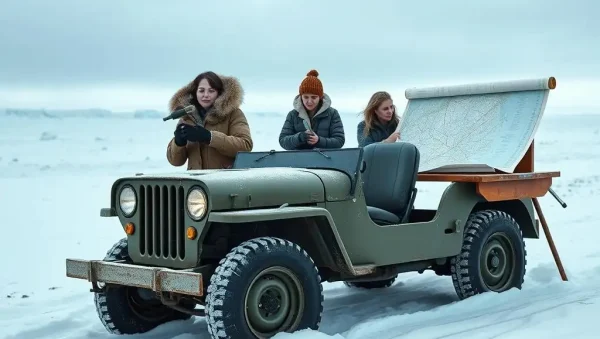
🌍 Women cartographers and geoscientists played crucial roles in Cold War exploration, pioneering uncharted territories and expanding scientific frontiers. Their contributions challenged…
Read article
🌟 Discover how women scientists in atomic energy broke barriers during Cold War tensions, pioneering groundbreaking research amidst gendered challenges, and inspiring…
Read article
🌟 Discover how women astronomers in the space race challenged gender dynamics, making groundbreaking contributions to celestial mechanics. Their perseverance and achievements…
Read article
🌟 Discover the remarkable female mathematicians of the Cold War era whose groundbreaking work in mathematics and cryptography reshaped history. Their stories,…
Read articleThe Cold War and Space Race (1947–1991) were not just geopolitical battles—they were scientific accelerators that opened unexpected doors for women. As the United States and the Soviet Union raced to dominate space, weapons, and medicine, governments desperately needed brainpower. This desperate demand cracked open male-dominated laboratories, allowing brilliant women to compute trajectories, design rocket components, and pioneer aerospace medicine. On this page, we explore how these pioneering figures navigated espionage, secrecy, and sexism, turning crisis into career breakthroughs. Discover the hidden heroes whose work launched satellites, saved cosmonauts, and reshaped modern science forever.
Before digital computers, "human computers" calculated everything—and most were women. At NASA’s Jet Propulsion Laboratory and Langley Research Center, female mathematicians like Katherine Johnson and Mary Jackson manually verified orbital equations during the Mercury and Apollo missions. They worked behind classified walls, often without credit, yet their double-checking prevented catastrophic failures. These women mastered slide rules, logarithmic tables, and early punch-card machines, making them indispensable to military and civilian space programs.
Meanwhile, in the Soviet Union, women like Tatiana Mavrina calculated ballistic missile trajectories under strict KGB oversight. Their work was invisible to the public, but their precision ensured that Sputnik and Vostok launches succeeded. Interestingly, many of these computers were African American or ethnic minorities, facing both racial segregation and gender bias. Despite earning less pay and being barred from engineering titles, they produced the mathematical backbone of the Space Race. Their story highlights how necessity, not equality, drove integration.
Surviving spaceflight required understanding how zero gravity, radiation, and isolation affect the human body. Women scientists led this emerging field. Dr. Patricia Cowings, for example, developed autogenic feedback training to combat space motion sickness—a technique later used on Space Shuttle missions. During the Cold War, her research was funded by secret military contracts, as both superpowers feared losing pilots to physiological breakdowns. Her work bridged neurology, psychology, and bioengineering, establishing protocols still used today.
On the Soviet side, Dr. Valentina Ponomaryova trained as a cosmonaut and researched vestibular disorders, while Dr. Galina Porokhnyak studied the effects of cosmic radiation on cell regeneration. These women published classified reports that shaped international safety standards. However, they rarely received medals or public recognition, and many had to publish under male pseudonyms. Their resilience turned clinical trials and animal testing into life-saving innovations, proving that medical research is as critical to space exploration as rocket fuel.
The nuclear arms race demanded explosive expertise—and female chemists delivered. Dr. Chien-Shiung Wu, though Chinese-American, worked on the Manhattan Project and later experimentally disproved the law of conservation of parity, a Nobel-worthy achievement that her male colleague alone received credit for. During the Cold War, Wu and others like Joan Maie Hinton (a Canadian physicist) toiled in underground labs, analyzing plutonium and uranium isotopes. Their work fueled both weapons and nuclear energy, making them silent pillars of national security.
In the USSR, Dr. Zinaida Yershova led radiochemical research on radioactive isotopes used in reactors and medical tracers. These women navigated intense state surveillance, knowing that any error could mean espionage charges. They also pioneered methods for disposing of nuclear waste, a legacy that still protects ecosystems today. Their stories expose the ethical dilemma of Cold War science: brilliant minds, both patriotic and reluctant, contributed to the potential annihilation of humanity while sincerely striving for peace through deterrence.
The Cold War’s intelligence war was fought in binary code, and women cryptographers were unsung heroes. At the National Security Agency, women like Agnes Driscoll broke Soviet military ciphers, while Elizebeth Smith Friedman cracked smuggling codes that exposed spy rings. Their work in early computing—using vacuum tube machines and punch tape—laid the foundation for modern cybersecurity. As tensions escalated, these codebreakers worked 24/7 shifts, their identities hidden behind "Top Secret" clearances, yet their successes shortened conflicts and saved lives.
Simultaneously, in the UK, Polish-British mathematician Irena Duberly helped develop Colossus, the world’s first programmable electronic computer, to decrypt Nazi messages—a skill repurposed for Soviet intercepts. These women mastered assembly language and Boolean logic before modern programming existed. Their achievements were declassified only decades later, and many never told their families. Today, historians recognize them as the first generation of female software engineers, proving that critical thinking and neural persistence, not physical strength, define military intelligence.
Space missions needed accurate weather and solar activity predictions, a niche where female geophysicists shone. Dr. Margarita Santana (at NOAA) developed solar flare detection algorithms used to protect satellites, while Dr. Lois J. Capps tracked upper-atmospheric winds that affected missile trajectories. Their data fusion of atmospheric chemistry, magnetism, and computer modeling created the field of "space weather." During the Cuban Missile Crisis, their forecasts determined safe launch windows for both reconnaissance flights and potential ICBMs—a tense, covert responsibility.
In the Soviet Union, female meteorologists like Klara Apotekar pioneered ice forecasting for Arctic military bases. Their research on electromagnetic pulses and solar storms helped design shielded electronics used in early cosmonaut capsules. These women balanced scientific rigor with political pressure to "predict favorable outcomes" for propaganda. Yet their honest data saved crews from radiation storms. Their work eventually evolved into civil environmental science, monitoring ozone depletion and climate change—a peaceful legacy from a warlike era.
Note: This subcategory also covers women who worked in secret research facilities, such as the Hanford Site or Chelyabinsk-40, where health physics and radiation biology became female-dominated roles. For deep dives, explore linked biographies on individual pioneers.
The urgent manpower shortage in defense, space, and intelligence pushed organizations to overlook gender biases. Governments offered accelerated training and higher pay to meet deadlines. Women proved equally capable, and though barriers persisted, the crisis created unprecedented hiring windows—especially for computational and medical roles seen as "supportive" rather than leadership positions.
Yes, a few, like British physicist Joan Hinton, moved to China after being horrified by atomic bomb use. More famously, Soviet scientist Lyudmila Trubetskaya allegedly shared nuclear secrets, though evidence remains disputed. Most women, however, remained loyal to their nations, believing their scientific advancements justified secrecy.
Women were routinely denied senior titles, promotions, and patents. For example, Chien-Shiung Wu’s Nobel-worthy experiment was recognized only in her male colleague’s award. Many had to publish under male pseudonyms or accept lower pay. Their contributions were often classified, blocking external recognition, and internal reviews rarely credited them publicly.
They developed human-rated spacecraft life support systems, inertial navigation algorithms, early error-correcting codes, and telemetry formatting. In medicine, they created anti-nausea training devices and radiation dosimetry standards. Their computational methods directly evolved into modern programming languages and real-time flight software.
Explore declassified archives at the National Archives, Smithsonian, or Roscosmos official histories. Read biographies like "Hidden Figures" or "The Codebreakers." Support organizations such as the Association for Women in Science (AWIS) or the IEEE Women in Engineering. Consider sponsoring a memorial scholarship in their names at university aerospace departments.