Understanding the Current Challenges for Women in STEM
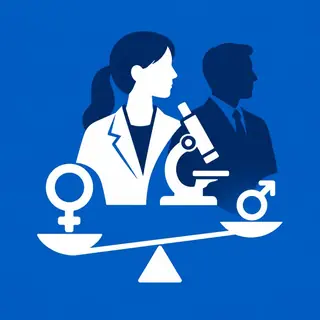
Despite remarkable progress in recent decades, women remain underrepresented in science, technology, engineering, and mathematics (STEM) fields. This subcategory explores the persistent barriers—from systemic bias and pay gaps to workplace culture and work-life integration—that continue to shape women's experiences today. By examining these contemporary issues, we aim to provide context for the historical struggles documented on WomenInScienceHistory.com, while offering actionable insights for creating more inclusive scientific communities. Below, we break down the most pressing challenges facing women in STEM in the 2020s, with a focus on evidence-based analysis and real-world impact.
🔬 The Leaky Pipeline and Attrition Rates
The "leaky pipeline" metaphor describes how women progressively drop out of STEM at every educational and career transition point—from high school to graduate school to tenured positions. Recent NSF data shows that women earn 59% of bachelor's degrees in biology but only 38% of engineering doctorates. This attrition is not due to lack of ability but rather to cumulative disadvantage, including implicit bias in hiring and evaluation, and a lack of role models at senior levels. For women of color and those from marginalized backgrounds, these rates are even steeper, often due to compounded microaggressions and exclusion from informal networks.
Addressing this challenge requires structural changes, not just individual resilience. Universities and research institutions are increasingly adopting "mentorship mapping" and "sponsorship programs" that proactively connect junior women with senior advocates. Additionally, transparent promotion criteria and family-friendly leave policies have shown promise in retaining women through the crucial early-career window. Understanding these attrition points is essential for any historical narrative, as it reveals why so many brilliant female scientists of the past had to pivot to teaching or industry roles despite their qualifications.
💼 Gender Pay Gap and Funding Disparities
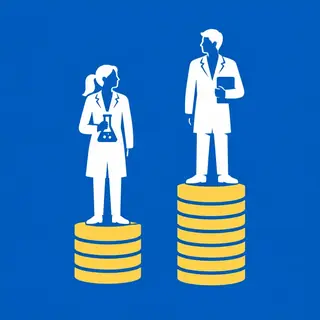
Even with comparable education and publication records, women in STEM earn on average 82 cents for every dollar earned by men, according to a 2023 report from the American Association of University Women. This gap is widest in engineering and computer science, where women earn up to 20% less at the mid-career level. Compounding this, National Institutes of Health (NIH) data reveals that female principal investigators receive fewer and smaller research grants than male counterparts, even when controlling for citation impact and prior funding history. This financial disadvantage directly impacts laboratory resources, graduate student stipends, and career trajectory.
These disparities are not merely statistical anomalies—they reflect systemic priorities that undervalue "feminized" research areas like education science or nursing informatics compared to "masculine" fields like artificial intelligence or aerospace. To combat this, some institutions now mandate salary audits and publish anonymized pay scales. Furthermore, grant review committees are being trained to recognize and counteract bias in peer review. For women scientists, understanding these patterns is critical for negotiation—studies show that women who negotiate their initial salary receive increases at rates similar to men, but they are significantly less likely to ask without structured coaching.
🧠 Implicit Bias and Workplace Culture
Implicit bias—the unconscious assumptions we all carry—manifests in subtle but damaging ways in STEM workplaces. A landmark Yale study demonstrated that both male and female faculty rated hypothetical male applicants as significantly more competent and hireable than identical female applicants, and offered them higher starting salaries. In daily practice, this means women are interrupted more in meetings, asked to take on more "housekeeping" tasks like note-taking or serving on low-visibility committees, and receive less credit for collaborative work. A 2022 survey of 3,000 STEM professionals found that 62% of women reported experiencing at least one instance of gender-based microaggression in the past year, compared to 19% of men.
Workplace culture often demands "masculine" norms—such as self-promotion, aggressive debate, and full-time on-site presence—which can alienate women without explicitly discriminating. Many organizations are now implementing "bystander intervention training" to combat everyday exclusionary behavior. Similarly, "hybrid work policies" have proven particularly beneficial for women, offering flexibility without perceived commitment penalties. However, cultural change requires consistent leadership and accountability. Without addressing these subtle biases, even well-designed diversity programs will fail, as women continue to report feeling invisible or undervalued in collaborative settings.
🤱 Work-Life Integration and Parenthood Penalty
For women in STEM, the "parenthood penalty" is particularly pronounced. Research from the Proceedings of the National Academy of Sciences shows that having children reduces a woman's perceived competence and commitment in scientific roles, while motherhood is associated with lower performance ratings and fewer advancement opportunities. Conversely, fatherhood often confers a "parenthood bonus," increasing men's perceived reliability and leadership potential. This bias directly affects work-life integration, as women are disproportionately expected to manage childcare and eldercare, yet institutions often lack paid parental leave, on-site childcare, or tenure-clock stoppage policies.
Structural solutions include "dual-career hiring packages" that accommodate both partners' employment, and "family-friendly meeting times" that respect school hours. Some universities now offer "mid-tenure reviews" that account for caregiving interruptions, and European institutions model "quiet flex hours" for focused research. However, these policies remain inconsistent across institutions. For women navigating STEM careers, building networks of fellow parents and negotiating flexible schedules early in job offers is crucial. Additionally, shifting cultural narratives—so that taking parental leave is not seen as career suicide—requires visible male allies to model equal caregiving responsibilities.
📉 Retention in Senior Leadership and Executive Roles
While the pipeline has improved at entry-level, women remain startlingly absent from senior STEM leadership. Women hold just 11% of Fortune 500 technology executive positions, and only 6% of STEM department head roles at R1 universities. This phenomenon is often described as the "broken rung"—for every 100 men promoted to manager, only 72 women are promoted, and this gap widens for women of color. The barriers at senior levels are not just about missing qualifications but about "confidence tax" and exclusion from "old boys' networks" that shape succession planning. Women also report facing greater scrutiny for "managerial assertiveness," encountering a double-bind where they must be both likable and competent, a standard not applied to male leaders.
Organizations are beginning to require "diverse slates" for every executive search, and "executive sponsorship" programs that pair senior leaders with high-potential women have shown measurable success. Additionally, establishing clear pathways to leadership through defined competencies (rather than "fit") helps reduce bias. For women themselves, understanding the "career lattice" rather than linear promotion can open unexpected opportunities. However, systemic change is needed at the board level, where mandated gender quotas (as seen in Norway and Germany) have accelerated progress. This historical perspective matters because many pioneering women scientists were denied leadership roles despite exceptional achievements—a legacy that persists today.
🚀 Emerging Technologies and the Future of STEM Equity
As artificial intelligence, biotechnology, and climate engineering reshape STEM, new gendered challenges are emerging. The AI industry exhibits a severe gender gap—only 18% of authors at leading AI conferences are women, and a 2023 UNESCO report warned that AI systems built on biased data are amplifying gender stereotypes. Similarly, the rise of gig-economy STEM work has led to precarious employment without benefits or advancement structures, disproportionately affecting women. Conversely, emerging fields like synthetic biology and sustainable engineering offer opportunities to "reset" norms, as they are still forming their cultures. However, women must be included in these technologies' design and governance from the outset, or risk encoding existing discriminations into systems that will shape decades of future work.
To capitalize on these opportunities, STEM pedagogy must integrate ethical reasoning and inclusive design—skills that are often stereotyped as "soft" but are now critical in tech development. Educational efforts should also include "unconscious bias training" for AI developers and "algorithmic auditing" to test for discriminatory outcomes. For individual women, upskilling in data science and digital literacy can make them indispensable in new fields. At the policy level, "tech equity audits" should be mandatory for federally funded research, ensuring that emerging technologies do not perpetuate historical exclusions. Without proactive intervention, the next generation of STEM could replicate the very challenges we seek to overcome.
Frequently Asked Questions
What is the most significant challenge women in STEM face today?
Implicit bias remains the most pervasive challenge, impacting hiring, promotion, funding, and daily interactions. It manifests as women being interrupted more, receiving less credit for identical work, and facing stricter competence standards than men. This bias compounds other issues like the pay gap and leadership invisibility, making it the root cause of many systemic inequities.
How does motherhood specifically affect women's STEM careers?
Motherhood triggers a "parenthood penalty," where women are perceived as less committed, less competent, and less deserving of advancement. Studies show mothers receive fewer interview callbacks and lower performance ratings compared to fathers, who often see a "bonus" in perceptions of stability and leadership potential. This penalty is particularly acute in research-intensive roles with inflexible timelines.
Are there STEM fields where women are now the majority?
Yes, women outnumber men in several health-related and social science fields, including biomedical sciences, nursing, veterinary medicine, and psychology. However, even in these fields, women remain underrepresented in leadership roles and face pay gaps of 10-15%. Moreover, the most lucrative tech and engineering specialties still show significant male dominance at all levels.
What can academic institutions do to improve retention of women in STEM?
Institutions should implement transparent promotion criteria, provide dedicated sponsorship programs, offer family-friendly policies like tenure-clock stoppage and on-site childcare, and conduct regular pay and workload audits. Additionally, establishing diverse search committees and requiring diverse candidate slates for faculty and leadership positions helps disrupt homogenous hiring patterns.
How can individual women advocate for themselves in STEM workplaces?
Women can benefit from structured negotiation coaching, tracking their achievements against public benchmarks, and seeking out external boards or committees for visibility. It's also vital to build strong peer networks for mutual support and to document microaggressions calmly. Importantly, women should prioritize legal protections—knowing their rights under anti-discrimination laws, including equal pay provisions, empowers self-advocacy.