The Data Deficit: Why We Need Better Metrics for Diversity in Global Science
🌟 Recognizing the vital role women have played in science, the article emphasizes the urgent need for improved women in science metrics…
Read article
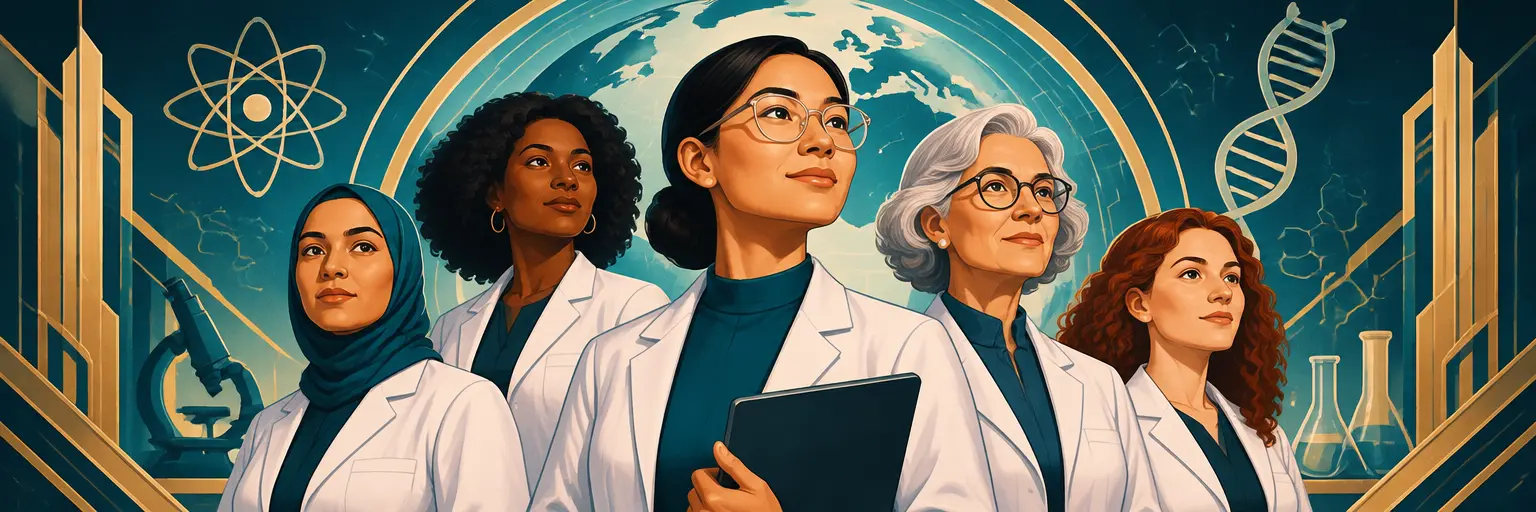
In an era where innovation depends on fresh perspectives, Diversity & Inclusion in Science is not just a moral imperative—it is a catalyst for breakthrough discoveries. At WomenInScienceHistory.com, we explore how systemic barriers have historically excluded brilliant minds, and why dismantling those barriers today enriches every field, from medicine to astrophysics. 🌍🔬 By amplifying underrepresented voices, we unlock creative problem-solving, reduce bias in research, and ensure that scientific progress serves all of humanity. Our insights connect past struggles to present movements, showing how inclusive labs and equitable policies lead to stronger, more replicable results. Whether you are an educator, researcher, or advocate, understanding these dynamics is key to building a future where talent thrives regardless of gender, race, or background. Join us in celebrating the pioneers who paved the way—and the changemakers who are redefining what science looks like today. 🚀✨

🌟 Recognizing the vital role women have played in science, the article emphasizes the urgent need for improved women in science metrics…
Read article
🌟 Embracing diversity in healthcare is crucial, as "Diverse healthcare improves patient outcomes" by ensuring personalized treatment and reducing disparities. Highlighting women…
Read article
🌟 Women scientists face significant parental leave challenges that hinder career progression; supporting parents in demanding research fields is essential to fostering…
Read article
🌟 An inclusive scientific community benefits women by fostering diverse perspectives, breaking barriers, and ensuring equitable recognition. Celebrating women in science not…
Read article
🌟 Excluding diverse women in science hampers innovation and progress, ultimately weakening our economy. Embracing their unique perspectives and contributions is essential…
Read article
🌟 Achieving fairer scientific peer review is crucial to recognizing women's groundbreaking contributions and overcoming biases in scholarly publishing. By addressing these…
Read article
🌍 Women’s challenges in international scientific collaboration highlight persistent barriers faced by female scientists worldwide. Addressing these issues is essential to fostering…
Read articleAt WomenInScienceHistory.com, our Diversity & Inclusion in Science subcategory delves into the systemic barriers, cultural shifts, and groundbreaking contributions of women and underrepresented groups across scientific disciplines. This section connects historical struggles to modern movements, showcasing how inclusive practices have accelerated innovation. Expect in-depth analyses of policy changes, personal narratives, intersectional challenges, and actionable insights for fostering equitable STEM environments. Whether you’re an educator, researcher, or advocate, these resources illuminate the transformative power of diversity—while cementing the legacies of trailblazing women who defied the odds.
Explore the lives of scientific women whose work was erased or minimized due to gender and racial bias. From Dorothy Vaughan’s NASA contributions to Chien-Shiung Wu’s parity experiments, this section highlights how systemic exclusion shaped their careers. Learn how their perseverance not only advanced science but also laid groundwork for future inclusion policies. These profiles emphasize that talent knows no gender, yet opportunity often did—and still does.
Each biography includes primary-source quotes, archival photos, and timelines of institutional resistance. Readers will uncover lesser-known figures like Ruby Payne-Scott, a radio astronomy pioneer forced to resign upon marriage, or Alice Ball, whose treatment for leprosy was credited to a white male colleague. By exposing these historical injustices, we contextualize contemporary diversity movements, proving that representation isn’t merely symbolic—it directly impacts discovery and public trust in science.
This facet examines how overlapping identities—race, ethnicity, socioeconomic status, and disability—compound exclusion in STEM fields. For instance, Black women faced double discrimination compared to white female colleagues, as documented in the stories of Katherine Johnson and Mary Jackson. Meanwhile, working-class scientists like Annie Jump Cannon had to self-fund their education. This section unpacks the layered nature of bias and why single-axis approaches to equality often fall short.
We also spotlight contemporary examples, such as transgender scientists and disabled researchers, whose contributions challenge ableist and cisnormative assumptions. By analyzing policy documents, funding disparities, and mentorship gaps, we provide a roadmap for creating genuinely inclusive laboratories. Readers will gain tools to audit their own environments, from hiring practices to lab culture, ensuring that intersectional awareness becomes actionable change rather than theoretical jargon.
Scientific inclusion varies dramatically across cultures and political systems. This section compares the progress of women in science in Nordic countries versus developing nations, highlighting unique challenges like religious constraints or lack of childcare infrastructure. We feature stories of scientists from Latin America, Africa, Asia, and the Middle East—such as Mexican physicist Ana María Cetto or Iranian mathematician Maryam Mirzakhani—whose successes defy stereotypes and inspire local policy reforms.
Additionally, we examine how colonial histories shaped modern scientific hierarchies, excluding indigenous knowledge systems. By showcasing decolonizing initiatives in research partnerships, we argue that true diversity requires valuing multiple epistemologies. Expect data-driven analyses hiring rates, publication patterns, and grant allocations, alongside personal testimonies that humanize statistics. This global lens helps readers understand that inclusion isn’t a Western luxury but a universal scientific imperative.
Diversity begins in classrooms, where biases in textbooks and teaching methods deter girls and minority students from STEM pathways. This section explores evidence-based strategies for inclusive pedagogy—from using female-led lab demonstrations to incorporating culturally relevant examples. We review successful programs like Black Girls Code and the L’Oréal-UNESCO For Women in Science awards, offering replicable models for schools and universities.
We also tackle the “leaky pipeline” metaphor by analyzing interventions at each career stage: primary school encouragement, mentorship during PhDs, and retention policies for mid-career researchers. Practical guides include checklists for bias-free hiring, family-friendly conference policies, and transparent salary structures. By integrating history into these recommendations—showing how past exclusions created current inequities—we make a compelling case for systemic not individual fixes. The goal: transform STEM education from a gatekeeping institution into a welcoming ecosystem.
Beyond education, this section focuses on professional environments where microaggressions, unequal pay, and caregiving penalties persist. Drawing from case studies at tech giants, universities, and startups, we outline evidence-based interventions: blind review processes, flexible tenure clocks, and ombudsperson offices. We also highlight the role of male allies and bystander training in shifting organizational culture.
Data from the National Science Foundation shows that women hold only 29% of R&D jobs globally—a figure static for decades. We dissect why diversity training often fails and champion structural changes like salary ban policies and parental leave parity. Interviews with HR leaders and equity officers provide insider perspectives, while cautionary tales of backlash remind us that transformation is gradual. Ultimately, we advocate for measurable goals with accountability, turning diversity pledges into daily practices that retain and promote underrepresented talent.
Diversity refers to the presence of varied identities—such as gender, race, and ability—within a scientific workforce. Inclusion, however, concerns how those individuals are treated, valued, and integrated into decision-making. A lab can be diverse yet exclusionary if marginalized members lack voice or fair opportunities. Our content examines both, emphasizing that representation must be paired with equitable culture to achieve genuine scientific innovation and retention.
Their resilience established precedents: refusing to be silenced, they created networks, published under ambiguous initials, and challenged discriminatory laws. For instance, Barbara McClintock’s Nobel win normalized women as theorists, while Alice Hamilton’s early occupational health activism proved women could lead applied sciences. These actions inspired later movements like 1970s feminist science critiques, leading to Title IX and institutional diversity offices.
Use diverse case studies, address implicit bias in grading, and employ active learning that gives all students speaking time. Incorporate role models from underrepresented groups and allow flexible assignment formats. Schools should audit textbooks for stereotypes and provide implicit bias training for educators. Additionally, celebrate failures as learning opportunities, which counteracts the perfectionism that often discourages marginalized students.
Intersectionality reveals that a Black woman faces unique barriers that neither a white woman nor a Black man experiences, such as stereotypes about both ability and assertiveness. Ignoring these overlaps leads to one-size-fits-all policies that fail. For example, maternity leave policies might not address childcare burdens for single parents. Recognizing intersecting identities ensures no one is left behind, fostering truly equitable environments.
Start by mentoring or sponsoring early-career scientists from underrepresented groups—even small acts like reviewing their papers or advocating for their presentations matter. Amplify their work on social media, cite them in your research, and challenge exclusionary language in meetings. Join or form affinity groups, and collect data on local disparities to present to leadership. Grassroots action, though modest, compounds into institutional change.