
Decoding DNA's Language: The Unsung Heroines of Molecular Biochemistry

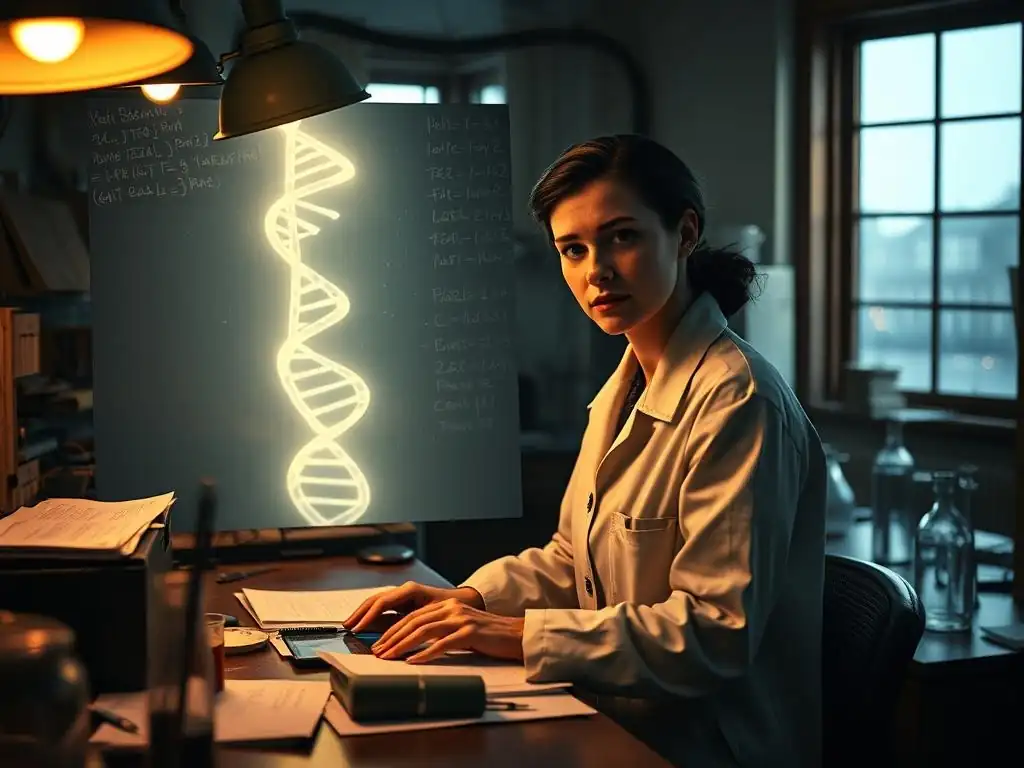
Welcome to WomenInScienceHistory.com! Dive into the untold stories of brilliant minds who shaped the scientific landscape. Are you ready to uncover the pivotal, yet often overlooked, contributions of women in science? Today, we're decoding the secrets of molecular biochemistry, focusing on the groundbreaking work of unsung heroines. Prepare to be captivated by the story of Rosalind Franklin’s DNA work and the intricate dance of discovery that revolutionized our understanding of life itself. What role did she really play in unlocking the secrets of the double helix? Let's explore!
- Introduction: Women Pioneers and the Double Helix
- Rosalind Franklin's DNA Work: A Pivotal Contribution
- Beyond Rosalind Franklin: Other Women Shaping DNA Research
- The Challenges Faced by Women in Molecular Biochemistry
- The Impact of Women's Discoveries on Modern Biochemistry
- The Legacy of Rosalind Franklin and Her Contemporaries
- Further Reading on Women in DNA Research
-
Frequently Asked Questions
- What was Rosalind Franklin's primary contribution to understanding DNA's structure?
- What challenges did female scientists like Rosalind Franklin face in the mid-20th century?
- Besides Rosalind Franklin, who are some other "unsung heroines" highlighted on WomenInScienceHistory.com?
- How does WomenInScienceHistory.com aim to inspire future generations?
- Why is it important to recognize Rosalind Franklin's DNA work specifically?
- Final Reflection: Honoring the Silent Architects of Discovery
- Empower Change: Advocate for Women in Science!
Introduction: Women Pioneers and the Double Helix
Celebrating Women in Biochemistry: A Historical Perspective
The history of biochemistry, like many scientific disciplines, has often been told through a predominantly male lens, overlooking the significant and often foundational contributions of women. From the early 20th century, a time marked by profound scientific breakthroughs, women faced immense societal and institutional barriers, including limited access to education, research facilities, and recognition. Despite these formidable challenges, a dedicated cohort of female scientists persevered, making discoveries that irrevocably shaped our understanding of life itself. Their narratives, often relegated to footnotes or completely omitted, are crucial for a comprehensive and accurate portrayal of scientific progress.
These pioneering women in biochemistry not only pushed the boundaries of knowledge but also paved the way for future generations. Their work laid critical groundwork in areas ranging from enzyme kinetics to metabolic pathways and, most notably, the very blueprint of life: DNA. By bringing their stories to light, we gain a fuller appreciation of the collaborative and diverse human endeavor that science truly is, highlighting how different perspectives enrich discovery and innovation.
The Central Role of DNA in Molecular Biology
Deoxyribonucleic acid, or DNA, stands as the cornerstone of molecular biology, holding the genetic instructions essential for the development, functioning, growth, and reproduction of all known organisms and many viruses. Its discovery and the subsequent elucidation of its intricate structure revolutionized biology, shifting it from a descriptive science to one capable of explaining life at a molecular level. The double helix model, established in the mid-20th century, provided a tangible framework for understanding heredity, genetic mutation, and the mechanisms of life itself.
Understanding DNA structure and function is crucial for advancing fields like medicine and biotechnology. The insights derived from DNA research have led to breakthroughs in disease diagnosis, drug development, and the burgeoning field of genetic engineering. From identifying genes responsible for inherited disorders to designing novel therapeutic interventions, the detailed knowledge of DNA’s language has unlocked unprecedented capabilities, transforming healthcare and our fundamental understanding of biological processes.
Rosalind Franklin's DNA Work: A Pivotal Contribution
Unveiling the X-ray Diffraction Images: Franklin's Key Discovery
Rosalind Franklin, a brilliant physical chemist, played an indispensable role in revealing the structure of DNA through her meticulous X-ray diffraction studies. Working at King's College London in the early 1950s, Franklin, alongside her doctoral student Raymond Gosling, produced exceptionally clear X-ray diffraction patterns of DNA fibers.
Her rigorous approach to crystallography and her precise experimental techniques yielded data of unparalleled quality, far surpassing any previous attempts. She identified two forms of DNA, 'A' and 'B', and her detailed analysis of the 'B' form's diffraction patterns provided critical insights into its helical nature, the spacing of its base pairs, and its phosphate backbone.
Franklin's dedication to scientific precision meant she was cautious about drawing premature conclusions, meticulously analyzing every detail before proposing a definitive model. Her quantitative measurements from these X-ray patterns, such as the 3.4 Ångstrom spacing between base pairs and the 34 Ångstrom pitch of the helix, were foundational. These specific numerical values, derived directly from her photographic evidence, were essential pieces of the puzzle that ultimately led to the correct double helix model. Her painstaking work meticulously documented the physical characteristics of DNA, setting the stage for structural elucidation.
Photo 51: The Image that Changed Molecular Biology
Among Rosalind Franklin’s DNA work, "Photo 51" stands out as perhaps the most iconic and consequential image in molecular biology. This specific X-ray diffraction photograph of the 'B' form of DNA, taken by Franklin and Gosling in 1952, provided compelling visual evidence of DNA's helical structure.
The distinctive X-shaped pattern, characteristic of a helix, along with the strong reflections indicating the repeating units along the fiber, offered irrefutable proof of a helical molecule with specific dimensions. X-ray diffraction involves bombarding a crystallized substance with X-rays and analyzing the resulting diffraction pattern to determine the arrangement of atoms within the crystal.
The clarity and detail of Photo 51 were remarkable for its time, providing the most direct visual evidence available of DNA's structure. Unbeknownst to Franklin, her data, including Photo 51, was shared with James Watson and Francis Crick via Maurice Wilkins, without her explicit permission. This image, along with Franklin's detailed unpublished report summarizing her findings, proved crucial for Watson and Crick in constructing their famous double helix model in 1953. The insight gained from Rosalind Franklin’s DNA work, particularly from Photo 51, was pivotal in confirming the helical nature and key dimensions that underpinned their proposed structure.
Beyond Rosalind Franklin: Other Women Shaping DNA Research
Esther Lederberg: Genetic Recombination and Lambda Phage
Esther Lederberg, a pioneering microbiologist, made groundbreaking contributions to bacterial genetics in the mid-20th century, though her work often received less recognition than that of her male contemporaries. In 1951, she developed the replica plating technique, a simple yet revolutionary method that allowed for the efficient transfer of bacterial colonies from one agar plate to another, while maintaining their spatial arrangement. This technique proved indispensable for isolating and studying bacterial mutants, particularly those resistant to antibiotics, and for demonstrating spontaneous mutations. It became a standard procedure in microbial genetics laboratories worldwide.
Beyond replica plating, Lederberg also made significant discoveries regarding bacterial viruses. She was the first to isolate and characterize the lambda phage, a bacteriophage that infects Escherichia coli. Her work on lambda phage was critical for understanding lysogeny—a process where a phage integrates its DNA into the host bacterium's genome—and genetic recombination in bacteria. These discoveries laid essential groundwork for the nascent field of molecular biology, providing tools and insights into how genetic material is exchanged and integrated within organisms, which continues to be relevant for understanding gene transfer mechanisms.
Barbara McClintock: Transposable Elements and the Dynamic Genome
Barbara McClintock, a brilliant cytogeneticist, revolutionized the understanding of genetics with her discovery of "jumping genes," or transposable elements. Working primarily with maize (corn) in the 1940s and 1950s, she meticulously observed patterns of kernel coloration that could not be explained by then-current Mendelian genetics. Through painstaking microscopic analysis of maize chromosomes and genetic crosses, she deduced that certain genetic elements could move from one position on a chromosome to another, or even between chromosomes. She initially referred to these as "controlling elements."
McClintock's findings, published in the early 1950s, were met with skepticism and largely ignored by the scientific community for decades, as the prevailing view was that genes occupied fixed positions on chromosomes. It wasn't until the late 1970s and early 1980s, with the advent of molecular biology techniques, that transposable elements were confirmed in bacteria and other organisms, validating her visionary work.
She was finally awarded the Nobel Prize in Physiology or Medicine in 1983, over thirty years after her initial discoveries, for her profound insight into the dynamic nature of the genome, demonstrating that DNA is not a static blueprint but a fluid and adaptable entity.
Dorothy Hodgkin: Pioneering X-ray Crystallographer and Nobel Laureate
Dorothy Hodgkin was a preeminent British chemist who pioneered the use of X-ray crystallography to determine the complex three-dimensional structures of biomolecules. Her work, which involved painstaking calculations before the advent of modern computers, was instrumental in understanding the function of these molecules. In 1945, she successfully elucidated the structure of penicillin, a feat that greatly aided its pharmaceutical production and understanding. This was followed by her determination of the structure of vitamin B12 in 1955, a molecule with an exceptionally complex arrangement of atoms, for which she received the Nobel Prize in Chemistry in 1964.
Hodgkin's methodical approach and profound insights into crystallography were foundational, much like the precision seen in Rosalind Franklin’s DNA work. Her most celebrated achievement, however, was the determination of the structure of insulin in 1969, after decades of dedicated research. This monumental accomplishment provided critical insights into how insulin functions in the body, paving the way for improved treatments for diabetes. Her legacy extends beyond her specific discoveries; she mentored numerous crystallographers and championed the role of science in global health, demonstrating a lifelong commitment to both scientific rigor and humanitarianism.
The Challenges Faced by Women in Molecular Biochemistry
Gender Bias in Scientific Research: Historical Context
Throughout the 20th century, women in scientific research, particularly in fields like molecular biochemistry, faced pervasive gender bias that significantly hindered their careers and recognition. Many talented female scientists were denied access to prestigious research institutions, often relegated to unpaid assistant roles or excluded from essential scientific discussions and collaborations. For instance, at King's College London, Rosalind Franklin was often excluded from the common room where male scientists congregated to discuss their work, limiting informal exchanges crucial for scientific progress. This systemic exclusion meant their contributions were often overlooked, undervalued, or even appropriated by male colleagues.
The prevailing societal expectations of women as primarily homemakers further exacerbated these challenges, creating an environment where a serious scientific career was seen as an anomaly rather than a norm. Women faced a "publish or perish" academic culture without equitable opportunities for authorship, funding, or promotion. This historical context illuminates why foundational work, such as Rosalind Franklin’s DNA work, was not immediately recognized with the same prominence as that of her male counterparts, despite its undeniable scientific merit.
Overcoming Obstacles: Perseverance and Recognition
Despite the systemic barriers, many women in molecular biochemistry demonstrated extraordinary perseverance, continuing their research against formidable odds. Their dedication often meant working longer hours, securing funding through unconventional means, or finding creative ways to continue their studies outside traditional academic structures. For example, Barbara McClintock faced years of skepticism regarding her "jumping gene" theory, yet she continued her meticulous maize research for decades, ultimately proving the validity of her revolutionary concept.
While immediate recognition was often denied, the enduring impact of their scientific contributions eventually led to some overdue acknowledgment. Dorothy Hodgkin received the Nobel Prize for her crystallographic work, albeit after many years of painstaking research. In the case of Rosalind Franklin’s DNA work, full recognition of her pivotal role in DNA structure elucidation largely came posthumously, decades after her death. These stories highlight the importance of actively seeking out and celebrating the "unsung heroines" of science, ensuring that their legacies are properly honored and serve as inspiration for future generations.
Societal expectations and limited access to resources often hindered women's scientific careers.
The Impact of Women's Discoveries on Modern Biochemistry
Advancements in Genetic Engineering and Biotechnology
The foundational discoveries made by women in molecular biochemistry have profoundly impacted modern genetic engineering and biotechnology. The elucidation of DNA's structure, heavily reliant on Rosalind Franklin’s DNA work, provided the essential blueprint for understanding how genetic information is encoded and replicated. This fundamental knowledge directly paved the way for technologies like recombinant DNA, which allows scientists to cut and paste DNA sequences, and gene cloning, enabling the production of specific proteins in large quantities. These techniques are now standard in industries ranging from pharmaceuticals to agriculture.
Furthermore, the understanding of DNA's dynamic nature, championed by Barbara McClintock's work on transposable elements, has informed the development of advanced gene editing tools. While McClintock's initial discoveries were met with skepticism, her insights into mobile genetic elements have provided a conceptual framework for understanding how genes can move and be manipulated. This has ultimately contributed to the conceptual underpinning of revolutionary technologies such as CRISPR-Cas9, which allows for precise editing of genes, holding immense promise for treating genetic diseases and engineering new biological functions.
Contributions to Understanding Human Disease
The groundbreaking work of women in DNA research has been instrumental in advancing our understanding and treatment of human diseases. Rosalind Franklin’s DNA work, by revealing the double helical structure, provided the very basis for understanding how genetic mutations lead to inherited disorders. This structural insight was critical for developing diagnostic tools for conditions like cystic fibrosis, Huntington's disease, and sickle cell anemia, allowing for early detection and genetic counseling. The ability to identify specific genes responsible for diseases stems directly from the knowledge of DNA's precise organization.
Beyond structural insights, the discoveries of women like Dorothy Hodgkin, who determined the structure of insulin, have directly impacted therapeutic development. Her work on insulin's 3D structure was crucial for understanding its function in glucose metabolism and for improving the production of synthetic insulin, revolutionizing diabetes treatment. Similarly, Barbara McClintock's work on transposable elements has provided insights into cancer development, as uncontrolled movement of these elements can lead to oncogene activation or tumor suppressor gene inactivation. Franklin's work laid the foundation for gene editing technologies like CRISPR, while McClintock's work on transposable elements has provided insights into cancer development.
The Legacy of Rosalind Franklin and Her Contemporaries
Inspiring Future Generations of Women in Science
The stories of Rosalind Franklin’s DNA work and her pioneering contemporaries serve as powerful sources of inspiration for future generations of women in science. By highlighting their resilience, intellectual brilliance, and profound scientific contributions, we can dismantle long-standing stereotypes about who can be a scientist. Celebrating these "unsung heroines" provides visible role models, demonstrating that women have always been, and continue to be, at the forefront of scientific discovery, despite systemic barriers. Their narratives encourage young women to pursue careers in STEM fields, showing them that their intellectual curiosity and talent are valued and necessary.
Recognizing the full scope of their achievements helps to correct historical inaccuracies and promotes a more inclusive understanding of scientific progress. For instance, acknowledging Rosalind Franklin's pivotal role in DNA structure elucidation ensures that her legacy is properly honored, not just for her scientific acumen but also for her perseverance in a challenging environment. This comprehensive view of scientific history empowers aspiring female scientists by validating their potential and highlighting the critical importance of diversity in driving innovation and discovery.
Promoting Equity and Inclusion in STEM Fields
The historical challenges faced by women like Rosalind Franklin and her contemporaries underscore the ongoing need to promote equity and inclusion in STEM fields today. Understanding the systemic biases that hindered their careers—from lack of recognition to limited access to resources—provides valuable lessons for creating more equitable scientific environments. Initiatives aimed at increasing female representation in leadership roles, ensuring fair authorship practices, and combating unconscious bias are direct responses to the historical inequities these women experienced.
Recognizing the contributions of these women reinforces the importance of diverse perspectives in scientific advancement. A scientific community that is truly inclusive, embracing individuals from all backgrounds, is better equipped to tackle complex problems and foster creativity. By actively celebrating the legacies of women in biochemistry, we not only pay tribute to their past achievements but also inspire a future where scientific excellence is recognized irrespective of gender, ensuring that all talented individuals have the opportunity to contribute to the advancement of human knowledge.
Further Reading on Women in DNA Research
Frequently Asked Questions
What was Rosalind Franklin's primary contribution to understanding DNA's structure?
Rosalind Franklin's X-ray diffraction images, particularly "Photo 51," provided crucial data for determining the double helix structure of DNA. Her work was essential for Watson and Crick's model.
What challenges did female scientists like Rosalind Franklin face in the mid-20th century?
Women in science often encountered gender bias and limited opportunities in research institutions. Their contributions were sometimes overlooked or attributed to male colleagues.
Besides Rosalind Franklin, who are some other "unsung heroines" highlighted on WomenInScienceHistory.com?
The site features many women, but some examples include Barbara McClintock for her work on transposable elements and Lise Meitner for her contributions to nuclear fission. The goal is to highlight overlooked contributions.
How does WomenInScienceHistory.com aim to inspire future generations?
By showcasing the achievements and struggles of female scientists, the website provides role models and demonstrates that women can succeed in STEM fields. It also aims to correct historical inaccuracies.
Why is it important to recognize Rosalind Franklin's DNA work specifically?
Recognizing Franklin’s work acknowledges the critical role she played in one of the greatest scientific discoveries of the 20th century. It combats the historical erasure of women's contributions and promotes fair recognition.
Final Reflection: Honoring the Silent Architects of Discovery
The intricate dance of molecules, the very blueprint of life, has been unveiled through the relentless efforts of countless scientists. Rosalind Franklin’s DNA work, and the contributions of other women in molecular biochemistry, are not just historical footnotes; they are the foundational pillars upon which our understanding of genetics and disease rests. Their dedication, often overshadowed, continues to fuel breakthroughs in medicine, agriculture, and our comprehension of the human condition.
The impact of these unsung heroines resonates deeply within our cultural and social fabric. Their stories, often silenced or minimized, serve as a potent reminder of the systemic biases that can hinder scientific progress and the critical need for inclusivity in STEM fields. Science and everyday life cannot and should not be separated.
- Rosalind Franklin. This quote encapsulates the profound interconnectedness of scientific discovery and its impact on our daily existence, urging us to recognize the vital role of every contributor, regardless of gender or background.
Let us, therefore, take a moment to reflect on the legacy of Rosalind Franklin and her contemporaries. Consider the countless hours of meticulous work, the unwavering dedication, and the intellectual brilliance that paved the way for our current understanding of DNA.
How can we, in our own lives, champion inclusivity, recognize the contributions of all individuals, and ensure that the silent architects of discovery receive the recognition they so rightfully deserve? Let us strive to create a future where every voice is heard, and every contribution is celebrated, fostering a scientific landscape that truly reflects the diversity and brilliance of humanity.
Empower Change: Advocate for Women in Science!
Thank you for diving into the incredible stories of these pioneering women in molecular biochemistry. You've uncovered a vital piece of history, and now it's time to make sure their contributions continue to inspire future generations.
Here's how you can help:
- Share this article! Help us spread awareness of these unsung heroines by sharing this article with your friends, family, and network.
- Champion women in STEM. Research organizations or charities supporting women in science, and make a donation or pledge volunteer hours to advance equal opportunity and representation.
- Delve Deeper: Explore other fascinating untold stories of groundbreaking women scientists on WomenInScienceHistory.com.
What steps will you take today to honor these legacies and empower women in science for years to come?