
NASA's Human Computers: The Women Whose Calculations Launched America into Space

Welcome to WomenInScienceHistory.com, where we unearth the remarkable stories of women who shaped the scientific landscape. Did you know that before sophisticated computers, human computers were crucial for NASA's success? Dive into the fascinating world of Women Calculating NASA Space Missions, and discover the unsung heroines whose brilliant calculations helped launch America into space. Their dedication and intellect broke barriers and propelled us towards the stars. Ready to learn more about their incredible journey?
- Introduction: Unsung Heroines of the Space Race
- Before Electronic Computers: The Era of Human Calculation
-
NASA's Human Computers: A Profile of Pioneering Women
- Langley Research Center: A Hub for Female Mathematicians
- Katherine Johnson: A Name Synonymous with Precision and Spaceflight
- Dorothy Vaughan: Leading the West Area Computing Unit
- Mary Jackson: Breaking Barriers as NASA's First Black Female Engineer
- Christine Darden: A Leading Expert in Sonic Boom Minimization
- The Crucial Calculations: Ensuring Space Mission Success
- Challenges and Triumphs: Navigating a Male-Dominated Field
- The Transition to Electronic Computing and its Impact
- Legacy and Recognition: Honoring the Human Computers' Contributions
- Conclusion: Celebrating the Women Calculating NASA Space Missions
-
Frequently Asked Questions
- What role did women play in calculating NASA space missions?
- Why were women often hired for these computational roles at NASA?
- What challenges did these women face working at NASA?
- How did the work of these women contribute to the success of NASA's space program?
- How does "WomenInScienceHistory.com" aim to highlight the contributions of these "human computers"?
- Final Reflection: Honoring the Unsung Architects of Space
- Ignite Your Inner Rocket Scientist!
Introduction: Unsung Heroines of the Space Race
The Overlooked Role of Women in Early Space Exploration
For decades, the narrative of the American Space Race primarily highlighted astronauts, engineers, and mission control specialists, often portraying a predominantly male endeavor. While the bravery of the astronauts and the ingenuity of the rocket scientists were undeniable, the foundational work performed by thousands of individuals behind the scenes remained largely unacknowledged. This oversight obscured the critical contributions of a dedicated group whose meticulous efforts made spaceflight possible: the human computers.
These skilled mathematicians, many of whom were women, performed the complex calculations essential for designing aircraft, testing rockets, and charting the trajectories of spacecraft. Their work was the bedrock upon which America's journey to the stars was built, yet their stories were often relegated to the footnotes of history, underscoring a pervasive gender bias that minimized their profound impact on scientific and technological progress.
Women Calculating NASA Space Missions: A Historical Perspective
The term "computer" originally referred to a person who performed mathematical calculations, a role that became increasingly vital in the early 20th century, particularly in fields like aeronautics and ballistics. As the United States embarked on the ambitious quest to send humans into space, the need for precise and rapid calculations escalated dramatically. It was in this environment that women calculating NASA space missions emerged as indispensable assets.
From the National Advisory Committee for Aeronautics (NACA) to its successor, the National Aeronautics and Space Administration (NASA), women were recruited in significant numbers to fill these demanding computational roles. They tackled everything from aerodynamic stresses on aircraft to the complex orbital mechanics required for Project Mercury and the Apollo missions. Their collective expertise and tireless work ensured the accuracy and safety of America's pioneering spaceflights, establishing a legacy of precision that paved the way for future exploration.
Before Electronic Computers: The Era of Human Calculation
The Rise of "Computers" in Scientific Fields
Before the widespread adoption of electronic digital computers, complex scientific and engineering problems relied heavily on human computational power. This era, spanning from the late 19th century through the mid-20th century, saw the establishment of "computing pools" in various research institutions and government agencies. These individuals, often equipped with only slide rules, mechanical calculators, and reams of paper, meticulously processed vast amounts of data and solved intricate equations.
Fields such as astronomy, ballistics, and aeronautics generated an immense demand for these human calculators. For instance, during World War II, the U.S. Army's Ballistic Research Laboratory at Aberdeen Proving Ground employed hundreds of women to compute firing tables for artillery. This demonstrated the efficiency and reliability of organized human computation, setting a precedent for similar operations at facilities like NACA, which would later become NASA.
Women's Entry into Calculating Roles: Opportunities and Limitations
The increasing need for skilled mathematicians, particularly during and after World War II, opened doors for women in scientific roles that had previously been largely inaccessible. Women, often with degrees in mathematics or related sciences, were seen as well-suited for the meticulous and repetitive nature of computational work. Many were hired for these positions due to a shortage of male workers who were serving in the war, and because the roles were sometimes perceived as "clerical" or "less prestigious" than engineering, despite requiring immense intellectual rigor.
While these roles provided unprecedented opportunities for women to contribute to cutting-edge scientific endeavors, they also came with significant limitations. Female computers were frequently paid less than their male counterparts, even when performing identical or more complex tasks. Opportunities for advancement into engineering or management positions were scarce, and in many instances, their work went uncredited, often appearing under the names of male supervisors. Despite these systemic barriers, the influx of women calculating NASA space missions laid the groundwork for their indispensable contributions to the Space Race.
NASA's Human Computers: A Profile of Pioneering Women
Langley Research Center: A Hub for Female Mathematicians
The Langley Memorial Aeronautical Laboratory, the oldest of NASA's field centers, became a crucial hub for human computers, particularly after World War II. Facing an acute shortage of engineers and mathematicians, NACA actively recruited women to perform the complex calculations necessary for aeronautical research, wind tunnel data analysis, and the burgeoning field of rocketry. These women were organized into segregated units, notably the "West Area Computers" composed of African American women and the "East Area Computers" consisting of white women.
Despite the prevailing racial segregation, both groups performed identical, mission-critical work, processing numerical data from extensive tests and experiments. Their calculations were fundamental to understanding aerodynamic principles, designing more efficient aircraft, and later, developing the rockets and spacecraft that would launch America into space. The sheer volume and complexity of the computations performed at Langley underscored the essential role these female mathematicians played in the nation's scientific advancement.
Katherine Johnson: A Name Synonymous with Precision and Spaceflight
Katherine Johnson, born in 1918, demonstrated exceptional mathematical talent from an early age, graduating from high school at 14 and college at 18 with degrees in mathematics and French. After a period as a teacher, she joined the West Area Computing section at Langley in 1953. Her extraordinary analytical skills and meticulous accuracy quickly made her invaluable, particularly as the space program accelerated.
Johnson's most celebrated contribution came during Project Mercury, when astronaut John Glenn specifically requested that she verify the electronic computer's calculations for his orbital flight in 1962. "If she says they're good," Glenn reportedly stated, "then I'm ready to go."
Her manual calculations confirmed the IBM 7090's trajectory, launch window, and emergency backup paths, providing critical assurance for the mission's success. She continued to make vital contributions, including calculations for the Apollo 11 lunar landing mission, charting the trajectory for the lunar module's rendezvous with the command module, cementing her legacy as one of the most impactful women calculating NASA space missions.
Dorothy Vaughan: Leading the West Area Computing Unit
Dorothy Vaughan, born in 1910, was a brilliant mathematician who joined NACA in 1943, initially as a temporary war effort employee. Her exceptional leadership qualities and mathematical prowess led her to become the acting head of the West Area Computing Unit in 1949, making her one of the few African American women to hold a management position at Langley at the time. She officially became the unit's supervisor in 1958.
Vaughan was not only a skilled mathematician but also a visionary leader. Recognizing the impending shift from human computers to electronic machines, she proactively taught herself the FORTRAN programming language and championed its adoption within her unit. She trained her team members in programming, ensuring that they were prepared for the technological transition and could adapt to new roles as programmers and analysts. Her foresight and dedication were instrumental in preserving the careers of many Black female mathematicians during a period of significant technological upheaval.
Mary Jackson: Breaking Barriers as NASA's First Black Female Engineer
Mary Jackson, born in 1921, joined NACA in 1951, working in the West Area Computing section under Dorothy Vaughan. Her work primarily focused on analyzing data from wind tunnel experiments, particularly in the Supersonic Pressure Tunnel. Driven by a desire for greater professional advancement, Jackson aspired to become an engineer. However, to qualify, she needed to take graduate-level math and physics courses, which were offered at the then-segregated Hampton High School.
Despite the significant racial barriers, Jackson successfully petitioned the City of Hampton to allow her to attend the classes. She completed the required coursework and, in 1958, became NASA's first Black female engineer. Throughout her career, she authored numerous research papers on the behavior of the boundary layer of air around aircraft and later became a strong advocate for women and minorities in STEM, dedicating herself to ensuring equitable opportunities for future generations at NASA.
Christine Darden: A Leading Expert in Sonic Boom Minimization
Christine Darden, born in 1942, began her career at NASA's Langley Research Center in 1967 as a data analyst, transitioning from the human computing era into the age of electronic computation. She worked on computer programs and performed calculations for engineers, quickly demonstrating her aptitude for complex aerospace problems. By 1973, she had moved into an engineering role, focusing on sonic boom research.
Darden became a leading expert in sonic boom minimization, developing sophisticated computer models to predict and reduce the intensity of sonic booms generated by supersonic aircraft. Her research was pivotal in shaping the design of future supersonic transport aircraft, contributing to over 50 technical papers and becoming the first African American woman at Langley to be promoted into the Senior Executive Service. Her transition from a computational role to a trailblazing engineering career exemplifies the profound impact and evolution of women calculating NASA space missions into advanced scientific leadership.
The Crucial Calculations: Ensuring Space Mission Success
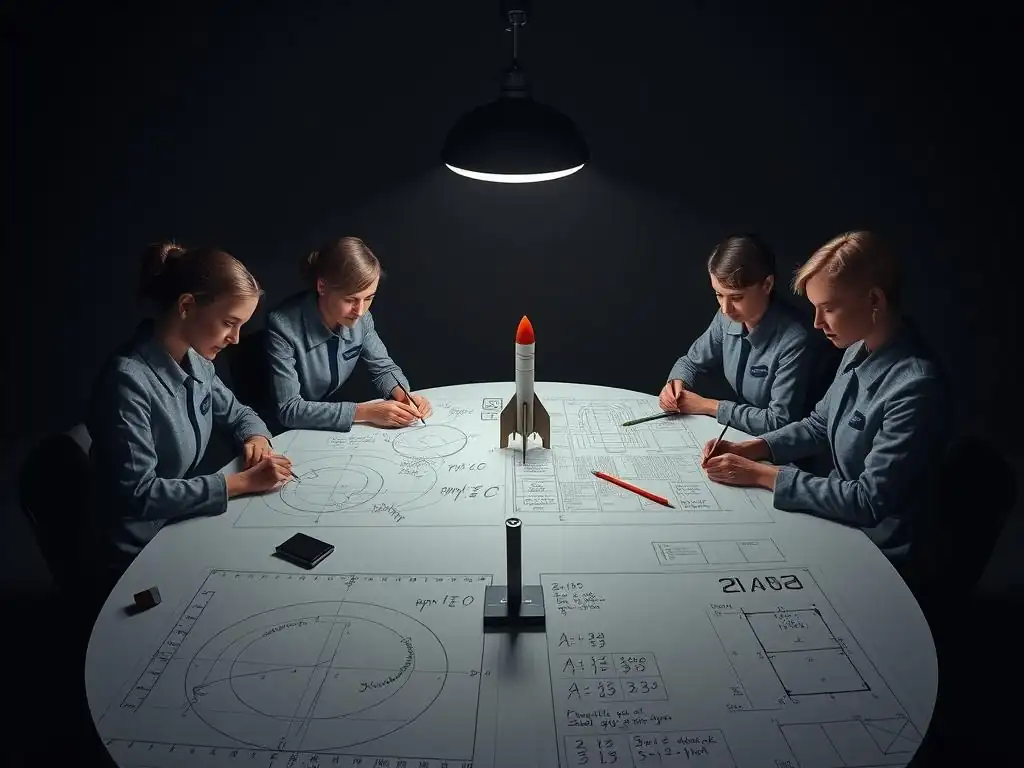
Calculating Trajectories: The Math Behind Rocket Launches
The journey from Earth to orbit, and eventually to the Moon, relied on incredibly precise mathematical calculations for every phase of a mission. Human computers were responsible for determining launch windows, the optimal times for a rocket to lift off based on orbital mechanics and celestial alignment. They calculated the complex ascent trajectories, factoring in thrust, gravity, atmospheric drag, and the changing mass of the rocket as fuel was consumed.
Furthermore, they meticulously charted the intricate orbital paths, ensuring that spacecraft would achieve the correct altitude, velocity, and inclination to rendezvous with other spacecraft or re-enter Earth's atmosphere safely. A slight error in these calculations could lead to catastrophic failures, either sending a rocket off course into space or causing it to burn up upon re-entry. The accuracy provided by the women calculating NASA space missions was therefore paramount to the success and safety of every launch.
Verifying Electronic Computer Results: A Human Check
In the early days of electronic computers, these machines were powerful but not always entirely trustworthy. They were prone to errors, and their outputs needed rigorous verification. This is where the human computers, with their unparalleled mathematical intuition and meticulous attention to detail, played a critical role. They would manually re-perform key calculations, often using slide rules and mechanical calculators, to cross-check the results generated by the nascent IBM machines.
A prime example of this human verification was Katherine Johnson's role in John Glenn's 1962 orbital flight. Before Glenn would launch, he famously requested that Johnson personally confirm the IBM 7090's trajectory calculations. Her manual confirmation provided the essential confidence needed for the mission to proceed, highlighting that even with the advent of electronic systems, the human element of calculation and verification remained indispensable for ensuring astronaut safety and mission integrity.
Solving Complex Equations: The Women's Mathematical Prowess
The problems faced by the human computers were far from simple arithmetic. They routinely tackled advanced differential equations, integral calculus, and iterative calculations that required deep understanding of mathematical principles. For instance, determining the precise re-entry angle for a capsule to avoid burning up or bouncing off the atmosphere involved solving complex equations related to atmospheric density, velocity, and heat transfer.
These women were not just number-crunchers; they were applied mathematicians who understood the physics behind the numbers. They often developed shortcuts, refined existing methods, and sometimes even identified errors in the theoretical models themselves. Their ability to visualize complex multi-dimensional problems and translate them into actionable numerical solutions showcased their profound mathematical prowess and intellectual agility, making them essential contributors to scientific discovery and engineering innovation.
Project Mercury Trajectory Analysis: Ensuring Astronaut Safety
Project Mercury, America's first manned spaceflight program, placed immense pressure on the human computers. The stakes were incredibly high: sending the first American into orbit and returning them safely. The women calculating NASA space missions were at the forefront of this effort, responsible for the trajectory analysis that determined the precise path of the Mercury capsules.
Their calculations included not only the launch and orbital trajectories but also critical parameters for re-entry, such as the retrofire timing and angle, and the predicted splashdown point for recovery. For instance, for Alan Shepard's suborbital flight in 1961, and even more so for John Glenn's orbital mission, every variable had to be precisely accounted for to ensure the astronauts' survival. The meticulous work of these women directly contributed to the success of these groundbreaking missions, demonstrating their indispensable role in securing the lives of America's pioneering astronauts.
Overcoming Gender Bias: Fighting for Recognition and Advancement
The era in which NASA's human computers worked was characterized by pervasive gender bias across society, and scientific fields were no exception. Women in these roles were often seen as support staff, rather than integral scientific contributors, despite their advanced degrees and complex work. They were frequently excluded from technical meetings, brainstorming sessions, and the informal networks that often led to professional advancement.
Many women had to actively fight for recognition and opportunities to move beyond the "computer" designation. Katherine Johnson, for example, had to repeatedly assert herself to attend editorial meetings where the technical papers she contributed to were being discussed. This constant battle against systemic bias required immense perseverance, as they navigated a professional landscape that often undervalued their intellectual contributions and limited their pathways to leadership and public acknowledgment.
Segregation and Discrimination: The Added Burden for Black Female Computers
For the African American women working as human computers at Langley, the challenges were compounded by racial segregation and discrimination, enforced by Jim Crow laws. They worked in separate offices, often used separate dining facilities and restrooms, and faced professional barriers beyond those experienced by their white counterparts. Despite their exceptional skills, they were often assigned to less visible projects or faced slower career progression.
Dorothy Vaughan, Mary Jackson, and Katherine Johnson, among others, endured these systemic injustices with remarkable resilience. They not only excelled in their demanding mathematical roles but also navigated a deeply prejudiced environment. Their determination to perform at the highest level, even when faced with daily reminders of their marginalized status, stands as a testament to their unwavering commitment to their work and to advancing the cause of racial equality within the scientific community.
Building a Community: Support and Mentorship Among the Women
In the face of these formidable challenges, the women of NASA's computing pools forged strong bonds of community and mutual support. Within their segregated units, they created an environment where knowledge was shared, and mentorship flourished. Experienced computers guided newcomers, helping them master complex calculation techniques and navigate the institutional landscape.
This sense of camaraderie was crucial for their professional and personal well-being. They celebrated each other's successes, offered encouragement during setbacks, and collectively found ways to push for greater recognition and opportunities. This supportive network not only fostered intellectual growth but also provided a vital emotional lifeline, allowing these women calculating NASA space missions to thrive and persist in an often isolating and challenging environment.
Achieving Professional Fulfillment: Contributions to Scientific Progress
Despite the gender and racial discrimination they faced, many of the human computers found profound professional fulfillment in their work. The intellectual stimulation of solving complex mathematical problems, coupled with the knowledge that their calculations directly contributed to monumental scientific and technological achievements, was a powerful motivator. They were keenly aware that their efforts were helping to put America at the forefront of the Space Race.
Their pride in being part of such groundbreaking endeavors, even if their names were not widely publicized at the time, was immense. They reveled in the challenge of ensuring the precision required for spaceflight and understood the critical impact of their contributions. The ability to apply their mathematical talents to real-world problems and witness the tangible results of their labor provided a deep sense of purpose and accomplishment, cementing their legacy as vital contributors to scientific progress.
The Transition to Electronic Computing and its Impact
Automation and the Displacement of Human Computers
The late 1950s and early 1960s marked a pivotal turning point with the advent of large-scale electronic digital computers, such as the IBM 704 and later the IBM 7090. These machines, capable of performing calculations at speeds orders of magnitude faster than human beings, gradually rendered the role of the human computer obsolete. The transition was inevitable, as NASA sought to leverage the unprecedented computational power of these new technologies for increasingly complex space missions.
This automation led to a significant reduction in the demand for human computing pools. Many individuals who had spent years performing manual calculations faced the challenge of adapting to an entirely new technological landscape or finding new roles. The shift represented a profound change in the nature of scientific work, moving from painstaking manual processes to the intricacies of programming and machine operation.
Adapting to New Technologies: Women's Role in Early Computer Programming
Remarkably, many of the highly skilled human computers did not become redundant; instead, they successfully transitioned into the new era of electronic computing. Their strong mathematical foundations and logical thinking skills proved invaluable in understanding and developing computer programs. Women like Dorothy Vaughan proactively embraced this change, teaching themselves languages like FORTRAN and instructing their teams in these new computational methods.
This adaptability allowed them to become early computer programmers, analysts, and even engineers. They were instrumental in debugging nascent electronic systems, developing algorithms, and translating complex mathematical problems into machine-readable code. Their ability to pivot and master new technologies ensured their continued relevance and contribution to NASA's missions, demonstrating their intellectual agility and foresight in shaping the future of space exploration.
Legacy of the Human Computers: Paving the Way for Future Generations
The legacy of the human computers extends far beyond their direct contributions to the Space Race. Their meticulous work in establishing reliable computational methods and their role in verifying the results of early electronic machines laid essential groundwork for the development of modern computer science applications in aerospace. They helped to build the trust and confidence necessary for relying on automated systems for critical tasks.
Furthermore, their pioneering efforts in a male-dominated field, particularly for the African American women who overcame both gender and racial barriers, opened doors and set precedents for future generations. Their perseverance demonstrated that talent and dedication transcend traditional boundaries, inspiring countless women and minorities to pursue careers in science, technology, engineering, and mathematics. The women calculating NASA space missions truly paved the way for a more diverse and inclusive scientific community.
Legacy and Recognition: Honoring the Human Computers' Contributions
For decades, the extraordinary contributions of NASA's human computers remained largely unknown to the public. However, the publication of Margot Lee Shetterly's non-fiction book "Hidden Figures: The American Dream and the Untold Story of the Black Women Who Helped Win the Space Race" in 2016, followed by the highly successful film adaptation, dramatically changed this. The book and movie brought the compelling stories of Katherine Johnson, Dorothy Vaughan, and Mary Jackson into the global spotlight.
This widespread recognition finally acknowledged their crucial, long-overlooked work in the Space Race. The narrative captivated audiences worldwide, shedding light on the immense talent, perseverance, and intellectual power of these women who had operated behind the scenes for so long. "Hidden Figures" became a cultural phenomenon, ensuring that the legacy of these remarkable mathematicians would no longer be hidden from history.
Inspiring Future Generations of Women in STEM
The stories of the women calculating NASA space missions have become powerful sources of inspiration for future generations, particularly for young girls and women considering careers in STEM fields. Their journeys demonstrate that intelligence, hard work, and dedication can overcome significant societal and professional barriers. Seeing women like Katherine Johnson, Dorothy Vaughan, and Mary Jackson achieve such profound scientific impact, despite the odds, challenges stereotypes and expands possibilities.
Educational initiatives, scholarships, and mentorship programs often highlight these pioneers, encouraging greater diversity and inclusion in science and engineering. Their legacy serves as a tangible reminder that talent is universal, but opportunity is not always equally distributed. By celebrating their achievements, we empower and motivate new generations of female scientists, engineers, and mathematicians to pursue their ambitions without limitation.
The Enduring Importance of Recognizing Unsung Scientific Contributions
The belated recognition of NASA's human computers underscores the enduring importance of continually re-examining historical narratives to ensure a more accurate and inclusive understanding of scientific progress. History is often written from a dominant perspective, inadvertently or intentionally sidelining the contributions of marginalized groups. The "Hidden Figures" narrative serves as a potent reminder of the countless unsung heroes in science whose work was essential but not always publicized.
By actively seeking out and celebrating these untold stories, we enrich our collective understanding of scientific discovery and technological advancement. It ensures that credit is given where it is due and provides a more comprehensive and inspiring tapestry of human ingenuity. The legacy of the women calculating NASA space missions demands that we remain vigilant in recognizing all who contribute to the grand enterprise of science, regardless of their background or the historical context in which they worked.
Conclusion: Celebrating the Women Calculating NASA Space Missions
The Lasting Impact of NASA's Human Computers
The women who served as human computers at NASA left an indelible mark on the American space program and the broader field of computer science. Their meticulous calculations were the silent backbone of Project Mercury, the Apollo missions, and countless other aeronautical endeavors. They ensured the accuracy of trajectories, verified the outputs of early electronic machines, and solved complex equations that were vital for national success in the Space Race.
Their contributions were not merely clerical; they were foundational to the engineering and scientific breakthroughs that propelled humanity into space. From Katherine Johnson's precise orbital mechanics to Dorothy Vaughan's leadership in the face of technological change, and Mary Jackson's barrier-breaking engineering feats, these women exemplified intellectual rigor and unwavering dedication. Their work bridged the gap between theoretical physics and practical spaceflight, proving indispensable to the nation's most ambitious scientific pursuits.
A Testament to the Power of Human Intellect and Perseverance
The story of the women calculating NASA space missions is a profound testament to the power of human intellect, meticulousness, and perseverance in the face of significant challenges. They navigated environments marked by gender bias, and for many, racial segregation, yet they consistently delivered work of the highest caliber. Their ability to adapt to new technologies, embrace change, and continually push the boundaries of their roles speaks volumes about their resilience and foresight.
Their legacy reminds us that true scientific progress often relies on the collective efforts of diverse talents, many of whom may operate outside the immediate spotlight. These remarkable women, through their brilliant minds and unwavering dedication, not only helped launch America into space but also paved the way for future generations of women in STEM, leaving an enduring legacy that continues to inspire and shape the pursuit of knowledge.
Frequently Asked Questions
What role did women play in calculating NASA space missions?
Women, often referred to as "human computers," played a crucial role by performing complex mathematical calculations that were essential for NASA's early space missions. Their work included trajectory analysis, data reduction, and other vital computations.
Why were women often hired for these computational roles at NASA?
During the mid-20th century, women were often hired for these roles due to societal biases that considered them more meticulous and detail-oriented than men in mathematical tasks. They were also paid less, making them a cost-effective option.
What challenges did these women face working at NASA?
These women faced significant challenges, including discrimination and segregation, often being relegated to separate work areas and denied opportunities for advancement compared to their male counterparts. They struggled to gain recognition for their contributions.
How did the work of these women contribute to the success of NASA's space program?
The accurate and timely calculations performed by these women were critical to the success of NASA's early space missions, ensuring the safe and precise trajectories of rockets and spacecraft. Their dedication and expertise were invaluable.
How does "WomenInScienceHistory.com" aim to highlight the contributions of these "human computers"?
The website aims to shed light on the often overlooked narratives of these women by providing biographies, discussing their groundbreaking work, and highlighting the challenges they overcame in a male-dominated field, thereby inspiring future generations.
Final Reflection: Honoring the Unsung Architects of Space
The story of NASA's "Human Computers," the women whose meticulous calculations propelled America into space, resonates profoundly today. Their contributions, often overlooked, serve as a powerful reminder that progress is built upon the shoulders of those who may not always receive the spotlight. By understanding their crucial role, we gain a deeper appreciation for the diverse talents and unwavering dedication that fueled the space race and continue to drive innovation.
This narrative transcends mere historical recounting; it underscores the enduring importance of recognizing and celebrating the contributions of women in STEM. The legacy of these "Human Computers" serves as a beacon, inspiring future generations to break barriers and pursue their passions, regardless of societal expectations. There's no limit to what we, as women, can accomplish.
- Michelle Obama. Their story is a testament to the power of perseverance and the transformative impact of inclusivity in scientific endeavors.
Let us carry forward the spirit of these remarkable women. Consider how you can champion inclusivity and equity in your own sphere of influence, ensuring that every voice is heard and every talent is recognized. The journey to the stars, and indeed, the journey to a more just and equitable world, requires the collective brilliance and unwavering dedication of all.
Ignite Your Inner Rocket Scientist!
Thank you for exploring the untold stories of NASA's human computers. We hope you've found their dedication and brilliance as inspiring as we do. Now, it's your turn to make an impact.
Here are a few things you can do:
- Uncover Hidden Figures in Your Own Community: Research and share stories of unsung heroes who have contributed to science and technology locally.
- Share this article to amplify the voices of these incredible women and inspire others with their achievements.
- Dive deeper into the history of women in STEM by exploring the recommended readings at your local library.
What's one small step you can take today to champion the contributions of women in science and technology?