
Powering the Digital Age: Women's Contributions to Data Storage Hardware


Welcome to WomenInScienceHistory.com!
Delve into the untold stories of brilliance and resilience. This site celebrates the groundbreaking achievements of women who shaped the scientific landscape. Ready to uncover the hidden figures behind technological advancements? Then prepare to be inspired as we explore the fascinating world of Women in Data Storage, revealing their pivotal, yet often overlooked, contributions to the very hardware that powers our digital age. Discover how these pioneers overcame barriers and revolutionized the field of Computer Science, leaving an indelible mark on history.
- Introduction: Recognizing Women in Data Storage Innovation
- Early Pioneers: Women Shaping the Foundations of Data Storage
- Mid-Century Advances: Women's Impact on Magnetic and Optical Storage
- The Modern Era: Women Leading Data Storage Hardware Development Today
- Key Contributions of Women to Data Storage Hardware: A Closer Look
- The Future of Data Storage: Inspiring the Next Generation of Women
- Conclusion: Celebrating the Legacy of Women in Data Storage
-
Frequently Asked Questions
- What is WomenInScienceHistory.com's goal?
- Why is it important to recognize women's contributions to data storage hardware?
- What types of information can I find on WomenInScienceHistory.com regarding women in data storage?
- What challenges did women in data storage historically face?
- How can WomenInScienceHistory.com help inspire future generations of women in data storage?
- Final Reflection: Amplifying the Unheard Voices
- Ignite Your Tech Journey: Champion Women in Data Storage!
Introduction: Recognizing Women in Data Storage Innovation
The Unsung Heroines of Hardware: A Historical Overview
Throughout the history of computing, the foundational role of hardware development has been paramount, yet the contributions of women in this critical domain, particularly in data storage, have often been overlooked or underappreciated. From the earliest electromechanical systems to today's sophisticated solid-state drives and cloud infrastructures, the ability to store and retrieve vast amounts of information efficiently has been central to technological progress.
This intricate field, demanding precision, innovation, and a deep understanding of physics and engineering, saw women engage in pioneering work that directly influenced how data is captured, preserved, and accessed. Their efforts, often carried out in male-dominated environments, laid crucial groundwork for the digital revolution.
These pioneering women in data storage hardware navigated a landscape rife with systemic barriers, including limited access to education, professional networks, and recognition for their intellectual property. Despite these formidable challenges, their ingenuity led to significant breakthroughs in magnetic recording, semiconductor design, and the architecture of storage systems.
Their stories are not just tales of individual brilliance but also powerful narratives about resilience and determination. By illuminating these historical contributions, we begin to paint a more complete picture of technological advancement, one that acknowledges the diverse minds that shaped our digital world, ensuring that the legacy of these unsung heroines is finally brought to light.
Why Women in Data Storage History Matters
Understanding the historical impact of women in data storage is crucial for several reasons. Firstly, it rectifies a pervasive historical oversight, ensuring that the narratives of innovation are inclusive and accurate. By highlighting the specific technical achievements of female engineers and scientists, we challenge the misconception that hardware development was exclusively a male domain. This recognition not only honors their individual legacies but also provides tangible evidence of women's long-standing and significant role in shaping core computing infrastructure.
Secondly, celebrating these achievements serves as a powerful source of inspiration for current and future generations. When young women see trailblazers like Erna Schneider Hoover or Evelyn Berezin, who broke through significant barriers to contribute to complex hardware systems, it demystifies the field and demonstrates that a career in highly technical areas like data storage is not only possible but has a rich history of female involvement. This visibility is vital for encouraging more girls and young women to pursue STEM fields, particularly hardware engineering, fostering a more diverse and innovative technological landscape for the future.
Early Pioneers: Women Shaping the Foundations of Data Storage
Erna Schneider Hoover: Revolutionizing Telephone Switching Systems
Erna Schneider Hoover, a brilliant mathematician, made a groundbreaking contribution to the burgeoning field of computer science with her invention of a computerized telephone switching system. While not directly a data storage hardware device in the modern sense, her system, patented as U.S. Patent 3,623,007 in 1971, was revolutionary for its ability to handle high volumes of calls by prioritizing essential traffic and preventing system overloads.
This required sophisticated real-time data processing and a form of temporary, dynamic memory management to keep track of call statuses and routing information, effectively managing a complex stream of data. Her work at Bell Labs in the 1960s was crucial for ensuring the reliability and efficiency of telephone networks, a foundational step towards large-scale data handling.
Hoover's system utilized a stored program control unit that monitored call traffic and dynamically adjusted call acceptance rates, preventing the system from crashing under peak loads. This innovative approach to managing fluctuating data streams was a critical precursor to modern data management and storage principles.
Her patent is considered one of the first software patents issued to a woman, underscoring her pioneering role not just in software logic but in the overall architecture that enabled reliable data flow and temporary storage within a complex system. Her foresight in designing a system that could intelligently manage data under stress laid groundwork that influenced subsequent digital systems requiring robust data handling capabilities.
Evelyn Berezin: Advancing Computerized Word Processing and Data Storage
Evelyn Berezin stands as another pivotal figure among women in data storage history, having developed the first computerized word processor in 1969. As the founder of Redactron Corporation, she designed a system that was far more than a simple typewriter; it was a sophisticated machine that allowed users to input, edit, store, and retrieve text, fundamentally changing office work.
The core of this innovation was the intricate data storage mechanisms required to handle textual information efficiently, enabling features like cut, paste, and search functions that we now take for granted. Her system relied on custom-designed magnetic tape drives and specialized circuitry to store and access documents, a significant leap from the manual methods prevalent at the time.
Berezin's word processor was a complex piece of hardware that integrated various components to perform its functions. It featured a compact, integrated storage unit that could hold multiple pages of text, a significant technical achievement for its era.
The machine's ability to manipulate and save data reliably was a testament to her engineering prowess, pushing the boundaries of what was possible with electronic data storage at the time. Her work not only revolutionized office productivity but also demonstrated the critical need for robust and accessible data storage solutions, making text data manageable and editable in a way that had never been possible before.
Overcoming Obstacles: Challenges Faced by Early Women in Hardware Development
The journey for early women in data storage and hardware development was fraught with significant obstacles that extended far beyond technical challenges. Societal norms and pervasive gender bias often relegated women to subordinate roles, even when their intellectual contributions were central to projects.
Many faced skepticism regarding their technical competence, and their ideas were frequently dismissed or even appropriated by male colleagues. Access to higher education in STEM fields was also limited for women for much of the 20th century, with many universities imposing quotas or simply not admitting women to certain engineering programs, thereby restricting their foundational knowledge and professional networks.
Beyond academic and professional discrimination, women in these pioneering roles often had to contend with a lack of institutional support and recognition. Promotions were scarce, and public acknowledgment of their work was rare, leading to many "hidden figures" whose impacts were vital but uncredited.
For instance, the meticulous work of programmers and engineers, many of whom were women, in setting up and maintaining early computing and data storage systems was frequently seen as clerical rather than innovative. These systemic barriers meant that these accomplished women in data storage not only had to excel technically but also possess extraordinary resilience to carve out their careers and make their indelible marks on the digital age.
Mid-Century Advances: Women's Impact on Magnetic and Optical Storage
Margaret R. Fox: Contributions to Early Computer Storage and Standards
Margaret R. Fox was a prominent figure at the National Bureau of Standards (NBS), now the National Institute of Standards and Technology (NIST), where her work significantly influenced the development and standardization of early computer storage. In the 1950s and 1960s, as computers began to emerge from experimental labs into broader applications, the need for reliable and interchangeable data storage formats became critical.
Fox played a key role in developing standards for magnetic tape, which was a dominant form of data storage during that era. Her efforts ensured that data recorded on one machine could be read by another, a fundamental requirement for interoperability and the growth of computing.
Her contributions extended to the evaluation and testing of early data processing systems, including their storage components. Fox's meticulous work helped establish benchmarks for performance and reliability in magnetic storage, directly impacting the capabilities of mainframe computers. She was instrumental in defining parameters for tape density, error correction, and data transfer rates, which were vital for improving the efficiency and capacity of these storage media. Her dedication to standardization laid a crucial foundation for the evolution of data storage, ensuring the integrity and accessibility of information as computing expanded.
Heidi E. Kaplan: Innovations in Magnetic Recording Heads
Heidi E. Kaplan, a researcher at IBM, made significant contributions to the advancement of magnetic recording technology, a cornerstone of hard disk drives (HDDs). Her work in the late 20th century focused on improving the design and performance of magnetic recording heads, the tiny components responsible for reading and writing data onto the magnetic platters within HDDs. Kaplan's research helped to push the boundaries of data density, enabling hard drives to store more information in smaller physical spaces. Her innovations were critical in the evolution from large, low-capacity storage units to the compact, multi-terabyte drives we know today.
Kaplan's expertise in materials science and magnetic physics allowed her to develop more efficient and precise recording heads. Her contributions directly addressed the challenges of achieving higher areal density—packing more bits per square inch on a disk surface—which is a fundamental metric for storage capacity. The improvements she spearheaded in head design contributed to faster data access times and enhanced reliability of magnetic storage devices. Her work exemplifies how the detailed, often microscopic, engineering efforts of women in data storage hardware were essential for the continuous exponential growth in storage capabilities.
The Rise of Computing and the Growing Role of Women in Hardware
The mid-20th century marked a period of rapid expansion in computing, moving from specialized mainframe systems to more widespread commercial and eventually personal computers. This era saw an increasing, though still challenging, role for women in data storage and broader hardware development.
As the demand for computing power grew, so did the need for innovative storage solutions, creating more opportunities for talented individuals regardless of gender, albeit often within established male-dominated structures. Women began to fill roles in design, testing, and manufacturing of components, contributing to the shift from vacuum tubes to transistors and integrated circuits, which profoundly impacted storage device size and performance.
This period also witnessed the emergence of new forms of data storage, including various iterations of magnetic disks and the early stages of optical storage. Women engineers and scientists were involved in research that explored new materials, improved recording techniques, and optimized data retrieval algorithms for these emerging technologies.
While still facing significant societal and professional barriers, the sheer volume of work and the growing complexity of hardware development necessitated a broader talent pool, allowing more women to make their mark. Their collective efforts during this transformative period were instrumental in advancing data storage capabilities, paving the way for the digital age.
The Modern Era: Women Leading Data Storage Hardware Development Today
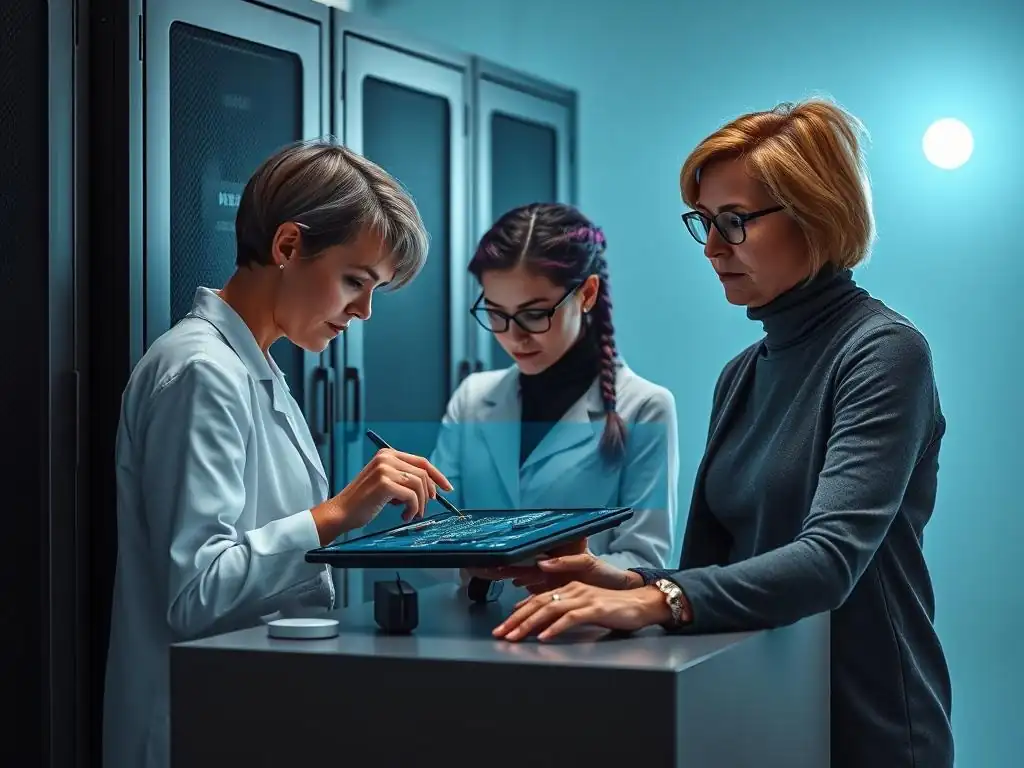
Lisa Su: Expertise in Semiconductor and CPU/GPU Technology (Indirectly impacting SSDs)
Dr. Lisa Su stands as a preeminent figure in the semiconductor industry, currently serving as the Chair and CEO of Advanced Micro Devices (AMD). While her primary focus is on high-performance computing, particularly CPUs and GPUs, her leadership and technical expertise profoundly impact the landscape of modern data storage, especially Solid State Drives (SSDs). SSDs rely heavily on advanced semiconductor technology for their memory (NAND flash) and controller chips. Su's vision and AMD's innovations in chip architecture directly influence the performance, power efficiency, and integration capabilities of the components that interact with and manage data on SSDs.
Under her leadership, AMD has pushed the boundaries of processor design, leading to more powerful and efficient systems that can process and retrieve data at unprecedented speeds. This indirectly but significantly affects data storage by creating demand for faster storage solutions and providing the computational backbone that allows SSDs to reach their full potential.
For example, the advancements in PCIe generations, driven by companies like AMD, directly enable higher bandwidth for NVMe SSDs, drastically improving data transfer rates. Lisa Su's influence, therefore, showcases how leadership in core semiconductor technology by women in data storage-adjacent fields drives the entire digital ecosystem forward.
Belinda Vassallo: Expertise in Storage Solutions and Data Management
Belinda Vassallo is a distinguished expert in enterprise storage solutions and data management, with extensive experience in leading roles at major technology corporations. Her career has centered on understanding the complex demands of large-scale data storage for businesses and developing robust, scalable solutions.
While not directly designing individual hardware components like magnetic heads, her expertise lies in architecting the systems and strategies that integrate various storage hardware technologies to meet critical business needs, such as data analytics, cloud computing, and disaster recovery. She plays a pivotal role in bridging the gap between cutting-edge hardware capabilities and practical, deployable storage infrastructures.
Vassallo's work often involves evaluating the performance and reliability of different storage hardware platforms, from traditional SAN/NAS systems to modern object storage and hyper-converged infrastructure. She contributes to defining the requirements for next-generation storage products and ensures that solutions are optimized for efficiency, security, and cost-effectiveness. Her strategic leadership in the field of data management highlights the crucial role of women in data storage who define how massive volumes of data are stored, protected, and accessed across diverse enterprise environments, ensuring the operational backbone of countless organizations.
Contemporary Challenges and Opportunities for Women in Data Storage
Despite significant progress, women in data storage and hardware development still face contemporary challenges. A persistent gender gap remains, particularly in senior leadership and highly technical engineering roles. Implicit biases in hiring, promotion, and project assignments can hinder career progression, and a lack of visible female role models in these specific fields can make it difficult for aspiring women to envision themselves in such positions. Furthermore, the demanding nature of hardware development, often requiring long hours and intensive problem-solving, can disproportionately affect women who may still carry a larger share of domestic responsibilities.
However, the field also presents immense opportunities. The rapid evolution of data storage technologies, driven by cloud computing, artificial intelligence, and big data analytics, creates new frontiers for innovation. Areas like sustainable data centers, quantum storage, and advanced non-volatile memory technologies are ripe for groundbreaking contributions.
There is a growing industry recognition of the value of diversity in fostering innovation and problem-solving. This includes initiatives to promote STEM education for girls, mentorship programs, and efforts to create more inclusive workplace cultures, all of which aim to empower more women in data storage to lead and innovate in the digital future.
Key Contributions of Women to Data Storage Hardware: A Closer Look
Improving Data Density and Capacity
The ability to store ever-increasing amounts of data in smaller physical footprints is a defining characteristic of modern computing, and women in data storage have been instrumental in achieving this. Early contributions, such as Heidi E. Kaplan's work on magnetic recording heads at IBM, directly improved the areal density of hard disk drives, allowing more bits to be packed onto each platter. Her research helped push the limits of how closely data could be written and read, leading to significant increases in storage capacity from megabytes to gigabytes and eventually terabytes.
In the contemporary era, the contributions of women in semiconductor design and materials science have been equally vital for solid-state drives (SSDs). Innovations in NAND flash memory technology, including advancements in multi-level cell (MLC), triple-level cell (TLC), and quad-level cell (QLC) designs, have dramatically increased the density of flash memory. While specific individual names are often proprietary or part of large teams, the collective expertise of female engineers in chip fabrication, circuit design, and manufacturing processes has been critical in scaling these technologies, enabling the compact, high-capacity SSDs that power everything from smartphones to enterprise servers.
Enhancing Storage Speed and Performance
Beyond sheer capacity, the speed at which data can be accessed and processed is paramount, and women in data storage have played a key role in accelerating performance. Erna Schneider Hoover's pioneering work on computerized telephone switching systems, for instance, focused on real-time data processing and rapid response to prevent system overloads, effectively laying groundwork for performance optimization in data handling. Her system's ability to quickly analyze and route calls was an early example of optimizing data flow under high demand.
More recently, contributions to controller design and interface technologies have significantly boosted storage performance. Female engineers have been involved in developing advanced algorithms for flash translation layers (FTL) in SSDs, which manage how data is written and read from NAND flash memory to optimize endurance and speed.
Furthermore, their work in designing high-speed interfaces like NVMe (Non-Volatile Memory Express) over PCIe has revolutionized data transfer rates for SSDs, achieving speeds many times faster than traditional SATA interfaces. These advancements, driven by the collective efforts of diverse engineering teams, have ensured that storage can keep pace with increasingly powerful processors and data-intensive applications.
Developing More Reliable and Durable Storage Solutions
The reliability and durability of data storage hardware are non-negotiable for both consumer and enterprise applications, ensuring data integrity and longevity. Women in data storage have contributed significantly to these critical aspects through their work in error correction, robust design, and quality assurance.
Margaret R. Fox's efforts at the National Bureau of Standards in establishing rigorous testing protocols and standards for magnetic tape in the mid-20th century were fundamental to ensuring data integrity and interoperability across different systems. Her work helped define the benchmarks for error rates and data recovery, which were crucial for the widespread adoption of early computer storage.
In modern storage, female engineers and quality assurance specialists are deeply involved in developing advanced error correction codes (ECC) for both magnetic and solid-state drives. These codes are vital for detecting and correcting data corruption, thereby extending the lifespan and reliability of storage devices. Additionally, their expertise in materials science contributes to designing more durable components, capable of withstanding environmental stresses and frequent read/write cycles. The meticulous attention to detail and innovative problem-solving brought by these women ensure that the digital information we rely on daily remains safe and accessible for years to come.
The Future of Data Storage: Inspiring the Next Generation of Women
Encouraging STEM Education for Girls and Young Women
Inspiring the next generation of women in data storage begins with robust and equitable STEM education for girls and young women. Early exposure to computer science, engineering, and mathematics can ignite a passion for innovation and problem-solving. This includes providing accessible and engaging educational programs from primary school onward, challenging gender stereotypes that often deter girls from pursuing technical fields, and showcasing real-world applications of STEM concepts. For instance, initiatives that introduce girls to coding, robotics, and the fundamentals of hardware design can demystify these areas and demonstrate their creative potential.
Furthermore, it is crucial to support girls through their higher education journeys, ensuring they have the resources and encouragement to pursue degrees in electrical engineering, computer engineering, and related fields. Scholarships, specialized workshops, and inclusive classroom environments can significantly impact retention rates. By building a strong foundational pipeline of talented young women with a solid understanding of STEM principles, we can cultivate the diverse pool of innovators needed to tackle the complex challenges and opportunities in future data storage technologies, from quantum computing to neuromorphic memory.
Mentorship and Support Networks for Women in Hardware Engineering
Beyond formal education, mentorship and strong support networks are indispensable for fostering the careers of women in data storage hardware engineering. Experienced female professionals can provide invaluable guidance, share their insights into navigating a male-dominated industry, and offer practical advice on career progression. Mentorship programs, both formal and informal, create safe spaces for dialogue, problem-solving, and professional development, helping to build confidence and resilience among emerging engineers.
Professional organizations and affinity groups dedicated to women in technology or engineering also play a critical role. These networks offer opportunities for collaboration, peer support, and visibility, connecting women with shared experiences and career aspirations. Events, conferences, and online forums allow for knowledge exchange, networking, and the celebration of achievements. By strengthening these mentorship and support structures, the industry can better retain talented women, help them overcome professional hurdles, and ensure a continuous pipeline of female leaders and innovators in the evolving landscape of data storage hardware.
Celebrating Success: Showcasing the Achievements of Women in Data Storage
To truly inspire future generations and solidify the place of women in data storage history, it is imperative to actively celebrate their successes and showcase their achievements. Platforms like WomenInScienceHistory.com are vital in this regard, providing accessible biographies and narratives that highlight the specific contributions of female pioneers and contemporary leaders. Public recognition through awards, publications, and speaking engagements ensures that their work is not only acknowledged but also becomes a visible part of the broader technological narrative.
Highlighting current innovations led by women in data storage, such as advancements in novel memory technologies, sustainable data center design, or cybersecurity for storage systems, provides tangible role models for aspiring engineers. By making these stories widely known, we dismantle stereotypes and demonstrate the diverse pathways to success in hardware development. This consistent celebration of achievements fosters a culture of inclusivity and recognition, encouraging more young women to pursue careers in a field where their contributions are not just valued but celebrated as essential to technological progress.
Conclusion: Celebrating the Legacy of Women in Data Storage
The Enduring Impact of Women on the Digital Landscape
The journey through the history of data storage hardware reveals an undeniable truth: the digital landscape we inhabit today owes an immense debt to the often-unseen contributions of women in data storage. From the foundational principles of real-time data management established by pioneers like Erna Schneider Hoover to the architectural innovations in enterprise storage systems influenced by experts like Belinda Vassallo, women have consistently pushed the boundaries of what is possible.
Their work in magnetic recording, semiconductor design, and the development of robust, high-performance storage solutions has been critical at every stage of computing's evolution. Without their ingenuity, perseverance, and technical acumen, the vast capacities, incredible speeds, and unwavering reliability of modern data storage would simply not exist.
These women navigated formidable societal and professional barriers, often working in isolation or with limited recognition, yet their impact resonated throughout the industry. Their meticulous engineering, groundbreaking research, and strategic leadership have directly contributed to the seamless flow of information that underpins our interconnected world.
The very fabric of the digital age, from the photos on our smartphones to the vast databases powering global enterprises, is built upon the foundational and ongoing innovations brought forth by these remarkable women. Their legacy is not merely historical; it is an enduring testament to their pivotal role in shaping our technologically advanced society.
Continuing the Journey: Advancing Gender Equity in Hardware Development
While much progress has been made in recognizing the historical contributions of women in data storage, the journey towards full gender equity in hardware development is ongoing. It requires a sustained commitment from educational institutions, industry leaders, and individuals to dismantle remaining biases and create truly inclusive environments. This includes actively promoting STEM education for girls, providing robust mentorship programs, and ensuring equitable opportunities for career advancement and leadership roles. Companies must continue to champion diversity initiatives, fostering workplaces where all voices are heard, valued, and empowered to innovate.
By actively celebrating the achievements of both historical and contemporary women in data storage, we not only honor their legacies but also inspire the next generation of female engineers and scientists. The future of data storage, with its complex challenges in areas like quantum computing, sustainable infrastructure, and artificial intelligence, demands the brightest and most diverse minds.
Continuing to champion gender equity in hardware development is not just a matter of fairness; it is an imperative for fostering the innovation and creativity necessary to power the digital age forward, ensuring that the full spectrum of human talent is engaged in shaping our technological future.
Frequently Asked Questions
What is WomenInScienceHistory.com's goal?
The site's primary goal is to celebrate and highlight the contributions of women to science throughout history, particularly in fields where they have been historically underrepresented. It aims to inspire future generations by showcasing these often overlooked narratives.
Why is it important to recognize women's contributions to data storage hardware?
Recognizing their contributions helps correct historical imbalances and demonstrates that women have always been crucial in advancing technology, including data storage hardware. This recognition inspires future generations by showcasing diverse role models.
What types of information can I find on WomenInScienceHistory.com regarding women in data storage?
You can find biographies of pioneering female scientists, discussions of their groundbreaking work, and information on the challenges they faced in male-dominated environments within the field of data storage.
What challenges did women in data storage historically face?
Women faced societal expectations, limited educational opportunities, and gender bias in the workplace. These barriers often hindered their ability to advance in their careers and receive proper recognition for their achievements.
How can WomenInScienceHistory.com help inspire future generations of women in data storage?
By showcasing the successes and resilience of women in this field, the platform provides powerful role models and demonstrates that women can and do excel in STEM fields. It encourages young women to pursue their passion for science and technology.
Final Reflection: Amplifying the Unheard Voices
The narrative of technological advancement is often painted with broad strokes, overlooking the intricate details and the diverse hands that shaped it. The story of women's contributions to data storage hardware is a vital thread in this tapestry, one that demands to be recognized and celebrated. By illuminating these often-unsung heroes, we not only rectify historical omissions but also inspire future generations to break barriers and redefine what's possible in the digital realm.
The impact of these women extends far beyond the bytes and circuits they engineered. Their perseverance and ingenuity have paved the way for greater inclusivity in STEM, challenging societal norms and demonstrating that innovation knows no gender. You can waste your lives drawing lines. Or you can live your life crossing them.
- Shonda Rhimes. This quote encapsulates the spirit of these pioneering women who dared to venture into uncharted territories and leave an indelible mark on the world.
As we navigate an increasingly data-driven world, let us remember the women who laid the foundation for this digital age. Consider how their stories resonate with your own aspirations and challenges. Let their legacy empower you to challenge the status quo, to champion diversity, and to contribute your unique talents to shaping a future where innovation thrives on inclusivity.
Ignite Your Tech Journey: Champion Women in Data Storage!
Thank you for exploring the groundbreaking contributions of women in data storage hardware. We hope this article has inspired you to recognize and celebrate the often-overlooked pioneers shaping our digital world. Now, let's turn that inspiration into action!
- Share this article with your network to amplify the stories of these remarkable women and inspire the next generation of female engineers.
- Research and discover contemporary women working in data storage and related fields, highlighting their achievements on social media.
- Consider donating to organizations that support STEM education for girls, fostering a more inclusive future for technology.
What steps will you take to ensure that women's contributions to technology are no longer hidden in the footnotes of history?