Women in Science – Developing Countries: Untold Stories of Resilience and Breakthroughs
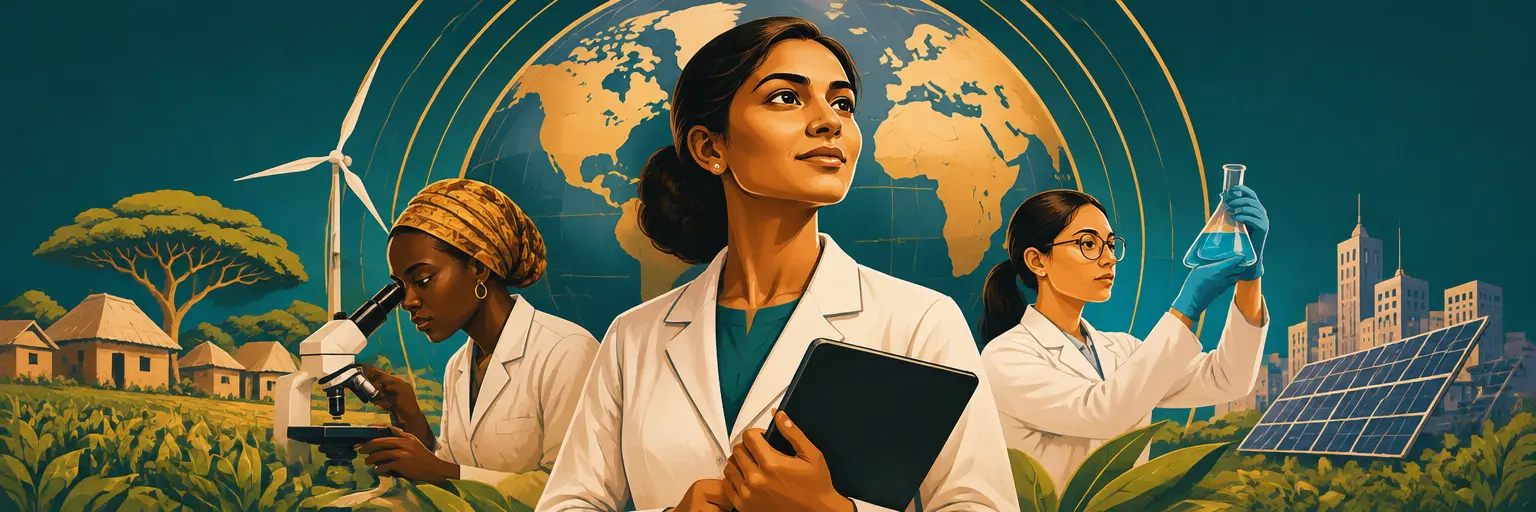
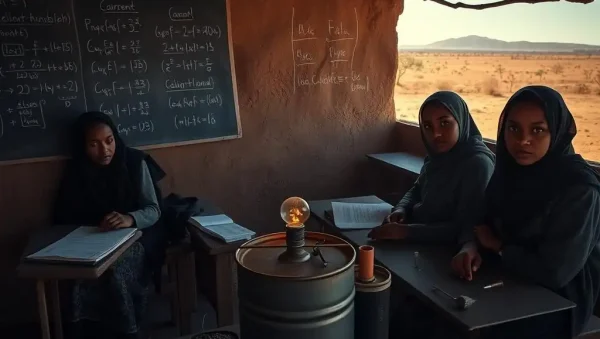
This subcategory shines a light on the extraordinary contributions of female scientists working in developing nations, where limited infrastructure, cultural barriers, and economic constraints create unique challenges. By exploring their journeys, you'll discover how innovation thrives under adversity, reshaping global science and inspiring systemic change.
🔬 Overcoming Infrastructure and Resource Gaps
Women scientists in developing countries often operate with minimal laboratory equipment, unreliable power supplies, and scarce funding. Yet, their resourcefulness leads to locally adapted solutions—from low-cost diagnostic tools to solar-powered water purification systems. These scientists are not just researchers; they are engineers of survival, turning constraints into catalysts for ingenuity.
Their work frequently bridges traditional knowledge with modern techniques, creating hybrid methodologies that are both sustainable and scalable. By profiling these pioneers, we highlight how necessity-driven research can produce globally relevant innovations, challenging the assumption that high-tech environments are prerequisites for scientific excellence.
🌍 Cultural Barriers and Advocacy for Equal Opportunity
In many developing regions, social norms restrict women's mobility, education, and career progression. Female scientists often combat entrenched stereotypes, requiring them to negotiate family expectations, communal pressures, and institutional biases. Their resilience is a testament to the power of mentorship and peer networks, which they actively build to support younger generations.
These advocates are reshaping policy by pushing for gender-responsive budgets, parental leave, and safe workplace protocols. Their stories reveal that failure to address cultural barriers not only stifles individual potential but also deprives entire nations of crucial scientific talent—making gender equity an economic and developmental imperative.
🔭 Trailblazing Research in Agriculture and Public Health
From developing drought-resistant crops to spearheading vaccination campaigns, women in developing countries are transforming fields critical to their communities. Their research often prioritizes practical applications—such as improving maternal health, combating tropical diseases, and enhancing food security—ensuring that scientific progress directly translates into tangible societal benefits.
Case studies feature breakthroughs like the development of affordable biosensors for malaria detection or community-based climate adaptation models. These scientists frequently collaborate with local farmers, healthcare workers, and policymakers, proving that participatory research can yield more effective, culturally sensitive solutions than top-down approaches from Western institutions.
📚 Education and the Next Generation of Female Scientists
Education remains a double-edged sword in developing countries: while access is expanding, quality and retention lag, especially for girls. Female scientists are pioneering grassroots programs—mobile science labs, after-school clubs, and scholarship schemes—to spark early interest. They also act as living proof that a career in science is attainable, countering narratives that such paths are exclusively for men or urban elites.
Their mentorship extends beyond technical skills to include negotiation, leadership, and resilience training. By documenting these initiatives, we emphasize that empowering women in STEM is a long-term investment, requiring sustained community engagement and policy support to dismantle systemic barriers from primary school to professorship.
🌱 Global Collaborations and South-South Networks
International partnerships often fund and amplify the work of women scientists in developing countries, but power dynamics can be unequal. Many are now forging South-South collaborations—peer networks spanning Africa, Asia, Latin America, and the Middle East—to share resources, data, and strategies without dependence on Western gatekeepers. These alliances enhance research quality and visibility.
Success stories include joint climate modeling projects, shared biobanks, and cross-border disease surveillance systems. These networks also serve as advocacy platforms, pushing for equitable authorship, funding disbursement, and credit recognition. Highlighting this shift encourages readers to rethink whose knowledge counts in global science.
💡 Policy Shifts and Funding Innovations
Governments and international bodies are slowly recognizing that ignoring this talent pool is unsustainable. Innovative funding models—such as micro-grants, crowdfunding platforms, and results-based financing—are emerging to bypass bureaucratic hurdles. Policymakers are also investing in childcare, safe transport, and flexible work arrangements, which disproportionately benefit women in science.
Yet, progress is uneven. Women in developing countries still receive a fraction of research funding and face underrepresentation in leadership roles. By analyzing policy successes and failures, this subcategory provides actionable insights for NGOs, funding agencies, and government officials, emphasizing that targeted interventions can yield outsized returns for national development.
Frequently Asked Questions
Why focus on women scientists in developing countries specifically?
Because they face compounded barriers—gender bias, resource scarcity, and infrastructural gaps—that are invisible in mainstream narratives. Their innovations are often vital for local survival and global problem-solving. Highlighting their work corrects historical omissions and provides role models, while also exposing systemic inequities that require urgent attention.
What are common challenges these women face beyond funding?
Challenges include restricted mobility due to safety concerns, exclusion from male-dominated professional networks, lack of affordable childcare, and pressure to prioritize family obligations. Additionally, they often grapple with unreliable internet, limited access to scientific literature, and visa restrictions for international conferences, which hampers collaboration and career advancement.
How can I support women scientists in developing countries?
Donate to verified grassroots organizations offering equipment, scholarships, or mentorship. Advocate for open-access journals and free scientific databases. Volunteer your expertise for virtual workshops or proposal reviews. Also, share their research and credit them in your own work, amplifying their visibility to funders and the public.
Are there successful policies that boost female participation in science there?
Yes, quotas for research grants, gender-blind peer review, and national science foundations with dedicated gender offices have worked. Other successes include public childcare subsidies, safe transport services for night labs, and stipends tied to research outputs. However, implementation and enforcement gaps remain, stressing the need for continuous evaluation and community feedback.
What role do traditional knowledge and local context play in their research?
Often, these scientists integrate indigenous practices—like herbal remedies, traditional weather forecasting, or seed saving—with modern science. This fusion produces culturally appropriate technical solutions, such as bio-pesticides from local plants or drought-resistant landraces. This approach enhances adoption rates and preserves biodiversity, proving that local context is a scientific asset, not a limitation.