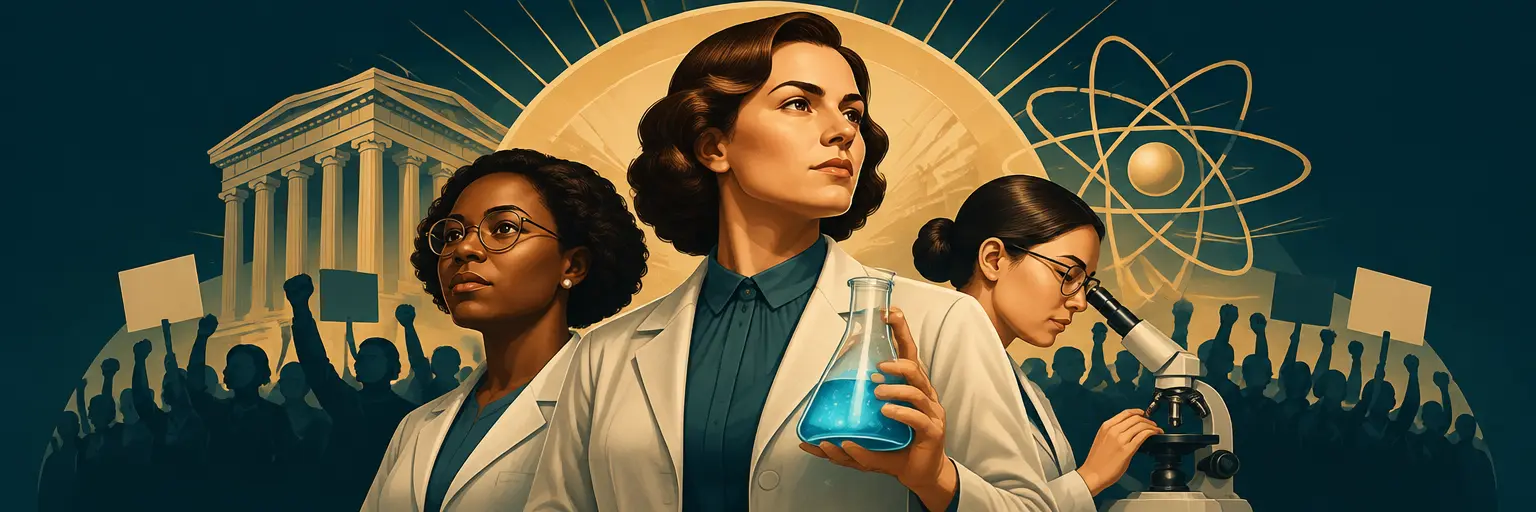
Social Movements & Women in Science: Catalysts for Change
Explore how broader social movements—from suffrage to civil rights and modern feminism—have propelled women into scientific fields and reshaped research agendas. This subcategory delves into the intersection of activism, policy, and scientific achievement, revealing how collective action has broken barriers and continues to drive equity in STEM. Learn about pivotal campaigns, influential networks, and the enduring legacy of women who turned societal pressure into scientific progress.
🌍 The Suffrage Movement & Early Scientific Pioneers
The fight for voting rights was intrinsically linked to women’s access to education and professional science. Early 20th-century suffragists like Alice Paul and Harriot Stanton Blatch leveraged scientific arguments to counter stereotypes, while scientists such as Ellen Swallow Richards (founder of home economics) used public health research to advocate for social reform. These efforts normalized women in laboratories and universities, creating a foundation for future generations.
Expect detailed case studies on how suffrage organizations supported early female researchers, funded their work, and integrated scientific literacy into activist platforms. You’ll also uncover lesser-known figures like Ethel Sargant, a botanist whose suffrage activism intertwined with her cytological discoveries, demonstrating that political engagement and rigorous science were mutually reinforcing.
📢 Second-Wave Feminism & Institutional Change (1960s–1980s)
Second-wave feminism challenged systemic exclusion in academia and industry, leading to landmark legislation like Title IX and the Equal Pay Act. Women scientists formed pressure groups, staged protests against discriminatory hiring, and pushed for childcare facilities on campuses. Biologist Ruth Hubbard and physicist Chien-Shiung Wu became vocal advocates, linking their research to broader critiques of male-dominated epistemologies.
This section examines how feminist critiques reshaped scientific methodologies, from primatology (e.g., Jane Goodall’s empathetic observation methods) to medical research that prioritized women’s health. You’ll learn about grassroots organizations like the Association for Women in Science (AWIS) and their role in documenting pay gaps, mentoring programs, and Title IX compliance—tools still used today.
🛡️ Civil Rights & Intersectional Activism in STEM
Intersectionality—coined by Kimberlé Crenshaw—highlights how race, gender, and class compound barriers. Activist-scientists like Shirley Ann Jackson (first Black woman PhD from MIT) and Yolanda Moses (anthropologist and civil rights leader) bridged movements, advocating for minority representation in labs and policy. The Black Lives Matter era reignited these efforts, prompting organizations like 500 Women Scientists to issue anti-racist action pledges.
Here, you’ll explore how diverse coalitions transformed institutional practices, including implicit bias training and funding pipelines for underrepresented groups. Case studies include Gladys West’s GPS contributions amidst segregation and modern efforts to decolonize science curricula by centering non-Western knowledge systems.
🌐 Global Solidarity Networks & Digital Activism
Modern digital platforms amplify women’s voices across borders. Hashtags like #MeTooSTEM and #ILookLikeAnEngineer exposed harassment, while online databases (Women in Science Today) and virtual mentoring schemes connect activists globally. International movements such as the STEM Sisters program in Australia demonstrate how social media accelerates change, bypassing traditional gatekeepers.
Expect analysis of crowdfunding for research repatriation, global strikes (e.g., Día Internacional de la Mujer) and their impact on science policy. You’ll also see digital archives like the VIVO network preserving oral histories of women scientists, ensuring their activism and research remain accessible to future activists.
🏛️ Policy Fights: Equal Opportunity & Research Funding
Beyond protests, women scientists have engaged in legislative advocacy to secure structural wins. The 1993 NIH Revitalization Act mandated inclusion of women in clinical trials—a victory led by epidemiologist Bernadine Healy and Representative Patricia Schroeder. Similarly, the establishment of the National Center for Women & IT (NCWIT) in 2004 created funding streams specifically for women in computing.
This subsection details how women navigated congressional hearings, wrote policy briefs, and formed alliances with civil rights groups. You’ll learn about state-level initiatives like California’s FabFems program, which pairs female scientists with junior researchers, and the ongoing battle to secure parental leave and anti-harassment protections in grant policies.
⚖️ Modern Movements: Climate Justice & Open Science
Today’s social movements intersect with science in unprecedented ways. Climate justice activists like Katharine Hayhoe link gendered impacts of environmental crises to advocacy for equitable research funding. Meanwhile, the open science movement challenges paywalls, promoting feminist principles of knowledge sharing and communal ownership—as seen in the Mozilla Open Leaders program.
Here, you’ll explore how women lead campaigns for data transparency (e.g., Data2X), resist corporate capture of research, and integrate indigenous knowledge into climate models. These efforts redefine what constitutes valid science, centering community outcomes over profit metrics, and are crucial for a just transition.
Frequently Asked Questions
How did the suffrage movement directly impact women in science?
The suffrage movement expanded educational and professional opportunities by normalizing women’s public roles. Suffragists often funded scholarships, lobbied for university co-education, and used scientific arguments to combat sexist pseudoscience. For example, suffragist Harriot Stanton Blatch organized science-briefed rallies, while biologist Ellen Richards tied public health to voting rights, securing male allies and institutional openings for future researchers.
What is the most significant legislative win for women in science?
The 1993 NIH Revitalization Act is pivotal—it mandated inclusion of women in federally funded clinical trials. Prior to this, many drugs were tested only on men, skewing medical evidence. Activists like Bernadine Healy and congressional champions drove the policy, leading to improved health outcomes. This law remains a model for global research equity policies and inspired similar mandates in the EU and Canada.
Are there still active movements for women in science today?
Absolutely. 500 Women Scientists (founded 2016) mobilizes for policy change and community science, while #MeTooSTEM campaigns against harassment. Digital networks like STEM Sisters and Ada Lovelace Day celebrate achievements and push for transparency in hiring, funding, and promotion. Climate justice and open access movements also prominently feature women scientists advocating for intersectional, equitable research practices.
How can I get involved in supporting women in science movements?
Start by supporting organizations like AWIS or Association for Women in Science through donations or volunteering. Advocate for inclusive policies in your own institution—join committees on hiring, sexual harassment, and childcare. Amplify women’s work on social media, mentor junior researchers, and participate in open source science projects. Every action counts, from local school outreach to national lobbying.
What resources exist to learn about women in science activism?
Explore the Women in Science (WiS) Archive at Harvard, the National Women’s History Project, and podcasts like “The Ladies Who Solve”. For primary sources, consult Scientific American’s historical articles and the Library of Congress’s Women Scientists Collection. Academic databases like JSTOR offer peer-reviewed papers on feminist epistemology, while Wikipedia’s Women in Science WikiProject actively documents activists and their campaigns.