Intersectionality & Women in Science: A Deeper Look at Overlapping Identities
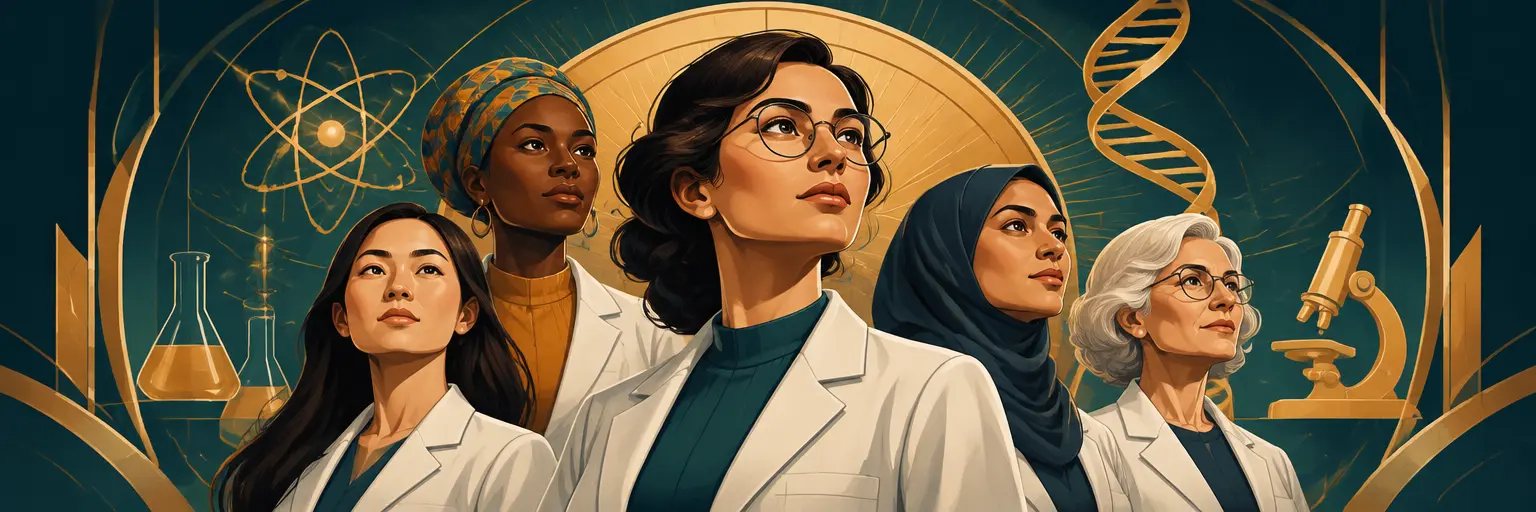
Welcome to our dedicated section on intersectionality and women in science, where we explore how overlapping social identities—such as race, class, sexuality, disability, and nationality—shape the experiences, barriers, and triumphs of female scientists. This is not just about adding diversity; it’s about understanding how systemic forces compound to create unique challenges for women at the crossroads of multiple marginalized groups. By examining these nuanced stories, we honor the full complexity of women’s contributions and pave the way for a more inclusive scientific community. Below, discover key facets of this vital topic through our curated explorations.
🔬 Historical Overlook: The Double Bind of Race and Gender
Historically, women of color in science faced a double bind—discrimination based on both gender and race often excluded them from laboratories, funding, and recognition. Pioneers like Katherine Johnson, Dorothy Vaughan, and Mary Jackson, portrayed in *Hidden Figures*, were relegated to “human computers” despite their mathematical genius. Their stories reveal how segregation and sexism intersected, forcing them to fight for every inch of progress while contributing to critical NASA missions. This section examines archival records and personal narratives to illuminate these overlooked pioneers, whose work laid foundational stones for modern aerospace and computing.
Understanding this historical context is essential because it demonstrates that scientific merit alone was never enough—social privilege often determined who got credit. By mapping the intersectional barriers these women faced, we can trace how institutional policies, from hiring quotas to promotion boards, were systematically biased. This exploration also highlights how solidarity among Black female scientists created informal networks of support, mentorship, and advocacy. Their resilience offers powerful lessons on navigating hostile environments, while also reminding us that the “Leaky Pipeline” is not uniform; it leaks far more severely at certain intersections, which we must address to truly diversify STEM fields today.
🧬 Contemporary Voices: Intersectionality in Modern Research Cultures
Today, women who hold multiple marginalized identities—such as being Black, disabled, or LGBTQ+—still report higher rates of harassment, imposter syndrome, and exclusion than their peers. Research by organizations like Nature and Science shows that intersectional microaggressions, such as being mistaken for a cleaner or having work questioned, disproportionately affect these groups. This subsection profiles contemporary scientists like Dr. Chanda Prescod-Weinstein, a cosmologist and advocate for Black feminist science, who actively challenges the field’s whiteness and patriarchy. Their work is not just about representation; it’s about redefining what counts as “good science” by incorporating diverse epistemic perspectives.
We also delve into how intersectional data collection is improving research outcomes—for instance, medical studies that ignore gender and race fail all patients, but particularly women of color. By highlighting case studies from epidemiology, environmental science, and AI ethics, we show that recognizing overlapping identities isn’t merely a matter of equity; it’s a matter of scientific accuracy and innovation. Expect to read interviews and opinion pieces from scientists who argue for intersectional frameworks in grant review, peer review, and lab management. These voices are reshaping institutional cultures, pushing for policies like flexible working, mental health support, and unbiased mentoring that benefit everyone, not just the “majority within minorities.”
⚖️ Institutional Barriers and Intersectional Policy Reforms
Scientific institutions—universities, funding agencies, and journals—have historically enacted policies that, while appearing neutral, disproportionately disadvantage women at the intersections. For example, tenure tracks often penalize career breaks for childbirth, but this burden is heavier for women from low-income backgrounds who lack family support or financial reserves. This section analyzes specific policy failures, such as the over-reliance on citation metrics that ignore research by scholars from the Global South, and the lack of accommodations for disabled women in lab environments. We present evidence-based arguments for **intersectional policy reforms**, including anonymous hiring, parental leave that includes all genders, and trauma-informed reporting mechanisms for harassment.
We also spotlight successful reform initiatives, like the Athena SWAN Charter in the UK, which now includes intersectionality requirements, and grassroots coalitions like Black Women in Ecology, Evolution, and Marine Science (BWEEMS). These programs demonstrate that systemic change is possible when institutions move beyond superficial diversity quotas to address root causes. By dissecting failure stories—such as universities enacting diversity policies but not funding them—we provide a roadmap for accountability. Readers will leave with actionable insights into how to advocate for changes in their own institutions, whether by auditing retention data by intersectional categories or by establishing complaint mechanisms that are actually safe for the most vulnerable scientists.
🌍 Global Perspectives: Intersectionality Beyond Western Borders
Intersectionality is not a one-size-fits-all concept; its meaning shifts across cultures, colonial histories, and geopolitical contexts. For instance, a woman scientist in Nigeria might face different overlapping pressures—ethnicity, religion, and postcolonial institutional legacies—than a Latina scientist in the U.S. This subsection brings global voices to the forefront, exploring how frameworks like decolonial feminism and postcolonial science studies offer critical tools. We feature stories from scientists in India, Brazil, South Africa, and the Middle East, who navigate both local patriarchal norms and international research hierarchies that often devalue their work. Their experiences reveal that global science is not a meritocracy but a deeply stratified system.
Moreover, we examine how international collaborations can either exacerbate or alleviate intersectional inequalities. For example, when Global North researchers “parachute” into the Global South, they often take credit while local women remain invisible. Conversely, equitable partnerships that foreground local leadership and compensate fairly can empower women scientists and their communities. This section also addresses climate science’s intersectional impact, where women from the Global South are both most affected by environmental change and least represented in decision-making. By amplifying these narratives, we stress that intersectionality is a global justice issue—one that requires Western scientists to relinquish power and listen to marginalized voices whose knowledge is vital for solving planetary crises.
📚 Educational Pathways and Mentorship for Intersectional Inclusion
Education is both a battleground and a haven for intersectional change. From early STEM classrooms where stereotypes are reinforced, to graduate programs that push out diverse students, the pipeline is leaky where intersections are ignored. This section explores **evidence-based teaching practices** that foster inclusion, such as culturally responsive curriculum, gender-neutral classroom language, and mentorship programs that match students with mentors sharing similar intersectional identities. We cite research showing that student retention improves dramatically when they see themselves reflected in faculty and when their unique challenges—like being a single mother or a first-generation student—are acknowledged and accommodated.
We also highlight mentoring initiatives like Million Women Mentors and Mentoring365 that specifically target women of color, LGBTQ+ scientists, and disabled researchers. These programs go beyond generic advice, offering practical guidance on navigating microaggressions, negotiating salaries as a minority, and building resilience in hostile institutional cultures. Additionally, we discuss the role of **online communities**—such as #BlackInScience and #DisabledInSTEM—that create belonging and share resources. By providing lists of scholarships, fellowships, and grants exclusively for intersectional minorities, we empower aspiring scientists to find the support they need. Higher education’s future depends on dismantling the myth of a “single woman’s experience” and embracing the full tapestry of human identity in science.
Frequently Asked Questions
What exactly does “intersectionality” mean in the context of women in science?
Intersectionality, coined by Kimberlé Crenshaw, examines how overlapping social identities—like race, gender, class, disability—create unique modes of discrimination and privilege. For women in science, this means a Black disabled woman’s experiences differ from a white able-bodied woman’s, with multiple biases compounding. In our context, we highlight firsthand accounts and research showing how these intersections affect hiring, funding, and retention, urging more nuanced, tailored interventions rather than one-size-fits-all diversity efforts.
Why is it important to study historical women of science with an intersectional lens?
Because traditional histories often highlight only white, middle-class women, erasing the contributions of women of color, working-class scientists, or those with disabilities. Applying an intersectional lens reveals how these pioneers faced layered obstacles and yet achieved greatness. It corrects the record, provides role models for today’s diverse students, and illustrates how systemic biases—not just individual brilliance—determine who gets remembered as a “great scientist.”
Can intersectional frameworks help solve the “leaky pipeline” problem in STEM?
Absolutely. The “leaky pipeline” is not uniform; leaks occur more at intersections. For example, women from minority ethnic groups leave STEM at higher rates due to combined racism and sexism. Intersectional frameworks identify specific choke points—like biased mentoring or hostile lab cultures—and design targeted solutions. By collecting demographic data that includes multiple identities, institutions can pinpoint who is leaving and why, then implement policies that plug those exact leaks, improving retention for all.
What are some practical steps institutions can take to become more intersectionally inclusive?
Institutions can conduct anonymous intersectional audits to reveal disparities in pay, promotion, and workload. They should reform hiring committees to include diverse members and use structured, bias-reduced interviews. Developing mentorship programs that match underrepresented women with allies and peers is crucial. Additionally, they must create clear, safe reporting channels for harassment and implement parental leave that supports all family structures. Finally, funding should be tied to demonstrating intersectional progress, not just vague diversity statements.
How can I become an ally to women at the intersections of multiple marginalized groups?
Start by educating yourself on intersectionality—read works by scholars like Prescod-Weinstein and Crenshaw, attend workshops, and listen without defensiveness. In the lab or classroom, actively amplify voices of minority women, giving credit where due. Challenge microaggressions when you see them, and support policy changes like flexible work and inclusive curricula. Most importantly, use your privilege to advocate behind the scenes, ensuring your allyship is consistent, unasked for, and centered on their agency—not your ego.