Societal Norms & Women in Science: Breaking Barriers That Shaped History
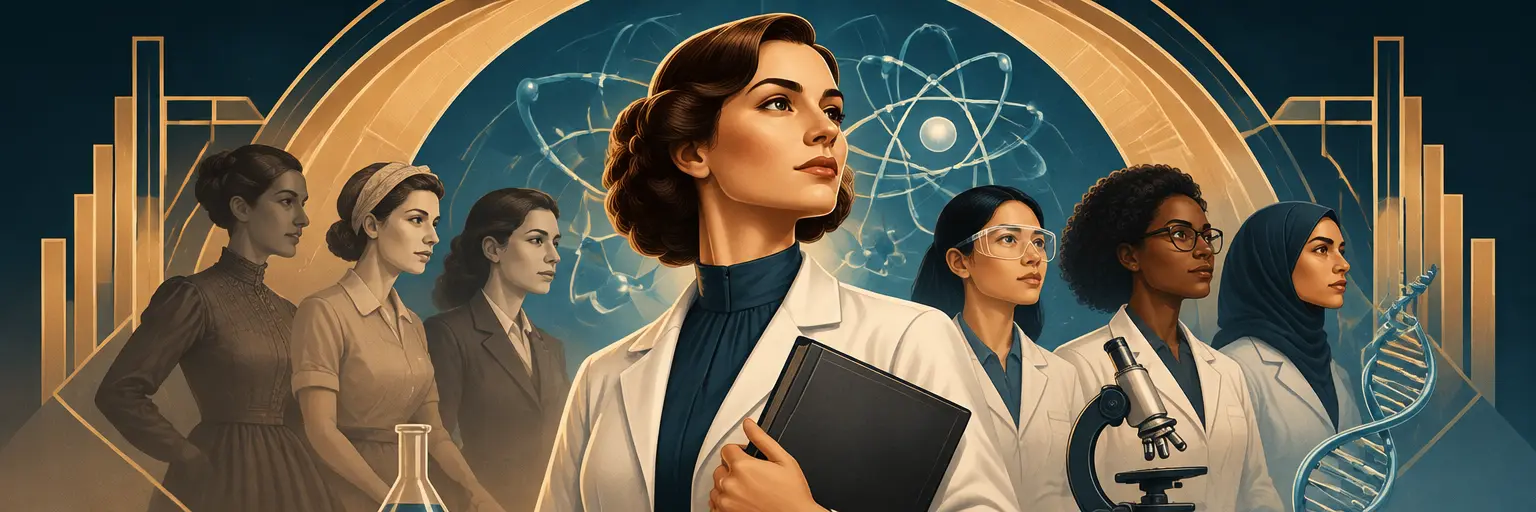
Welcome to our dedicated section on Societal Norms & Women in Science, where we explore the powerful, often invisible forces that dictated who could enter laboratories, publish papers, or receive credit for discoveries. Here, we unpack how cultural expectations, educational restrictions, and institutional biases influenced the careers of pioneering female scientists. From the Victorian era’s “separate spheres” ideology to mid-20th-century workplace exclusions, understanding these norms is essential to appreciating the magnitude of every breakthrough achieved against the odds. This archive is your resource for contextualizing the biographies on WomenInScienceHistory.com, revealing why certain women chose particular fields, how they navigated social censure, and what legacy their resilience left for modern STEM.
🔬 The Historical Limits on Women’s Scientific Education
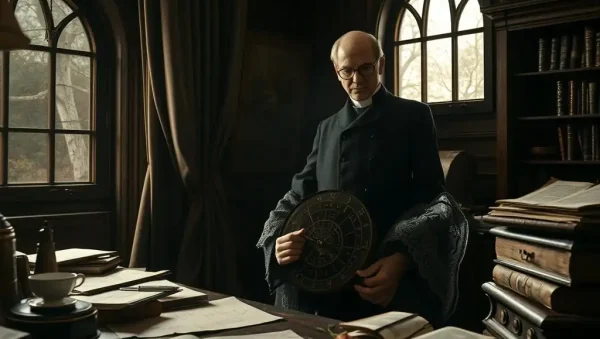
For centuries, formal scientific education was explicitly barred to women, with universities like Cambridge refusing degrees until 1948. This subcategory examines how societal assumptions about female intellect—rooted in pseudoscientific theories of the 19th century—determined access to laboratories, collections, and mentoring networks. Women like Elizabeth Blackwell overcame these barriers through private study or by attending newly founded women’s colleges, while others relied on family workshops or brothers' tutoring. These constraints shaped not only who became a scientist but also the types of research women could pursue, often pushing them toward botany or astronomy where observation was deemed “appropriate” rather than experimental fields like chemistry or physics.
Our content here details specific institutional policies, such as the French Academy of Sciences excluding women until 1979, and the workaround strategies women employed—like Marie Curie’s informal lab access. We also highlight how class and race intersected with gender, as Mary Anning’s fossil hunting was dismissed partly because she was working-class. By understanding these educational barriers, readers gain a clearer picture of why many breakthroughs were initially credited to male colleagues, and how the fight for coeducation became a pivotal chapter in women’s rights history.
👩🔬 Gender Stereotypes and the “Soft Science” Bias
Societal norms have long categorized science into “masculine” fields—physics, engineering, mathematics—and “feminine” ones like nutrition, child psychology, or botany. This section unpacks how these labels affected funding, prestige, and research opportunities. For example, Rosalind Franklin’s work on DNA was framed as “technical assistance” rather than theoretical leadership, while Barbara McClintock’s maize genetics was dismissed for years as too “descriptive.” We explore the rhetoric of the time, from scientific journals that questioned women’s emotional stability to popular media that painted female researchers as anomalies or social misfits. These stereotypes not only diminished their achievements but also pressured women to adopt traditionally male communication styles to be taken seriously.
Our coverage includes case studies of women who deliberately chose fields with less professional resistance, like Annie Jump Cannon’s stellar classification, and those who defied expectations entirely, such as Lise Meitner in nuclear physics. We also analyze how the “double bind” worked: if a woman was methodical, she was seen as uncreative; if creative, seen as unreliable. This section provides historical context for contemporary STEM gender gaps, offering evidence that these biases are not innate but culturally constructed and thus changeable.
🏛️ Workplace Exclusion and the “Two-Body Problem” in Academia
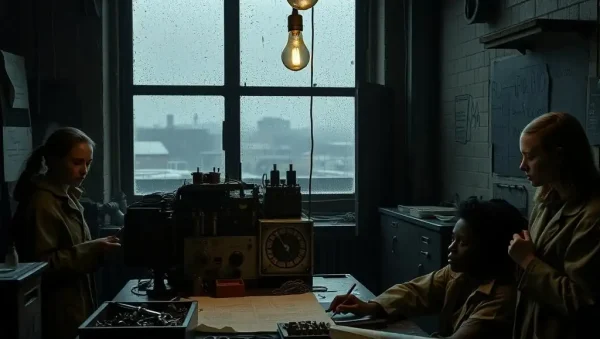
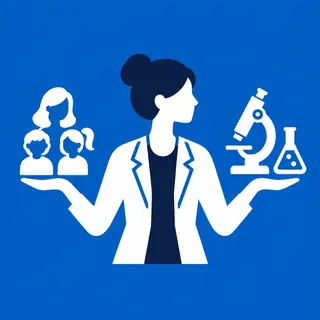
Even when women earned degrees, societal norms dictated that marriage and motherhood precluded serious scientific careers. Many universities enforced anti-nepotism rules that prevented husbands and wives from holding faculty positions together—a direct barrier for couples like Marie and Pierre Curie, who initially worked without salary. This subcategory documents the informal policies that limited lab space, travel grants, and publication credits. We also examine the “civil service” approach in places like the Harvard Observatory, where women were hired as low-paid “computers” (like Henrietta Swan Leavitt) despite doing original research. These roles were deemed acceptable because they were seen as clerical, even when they produced groundbreaking discoveries like the period-luminosity relation for Cepheid variables.
Beyond academia, we cover industrial and governmental laboratories, where women faced separate restrooms, dress codes, and wage disparities. We feature stories of women who circumvented these norms by creating independent research institutes, such as Florence Sabin’s work at Rockefeller after retirement, or who leveraged philanthropy, like the Rockefeller Foundation’s grants specifically for women. This section also addresses the “leaky pipeline” concept historically, showing how many talented women left science careers not due to lack of ability but due to cumulative microaggressions and structural exclusion.
🌍 Media Representation and the Invisibility of Female Genius
Societal norms are reinforced through media, and this subcategory analyzes how newspapers, films, and textbooks portrayed women scientists. For decades, female researchers were either omitted from history books or depicted as “assistants” to male mentors. For instance, the Nobel Prize was rarely awarded to women (only Marie Curie, twice, and later Dorothy Hodgkin), but even then, coverage focused on their marital status or appearance rather than their methodologies. This section deconstructs these narratives, showing how highlighting “the first woman to…” often underscored their exceptionality rather than normalizing their presence. We also discuss the impact of biographies for children, which overwhelmingly featured male scientists, influencing generations of young readers to associate science with masculinity.
On our site, you’ll find analysis of 19th-century scientific illustrations that excluded women from group photos, or how publications like Scientific American framed female contribution as a novelty. We celebrate counterexamples, such as the popularization of Rachel Carson’s work in the 1960s, which used environmentalism to link “feminine” care with scientific rigor. By learning how perception is shaped, readers can more critically evaluate present-day media, recognizing lingering biases in how women in STEM are described—often as “nurturing” rather than “brilliant.”
🕊️ Resilience Strategies and Subversive Networks
Against overwhelming odds, women scientists developed clever workarounds, and this section highlights their resilience techniques. Some used pseudonyms (like Jane Goodall’s early publications), while others collaborated across continents to share data through informal letters—networks such as the “Botanical Ladies” of the 18th century. We also cover mentorship circles, where senior women like Maria Mitchell actively trained young women in astronomy, creating a chain of opportunity. These strategies were not merely individual—they often required defiance of decorum, such as Florence Nightingale using her fame to champion statistical methods. Here, we detail how women leveraged their “outsider” status to challenge established paradigms, as when Barbara McClintock’s genetic work was validated years later, proving that contrarian perspectives can reshape science.
This subsection also explores the emotional and psychological costs of these strategies, including isolation and self-doubt, but ultimately frames them as evidence of extraordinary drive. We include how some women disguised themselves as men (e.g., James Barry as a physician) or used male pseudonyms to get published. We aim to provide actionable lessons for today’s scientists—how to build coalitions, document contributions meticulously, and choose battles wisely, based on the historical playbook of pioneering women. These narratives underscore that resilience is not a natural trait but a set of learned, deliberate actions.
🔍 Debunking Myths and Reclaiming Historical Credit
One of the most common societal norms is the myth that women did not contribute to “hard” sciences or that their discoveries were minor. This subcategory systematically debunks these falsehoods by revisiting primary sources, lab notebooks, and correspondences. For example, we examine how Jocelyn Bell Burnell’s discovery of pulsars was overshadowed by the male supervisor’s Nobel Prize, and how Esther Lederberg’s work on lambda phage was downplayed in favor of her husband’s. Through archival evidence, we reconstruct the true division of labor, showing that many “assistants” were intellectual equals. This is not about glorifying women but about correcting the historical record, which misrepresents science’s collaborative nature.
Our site offers timelines and side-by-side comparisons of credited vs. actual contributions, such as Nettie Stevens’ discovery of chromosomal sex determination, often credited to E.B. Wilson. We also analyze why certain women’s names became footnotes—how peer review, citation habits, and obituaries systematically erased their role. By presenting these facts, we aim to change educational curricula and public awareness. This section is essential reading for educators who want to teach an accurate scientific history, and for researchers who want to understand the subtle mechanisms of credit allocation in contemporary academia.
Frequently Asked Questions
Why were women historically excluded from scientific education?
Societal norms rooted in Victorian gender roles held that women’s brains were unsuited for abstract reasoning, and that education would harm their fertility or moral character. Universities like Harvard and Oxford enforced explicit bans, while others limited women to “ladylike” subjects like botany. This exclusion was reinforced by religious texts and popular science, creating a self-fulfilling prophecy of male-dominated disciplines.
How did women manage to conduct research without formal training?
Many women learned through private tutors, family members, or by auditing lectures informally. Others worked as unpaid assistants to male relatives, as Marie Curie did initially. Some, like Mary Somerville, were self-taught through library archives. Later, women’s colleges such as Mount Holyoke provided rigorous science education, producing a generation of researchers like Annie Jump Cannon.
What were the most common jobs available for women in 19th-century science?
Women were often hired as astronomical “computers” at observatories, performing mathematical calculations under male supervision. They also worked as botanical illustrators, lab assistants, and cataloguers. These roles were classified as clerical, which kept salaries low and denied credit, even when women like Williamina Fleming discovered hundreds of variable stars.
Did any women win Nobel Prizes early in history?
Yes, Marie Curie won Physics in 1903 and Chemistry in 1911, but she had to be nominated by her husband. Her daughter Irène Joliot-Curie won Chemistry in 1935. Later, Gerty Cori won Physiology or Medicine in 1947. However, many deserving women like Lise Meitner were repeatedly passed over due to bias.
How can modern society reduce the impact of old stereotypes?
Actionable steps include revising textbooks to include female scientists, actively citing women’s original works, and funding mentorship programs. Institutions should audit salary and promotion equity, and media should depict women in STEM as multidimensional, not overly nurturing or exceptional. Schools can create inclusive lab environments that challenge “genius” myths and value collaboration.