Allies or Adversaries? The Evolving Role of Men in Women's Scientific Equality
🌟 Men supporting women science equality play a crucial role in fostering inclusive progress, transforming allies into active partners in breaking barriers…
Read article
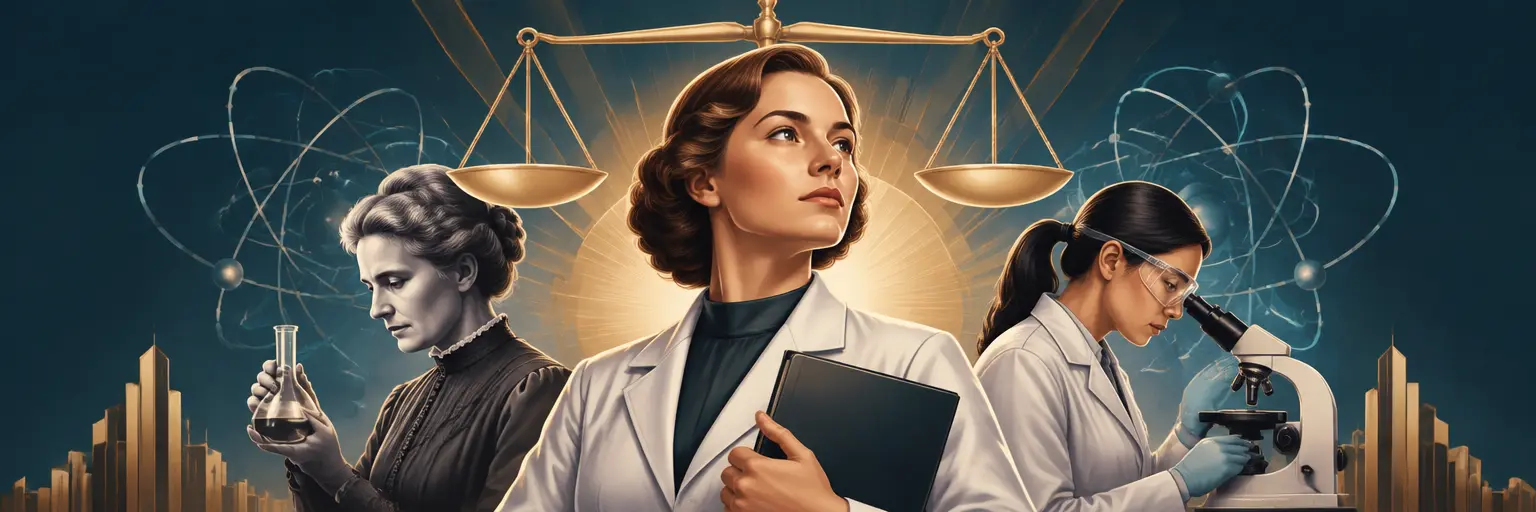
Uncover the relentless pursuit of gender equality in the scientific community—a journey marked by brave pioneers, institutional barriers, and transformative victories. From breaking through laboratory doors to challenging biased research paradigms, this fight reshaped who gets to ask questions and whose answers matter. Discover how trailblazing women fought for equal funding, fair credit, and inclusive workplaces, while confronting stereotypes that once deemed science a “masculine” domain. Their collective activism sparked policy changes, mentorship networks, and a redefinition of scientific excellence itself. Explore the ongoing struggle for representation in STEM fields, from classroom ceilings to Nobel committees, and see why equality in science isn’t just about fairness—it’s about unlocking diverse genius that benefits humanity. This narrative celebrates resilience, exposes persistent inequities, and offers a roadmap for future change, proving that the fight for equality is as vital in labs and lecture halls as anywhere else.

🌟 Men supporting women science equality play a crucial role in fostering inclusive progress, transforming allies into active partners in breaking barriers…
Read article
🌟 Discover how women scientist mentorship legacy challenges have shaped groundbreaking progress in science. This inspiring article highlights the enduring power of…
Read article
🌟 Gender inequality science statistics history reveal persistent disparities faced by women in science. Despite groundbreaking contributions, female scientists have historically encountered…
Read article
🌟 Celebrating women in science recognition, this article honors the often-overlooked heroines whose groundbreaking work reshaped history. By spotlighting their struggles and…
Read article
🌟 Women scientists breaking glass ceilings are transforming the landscape of science, overcoming barriers and inspiring future generations. Their groundbreaking achievements reveal…
Read article
🌟 Women's science higher education challenges have historically posed formidable barriers, yet pioneering women persevered, breaking barriers and inspiring future generations. Their…
Read article
🌟 The exclusion of women in science has stifled groundbreaking discoveries and wasted immense potential. By neglecting female scientists' contributions, society bears…
Read articleWelcome to our deep dive into The Fight for Equality in Science, a pivotal subcategory within our Social & Societal Impact section at WomenInScienceHistory.com. Here, we examine the systemic barriers, courageous activism, and landmark victories that have shaped women’s participation in STEM fields. From suffrage-era campaigns to modern intersectional movements, this space uncovers how gender bias, institutional policies, and cultural norms have been challenged and transformed. Expect a blend of historical analysis, personal narratives, and ongoing debates that illuminate why equality in science is not just a moral imperative but a catalyst for innovation. Let’s explore the resilience that turned exclusion into empowerment.
This section focuses on the formal barriers women faced—such as university admission bans, laboratory access restrictions, and professional society exclusions—and the landmark lawsuits, policy shifts, and institutional reforms that dismantled them. Learn how figures like Elizabeth Blackwell and Marie Curie navigated hostile systems, and how Title IX and equal opportunity legislation in various countries opened doors for future generations. We analyze the ripple effects of these victories on research funding, lab leadership, and academic tenure.
Expect a chronological walkthrough of key legal milestones, from the first female medical degrees to modern diversity charters in STEM workplaces. We also highlight lesser-known activists, such as Matilda Joslyn Gage, who fought for scientific education rights, and institutional allies who reformed hiring practices. By understanding these structural changes, you’ll grasp how today’s equitable policies are built on decades of persistent advocacy—and why vigilance remains crucial against subtle rollbacks.
Here, we unpack the informal biases that persist even after legal equality: peer-review prejudice, citation gaps, underrepresentation in high-impact journals, and the “Matilda Effect” where women’s contributions are attributed to male colleagues. We profile studies showing how double-blind review and diverse editorial boards improve outcomes, and we spotlight detectives like historian Margaret Rossiter who exposed systematic erasure. This section is a toolkit for recognizing and countering unconscious bias in everyday scientific practice.
Readers will find actionable insights on mentoring, sponsorship, and allyship, plus data-driven analyses of grant award disparities. We also celebrate modern advocacy groups like 500 Women Scientists and their campaigns for transparent, equitable review processes. Whether you’re a student submitting your first paper or a principal investigator shaping lab culture, this content equips you with evidence-based strategies to make research truly meritocratic.
Equality in science is not monolithic; this section examines how overlapping identities—such as race, ethnicity, socioeconomic status, and geography—compound or mitigate barriers. Explore the stories of trailblazers like Alice Ball, Jewel Plummer Cobb, and Wangari Maathai, whose achievements intersect with colonialism, segregation, and economic exclusion. We discuss how global movements, from post-war reconstruction to decolonizing STEM curricula, have reshaped who gets to be called a scientist.
Dive into comparative analyses of policies in the U.S., Europe, India, and Africa, revealing different pathways to inclusion. We also interrogate current challenges, such as the underrepresentation of Black and Indigenous women in physics, and highlight grassroots initiatives that foster local talent. By centering intersectional narratives, this section ensures that the fight for equality honors every woman’s unique struggle and contribution—not just those from privileged backgrounds.
No breakthrough happens in isolation. Here, we celebrate the power of women’s scientific networks, from 19th-century salons to modern digital communities like #BlackInSciComm and Women in STEM groups on LinkedIn. Historical case studies include the “Golden Age” of women’s colleges and the rise of professional organizations like AWIS and the Association for Women in Mathematics. Learn how these networks provide mentorship, funding access, and emotional solidarity that counteract isolation and imposter syndrome.
This section offers practical guides for building your own coalition, whether in academia, industry, or policy—and highlights how intergenerational mentorship has passed down both technical skills and strategic advocacy. We also analyze the role of male allies, from supportive husbands like Pierre Curie to institutional champions who created equitable lab spaces. Expect inspiring stories of collective wins, such as the successful campaigns for maternity leave policies and childcare support in research institutions.
Data tells a story of both triumph and unfinished business. This section presents longitudinal statistics on women’s representation across disciplines—from near-parity in biology to persistent scarcity in engineering and computer science. We dissect metrics like the leaky pipeline, glass ceiling, and productivity penalties, and discuss how measurement itself can be biased. Visualize trends in Nobel Prizes, patent authorship, and editorial positions to see where gains have plateaued or reversed.
Critically, we examine how recent global crises, such as the COVID-19 pandemic, disproportionately disrupted women’s research productivity due to caregiving burdens. We also spotlight new methodologies for tracking inclusivity, such as gender-disaggregated funding audits and citation parities. By grounding the fight for equality in rigorous evidence, this section empowers readers to become effective advocates who can argue for change with confidence and precision.
One of the earliest was the 1876 decision that allowed women to enroll in the University of Zurich’s medical program, producing pioneers like Nadezhda Suslova. In the U.S., the 1964 Civil Rights Act and Title IX (1972) were landmark, prohibiting sex discrimination in federally funded education programs, opening lab courses and professional schools.
Start by auditing your own practices: use inclusive language, cite women’s work explicitly, and participate in double-blind review whenever possible. Advocate for transparent hiring and promotion criteria, and support policies like paid parental leave and flexible hours. Ally with mentorship programs and donate to organizations that fund underrepresented researchers.
The Matilda Effect occurs when women’s discoveries are attributed to male colleagues, erasing their credit and discouraging future participation. It distorts the historical record, misdirects funding and citations, and wastes talent by pushing women away from research careers. Correcting it means actively researching and narrating the true originators of breakthroughs.
Male allies can amplify women’s voices by consistently crediting their work, introducing them to influential networks, and challenging biased remarks in real time. They can also use their privilege to advocate for structural changes—such as family-friendly policies—without taking over the agenda. Effective allies listen more than they speak and transfer power, not just visibility.
Yes, in many life sciences, veterinary medicine, psychology, and social sciences, women earn the majority of doctoral degrees. However, representation drops sharply in physics, computer science, and engineering, and women remain underrepresented in senior leadership and Nobel-level recognition even in “feminized” fields. Equality means balanced representation at every career stage, not just entry levels.