
East vs. West: Divergent Societal Paths and Pressures for Women in Science Globally


Welcome to WomenInScienceHistory.com!
Delve into the fascinating and often untold stories of women who shaped the scientific landscape. This site celebrates their ingenuity and resilience, but what happens when societal norms clash with scientific aspirations? In this article, we explore the intriguing contrasts between East and West, examining the divergent societal paths and pressures that women's science global societal pressures faced, and continue to face, in different corners of the world.
Discover how these forces have influenced their opportunities and achievements, and perhaps, uncover lessons for a more equitable future. Curious to understand the profound impact of culture on scientific progress? Read on to uncover these critical insights.
- Bridging the Gap: Societal Influences on Women in STEM Across Developed and Developing Nations
- Defining "Developed" and "Developing" Nations in the Context of Women in STEM
- Societal Expectations and Women's Roles in STEM: A Comparative Overview
- Pressures on Women in STEM: Developed vs. Developing Nations
- Educational Access and STEM Opportunities for Women: Developed-Developing Comparison
- Case Studies: Women in STEM in Developed and Developing Contexts
- Cultural Influences on Women's STEM Careers
- Addressing Gender Bias in STEM: Global Efforts and Regional Approaches
- Overcoming Societal Pressures: Strategies for Women in STEM Globally
- The Future of Women in STEM: Fostering Global Collaboration and Equity
- Conclusion: Societal Influences on Women in STEM and Future Directions
-
Frequently Asked Questions
- How did societal expectations in Eastern cultures historically impact women's participation in science compared to Western cultures?
- What specific global societal pressures did women scientists commonly face, regardless of their location (East or West)?
- In what ways did the Women in Science History website address the challenges highlighted in the article's title?
- How did differing East vs. West cultural norms shape the perception and treatment of women's scientific contributions?
- What are some examples of groundbreaking work by women scientists that the article may highlight, and how did global societal pressures affect their journey?
- Final Reflection: Bridging the Divide for Women in Science
- Empower Change: Champion Women in Science Now!
Bridging the Gap: Societal Influences on Women in STEM Across Developed and Developing Nations
Historical Underrepresentation of Women in STEM Fields
Throughout much of history, women's contributions to scientific fields have been systematically overlooked, minimized, or outright suppressed. From ancient civilizations to the Enlightenment and beyond, societal norms often confined women to domestic roles, effectively barring them from formal education and scientific inquiry. Even when women made groundbreaking discoveries, their work was frequently attributed to male colleagues or dismissed as amateur pursuits, contributing to a persistent historical underrepresentation that still casts a long shadow on women’s science global societal pressures.
This historical marginalization is reflected in the disproportionately low numbers of women recognized in science textbooks and prestigious awards. For instance, less than 6% of Nobel Prizes in scientific fields have been awarded to women since their inception, underscoring a systemic bias that has historically limited visibility and opportunities. This legacy means that despite significant progress in recent decades, the journey for women in science remains one of overcoming ingrained historical disadvantages.
Examining the Impact of Developed vs. Developing Nation Contexts
The landscape of women’s science global societal pressures is not uniform; it varies significantly between developed and developing nations. In countries with advanced economies and robust social infrastructures, the challenges for women in STEM often revolve around issues of implicit bias, work-life integration, and representation in leadership roles. These are often subtle yet pervasive barriers that affect career progression and recognition.
Conversely, women in STEM in developing nations frequently confront more fundamental obstacles. These can include limited access to quality education, inadequate scientific infrastructure, deep-seated cultural expectations that prioritize traditional gender roles, and severe socioeconomic constraints. Understanding these divergent contexts is crucial to formulating effective strategies that empower women in science worldwide.
Defining "Developed" and "Developing" Nations in the Context of Women in STEM
"Developed nations" typically refers to countries characterized by high levels of economic development, indicated by a high Gross Domestic Product (GDP) per capita, robust industrialization, and a significant service sector. These nations generally boast advanced social infrastructure, including universal access to quality education, comprehensive healthcare systems, and well-established research and development facilities. Such environments often provide a foundation for greater investment in STEM education and research, potentially offering more pathways for women to enter and thrive in scientific careers.
"Developing nations," conversely, are generally characterized by lower GDP per capita, economies often reliant on agriculture or nascent industries, and less developed social infrastructure. Access to basic education, healthcare, and advanced scientific facilities can be limited, particularly in rural areas. These economic and infrastructural disparities profoundly influence the opportunities available to women pursuing science, shaping the specific women’s science global societal pressures they encounter.
Acknowledging Diversity Within Developed and Developing Nations
It is crucial to recognize that the terms "developed" and "developing" encompass a vast spectrum of nations, each with its unique cultural, economic, and social nuances. Within developed countries, significant regional disparities can exist, with urban centers often offering more opportunities and support for women in STEM than rural areas. Socioeconomic status and racial or ethnic background can also play a significant role in determining access and success, even within seemingly equitable systems.
Similarly, "developing nations" is a broad category that includes rapidly emerging economies like India and Brazil, which have made considerable strides in certain STEM sectors, alongside least developed countries where basic educational access remains a critical challenge. For example, while Rwanda has made impressive gains in promoting girls' education in STEM, challenges in infrastructure persist. This internal diversity means that solutions to address women’s science global societal pressures must be tailored and context-specific, avoiding a one-size-fits-all approach.
Societal Expectations and Women's Roles in STEM: A Comparative Overview
Developed Nations: Emphasis on Career Advancement and Gender Equality
In many developed nations, there is a strong societal emphasis on gender equality and individual career advancement, driven by decades of feminist movements and policy reforms. Women are increasingly encouraged to pursue higher education and enter traditionally male-dominated fields, including STEM. Governments and institutions often implement initiatives such as affirmative action, parental leave policies, and anti-discrimination laws aimed at fostering equitable opportunities and professional growth for women in science.
Despite these advancements, subtle but persistent societal expectations continue to influence women's roles. The expectation that women will disproportionately bear the burden of childcare and household responsibilities, for instance, can still impact career trajectories, leading to reduced hours, career breaks, or slower advancement compared to male counterparts. This highlights how women’s science global societal pressures can manifest even in seemingly progressive environments, often through implicit biases and systemic structures rather than overt discrimination.
Developing Nations: Prioritization of Family Needs and Traditional Roles
In many developing nations, traditional gender roles often remain deeply entrenched, placing a primary emphasis on women's roles as caregivers and homemakers. Societal expectations may dictate early marriage and childbearing, which can significantly curtail educational opportunities and career aspirations in STEM. For example, in some rural communities, girls are expected to marry and start families in their mid-to-late teens, making the pursuit of a university degree or a demanding scientific career extremely challenging.
These traditional roles can be reinforced by cultural norms and economic realities, where a woman’s contribution to the household is often valued more in terms of domestic labor or immediate income generation than long-term professional development. This can lead to significant women’s science global societal pressures that divert talented young women away from STEM fields, even if they possess the intellectual aptitude and interest, as societal and family expectations often overshadow individual career ambitions.
Pressures on Women in STEM: Developed vs. Developing Nations
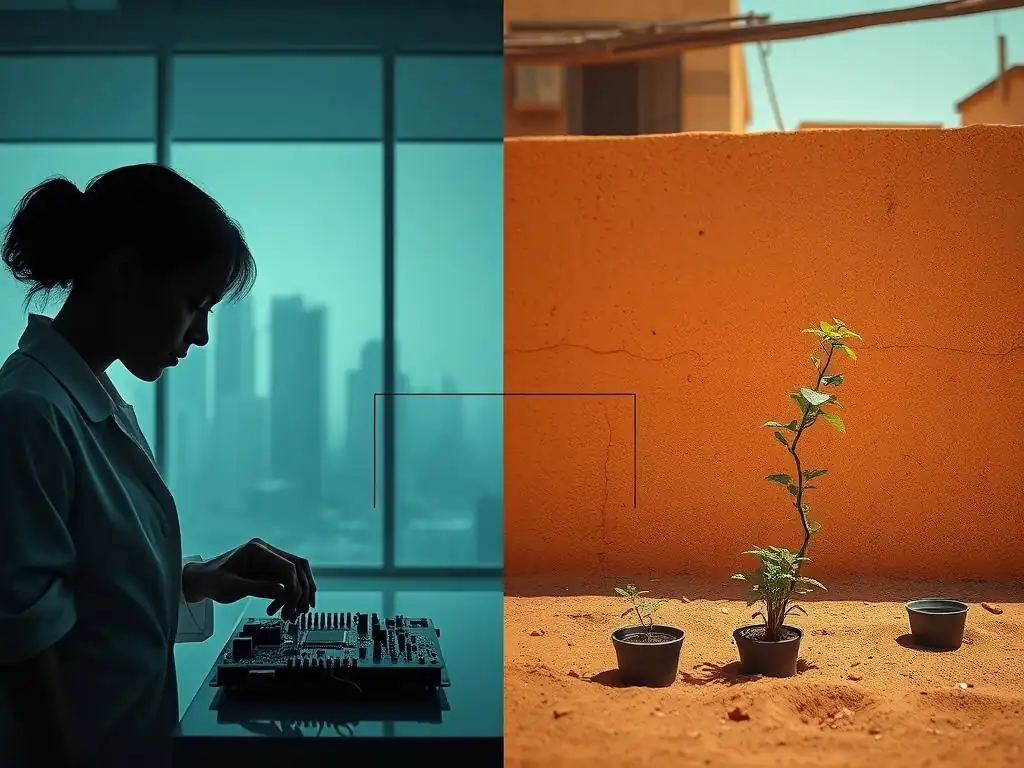
Developed Nations: Work-Life Integration, Implicit Bias, and Leadership Representation
Women in STEM in developed nations frequently face pressures related to work-life integration. The demanding nature of scientific careers, often requiring long hours and intense focus, clashes with societal expectations of women as primary caregivers. Surveys in countries like the United States and the UK consistently show that women scientists, particularly those with children, report greater difficulty balancing professional demands with family responsibilities compared to their male peers. This struggle is a significant contributor to the "leaky pipeline," where women leave STEM at higher rates, especially after postdoctoral work or mid-career.
Furthermore, implicit biases and a lack of representation in leadership roles persist as significant women’s science global societal pressures. Studies indicate that women are often evaluated differently in hiring, promotion, and grant allocation processes, even when objective criteria are applied. For example, while women earn approximately half of all STEM bachelor's degrees in many developed countries, they hold less than 30% of senior research positions and less than 20% of full professorships in fields like engineering and computer science, demonstrating a clear barrier to advancement beyond entry-level roles.
Developing Nations: Limited Resources, Educational Barriers, and Cultural Expectations
In developing nations, the pressures on women in STEM are often more foundational. Access to quality education, particularly in specialized scientific disciplines, remains a significant hurdle. In many rural areas, girls may not even complete primary education due to factors such as poverty, the need to contribute to household income, or long distances to schools. Even for those who do access education, the lack of well-equipped laboratories, up-to-date curricula, and qualified STEM teachers can severely limit their scientific development.
Beyond educational access, deeply ingrained cultural expectations and limited resources combine to create formidable women’s science global societal pressures. Women may face pressure to marry young, prioritize family over career, or choose professions perceived as more "suitable" for women, such as teaching or nursing, rather than demanding scientific research roles. Furthermore, inadequate funding for scientific research, limited job opportunities in advanced STEM fields, and a general lack of infrastructure (e.g., reliable internet, electricity) can make pursuing a scientific career an almost insurmountable challenge.
Educational Access and STEM Opportunities for Women: Developed-Developing Comparison
Developed Nations: Advanced STEM Education and Research Opportunities
Developed nations generally offer extensive and high-quality STEM education from early childhood through advanced postgraduate studies. Curricula are typically well-resourced, with access to modern laboratories, computational tools, and a wide array of specialized STEM programs. Universities in these regions are often world-renowned research hubs, providing opportunities for cutting-edge scientific inquiry and collaboration. Women in these contexts have access to a broad spectrum of STEM fields, from advanced robotics to molecular biology, supported by a vast network of institutions and funding bodies.
Despite this robust infrastructure, disparities in access and opportunity can still exist. For instance, while enrollment of women in STEM fields has increased significantly, certain disciplines like computer science and engineering still show lower female representation compared to fields like biology or chemistry. Furthermore, socioeconomic background can influence access to elite institutions or specialized programs, meaning that even in developed nations, not all women have equal opportunities to leverage the advanced STEM education and research landscape.
Developing Nations: Basic Education Access and Limited STEM Infrastructure
In many developing nations, the primary challenge for women in STEM begins with basic educational access. Millions of girls worldwide are still denied the opportunity to complete primary or secondary education due to poverty, cultural norms that prioritize boys' education, or lack of safe and accessible schools. Even when girls do attend school, the quality of STEM education can be severely limited by a lack of trained teachers, outdated textbooks, and non-existent laboratory facilities, making the study of science abstract and unengaging.
Beyond basic education, the infrastructure for advanced STEM training and research is often nascent or severely underfunded. Universities may lack the resources for postgraduate research, and opportunities for specialized training or international collaboration are scarce. This fundamental lack of infrastructure and basic access to quality education creates significant women’s science global societal pressures, making it incredibly difficult for women to build foundational scientific knowledge, let alone pursue advanced research careers.
Case Studies: Women in STEM in Developed and Developing Contexts
Dr. Anya Sharma: Overcoming Barriers in Rural India to Lead a Biotech Startup
Dr. Anya Sharma's journey began in a small village in rural Uttar Pradesh, India, where access to quality education, particularly for girls, was a significant challenge. Despite initial family pressure to marry young, her innate curiosity and exceptional aptitude for science were recognized by a local teacher who encouraged her parents to allow her to pursue higher studies. Anya secured a scholarship to an agricultural university in a nearby city, where she excelled, driven by a desire to address the challenges faced by farmers in her home region.
After completing her PhD in biotechnology, Dr. Sharma founded "BioAgri Innovations," a startup focused on developing sustainable, drought-resistant crop varieties and affordable bio-fertilizers for small-scale farmers. She faced immense women’s science global societal pressures in a male-dominated entrepreneurial landscape, including skepticism from investors, limited access to advanced lab equipment, and the societal expectation that she should prioritize family over business. Despite these hurdles, her dedication led to successful pilot projects, improving crop yields by an average of 20% in participating villages and securing initial seed funding, demonstrating the power of resilience against systemic barriers.
Professor Emily Carter: Balancing Research and Family in a US University Setting
Professor Emily Carter is a renowned theoretical physicist at a top-tier university in the United States, celebrated for her groundbreaking work in quantum materials. Her career trajectory involved intense postdoctoral research, securing competitive grants, and navigating the demanding "publish or perish" culture of academia. While she benefited from world-class research facilities and a supportive academic environment, she also confronted the pervasive women’s science global societal pressures inherent in highly competitive developed-world academia.
A significant challenge for Professor Carter has been balancing the relentless demands of her research career with raising two young children. Despite progressive university policies like parental leave, the unspoken expectation of constant productivity and the implicit bias against mothers in academia often meant working late nights and weekends to maintain her research output and grant applications.
She noted that while male colleagues with families often had partners who managed domestic life, she, like many women, felt the dual pressure to excel in her field and manage the majority of household and childcare responsibilities, highlighting a common, yet often invisible, struggle for women in STEM in developed nations.
Cultural Influences on Women's STEM Careers
The Impact of Cultural Norms on Career Choices in Developing Nations
In many developing nations, deeply ingrained cultural norms significantly influence career choices for women, often steering them away from STEM fields. Traditional beliefs about gender roles may lead families to prioritize male children's education, particularly in science and engineering, while girls are encouraged to pursue fields deemed more "feminine" or those that align with domestic roles, such as teaching or nursing. This cultural conditioning can begin at a very young age, limiting girls' exposure to STEM subjects and shaping their aspirations.
Furthermore, the emphasis on early marriage and childbearing in certain cultures can abruptly end a woman's educational journey or nascent career. For example, in parts of sub-Saharan Africa, over 40% of girls are married before age 18, making the pursuit of a demanding university degree or a scientific career practically impossible. These powerful cultural expectations create immense women’s science global societal pressures that can override individual ambition and aptitude, effectively narrowing the pipeline of women entering and staying in STEM.
The Role of Institutional Support in Career Progression in Developed Nations
In developed nations, institutional support plays a critical role in fostering women's progression in STEM careers, though its effectiveness can vary. Universities and research institutions often implement policies such as flexible work arrangements, extended parental leave, and on-site childcare facilities, aiming to alleviate the work-life balance pressures that disproportionately affect women. Many institutions also have mentorship programs and women-in-STEM networks designed to provide guidance and support.
However, the mere existence of these policies does not always translate into equitable outcomes. Persistent implicit biases within hiring and promotion committees, coupled with a lack of diverse representation in leadership, can still create barriers. For example, while many institutions now offer parental leave, women often report feeling pressured to return quickly or fear that taking leave will negatively impact their career trajectory. This highlights that while institutional support is crucial, it must be accompanied by a deeper cultural shift within the scientific community to truly dismantle women’s science global societal pressures.
Addressing Gender Bias in STEM: Global Efforts and Regional Approaches

Developed Nations: Implementing Diversity and Inclusion Programs in Academia and Industry
In developed nations, efforts to address gender bias in STEM largely focus on implementing robust diversity and inclusion (D&I) programs within academic institutions and industries. These initiatives often include unconscious bias training for faculty and hiring managers, aiming to mitigate subtle prejudices that can affect recruitment and promotion. Many organizations also set targets or quotas for female representation in leadership roles and on scientific boards, striving for greater equity.
Furthermore, policies designed to improve work-life integration are becoming more common, such as enhanced parental leave, flexible working hours, and support for childcare. For example, several leading European research councils now offer grant extensions for researchers who take parental leave. While these programs are vital in creating a more equitable environment, their success hinges on consistent implementation and a genuine commitment from leadership to challenge long-standing women’s science global societal pressures and cultural norms within STEM.
Developing Nations: Promoting STEM Education for Girls and Addressing Socioeconomic Barriers
In developing nations, addressing gender bias in STEM requires a more fundamental approach, often focusing on increasing basic access to education for girls and tackling socioeconomic barriers. Initiatives include building schools in remote areas, providing scholarships specifically for girls to pursue STEM subjects, and establishing safe transportation to educational facilities. Organizations like UNICEF and local NGOs often run programs to provide sanitary facilities in schools, which is a critical factor in keeping adolescent girls in education.
Beyond access, efforts are made to challenge cultural norms through community outreach and awareness campaigns that highlight the value of girls' education and women's contributions to science. For example, programs in sub-Saharan Africa encourage girls to pursue STEM by featuring successful female scientists as role models and providing hands-on science activities. These regional approaches are crucial for dismantling the deep-seated women’s science global societal pressures that prevent girls from even considering a path in science.
Overcoming Societal Pressures: Strategies for Women in STEM Globally
Creating Inclusive Work Environments and Mentorship Programs
A critical strategy for overcoming women’s science global societal pressures in STEM is the creation of genuinely inclusive work environments where women feel valued, respected, and empowered. This involves fostering a culture of psychological safety, where diverse perspectives are welcomed, and microaggressions or discriminatory behaviors are actively addressed. Companies and institutions are increasingly implementing specific policies to prevent harassment and promote equity, ensuring that women can thrive without fear of bias or discrimination.
Beyond policy, effective mentorship and sponsorship programs are invaluable. Mentors, both male and female, can provide guidance, share experiences, and help navigate career challenges. Sponsorship, where senior leaders actively champion and advocate for women's advancement, is particularly crucial for breaking through glass ceilings. For instance, studies show that women who have sponsors are significantly more likely to be promoted to senior leadership roles, demonstrating the tangible impact of dedicated support networks.
Advocating for Policies that Support Women's Advancement in STEM
Systemic change requires persistent advocacy for policies that directly support women's advancement in STEM. This includes lobbying for equitable funding for women-led research, advocating for universal paid parental leave that is accessible to all genders, and pushing for affordable, high-quality childcare options. These policies alleviate some of the most significant women’s science global societal pressures that disproportionately affect women's career trajectories.
Furthermore, advocating for transparent hiring and promotion processes, with clear criteria and diverse review panels, can help reduce implicit bias. Implementing regular gender pay gap analyses and holding organizations accountable for closing these gaps are also essential. By working collectively to influence legislative bodies and institutional leadership, women in STEM and their allies can drive the structural changes necessary to create a truly equitable scientific landscape.
The Future of Women in STEM: Fostering Global Collaboration and Equity
Promoting International STEM Education and Research Partnerships
The future of women in STEM hinges significantly on fostering robust international collaboration in education and research. By creating partnerships between institutions in developed and developing nations, opportunities for knowledge exchange, resource sharing, and joint research projects can be significantly expanded. For example, joint PhD programs or visiting scientist initiatives can provide women from resource-limited regions access to advanced facilities and diverse research networks, helping to bridge existing gaps in scientific infrastructure.
These collaborations also promote a global understanding of the diverse women’s science global societal pressures faced by women in science, enabling the development of more effective and context-specific solutions. Sharing best practices in gender equality initiatives, curriculum development, and mentorship across borders can accelerate progress worldwide, ensuring that scientific advancement is a truly collective and inclusive endeavor.
Building a More Inclusive and Equitable Global STEM Community
Building a more inclusive and equitable global STEM community means actively dismantling the barriers that have historically excluded women and other underrepresented groups. This involves not only addressing formal policies but also cultivating a culture of respect, diversity, and mutual support across all scientific disciplines and geographies. It means recognizing that the unique perspectives and experiences of women, particularly those from diverse backgrounds, are invaluable assets that drive innovation and lead to more comprehensive scientific solutions.
The ultimate vision is a future where gender is no longer a determinant of one's ability to pursue or succeed in science. Achieving this requires sustained commitment from governments, academic institutions, industries, and individuals to challenge existing women’s science global societal pressures, invest in equitable opportunities, and celebrate the diverse contributions of all scientists. Only then can the full potential of human ingenuity be unleashed for the benefit of all.
Conclusion: Societal Influences on Women in STEM and Future Directions
Recognizing Ongoing Challenges and Emerging Opportunities
The journey for women in science, marked by distinct yet interconnected societal pressures across developed and developing nations, continues to present significant challenges. From battling implicit biases and work-life integration dilemmas in affluent societies to confronting limited educational access and deeply entrenched cultural norms in emerging economies, the path is often arduous. Despite notable progress in recent decades, the underrepresentation of women in leadership roles and certain STEM fields underscores that the fight for true equity is far from over.
However, alongside these challenges, a multitude of emerging opportunities offers hope for a more inclusive future. Increased global awareness of gender disparities, the rise of powerful advocacy movements, and the growing recognition of diversity as a driver of innovation are creating new pathways for women in science. Technological advancements are also democratizing access to information and collaboration, potentially mitigating some of the geographical and resource-based women’s science global societal pressures.
Celebrating the Achievements of Women in STEM Worldwide
As we look to the future, it is imperative to not only address ongoing barriers but also to celebrate the extraordinary achievements of women in STEM worldwide, both historically and in the present day. From groundbreaking discoveries in physics and biology to pioneering work in engineering and computer science, women have consistently pushed the boundaries of knowledge despite immense women’s science global societal pressures. Their resilience, intellect, and unwavering dedication serve as powerful inspirations.
Highlighting these narratives, as championed by platforms like WomenInScienceHistory.com, is crucial for inspiring future generations of girls and young women to pursue their scientific passions. By recognizing and elevating the contributions of women in science, we not only correct historical oversights but also foster a more equitable and scientifically vibrant global community, ensuring that the next wave of scientific breakthroughs benefits from the full spectrum of human talent.
Frequently Asked Questions
How did societal expectations in Eastern cultures historically impact women's participation in science compared to Western cultures?
Historically, Eastern cultures often emphasized traditional roles and family obligations for women, sometimes limiting access to education and scientific pursuits compared to the West, where there was a gradual, albeit slow, move toward greater educational opportunities.
What specific global societal pressures did women scientists commonly face, regardless of their location (East or West)?
Regardless of location, women scientists frequently encountered gender bias, limited access to funding and resources, and the challenge of balancing professional aspirations with societal expectations related to marriage and motherhood.
In what ways did the Women in Science History website address the challenges highlighted in the article's title?
The Women in Science History website addresses these challenges by showcasing the achievements of women scientists, highlighting the obstacles they overcame, and promoting a more inclusive narrative of scientific history.
How did differing East vs. West cultural norms shape the perception and treatment of women's scientific contributions?
Cultural norms in the East and West influenced the value placed on women's scientific contributions, with Western societies gradually acknowledging (though often imperfectly) their work, while Eastern societies sometimes prioritized more traditional female roles.
What are some examples of groundbreaking work by women scientists that the article may highlight, and how did global societal pressures affect their journey?
The article might showcase women whose groundbreaking work was initially dismissed or attributed to male colleagues, demonstrating how societal pressures hampered their recognition and career advancement, regardless of their geographic location.
Final Reflection: Bridging the Divide for Women in Science
The contrasting realities highlighted throughout this article underscore the persistent global disparities faced by women pursuing careers in science. While progress has undoubtedly been made, the stark differences in societal expectations and institutional support between Eastern and Western cultures reveal that a truly equitable landscape remains a distant goal. The pressures, both overt and subtle, continue to shape the career trajectories of countless talented women, hindering their potential and ultimately, the advancement of scientific knowledge itself.
The impact of these divergent paths extends far beyond individual experiences, influencing the very fabric of scientific innovation and progress. Witnessing the resilience and determination of women navigating these challenges has been profoundly inspiring, yet it also underscores the urgent need for systemic change. Science knows no country, because knowledge belongs to humanity, and is the torch which illuminates the world.
- Louis Pasteur. This quote reminds us that the barriers faced by women in science, regardless of their origin, are a loss for all of humanity, diminishing the collective potential for discovery and innovation.
As you reflect on the challenges and triumphs explored in this article, consider your own role in fostering a more inclusive and supportive environment for women in science. Whether you are a student, a researcher, a policymaker, or simply an engaged citizen, your actions, however small, can contribute to dismantling the barriers that continue to hold women back. Let us strive to create a world where every woman, regardless of her cultural background, has the opportunity to pursue her scientific passions and contribute her unique talents to the advancement of knowledge for the benefit of all.
Empower Change: Champion Women in Science Now!
Thank you for exploring the contrasting journeys of women in science across the East and West. We hope this article has shed light on the unique pressures and pathways these pioneering women navigate. Now, let's translate understanding into action!
- Become a mentor to a young woman pursuing a STEM career and share your insights or simply provide needed encouragement.
- Start a dialogue about gender equality in science within your community or workplace.
- Share this article on your social media to broaden awareness and inspire further conversation.
What specific change can you initiate today to support women in science globally?