
Beyond Borders: Comparing Societal Norms for Women Scientists Across Different Cultures

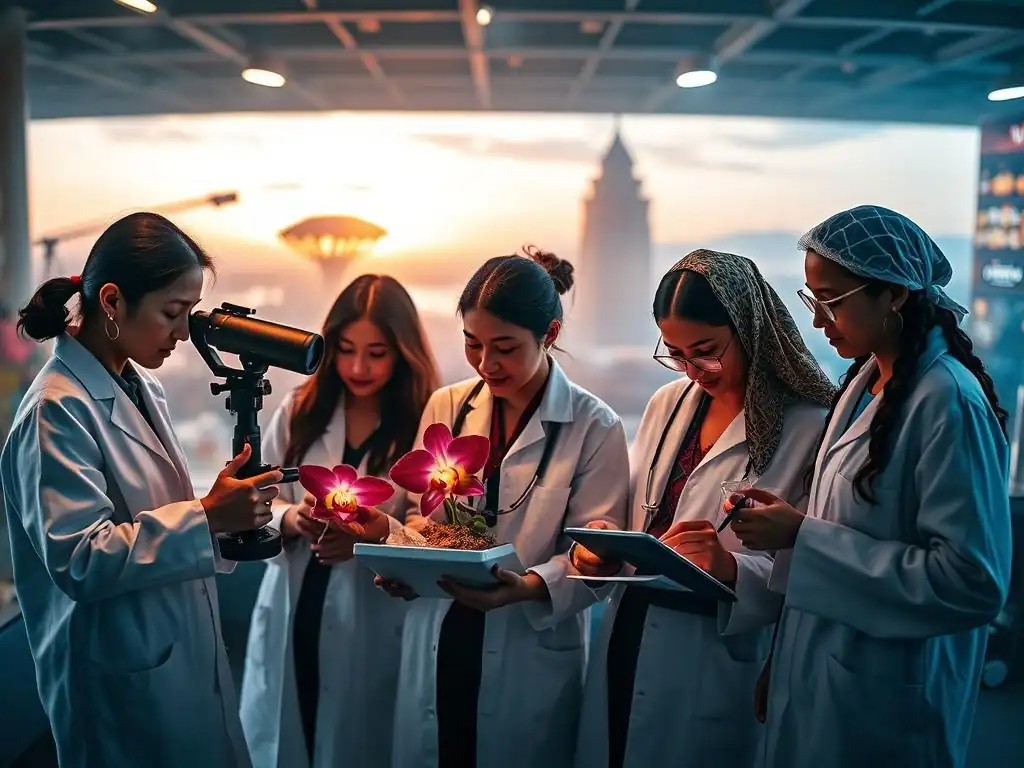
Welcome to WomenInScienceHistory.com, where we unearth the remarkable stories of women who shaped the world of science. Today, we delve into a fascinating exploration of how women scientists cultural norms differed across various societies and eras. Discover how societal expectations impacted their journeys, fueling both their resilience and the unique challenges they faced. Are you ready to unravel the complex interplay between culture, gender, and scientific achievement?
- Introduction: Women Scientists, Cultural Norms, and Global Perspectives
- Examining Societal Expectations and Gender Roles for Women in Science
- Comparing Cultural Norms in North American and East Asian Societies
- The Influence of Religion and Tradition on Women's Access to Science
- Workplace Culture and Gender Bias in Science: A Global Comparison
- The Role of Education and Policy in Promoting Women in Science Globally
- Strategies for Navigating Cultural Barriers in Scientific Careers
- Conclusion: Fostering Inclusive Environments for Women Scientists Worldwide
-
Frequently Asked Questions
- What are some common challenges faced by women scientists across different cultures, according to WomenInScienceHistory.com?
- How did societal norms impact the types of scientific fields women were encouraged or discouraged from pursuing?
- How does WomenInScienceHistory.com aim to address the underrepresentation of women in science history?
- Can you provide an example of how cultural norms hindered the recognition of a female scientist's work?
- What role do cultural norms play in fostering or hindering mentorship opportunities for women in science?
- Final Reflection: Embracing Global Perspectives for Women in Science
- Empower Change: Champion Women in Science Globally!
Introduction: Women Scientists, Cultural Norms, and Global Perspectives
Why Understanding Cultural Norms Matters for Women in Science
Understanding the diverse cultural norms that impact women in science is paramount to fostering a truly equitable and innovative global scientific community. Societal expectations, deeply embedded in cultural traditions, significantly shape the educational pathways, career opportunities, and professional experiences of women scientists. These women scientists cultural norms can dictate everything from the subjects girls are encouraged to study in school to the perceived legitimacy of a woman holding a leadership position in a research lab. Without a nuanced appreciation of these varying contexts, efforts to promote gender equality in STEM fields risk being ineffective or even counterproductive, as solutions tailored for one cultural setting may not translate effectively to another.
Furthermore, analyzing these cultural variations helps us identify universal barriers and unique challenges faced by women scientists worldwide. It sheds light on how different societies value or devalue women's intellectual contributions, impacting funding opportunities, recognition, and the overall professional environment. For example, in some cultures, the expectation for women to prioritize family over career is a powerful unwritten rule, often forcing talented women to make difficult choices that can slow or halt their scientific progression. Recognizing these specific women scientists cultural norms allows for more targeted interventions, such as flexible work policies or enhanced childcare support, that address the root causes of gender disparity in science.
The Historical Context of Women in Science: A Global Overview
Historically, the landscape for women in science has been fraught with challenges across nearly all cultures, though the specific nature of these obstacles varied significantly. In many ancient civilizations, women were often relegated to domestic roles, their intellectual pursuits either ignored or actively suppressed, making the very concept of women scientists cultural norms a nascent or non-existent one. For instance, while some early Greek societies produced notable female philosophers and mathematicians like Hypatia of Alexandria, their prominence was often an exception in a patriarchal world where formal education was largely reserved for men. The institutionalization of science in later centuries, particularly during the European Enlightenment, often mirrored existing societal hierarchies, effectively excluding women from universities, academies, and professional scientific circles.
Across Asia, Africa, and the Americas, indigenous knowledge systems often recognized women's roles in healing, agriculture, and observation of the natural world, but these contributions were rarely formalized or acknowledged as "science" in the Western sense. The advent of modern scientific disciplines, heavily influenced by Western models, often superimposed existing gender biases onto new professional structures. This meant that even as opportunities slowly began to emerge in the 19th and 20th centuries, women still faced entrenched women scientists cultural norms that questioned their intellectual capacity, their dedication, and their rightful place in laboratories, lecture halls, and field expeditions. The fight for recognition, resources, and respect has been a long and arduous journey, shaped by distinct cultural fabrics in every corner of the globe.
Examining Societal Expectations and Gender Roles for Women in Science
Gender Roles and Scientific Careers: A Cross-Cultural Analysis
Traditional gender roles, deeply ingrained in various cultures, often present significant hurdles for women pursuing scientific careers. In many societies, the expectation that women are primary caregivers and homemakers clashes directly with the demanding, often inflexible nature of scientific research. For example, in some South Asian and Middle Eastern cultures, societal pressure for women to marry young and start families can lead to an abrupt end to their educational or early career pursuits, even if they show exceptional scientific promise. This cultural expectation, a pervasive women scientists cultural norm, means that even with strong academic performance in early years, women may struggle to transition into full-time research roles or leadership positions.
Conversely, while Western societies have made strides in promoting gender equality, subtle women scientists cultural norms persist, manifesting as unconscious biases. Studies in the United States, for instance, have shown that female scientists are less likely to be invited to give talks, are paid less than their male counterparts for similar work, and receive less research funding, even when controlling for productivity and experience. These disparities are often attributed to deeply embedded gender stereotypes that perceive scientific excellence as a masculine trait. Such cross-cultural variations highlight that while overt discrimination may be more prevalent in some regions, implicit biases rooted in gender roles are a global challenge, shaping the professional landscape for women scientists everywhere.
The Impact of Family Expectations on Women's Scientific Pursuits
Family expectations play a crucial role in shaping the educational and career trajectories of women scientists, often reflecting broader women scientists cultural norms. In many collectivistic societies, family approval and support are paramount, and a woman's career choice may be heavily influenced by her family's perception of its suitability or prestige, or its compatibility with traditional family responsibilities. For example, in parts of East Asia, while academic excellence is highly valued for both genders, there can be an underlying expectation for women to prioritize family responsibilities, making a demanding research career seem less desirable or sustainable in the long term. This can lead to women opting for less competitive or more flexible scientific roles, or even leaving the field entirely after marriage or childbirth.
Even in more individualistic cultures, family expectations, though less overt, can still impact women's scientific pursuits. The "ideal worker" norm, where an employee is expected to be fully dedicated to their career without significant family obligations, often disproportionately affects women. Many women scientists in North America and Europe report struggling with work-life balance, feeling pressured to choose between career advancement and family life. This pressure, while not always explicitly stated by families, is often internalized, reflecting subtle women scientists cultural norms that still place the primary burden of childcare and household management on women. The lack of robust institutional support for parental leave or flexible work arrangements further exacerbates this challenge, making it difficult for women to re-enter or advance in science after having children.
Cultural Perceptions of Women's Competence in STEM Fields
Cultural perceptions of women's competence in STEM fields vary widely, yet a common thread across many societies is the persistence of stereotypes that undermine women's intellectual capabilities, particularly in mathematics and hard sciences. In some cultures, there's a deeply ingrained belief that men are inherently more rational or logical, making them naturally better suited for scientific endeavors. This women scientists cultural norm can manifest in educational settings, where girls may be subtly or overtly discouraged from pursuing advanced science courses, or where their achievements are attributed to hard work rather than innate talent, unlike their male peers. This can lead to a lack of confidence among young women and a reduced pipeline of female talent entering STEM fields.
Conversely, some cultures, while still grappling with gender roles, have fostered environments where women's academic excellence in STEM is celebrated, at least in the educational phase. For example, in several East Asian countries, girls often perform exceptionally well in mathematics and science throughout primary and secondary education, sometimes outperforming boys. However, despite this strong foundation, the transition into scientific careers, particularly into leadership or highly competitive research roles, often sees a significant drop-off for women. This suggests that while their competence is recognized early on, later women scientists cultural norms related to career progression, work-life balance, and implicit biases in the workplace can still hinder their advancement, creating a "leaky pipeline" at higher career stages.
Comparing Cultural Norms in North American and East Asian Societies
North American Societies: Progress and Persistent Challenges for Women Scientists
North American societies, particularly the United States and Canada, have made considerable strides in promoting gender equality in science, with significant legislative and social movements pushing for equal opportunities. Women now earn a substantial percentage of STEM degrees, often exceeding 50% in fields like biology and chemistry, and making up approximately 25-30% of the workforce in overall STEM occupations. This progress reflects a shift in women scientists cultural norms towards greater acceptance and encouragement of women in academic and professional scientific roles. Universities and research institutions have implemented various initiatives, including mentorship programs, diversity quotas, and anti-harassment policies, to support women scientists and address historical imbalances.
However, persistent challenges remain, indicating that deeply embedded women scientists cultural norms still influence career progression. The "leaky pipeline" phenomenon is particularly evident: while women enter STEM fields in significant numbers, their representation dramatically decreases at higher career stages, such as tenure-track positions, full professorships, and leadership roles in industry. Women scientists in North America continue to face issues like implicit bias in hiring and promotion, lower salaries compared to male counterparts for similar work, and a disproportionate burden of family responsibilities. A 2021 study by the National Academies of Sciences, Engineering, and Medicine, for instance, highlighted that sexual harassment remains a pervasive issue in academic science, severely impacting women's retention and advancement. These challenges underscore that while overt barriers have diminished, subtle and systemic women scientists cultural norms still create obstacles for women scientists in North America.
East Asian Societies: Balancing Tradition and Scientific Advancement
East Asian societies present a complex landscape for women scientists, where high academic achievement often coexists with strong traditional women scientists cultural norms. Countries like South Korea, Japan, and China have invested heavily in scientific research and education, producing a large pool of highly qualified scientists, including many women. In South Korea, for example, women's enrollment in STEM fields at the university level is relatively high, and there's a strong emphasis on academic merit. This reflects a cultural value placed on education and intellectual prowess, which can be beneficial for aspiring women scientists.
However, despite strong educational foundations, women in East Asian societies often face significant challenges in translating their academic success into long-term scientific careers, particularly in leadership roles. Traditional women scientists cultural norms often emphasize women's roles as primary caregivers and homemakers, which can lead to intense pressure to prioritize family over career, especially after marriage or childbirth. In Japan, for instance, the proportion of female researchers tends to be lower than in many Western countries, with women holding less than 17% of research positions across all sectors as of recent data, and even fewer in leadership. This "M-curve" phenomenon, where women's labor force participation dips significantly during child-rebearing years, is pronounced in many East Asian nations. While there are growing efforts to promote gender equality in science, these deeply ingrained women scientists cultural norms related to work-life balance, corporate culture, and patriarchal structures continue to pose significant barriers to the full integration and advancement of women scientists.
Case Studies: Dr. Tu Youyou (China) and Dr. Jennifer Doudna (USA)
The career paths of Dr. Tu Youyou from China and Dr. Jennifer Doudna from the United States offer fascinating insights into how women scientists cultural norms can shape groundbreaking scientific journeys. Dr. Tu Youyou, a pharmaceutical chemist, was awarded the Nobel Prize in Physiology or Medicine in 2015 for her discovery of artemisinin, a drug used to treat malaria. Her work was conducted during the tumultuous Cultural Revolution in China, a period when traditional academic structures were disrupted, and research was often conducted in collective, mission-driven teams. Tu Youyou's success emerged from a unique blend of traditional Chinese medicine knowledge and modern scientific methodology, supported by a government-mandated research program. Her career, while facing the implicit gender biases of the time, was also shaped by a national imperative to solve critical health issues, which somewhat transcended individual women scientists cultural norms in favor of collective scientific progress. Her "three-noes" status (no doctoral degree, no overseas study experience, no membership in national academies) highlights a non-traditional path to scientific recognition within a unique Chinese context.
In stark contrast, Dr. Jennifer Doudna, an American biochemist, shared the Nobel Prize in Chemistry in 2020 for her co-discovery of CRISPR-Cas9 genetic editing, a monumental achievement that has revolutionized biology. Her career trajectory is emblematic of the highly competitive, collaborative, and institutionally supported scientific environment prevalent in North America. Doudna benefited from world-class university resources, extensive grant funding from organizations like the National Institutes of Health, and a culture that, while still grappling with gender bias, increasingly recognizes and rewards individual scientific brilliance. Her journey reflects the evolving women scientists cultural norms in the U.S. that emphasize individual merit, entrepreneurial spirit in science, and the importance of diverse teams, even as she has spoken openly about the subtle gender biases she encountered. Both women achieved extraordinary scientific breakthroughs, but their paths were distinctly influenced by the prevailing women scientists cultural norms and scientific ecosystems of their respective nations.
The Influence of Religion and Tradition on Women's Access to Science
Religious Beliefs and Women's Education in STEM: A Global Examination
Religious beliefs can significantly influence women scientists cultural norms, particularly regarding women's access to education and their participation in STEM fields. In some contexts, conservative interpretations of religious texts or traditions may advocate for women's primary role as homemakers and mothers, thereby discouraging or even prohibiting their pursuit of higher education, especially in fields perceived as secular or traditionally male-dominated like science. For instance, in certain deeply conservative communities globally, girls may be withdrawn from school at an early age, limiting their foundational knowledge necessary for STEM subjects. This can create a profound and systemic barrier to women entering the scientific pipeline, regardless of their individual aptitude or interest.
However, it is crucial to note that not all religious traditions are restrictive, and many interpretations actively support or even encourage women's education and intellectual pursuits. Throughout history, there have been examples of prominent female scholars and scientists from various religious backgrounds who found ways to reconcile their faith with their intellectual endeavors. Furthermore, in contemporary society, numerous religious organizations and leaders are actively promoting STEM education for girls, recognizing its importance for societal development. The challenge often lies not with the religion itself, but with specific cultural or patriarchal interpretations that may misrepresent religious tenets to reinforce existing women scientists cultural norms that limit women's roles.
Traditional Practices and Their Impact on Women's Scientific Careers
Beyond formal religious doctrines, deeply ingrained traditional practices can also profoundly impact women scientists cultural norms and their career trajectories. Practices such as early marriage, arranged marriages, or the expectation of women to live in extended family households can impose significant constraints on a woman's ability to pursue demanding scientific careers. In some parts of South Asia and Africa, for example, girls are often married off before completing secondary education, effectively ending their chances of pursuing higher studies in STEM. Even if they do complete university, the pressure to conform to traditional family roles, such as immediate childbearing and domestic duties, can make it nearly impossible to commit to the long hours and intensive research required for a scientific career.
Furthermore, traditional societal expectations regarding women's mobility and public presence can create practical barriers. In cultures where women are expected to have limited interactions with men outside their family or where travel for conferences and fieldwork is frowned upon, women scientists cultural norms can severely restrict professional development. These practices can isolate women scientists, limiting their opportunities for networking, collaboration, and presenting their research on a global stage. While some women manage to navigate these challenges with exceptional resilience or family support, these traditional practices often create a significant "push factor" away from scientific professions, leading to a loss of talent and perpetuating gender disparities in the scientific workforce.
Overcoming Religious and Traditional Obstacles: Success Stories
Despite formidable religious and traditional obstacles, numerous women scientists have demonstrated incredible resilience and determination, offering inspiring success stories that challenge entrenched women scientists cultural norms. One notable example is Dr. Hayat Sindi from Saudi Arabia, a leading biotechnologist and co-founder of Diagnostics For All, a non-profit that develops low-cost diagnostic tools for underserved communities. Growing up in a conservative society, Sindi faced initial resistance to her dream of pursuing science abroad. However, with unwavering family support and her own perseverance, she became the first Saudi woman to earn a Ph.D. in biotechnology from Cambridge University. Her journey exemplifies how individual resolve, coupled with changing family and societal perspectives, can enable women to break through traditional barriers.
Another powerful narrative comes from Dr. Maryam Mirzakhani, the late Iranian mathematician and the first woman to win the Fields Medal, the highest honor in mathematics. Mirzakhani pursued her education and career in an environment where women's roles in academia were expanding but still faced unique challenges. Her dedication to complex mathematical problems, fueled by her passion, allowed her to excel globally, demonstrating that intellectual brilliance transcends borders and women scientists cultural norms. While she eventually moved to the U.S. for her career, her foundational education in Iran, where women have increasingly accessed higher education despite societal complexities, showcases the potential for women to thrive in STEM fields even within challenging cultural contexts. These stories are powerful testaments to the fact that with vision, support, and tenacity, women can overcome significant religious and traditional hurdles to contribute profoundly to science.
Workplace Culture and Gender Bias in Science: A Global Comparison

Gender Bias in Academia: A Cross-Cultural Study
Gender bias in academia is a pervasive issue that manifests differently across cultures, yet its impact on women scientists cultural norms and career progression remains universally detrimental. In Western academic settings, studies consistently reveal unconscious bias in hiring, promotion, and grant allocation. For instance, research conducted in the United States and Europe has shown that identical CVs are often rated lower when attributed to a female name compared to a male name, and women are less likely to be hired for tenure-track positions. Furthermore, women in academia often receive less mentoring, are assigned more service duties than research tasks, and face challenges in receiving credit for collaborative work, all subtle reflections of ingrained women scientists cultural norms that undervalue female contributions.
In East Asian academic environments, while meritocracy is often emphasized, explicit and implicit biases can still create significant barriers. For example, in Japan, while women constitute a growing percentage of STEM graduates, they hold a disproportionately small share of senior academic positions. This gap is often attributed to traditional workplace women scientists cultural norms that favor long working hours, often incompatible with family responsibilities, and a hierarchical structure that can be less welcoming to women. In some contexts, women may also face skepticism regarding their long-term commitment to research due to societal expectations around marriage and motherhood. These cross-cultural manifestations of gender bias highlight that while the specific forms may differ, the underlying issue of undervaluing and under-supporting women scientists is a global challenge.
Mentorship and Networking Opportunities for Women Scientists: A Global Perspective
Access to effective mentorship and robust networking opportunities is critical for career advancement in science, yet women scientists cultural norms can significantly influence their availability and quality globally. In many Western countries, formal and informal mentorship programs have been established to support women in STEM, recognizing their importance for navigating academic politics, securing funding, and developing leadership skills. However, even with these initiatives, women often report fewer high-quality mentorship relationships compared to men, and their networks tend to be less diverse in terms of senior leaders or influential figures. This can be partly attributed to the "old boys' club" phenomenon, where existing male-dominated networks may inadvertently exclude women.
In cultures with more rigid social hierarchies or pronounced gender segregation, networking can be even more challenging for women scientists. For example, in some Middle Eastern or South Asian societies, women scientists cultural norms may limit mixed-gender professional interactions, making it difficult for women to connect with senior male mentors or participate in informal networking events where crucial career opportunities often arise. This can lead to professional isolation and fewer opportunities for collaboration or sponsorship. While some regions are seeing the emergence of women-only professional networks and mentorship programs, these efforts are often nascent and face an uphill battle against deeply ingrained women scientists cultural norms that have historically limited women's presence and influence in scientific leadership.
Addressing Workplace Harassment and Discrimination: International Efforts
Workplace harassment and discrimination are pervasive issues that undermine the careers of women scientists globally, and addressing them requires concerted international efforts that acknowledge diverse women scientists cultural norms. In many countries, particularly those with less developed legal frameworks or weaker enforcement mechanisms, women scientists may face explicit sexual harassment, bullying, and discriminatory practices with little recourse. Reports from various regions indicate that fear of retaliation, lack of formal reporting channels, or societal pressure to remain silent often prevent women from coming forward, allowing perpetrators to continue their behavior unchecked. This creates a hostile work environment that actively drives women out of science.
In response, international scientific organizations and national academies are increasingly advocating for stronger policies and cultural shifts. For example, the European Commission has funded various projects to combat gender-based violence in academia, and organizations like the American Association for the Advancement of Science (AAAS) have adopted stricter codes of conduct for their members and events. These efforts aim to not only establish clear zero-tolerance policies but also to change the underlying women scientists cultural norms that enable such behaviors. By promoting transparency, establishing safe reporting mechanisms, and educating the scientific community on respectful conduct, there is a growing global movement to create workplaces where all scientists, regardless of gender, can thrive free from harassment and discrimination.
The Role of Education and Policy in Promoting Women in Science Globally
Educational Reforms and Gender Equality in STEM
Educational reforms play a pivotal role in reshaping women scientists cultural norms and promoting gender equality in STEM from the earliest stages. Many countries are implementing initiatives aimed at encouraging girls to pursue science and mathematics, recognizing that early exposure and engagement are crucial. This includes revising curricula to remove gender stereotypes from textbooks, introducing hands-on STEM activities in primary schools, and promoting female role models in science. For example, programs in the UK and Australia specifically target girls in secondary education to foster interest in physics and engineering, fields where women are historically underrepresented. These reforms seek to dismantle the notion that certain subjects are inherently "for boys" or "for girls," a deeply ingrained women scientists cultural norm in many educational systems.
Furthermore, efforts are being made to address the "hidden curriculum" within educational institutions, which can inadvertently perpetuate gender biases. This involves training teachers to recognize and counteract their own unconscious biases, ensuring equitable classroom participation, and providing tailored academic and career counseling for girls in STEM. In some developing nations, educational reforms focus on basic access for girls, ensuring that cultural or economic barriers do not prevent them from attending school at all. By strengthening foundational education and creating inclusive learning environments, these reforms aim to build a robust pipeline of female talent, gradually transforming women scientists cultural norms from the ground up and preparing women for successful careers in science.
Government Policies and Initiatives Supporting Women Scientists
Government policies and initiatives are crucial levers for accelerating the advancement of women in science by directly challenging and reshaping women scientists cultural norms. Many nations have recognized that fostering gender equality in STEM is not just a matter of fairness but also an economic and innovation imperative. Consequently, various policies have been enacted, ranging from targeted funding for female researchers to quotas for women in scientific leadership positions. For example, countries like Germany and Sweden have implemented policies requiring a certain percentage of women on scientific advisory boards and grant review panels, aiming to increase female representation in decision-making roles.
Beyond representation, many governments are also introducing policies that address work-life balance, a critical factor often influenced by women scientists cultural norms. Enhanced parental leave policies, subsidized childcare, and provisions for flexible work arrangements are becoming more common, designed to retain women in science, particularly during critical career stages such as childbearing years. In Canada, for instance, federal research granting agencies have implemented specific measures to account for career interruptions due to parental leave when evaluating grant applications. These policies aim to mitigate the disproportionate impact of family responsibilities on women's scientific careers, actively working to create a more supportive environment that challenges traditional women scientists cultural norms about women's roles.
International Collaborations to Advance Women in Science
International collaborations are increasingly vital in advancing women in science globally, as they provide a platform for sharing best practices, pooling resources, and collectively challenging restrictive women scientists cultural norms. Organizations like UNESCO, UN Women, and the European Union's Horizon Europe program actively promote gender equality in science through cross-border initiatives, research projects, and policy dialogues. These collaborations often focus on capacity building in regions where women face more significant barriers, providing training, mentorship, and networking opportunities that might not be available domestically. For instance, the Organization for Women in Science for the Developing World (OWSD) offers fellowships for women from developing countries to pursue postgraduate research, enabling them to overcome local limitations and contribute to global science.
Moreover, international scientific unions and associations are adopting global charters and declarations aimed at promoting gender equity, fostering a shared commitment among diverse scientific communities. These collaborations help to standardize metrics for measuring gender equality, facilitate data collection on women scientists cultural norms and their impact, and encourage accountability among institutions worldwide. By bringing together diverse perspectives and experiences, international efforts create a collective voice that advocates for systemic change, pushing against outdated women scientists cultural norms and fostering a more inclusive and equitable scientific landscape for women across all cultures.
Building Resilience and Overcoming Stereotypes
Building resilience is a fundamental strategy for women scientists navigating cultural barriers and overcoming persistent stereotypes. In environments where women scientists cultural norms may question their competence or commitment, developing mental fortitude is crucial. This involves cultivating a strong sense of self-efficacy, believing in one's own abilities despite external doubts or biases. Many successful women scientists have shared narratives of how they learned to internalize constructive feedback while dismissing prejudiced remarks, focusing instead on their scientific passion and goals. This internal resilience allows them to persist through challenges like microaggressions in the lab or skepticism from peers, which can be particularly prevalent in fields historically dominated by men.
Furthermore, actively challenging stereotypes is a powerful, though sometimes subtle, act of resilience. This can involve consistently excelling in their work, serving as visible role models for younger generations, and speaking out against discriminatory practices when safe to do so. For example, a woman scientist in a culture where research is not considered a "feminine" pursuit might demonstrate resilience by publishing high-impact papers and presenting at international conferences, thereby subtly reshaping women scientists cultural norms through her achievements. By embodying excellence and challenging preconceived notions, women scientists not only pave their own way but also contribute to a broader shift in societal attitudes towards women's capabilities in STEM.
Finding Mentors and Support Networks Across Cultures
Finding effective mentors and building robust support networks are indispensable strategies for women scientists navigating diverse women scientists cultural norms and career challenges. Mentors, both male and female, can provide invaluable guidance on research directions, grant applications, and career progression, offering insights into navigating academic politics and balancing professional and personal life. For women operating in cultures with more traditional gender roles, finding a mentor who understands the unique societal pressures can be particularly beneficial. These mentors can offer strategies for managing family expectations or for finding flexible work arrangements that align with cultural demands while still allowing for scientific productivity.
Beyond individual mentors, establishing broad support networks—including peers, senior colleagues, and professional associations—is equally critical. These networks can provide emotional support, opportunities for collaboration, and access to informal knowledge and resources. For women scientists working across different cultural contexts, building cross-cultural networks can be particularly empowering. For instance, connecting with women scientists from similar cultural backgrounds who have successfully navigated similar challenges, or with international peers who offer diverse perspectives, can provide a sense of community and shared experience. These networks help mitigate the isolation that can arise from challenging existing women scientists cultural norms, fostering a collective strength that empowers women to thrive in their scientific careers.
Advocating for Gender Equality in Scientific Institutions
Advocating for gender equality within scientific institutions is a crucial strategy for women scientists to drive systemic change and reshape women scientists cultural norms. This advocacy can take many forms, from actively participating in diversity and inclusion committees to speaking out against discriminatory practices and promoting equitable policies. Women scientists can leverage their positions to push for transparent hiring and promotion processes, ensure fair allocation of resources, and advocate for flexible work arrangements that support work-life balance. For example, contributing to the development of institutional guidelines for parental leave or anti-harassment policies can have a profound impact on the experiences of current and future women in science.
Furthermore, advocacy involves challenging implicit biases and stereotypes within the scientific community itself. This can be achieved through educational initiatives, workshops on unconscious bias, and promoting awareness of the unique challenges faced by women scientists in different cultural contexts. By consistently raising these issues and providing data-driven arguments for change, women scientists contribute to a gradual but significant shift in the women scientists cultural norms embedded within scientific institutions. This collective advocacy is essential not just for individual career progression, but for fostering a truly inclusive scientific environment where talent is recognized and nurtured regardless of gender or cultural background.
Conclusion: Fostering Inclusive Environments for Women Scientists Worldwide
The Importance of Cultural Sensitivity and Understanding
Fostering truly inclusive environments for women scientists worldwide hinges critically on the importance of cultural sensitivity and understanding. A one-size-fits-all approach to promoting gender equality in science often fails because it neglects the deeply embedded women scientists cultural norms that vary significantly across societies. What constitutes a barrier in one culture, such as the expectation of early marriage, might be less prevalent in another, where subtle biases in grant funding are more pressing. Recognizing these specific nuances allows for the development of targeted, effective interventions that resonate with local contexts and address the actual challenges women face.
Moreover, cultural sensitivity extends beyond merely identifying obstacles; it involves appreciating the diverse ways in which women contribute to science within their unique cultural frameworks. It means understanding that the path to scientific excellence might look different in Beijing compared to Boston, or in a rural African community versus a bustling European city. By embracing this diversity of experiences and perspectives, the global scientific community can build more robust support systems that respect cultural identities while simultaneously challenging restrictive women scientists cultural norms. This nuanced approach ensures that efforts to empower women scientists are not only equitable but also culturally respectful and ultimately more impactful.
Future Directions: Promoting Global Equity in Science
Promoting global equity in science requires a multifaceted approach that considers future directions for dismantling pervasive women scientists cultural norms. One key area is the continued investment in early STEM education for girls, particularly in regions where access remains limited due to cultural or economic barriers. This includes developing culturally relevant curricula and providing strong female role models to inspire the next generation of scientists. Furthermore, there is a need for more granular, culturally specific research on the challenges faced by women scientists, allowing for policies and interventions that are truly evidence-based and locally tailored rather than broadly applied.
Another critical future direction involves strengthening international collaborations to share best practices and create a global network of support. This includes fostering mentorship programs that transcend geographical and cultural boundaries, enabling women scientists to learn from diverse experiences and build resilience against differing women scientists cultural norms. Additionally, sustained advocacy for policy changes within scientific institutions and governments worldwide—such as improved parental leave, flexible work arrangements, and transparent promotion criteria—will be essential. The goal is to move towards a future where women scientists cultural norms universally support, rather than hinder, female talent, ensuring that scientific progress benefits from the full intellectual potential of all genders.
Call to Action: Empowering Women in Science Across Cultures
Empowering women in science across cultures is not merely an aspiration but a vital imperative for the future of global scientific discovery and innovation. It demands a collective call to action from individuals, institutions, and governments worldwide to actively dismantle restrictive women scientists cultural norms and cultivate truly inclusive environments. For individuals, this means challenging personal biases, supporting female colleagues, and advocating for equitable practices within their spheres of influence. For scientific institutions, it entails implementing robust diversity and inclusion policies, ensuring fair representation in leadership, and providing flexible work arrangements that acknowledge diverse family responsibilities.
Ultimately, governments must also play a pivotal role by enacting and enforcing policies that promote gender equality in education and the workplace, investing in research on gender disparities, and celebrating the achievements of women scientists from all backgrounds. By embracing cultural sensitivity, fostering international collaboration, and committing to sustained action, the global community can accelerate the pace at which women achieve full and equitable participation in science. Empowering women scientists across cultures will not only unlock untapped potential but also enrich the scientific endeavor with diverse perspectives and solutions, ultimately benefiting all of humanity.
Frequently Asked Questions
What are some common challenges faced by women scientists across different cultures, according to WomenInScienceHistory.com?
Women scientists often face cultural biases and stereotypes that limit their opportunities and recognition. These can include gender roles that prioritize family responsibilities over career advancement, and lack of access to mentorship and funding.
How did societal norms impact the types of scientific fields women were encouraged or discouraged from pursuing?
Historically, and in some cultures still today, women were often steered towards fields like nursing or teaching, considered more "suitable". Fields like physics and engineering were often seen as exclusively male domains.
How does WomenInScienceHistory.com aim to address the underrepresentation of women in science history?
The website provides biographies and articles that highlight the achievements of women scientists throughout history. It aims to inspire and demonstrate that science is for everyone, regardless of gender.
Can you provide an example of how cultural norms hindered the recognition of a female scientist's work?
Many women scientists' contributions were attributed to male colleagues or supervisors. Their achievements were often overlooked or downplayed due to prevailing societal biases.
What role do cultural norms play in fostering or hindering mentorship opportunities for women in science?
In some cultures, informal networks and mentorship opportunities are predominantly male-dominated, limiting women's access. This can hinder their career advancement and professional development.
Final Reflection: Embracing Global Perspectives for Women in Science
The exploration of societal norms impacting women scientists across diverse cultures reveals a crucial truth: gender equality in STEM is not a monolithic concept, but a tapestry woven with threads of cultural context. Understanding these nuances is not merely an academic exercise; it is a vital step towards dismantling systemic barriers that hinder the progress of women in science globally.
The journey through different cultural landscapes has underscored the profound influence of tradition, expectation, and opportunity on the career trajectories of women scientists. This realization has deepened my appreciation for the resilience and ingenuity of women navigating these complex systems, and highlights the urgent need for culturally sensitive interventions. Science knows no country, because knowledge belongs to humanity, and is the torch which illuminates the world.
- Louis Pasteur. This quote reminds us that while science transcends borders, the lived experiences of scientists are deeply rooted in their cultural realities.
As we close this exploration, I invite you to reflect on the power of perspective. Consider how your own cultural background shapes your understanding of gender roles and scientific pursuits. Let us all strive to become advocates for inclusive environments that celebrate the diverse contributions of women scientists, regardless of their origin. By fostering a global community that values equity and understanding, we can unlock the full potential of scientific innovation and create a brighter future for all.
Empower Change: Champion Women in Science Globally!
Thank you for delving into the fascinating world of women scientists and the diverse cultural landscapes they navigate. We hope this article has broadened your understanding of the challenges and triumphs they face. Now, let's translate awareness into action.
Here are a few ways you can contribute to a more equitable and supportive scientific community for women worldwide:
- Speak Up: Advocate for policies within your local institutions that actively support and promote gender equality in STEM fields. Encourage transparent hiring practices, mentorship programs, and equal opportunities for advancement.
- Share Your Insights: Discuss this article with your friends, family, and colleagues to raise awareness about the impact of cultural norms on women in science. What personal experiences or observations can you share?
- Rediscover unsung heroines: Explore our website, WomenInScienceHistory.com, and nominate a remarkable woman scientist from your culture whose story deserves to be told.
What specific changes can you implement in your sphere of influence to foster a more inclusive environment for women scientists?