
The Double Helix and a Double Standard: Inside '[Book Title]' on Rosalind Franklin

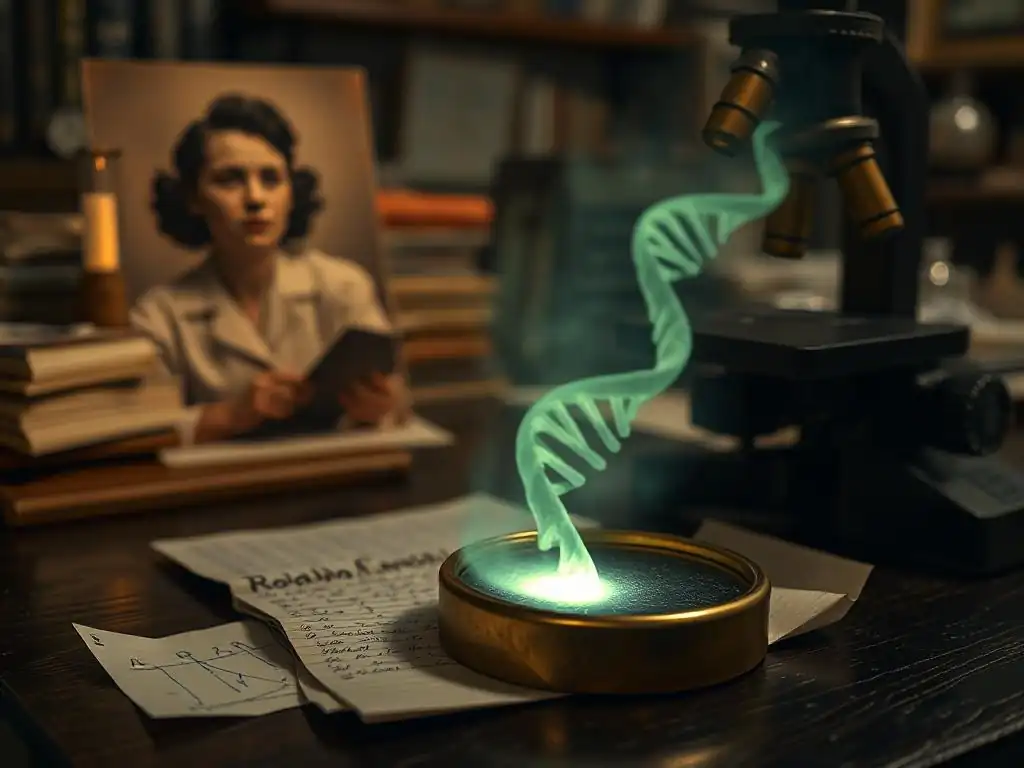
Welcome to WomenInScienceHistory.com! Dive into the untold stories of remarkable women who shaped the scientific landscape. This week, we're exploring the complex legacy of Rosalind Franklin, the brilliant mind behind crucial DNA discoveries. But was her contribution fully recognized? Our deep dive into '[Book Title],' a compelling Rosalind Franklin DNA biography book, uncovers the triumphs and tribulations she faced. Prepare to question the narrative and discover a deeper understanding of scientific history's unsung heroes.
- The Double Helix and a Double Standard: Inside "Rosalind Franklin: The Dark Lady of DNA" on Rosalind Franklin
- Introduction: Unveiling Rosalind Franklin's Story Through "Rosalind Franklin: The Dark Lady of DNA"
- "Rosalind Franklin: The Dark Lady of DNA": A Deep Dive into Franklin's Life and Work
- "Rosalind Franklin: The Dark Lady of DNA" Examines the Double Standard Faced by Rosalind Franklin
- Analyzing the Strengths and Weaknesses of "Rosalind Franklin: The Dark Lady of DNA"
- Rosalind Franklin's Legacy: Beyond the Double Helix
- Conclusion: Why "Rosalind Franklin: The Dark Lady of DNA" is Essential Reading for Understanding Rosalind Franklin and the History of DNA
-
Frequently Asked Questions
- What is the main focus of "[Book Title]" as discussed on WomenInScienceHistory.com?
- Why is Rosalind Franklin considered an important figure in science history, according to WomenInScienceHistory.com?
- What kind of challenges did Rosalind Franklin likely face as a female scientist, based on the theme of WomenInScienceHistory.com?
- Where can I find more information about Rosalind Franklin's life and work, according to WomenInScienceHistory.com?
- What is the overall goal of WomenInScienceHistory.com in highlighting stories like Rosalind Franklin's?
- Final Reflection: Unraveling the Threads of Recognition
- Unveil the Unsung Heroine: Reimagine Scientific History!
The Double Helix and a Double Standard: Inside "Rosalind Franklin: The Dark Lady of DNA" on Rosalind Franklin
Introduction: Unveiling Rosalind Franklin's Story Through "Rosalind Franklin: The Dark Lady of DNA"
Why a Rosalind Franklin Biography Matters
For too long, the narrative of the DNA double helix discovery has largely centered on James Watson and Francis Crick, often relegating Rosalind Franklin to a footnote, if she was mentioned at all. A compelling Rosalind Franklin DNA biography book becomes not just a historical account but a vital corrective, ensuring that her unparalleled contributions receive the recognition they rightfully deserve. Understanding Franklin's meticulous scientific process and the societal hurdles she faced is essential for a complete and accurate portrayal of one of the 20th century's most pivotal scientific breakthroughs.
This particular Rosalind Franklin DNA biography book, "Rosalind Franklin: The Dark Lady of DNA" by Brenda Maddox, meticulously reconstructs Franklin's life, work, and the complex interpersonal dynamics at play during the race to uncover DNA's structure. It moves beyond the simplistic portrayals to reveal a brilliant, dedicated scientist whose impact was profound and whose story offers crucial lessons about gender, collaboration, and recognition in science.
Setting the Stage: The Context of DNA Discovery
The mid-20th century was a period of intense scientific inquiry into the fundamental building blocks of life, with the structure of DNA being the ultimate prize. Scientists across the globe, including teams at King's College London and Cambridge University, were grappling with the question of how genetic information was stored and transmitted. The prevailing understanding was that DNA, composed of nucleotides, held the key to heredity, but its precise three-dimensional arrangement remained elusive.
This scientific race fostered a highly competitive environment, where breakthroughs were eagerly sought and often fiercely guarded. The groundbreaking work of Linus Pauling on the alpha-helix structure of proteins had set a high bar, demonstrating the power of understanding molecular architecture. It was into this charged atmosphere that Rosalind Franklin brought her exceptional skills in X-ray crystallography, a technique poised to unlock the secret of the double helix.
"Rosalind Franklin: The Dark Lady of DNA": A Deep Dive into Franklin's Life and Work
Exploring Franklin's Early Life and Scientific Education
Rosalind Franklin's journey into the world of science began with a strong foundation in her early life in London. Born into an affluent and intellectually engaged Jewish family in 1920, she displayed an early aptitude for mathematics and science. Her education at St Paul's Girls' School, one of the few institutions at the time to offer rigorous science instruction for girls, further cultivated her talents. She went on to study physical chemistry at Newnham College, Cambridge, graduating in 1941, and subsequently earned her Ph.D. from Cambridge in 1945 for her research on the physical chemistry of coals and carbons.
Her doctoral work, conducted at the British Coal Utilisation Research Association (BCURA) during World War II, involved groundbreaking studies on the porosity of coal using gas absorption and X-ray diffraction. This research was crucial for understanding coal's properties, particularly its use in gas masks, and demonstrated her exceptional skill in applying X-ray techniques to complex amorphous materials. This period honed her precision and analytical rigor, skills that would prove indispensable in her later, more famous work on DNA, as meticulously chronicled in this Rosalind Franklin DNA biography book.
Rosalind Franklin's Crucial Role in DNA Research at King's College
Franklin arrived at King's College London in 1951, initially with the expectation of working on proteins. However, her expertise in X-ray diffraction led her to be assigned to the DNA project, where she was tasked with improving the quality of DNA fibers for X-ray analysis. Her methodical approach and insistence on high-quality samples were paramount. She discovered that DNA existed in two forms, "A" (crystalline) and "B" (hydrated), and meticulously worked to obtain pure, well-oriented fibers of both.
Her rigorous experimental work, often carried out in isolation, yielded unprecedentedly clear X-ray diffraction patterns. She precisely measured the dimensions of the DNA molecule, deduced its helical nature, and correctly positioned the phosphate backbone on the outside of the helix, with the bases on the inside. Her detailed notebooks and internal reports from King's College demonstrate her profound understanding of the data, laying critical groundwork for the eventual structural model.
The Significance of Photo 51: A Central Focus of "Rosalind Franklin: The Dark Lady of DNA"
Among Rosalind Franklin's most impactful achievements at King's College was Photo 51, an X-ray diffraction image of the "B" form of DNA captured in May 1952 by her Ph.D. student, Raymond Gosling, under her direct supervision. This photograph was groundbreaking because its distinct "X" shape provided irrefutable visual evidence of a helical structure. More importantly, the precise angles and patterns in the image allowed for accurate calculations of the helix's dimensions, including its pitch of 3.4 Å per base pair and 34 Å per full turn, and its diameter.
The significance of Photo 51 cannot be overstated; it was the clearest and most definitive X-ray image of DNA B form available at the time. This crucial piece of evidence was shown to James Watson by Maurice Wilkins, Franklin's colleague at King's, without Franklin's knowledge or permission.
Watson immediately recognized its implications, and along with Franklin's unpublished data from a Medical Research Council report, it provided Watson and Crick with the critical empirical information they needed to construct their double helix model. This ethical breach is a central theme explored in this Rosalind Franklin DNA biography book, highlighting the pivotal role of Franklin's data.
"Rosalind Franklin: The Dark Lady of DNA" Examines the Double Standard Faced by Rosalind Franklin
Gender Bias in Science: An Enduring Challenge
The scientific landscape of the mid-20th century was overwhelmingly male-dominated, and women scientists frequently encountered systemic gender bias. This bias manifested in various forms, from exclusion from informal networks and male-only common rooms—such as the senior common room at King's College, where Franklin was barred—to a general underestimation of their intellectual capabilities and contributions. Women often struggled to gain recognition, secure promotions, or even be taken seriously by their male peers, regardless of their scientific acumen.
This prevailing atmosphere of discrimination directly impacted Rosalind Franklin. Her direct and assertive communication style, which would have been seen as professional in a male colleague, was often perceived as "difficult" or "unfeminine" in her. The lack of an inclusive environment at King's College further isolated her, making collaboration more challenging and contributing to the misinterpretations of her personality and intentions. This Rosalind Franklin DNA biography book meticulously details these environmental factors, showing how they shaped her experiences.
The Book's Analysis of Franklin's Treatment by Watson and Crick
"Rosalind Franklin: The Dark Lady of DNA" offers a detailed examination of the controversial interactions between Franklin, Watson, and Crick. The book highlights how Watson's initial portrayal of Franklin in his memoir, "The Double Helix" (1968), was deeply unflattering, depicting her as an uncooperative, stubborn figure. Maddox's biography directly challenges this narrative, providing evidence that Franklin was a highly professional and diligent scientist, whose cautious approach was rooted in scientific rigor, not obstinacy.
Furthermore, the book meticulously documents the unauthorized access to Franklin's critical data, including Photo 51 and her detailed internal report to the Medical Research Council, which contained precise measurements of DNA's helical structure. Watson and Crick obtained this information without her direct knowledge or consent, and it proved instrumental in their model building. This ethical lapse, and the subsequent lack of immediate, explicit credit to Franklin in their seminal Nature paper of 1953, forms a significant part of the "double standard" explored in this Rosalind Franklin DNA biography book.
Highlighting the Overlooked Contributions of Women in DNA Research
Rosalind Franklin's story is unfortunately not an isolated incident but rather emblematic of a broader pattern of overlooked contributions by women in scientific history. Beyond the DNA saga, countless women scientists have made fundamental discoveries only to be marginalized or have their work attributed to male colleagues. For instance, Lise Meitner's pivotal role in explaining nuclear fission was largely ignored in favor of Otto Hahn, who received the Nobel Prize. Similarly, Jocelyn Bell Burnell's discovery of pulsars was recognized with a Nobel Prize awarded solely to her supervisor.
"Rosalind Franklin: The Dark Lady of DNA" serves as a powerful testament to the need for a more inclusive and accurate historical record. By shining a bright light on Franklin's meticulous work and the challenges she faced, the book not only corrects a specific historical injustice but also encourages a re-evaluation of how scientific narratives are constructed. It underscores the importance of acknowledging all contributors, regardless of gender, ensuring that the full tapestry of scientific progress is celebrated, making it an indispensable Rosalind Franklin DNA biography book for anyone interested in rectifying historical oversight.
Analyzing the Strengths and Weaknesses of "Rosalind Franklin: The Dark Lady of DNA"
"Rosalind Franklin: The Dark Lady of DNA"'s Contribution to Understanding Rosalind Franklin's Scientific Process
One of the greatest strengths of "Rosalind Franklin: The Dark Lady of DNA" lies in its profound ability to illuminate Franklin's extraordinary scientific process. Brenda Maddox delves deep into Franklin's meticulous experimental approach, showcasing her dedication to precision in X-ray crystallography.
The book highlights her rigorous methodology in preparing DNA samples, her careful calibration of equipment, and her cautious interpretation of data, often contrasting this with the more intuitive, sometimes speculative, methods of her contemporaries. For example, Franklin's insistence on confirming every detail through empirical evidence before drawing conclusions was a hallmark of her scientific integrity, preventing her from rushing to publish a model without sufficient proof.
The biography masterfully utilizes Franklin's own letters, laboratory notebooks, and published scientific papers to reconstruct her intellectual journey. Readers gain insight into her thought process, her methodical progression from raw data to significant insights about DNA's helical structure, and her unwavering commitment to scientific truth. This comprehensive approach provides an intimate and respectful portrait of a brilliant mind at work, establishing this as a definitive Rosalind Franklin DNA biography book for understanding her scientific contributions.
Potential Biases or Limitations in the Book's Narrative
While "Rosalind Franklin: The Dark Lady of DNA" is widely lauded for its comprehensive and sympathetic portrayal, it is important to acknowledge that any biography, no matter how well-researched, can carry inherent perspectives. Some critics might argue that the book, in its commendable effort to correct past injustices, occasionally leans heavily into the "victim" narrative, potentially downplaying or softening certain aspects of Franklin's personality that might have contributed to her isolation, such as her reserved nature or her direct, sometimes blunt, communication style.
In a male-dominated environment unused to such candor from a woman, these traits could indeed be misinterpreted.
Moreover, the book relies on historical accounts and personal recollections, which, while invaluable, can be subject to individual biases or imperfect memories. While Maddox meticulously cross-references sources, the interpretation of events and motives is ultimately the author's. It's crucial for readers to approach this, or any Rosalind Franklin DNA biography book, as one authoritative perspective among a broader scholarly discourse, encouraging further exploration of primary sources and diverse interpretations of the complex history of DNA discovery.
Comparing "Rosalind Franklin: The Dark Lady of DNA" to Other Rosalind Franklin Biographies
"Rosalind Franklin: The Dark Lady of DNA" distinguishes itself among other biographical works on Franklin. An earlier notable work, Anne Sayre's "Rosalind Franklin and DNA" (1975), was written by a close friend and offered an immediate, passionate defense of Franklin against Watson's criticisms in "The Double Helix." While Sayre's book was crucial in initiating the re-evaluation of Franklin's legacy, Maddox's biography, published in 2002, benefits from nearly three decades of additional historical research, access to more archival materials, and a broader historical perspective.
Maddox's work is often praised for its journalistic rigor and comprehensive scope, covering Franklin's entire life rather than focusing primarily on the DNA period. It provides a more nuanced and detailed account of her family life, education, and later scientific achievements in virology. By systematically addressing and refuting the misrepresentations of "The Double Helix" with extensive factual evidence, "Rosalind Franklin: The Dark Lady of DNA" has solidified its reputation as a highly authoritative and essential Rosalind Franklin DNA biography book, offering a more balanced yet deeply sympathetic portrayal.
Rosalind Franklin's Legacy: Beyond the Double Helix
The Lasting Impact of Franklin's Research on Molecular Biology
While James Watson and Francis Crick were awarded the Nobel Prize in Physiology or Medicine in 1962 for their DNA model, the fundamental X-ray diffraction data and crucial insights provided by Rosalind Franklin were undeniably indispensable to their discovery. Her meticulous experimental results, particularly Photo 51, provided the empirical bedrock upon which the theoretical double helix model was built. Her precise measurements of DNA's density, hydration, and helical dimensions were not mere supporting details but critical parameters that constrained and validated the final structure. Without her rigorous data, the model would have remained an unproven hypothesis.
Beyond the DNA structure, Franklin's scientific contributions extended significantly into the field of virology. After leaving King's College, she moved to Birkbeck College, where she pioneered groundbreaking work on the structure of the Tobacco Mosaic Virus (TMV) and later the polio virus. Her research elucidated the helical arrangement of TMV's RNA and protein, demonstrating her versatile scientific talent and her continued profound impact on molecular biology and structural biology until her untimely death in 1958.
"Rosalind Franklin: The Dark Lady of DNA" and the Ongoing Effort to Recognize Women in Science
"Rosalind Franklin: The Dark Lady of DNA" has played a pivotal role in raising public awareness about historical injustices in science and fostering a broader, much-needed discussion about diversity and inclusion within STEM fields. The book has become a touchstone for advocates and historians seeking to acknowledge the often-hidden contributions of women and other underrepresented groups in scientific discovery. It highlights that the exclusion of certain narratives not only distorts history but also deprives current and future generations of inspiring role models.
The narrative presented in this Rosalind Franklin DNA biography book has significantly contributed to a paradigm shift in how scientific history is taught and perceived. It encourages a critical examination of primary sources and challenges dominant, often male-centric, narratives. By detailing Franklin's rigorous scientific process and the systemic biases she faced, the book promotes a more nuanced and accurate understanding of scientific progress as a complex, often collaborative, and deeply human endeavor, ensuring that the full spectrum of intellectual effort is recognized.
Inspiring Future Generations of Women Scientists: The Power of Franklin's Story
Rosalind Franklin's story, as powerfully recounted in this Rosalind Franklin DNA biography book, serves as an enduring source of inspiration for aspiring scientists, particularly young women. Despite the formidable challenges and the lack of proper recognition she faced during her lifetime, her unwavering persistence, intellectual rigor, and groundbreaking discoveries stand as a testament to her exceptional brilliance and resilience. Her determination to pursue scientific truth, even in the face of adversity and a sometimes hostile environment, offers invaluable lessons in perseverance and integrity.
By highlighting role models like Franklin, the book helps to dismantle persistent stereotypes about who can excel in science. It powerfully demonstrates that women have always been, and continue to be, at the forefront of scientific innovation. Franklin's legacy is not merely about her pivotal role in the discovery of DNA; it is also about paving the way for future generations of women scientists, encouraging them to pursue their passions in STEM with confidence and to demand the recognition they deserve.
Conclusion: Why "Rosalind Franklin: The Dark Lady of DNA" is Essential Reading for Understanding Rosalind Franklin and the History of DNA
The Importance of Remembering Rosalind Franklin's Contribution to DNA Discovery
Remembering Rosalind Franklin's contribution to the discovery of the DNA structure is not merely a matter of historical revisionism; it is fundamental to understanding the true, complex nature of scientific progress. Her meticulous X-ray diffraction images, particularly Photo 51, and her precise analytical data were not simply corroborative details but the empirical bedrock upon which the double helix model was built. To ignore her work is to perpetuate a skewed view of history, diminishing the collective effort and intellectual rigor that characterized one of the 20th century's most significant breakthroughs.
"Rosalind Franklin: The Dark Lady of DNA" ensures that Franklin's rightful place in the annals of science is firmly established. It underscores that recognizing her contribution is not just about correcting a historical oversight, but about valuing the integrity of the scientific process itself and acknowledging the multifaceted, often fraught, collaborative nature of discovery. This Rosalind Franklin DNA biography book is crucial for anyone seeking a complete and accurate narrative of the DNA story.
Further Reading and Resources on Rosalind Franklin and Women in Science
For those inspired by "Rosalind Franklin: The Dark Lady of DNA" and eager to delve deeper into the life and work of Rosalind Franklin, or to explore the broader contributions of women in science, a wealth of resources awaits. Consider exploring other biographies, such as Anne Sayre's earlier work, or examining the scientific papers published by Franklin herself, which offer direct insight into her rigorous methodology. Delving into historical archives related to the DNA discovery can provide further context and primary source material.
Beyond Franklin, numerous other pioneering women scientists across various fields and eras have made significant, yet often under-recognized, contributions. Exploring their stories can further illuminate the challenges and triumphs of women in STEM throughout history. Engaging with these narratives helps to foster a more inclusive understanding of scientific progress and inspires future generations to pursue their scientific ambitions.
Frequently Asked Questions
What is the main focus of "[Book Title]" as discussed on WomenInScienceHistory.com?
The book, as reviewed on the site, likely focuses on the life and scientific contributions of Rosalind Franklin, particularly her crucial role in the discovery of DNA's double helix structure. It probably also explores the challenges she faced as a woman in science.
Why is Rosalind Franklin considered an important figure in science history, according to WomenInScienceHistory.com?
Rosalind Franklin's X-ray diffraction work was essential to understanding the structure of DNA. WomenInScienceHistory.com probably argues she deserves greater recognition for her groundbreaking contributions, often overshadowed by her male colleagues.
What kind of challenges did Rosalind Franklin likely face as a female scientist, based on the theme of WomenInScienceHistory.com?
The website highlights that women faced significant discrimination and bias in science. Franklin likely encountered limited opportunities, lack of recognition, and difficulty getting her work valued equally.
Where can I find more information about Rosalind Franklin's life and work, according to WomenInScienceHistory.com?
The website likely offers a biography of Rosalind Franklin, discussions of her scientific research, and potentially links to other relevant resources like books and articles.
What is the overall goal of WomenInScienceHistory.com in highlighting stories like Rosalind Franklin's?
The platform aims to inspire future generations, particularly women, to pursue careers in science. It seeks to correct historical biases and give credit to women who have made significant scientific contributions.
Okay, here's a final reflection crafted to fit your article about Rosalind Franklin and a biography about her, aiming to rank for "Rosalind Franklin DNA biography book," and following the structure you provided:
Final Reflection: Unraveling the Threads of Recognition
The story of Rosalind Franklin, as illuminated by '[Book Title],' resonates profoundly today because it underscores the persistent struggle for equitable recognition in scientific fields. Her contributions to understanding DNA, often overshadowed, serve as a stark reminder of the biases that can obscure brilliance and delay progress. The book's exploration of her life and work compels us to confront these historical injustices and actively work towards a more inclusive future for science.
The impact of Franklin's story extends far beyond the scientific community. It has influenced and continues to influence the cultural landscape, prompting critical conversations about gender roles, scientific collaboration, and the ethics of attribution. Her legacy serves as a powerful symbol of resilience and a call for greater transparency and fairness in all fields. Science and everyday life cannot and should not be separated.
- Rosalind Franklin. This quote encapsulates her dedication and the importance of recognizing the human element within scientific discovery.
As we close the pages of '[Book Title],' let us not simply admire Rosalind Franklin's intellect and determination, but also internalize the lessons of her journey. Consider how you can champion inclusivity, challenge biases, and ensure that all voices, especially those historically marginalized, are heard and valued. Let Franklin's story inspire you to be an advocate for fairness and a catalyst for change in your own sphere of influence.
Unveil the Unsung Heroine: Reimagine Scientific History!
Thank you for exploring the story of Rosalind Franklin. We hope her journey has been as enlightening and inspiring as it is for us. Now, let's honor her legacy and ensure her contributions are recognized.
- Take the lead: Advocate for women in science by sharing this article on your social media platforms and encouraging discussions about acknowledging overlooked contributions.
- Explore further: Deepen your understanding of scientific discovery by reading a compelling biography that highlights Rosalind Franklin’s pivotal role in the field.
- Step into action: Support organizations and initiatives dedicated to promoting diversity and inclusion in STEM to ensure every voice is heard and valued.
What actions will you take to reshape our understanding of scientific history?