Explore Ready-to-Use University Course Syllabi for Women in Science History
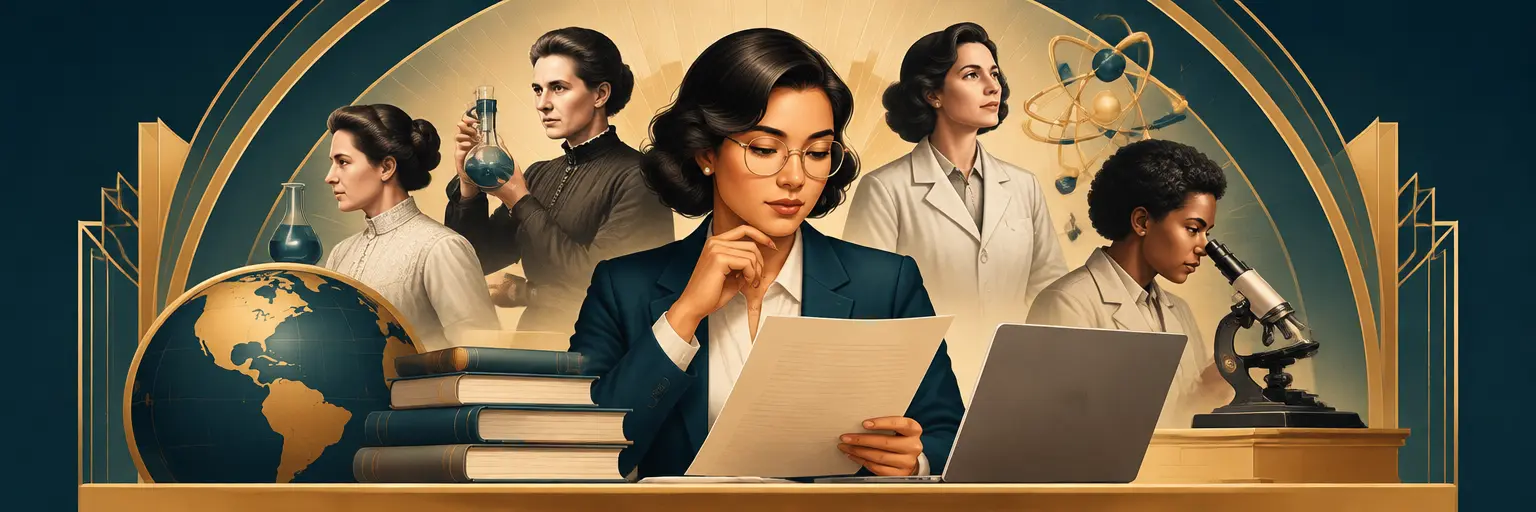
Dive into our curated collection of university course syllabi dedicated to the history of women in science. Designed for educators at the collegiate level, these resources provide structured frameworks, reading lists, and assignment ideas to help you teach the vital contributions of female scientists. Whether you are designing a new course or enriching an existing one, our syllabi offer a blend of narrative history, critical analysis, and primary source exploration, ensuring your students gain a comprehensive understanding of the field.
📚 Foundational Course Structures and Learning Objectives
These syllabi begin with clear learning outcomes, focusing on gender dynamics in scientific institutions and the historical exclusion of women. Expect modules that trace the journey from the 18th-century salons to modern labs, with weekly themes like “The Lady Astronomers” or “Invisible Technicians.” Each syllabus integrates discussion prompts and reflective essays to foster critical thinking about how scientific knowledge is gendered. You’ll also find guidelines for final research papers that encourage students to use archival databases and biographical case studies, making the course both academically rigorous and personally inspiring.
Our structures are flexible, allowing you to adapt them for a 10-week quarter or a 15-week semester. They include grading rubrics and participation metrics, saving you prep time while maximizing student engagement. The syllabi emphasize intersectionality, covering women of color, LGBTQ+ scientists, and those from non-Western traditions, ensuring a rich, global perspective. By using these frameworks, you can confidently deliver a course that challenges traditional narratives and highlights the resilience of women in STEM fields.
🧪 Curated Primary Source and Biography Reading Lists
Each syllabus features a weekly reading list that pairs scholarly articles with autobiographical writings from trailblazers like Marie Curie, Barbara McClintock, and Rachel Carson. You’ll find links to open-access journals, digitized letters, and lab notebooks, many sourced from the Library of Congress and university archives. These materials help students analyze scientific progress through a personal lens, revealing the social obstacles women faced. The lists are annotated with succinct summaries and discussion questions, so you can quickly guide classroom dialogue without extra research.
Moreover, we include alternative media like podcast episodes and documentary clips, catering to diverse learning styles. Each reading list is updated to reflect the latest historiography, incorporating recent scholarship on hidden figures in botany, physics, and medicine. This ensures your curriculum stays current and engaged with evolving academic debates. By integrating these sources, you empower students to see women not as anomalies but as integral parts of scientific history, fostering a more inclusive and accurate understanding of discovery.
🗂️ Assignment Ideas, Rubrics, and Assessment Tools
Our syllabi come with ready-made assignments such as "Biographical Digital Poster" or "Comparative Analysis of Scientific Diaries," each aligned with Bloom’s taxonomy to promote higher-order thinking. For example, a midterm project might ask students to create a virtual museum exhibit on a female scientist, complete with narrative labels and historical context. We also provide peer-review worksheets and self-assessment checklists, encouraging collaborative learning and metacognition. These tools help you evaluate both factual knowledge and interpretive skills, ensuring fair and transparent grading.
Assessment rubrics are detailed, breaking down criteria like thesis clarity, use of evidence, and engagement with gender theory. We also suggest formative assessments like weekly reading responses or idea maps, which build toward larger projects. For final exams, we offer essay prompts that synthesize course themes, such as "How did the Cold War shape opportunities for women in science?" These resources reduce your administrative load and provide consistent expectations for students, making your teaching more efficient and impactful.
🌍 Inclusive Pedagogies and Classroom Discussion Guides
Teaching women’s history requires sensitivity to implicit bias and marginalized voices. Our syllabi embed inclusive teaching strategies, such as think-pair-share activities on stereotypes and reverse chronological case studies that show modern inequities persist. Each lesson plan includes facilitator notes on managing difficult conversations about sexism, racism, and class privilege. We also provide alternative grading schemes (e.g., contract grading) to reduce student anxiety, and suggest collaborative research wikis where students co-construct knowledge.
Discussion guides offer sample questions like "What constitutes a ‘discovery’ when women’s contributions were often credited to men?" or "How do we interpret the term ‘amateur’ in historical contexts?" These prompts are designed to be accessible yet challenging, prompting students to question automatic assumptions. We also include low-stakes writing exercises and exit tickets to gauge comprehension. By adopting these pedagogies, you create a classroom where all students feel valued and are encouraged to see themselves as future scientists or historians.
📝 Multimodal Project Templates and Final Presentation Frameworks
To cap off the course, our syllabi offer capstone project templates like oral history interviews, digital timelines, or policy briefs on equity in STEM. Each template includes step-by-step instructions, example projects, and rubric checkpoints to guide students from proposal to final draft. For instance, a student might create a podcast episode on Rosalind Franklin’s overlooked role in DNA discovery, complete with sound editing guidance. We also provide presentation rubrics that assess public speaking skills, visual design, and audience engagement, helping students polish their professional communication.
These frameworks are adaptable for both in-person and online formats, with suggestions for using tools like Canva, ArcGIS, or WordPress. We include mentorship models where students can interview contemporary female scientists, linking historical lessons to current careers. Additionally, we offer sample poster session templates for class symposia, encouraging students to showcase their research in a supportive environment. By providing these structured yet flexible templates, you enable students to produce high-quality work that demonstrates their mastery of both historical content and academic skills.
Frequently Asked Questions
Are these syllabi suitable for first-year undergraduates?
Yes, we offer versions with simplified readings and more scaffolding. For first-year students, emphasize the biography-focused modules and group discussions. Adjust the final paper to a 5-page reflective essay rather than a research paper.
Can I modify the syllabi to focus on a specific time period?
Absolutely. Each syllabus includes a modular table of contents, so you can swap weeks. For a 19th-century focus, replace the Cold War units with ones on the women’s suffrage movement and early laboratory pioneers.
Do the syllabi include links to open-access resources only?
Mostly yes. We prioritize freely available materials from JSTOR’s open collection, Wikipedia’s wiki-education pages, and museum archives. Any paywalled sources are optional and clearly marked, so you can exclude them if needed.
How often are these syllabi updated?
We review and update every syllabus annually to reflect new scholarship and online materials. This includes adding recent biography releases and revising discussion prompts based on pedagogical feedback.
Is there a sample weekly schedule included?
Yes, each syllabus begins with a week-by-week overview that maps themes, readings, and assignments. This schedule serves as a starting point and includes flexibility for guest lectures or field trips.