Classroom Activities: Women in Chemistry
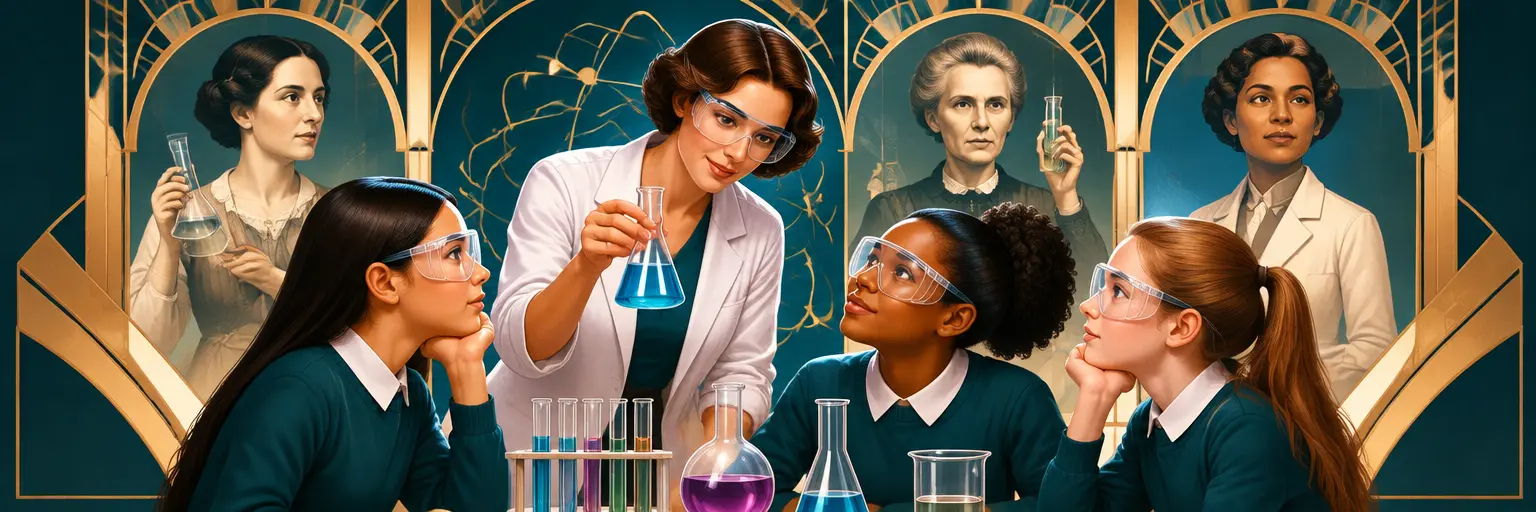
Bring the inspiring stories of female chemists into your classroom with hands-on, inquiry-based activities designed to spark curiosity and deepen understanding. This subcategory offers ready-to-use lesson plans, experiments, and discussion guides that highlight the pivotal contributions of women like Marie Curie, Rosalind Franklin, and Gertrude Elion. Each resource aligns with STEM education standards and encourages critical thinking about gender representation in science, making it easier for educators to integrate diverse historical narratives into their chemistry curriculum.
🔬 Interactive Experiments Based on Pioneering Discoveries
Explore step-by-step laboratory activities that replicate or simplify the groundbreaking work of women chemists. From isolating radium’s glow to testing the structure of DNA-like molecules, these experiments are adapted for classroom safety and engagement. Each plan includes materials lists, safety notes, and reflection prompts that connect the scientific process to the original researchers’ challenges, fostering a deeper appreciation for their perseverance.
These activities are not just about doing science—they are about experiencing history. Students will learn to analyze data, hypothesize like historical figures, and discuss how gender barriers influenced research methods. Perfect for middle and high school levels, these experiments can be adjusted for virtual labs or minimal-equipment settings, ensuring accessibility for diverse learning environments.
📚 Biographical Storytelling & Role-Play Scenarios
Transform biographies into interactive narratives where students role-play as chemists facing real-world dilemmas. For example, they might negotiate for lab access as Marie Curie did, or defend their research against skepticism like Alice Ball. These scripts and scenario cards encourage empathy, public speaking, and historical analysis, while also teaching core chemistry concepts embedded in each character’s story.
Teachers can use these materials for drama-based learning, debate sessions, or as writing prompts for creative essays. Each scenario includes background notes, discussion questions, and extension activities that link to periodic table trends, chemical bonding, or medicinal chemistry. This approach makes history tangible and shows students that scientific breakthroughs are often born from resilience and collaboration, not just pure intellect.
🧪 Collaborative Group Projects: "Modern Female Chemist" Profiles
Guide students in researching and presenting the work of contemporary women in chemistry, from Frances Arnold to Carolyn Bertozzi. These project kits provide research templates, citation guides, and presentation rubrics that emphasize the diversity of career paths in chemistry, including academia, industry, and public policy. Students will practice summarizing complex research into accessible formats, such as posters or short videos.
This activity also encourages peer teaching, as groups exchange profiles and quiz each other on key discoveries. By focusing on living scientists, students see that history is still being written and that they can contribute to it. Included are links to interviews, lab tour videos, and accessible journal summaries, helping students differentiate between popular media and primary scientific sources while building digital literacy.
🖼️ Visual Timeline & Infographic Creation Kits
Use curated datasets and image banks to help students construct visual timelines of women’s contributions to chemistry, from early alchemy to modern green chemistry. These kits include printable timeline templates, infographic design guidelines, and fact-checking checklists. Students will prioritize key events, explain the significance of each breakthrough, and visually represent the disproportionate recognition versus actual contribution.
This hands-on activity enhances spatial reasoning and data visualization skills, which are critical in STEM fields. Teachers can assign individual or group timelines, then connect them to broader historical context—such as how war or social movements affected access to education. The final products can be displayed in classrooms or shared digitally, fostering a sense of community achievement and historical awareness.
📝 Critical Thinking & Discussion Prompts on Gender in Science
Dive into structured debates and Socratic seminars using ready-made question sets about underrepresentation, citation bias, and the "Matilda Effect" in chemistry. These prompts are designed to be used after a biography or experiment, pushing students to evaluate how gender biases shape scientific recognition. Each set includes moderator guides, student handouts, and optional assessment rubrics for evidence-based arguments.
Such discussions cultivate a classroom culture where questioning norms is valued. Students will learn to separate scientific merit from social bias and propose actionable ways to support equity in STEM. These activities also align with social-emotional learning goals, helping students articulate their own perspectives while respectfully listening to others. They are ideal for advisory periods, science clubs, or as a capstone to a unit on women in chemistry.
Frequently Asked Questions
Do these activities require expensive laboratory equipment?
Most activities are designed with low-cost, easily accessible materials like baking soda, food coloring, or household acids. Advanced experiments include alternative procedures that use virtual simulations or simple models, ensuring that even schools with limited budgets can participate fully without compromising learning outcomes.
How do these activities align with standard chemistry curricula?
Each activity explicitly lists relevant NGSS, state, or national standards, including topics like atomic structure, chemical reactions, and scientific inquiry. Teachers can easily map them to existing lesson plans, and many activities include cross-curricular connections to history, English, and art, making them versatile for interdisciplinary teaching.
Can these resources be adapted for elementary or college levels?
Yes, every activity includes tiered modifications. For younger students, simplify language and focus on observation and storytelling. For college students, add original research papers, statistical analysis of recognition patterns, or community-based projects. The core narratives remain engaging across ages, while the complexity of tasks can scale up or down.
Are there printable worksheets or digital versions available?
All resources come in both PDF and editable Google Docs formats. This flexibility allows teachers to print handouts directly or share digital copies for remote learning. Many kits include fillable forms and self-grading quizzes to streamline assessment, whether in-person or hybrid classroom settings.
How can I assess student learning from these activities?
Each activity includes suggested formative and summative assessments, such as reflection journals, rubric-scored presentations, or peer review checklists. Many also offer example “answer keys” for factual components, but emphasize open-ended, critical thinking responses to gauge deeper understanding of both chemistry concepts and historical contexts.