
Forgotten Figures: A "Who Am I?" Game Featuring LesserKnown Women Chemists

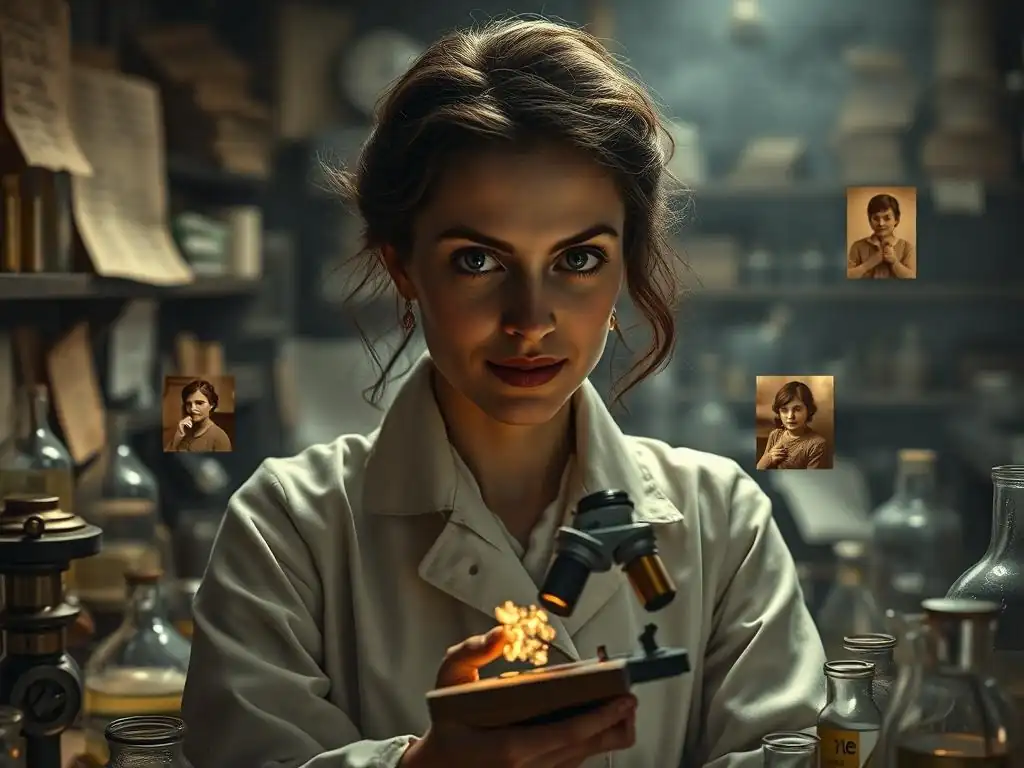
Welcome to WomenInScienceHistory.com!
Dive into the captivating world of Forgotten Figures – a journey to uncover the unsung heroes of chemistry. Can you guess the identity of these brilliant minds based on subtle clues and intriguing hints? This interactive resource, focusing on forgotten women chemists biographies, is designed to challenge and inspire, revealing the crucial roles these women played in shaping the scientific landscape. Prepare to be amazed by their resilience, innovation, and the secrets they hold. Ready to play and discover?
- Introduction: Unveiling the Hidden Stories of Women Chemists
- How to Play the "Who Am I?" Game: Forgotten Women in Chemistry Edition
- Expanding the Learning Experience: Further Exploration of Women Chemists' Biographies
- Conclusion: Celebrating the Legacy of Forgotten Women Chemists and Inspiring Future Generations
-
Frequently Asked Questions
- What is the main goal of WomenInScienceHistory.com?
- Why does the website focus on "Forgotten women chemists biographies"?
- What kind of information can I find on WomenInScienceHistory.com about women chemists?
- What is the "Who Am I?" game mentioned in the title of the article?
- How does WomenInScienceHistory.com aim to inspire future generations?
- Final Reflection: Illuminating the Unseen
- Unveil Hidden Heroines: Challenge Your Knowledge!
Why Focus on Overlooked Women Chemists in Science Education?
The traditional narrative of scientific discovery often overlooks the profound contributions of women, particularly in fields like chemistry where their ingenuity and perseverance were instrumental. Integrating the forgotten women chemists biographies into educational curricula offers a more complete and accurate historical perspective, challenging the long-standing biases that have minimized their roles. By spotlighting these unsung heroes, educators can demonstrate that scientific brilliance is not confined by gender, thereby enriching students' understanding of how scientific progress truly unfolds through diverse minds.
Moreover, learning about these remarkable forgotten women chemists biographies serves as a powerful source of inspiration. When students, especially young women, discover figures like Alice Ball, who developed a critical leprosy treatment, or Stephanie Kwolek, the inventor of Kevlar, they gain tangible proof that women have always been at the forefront of innovation despite systemic barriers. This exposure can dismantle preconceived notions about who can be a scientist, encouraging a broader range of students to envision themselves pursuing careers in STEM and contributing to future scientific breakthroughs.
How to Play the "Who Am I?" Game: Forgotten Women in Chemistry Edition
Game Setup: Preparing Your Classroom for Scientific Discovery
To effectively play the "Who Am I?" game, preparation is key to creating an engaging and educational environment. Begin by printing out the clue sets for each forgotten woman chemist biography on separate cards or slips of paper, ensuring each set is clearly labeled with a number or letter but not the chemist's name. Consider laminating these cards for durability, especially if you plan to reuse them across multiple classes or years. Provide each student or small group with a worksheet or notebook where they can record their guesses and any notes they take during the game.
For optimal engagement, arrange your classroom to facilitate discussion and collaboration. Students can work individually, in pairs, or in small groups of three to four, allowing for varied learning styles and encouraging peer-to-peer learning. Before starting, briefly introduce the concept of overlooked scientists and the importance of uncovering forgotten women chemists biographies to set the stage for discovery. You might also prepare a whiteboard or projector to reveal the correct answers and discuss additional details about each chemist after the guessing phase.
Game Clues: Unveiling the Achievements of Underrepresented Women Chemists
This section provides example clue sets designed to highlight the significant, yet often overlooked, contributions of various forgotten women chemists biographies. Each set offers distinct facts that point to a specific individual, encouraging students to synthesize information and make educated guesses. The goal is to spark curiosity and facilitate a deeper appreciation for their diverse scientific legacies.
-
Section Introduction:
The following clue sets are crafted to introduce students to seven pivotal forgotten women chemists biographies. Each set contains three distinct clues that progressively reveal details about the chemist's life, work, and impact. Encourage students to listen carefully, discuss with their peers (if working in groups), and use critical thinking to identify the individual. After each set, the correct answer will be revealed, followed by a brief discussion of their contributions.
-
(Example 1) Clue Set: Alice Ball - Pioneering Chemist for Leprosy Treatment
- Clue 1: Born in Seattle, Washington, in 1892, she was the first woman and first African American to earn a master's degree in chemistry from the University of Hawaii.
- Clue 2: She developed the "Ball Method," an injectable oil extract from chaulmoogra tree seeds, which was the most effective treatment for leprosy for decades. This method significantly improved the lives of thousands suffering from the disease globally.
- Clue 3: Tragically, she died at age 24, and her work was initially claimed by a male colleague, though her contributions were later recognized and her method remained the gold standard until the 1940s.
-
(Example 2) Clue Set: Stephanie Kwolek - Inventor of Kevlar
- Clue 1: A DuPont chemist born in 1923, her groundbreaking work in polymer chemistry led to an accidental discovery during research into lightweight fibers for radial tires.
- Clue 2: She synthesized a liquid crystalline polymer that was five times stronger than steel by weight, initially thought to be a bad batch due to its unusual viscosity and murky appearance.
- Clue 3: This invention, Kevlar, is used in bulletproof vests, aerospace components, fire-resistant gear, and even fiber optic cables, saving countless lives and revolutionizing material science since its commercialization in 1971.
-
(Example 3) Clue Set: Lise Meitner - Nuclear Physics Pioneer
- Clue 1: An Austrian-Swedish physicist born in 1878, she worked extensively with Otto Hahn and Fritz Strassmann in nuclear chemistry in Berlin for over 30 years.
- Clue 2: Forced to flee Nazi Germany in 1938, she continued her work remotely and, with her nephew Otto Frisch, provided the theoretical explanation for nuclear fission, a term they coined.
- Clue 3: Despite her pivotal intellectual role in understanding the process, she was controversially overlooked for the Nobel Prize in Chemistry awarded solely to Hahn in 1944.
-
(Example 4) Clue Set: Barbara Askins - Image Enhancement Innovator
- Clue 1: A physical chemist working for NASA in the 1970s, she developed a method for enhancing underexposed photographic negatives, particularly those from astronomical and medical sources.
- Clue 2: Her invention, patented in 1978, significantly improved images from space missions like the Voyager spacecraft and medical X-rays, allowing for much clearer scientific analysis and diagnostic capabilities.
- Clue 3: This pioneering work earned her the National Inventor of the Year award in 1983, making her the first woman to receive this prestigious honor individually.
-
(Example 5) Clue Set: Katharine Burr Blodgett - Surface Chemistry Expert
- Clue 1: Born in 1898, she was the first woman to earn a Ph.D. in physics from the University of Cambridge in 1926 and spent her entire professional career at General Electric's research laboratory.
- Clue 2: She invented "invisible" or non-reflecting glass, using a technique to apply monomolecular layers of fatty acids to glass surfaces, reducing surface reflection to near zero.
- Clue 3: Her invention had widespread applications, from camera lenses to eyeglasses, submarine periscopes, and even museum display cases, significantly improving clarity and reducing glare.
-
(Example 6) Clue Set: Mary Lowe Good - Industrial Chemist and Innovator
- Clue 1: A prominent inorganic chemist born in 1931, she held significant roles in both academia and government, including Under Secretary for Technology in the U.S. Department of Commerce during the Clinton administration.
- Clue 2: Her research focused on catalysts and solid-state chemistry, particularly in understanding the structure and properties of complex inorganic compounds, publishing over 100 papers.
- Clue 3: She was the first woman to head the American Chemical Society in 1987, and her leadership was crucial in bridging the gap between scientific research and industrial application.
-
(Example 7) Clue Set: Patsy O'Connell Sherman - Co-inventor of Scotchgard
- Clue 1: Born in 1930, she was one of the first women to receive a bachelor's degree in chemistry and mathematics from Gustavus Adolphus College in 1952.
- Clue 2: While working at 3M, she co-invented a fluorochemical polymer that repels water and oil, after a spill of a new rubber material on a lab assistant's shoe proved impossible to clean.
- Clue 3: This invention, patented in 1956 and commercialized as Scotchgard, revolutionized textiles, carpets, and upholstery, creating a new category of stain-resistant products and becoming a household name globally.
Running the Game: Facilitating Engaging Learning About Women in Science History
Once the game setup is complete and the clue sets are prepared, the next step is to facilitate the game itself in a manner that maximizes engagement and learning about these forgotten women chemists biographies. Distribute the clue sets one at a time, allowing students a set amount of time (e.g., 2-3 minutes) to read the clues, discuss within their groups, and formulate a guess. Encourage them to write down their reasoning or any keywords that helped them arrive at their answer.
After each round, reveal the correct chemist's name and briefly elaborate on her achievements, challenges, and lasting impact. This debriefing is crucial; it transforms a simple guessing game into a powerful educational experience, solidifying the knowledge of these forgotten women chemists biographies. You can ask questions like, "What surprised you most about her story?" or "How might her work have been different if she lived today?" This encourages deeper reflection and helps students connect historical scientific contributions to broader societal contexts.
Expanding the Learning Experience: Further Exploration of Women Chemists' Biographies

Research Projects: Diving Deeper into Individual Stories
To extend the learning beyond the "Who Am I?" game, encourage students to embark on individual or group research projects focusing on specific forgotten women chemists biographies. Provide a list of additional lesser-known figures, or allow students to choose one that piqued their interest during the game. The goal is for them to delve deeper into the chemist's life, scientific methodologies, the historical context of their work, and the obstacles they overcame.
These projects can take various forms, such as creating detailed biographical presentations, writing informative essays, designing a timeline of their discoveries, or even developing new "Who Am I?" clue sets for other forgotten women chemists biographies. Emphasize the importance of consulting diverse sources, including academic journals, historical archives, and reputable science history websites, to gather comprehensive and accurate information. This process will not only enhance their research skills but also foster a profound appreciation for the intellectual rigor and resilience of these pioneering women.
Connecting to Current Events: Women in Chemistry Today
Bridging the past with the present is an effective way to make the forgotten women chemists biographies relevant to today's students. Initiate discussions on how the historical struggles and triumphs of these women relate to the current landscape for women in STEM fields. For instance, while women have made significant strides, they still face challenges; in 2022, women comprised approximately 34% of chemistry-related jobs in the U.S., but often hold a smaller percentage of senior leadership or tenured research positions.
Encourage students to research and discuss contemporary women making significant contributions in chemistry, perhaps even identifying local examples in academia or industry. This exercise helps students recognize that the legacy of the forgotten women chemists biographies continues to inspire and inform the experiences of modern scientists. It also provides an opportunity to reflect on ongoing efforts to achieve gender equity in science and to consider how they, as future innovators, can contribute to a more inclusive scientific community.
Conclusion: Celebrating the Legacy of Forgotten Women Chemists and Inspiring Future Generations
The Importance of Recognizing Unsung Heroes
The "Who Am I?" game and subsequent activities serve as a powerful gateway to understanding and celebrating the profound impact of forgotten women chemists biographies. By intentionally bringing these unsung heroes into the classroom, educators not only correct historical oversights but also enrich the scientific narrative, demonstrating that innovation and discovery are products of diverse perspectives and persistent effort. These women, through their groundbreaking research and unwavering dedication, laid foundations that continue to shape our world, from life-saving medicines to revolutionary materials.
Ultimately, the act of recognizing these forgotten women chemists biographies is more than just an academic exercise; it is an act of empowerment. Their stories of resilience, ingenuity, and intellectual prowess in the face of societal barriers offer invaluable lessons for all students. By highlighting these remarkable lives, we inspire future generations, especially young women, to pursue their scientific passions, to challenge norms, and to contribute their unique brilliance to the ongoing journey of scientific discovery, ensuring that no groundbreaking contribution remains unsung.
Frequently Asked Questions
What is the main goal of WomenInScienceHistory.com?
The site aims to celebrate and highlight the contributions of women in science, focusing on their biographies and work. It seeks to inspire future generations by shedding light on often overlooked narratives.
Why does the website focus on "Forgotten women chemists biographies"?
The website aims to rectify the historical underrepresentation of women in science. By focusing on forgotten figures, it seeks to bring their achievements to a wider audience and acknowledge their impact.
What kind of information can I find on WomenInScienceHistory.com about women chemists?
You can find biographies of pioneering female chemists, discussions of their groundbreaking research, and insights into the challenges they faced in their careers.
What is the "Who Am I?" game mentioned in the title of the article?
The "Who Am I?" game is likely an interactive way to learn about lesser-known women chemists. It probably presents clues and encourages users to guess the scientist's identity, promoting engagement and learning.
How does WomenInScienceHistory.com aim to inspire future generations?
By showcasing the successes and resilience of women in science history, the website provides role models and encouragement. It demonstrates that women can excel in scientific fields, despite historical barriers.
Final Reflection: Illuminating the Unseen
The stories of forgotten women chemists, once relegated to the shadows of history, are now more vital than ever. Their contributions, often overlooked and undervalued, serve as a potent reminder of the systemic biases that have shaped scientific narratives. By bringing these remarkable individuals to light through a playful "Who Am I?" game, we not only celebrate their achievements but also challenge the prevailing historical record.
This journey into the lives of these pioneers has profoundly impacted my understanding of scientific progress. It underscores the importance of actively seeking out and amplifying marginalized voices, ensuring that history reflects a more complete and equitable picture of innovation. Until lions have their own historians, tales of the hunt will always glorify the hunter.
This quote resonates deeply, reminding us that the narratives we inherit are often incomplete, shaped by dominant perspectives, and that we have a responsibility to seek out and share the untold stories.
Now, I invite you to reflect on the power of recognition. How can you, in your own sphere of influence, champion the unseen and unheard? Let us all commit to actively seeking out and celebrating the contributions of those who have been historically marginalized, ensuring that future generations inherit a more inclusive and inspiring legacy of scientific achievement.
Thank you for diving into the stories of these remarkable yet often overlooked women chemists. You've now gained a glimpse into their groundbreaking contributions and inspiring lives. Ready to put your newfound knowledge to the test?
- Take the "Who Am I?" challenge on WomenInScienceHistory.com and see how many of these incredible women you can identify!
- Share this article with your friends and family to spread awareness of these unsung heroes.
- Dive deeper:Explore related articles on WomenInScienceHistory.com to discover more fascinating stories of women in STEM.
Which of these women's stories resonated with you the most, and what inspired you to learn more?