
The Evolution of Astronomy: An Online Look at Women's Changing Roles & Discoveries

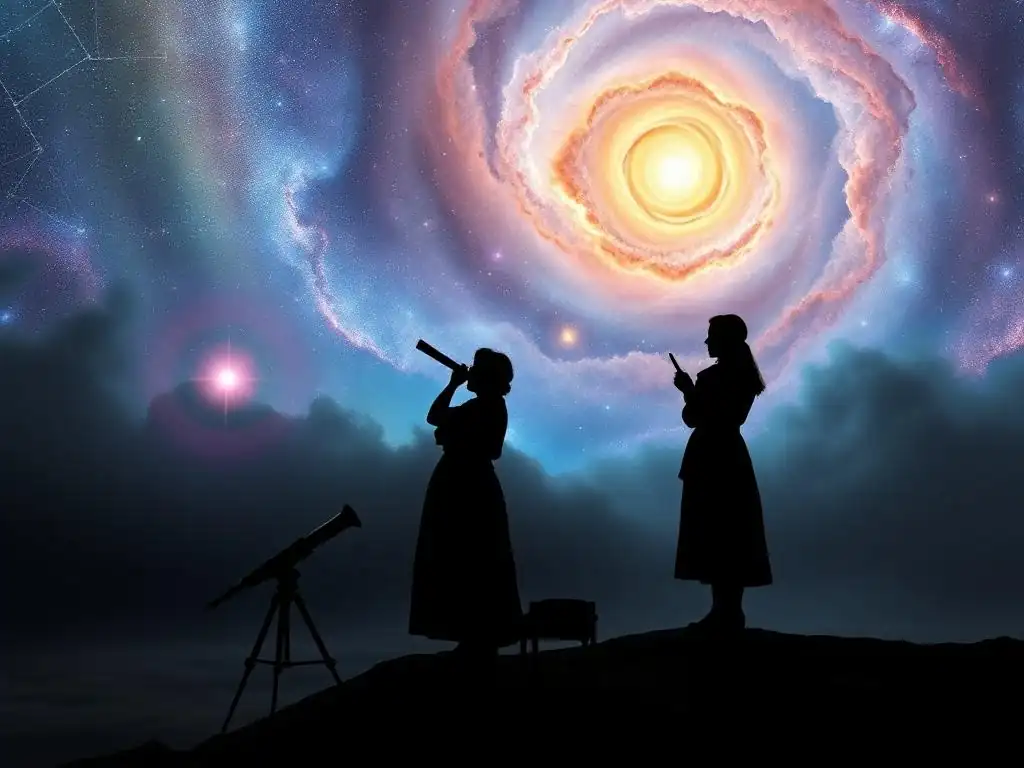
Welcome to WomenInScienceHistory.com!
Did you know that the story of astronomy is also the story of remarkable women whose contributions have been, for too long, relegated to the shadows? Dive into our new article, " The Evolution of Astronomy: An Online Look at Women's Changing Roles & Discoveries," and uncover the fascinating journey of female astronomers and their groundbreaking work. Explore how these pioneers navigated a male-dominated field and shaped our understanding of the cosmos. What celestial secrets did they unlock, and what obstacles did they overcome? Discover more about women’s astronomy historical contributions and embark on a journey of scientific rediscovery!
- Unveiling Women’s Astronomy Historical Contributions: A Journey Through Time
- Early Pioneers: Women Laying the Foundation for Astronomical Science
- Breaking Barriers: Women Navigating a Male-Dominated Field
- Key Discoveries and Innovations by Women in Astronomy
- Modern Women Astronomers: Shaping the Future of Space Exploration
- Online Resources for Learning About Women’s Contributions to Astronomy
- Tools and Technology Used by Women Astronomers Throughout History
- Inspiring Future Generations: How to Support Women in STEM Fields
- The Ongoing Evolution: Women's Role in the Future of Astronomy
-
Frequently Asked Questions
- What is the primary focus of WomenInScienceHistory.com?
- Why is it important to recognize "Women’s astronomy historical contributions"?
- What kind of content does WomenInScienceHistory.com offer regarding women in astronomy?
- What challenges did women in astronomy historically face?
- How can learning about women in science, particularly astronomy, inspire future generations?
- Final Reflection: Illuminating the Cosmos, Empowering Women
- Ignite Your Inner Astronomer!
Unveiling Women’s Astronomy Historical Contributions: A Journey Through Time
From Ancient Observers to Modern Astrophysicists: Tracing Women's Footsteps in the Cosmos
The journey of women in astronomy is a rich tapestry woven through millennia, often obscured by historical biases. From ancient civilizations, where women likely played crucial roles in observing celestial cycles for agricultural planning and timekeeping, to the sophisticated observatories of today, their contributions, though frequently uncredited, laid foundational groundwork. Early societies, such as those in Mesopotamia or ancient Egypt, relied on sky knowledge for religious practices and seasonal predictions, activities in which women, as priestesses or healers, may have been integral observers of the cosmos.
As astronomy evolved from observational practices to a formalized science, the challenges for women intensified. Yet, despite systemic barriers, a determined few managed to carve out spaces for themselves, contributing significantly to our understanding of the universe. Their persistent efforts ensured that women’s astronomy historical contributions, from the meticulous charting of stars to groundbreaking theoretical physics, gradually became undeniable, paving the way for the diverse and inclusive astronomical community we see today.
Early Pioneers: Women Laying the Foundation for Astronomical Science
Hypatia of Alexandria: A Beacon of Knowledge in Antiquity
Hypatia of Alexandria, born around 350-370 AD, stands as a towering figure in the annals of early science, a brilliant philosopher, astronomer, and mathematician in a period dominated by men. She taught at the Neoplatonic School in Alexandria, attracting students from across the Roman Empire, including prominent figures like Synesius of Cyrene. Her scholarly work included commentaries on significant mathematical and astronomical texts of her time, such as Ptolemy's Almagest and Euclid's Elements, which she helped clarify and disseminate.
Hypatia's intellectual prowess and leadership made her a revered figure, sought after for her wisdom and counsel. Her tragic death in 415 AD, a result of political and religious turmoil, marked a profound loss for the intellectual world. Despite the limited direct evidence of her specific astronomical discoveries, her role in preserving and advancing classical knowledge, and her embodiment of intellectual pursuit in a challenging era, firmly establish her as a pivotal early example of women’s astronomy historical contributions.
Caroline Herschel: Cataloging the Heavens and Mentoring Future Astronomers
Caroline Herschel (1750-1848), sister and assistant to the renowned astronomer William Herschel, was a formidable astronomer in her own right, whose meticulous work significantly advanced celestial cartography. She dedicated her life to observing and cataloging stars and nebulae, famously discovering eight comets, including the periodic comet 35P/Herschel–Rigollet, and fourteen new nebulae. Her systematic re-observation and compilation of existing catalogs led to the publication of an index to Flamsteed's observations, correcting errors and adding a substantial list of new nebulae.
Herschel's groundbreaking work earned her the distinction of being the first woman to be paid for her scientific work in England, receiving an annual salary from King George III for her services to astronomy. In 1828, she was awarded the Gold Medal of the Royal Astronomical Society, a testament to her enduring legacy and her profound impact on women’s astronomy historical contributions. Her dedication set a precedent for future female scientists, demonstrating the invaluable role women could play in rigorous astronomical research.
The "Harvard Computers": Women Analyzing Astronomical Data and Classifying Stars
At the turn of the 20th century, a remarkable group of women, famously known as the "Harvard Computers," revolutionized astronomical research through their diligent and precise analysis of photographic plates. Employed by Edward Pickering at the Harvard College Observatory, these women, often college graduates, were tasked with the laborious but critical work of measuring stellar positions, magnitudes, and classifying spectra from hundreds of thousands of photographic plates. Their collective effort, though often undervalued and underpaid compared to their male counterparts, formed the backbone of major astronomical catalogs and laid the empirical foundation for astrophysics.
Their contributions were immense; they processed an unprecedented volume of data, leading to the development of stellar classification systems that are still in use today. Despite the prevailing societal norms that limited women's access to formal scientific roles, these women demonstrated exceptional skill and dedication, systematically charting the heavens and making indispensable women’s astronomy historical contributions, proving that scientific rigor knows no gender.
Annie Jump Cannon: Revolutionizing Stellar Classification and Paving the Way for Future Generations of Women Astronomers
Among the most prominent of the "Harvard Computers" was Annie Jump Cannon (1863-1941), whose genius for stellar classification transformed astronomy. Cannon developed the Harvard Classification Scheme, which categorizes stars based on their spectral characteristics (OBAFGKM), a system universally adopted and still fundamental to stellar astrophysics. Her unparalleled ability allowed her to classify an astonishing number of stars—over 350,000—often at a rate of three stars per minute, a feat of precision and speed that remains legendary.
Cannon's meticulous work provided the framework for understanding stellar evolution and the physical properties of stars. Her achievements garnered significant recognition, including being the first woman to receive an honorary doctorate from Oxford University in 1925, and being inducted into the American Philosophical Society. Her systematic approach and enduring classification system made one of the most significant women’s astronomy historical contributions, opening doors and inspiring countless future generations of women astronomers.
Key Discoveries and Innovations by Women in Astronomy
Henrietta Swan Leavitt: Discovering the Period-Luminosity Relationship of Cepheid Variables and Measuring Cosmic Distances
Henrietta Swan Leavitt (1868-1921), another brilliant member of the Harvard College Observatory team, made a discovery that fundamentally changed our understanding of the universe's scale. While studying Cepheid variable stars in the Magellanic Clouds, Leavitt painstakingly observed their fluctuating brightness. In 1912, she published her profound finding: a direct, quantifiable relationship between the luminosity (intrinsic brightness) of a Cepheid star and the period of its pulsation. The brighter the star, the longer its pulsation period.
This period-luminosity relationship provided astronomers with a crucial "standard candle," a cosmic yardstick to measure distances across the vastness of space. Her work directly enabled Edwin Hubble's later discovery of the expanding universe, as he used Cepheids to determine the distances to galaxies beyond the Milky Way. Leavitt's quiet, diligent work, though not fully appreciated during her lifetime, stands as one of the most pivotal women’s astronomy historical contributions, unlocking the true scale of the cosmos.
Cecilia Payne-Gaposchkin: Unveiling the Composition of Stars and Redefining Astronomical Understanding
Cecilia Payne-Gaposchkin (1900-1979) revolutionized astrophysics with her groundbreaking 1925 PhD thesis, Stellar Atmospheres, A Contribution to the Observational Study of High Temperature in the Reversing Layers of Stars. In it, she applied quantum mechanics to stellar spectra, definitively concluding that stars are overwhelmingly composed of hydrogen and helium. This contradicted the prevailing scientific consensus, which held that stars had a similar elemental composition to Earth.
Initially, her findings were met with skepticism, notably from prominent astronomer Henry Norris Russell, who advised her to retract her conclusion about hydrogen's abundance. However, subsequent evidence overwhelmingly supported her revolutionary theory, with Russell himself acknowledging her correctness four years later. Payne-Gaposchkin's thesis is widely regarded as one of the most important doctoral dissertations in astronomy, fundamentally reshaping our understanding of stellar composition and marking an indelible women’s astronomy historical contribution.
Modern Women Astronomers: Shaping the Future of Space Exploration
Vera Rubin: Uncovering Evidence for Dark Matter and Transforming Our Understanding of Galactic Rotation
Vera Rubin (1928-2016) was a pioneering astronomer whose meticulous observations provided compelling evidence for the existence of dark matter, one of the universe's most enigmatic components. In the 1970s, working with Kent Ford, she meticulously studied the rotation curves of spiral galaxies, particularly the Andromeda galaxy. Her data consistently showed that stars at the outer edges of galaxies were orbiting at speeds far too high to be accounted for by the visible matter alone, defying Newtonian gravitational predictions.
This discrepancy led Rubin to propose the existence of a vast halo of unseen, non-luminous matter surrounding galaxies—dark matter. Her work fundamentally transformed our understanding of galactic dynamics and the universe's composition, where dark matter is now estimated to constitute about 27% of its total mass. Rubin’s persistent research, often met with initial resistance, ultimately reshaped modern cosmology and stands as a monumental women’s astronomy historical contribution.
Dr. Katie Bouman: Developing Algorithms for Imaging Black Holes
Dr. Katie Bouman (born 1989) played a pivotal role in one of the most iconic scientific achievements of the 21st century: the first-ever image of a black hole. As a computer scientist and part of the international Event Horizon Telescope (EHT) collaboration, Bouman developed a crucial algorithm named CHIRP (Continuous High-resolution Image Reconstruction using Patch priors). This algorithm was essential for processing the vast, sparse, and noisy data collected from a global network of radio telescopes.
Her work involved meticulously stitching together terabytes of data from eight observatories across the planet to reconstruct an image of the supermassive black hole at the center of galaxy M87 (M87*), released in 2019. Dr. Bouman's innovative computational approach showcased how advanced algorithms and interdisciplinary collaboration are vital for modern astronomical discoveries. Her contribution highlights the continuing evolution of women’s astronomy historical contributions in the age of big data and computational astrophysics.
Online Resources for Learning About Women’s Contributions to Astronomy
Recommended Online Courses: Exploring Women in STEM and the Universe
The digital age has opened unprecedented avenues for learning about the significant roles women have played in science, including astronomy. Many online platforms now offer specialized courses or modules that delve into the biographies, challenges, and groundbreaking discoveries of female scientists. These educational resources provide a structured and accessible way to explore women’s astronomy historical contributions, often combining historical narrative with scientific principles.
These courses are invaluable for anyone seeking a deeper understanding of the struggles and triumphs of women in STEM. They often highlight how scientific progress is a collective human endeavor, underscoring the importance of diverse perspectives. By engaging with these dedicated online learning opportunities, individuals can gain a richer appreciation for the often-overlooked narratives of women who shaped our cosmic understanding.
Free Astronomy Courses: MIT OpenCourseWare - Introduction to Astronomy
For those beginning their journey into the cosmos, free online resources like MIT OpenCourseWare offer excellent foundational knowledge. The "Introduction to Astronomy" course, for instance, provides a comprehensive overview of celestial mechanics, stellar evolution, galaxies, and cosmology. While not exclusively focused on women, such courses offer the fundamental scientific context necessary to appreciate the specific contributions of women astronomers.
Learners can use these free courses to build a strong base in astronomical concepts. As they progress, they can then independently research the female scientists who made pivotal discoveries within the topics covered. This approach allows for a self-directed exploration of women’s astronomy historical contributions, seamlessly integrating individual narratives into the broader scientific landscape.
Paid Astronomy Courses: Coursera - Astrophysics Specialization
For a more in-depth and specialized learning experience, platforms like Coursera offer paid programs such as the "Astrophysics Specialization." These comprehensive courses are typically developed by leading universities and delve into advanced topics like stellar atmospheres, galactic dynamics, and cosmology. Within these specialized areas, the discoveries of women like Cecilia Payne-Gaposchkin (stellar composition) and Vera Rubin (dark matter) are inherently foundational.
Enrolling in such a specialization provides a rigorous academic pathway to understanding the universe, where the impact of women’s astronomy historical contributions is evident in the very fabric of the curriculum. While not always explicitly titled "Women in Astronomy," the content naturally explores the cutting-edge research fields where female scientists have made, and continue to make, profound and lasting impacts.
Tools and Technology Used by Women Astronomers Throughout History
From Sextants to Space Telescopes: A Look at the Instruments that Enabled Groundbreaking Discoveries
The tools used by astronomers have evolved dramatically over centuries, each advancement enabling new insights into the cosmos. Early astronomers, including women like Hypatia, would have relied on instruments such as the astrolabe and the armillary sphere for theoretical understanding and teaching, though direct observational tools were more basic. With the advent of the telescope in the 17th century, the observational landscape transformed. Caroline Herschel, for example, used reflecting telescopes, often built by her brother William, to meticulously survey the night sky and discover new comets and nebulae, pushing the boundaries of what could be seen.
The late 19th and early 20th centuries saw the widespread adoption of photographic plates, which allowed astronomers to record celestial light over long exposures. The "Harvard Computers," including Annie Jump Cannon and Henrietta Swan Leavitt, spent countless hours analyzing these plates, classifying stars and discovering fundamental cosmic relationships. Today, modern women astronomers utilize an array of sophisticated instruments, from ground-based radio telescopes that form arrays like the Event Horizon Telescope, to orbiting space telescopes like Hubble and James Webb, which capture light across the electromagnetic spectrum, continually expanding our cosmic view.
Celestron Telescopes: Perfect for Beginner Astronomers Inspired by Women in Science
Inspired by the pioneering spirit of women in science, aspiring astronomers can begin their own journey of cosmic exploration with accessible and user-friendly equipment, such as Celestron telescopes. These widely available instruments offer a fantastic entry point for beginners, allowing them to observe the Moon, planets, and even distant nebulae and galaxies from their own backyards. Engaging with a personal telescope fosters a direct, hands-on connection to the universe, mirroring the foundational experiences of early astronomers.
By actively observing the night sky, young enthusiasts, particularly girls, can cultivate a passion for astronomy that resonates with the historical contributions of women. Holding a telescope and gazing at celestial wonders can ignite the same curiosity that drove figures like Caroline Herschel to dedicate their lives to charting the heavens, directly connecting modern hobbyists to the enduring legacy of women’s astronomy historical contributions.
Python: Used by Professionals – Learn the tools used by modern women astronomers
In contemporary astronomy, computational tools are as vital as optical telescopes, and Python has emerged as a dominant programming language for professional astronomers. Its versatility, extensive libraries (such as NumPy, SciPy, and Astropy), and strong community support make it indispensable for data analysis, simulation, and visualization of astronomical phenomena. Modern women astronomers routinely use Python to process vast datasets from telescopes, model stellar evolution, simulate galaxy interactions, and analyze the complex physics of black holes.
Learning Python or similar computational skills is crucial for anyone aspiring to contribute to cutting-edge astronomical research today. Just as Dr. Katie Bouman leveraged advanced algorithms to image a black hole, mastering these digital tools empowers the next generation of women astronomers to tackle grand scientific challenges, ensuring that women’s astronomy historical contributions continue to evolve and shape our understanding of the universe in the digital age.
Inspiring Future Generations: How to Support Women in STEM Fields
Mentorship Programs and Educational Initiatives: Empowering Young Women to Pursue Careers in Astronomy
Fostering the next generation of women in astronomy requires dedicated support systems, with mentorship programs playing a pivotal role. These initiatives connect aspiring young women with experienced female astronomers who can provide guidance, share insights into career paths, and help navigate the unique challenges of STEM fields. Such relationships offer invaluable role models and a sense of community, significantly boosting confidence and retention rates.
Beyond mentorship, targeted educational initiatives, such as summer camps, workshops, and school outreach programs specifically designed for girls, are crucial. By introducing astronomical concepts in an engaging and accessible manner from an early age, these programs can spark curiosity and demonstrate the exciting possibilities within astronomy, directly inspiring future women to build upon the legacy of women’s astronomy historical contributions.
Books and Resources for Young Astronomers: Fostering a Love of Science from an Early Age
Cultivating a love for astronomy in young minds is essential, and engaging books and educational resources are powerful tools in this endeavor. Materials that highlight the stories and achievements of women astronomers can provide relatable and inspiring role models, showing young girls that a career in science is not only possible but also exciting and impactful. These resources often simplify complex cosmic concepts, making them approachable and fascinating.
By exposing children to the wonders of the universe through captivating narratives and beautiful illustrations, these resources can ignite a lifelong passion for scientific inquiry. They encourage exploration, critical thinking, and a sense of wonder, directly contributing to the pipeline of future female scientists who will continue to make significant women’s astronomy historical contributions.
"Ada Lovelace, Poet of Science: The First Computer Programmer" - Inspiring children's book
While not directly about astronomy, the children's book "Ada Lovelace, Poet of Science: The First Computer Programmer" serves as an excellent example of how to inspire young minds by showcasing pioneering women in STEM. This narrative introduces children to Ada Lovelace, daughter of Lord Byron, who, in the 19th century, envisioned the potential of computers beyond mere calculation, essentially becoming the world's first computer programmer. The book highlights her intellectual curiosity, her innovative thinking, and her ability to merge scientific rigor with poetic imagination.
Exposing children to stories of remarkable women like Ada Lovelace, even if their field isn't astronomy, broadens their understanding of what women can achieve in science and technology. It cultivates an appreciation for historical contributions of women in various scientific disciplines, laying a fertile ground for recognizing and celebrating the specific women’s astronomy historical contributions when they encounter them later in their educational journey.
The Ongoing Evolution: Women's Role in the Future of Astronomy
Addressing Gender Bias and Promoting Diversity in the Astronomical Community
Despite significant progress in recognizing women’s astronomy historical contributions, gender bias and underrepresentation persist within the astronomical community. Addressing these systemic issues is crucial for fostering a truly equitable and innovative scientific environment. Professional organizations, universities, and observatories are actively working to implement policies that promote equitable hiring and promotion practices, ensure inclusive workplace cultures, and develop robust mechanisms for reporting and addressing harassment and discrimination.
Beyond gender, promoting broader diversity—including racial, ethnic, socioeconomic, and LGBTQ+ representation—is equally vital. A diverse scientific community brings varied perspectives, experiences, and approaches to problem-solving, enriching research and accelerating discovery. By actively dismantling barriers and championing inclusivity, the field can ensure that all talented individuals, regardless of background, have the opportunity to contribute to the future of astronomy.
The Future is Bright: Celebrating the Continued Contributions of Women to Space Exploration
The legacy of women’s astronomy historical contributions is not confined to the past; it is a vibrant, ongoing narrative that continues to shape the future of space exploration. From leading complex international collaborations to developing cutting-edge technologies and making profound theoretical breakthroughs, women are at the forefront of astronomical research today. They are directing major observatories, designing missions to distant planets, and unraveling the universe's deepest mysteries.
As more women pursue advanced degrees and leadership roles in astronomy, their impact will only continue to grow. The increasing visibility of female scientists serves to inspire an even broader generation of young women, ensuring that the field benefits from the full spectrum of human talent. The future of astronomy is undoubtedly bright, propelled forward by the ingenuity, dedication, and continued groundbreaking discoveries of women in science.
Frequently Asked Questions
What is the primary focus of WomenInScienceHistory.com?
The site primarily focuses on celebrating the historical contributions of women to various scientific fields, highlighting their groundbreaking work and the challenges they faced. It aims to inspire future generations by showcasing these often overlooked narratives.
Why is it important to recognize "Women’s astronomy historical contributions"?
Recognizing Women’s astronomy historical contributions is crucial because it acknowledges their vital role in advancing our understanding of the universe. Their work was often overlooked or attributed to male colleagues, thus requiring deliberate effort to bring them to the forefront.
What kind of content does WomenInScienceHistory.com offer regarding women in astronomy?
The website features biographies of pioneering female astronomers, discussions on their specific astronomical discoveries, and examinations of the societal barriers they overcame in a male-dominated field.
What challenges did women in astronomy historically face?
Women in astronomy faced significant challenges, including limited access to education and resources, societal biases that undervalued their contributions, and exclusion from prestigious positions within the scientific community.
How can learning about women in science, particularly astronomy, inspire future generations?
Learning about women’s historical contributions can inspire future generations by demonstrating that science is for everyone. It shows that with perseverance and dedication, women can achieve remarkable scientific breakthroughs, even in the face of adversity.
Final Reflection: Illuminating the Cosmos, Empowering Women
The journey through the evolution of astronomy, particularly when viewed through the lens of women's historical contributions, reveals not just scientific progress, but also a profound shift in societal perspectives. The stories of these pioneering women, often overlooked in traditional narratives, resonate powerfully today, reminding us of the persistent struggle for equality and the enduring impact of those who dared to challenge the status quo.
This exploration has underscored the vital, yet often marginalized, role women have played in shaping our understanding of the universe. It's a humbling reminder that history is not a static narrative, but a constantly evolving tapestry woven with the threads of countless untold stories. We are all star stuff contemplating the stars; star stuff organized into systems, into living beings.
- Carl Sagan. This quote encapsulates the universal connection we all share, regardless of gender, to the cosmos, and highlights the importance of ensuring everyone has the opportunity to explore its mysteries.
As we look to the future, let us carry forward the lessons learned from these remarkable women. Let us actively seek out and amplify the voices of those who have been historically silenced, fostering a more inclusive and equitable scientific community. Consider how you can contribute to this ongoing evolution, ensuring that future generations inherit a world where every individual, regardless of gender, has the opportunity to reach for the stars and unlock the secrets of the universe.
Ignite Your Inner Astronomer!
Thank you for exploring the evolving world of astronomy and celebrating the remarkable contributions of women throughout its history. Now it's your turn to contribute to the ongoing legacy!
Here are some ways to take action:
- Dive deeper: Explore the "Pioneering Women" section of WomenInScienceHistory.com and learn about an astronomer you've never heard of before.
- Share this article with your network to spark conversations about the importance of recognizing women in STEM fields.
- Participate in or organize a local stargazing event to inspire the next generation of female astronomers.
What small step will you take today to further appreciate and amplify the stories of women in astronomy?