
Ecology & Evolution: A Biology Intro Guided by Female Scientific Pioneers

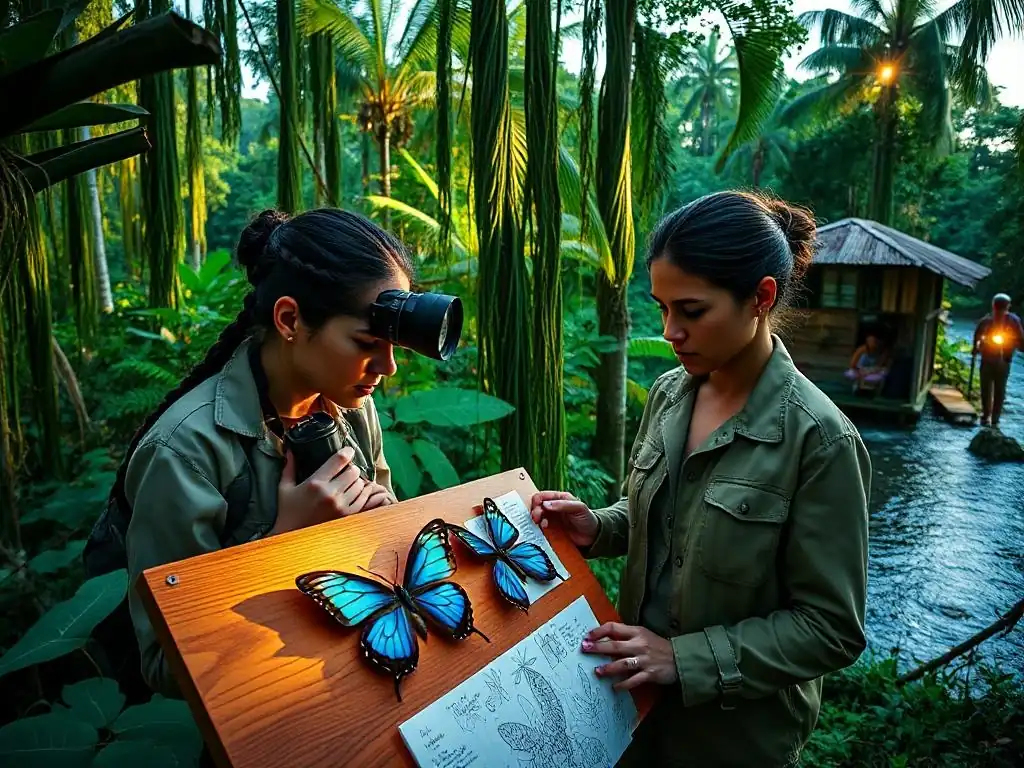
Welcome to WomenInScienceHistory.com!
Delve into the inspiring world of scientific discovery, where the contributions of women shine brightly. Ever wondered how female pioneers shaped the very foundations of fields like ecology and evolution? In this article, we'll explore how their groundbreaking work not only advanced our understanding of the natural world, but also paved the way for future generations of scientists. Prepare to be captivated by the untold stories and remarkable achievements of women in science history – and discover a new perspective on learning biology. Let's begin!
- Unveiling Ecology and Evolution Through the Lens of Women in Science
- Essential Resources for Learning Ecology & Evolution: A Female-Led Approach
-
Key Concepts in Ecology & Evolution: Taught Through the Work of Female Scientists
- Population Ecology: Understanding Growth and Limits Through the Eyes of Women Researchers
- Community Ecology: Interacting Species and the Contributions of Female Biologists
- Ecosystem Ecology: Nutrient Cycling and Energy Flow with Female Pioneers
- Evolutionary Biology: Natural Selection and the Female Perspective
- Choosing the Right Resources for Your Ecology & Evolution Journey
- Conclusion: Empowering Your Ecology & Evolution Education with Female Role Models
-
Frequently Asked Questions
- What is WomenInScienceHistory.com's primary goal?
- Why is it important to highlight the role of women in ecology and evolution?
- What challenges did women in ecology and evolution historically face?
- How does the website WomenInScienceHistory.com promote the keyword "Women in ecology evolution"?
- Can learning about these women's contributions inspire future generations of scientists?
- Final Reflection: Honoring the Legacy, Shaping the Future
- Ignite Your Inner Scientist: Answer the Call of Evolution!
Unveiling Ecology and Evolution Through the Lens of Women in Science
Why Study Ecology & Evolution with a Focus on Female Pioneers?
Understanding ecology and evolution is paramount in our current global climate, as these fields provide the fundamental knowledge needed to tackle pressing environmental challenges. From the intricate web of biodiversity loss to the complex dynamics of climate change, a grasp of ecological principles and evolutionary processes is essential for developing sustainable solutions. However, traditional scientific narratives often overlook or downplay the groundbreaking contributions of half of humanity.
By intentionally focusing on female pioneers in ecology and evolution, learners gain a more comprehensive and accurate understanding of scientific history. This approach not only corrects historical oversights but also unveils the unique perspectives, methodologies, and challenges faced by women in ecology evolution. Their stories serve as powerful inspiration, demonstrating resilience and intellectual brilliance in often male-dominated scientific landscapes, thereby encouraging new generations to pursue these vital fields.
Essential Resources for Learning Ecology & Evolution: A Female-Led Approach
Top Recommended Introductory Ecology & Evolution Courses Featuring Female Scientists
The landscape of online learning is increasingly recognizing the importance of diverse voices in science, leading to the development of courses that specifically highlight the contributions of women. These introductory courses often weave historical context with core scientific concepts, providing a richer, more engaging learning experience. For instance, some university extension programs or platforms like Coursera might offer modules dedicated to Rachel Carson's pivotal role in environmentalism or Lynn Margulis's revolutionary work on endosymbiosis, integrating their biographies directly into the curriculum.
When seeking such courses, prospective students should look for those that explicitly mention "women in science" or "female pioneers" in their descriptions. Many offer flexible, self-paced learning options, making them accessible to adult learners balancing other commitments. These courses not only teach fundamental ecological and evolutionary principles but also provide a narrative of discovery that includes the often-untold stories of women in ecology evolution, demonstrating how their insights shaped our current scientific understanding.
Essential Textbooks and Readings Highlighting Women in Ecological and Evolutionary Biology
Beyond structured courses, a wealth of textbooks and supplementary readings can deepen one's understanding of ecology and evolution through a female-led lens. These resources range from foundational scientific texts to historical accounts that meticulously document the journeys of pioneering women. For example, Rachel Carson's "Silent Spring" remains a seminal work that not only educated the public on the dangers of pesticides but also ignited the modern environmental movement, making it an essential read for anyone studying ecology.
Furthermore, contemporary textbooks are beginning to integrate more diverse perspectives, sometimes featuring sidebars or dedicated chapters on the lives and work of female scientists. Look for books that go beyond the usual suspects and delve into the contributions of figures like Ruth Patrick, a pioneer in limnology, or Mary E. Barkworth, whose extensive work on grasses has significantly advanced plant systematics. These texts offer not just scientific knowledge but also valuable insights into the perseverance and intellectual rigor demonstrated by women in ecology evolution.
Key Concepts in Ecology & Evolution: Taught Through the Work of Female Scientists

Population Ecology: Understanding Growth and Limits Through the Eyes of Women Researchers
Population ecology investigates how and why populations change over time, focusing on concepts like growth rates, density, distribution, and carrying capacity. While many foundational models were developed by men, the practical application and deep understanding of these dynamics have been significantly advanced by women researchers. For instance, Evelyn Hutchinson, a brilliant limnologist often referred to as the "father of modern ecology," had many female collaborators and students who contributed immensely to the understanding of aquatic population dynamics, including studies on plankton blooms and their environmental limits.
In contemporary research, female scientists are at the forefront of studying endangered species populations, providing critical data on their decline and recovery potential. A compelling example might be a female conservation biologist leading a long-term study on a declining primate population in Madagascar, meticulously tracking birth rates, mortality, and resource availability to determine the ecosystem's carrying capacity for that species. Her work, grounded in empirical data collected over decades, directly informs conservation strategies and highlights the crucial role of women in ecology evolution in preserving biodiversity.
Community Ecology: Interacting Species and the Contributions of Female Biologists
Community ecology explores the interactions between different species within a shared habitat, encompassing concepts such as competition, predation, mutualism, and the structure of food webs. Female biologists have made profound contributions to understanding these complex relationships, often through meticulous observation and innovative experimental design. For instance, Mary E. Barkworth's extensive taxonomic work on grasses has provided the foundational classification necessary to understand plant community composition and interactions in diverse ecosystems worldwide.
Another illustrative example is the work of Dr. Monica G. Turner, whose research on disturbance ecology and ecosystem resilience has significantly advanced our understanding of how natural events like wildfires or insect outbreaks reshape ecological communities. Her studies on Yellowstone National Park, for example, have elucidated how the reintroduction of wolves impacted the entire Yellowstone ecosystem, altering elk grazing patterns and allowing riparian vegetation to recover, thereby affecting numerous other species. Such comprehensive research by women in ecology evolution underscores their deep insights into the intricate balance of nature.
Ecosystem Ecology: Nutrient Cycling and Energy Flow with Female Pioneers
Ecosystem ecology focuses on the flow of energy and the cycling of nutrients within an ecosystem, bridging the gap between biological communities and their abiotic environment. Pioneering female scientists have been instrumental in unraveling these fundamental processes. Dr. Ruth Patrick, a world-renowned limnologist and botanist, made groundbreaking contributions through her extensive research on freshwater ecosystems, particularly her work on diatoms as indicators of water quality and pollution. Her "Patrick Principle" for assessing ecosystem health was revolutionary, demonstrating how the diversity of species can indicate the level of environmental stress.
Her work provided critical insights into how industrial and agricultural runoff impacts nutrient cycles in rivers and streams, leading to phenomena like eutrophication. Furthermore, female researchers continue to lead studies on global biogeochemical cycles, mapping carbon sequestration in various biomes or analyzing nitrogen deposition impacts on forest health. These contributions by women in ecology evolution are vital for understanding and mitigating the large-scale environmental changes affecting our planet.
Evolutionary Biology: Natural Selection and the Female Perspective
Evolutionary biology explains the processes by which life on Earth has changed over millions of years, with natural selection being a cornerstone concept. Female scientists have offered transformative perspectives and made monumental discoveries that have reshaped our understanding of evolution. Lynn Margulis's revolutionary endosymbiotic theory, which posits that eukaryotic cells originated from symbiotic relationships between different prokaryotic organisms, fundamentally altered our view of cellular evolution and the tree of life. Her persistence in the face of initial skepticism ultimately led to widespread acceptance of this paradigm-shifting idea.
Beyond cellular evolution, figures like Dr. Jane Goodall have provided unparalleled insights into primate evolution through decades of immersive research with chimpanzees in Gombe Stream National Park. Her detailed observations on chimpanzee tool use, complex social structures, and individual personalities challenged prevailing scientific paradigms and redefined our understanding of animal behavior and its evolutionary implications. These enduring contributions by women in ecology evolution highlight their capacity for groundbreaking research and their profound impact on biological thought.
Choosing the Right Resources for Your Ecology & Evolution Journey
Comparing Online Courses: Features, Pricing, and Focus on Female Contributions
When embarking on an ecology and evolution learning journey, especially one focused on female pioneers, comparing online courses is a crucial step. Evaluate courses based on their curriculum depth, ensuring they cover core ecological and evolutionary principles while explicitly integrating the narratives of women scientists. Look for details on instructor expertise, interactive elements like discussion forums or virtual labs, and opportunities for peer collaboration. Reading student reviews and testimonials can also provide valuable insights into the course's effectiveness and its commitment to highlighting women in ecology evolution.
Consider the practical aspects such as pricing models – some courses are free, others offer subscriptions, while some are part of university programs with associated tuition fees. Assess the time commitment required and whether certifications are offered upon completion, which can be valuable for professional development. Prioritize courses that not only deliver robust scientific content but also actively promote a more inclusive and historically accurate understanding of scientific progress, ensuring your learning experience is both comprehensive and inspiring.
Selecting the Right Textbooks: Content, Accessibility, and Women's Perspectives
Choosing the right textbooks is fundamental to a deep dive into ecology and evolution. Look for texts that are comprehensive, clearly written, and feature strong pedagogical elements such as detailed diagrams, real-world examples, and thought-provoking study questions. The currency of the information is also important, as these fields are constantly evolving with new discoveries. Many publishers now offer digital versions, which can enhance accessibility and sometimes reduce cost compared to traditional print editions.
Crucially, when selecting textbooks with a focus on women in ecology evolution, scrutinize the table of contents, author biographies, and index for mentions of female scientists and their contributions. Some modern textbooks are making conscious efforts to integrate these stories throughout the chapters, rather than relegating them to separate appendices. Seek out books that not only present scientific facts but also narrate the human stories behind the discoveries, providing a more holistic and inspiring educational experience.
Conclusion: Empowering Your Ecology & Evolution Education with Female Role Models
Recap of Key Resources and Learning Opportunities
Embarking on an ecology and evolution learning journey with a deliberate focus on female scientific pioneers offers an unparalleled educational experience. We've explored how specialized online courses can provide structured learning that integrates historical context with core scientific principles, often highlighting the groundbreaking work of figures like Rachel Carson or Lynn Margulis. Complementing these courses, a careful selection of textbooks and readings, including seminal works by women and contemporary texts that acknowledge their contributions, ensures a rich and comprehensive understanding of the field.
This approach not only equips learners with essential ecological and evolutionary knowledge but also enriches their perspective by showcasing the resilience, intellectual rigor, and transformative impact of women in ecology evolution. It fosters a deeper appreciation for the diverse pathways to scientific discovery and challenges traditional narratives, providing a more complete and accurate picture of scientific advancement.
Further Exploration: Resources and Opportunities to Dive Deeper
To truly empower your ecology and evolution education, consider diving deeper beyond introductory materials. Explore advanced online courses or university programs that delve into specific sub-disciplines, such as conservation biology, behavioral ecology, or molecular evolution. Engage with scientific journals and research papers to stay abreast of the latest discoveries, many of which are led by contemporary female scientists pushing the boundaries of knowledge.
Furthermore, connecting with professional scientific societies that promote diversity in STEM, attending virtual seminars, or participating in local environmental groups can provide invaluable networking opportunities and real-world exposure. These avenues offer continuous learning and engagement, allowing you to contribute to and be inspired by the ongoing legacy of women in ecology evolution, ensuring a fulfilling and impactful scientific journey.
Frequently Asked Questions
What is WomenInScienceHistory.com's primary goal?
The site primarily aims to celebrate the contributions of women to various scientific fields throughout history and to inspire future generations by sharing their stories. It also seeks to shed light on overlooked narratives.
Why is it important to highlight the role of women in ecology and evolution?
Highlighting women in ecology and evolution helps address the historical underrepresentation of women in STEM fields and showcases their significant contributions to these disciplines. It also provides role models for aspiring female scientists.
What challenges did women in ecology and evolution historically face?
Women in science often faced gender bias, limited access to educational and research opportunities, and lack of recognition for their work in male-dominated fields.
How does the website WomenInScienceHistory.com promote the keyword "Women in ecology evolution"?
The website promotes the keyword by featuring biographies of female scientists who made significant contributions to ecology and evolution, discussing their groundbreaking research, and optimizing content for search engines.
Can learning about these women's contributions inspire future generations of scientists?
Absolutely! By learning about the perseverance and achievements of these pioneering women, future generations can be inspired to pursue careers in science, overcome challenges, and contribute to advancing knowledge in ecology and evolution.
Final Reflection: Honoring the Legacy, Shaping the Future
The journey through ecology and evolution, guided by the groundbreaking work of female scientific pioneers, reveals that scientific advancement is inextricably linked to inclusivity and diverse perspectives. The stories of these women, often overlooked in traditional narratives, are not just historical footnotes; they are vital lessons that resonate powerfully in today's scientific landscape, urging us to actively dismantle systemic barriers and champion equitable opportunities for all.
This exploration has underscored how deeply the contributions of women like Rachel Carson, Lynn Margulis, and Barbara McClintock have shaped, and continue to shape, our understanding of the natural world. Their resilience and brilliance serve as a constant reminder that progress thrives when diverse voices are heard and valued. The more clearly we can focus our attention on the wonders and realities of the universe about us, the less taste we shall have for destruction.
- Rachel Carson. This quote encapsulates the profound impact these women have had, not just on scientific knowledge, but on our very relationship with the planet.
As we close this chapter, let us carry forward the torch of these remarkable women. Consider how you can actively contribute to a more inclusive and equitable scientific community. Advocate for representation, mentor aspiring scientists, and challenge biases wherever you encounter them. The future of ecology and evolution, and indeed all scientific fields, depends on our collective commitment to fostering an environment where every voice can flourish and contribute to a deeper, more complete understanding of the world around us.
Ignite Your Inner Scientist: Answer the Call of Evolution!
Thank you for diving into the groundbreaking world of ecology and evolution through the lens of these inspiring women! Now, take the next step and channel their spirit of discovery.
Here’s how you can continue your journey:
- Embark on a citizen science project related to ecology or evolution. Your observations can contribute to real scientific data!
- Explore the "Women in Science History" website for stories about other pioneering women in STEM. Uncover hidden figures and expand your understanding of science history.
- Share this article with a friend or classmate and start a conversation: What are some modern scientific challenges where a diverse perspective could lead to breakthroughs?