
Darleane C. Hoffman: Charting Uncharted Territory with Superheavy Elements (19502000)

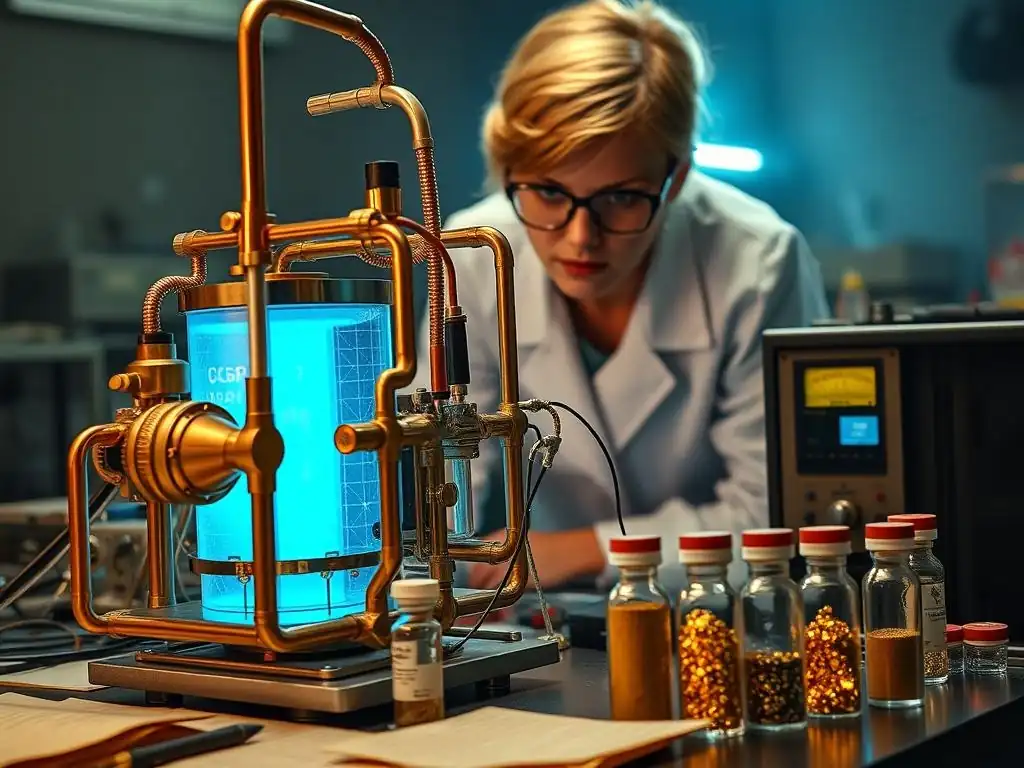
Welcome to WomenInScienceHistory.com!
Prepare to be inspired by the untold stories of brilliant women who shaped the scientific landscape. Today, we delve into the extraordinary life and groundbreaking work of Darleane Hoffman, a chemist who fearlessly charted the uncharted territory of superheavy element research. Discover how she shattered glass ceilings and redefined the boundaries of nuclear chemistry, leaving an enduring legacy for generations to come. Intrigued? Read on to uncover the secrets behind her remarkable discoveries and the challenges she overcame in a field dominated by men.
- Introduction: Darleane Hoffman's Pioneering Journey in Nuclear Chemistry
- Early Life and Education: Foundations of a Nuclear Chemist
- Early Career: Gaining Expertise in Nuclear Processes
- The Quest for Superheavy Elements: A Defining Research Focus
- Key Discoveries and Breakthroughs in Superheavy Element Research
- Hoffman's Leadership and Mentorship in Nuclear Chemistry
- Challenges and Obstacles Faced by Darleane Hoffman
- Darleane Hoffman's Legacy: Inspiring Future Generations of Scientists
- Conclusion: Celebrating Darleane Hoffman's Impact on Nuclear Science
-
Frequently Asked Questions
- What is Darleane Hoffman best known for in the field of science?
- What were some of the major challenges Darleane Hoffman faced as a woman in science during her career?
- What time frame does the "Darleane C. Hoffman: Charting Uncharted Territory with Superheavy Elements (1950-2000)" article primarily cover?
- Besides superheavy elements, what other areas of nuclear chemistry did Darleane Hoffman contribute to?
- How does "WomenInScienceHistory.com" aim to promote the recognition of women in science?
- Final Reflection: Illuminating the Unknown
- Unveil the Secrets of the Superheavy!
Introduction: Darleane Hoffman's Pioneering Journey in Nuclear Chemistry
Women in Science History: Recognizing Darleane Hoffman's Contributions
Darleane C. Hoffman stands as a towering figure in the annals of nuclear chemistry, her career spanning a transformative period from the mid-20th century into the new millennium. As a woman navigating a field historically dominated by men, her contributions were not only scientifically profound but also trailblazing, paving the way for future generations of female scientists. Her meticulous experimental work and insightful analyses pushed the boundaries of our understanding of the heaviest elements, earning her a unique place in the history of science.
Within the broader narrative of Women in Science History, Darleane Hoffman's journey serves as a powerful testament to perseverance, intellectual rigor, and groundbreaking achievement. Her story exemplifies the challenges and triumphs faced by women who dared to pursue scientific careers in an era of significant gender disparity. Despite these obstacles, her unwavering dedication to scientific inquiry led to discoveries that reshaped fundamental concepts in nuclear physics and chemistry.
The Significance of Hoffman's Work in Superheavy Element Research
Darleane Hoffman's superheavy element research was pivotal in expanding the periodic table and validating theoretical predictions about the stability of atomic nuclei at extreme proton and neutron numbers. Superheavy elements, with atomic numbers beyond 103, exist only fleetingly and are incredibly difficult to synthesize and characterize. Her work provided crucial experimental evidence, bridging the gap between theoretical models and observable reality in this exotic region of nuclear existence.
The impact of Dr. Darleane Hoffman's contributions extended to refining our understanding of nuclear structure, decay modes, and the elusive "island of stability," a theoretical region where superheavy elements might exhibit surprisingly long half-lives. Her meticulous investigations into the properties of these ephemeral elements laid foundational knowledge that continues to guide contemporary efforts to synthesize even heavier elements and explore the limits of matter.
Early Life and Education: Foundations of a Nuclear Chemist
Hoffman's Early Interest in Science and Chemistry
Born in 1926 in Fort Dodge, Iowa, Darleane Christian grew up with an innate curiosity about the natural world. While not initially set on a career in chemistry, an inspiring high school chemistry teacher sparked her interest, revealing the logical elegance and practical applications of the subject. This early exposure cultivated a deep appreciation for scientific inquiry and problem-solving, which would define her illustrious career.
This burgeoning fascination with chemistry propelled her towards higher education, a path less commonly pursued by women in science during the mid-20th century. Her early experiences instilled a meticulous approach to experimentation and a relentless pursuit of understanding, foundational traits that would prove invaluable in her later Darleane Hoffman: Superheavy element research.
Academic Pursuits: From Iowa State University to a PhD in Chemistry
Darleane Christian enrolled at Iowa State University, where she pursued a Bachelor of Science degree in chemistry, graduating in 1948. Her undergraduate studies provided a robust foundation in fundamental chemical principles and laboratory techniques, preparing her for the specialized demands of nuclear science. It was during this period that her academic excellence began to shine.
She continued her academic journey at Iowa State, earning her Ph.D. in chemistry in 1951, specializing in radiochemistry. Her doctoral research focused on the properties of nuclear fission products, a field that was rapidly developing in the post-World War II era. This advanced training in radiochemistry, a critical sub-discipline of nuclear chemistry, equipped her with the unique skills necessary for handling and analyzing radioactive materials, skills that would be indispensable for her future Darleane Hoffman: Superheavy element research.
Early Career: Gaining Expertise in Nuclear Processes
Joining Los Alamos National Laboratory: Initial Research Focus
Shortly after completing her Ph.D., Darleane Hoffman joined Los Alamos National Laboratory in 1953, a pivotal institution in nuclear research. Her initial roles at Los Alamos involved working on the radiochemistry of fission products, a direct continuation of her doctoral studies. This environment, at the forefront of nuclear science, provided unparalleled opportunities to apply her expertise and develop advanced experimental techniques.
Her work during this period, often involving the analysis of complex mixtures of radioactive isotopes, honed her skills in chemical separations and precise measurements. These early experiences at Los Alamos were crucial for building the practical foundation needed for her later, more complex investigations into transuranic elements and Darleane Hoffman: Superheavy element research.
Developing Analytical Techniques for Nuclear Materials
In the early stages of her career, Darleane Hoffman played a significant role in developing and refining analytical techniques essential for characterizing nuclear materials. Her work involved the meticulous separation and identification of minute quantities of radioactive isotopes, often from highly complex samples. This required innovative approaches to radiochemical separations and detection methods.
For instance, she contributed to improving methods for alpha and gamma spectroscopy, crucial tools for identifying specific radionuclides based on their decay signatures. The precision and reliability of these analytical techniques, many of which she helped to establish or enhance, were fundamental to her subsequent breakthroughs in isolating and identifying exotic heavy elements, a core aspect of Darleane Hoffman's superheavy element research.
The Quest for Superheavy Elements: A Defining Research Focus
Understanding Superheavy Elements: Theoretical Predictions and Challenges
Superheavy elements are defined as those with atomic numbers greater than 103, extending beyond the traditionally known periodic table. Their existence was primarily theoretical for decades, based on predictions of "islands of stability" where certain combinations of protons and neutrons might create nuclei with unexpectedly long half-lives, defying the general trend of decreasing stability with increasing atomic number. However, experimentally proving their existence was a monumental challenge due to their extreme rarity and fleeting lifetimes.
The experimental hurdles were immense: superheavy elements are produced in accelerators by fusing lighter nuclei, yielding only a few atoms at a time. These atoms often exist for mere microseconds or milliseconds before decaying. Identifying them required incredibly sensitive and rapid radiochemical separation techniques, followed by precise detection of their characteristic decay chains. Darleane Hoffman's superheavy element research directly confronted these daunting theoretical and practical challenges.
Hoffman's Role in the Search for Element 106 (Seaborgium)
Darleane Hoffman played a significant role in the international efforts to synthesize and identify element 106, later named Seaborgium (Sg). Her involvement in this quest, which intensified in the 1970s, showcased her expertise in the chemical identification of newly synthesized elements. Collaborating with teams at institutions like Lawrence Berkeley National Laboratory, she contributed to experiments that bombarded californium-249 targets with oxygen-18 ions.
Her radiochemical prowess was essential in isolating the elusive atoms of element 106 from the vast background of other reaction products. While the initial discovery claims were complex and involved multiple groups, Darleane Hoffman's rigorous analytical methods were crucial in confirming the chemical properties of element 106. This work, a cornerstone of Darleane Hoffman's superheavy element research, provided vital experimental evidence for the existence of elements far beyond uranium.
Key Discoveries and Breakthroughs in Superheavy Element Research

The Spontaneous Fission of Fermium-258: A Groundbreaking Observation
One of Darleane Hoffman's most significant early breakthroughs in superheavy element research involved the study of fermium-258 (
Hoffman and her team meticulously produced and studied
Hoffman's Contribution to the Discovery of Plutonium-244 in Nature
Another remarkable achievement in Darleane Hoffman's career was her contribution to the definitive identification of plutonium-244 (
Hoffman's unparalleled expertise in ultra-trace analysis and radiochemical separation was instrumental in isolating and confirming the presence of minute quantities of
Investigating the Decay Properties of Heavy Nuclei
A central theme in Darleane Hoffman's superheavy element research was the systematic investigation of the decay properties of various heavy and superheavy nuclei. Understanding how these nuclei decay—whether through alpha emission, beta decay, or spontaneous fission—is critical for their identification and for predicting the stability and characteristics of even heavier, yet-undiscovered elements.
Her team conducted extensive studies on decay chains, meticulously measuring the half-lives and decay energies of isotopes of elements like nobelium, lawrencium, and others. This wealth of experimental data was crucial for validating and refining theoretical models of nuclear structure and decay. Her rigorous approach provided invaluable empirical evidence that underpinned the continuous quest for new superheavy elements and pushed the boundaries of nuclear science.
Hoffman's Leadership and Mentorship in Nuclear Chemistry
Leading Research Teams at Los Alamos National Laboratory
Darleane Hoffman's scientific acumen naturally led her into leadership roles, notably as the head of the Seaborg Institute for Transactinium Science (SIT) at Los Alamos National Laboratory from 1992 to 1996. In this capacity, she guided multidisciplinary teams focused on advanced research into transactinide and superheavy elements. Her leadership was characterized by a deep understanding of complex nuclear processes and an ability to foster collaborative environments.
Under her direction, SIT became a hub for cutting-edge investigations, attracting top scientists from around the world. She oversaw projects that involved the synthesis of new isotopes, the study of their decay properties, and the development of novel detection techniques. Her tenure as a leader further cemented Los Alamos's reputation as a world-leading institution in Darleane Hoffman: Superheavy element research.
Mentoring Young Scientists and Promoting Women in STEM
Beyond her direct scientific contributions, Darleane Hoffman was a dedicated mentor to countless young scientists, particularly those embarking on careers in nuclear chemistry. She tirelessly shared her vast knowledge and practical experience, guiding students and postdocs through the intricacies of experimental design, data analysis, and scientific communication. Her mentorship was invaluable in shaping the next generation of researchers.
Furthermore, Darleane Hoffman was a passionate advocate for increasing the representation of women in STEM fields. Recognizing the challenges she herself faced, she actively encouraged and supported female students and colleagues, demonstrating through her own success that gender is no barrier to achieving scientific excellence. Her efforts extended beyond the lab, inspiring countless women to pursue careers in nuclear chemistry and other demanding scientific disciplines.
Challenges and Obstacles Faced by Darleane Hoffman
Throughout her career, particularly during the mid-20th century, Darleane Hoffman operated in a scientific landscape overwhelmingly dominated by men. This often meant facing implicit biases, skepticism, and a lack of recognition that were common experiences for women in STEM during that era. Opportunities for leadership or prominent roles were frequently more readily available to her male counterparts.
Despite these systemic barriers, Darleane Hoffman's profound scientific rigor and the undeniable significance of her discoveries consistently spoke for themselves. Her meticulous experimental work and groundbreaking findings, especially in Darleane Hoffman's superheavy element research, earned her respect and credibility, allowing her to break through these gender-based limitations and establish herself as a leading authority in her field.
Securing Funding and Resources for Superheavy Element Research
Superheavy element research is inherently resource-intensive, requiring access to multi-million dollar particle accelerators, highly specialized detection equipment, and the painstaking preparation of extremely rare and expensive target materials. Securing consistent and substantial funding for such long-term, high-risk, high-reward endeavors was a continuous challenge for Darleane Hoffman and her teams.
She had to skillfully navigate competitive funding landscapes, articulating the fundamental importance of Darleane Hoffman's superheavy element research to government agencies and scientific review panels. Her ability to consistently demonstrate the scientific merit and potential impact of her work was crucial in acquiring the necessary financial and infrastructural support, enabling her to pursue ambitious experimental programs that pushed the frontiers of nuclear science.
Darleane Hoffman's Legacy: Inspiring Future Generations of Scientists
Awards and Recognition for her Contributions to Chemistry
Darleane Hoffman's profound contributions to nuclear chemistry were widely recognized throughout her career, culminating in numerous prestigious awards. In 1997, she was awarded the National Medal of Science by President Bill Clinton, the highest scientific honor in the United States, acknowledging her pioneering work on transuranic elements. This was a testament to her immense impact on fundamental science.
Further cementing her legacy, in 2000, she received the Priestley Medal, the American Chemical Society's highest honor, for her distinguished services to chemistry. These accolades, alongside her induction into the Norwegian Academy of Science and Letters and the American Academy of Arts and Sciences, underscore the international recognition of Darleane Hoffman's superheavy element research and her broader influence on the field of chemistry.
The Continued Importance of Superheavy Element Research
Darleane Hoffman's superheavy element research laid the essential groundwork for ongoing efforts to synthesize and characterize even heavier elements, pushing the boundaries of the periodic table beyond element 118. Her meticulous techniques and deep understanding of nuclear properties continue to inform contemporary experiments at leading research facilities worldwide, such as the Joint Institute for Nuclear Research in Dubna, Russia, and the GSI Helmholtz Centre for Heavy Ion Research in Germany.
The quest for superheavy elements remains a vibrant area of research, fueled by the desire to explore the limits of nuclear existence and to understand the forces that govern the atomic nucleus. Darleane Hoffman's pioneering work continues to inspire new theoretical models and experimental designs, demonstrating the enduring relevance of her contributions to fundamental physics and chemistry.
Conclusion: Celebrating Darleane Hoffman's Impact on Nuclear Science
Hoffman's Enduring Influence on the Field of Nuclear Chemistry
Darleane C. Hoffman's career represents a pinnacle of scientific achievement in nuclear chemistry, particularly in her groundbreaking Darleane Hoffman: Superheavy element research. Her relentless pursuit of knowledge, combined with her exceptional experimental skill, led to discoveries that fundamentally altered our understanding of the heaviest elements and the stability of atomic nuclei. Her work not only expanded the periodic table but also provided critical empirical data to refine nuclear models.
Her enduring influence stems from both her scientific output and her role as a trailblazer. She demonstrated that rigorous scientific inquiry, coupled with perseverance, could overcome significant societal and technical challenges. Her legacy continues to shape experimental approaches and theoretical considerations in the ongoing exploration of the superheavy realm.
Further Exploration: Resources for Learning More About Darleane Hoffman
For those eager to delve deeper into the life and work of Darleane Hoffman, numerous resources exist that chronicle her remarkable journey. Exploring interviews, biographical sketches, and scientific papers (though no direct links are provided here) can offer profound insights into her methodologies, challenges, and the intellectual landscape of nuclear chemistry during her active career.
Learning about Darleane Hoffman's contributions is essential for appreciating the full scope of women's impact on scientific progress. Her story, alongside those of other pioneering women in science, serves as a powerful reminder that diversity in scientific inquiry leads to more comprehensive understanding and accelerates the pace of discovery for the benefit of all.
Frequently Asked Questions
What is Darleane Hoffman best known for in the field of science?
Darleane Hoffman is renowned for her superheavy element research, particularly her contributions to the discovery and study of elements like seaborgium and berkelium. She also made significant strides in understanding nuclear fission.
What were some of the major challenges Darleane Hoffman faced as a woman in science during her career?
As a woman in a male-dominated field, Hoffman faced challenges including lack of recognition and limited opportunities for advancement and leadership roles early in her career.
What time frame does the "Darleane C. Hoffman: Charting Uncharted Territory with Superheavy Elements (1950-2000)" article primarily cover?
The article focuses on Darleane Hoffman's work and accomplishments between the years 1950 and 2000, highlighting her key contributions during that period.
Besides superheavy elements, what other areas of nuclear chemistry did Darleane Hoffman contribute to?
Beyond superheavy elements, Hoffman's research extended to the study of nuclear fission and the properties of transuranic elements, broadening our understanding of nuclear processes.
How does "WomenInScienceHistory.com" aim to promote the recognition of women in science?
"WomenInScienceHistory.com" highlights the achievements of female scientists throughout history, offering biographies and discussions to inspire future generations and address historical underrepresentation.
Okay, here's a final reflection designed to close your article on Darleane Hoffman and her superheavy element research, optimized for the keyword "Darleane Hoffman: Superheavy element research" and following the structure you outlined:
Final Reflection: Illuminating the Unknown
The journey of Darleane Hoffman, as explored in this article, reminds us that the pursuit of knowledge is often a journey into the unknown, a charting of uncharted territory much like the superheavy elements she dedicated her life to discovering. Her work isn't just a historical footnote; it's a living testament to the power of scientific curiosity and the enduring human drive to push the boundaries of what's possible, a legacy that continues to inspire researchers today.
Darleane Hoffman's impact extends far beyond the laboratory. Her pioneering spirit and unwavering dedication shattered barriers for women in science and redefined our understanding of the periodic table. Science knows no country, because knowledge belongs to humanity, and is the torch which illuminates the world.
- Louis Pasteur. This quote perfectly encapsulates Hoffman's contribution; she not only expanded the scientific landscape but also illuminated the path for future generations of scientists, regardless of gender or background.
Now, as you reflect on Darleane Hoffman's extraordinary journey, consider how her unwavering commitment to exploration can inspire your own life. What "uncharted territory" awaits your exploration? What boundaries can you push, what new frontiers can you conquer, driven by the same curiosity and determination that defined Darleane Hoffman's remarkable career? Let her story be a beacon, guiding you towards your own discoveries and contributions to the world.
Unveil the Secrets of the Superheavy!
Thank you for exploring the pioneering work of Darleane Hoffman! You've now glimpsed the challenges and triumphs of pushing the boundaries of the periodic table. Ready to make your own mark?
- Dive deeper: Begin your own research project: on a superheavy element that intrigues you.
- Share this article with a friend and spark a conversation about the impact of women in STEM.
- Explore the periodic table in a new way:Design your own element and predict its properties!
Which superheavy element discovery inspires you the most, and why?