
Dorothy Hodgkin: Unraveling Life's Molecules in 3D (1964 Nobel)


Welcome to WomenInScienceHistory.com!
Dive into the extraordinary world of women who shattered glass ceilings and revolutionized scientific understanding. Today, we unravel the story of a true pioneer: Dorothy Hodgkin. Prepare to be captivated by her groundbreaking work in X-ray crystallography, a technique she masterfully used to reveal the intricate structures of life's molecules. How did she unlock secrets hidden within penicillin, insulin, and Vitamin B12, earning a Nobel Prize along the way? Read on to discover the remarkable journey of this chemical visionary and the challenges she overcame to leave an indelible mark on science.
- Introduction: Dorothy Hodgkin and the Dawn of Molecular Crystallography
- Early Life and Education: Shaping a Future in Science
- The Breakthroughs: X-ray Crystallography and Molecular Structures
- The 1964 Nobel Prize in Chemistry: Recognition and Acclaim
- Legacy and Impact: Hodgkin's Enduring Influence on Science
- Dorothy Hodgkin's X-ray Crystallography Techniques: A Detailed Look
- Beyond the Nobel: Hodgkin's Activism and Social Concerns
- Conclusion: Remembering Dorothy Hodgkin's Scientific Legacy
-
Frequently Asked Questions
- What was Dorothy Hodgkin's most significant contribution to science?
- Why is Dorothy Hodgkin's work with X-ray crystallography considered so important?
- What challenges did Dorothy Hodgkin face as a woman in science during her time?
- How did Dorothy Hodgkin's work impact the field of medicine?
- What is the significance of Dorothy Hodgkin receiving the Nobel Prize in 1964?
- Final Reflection: The Enduring Legacy of Molecular Vision
- Embark on Your Own Journey of Scientific Discovery!
Introduction: Dorothy Hodgkin and the Dawn of Molecular Crystallography
Celebrating Dorothy Hodgkin: A Pioneer for Women in Science History
Dorothy Hodgkin stands as a monumental figure in the annals of science, particularly as an enduring inspiration for women in science history. Born in Cairo in 1910, her pioneering work in X-ray crystallography not only revolutionized our understanding of complex biological molecules but also shattered prevailing gender barriers in a scientific landscape overwhelmingly dominated by men. Her meticulous research and unwavering dedication earned her the Nobel Prize in Chemistry in 1964, making her the third woman to achieve this prestigious honor in chemistry, following Marie Curie and Irène Joliot-Curie.
Hodgkin's legacy extends far beyond her scientific discoveries; she embodied resilience, intellectual curiosity, and a quiet determination that proved instrumental in an era where female scientists often faced skepticism and limited opportunities. Her story serves as a powerful testament to the impact a single individual can have, inspiring countless future generations to pursue their passions in chemistry and beyond, reinforcing the critical contributions of women throughout scientific history.
The Significance of Hodgkin's Work in 20th Century Chemistry
Dorothy Hodgkin's contributions to 20th-century chemistry were nothing short of transformative, fundamentally changing how scientists viewed and interacted with the building blocks of life. Before her groundbreaking work, the precise three-dimensional structures of large, complex organic molecules like vitamins and hormones were largely unknown, relying on educated guesses derived from chemical reactions. Her application of Dorothy Hodgkin X-ray crystallography provided the definitive method to "see" these molecules at an atomic level.
This ability to determine exact molecular architecture had profound implications. It moved chemistry from a realm of inference to one of precise visualization, enabling rational drug design and a deeper understanding of biological processes at their most fundamental level. Her solutions to the structures of penicillin, vitamin B12, and insulin are not just academic achievements but cornerstones upon which much of modern biochemistry and pharmaceutical science is built, solidifying her place as a titan of chemical science.
Early Life and Education: Shaping a Future in Science
Hodgkin's Early Fascination with Crystals and Chemistry
Dorothy Mary Crowfoot, later Hodgkin, developed an early and profound fascination with the natural world, particularly with crystals. Her interest was sparked during her childhood, partly influenced by her parents, particularly her mother, Mary Hodgkin, who was a botanist and keenly interested in minerals. This early exposure to geological specimens, combined with a natural inquisitiveness, set the stage for her future career.
By the age of ten, Dorothy was already conducting rudimentary chemical experiments at home, crystallizing substances like copper sulfate. This hands-on experience, coupled with visits to local museums and her parents' encouragement, nurtured an innate curiosity about the underlying structures of matter. It was this early, almost intuitive, connection with the symmetrical beauty and hidden order within crystals that would ultimately guide her towards the specialized field of X-ray crystallography.
Somerville College, Oxford: The Foundation of Her Scientific Career
In 1928, Dorothy Hodgkin embarked on her higher education journey at Somerville College, Oxford, one of the few institutions at the time that actively admitted women for scientific study. This was a crucial step in her career, providing her with a rigorous academic environment and the intellectual freedom to delve deep into chemistry. While at Oxford, she was exposed to the foundational principles of analytical and physical chemistry, which proved indispensable for her later work.
Her time at Somerville College was instrumental in solidifying her commitment to scientific research. It was during her undergraduate studies that she was introduced to the burgeoning field of X-ray diffraction, a technique that was still in its infancy for complex organic molecules. This initial exposure at Oxford laid the intellectual groundwork and provided the necessary scientific discipline that would underpin her future groundbreaking contributions to Dorothy Hodgkin X-ray crystallography.
Mentorship and Influences: Bernal and the Introduction to X-ray Diffraction
A pivotal moment in Dorothy Hodgkin's scientific career came when she moved to Cambridge in 1932 to work with J.D. Bernal at the University of Cambridge. Bernal was a visionary physicist and crystallographer who had an uncanny foresight regarding the potential of X-ray diffraction for elucidating the structures of biological molecules. He introduced Hodgkin to the cutting-edge techniques of X-ray crystallography and, crucially, to the idea of applying them to complex organic and biochemical substances.
Bernal's laboratory was a vibrant intellectual hub, fostering an environment of innovation and collaborative inquiry. Under his guidance, Hodgkin began her seminal work, starting with sterols. This period at Cambridge, though relatively brief, cemented her expertise in Dorothy Hodgkin X-ray crystallography and instilled in her the confidence to tackle monumental structural problems. Bernal's mentorship was not just about technical skills; it was about inspiring a generation to see the immense possibilities hidden within the diffracted patterns of X-rays.
The Breakthroughs: X-ray Crystallography and Molecular Structures
Understanding X-ray Diffraction: A Key to Unlocking Molecular Secrets
X-ray diffraction, the core technique employed by Dorothy Hodgkin, is a sophisticated method used to determine the atomic and molecular structure of a crystal. When a beam of X-rays interacts with the electrons in a crystal, the X-rays are scattered in a specific pattern unique to the arrangement of atoms within that crystal. By capturing and analyzing this diffraction pattern, scientists can mathematically reconstruct the electron density map of the molecule, which in turn reveals the precise three-dimensional positions of its atoms.
Hodgkin's genius lay not only in her profound understanding of the theoretical underpinnings of this technique but also in her extraordinary ability to apply it practically to increasingly complex biological molecules. She meticulously collected diffraction data, often over hundreds of hours, and then painstakingly interpreted the intricate patterns. This process, akin to solving a complex 3D jigsaw puzzle without a picture, transformed X-ray diffraction from a niche physical method into an indispensable tool for structural biology and chemistry, largely thanks to her pioneering efforts in Dorothy Hodgkin X-ray crystallography.
Determining the Structure of Penicillin: A Crucial Early Success
One of Dorothy Hodgkin's earliest and most impactful triumphs was the determination of the structure of penicillin. During World War II, there was an urgent global need to understand penicillin's chemical makeup to facilitate its large-scale synthesis. Scientists in both the UK and the US were racing to solve this puzzle, and Hodgkin's team at Oxford, working under immense pressure, played a critical role.
By 1945, using Dorothy Hodgkin X-ray crystallography, her group confirmed the then-controversial beta-lactam ring structure of penicillin, proposed by other chemists. This structural elucidation was vital for the subsequent development of synthetic penicillin and its various derivatives, directly contributing to saving countless lives during and after the war. This achievement not only showcased the immense practical utility of X-ray crystallography but also brought Hodgkin significant recognition within the scientific community.
Vitamin B12: The Complex Challenge and Hodgkin's Triumph
The determination of the structure of vitamin B12 (cobalamin) represented an even greater challenge and a monumental triumph for Dorothy Hodgkin. This molecule, essential for human health and notably complex, contains over 90 atoms, including a cobalt atom, making it the largest and most intricate natural product structure solved by X-ray crystallography at the time. The sheer scale and complexity of its electron density map were unprecedented.
Hodgkin dedicated nearly a decade to this arduous task, starting in 1948. Through meticulous data collection, innovative use of heavy atom methods, and painstaking calculations (often performed with early, rudimentary computers or even by hand), she and her team finally elucidated the complete structure in 1955. This achievement was widely hailed as one of the most remarkable feats in chemical analysis and demonstrated the unparalleled power and precision of Dorothy Hodgkin X-ray crystallography.
Insulin: A Decades-Long Pursuit and its Impact on Diabetes Research
Dorothy Hodgkin's pursuit of the insulin structure became a defining mission of her scientific life, spanning over 35 years. She began studying insulin crystals in 1934, captivated by its biological importance as a hormone central to diabetes regulation. However, insulin, a protein composed of 51 amino acids, presented an enormous challenge due to its size and the complexity of its arrangement in crystals.
Despite the formidable difficulties, including the limited computational power of the era, Hodgkin and her research group persevered. They finally published the complete three-dimensional structure of insulin in 1969. This monumental achievement provided invaluable insights into how insulin functions at a molecular level, including its interaction with receptors. The detailed structural knowledge derived from Dorothy Hodgkin X-ray crystallography was crucial for understanding diabetes and for the subsequent development of more effective and rationally designed insulin therapies, profoundly impacting millions worldwide.
The 1964 Nobel Prize in Chemistry: Recognition and Acclaim
The Nobel Committee's Citation: Highlighting Hodgkin's Contributions
In 1964, Dorothy Hodgkin was awarded the Nobel Prize in Chemistry, a pinnacle of scientific recognition. The Nobel Committee specifically cited her "determinations by X-ray techniques of the structures of important biochemical substances." This succinct statement underscored the revolutionary nature of her work, acknowledging that her structural elucidations of penicillin, vitamin B12, and insulin were not merely academic exercises but fundamental breakthroughs with immense implications for chemistry, biology, and medicine.
This prize was a profound validation of her decades of painstaking research and her unwavering belief in the power of Dorothy Hodgkin X-ray crystallography. It highlighted her unique ability to tackle some of the most complex molecular puzzles of her time, pushing the boundaries of what was thought possible in structural chemistry. The award also elevated the profile of X-ray crystallography itself, cementing its status as an indispensable tool for understanding the molecular world.
Hodgkin's Nobel Lecture: Reflections on Molecular Structures and Their Significance
On December 11, 1964, Dorothy Hodgkin delivered her Nobel Lecture titled "The X-ray Analysis of Complicated Molecules." In her address, she eloquently reflected on the journey of deciphering the intricate structures of biochemical compounds, emphasizing the elegance and beauty she found in the molecular architecture of life. She described the painstaking processes involved, from growing perfect crystals to interpreting the complex diffraction patterns, highlighting the intellectual adventure inherent in her work.
Beyond the technical aspects, Hodgkin's lecture also touched upon the broader significance of her discoveries. She connected the abstract world of atomic arrangements to the profound biological functions of these molecules, underscoring how structural knowledge provides critical insights into disease mechanisms and potential therapeutic interventions. Her discourse showcased not only her scientific brilliance but also her deep appreciation for the interplay between pure chemistry and its practical applications, a testament to her holistic approach to science.
Being a Woman in Science: Overcoming Challenges and Inspiring Others
Dorothy Hodgkin's path to the Nobel Prize was navigated within a scientific landscape that presented significant challenges for women. Throughout her career, she often faced subtle and overt biases, from limited access to certain academic positions to the societal expectation that women prioritize domestic life over professional ambitions. Despite these systemic hurdles, including balancing her demanding research with raising three children, she persevered with quiet determination and exceptional intellectual rigor.
Her success, culminating in the Nobel Prize, served as a powerful beacon for aspiring female scientists globally. She demonstrated that intellectual prowess and persistent effort could overcome the prevailing gender inequalities of the era. Her story continues to inspire countless women, proving that groundbreaking scientific contributions are not limited by gender, and reinforcing the mission of WomenInScienceHistory.com to highlight and celebrate such trailblazing figures.
Legacy and Impact: Hodgkin's Enduring Influence on Science
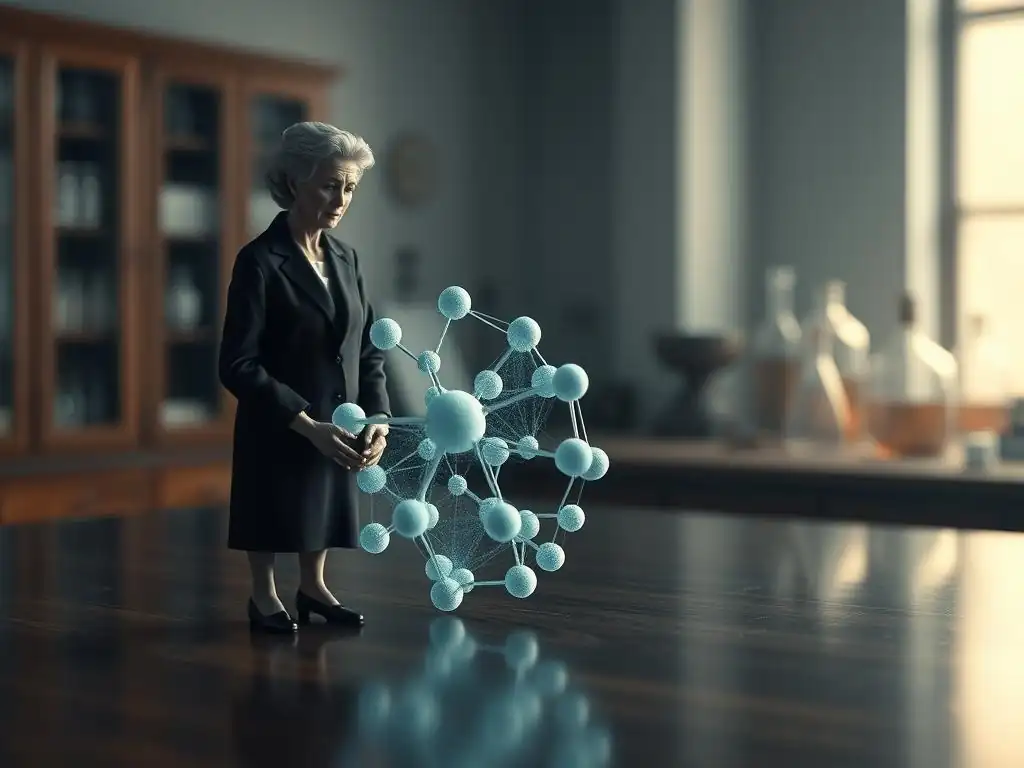
Hodgkin's Influence on Structural Biology and Drug Discovery
Dorothy Hodgkin's work laid the foundational stones for the entire field of structural biology. Before her, the precise three-dimensional structures of biological macromolecules were largely speculative; after her work on penicillin, vitamin B12, and insulin, the field blossomed. Her meticulous methods and unwavering commitment to precision became the gold standard, influencing generations of crystallographers and biochemists.
This profound impact extends directly to drug discovery. Understanding the exact 3D structure of disease-related proteins and enzymes, a concept pioneered by Hodgkin, is now central to rational drug design. Pharmaceutical companies routinely use X-ray crystallography to identify binding sites on target molecules, allowing for the precise engineering of drugs that fit like a key in a lock. Her contributions to Dorothy Hodgkin X-ray crystallography directly enabled the development of more effective and targeted therapies, revolutionizing how new medicines are conceived and developed.
Mentoring Future Generations of Scientists: A Lasting Contribution
Beyond her individual scientific achievements, Dorothy Hodgkin left an indelible mark through her role as a dedicated mentor. She fostered a vibrant and supportive research environment at Oxford, where she trained numerous students and researchers who would go on to become prominent figures in crystallography and structural biology themselves. Among her notable proteges was Thomas A. Steitz, who later won his own Nobel Prize in Chemistry in 2009 for his work on ribosome structure, directly acknowledging Hodgkin's influence.
Hodgkin's approach to mentorship was characterized by patience, encouragement, and a genuine belief in the potential of her students. She instilled in them not only technical proficiency in Dorothy Hodgkin X-ray crystallography but also the critical thinking, perseverance, and collaborative spirit essential for scientific discovery. Her nurturing guidance ensured that her scientific lineage continued to thrive, propagating her rigorous standards and intellectual curiosity across the globe.
Hodgkin's Impact on Modern Drug Design and Personalized Medicine.
The detailed structural insights provided by Dorothy Hodgkin X-ray crystallography have profoundly shaped modern drug design and continue to influence the emerging field of personalized medicine. Her pioneering work demonstrated that understanding the precise atomic arrangement of biological molecules is key to understanding their function and, crucially, how drugs interact with them. Today, pharmaceutical research heavily relies on structural data, often obtained through advanced crystallography techniques, to identify potential drug targets and optimize lead compounds.
In personalized medicine, Hodgkin's legacy is evident in the focus on individual molecular variations. For example, understanding how specific genetic mutations alter protein structures, and thus drug efficacy or side effects, is a direct extension of the structural biology she championed. By enabling the precise visualization of molecular interactions, her work laid the groundwork for tailoring medical treatments to an individual's unique biological makeup, moving healthcare towards more effective and patient-specific interventions.
Dorothy Hodgkin's X-ray Crystallography Techniques: A Detailed Look
Advancements in X-ray Crystallography Under Hodgkin's Leadership
Dorothy Hodgkin was not merely an executor of existing X-ray crystallography techniques; she was a driving force behind their advancement, particularly in their application to complex biological molecules. She worked during an era of limited computational power, often relying on meticulous manual calculations and innovative graphical methods to interpret vast amounts of diffraction data. Her laboratory was at the forefront of experimenting with early computational tools, such as the initial use of Hollerith punch cards for calculations in the 1950s, to streamline the complex Fourier syntheses required to generate electron density maps.
Her leadership involved pushing the boundaries of crystal preparation, ensuring the growth of high-quality crystals essential for clear diffraction patterns, especially for delicate biological macromolecules. She also refined the experimental setups for X-ray exposure and photographic recording, achieving unprecedented precision for her time. These methodological improvements, coupled with her tenacious problem-solving, significantly expanded the scope and capability of Dorothy Hodgkin X-ray crystallography for intricate biological structures.
Heavy Atom Method and Isomorphous Replacement in Hodgkin's Research
A critical breakthrough in Dorothy Hodgkin's approach to solving complex molecular structures, particularly for vitamin B12, was her masterful application of the heavy atom method, also known as isomorphous replacement. This technique addresses the "phase problem" in X-ray crystallography, which is the inability to directly determine the phase of scattered X-rays from the diffraction pattern alone. Without phase information, the electron density map cannot be uniquely calculated.
The heavy atom method involves introducing a heavy atom (like mercury or iodine) into the crystal lattice of the molecule of interest, creating a new crystal that is chemically similar (isomorphous) but with altered diffraction patterns due to the heavy atom's strong scattering power. By comparing the diffraction data from the native crystal and the heavy-atom derivative, Hodgkin could deduce the missing phase information. This ingenious method, which she applied with remarkable skill, was instrumental in her ability to solve the formidable structure of vitamin B12, a landmark achievement in Dorothy Hodgkin X-ray crystallography.
Challenges and Innovations in Hodgkin's X-ray Crystallography Research
Dorothy Hodgkin's X-ray crystallography research was characterized by immense challenges coupled with ingenious innovations. One of the primary obstacles was the sheer computational intensity required to process the vast amounts of diffraction data. In the 1940s and 50s, calculations that now take seconds on a computer would take weeks or months of manual labor using mechanical calculators. This necessitated the development of clever graphical methods and the early adoption of nascent computing technologies to accelerate the process.
Another significant challenge was the delicate nature of biological crystals, which are often fragile and prone to radiation damage during X-ray exposure. Hodgkin and her team developed meticulous techniques for handling and mounting these crystals, often working in cold rooms to preserve their integrity. Her innovations extended beyond methodology to a profound philosophical approach: an unwavering belief in the power of the method, even when faced with seemingly insurmountable complexity. This combination of technical prowess and intellectual fortitude allowed her to push the boundaries of Dorothy Hodgkin X-ray crystallography, solving structures that were considered intractable by her contemporaries.
Hodgkin's Advocacy for Peace and International Collaboration
Beyond her monumental scientific achievements, Dorothy Hodgkin was a passionate advocate for peace and international collaboration, particularly during the turbulent years of the Cold War. She was deeply committed to the idea that science should be a unifying force, transcending political divides. A prominent figure in the Pugwash Conferences on Science and World Affairs, she actively campaigned against nuclear weapons and for disarmament, often traveling globally to participate in these crucial dialogues.
Her involvement in such movements was not peripheral to her scientific identity; rather, she saw it as a moral imperative for scientists to engage with the societal implications of their work. Hodgkin believed that the same intellectual rigor and collaborative spirit that drove scientific discovery could and should be applied to solving global conflicts. Her unwavering dedication to peace underscored her belief in the universal brotherhood of humanity, making her a formidable voice for diplomacy and understanding.
Dorothy Hodgkin epitomized a holistic approach to science, seamlessly integrating her rigorous pursuit of knowledge with a profound sense of social responsibility. She viewed her scientific endeavors not in isolation but as deeply intertwined with human well-being and global peace. Her work on insulin, for instance, directly contributed to alleviating suffering from diabetes, showcasing a direct link between her scientific curiosity and humanitarian impact.
Her activism for peace and her commitment to international scientific exchange reflected her conviction that scientists have a unique role to play in shaping a better world. She consistently used her platform and influence, particularly after receiving the Nobel Prize, to champion causes that promoted human welfare and fostered understanding across nations. Hodgkin's life serves as a powerful example of how intellectual brilliance can be coupled with a deep ethical compass, demonstrating that a scientist's contributions extend far beyond the laboratory bench.
Conclusion: Remembering Dorothy Hodgkin's Scientific Legacy
Dorothy Hodgkin: A Role Model for Women in STEM
Dorothy Hodgkin's life and work represent an extraordinary testament to intellectual brilliance, perseverance, and unwavering dedication, making her an unparalleled role model for women in STEM fields. In an era where female scientists were often marginalized and faced significant systemic barriers, she not only excelled but led groundbreaking research that fundamentally reshaped our understanding of molecular biology. Her quiet strength and steadfast commitment to her research, despite societal expectations and personal challenges, serve as a beacon of inspiration.
Her story, celebrated on platforms like WomenInScienceHistory.com, powerfully demonstrates that scientific aptitude knows no gender. By breaking through the glass ceiling to win the Nobel Prize and by mentoring countless students, she paved the way for future generations of women to pursue their passions in science, technology, engineering, and mathematics with confidence and determination. Her legacy continues to empower and encourage young women to envision themselves at the forefront of scientific discovery.
The Enduring Importance of X-ray Crystallography in Modern Science
The enduring importance of X-ray crystallography in modern science is largely attributable to the foundational work and pioneering spirit of scientists like Dorothy Hodgkin. What began as a complex and laborious technique for determining molecular structures has evolved into an indispensable tool across a myriad of scientific disciplines. From her initial triumphs with penicillin and vitamin B12 to the decades-long pursuit of insulin, Hodgkin consistently demonstrated the unparalleled power of Dorothy Hodgkin X-ray crystallography to unlock the secrets of life's most complex molecules.
Today, X-ray crystallography remains a cornerstone in fields such as drug discovery, where it is vital for identifying binding sites for new pharmaceuticals; in materials science, for developing novel compounds with specific properties; and in structural biology, for understanding protein function and disease mechanisms. Her meticulous approach and groundbreaking discoveries not only validated the technique but also established the rigorous standards that continue to drive advancements in this vital scientific discipline, solidifying her place as a true giant in the history of chemistry.
Frequently Asked Questions
What was Dorothy Hodgkin's most significant contribution to science?
Dorothy Hodgkin is best known for her pioneering work in X-ray crystallography, which she used to determine the 3D structures of complex biomolecules. This included groundbreaking structures of penicillin, insulin, and vitamin B12.
Why is Dorothy Hodgkin's work with X-ray crystallography considered so important?
Her work allowed scientists to understand how these molecules function at a molecular level, leading to advancements in medicine and our understanding of life itself. It provided crucial insights into protein structure and function.
What challenges did Dorothy Hodgkin face as a woman in science during her time?
She faced significant hurdles due to gender bias in the scientific community, including difficulty securing funding and recognition for her work. The scientific world was male-dominated during her career.
How did Dorothy Hodgkin's work impact the field of medicine?
Her determination of the structure of penicillin led to its mass production and widespread use, saving countless lives. Her work on insulin greatly advanced our understanding of diabetes treatment.
What is the significance of Dorothy Hodgkin receiving the Nobel Prize in 1964?
It was a major recognition of her outstanding contributions to chemistry and a significant moment for women in science. It helped to inspire future generations of female scientists to pursue their passion.
Final Reflection: The Enduring Legacy of Molecular Vision
The journey through Dorothy Hodgkin's groundbreaking work in X-ray crystallography reveals more than just the structures of complex molecules; it illuminates the power of persistent curiosity and meticulous dedication. Her ability to visualize the invisible, to translate diffraction patterns into three-dimensional realities, remains profoundly relevant today. In an era dominated by rapid technological advancements, Hodgkin's story reminds us that fundamental scientific breakthroughs often stem from unwavering focus and a deep understanding of core principles.
The impact of Hodgkin's work extends far beyond the laboratory, shaping our understanding of medicine, biology, and chemistry. Her determination to unravel the structures of penicillin, vitamin B12, and insulin not only revolutionized these fields but also inspired generations of scientists, particularly women, to pursue careers in STEM. Life is not easy for any of us. But what of that? We must have perseverance and above all confidence in ourselves. We must believe that we are gifted for something and that this thing must be attained.
This quote encapsulates Hodgkin's spirit and serves as a timeless reminder of the importance of self-belief in the face of adversity.
As we reflect on Dorothy Hodgkin's legacy, let us embrace her spirit of inquiry and her unwavering commitment to understanding the world around us. Consider how her meticulous approach to problem-solving, her dedication to collaboration, and her profound curiosity can inspire you in your own endeavors. Let Hodgkin's story be a catalyst for your own exploration, a reminder that even the most complex challenges can be overcome with perseverance, vision, and a deep-seated belief in the power of human intellect.
Embark on Your Own Journey of Scientific Discovery!
Thank you for delving into the groundbreaking world of Dorothy Hodgkin! Now, equipped with her inspiring story, it's time to ignite your own passion for science and exploration.
Here are a few ways to continue Hodgkin's legacy of discovery:
- Take a Deep Dive: Research a molecule that fascinates you.: Explore its structure, function, and impact on the world around us.
- Share Hodgkin's story! Spread the word about her incredible achievements and inspire others to pursue their scientific dreams.
- Uncover Local Science! Visit a local science museum or attend a lecture to see how science is shaping your community.
What molecule will you choose to explore first, and what mysteries will you unravel?