
The Data Weavers: Female Scientists Pioneering Environmental Data Collection (19502000)

Welcome to WomenInScienceHistory.com!
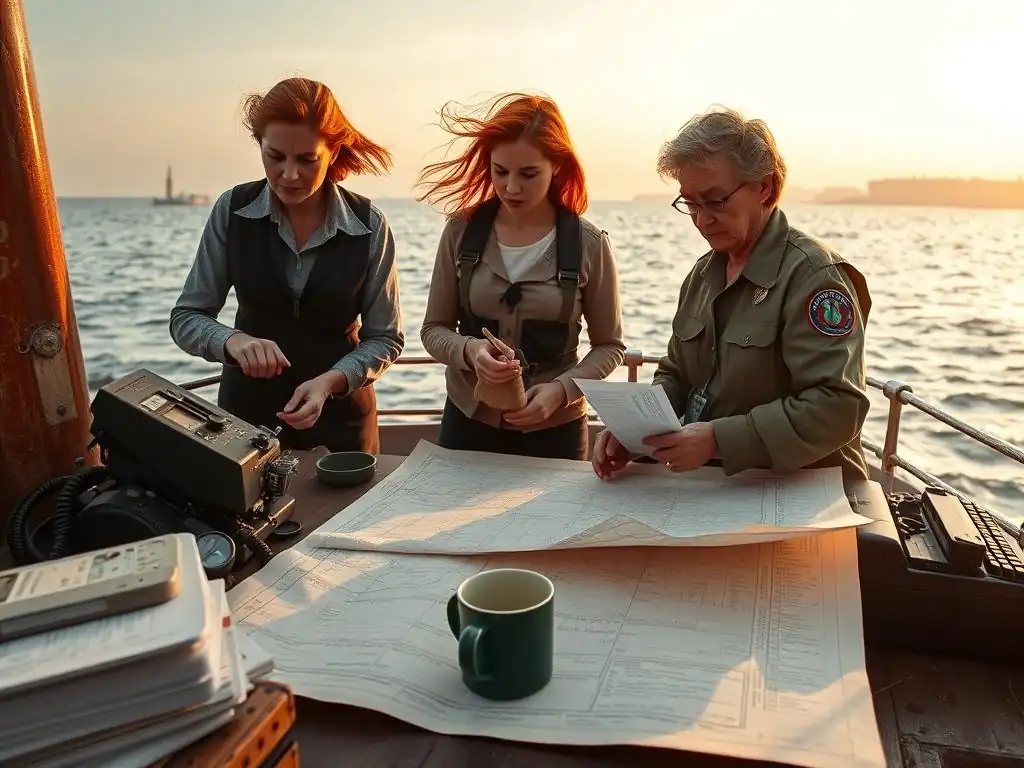
Delve into the untold stories of brilliant minds and groundbreaking discoveries. Today, we explore a vital, yet often unacknowledged, chapter in Environmental Science: Women’s environmental data collection history between 1950 and 2000. Discover how these tenacious female scientists meticulously gathered crucial information, shaping our understanding of the planet. But what challenges did they face, and how did their dedication lay the foundation for modern environmental studies? Uncover the answers and meet The Data Weavers, the unsung heroines who helped us see the world anew.
- Introduction: Unveiling Women's Roles in Environmental Data History
- Setting the Stage: Environmental Science in the Mid-20th Century (1950-1970)
- Trailblazing Women and Their Contributions to Environmental Data Collection
- Expanding the Scope: Environmental Data Collection Methods and Techniques (1970-1990)
- Overcoming Obstacles: Challenges Faced by Women in Environmental Science
- The Digital Revolution and its Impact on Environmental Data (1990-2000)
- The Legacy: Inspiring Future Generations of Female Environmental Scientists
- Conclusion: Celebrating the Data Weavers and their Enduring Impact on Environmental Science
-
Frequently Asked Questions
- What specific time period does The Data Weavers focus on regarding women's contributions?
- What kind of challenges did these women face in their scientific careers?
- What types of environmental data collection were these women involved in?
- Why is it important to highlight the contributions of women in environmental data collection history?
- How does WomenInScienceHistory.com aim to inspire future generations through this article?
- Final Reflection: Honoring the Legacy, Inspiring the Future
- Empower Change: Honor Their Legacy!
Introduction: Unveiling Women's Roles in Environmental Data History
The latter half of the 20th century marked a pivotal era for environmental science, as growing concerns about pollution and resource depletion spurred an urgent need for systematic data collection. This period, from 1950 to 2000, witnessed the nascent stages of modern environmental monitoring, the emergence of groundbreaking analytical techniques, and the development of digital data management systems. While the narratives often focus on the broader scientific advancements, a closer look reveals the indispensable contributions of women scientists who, often against significant odds, pioneered critical aspects of environmental data collection.
This article delves into the Women’s environmental data collection history during these transformative decades, highlighting the trailblazers who meticulously gathered, analyzed, and interpreted the data that formed the bedrock of contemporary environmental understanding. From painstaking field observations to the innovative use of emerging technologies, these women wove together the intricate tapestry of environmental information, shaping policies and inspiring future generations in the process. Their often-unheralded work is a testament to their scientific rigor and unwavering dedication to understanding our planet.
Setting the Stage: Environmental Science in the Mid-20th Century (1950-1970)
The Rise of Environmental Awareness and the Need for Data
Following World War II, rapid industrial expansion and a booming global population led to unprecedented environmental impacts. Cities experienced severe smog events, such as the Great Smog of London in 1952, which claimed thousands of lives, and rivers like the Cuyahoga in Ohio famously caught fire due to industrial waste. These visible signs of degradation spurred a nascent public and scientific awareness that human activities were profoundly altering natural systems.
Scientists began to recognize that anecdotal evidence was insufficient; robust, quantifiable data was essential to understand the scale of environmental problems, identify their causes, and propose effective solutions. This period saw the first concerted efforts to establish baseline measurements for air and water quality, track pollutant pathways, and monitor ecosystem health, laying the groundwork for what would become comprehensive environmental data collection.
The Limited Opportunities for Women in STEM Fields
Despite the growing need for scientific expertise, the mid-20th century presented significant systemic barriers for women aspiring to careers in science, technology, engineering, and mathematics (STEM). Universities and research institutions were largely male-dominated, and cultural norms often steered women towards domestic roles or traditionally "female" professions. In the 1960s, for instance, women earned less than 10% of all engineering degrees in the United States, and their representation in advanced scientific research positions was similarly low.
Those women who did pursue scientific careers often faced discrimination, limited access to funding, fewer opportunities for promotion, and lower salaries compared to their male counterparts. Fieldwork, a cornerstone of environmental data collection, was particularly challenging for women due to practical constraints and prevailing biases. This context makes the achievements of the pioneering women in Women’s environmental data collection history even more remarkable, as they carved out niches and made profound impacts in a restrictive environment.
Trailblazing Women and Their Contributions to Environmental Data Collection
Rachel Carson: A Catalyst for Change and Environmental Data Analysis
Rachel Carson, a marine biologist and conservationist, became a transformative figure in environmental science with the publication of her seminal book, Silent Spring, in 1962. While she did not engage in extensive new field data collection for this work, her unparalleled contribution lay in her meticulous and exhaustive synthesis of existing scientific data from diverse sources. Carson painstakingly reviewed thousands of government reports, scientific papers, and private communications from researchers across the United States and Europe, compiling overwhelming evidence of the widespread environmental and health damage caused by pesticides like DDT.
Her rigorous analysis of this disparate data, presented in a compelling and accessible narrative, revealed the insidious biomagnification of these chemicals through food chains and their devastating impact on wildlife, particularly birds. Silent Spring effectively translated complex scientific data into a powerful public indictment, leading directly to a nationwide ban on DDT for agricultural use in the U.S. in 1972 and catalyzing the modern environmental movement. Carson’s work demonstrated the critical importance of comprehensive data synthesis and communication in driving environmental policy and profoundly influenced the future direction of Women’s environmental data collection history.
Ruth Patrick: Pioneering Research on Diatoms as Indicators of Water Quality
Dr. Ruth Patrick, a distinguished limnologist and botanist at the Academy of Natural Sciences of Philadelphia, revolutionized the biological assessment of water quality through her pioneering research on diatoms. Beginning in the 1940s and continuing throughout the mid-20th century, Patrick developed the "Patrick Principle," a sophisticated methodology that used the diversity and composition of diatom communities—microscopic algae—as sensitive indicators of a river's ecological health. Her approach provided a quantifiable and biological metric for assessing pollution, moving beyond purely chemical analyses.
Patrick led numerous groundbreaking expeditions, meticulously collecting thousands of water samples and biological specimens from rivers and streams across the United States, including major studies on the Conestoga Basin in Pennsylvania and the Savannah River in South Carolina. Her team's extensive field data collection and subsequent laboratory analysis established baseline ecological conditions and documented the impacts of industrial and agricultural pollution, providing irrefutable evidence of environmental degradation. Her work was instrumental in shaping early water quality standards and remains a cornerstone of aquatic ecosystem monitoring, solidifying her place in Women’s environmental data collection history.
Estella Bergere Leopold: Developing Innovative Methods for Long-Term Ecological Research
Estella Bergere Leopold, a renowned paleobotanist and palynologist, made profound contributions to long-term ecological research by pioneering the use of pollen analysis to reconstruct past environments and climates. Her work involved the painstaking collection and analysis of sediment cores from lakes and bogs, which contain preserved pollen grains from thousands of years ago. By identifying and quantifying these ancient pollen grains, Leopold could infer the composition of past vegetation, track changes in plant communities over millennia, and deduce historical climate patterns.
Leopold's extensive fieldwork and laboratory analysis from sites across North America, including significant studies in Yellowstone National Park and the Rocky Mountains, provided invaluable long-term data sets that revealed how ecosystems respond to natural climate variability and human disturbance over vast timescales. Her meticulous data collection and interpretation provided crucial context for understanding contemporary environmental changes, demonstrating the deep historical roots of ecological processes. Her innovative methods established a vital branch of Women’s environmental data collection history, offering unique insights into the planet's ecological past.
Expanding the Scope: Environmental Data Collection Methods and Techniques (1970-1990)
The Emergence of Remote Sensing and Satellite Data
The 1970s ushered in a new era of environmental data collection with the advent of remote sensing technologies, most notably the launch of the first Landsat satellite by NASA in 1972. These satellites began systematically collecting vast amounts of imagery of Earth's surface, revolutionizing the ability to monitor environmental changes on a global scale. From space, scientists could track deforestation rates, monitor ice sheet melt, assess urban expansion, and detect pollution plumes over vast areas, data that was impossible to collect through traditional ground-based methods alone.
This period saw the development of sophisticated image processing techniques and geographical information systems (GIS) to interpret and manage this deluge of spatial data. While the initial development of these technologies was often male-dominated, female scientists quickly became adept at utilizing remote sensing data for their research, applying it to diverse fields from land-use planning to biodiversity conservation. Their engagement helped to integrate this powerful new tool into the mainstream of environmental science, significantly expanding the scope of Women’s environmental data collection history.
Women's Contributions to Air and Water Quality Monitoring
The establishment of the U.S. Environmental Protection Agency (EPA) in 1970 and the subsequent passage of landmark legislation like the Clean Air Act (1970) and Clean Water Act (1972) mandated systematic monitoring of air and water quality across the nation. This created a new demand for scientists to design monitoring networks, collect vast numbers of samples, and develop standardized analytical techniques. Women scientists played crucial roles in these efforts, often working in laboratories and field sites to ensure compliance and track environmental health.
Female chemists and environmental engineers were instrumental in developing and refining methods for detecting trace pollutants in water and air, utilizing advanced techniques such as gas chromatography and mass spectrometry. For example, scientists at various EPA regional offices and state environmental agencies were responsible for collecting thousands of water samples from municipal treatment plants and natural waterways, and air samples from urban and industrial areas. Their meticulous work provided the empirical data necessary to assess the effectiveness of environmental regulations and to inform policy decisions, making substantial contributions to Women’s environmental data collection history.
The Role of Female Scientists in Biodiversity Data Collection
As concerns about species extinction and habitat loss grew in the 1980s, biodiversity data collection became increasingly critical. Female scientists were at the forefront of this effort, conducting extensive fieldwork in diverse ecosystems worldwide. Botanists, zoologists, and ecologists spent countless hours in remote forests, wetlands, and marine environments, meticulously documenting species presence, population sizes, and ecological interactions.
These women contributed to the growth of natural history collections in museums and herbaria, adding thousands of specimens that serve as invaluable historical records of biodiversity. For instance, many female conservation biologists dedicated their careers to long-term studies of specific species or ecosystems, such as tracking bird migrations, monitoring amphibian populations, or mapping plant distributions. Their diligent efforts in collecting and curating this vast amount of biological data were essential for understanding global biodiversity patterns and developing conservation strategies, further enriching the Women’s environmental data collection history.
Overcoming Obstacles: Challenges Faced by Women in Environmental Science
Gender Bias and Discrimination in Research Institutions
Despite their undeniable contributions, women in environmental science during this period frequently encountered significant gender bias and discrimination within research institutions and academic settings. They often faced skepticism regarding their capabilities, were passed over for promotions, and received lower salaries compared to their male colleagues with similar qualifications and experience. Studies from the late 20th century, including a notable 1999 report by MIT, revealed that even at prestigious institutions, female faculty members in science and engineering often experienced subtle but pervasive forms of discrimination, leading to fewer resources, less recognition, and slower career progression.
This bias extended to funding opportunities and leadership roles. Women were less likely to be principal investigators on large grants or to hold positions of power within scientific organizations, which limited their ability to shape research agendas and direct large-scale data collection efforts. Navigating these entrenched biases required immense resilience and determination, making the achievements of these women all the more remarkable in the context of Women’s environmental data collection history.
Lack of Funding and Resources for Female Scientists
A direct consequence of gender bias was the persistent lack of equitable funding and resources allocated to female scientists. Access to grants, state-of-the-art laboratory equipment, and sufficient field support were often more readily available to male researchers. This disparity meant that even brilliant research proposals from women sometimes struggled to secure the necessary financial backing, hindering their ability to conduct extensive environmental data collection projects.
Furthermore, women often had limited access to established networks and mentorship opportunities that were crucial for career advancement and securing resources. Without adequate funding for staff, travel to remote field sites, or specialized analytical tools, female scientists faced an uphill battle in competing for impactful research outcomes. This systemic disadvantage underscored the additional hurdles women had to overcome to contribute meaningfully to Women’s environmental data collection history.
Balancing Family Life and Scientific Careers
Societal expectations during the mid to late 20th century placed a significant burden on women to manage family responsibilities alongside their professional careers. For female environmental scientists, this often meant navigating the demanding schedules of fieldwork, laboratory experiments, and conference travel while simultaneously being the primary caregiver for children or other family members. Many institutions lacked adequate maternity leave policies or childcare support, forcing women to make difficult choices between career advancement and family obligations.
The intense demands of a scientific career, particularly one involving extensive data collection in remote locations or long hours in the lab, often conflicted with traditional gender roles. This balancing act contributed to higher rates of attrition for women in STEM fields compared to men, particularly at critical career junctures. Despite these formidable challenges, many women persevered, demonstrating extraordinary dedication to their scientific pursuits and enriching Women’s environmental data collection history through their tireless efforts.
The Digital Revolution and its Impact on Environmental Data (1990-2000)
Women's Leadership in Developing Environmental Databases
The 1990s marked a significant shift in environmental data management with the advent of the digital revolution. As computing power increased and the internet became more accessible, the capacity to store, manage, and share vast amounts of environmental data exploded. Women scientists played crucial roles in this transition, often leading efforts to develop robust environmental databases that could handle complex and diverse datasets, moving away from paper records to structured digital archives.
These women were instrumental in designing database architectures, implementing data quality control protocols, and ensuring the accessibility of environmental information for research and policy-making. Their expertise in informatics and data curation was vital for creating systems that could integrate data from various sources—from satellite imagery to ground-based monitoring stations—and make it usable for large-scale analysis. Their contributions laid the digital foundation for much of today's environmental research, solidifying a pivotal chapter in Women’s environmental data collection history.
The Rise of Geographic Information Systems (GIS) and Women in GIS
Geographic Information Systems (GIS) emerged as an increasingly powerful tool in the 1990s for spatial data analysis, enabling environmental scientists to visualize, analyze, and interpret geographically referenced data. GIS allowed for the mapping of environmental phenomena like pollution plumes, biodiversity hotspots, deforestation rates, and climate change impacts with unprecedented precision. As GIS software became more sophisticated and user-friendly, a growing number of women entered this specialized field.
Female scientists and technicians became adept at using GIS for a wide range of environmental applications, from conducting site suitability analyses for conservation projects to mapping the spread of invasive species or modeling the impacts of sea-level rise. Their expertise in spatial analysis, remote sensing interpretation, and cartography was invaluable for transforming raw environmental data into actionable insights, further enriching Women’s environmental data collection history by adding a critical spatial dimension to environmental understanding.
Nancy Grimm: Pioneering Work in Urban Ecology and Ecosystem Modeling
Dr. Nancy B. Grimm, a distinguished ecosystem ecologist at Arizona State University, emerged as a leading figure in urban ecology during the 1990s. Her pioneering work focused on understanding the ecological processes within urban environments, particularly the dynamics of urban streams and infrastructure. Grimm's research involved the meticulous collection of long-term environmental data from urbanized watersheds, including measurements of water quality, nutrient cycling, and streamflow.
As a principal investigator in the Central Arizona-Phoenix Long-Term Ecological Research (CAP LTER) program, established in 1997, Dr. Grimm led extensive data collection efforts designed to understand the complex interactions between human activity and ecological systems in arid urban settings. Her work integrated diverse data types—from hydrological measurements to socio-economic indicators—to build comprehensive ecosystem models. Her leadership in this large-scale, interdisciplinary data collection initiative significantly advanced the field of urban ecology and firmly established her as a key figure in Women’s environmental data collection history.
The Legacy: Inspiring Future Generations of Female Environmental Scientists
Highlighting the Impact of Women’s Environmental Data Collection History
The collective impact of the women who pioneered environmental data collection from 1950 to 2000 is immeasurable. Their painstaking efforts in the field, their rigorous analytical work in the lab, and their foresight in embracing new digital technologies laid the foundational knowledge upon which much of contemporary environmental science is built. From understanding the widespread effects of pesticides to developing biological indicators of water quality and establishing long-term ecological monitoring programs, these women provided the empirical evidence that propelled environmental awareness into mainstream policy and public consciousness.
Their data collection, often conducted with limited resources and against prevailing biases, revealed critical insights into the health of our planet. The long-term datasets they initiated and contributed to continue to inform climate models, biodiversity conservation strategies, and pollution control efforts today. Recognizing this rich Women’s environmental data collection history is essential not just for historical accuracy, but for appreciating the depth and breadth of their scientific legacy.
The Importance of Mentorship and Role Models
The pioneering women discussed in this article serve as powerful role models, demonstrating that scientific excellence and leadership are not confined by gender. Their stories of perseverance, innovation, and groundbreaking discoveries inspire young women and girls to pursue careers in environmental science and other STEM fields. Seeing successful women in demanding scientific roles helps to break down preconceived notions and fosters a sense of possibility.
Moreover, the importance of mentorship cannot be overstated. Many of these women, once established, dedicated themselves to mentoring younger female scientists, providing guidance, support, and opportunities that they themselves may have lacked. Creating robust mentorship networks and making the achievements of these historical figures visible are crucial steps in encouraging and retaining the next generation of female environmental scientists, ensuring a vibrant future for Women’s environmental data collection history.
Continuing the Fight for Gender Equality in STEM
While significant progress has been made since 2000, the fight for full gender equality in STEM fields, including environmental science, continues. Women still face challenges related to unconscious bias, equitable representation in leadership positions, and balancing career demands with family life. Ensuring that future generations of female environmental scientists can contribute without facing the systemic barriers of the past requires ongoing vigilance and proactive measures.
This includes advocating for equitable funding, promoting inclusive institutional cultures, and celebrating the diverse contributions of all scientists. By continuing to highlight the profound Women’s environmental data collection history and addressing contemporary inequalities, we can ensure that environmental science benefits from the full spectrum of talent and perspective, leading to more comprehensive and effective solutions for our planet's most pressing challenges.
Conclusion: Celebrating the Data Weavers and their Enduring Impact on Environmental Science
The period from 1950 to 2000 was a transformative era for environmental science, marked by a growing understanding of human impact on the planet and the urgent need for robust data. At the heart of this transformation were "The Data Weavers"—the pioneering female scientists who, through their meticulous fieldwork, rigorous analysis, and innovative use of emerging technologies, built the foundational datasets that define our environmental understanding.
From Rachel Carson's synthesizing insights to Ruth Patrick's pioneering water quality assessments, Estella Bergere Leopold's long-term ecological reconstructions, and Nancy Grimm's leadership in urban ecology, these women challenged norms and pushed the boundaries of scientific inquiry.
Their contributions to Women’s environmental data collection history are not merely footnotes but central chapters in the story of environmental progress. They navigated systemic barriers, often working in isolation or with limited resources, yet their dedication yielded invaluable knowledge that continues to inform policy, inspire research, and shape our collective response to environmental challenges. Celebrating their enduring legacy is a vital step in acknowledging the full breadth of scientific achievement and inspiring a future where all voices are heard and valued in the pursuit of a sustainable planet.
Frequently Asked Questions
What specific time period does The Data Weavers focus on regarding women's contributions?
The article focuses on the period between 1950 and 2000, highlighting women's roles in environmental data collection during that time. It explores their pioneering contributions within those decades.
What kind of challenges did these women face in their scientific careers?
These women often faced challenges due to the male-dominated nature of scientific fields. They had to overcome gender bias and societal expectations to pursue their research.
What types of environmental data collection were these women involved in?
The article likely covers a range of data collection activities, possibly including air and water quality monitoring, wildlife observation, and climate change research. The specific areas would depend on the individual scientists featured.
Why is it important to highlight the contributions of women in environmental data collection history?
It's crucial to highlight these contributions because they are often overlooked in traditional historical accounts. Recognizing their work inspires future generations and provides a more complete understanding of scientific progress.
How does WomenInScienceHistory.com aim to inspire future generations through this article?
The website aims to inspire future generations by showcasing the groundbreaking work and resilience of these female scientists. This highlights that women can excel in STEM fields and make significant contributions.
Okay, here's a final reflection designed for your article "The Data Weavers: Female Scientists Pioneering Environmental Data Collection (1950-2000)," optimized for the keyword "Women's environmental data collection history," and adhering to the structure you provided:
Final Reflection: Honoring the Legacy, Inspiring the Future
The stories of these pioneering women, once relegated to the margins of scientific history, are now more crucial than ever. Their dedication to meticulous data collection and insightful analysis laid the groundwork for our current understanding of environmental change. Recognizing their contributions is not just about historical accuracy; it's about acknowledging the vital role women have played, and continue to play, in safeguarding our planet.
This journey through the past reveals not only the challenges these women faced but also the enduring power of their work. Their commitment to uncovering environmental truths, often against societal expectations, serves as a powerful reminder of the importance of perseverance and passion in the face of adversity. The best way to predict the future is to create it.
- Peter Drucker. This quote encapsulates the spirit of these women, who actively shaped our understanding of the environment through their tireless efforts.
Let us remember the Data Weavers, not just as historical figures, but as beacons of inspiration. Their legacy calls upon us to champion inclusivity in STEM fields, to support the next generation of female scientists, and to embrace the power of data in addressing the urgent environmental challenges of our time. Consider how you can contribute to building upon their foundation, ensuring that their dedication to environmental knowledge continues to inspire generations to come.
Empower Change: Honor Their Legacy!
Thank you for exploring the inspiring stories of these pioneering women. Their dedication to environmental data collection shaped our understanding of the planet. Now, it's your turn to contribute to their legacy.
Here's how you can make a difference:
- Become a Citizen Scientist: Contribute to Environmental Data Collection in Your Community.: Find local organizations and projects where you can volunteer to collect data on air quality, water samples, or biodiversity.
- Share this article! Help spread awareness about these remarkable women and inspire the next generation of environmental scientists.
- Dive deeper: Research other unsung heroes in environmental science and share their stories with your network.
What data will you help collect to safeguard our planet for future generations?