
Life Aboard the ISS: Women Scientists Conducting Groundbreaking ZeroG Research

Welcome to WomenInScienceHistory.com!
Dive into the fascinating world of scientific discovery where we illuminate the remarkable contributions of women. Ever wondered how pioneering female scientists are pushing the boundaries of knowledge in zero gravity? This week, we explore the groundbreaking research being conducted by women scientists aboard the International Space Station, unveiling their vital role in shaping our understanding of the cosmos and life itself. What challenges did they face, and what incredible discoveries are they making? Read on to find out!
- Introduction: Women Scientists Pioneering Zero-Gravity Research on the ISS
- The Role of Women Scientists in ISS Research
- Groundbreaking Zero-G Research Led by Women on the ISS
- Challenges Faced by Women Scientists in Space
- The Impact of Women's ISS Research on Future Space Exploration
- Showcasing the Legacy of Women Scientists in Zero-G Research
-
Frequently Asked Questions
- What role have women scientists played in ISS research?
- Why is zeroG research important for understanding human health?
- What types of experiments are women scientists conducting in zeroG on the ISS?
- What challenges have women scientists faced while conducting ISS research?
- How does ISS research conducted by women scientists inspire future generations?
- Final Reflection: Reaching for the Stars, Grounded in Science
- Ignite Your Inner Astronaut: Explore the Cosmos of Science!
Introduction: Women Scientists Pioneering Zero-Gravity Research on the ISS
Highlighting the Contributions of Women in Space Science
The history of space exploration, while often spotlighting male figures, is increasingly recognizing the pivotal and enduring contributions of women. From the pioneering cosmonaut Valentina Tereshkova to the groundbreaking research conducted by contemporary astronauts, women have consistently pushed the boundaries of human knowledge and capability in the cosmos. Their presence has not only broadened the scope of scientific inquiry but also inspired countless individuals worldwide to pursue careers in science, technology, engineering, and mathematics (STEM).
This growing visibility underscores a powerful shift, as women scientists are no longer merely participants but are leading critical investigations in unique environments like the International Space Station (ISS). Their dedication to understanding life and matter in extreme conditions is yielding insights that are indispensable for future space missions and for improving life on Earth. The narrative of women in space science is one of resilience, intellectual prowess, and an unwavering commitment to discovery.
The International Space Station (ISS) as a Microgravity Research Hub
The International Space Station (ISS) stands as humanity's most ambitious orbital laboratory, a testament to international collaboration and scientific ingenuity. Orbiting approximately 400 kilometers (250 miles) above Earth, the ISS provides a unique, sustained microgravity environment—often referred to as zero-G—that is impossible to replicate for extended periods on our planet. This distinctive setting makes the ISS an unparalleled platform for conducting groundbreaking research across a multitude of scientific disciplines.
For over two decades, the ISS has hosted thousands of experiments, ranging from fundamental physics to advanced biotechnology, all leveraging the absence of significant gravitational forces. This microgravity environment allows scientists to observe phenomena and processes in ways that reveal new properties of materials, biological systems, and even human physiology, providing critical data that informs our understanding of the universe and prepares us for long-duration spaceflight.
The Role of Women Scientists in ISS Research
Breaking Barriers: Women's Increasing Presence on the ISS
The presence of women on the International Space Station has steadily increased since the first female astronaut, Peggy Whitson, commanded the station in 2007. This growing representation is a direct result of decades of advocacy and the undeniable talent of female scientists and engineers. In recent years, missions have seen multiple women serving concurrently on the ISS, such as the historic all-female spacewalk by Christina Koch and Jessica Meir in October 2019, a milestone that symbolized the breaking of traditional gender barriers in extravehicular activity.
This progress reflects a broader societal shift towards greater inclusivity in STEM fields, acknowledging that diversity enhances scientific outcomes. The contributions of these women scientists performing zero-G research are not just symbolic; they are fundamental to the success of current and future space endeavors, demonstrating that capabilities and intellectual curiosity transcend gender.
Key Disciplines: Women's Research Contributions in Zero-G
Women scientists on the ISS are actively engaged in a diverse array of research disciplines, leveraging the microgravity environment to conduct experiments that span biology, human physiology, material science, and physical sciences. Their work is critical for understanding how life adapts to space, how materials behave without gravity, and how to safeguard astronaut health during long-duration missions. For instance, studies on bone density loss and muscle atrophy in microgravity, often led by female researchers, directly inform countermeasures for future journeys to Mars.
Beyond medical and biological research, women have also spearheaded investigations into fluid physics, combustion science, and advanced robotics, all within the unique context of zero-G. This breadth of involvement highlights their multifaceted contributions and ensures that research on the ISS is comprehensive and addresses a wide spectrum of scientific challenges. These women scientists are truly at the forefront of space exploration, shaping our understanding of the universe.
Groundbreaking Zero-G Research Led by Women on the ISS
Dr. Christina Koch's Research on Material Science
Objectives and Methodology of the Zero-G Experiment
Dr. Christina Koch, an electrical engineer and NASA astronaut, contributed significantly to material science research during her record-breaking 328-day mission aboard the ISS. One notable area of her work involved crystal growth experiments, specifically investigating the formation of protein crystals in microgravity. The primary objective was to grow larger and more perfectly ordered crystals than possible on Earth, where gravity can interfere with crystal lattice formation, leading to imperfections. This precise growth is crucial for understanding the three-dimensional structure of complex proteins, which is vital for drug discovery and disease research.
Her methodology often involved setting up and monitoring various protein crystallization chambers within the station's microgravity science glovebox. She carefully controlled temperature and concentration parameters, often documenting the growth process with high-resolution imagery. This hands-on involvement ensured that the experiments proceeded as planned, despite the unique operational challenges of a space environment, providing invaluable data on the molecular architecture of these vital biological components.
Results and Implications for Future Space Stations
The results from Dr. Koch's zero-G material science experiments, and similar studies, have demonstrated that microgravity indeed facilitates the growth of larger and more uniform protein crystals. These higher-quality crystals allow for more precise X-ray diffraction analysis back on Earth, leading to clearer images of protein structures. For example, insights gained from such experiments have aided in developing new drug targets for conditions ranging from cancer to infectious diseases, by revealing how specific proteins interact with potential therapeutic compounds.
The implications of this research extend far beyond pharmaceuticals. Understanding material behavior in zero-G is crucial for designing future spacecraft and habitats, particularly for long-duration missions to the Moon or Mars. The data helps engineers select materials that can withstand the unique stresses of space, and it also informs the development of in-space manufacturing techniques, potentially allowing future space stations to produce components or even entire structures in orbit, reducing reliance on costly Earth-launched supplies.
Dr. Kate Rubins' Research on Sequencing DNA in Space
Addressing Medical Needs in Space
Dr. Kate Rubins, a microbiologist and NASA astronaut, made history by becoming the first person to sequence DNA in space aboard the ISS. Her pioneering work directly addressed a critical medical need for long-duration space missions: the ability to rapidly identify microbes and diagnose astronaut illnesses without relying on samples being sent back to Earth. In the confined environment of a spacecraft, infectious diseases pose a significant risk, and traditional diagnostic methods require specialized equipment and significant time delays.
Her experiments, notably the "Biomolecule Sequencer" investigation, aimed to validate the use of commercially available DNA sequencing technology in microgravity. This capability is essential for monitoring environmental contaminants, tracking microbial growth on surfaces, and quickly identifying pathogens that might affect crew health, thereby enhancing the safety and autonomy of astronauts far from Earth.
Enabling Rapid Diagnostics for Astronaut Health
The successful sequencing of DNA in space by Dr. Rubins proved that this complex biological process is feasible in a microgravity environment, a monumental step towards enabling rapid diagnostics for astronaut health. Using samples of a virus, mouse DNA, and bacteria, she demonstrated that the minION sequencer could accurately identify organisms, mirroring results obtained on Earth. This breakthrough means that future crews on missions to Mars, for example, could diagnose an infection, identify a contaminant, or even monitor changes in their own gene expression in real-time.
This capability significantly reduces the reliance on Earth-based laboratories for critical health information, thereby improving the medical autonomy of space crews. It also opens doors for fundamental biological research in space, allowing scientists to study how DNA and RNA behave in microgravity, which could lead to a deeper understanding of life itself and its potential adaptations beyond Earth.
Dr. Jessica Meir's Research on Cardiovascular Changes in Microgravity
Understanding the Effects of Microgravity on Human Physiology
Dr. Jessica Meir, a marine biologist and NASA astronaut, has dedicated significant research time on the ISS to understanding the profound effects of microgravity on the human body, particularly the cardiovascular system. In zero-G, the absence of gravity means fluids shift upwards in the body, leading to a "puffy face" and "bird legs" syndrome, and can cause changes in heart size and blood vessel function. Her research, including participation in the "Fluid Shifts" and "Cardio-Ox" experiments, aimed to precisely measure these physiological adaptations and their implications for astronaut health.
Using advanced ultrasound technology and blood pressure monitoring, Dr. Meir collected critical data on how the heart and blood vessels remodel themselves in space. This involves studying how the heart adapts to pumping blood without the downward pull of gravity and how blood vessels change their elasticity and structure over extended periods in space, providing fundamental insights into human adaptation to extreme environments.
Developing Exercise Regimens for Long-Duration Spaceflight
The data collected by Dr. Meir and her colleagues is instrumental in developing and refining exercise regimens and other countermeasures for long-duration spaceflight. Understanding the cardiovascular changes in microgravity is paramount for ensuring astronaut well-being on missions lasting months or even years, such as those planned for the Moon or Mars. For instance, the "Fluid Shifts" experiment directly informed strategies to mitigate vision impairment, a known issue among some astronauts, by examining fluid redistribution.
Her research contributes to optimizing exercise protocols, such as tailored resistance and aerobic training, designed to maintain cardiovascular health, bone density, and muscle mass. These findings are not only vital for space explorers but also have direct applications for understanding and treating conditions like orthostatic intolerance and bone loss in elderly populations on Earth, showcasing the dual benefit of zero-G research led by women scientists.
Challenges Faced by Women Scientists in Space

Overcoming Gender Bias in STEM Fields
Despite significant progress, women scientists, including those aspiring to or serving in space, continue to face inherent gender bias within STEM fields. Historically, opportunities in disciplines like aerospace engineering and physics were predominantly offered to men, creating an uphill battle for women seeking to enter and excel in these areas. This bias can manifest in subtle forms, such as unconscious assumptions about competence, or more overt forms, like unequal access to resources or mentorship.
For women involved in ISS research, this might translate to having to consistently prove their capabilities in environments where their male counterparts are implicitly assumed to be proficient. While space agencies have made strides in promoting diversity, the legacy of past biases can still influence career progression and recognition, requiring women to demonstrate exceptional resilience and determination to overcome these systemic hurdles.
Balancing Personal Life with Demanding Research Schedules
The life of a scientist, particularly one involved in cutting-edge research like that conducted on the ISS, is inherently demanding, often requiring long hours, extensive travel, and deep intellectual commitment. For women scientists, this demanding schedule is frequently compounded by societal expectations regarding family and personal life, creating a unique challenge in balancing professional aspirations with personal responsibilities. The rigorous training for spaceflight alone can span years, involving intense physical conditioning and specialized scientific instruction.
Once in orbit, astronauts work incredibly long hours, often 12-hour days, six days a week, conducting complex experiments and maintaining the station. This extreme dedication leaves minimal time for personal communication with family on Earth, let alone maintaining a semblance of a traditional personal life. The pressures to excel in a high-stakes environment while managing these external expectations can be immense, requiring exceptional organizational skills and a strong support network.
The Psychological and Physical Demands of Long-Duration Spaceflight
Long-duration spaceflight imposes extraordinary psychological and physical demands on all astronauts, regardless of gender. Physically, the microgravity environment leads to bone density loss at a rate of approximately 1% per month in critical weight-bearing bones, and muscle atrophy, necessitating rigorous daily exercise regimens. There are also risks from radiation exposure, which can impact vital organs and increase cancer risk over time.
Psychologically, astronauts face isolation from Earth, confinement in a small habitat, and the constant awareness of being in a high-risk environment. This can lead to stress, sleep disturbances, and potential interpersonal challenges within a small crew. For women, who may also be navigating societal expectations or gender-specific physiological responses that are still being studied, these demands can be particularly acute, requiring robust mental resilience and comprehensive support systems to maintain well-being and peak performance throughout their mission.
The Impact of Women's ISS Research on Future Space Exploration
Paving the Way for Long-Term Human Space Missions
The zero-G research conducted by women scientists on the ISS is fundamentally paving the way for humanity's ambitious future in long-term human space missions, including journeys to the Moon and Mars. Their studies on human physiology, material science, and life support systems are providing critical data points for mitigating the risks associated with extended periods in space. For instance, understanding bone density loss and cardiovascular changes, as explored by Dr. Jessica Meir, directly informs the development of effective countermeasures that will enable astronauts to endure multi-year voyages without debilitating health consequences.
Furthermore, research into closed-loop life support systems and in-situ resource utilization, often with significant contributions from female researchers, aims to reduce reliance on Earth-based resupply. This essential work moves us closer to self-sustaining outposts on other celestial bodies, making future deep-space exploration not just possible, but sustainable and safer for the crews.
Advancing Scientific Knowledge in Microgravity Environments
The contributions of women scientists to ISS research are significantly advancing scientific knowledge across a broad spectrum of disciplines within microgravity environments. Their work on topics such as advanced material crystal growth by Dr. Christina Koch, or the pioneering DNA sequencing by Dr. Kate Rubins, reveals fundamental properties of matter and life that are obscured by gravity on Earth. These discoveries are not merely academic; they have tangible benefits, from informing the design of stronger, lighter materials for spacecraft to enabling rapid medical diagnostics in remote settings.
The unique conditions of the ISS allow for experiments that challenge existing scientific paradigms, leading to breakthroughs that might otherwise be unattainable. By engaging in these complex investigations, women scientists are ensuring that the full potential of the microgravity laboratory is realized, providing crucial insights that expand our understanding of physics, chemistry, and biology in ways that benefit both space exploration and terrestrial applications.
Inspiring the Next Generation of Women in STEM
Perhaps one of the most profound impacts of women scientists conducting zero-G research on the ISS is their powerful role as role models, inspiring the next generation of women and girls to pursue careers in STEM. Seeing accomplished female astronauts like Dr. Peggy Whitson, Dr. Serena Auñón-Chancellor, or Dr. Kathleen Rubins lead complex scientific experiments on the world stage sends a clear message: science is for everyone, and gender is no barrier to achieving the highest echelons of discovery.
Their narratives, shared through interviews, documentaries, and educational outreach, demystify the complexities of space science and make it accessible. By showcasing their intelligence, dedication, and resilience in a field historically dominated by men, these women are actively breaking down stereotypes and encouraging young minds to dream big, fostering a more inclusive and diverse future for scientific innovation.
Showcasing the Legacy of Women Scientists in Zero-G Research
Celebrating Achievements and Contributions to Space Science
The legacy of women scientists in zero-G research on the ISS is a testament to their unwavering dedication and profound intellectual contributions to space science. From pioneering long-duration missions to leading complex biological and physical experiments, their achievements have not only pushed the boundaries of human knowledge but have also normalized the presence of women at the forefront of scientific exploration. Their work has directly led to advancements in understanding human physiology in space, developing new materials, and perfecting in-space technologies, all critical for the future of space travel.
Celebrating these accomplishments is vital, as it highlights the diverse talent pool that drives innovation and reinforces the idea that scientific excellence knows no gender. Their stories serve as powerful narratives of perseverance and success, ensuring that the contributions of women to space science are recognized and deeply embedded in the historical record of human endeavor beyond Earth.
Resources for Further Exploration of Women's Roles in ISS Research
For those interested in delving deeper into the remarkable contributions of women scientists to ISS research, a wealth of information exists within official space agency archives and published scientific papers. These resources provide detailed accounts of specific experiments, methodologies, and findings, offering an in-depth look at the groundbreaking work performed in microgravity. Documentaries and educational programs produced by space agencies and scientific institutions also frequently feature interviews with these trailblazing women, providing personal insights into their experiences and motivations.
Additionally, academic journals and science news outlets regularly publish updates and analyses of ongoing ISS research, including projects led by female scientists. Exploring these avenues offers a comprehensive understanding of the multifaceted roles women play in advancing our knowledge of space and its implications for life on Earth.
The Future of Women in Space: Opportunities and Aspirations
The future of women in space, particularly in the realm of zero-G research, is brighter and more promising than ever before. With upcoming missions to the Moon under the Artemis program and the long-term goal of human exploration of Mars, the demand for diverse scientific talent will only grow. Women are poised to play increasingly central roles, not only as astronauts conducting experiments but also as mission commanders, flight directors, and lead researchers on Earth.
Aspirations for the next generation include not only continuing the critical research on human health and planetary science but also innovating new technologies for space habitation and resource utilization. The ongoing commitment to diversity and inclusion within space agencies ensures that more women will have the opportunity to contribute their unique perspectives and scientific prowess, shaping the very trajectory of human presence in the cosmos.
Frequently Asked Questions
What role have women scientists played in ISS research?
Women scientists have been integral to ISS research from its inception, contributing to diverse fields like biology, medicine, and materials science. Their work in zeroG environments has been crucial for understanding the effects of space on various systems.
Why is zeroG research important for understanding human health?
ZeroG research allows scientists to study how the human body adapts to spaceflight, revealing insights into bone density loss, muscle atrophy, and cardiovascular changes. Understanding these effects is essential for long-duration space missions and potential health benefits on Earth.
What types of experiments are women scientists conducting in zeroG on the ISS?
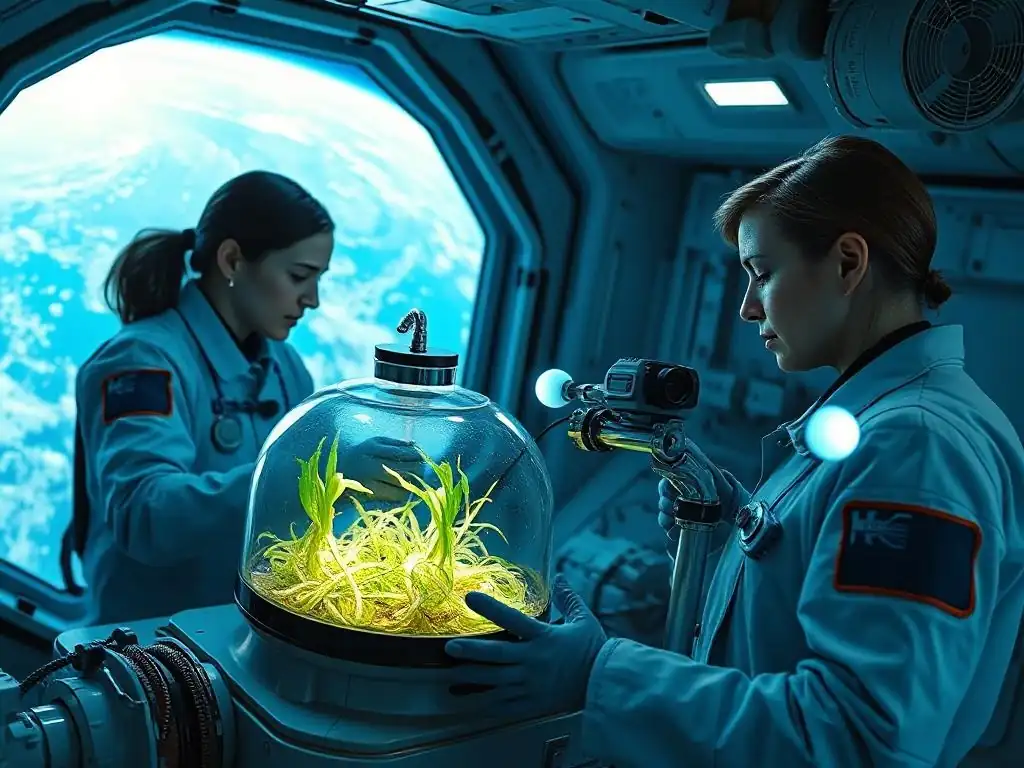
Women scientists on the ISS are conducting a wide range of experiments, including studying the growth of plants in zeroG, the behavior of fluids, and the effects of microgravity on human cells. These experiments help us understand fundamental scientific principles and develop new technologies.
What challenges have women scientists faced while conducting ISS research?
Historically, women scientists have faced challenges including limited access to funding, recognition, and opportunities within the male-dominated fields of science and engineering. They have also had to overcome gender bias in the selection process for space missions.
How does ISS research conducted by women scientists inspire future generations?
The accomplishments of women scientists on the ISS serve as powerful role models, demonstrating that women can excel in STEM fields and contribute to groundbreaking discoveries. Their stories inspire young people to pursue careers in science and engineering, particularly in space exploration.
Final Reflection: Reaching for the Stars, Grounded in Science
The journey of women scientists aboard the International Space Station, conducting groundbreaking zero-gravity research, is not just a tale of scientific advancement; it's a powerful testament to human potential unbound by earthly limitations. Their dedication, ingenuity, and relentless pursuit of knowledge in the challenging environment of space serve as a beacon, illuminating the path for future generations of scientists, regardless of gender.
The impact of these women extends far beyond the confines of the ISS. Their work inspires us to question, to explore, and to push the boundaries of what's possible, fostering a culture of innovation and inclusivity within STEM fields. The sky is not the limit when there are footprints on the moon.
This quote, often attributed to various figures, perfectly encapsulates the spirit of these women, demonstrating that with determination and collaboration, even the most audacious goals are within reach.
As we look to the future, let us carry the lessons learned from these pioneering women. Let us strive to create a world where every individual, regardless of their background, has the opportunity to contribute their unique talents to the advancement of science and the betterment of humanity. Embrace the spirit of exploration, challenge the status quo, and never stop reaching for the stars.
Ignite Your Inner Astronaut: Explore the Cosmos of Science!
Thank you for joining us on this incredible journey through the groundbreaking research of women scientists aboard the ISS. Inspired by their dedication to pushing the boundaries of knowledge in zero gravity? Now it's your turn to launch into action!
- Dive deeper into the world of space research by exploring the current experiments being conducted on the ISS. Discover the latest breakthroughs and the incredible impact they have on our understanding of the universe.
- Share this article with friends and family to spark conversations about the vital role of women in STEM fields and the exciting possibilities of space exploration.
- Volunteer your time at a local science museum or attend a space-themed event to connect with your community and learn more about the wonders of science and space.
What small step can you take today to contribute to the future of space science and inspire the next generation of female scientists?