
Soaring Beyond Stereotypes: Black Women Engineers Revolutionizing Aerospace


Welcome to WomenInScienceHistory.com!
Prepare to be inspired by stories often left untold. This week, we're soaring beyond stereotypes and shining a spotlight on the incredible contributions of Black women aerospace engineers. Discover their groundbreaking work and the perseverance that propelled them to revolutionize the field of aerospace. Intrigued? Keep reading to uncover their pivotal roles and the challenges they overcame to reach for the stars!
Introduction: Honoring Black Women's Contributions to Aerospace Engineering
The realm of aerospace engineering, often perceived as a frontier of innovation and human ingenuity, has historically been a challenging landscape for women, particularly Black women. Despite facing immense systemic barriers and societal biases, Black women have made profound and indispensable contributions to space exploration, aviation, and related scientific fields. Their stories, often overlooked in mainstream historical narratives, are testaments to their exceptional intellect, unwavering resilience, and groundbreaking achievements that have propelled humanity forward.
This article celebrates the pioneering spirit and enduring legacy of Black women aerospace engineers, highlighting their critical roles from the early days of space flight to contemporary innovations. By shedding light on their struggles, triumphs, and significant technical accomplishments, we aim to inspire future generations and acknowledge the foundational impact these remarkable individuals have had on the aerospace industry, ensuring their rightful place in the annals of scientific history.
- Dr. Christine Darden: A Sonic Boom Pioneer
- Contributions to Sonic Boom Minimization and Supersonic Flight
- Mary Jackson: From Mathematician to NASA's First Black Female Engineer
- Advocating for Equal Opportunities and Engineering Advancement
- Katherine Johnson: The Human Computer Who Shaped Space Missions
- Critical Calculations for Mercury and Apollo Missions
- What is the main focus of WomenInScienceHistory.com?
- Why is it important to highlight the stories of Black women in aerospace engineering?
- What kind of challenges did Black women aerospace engineers historically face?
- What impact have Black women aerospace engineers had on the field?
- How can WomenInScienceHistory.com inspire future generations of Black women in STEM?
The Historical Underrepresentation of Black Women in STEM and Aerospace
Barriers Faced by African American Women in Engineering Fields
Historically, African American women encountered a formidable array of obstacles when attempting to enter and advance within engineering fields, especially aerospace. Systemic racism and sexism created a dual burden, limiting access to quality education, professional networks, and employment opportunities that were readily available to their white male counterparts. Many institutions, including universities and corporations, maintained segregationist policies and discriminatory hiring practices well into the mid-20th century, effectively barring Black women from pursuing their engineering aspirations. Even when admitted, they often faced hostile environments, microaggressions, and a pervasive lack of recognition for their intellectual capabilities.
Furthermore, societal stereotypes perpetuated the notion that engineering was a domain exclusively for men, and even more so, for white men. This cultural bias, coupled with a severe lack of visible role models, made it exceedingly difficult for young Black girls to envision themselves as future engineers.
The economic realities of the era also meant that resources for advanced education were scarce within many Black communities, pushing talented individuals towards more accessible, albeit often less recognized, professions. Consequently, the representation of Black women in aerospace engineering remained disproportionately low for decades, a stark reflection of the deep-seated inequities within the American educational and professional landscapes.
Overcoming Systemic Obstacles: A Legacy of Resilience
Despite these daunting barriers, Black women exhibited extraordinary resilience and determination, forging paths where none had existed before. Many pursued their education through sheer will, attending night classes, traveling long distances, or challenging discriminatory rules to gain the necessary qualifications.
Their fight was not just for personal advancement but often for the right to be recognized as intellectual equals and to contribute their talents to critical national endeavors. For instance, in the early days of NASA, Black women who served as "human computers" at Langley Memorial Aeronautical Laboratory had to navigate segregated facilities, including separate dining areas and restrooms, even as they performed calculations vital to the nascent space program.
This legacy of resilience is marked by countless individual acts of courage and collective advocacy. Pioneers often had to prove their competence repeatedly, working twice as hard to earn half the recognition.
They built informal networks of support, mentored each other, and, in some cases, took direct action to challenge discriminatory practices. Their unwavering commitment to scientific excellence, coupled with their refusal to be confined by the limitations imposed upon them, not only paved the way for their own groundbreaking achievements but also laid the groundwork for future generations of Black women aerospace engineers to enter and thrive in an increasingly diverse field.
Pioneering Black Women Aerospace Engineers: Breaking Barriers
Dr. Christine Darden: A Sonic Boom Pioneer
Dr. Christine Darden stands as a monumental figure among pioneering Black women aerospace engineers, renowned for her groundbreaking work in sonic boom research. Born in Monroe, North Carolina, Darden joined NASA's Langley Research Center in 1967 as a "human computer" in the segregated West Area Computing unit. Her exceptional mathematical prowess and keen analytical skills quickly became evident, leading her to transition into an engineering role by 1973. This move was significant, as it marked her transition from a computational assistant to a lead researcher and engineer, a testament to her capabilities in a male-dominated field.
Throughout her distinguished 40-year career at NASA, Dr. Darden focused on the complex physics of supersonic flight and the minimization of sonic booms. She developed innovative computer programs to model and predict the characteristics of sonic booms, providing crucial data that influenced the design of future supersonic aircraft. Her research was instrumental in understanding how to reduce the disruptive effects of sonic booms, which was a major hurdle for the development of commercial supersonic transport.
In 1999, she became the first African American woman at NASA Langley to be promoted to Senior Executive Service, the highest rank in the federal civil service, overseeing the agency's sonic boom program. Her tireless dedication and scientific contributions significantly advanced the field of aeronautical engineering and paved the way for quieter, more efficient supersonic flight.
Contributions to Sonic Boom Minimization and Supersonic Flight
Dr. Christine Darden's work on sonic boom minimization was revolutionary, fundamentally altering the approach to supersonic aircraft design. Before her extensive research, the loud, concussive "boom" produced by aircraft breaking the sound barrier was a significant barrier to widespread supersonic commercial travel. Darden's mathematical models and computational simulations allowed engineers to predict the intensity and propagation of sonic booms with unprecedented accuracy. This capability was crucial for developing aircraft designs that could mitigate the noise, making supersonic flight more palatable for populated areas.
Her contributions extended beyond theoretical modeling to practical applications. She authored over 50 publications on high-lift wing design, supersonic flow, and sonic boom prediction, solidifying her reputation as a leading expert in the field.
Her research directly informed projects aimed at creating a second generation of supersonic transport, such as the High Speed Civil Transport (HSCT) program, which aimed to develop a more environmentally friendly and economically viable supersonic airliner. Dr. Darden's efforts not only advanced the scientific understanding of aerodynamics but also demonstrated how dedicated research by Black women aerospace engineers could overcome significant technical challenges, pushing the boundaries of what was thought possible in aviation.
Mary Jackson: From Mathematician to NASA's First Black Female Engineer
Mary Jackson's journey from a talented mathematician to NASA's first Black female engineer is a powerful narrative of determination and barrier-breaking. Born in Hampton, Virginia, Jackson graduated from Hampton Institute (now Hampton University) with degrees in mathematics and physical science. She began her career at the National Advisory Committee for Aeronautics (NACA), the precursor to NASA, in 1951, joining the West Area Computing section at Langley Research Center. In this segregated unit, she performed complex calculations, contributing to the foundational research of early American aeronautics.
Her exceptional aptitude led her supervisor, Kazimierz Czarnecki, to offer her an opportunity to work on experiments in a supersonic pressure tunnel, a critical facility for understanding airflow. To become an engineer, Jackson needed to take graduate-level math and physics courses. However, these courses were offered at the then-segregated Hampton High School.
Jackson had to petition the City of Hampton to allow her to attend classes with white students, a plea she won. After completing the required courses, she officially became an aerospace engineer in 1958, marking a monumental achievement as the first African American woman to hold this title at NASA. Her career as an engineer spanned two decades, during which she authored or co-authored numerous research reports on the behavior of the boundary layer of air around aircraft.
Advocating for Equal Opportunities and Engineering Advancement
Beyond her technical contributions, Mary Jackson became a fierce advocate for equal opportunities and the advancement of women and minorities in STEM fields. After 34 years at NASA, she voluntarily stepped down from her engineering role in 1979 to take a demotion to become the Federal Women's Program Manager in the Office of Equal Opportunity Programs. This career change was a testament to her deep commitment to creating more inclusive environments for future generations. She recognized that her unique experiences and position allowed her to effect broader systemic change.
In her new role, Jackson worked tirelessly to highlight and address the challenges faced by women and minorities at NASA. She advised women on how to position themselves for promotions, advocated for fair hiring practices, and worked to ensure that talented individuals from underrepresented groups had access to the same opportunities as their white male counterparts.
Mary Jackson's legacy extends far beyond her engineering calculations; it encompasses her unwavering dedication to social justice and her pioneering efforts to dismantle the barriers that prevented other Black women aerospace engineers from reaching their full potential. Her advocacy laid crucial groundwork for diversity and inclusion efforts that continue to shape the aerospace industry today.
Katherine Johnson: The Human Computer Who Shaped Space Missions
Katherine Johnson, a mathematical genius and one of the most celebrated Black women aerospace engineers, played a pivotal role in the success of America's early space missions. Born in White Sulphur Springs, West Virginia, Johnson displayed an extraordinary aptitude for mathematics from a young age, graduating from high school at 14 and college at 18. She joined NACA in 1953, assigned to the West Area Computers section at Langley Research Center, a group of African American women who performed complex manual calculations for the agency's engineers.
Johnson's unparalleled ability to calculate trajectories, launch windows, and emergency return paths made her indispensable to NASA's nascent human spaceflight program. Her precision was so trusted that when electronic computers were introduced, astronaut John Glenn specifically requested that Johnson verify the machine's calculations for his historic 1962 orbital flight. Her handwritten figures provided the critical assurance needed for the mission to proceed, underscoring the vital role of human intellect in an increasingly automated world. Her contributions were not just accurate; they were foundational to the nascent field of orbital mechanics.
Critical Calculations for Mercury and Apollo Missions
Katherine Johnson's mathematical brilliance was central to some of NASA's most iconic missions, from the Mercury program to the Apollo moon landings. For the Mercury Seven missions, she performed trajectory analysis for Alan Shepard's 1961 suborbital flight, the first American in space, and John Glenn's 1962 orbital mission. Her calculations were critical for ensuring that the spacecraft would follow its intended path and that astronauts could safely return to Earth. Her work provided the fundamental equations that defined the parameters of human spaceflight.
Her involvement continued through the Apollo program, where she calculated trajectories for the Apollo 11 mission that landed humans on the Moon in 1969. Perhaps even more dramatically, Johnson's team played a crucial role in the safe return of the Apollo 13 crew in 1970 after an onboard explosion.
When the mission faced a catastrophic failure, her team's rapid and accurate calculations of a new trajectory were vital for guiding the damaged spacecraft back to Earth. Katherine Johnson's legacy as one of the most celebrated Black women aerospace engineers is undeniable; her mind was literally the driving force behind some of humanity's greatest exploratory achievements.
Contemporary Black Women Leading the Way in Aerospace Innovation
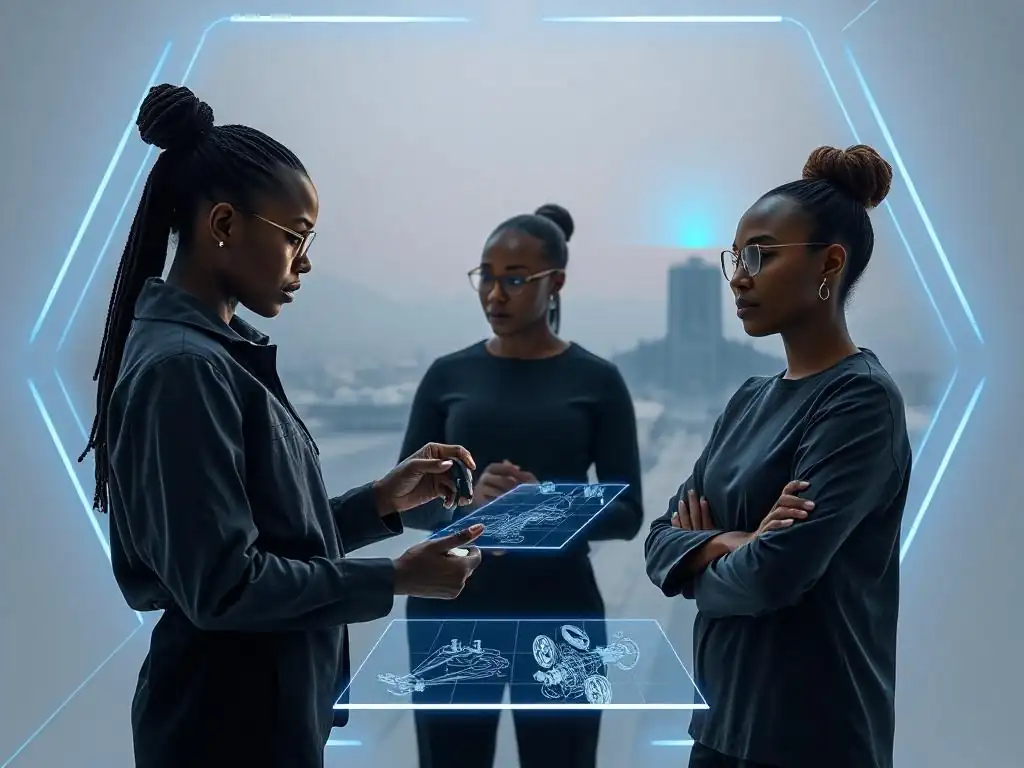
Camille Alleyne: Spacecraft Systems Engineer and STEM Advocate
Camille Alleyne stands as a prominent figure among contemporary Black women aerospace engineers, making significant contributions to human spaceflight and passionately advocating for STEM education. With a distinguished career at NASA's Johnson Space Center, Alleyne has held various critical roles, including Deputy Manager for the International Space Station (ISS) Research Integration Office.
In this capacity, she played a key role in integrating scientific experiments and research payloads onto the ISS, ensuring the station's capabilities were maximized for groundbreaking scientific discovery. Her work is vital for advancing the scientific knowledge gained from long-duration spaceflight and preparing for future missions to the Moon and Mars.
Beyond her technical expertise, Alleyne is a dedicated advocate for increasing diversity in STEM fields. She founded "The Brightest Stars Foundation," an organization committed to inspiring and educating young people, particularly girls and minorities, about careers in science, technology, engineering, and mathematics. Through workshops, mentorship, and outreach programs, she actively works to ensure that the next generation has the resources and encouragement needed to pursue their dreams in aerospace. Her dual commitment to cutting-edge engineering and empowering future Black women aerospace engineers makes her an invaluable asset to the space community.
Aprille Ericsson-Jackson: Aerospace Engineer and Mission Systems Manager
Dr. Aprille Ericsson-Jackson represents the vanguard of modern Black women aerospace engineers, recognized for her pioneering achievements and extensive contributions to NASA missions. She holds the distinction of being the first African American woman to receive a Ph.D. in Mechanical Engineering from Howard University in 1995, with a specialization in aerospace engineering. Her groundbreaking academic achievement paved the way for many who followed. Since then, she has built an impressive career at NASA's Goddard Space Flight Center, where she works as an Aerospace Engineer and Mission Systems Manager.
Dr. Ericsson-Jackson's expertise lies in the design, development, and testing of spaceflight instruments and systems. She has contributed to numerous high-profile missions, including the Tropical Rainfall Measuring Mission (TRMM), which provided crucial data on global rainfall patterns, and the Lunar Reconnaissance Orbiter (LRO), a robotic mission exploring the Moon. Her work involves ensuring the complex instruments on these spacecraft function flawlessly in the harsh environment of space.
In addition to her technical roles, Dr. Ericsson-Jackson is a prolific speaker and mentor, actively engaging with students and aspiring engineers. She passionately promotes STEM education and serves as an inspiring role model for young Black women considering careers in aerospace, demonstrating the profound impact Black women aerospace engineers have on pushing the boundaries of scientific exploration.
The Impact of Black Women Aerospace Engineers on Space Exploration and Aviation
Advancements in Spacecraft Propulsion and Satellite Technology
The collective ingenuity and dedication of Black women aerospace engineers have significantly advanced the fields of spacecraft propulsion and satellite technology. Their contributions, often woven into the fabric of larger projects, have led to more efficient and reliable systems that power rockets and enable long-duration space missions.
From optimizing fuel consumption for launch vehicles to designing advanced thrusters for orbital maneuvers, these engineers have played pivotal roles in enhancing the performance and longevity of spacecraft. For instance, their work has contributed to the development of propulsion systems that can achieve higher specific impulses, meaning more thrust per unit of propellant, making deep-space exploration more feasible.
Furthermore, their expertise has been crucial in the evolution of satellite technology. Black women aerospace engineers have been involved in designing lightweight, durable, and highly functional satellites for various purposes, including communication, navigation, and scientific research. Their innovations have helped improve signal strength, extend operational lifespans, and miniaturize components, leading to more cost-effective and versatile satellite constellations. The reliability of global positioning systems (GPS) and the clarity of satellite communications owe much to the meticulous engineering and problem-solving skills brought forth by these talented professionals, ensuring that data can be transmitted reliably across vast distances.
Contributions to Mars Exploration and Earth Observation Missions
Black women aerospace engineers have made indelible marks on humanity's quest to explore Mars and better understand our own planet through Earth observation missions. Their contributions have been instrumental in the design and operation of robotic missions that have provided unprecedented insights into the Red Planet.
This includes roles in developing the sophisticated instruments carried by Mars rovers, ensuring their ability to collect and transmit scientific data from an alien environment. Their work has helped overcome challenges related to extreme temperatures, dust storms, and atmospheric conditions, enabling the successful operation of missions like the Mars Perseverance rover and the Ingenuity helicopter.
Closer to home, these engineers have played critical roles in developing and managing Earth observation satellites that monitor climate change, weather patterns, and natural disasters. Their efforts contribute to the systems that track sea levels, measure atmospheric composition, and map deforestation, providing essential data for environmental scientists and policymakers.
For example, their work on sensor technologies and data processing has enhanced the accuracy of weather forecasts and improved our ability to respond to emergencies. The insights gained from these missions, often facilitated by the meticulous work of Black women aerospace engineers, are vital for protecting our planet and understanding its complex systems.
Innovations in Aviation Safety and Efficiency
Beyond space, Black women aerospace engineers have significantly contributed to innovations that enhance aviation safety and efficiency. Their work spans various aspects of aircraft design, air traffic management, and maintenance protocols, leading to safer skies and more sustainable flight operations. In terms of aircraft design, their expertise has contributed to improvements in aerodynamics, structural integrity, and flight control systems, making planes more stable and less prone to mechanical failures. This includes optimizing wing shapes for better lift and reduced drag, as well as developing advanced materials that are both strong and lightweight.
Their contributions also extend to the operational side of aviation. Black women aerospace engineers have been involved in developing sophisticated air traffic control systems that manage the flow of thousands of flights daily, minimizing congestion and reducing the risk of mid-air collisions. Their work on navigation technologies and communication protocols has made air travel more precise and reliable.
Furthermore, they have helped engineer more fuel-efficient aircraft, contributing to reduced carbon emissions and lower operating costs for airlines. These advancements, driven by the diverse perspectives and technical prowess of Black women aerospace engineers, ensure that air travel remains one of the safest and most efficient modes of transportation.
Inspiring Future Generations: Representation and Mentorship
The Importance of STEM Education for Young Black Girls
The foundational importance of STEM education for young Black girls cannot be overstated in fostering the next generation of Black women aerospace engineers. Early exposure to science, technology, engineering, and mathematics concepts, coupled with engaging and inclusive learning environments, is crucial for sparking interest and building confidence. Studies consistently show that girls who participate in STEM activities from a young age are more likely to pursue related fields in higher education and beyond. However, systemic biases and a lack of resources in many communities disproportionately affect Black girls, often limiting their access to high-quality STEM programs and role models.
Therefore, providing accessible and culturally relevant STEM education is paramount. This includes curricula that highlight the contributions of diverse scientists and engineers, making the field feel more inclusive and attainable. Encouraging participation in robotics clubs, science fairs, and coding camps can demystify complex subjects and transform abstract concepts into tangible, exciting experiences. By nurturing their innate curiosity and providing strong educational foundations, we empower young Black girls to envision themselves as innovators and leaders, paving the way for them to become future Black women aerospace engineers who will continue to push the boundaries of human achievement.
Mentorship Programs and Initiatives Supporting Black Women in Engineering
Mentorship plays a pivotal role in the academic and professional success of Black women in engineering, providing invaluable guidance, support, and networking opportunities. Navigating complex engineering curricula and entering a field where they remain underrepresented can be challenging, and having experienced mentors can make a significant difference. Numerous programs and initiatives have emerged specifically to address this need, connecting aspiring and early-career Black women aerospace engineers with established professionals who can offer insights, share experiences, and help navigate potential obstacles.
These mentorship programs often provide a range of support, from academic tutoring and career advice to emotional encouragement and sponsorship for leadership roles. For instance, university-led initiatives, industry-sponsored programs, and non-profit organizations facilitate these crucial connections. Mentors can help demystify the aerospace industry, provide practical advice on skill development, and open doors to internships or job opportunities. By fostering strong mentor-mentee relationships, these initiatives not only equip individual Black women with the tools for success but also create a supportive community that encourages retention and advancement within engineering fields, ensuring a continuous pipeline of talented Black women aerospace engineers.
Fostering Inclusive and Equitable Environments in Aerospace
Fostering truly inclusive and equitable environments within the aerospace industry is essential for the continued growth and success of Black women aerospace engineers. While progress has been made, systemic biases and cultural barriers can still impede their full participation and advancement. True inclusion goes beyond mere representation; it involves creating workplaces where Black women feel valued, respected, and empowered to contribute their unique perspectives and talents without facing discrimination or microaggressions. This requires a conscious effort from leadership to dismantle existing biases and implement policies that promote fairness and equity.
Key initiatives include implementing diverse hiring panels, establishing clear pathways for promotion based on merit, and offering unconscious bias training to all employees. Furthermore, creating affinity groups and employee resource groups specifically for Black women in aerospace can provide crucial peer support and advocacy platforms.
Companies and institutions must also actively celebrate the achievements of their Black women engineers, making their contributions visible and inspiring. By prioritizing diversity and inclusion, the aerospace industry not only fulfills a moral imperative but also strengthens its capacity for innovation, as diverse teams are consistently shown to be more creative and effective problem-solvers, ensuring a thriving future for Black women aerospace engineers.
Resources and Organizations Supporting Black Women in Aerospace
National Society of Black Engineers (NSBE) and Society of Women Engineers (SWE)
Several prominent organizations play a critical role in supporting and empowering Black women in engineering, including those pursuing careers as Black women aerospace engineers. The National Society of Black Engineers (NSBE) is one of the largest student-governed organizations in the country, dedicated to the academic and professional success of African American engineering students and professionals. NSBE provides a robust network, professional development resources, career fairs, and mentorship opportunities, fostering a sense of community and belonging. Their initiatives focus on increasing the number of culturally responsible Black engineers who excel academically, succeed professionally, and positively impact the community.
Similarly, the Society of Women Engineers (SWE) is a global organization that advocates for women in engineering and technology. SWE offers a broad range of programs, including scholarships, networking events, conferences, and leadership development training, all aimed at supporting women throughout their engineering careers. Both NSBE and SWE have dedicated sections and programs that specifically address the unique challenges and opportunities for Black women in engineering, providing platforms for advocacy, mentorship, and celebration of their achievements. These organizations are vital pillars of support for aspiring and established Black women aerospace engineers, helping them navigate their educational and professional journeys.
Scholarships and Mentorship Programs for Aspiring Engineers
Financial support and structured mentorship are crucial for aspiring Black women aerospace engineers, and numerous scholarships and programs exist to provide this vital assistance. Scholarships specifically designed for underrepresented groups in STEM help alleviate the financial burden of higher education, enabling talented individuals to pursue demanding engineering degrees without prohibitive debt. Examples include scholarships offered by the National Society of Black Engineers (NSBE), the Society of Women Engineers (SWE), and various corporate and governmental initiatives aimed at increasing diversity in aerospace.
Beyond financial aid, targeted mentorship programs are equally important. These programs connect students with experienced Black women aerospace engineers or other professionals who can offer guidance, share industry insights, and provide invaluable career advice.
For instance, the Patti Grace Smith Fellowship is a notable program that provides internships and scholarships specifically for Black students pursuing aerospace careers, pairing them with mentors in leading aerospace companies and government agencies. Such initiatives not only provide practical support but also build confidence and a sense of belonging, ensuring that aspiring Black women aerospace engineers have the resources and encouragement needed to succeed in a challenging yet rewarding field.
Conclusion: A Future Where Black Women Thrive in Aerospace
Celebrating the Achievements and Continued Progress of Black Women in Aerospace Engineering
The journey of Black women aerospace engineers, from the pioneering "human computers" like Katherine Johnson and Mary Jackson to contemporary leaders such as Dr. Christine Darden, Camille Alleyne, and Aprille Ericsson-Jackson, is a testament to their extraordinary intellect, perseverance, and profound impact on space exploration and aviation. Their achievements, often realized in the face of systemic discrimination and historical underrepresentation, have not only pushed the boundaries of scientific knowledge but have also opened doors for future generations.
They have contributed critical calculations, innovative designs, and strategic leadership that have been fundamental to landmark missions, from sending humans to the Moon to exploring Mars and advancing aviation safety.
This article has sought to illuminate their invaluable contributions, ensuring their stories are recognized and celebrated within the broader narrative of scientific progress. Their legacy is not just one of technical prowess but also of unwavering advocacy for diversity and inclusion, demonstrating that excellence knows no racial or gender bounds. The advancements they have driven, from sonic boom minimization to sophisticated satellite technology, underscore the indispensable role Black women aerospace engineers play in shaping the future of the industry.
The Ongoing Need for Diversity and Inclusion in STEM Fields
Despite the significant progress made by Black women aerospace engineers, the ongoing need for diversity and inclusion in STEM fields remains critical. While representation has improved, Black women continue to be underrepresented in engineering, particularly at leadership levels. True diversity extends beyond numbers; it encompasses creating genuinely equitable and inclusive environments where all individuals feel empowered to contribute their unique perspectives and talents. The aerospace industry, like all STEM fields, thrives on innovation, and innovation is strongest when fueled by a multitude of viewpoints and experiences.
Therefore, continued efforts are essential to dismantle systemic barriers, foster supportive educational pathways, and cultivate inclusive workplaces. This includes robust mentorship programs, equitable hiring and promotion practices, and a persistent commitment to addressing unconscious biases. By actively investing in and championing Black women aerospace engineers, the industry not only fulfills a moral imperative but also strengthens its capacity for groundbreaking discovery and global leadership. The future of space exploration and aviation depends on harnessing the full potential of all humanity, ensuring that Black women continue to thrive and lead in shaping our technological destiny.
Frequently Asked Questions
What is the main focus of WomenInScienceHistory.com?
The website focuses on celebrating the contributions of women to various scientific fields throughout history. It highlights their biographies, groundbreaking work, and the challenges they faced in male-dominated environments.
Why is it important to highlight the stories of Black women in aerospace engineering?
Highlighting these stories sheds light on often overlooked narratives and inspires future generations. It also challenges stereotypes and promotes diversity and inclusion in STEM fields.
What kind of challenges did Black women aerospace engineers historically face?
They faced challenges including racial and gender discrimination, limited access to education and opportunities, and lack of recognition for their contributions.
What impact have Black women aerospace engineers had on the field?
Black women aerospace engineers have made significant contributions to advancements in aircraft design, space exploration, and other critical areas within the aerospace industry.
How can WomenInScienceHistory.com inspire future generations of Black women in STEM?
By showcasing the achievements and resilience of pioneering Black women, the website provides role models and demonstrates that success in STEM is possible regardless of background.
Final Reflection: Reaching for the Stars
The narratives shared within this article underscore a powerful truth: Black women aerospace engineers are not just breaking barriers, they are redefining the very landscape of innovation. Their contributions, often overlooked, are now rightfully taking center stage, demonstrating that brilliance knows no bounds of race or gender. This shift in visibility is not merely symbolic; it is a catalyst for future generations.
This journey of shattering stereotypes and achieving excellence profoundly impacts our understanding of potential and opportunity. Witnessing these women navigate and conquer challenges within a historically exclusive field inspires us to question our own preconceived notions and actively champion inclusivity. The sky is no longer the limit. We have the technology to go beyond it.
- James L. Cambias. This quote, often attributed to space exploration, resonates deeply here, symbolizing the limitless potential unlocked when talent is nurtured and celebrated, regardless of background.
Now, consider the legacy these women are building. How can you, in your own sphere of influence, actively dismantle barriers and create pathways for underrepresented voices to thrive? Let us all strive to foster environments where every individual, regardless of race or gender, feels empowered to reach for the stars and contribute their unique brilliance to the betterment of our world.
Ignite Your Own Aerospace Journey!
Thank you for exploring the incredible stories of Black women engineers who are shaping the future of aerospace. Inspired? Here's how you can take flight:
- Take the Lead: Start by identifying a small problem in your local community that could be solved with engineering principles. Even a simple solution can spark innovation.
- Share this article with your network to amplify the voices of these incredible women and inspire the next generation of STEM leaders.
- Explore online resources and workshops in STEM to deepen your understanding and connect with mentors.
What's one small step you'll take this week to fuel your own passion for STEM and become a change-maker in your field?