
Valentina Tereshkova: How "Seagull" Became the First Woman to Conquer Space

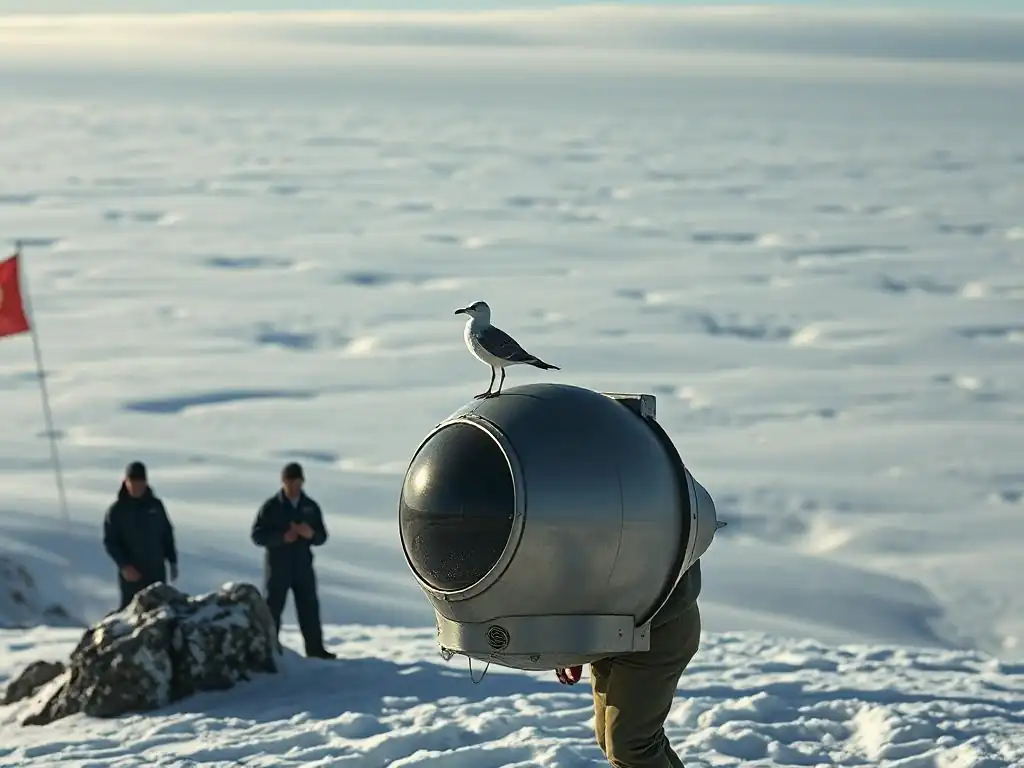
Welcome to WomenInScienceHistory.com!
Prepare to be inspired by the extraordinary story of Valentina Tereshkova, the woman who defied gravity and societal expectations to become the first woman in space. But how did this textile worker earn the call sign "Seagull" and embark on this monumental journey? Delve into the challenges and triumphs of a true pioneer in our latest article exploring her groundbreaking voyage and lasting impact on Space Science & Astronomy. Ready to discover the hidden chapters of her incredible feat?
- Valentina Tereshkova: How "Seagull" Became the First Woman in Space
- Introduction: Valentina Tereshkova, A Pioneer of Space Exploration
- Early Life and Selection for the Soviet Space Program
- The Vostok 6 Mission: Tereshkova's Historic Flight
- The Aftermath and Impact of Tereshkova's Space Journey
- Valentina Tereshkova's Later Life and Political Career
- Reflecting on Valentina Tereshkova's Enduring Influence
- Conclusion: Valentina Tereshkova, A True Space Pioneer
-
Frequently Asked Questions
- What is Valentina Tereshkova best known for?
- What were some of the challenges Valentina Tereshkova faced as a woman in the early space program?
- What was the name of Valentina Tereshkova's spacecraft during her historic mission?
- Why is it important to highlight the contributions of women like Valentina Tereshkova in science history?
- Where can I find more information about other women who have made significant contributions to science?
- Final Reflection: The Enduring Legacy of a Cosmic Pioneer
- Launch Your Own Exploration!
Valentina Tereshkova: How "Seagull" Became the First Woman in Space
Introduction: Valentina Tereshkova, A Pioneer of Space Exploration
Celebrating Valentina Tereshkova's Historic Spaceflight
On June 16, 1963, the world witnessed a monumental leap in human exploration as Valentina Tereshkova, a Soviet cosmonaut, became the first woman to journey into space. Piloting the Vostok 6 spacecraft, Tereshkova, whose call sign was "Chaika" (Seagull), completed an unprecedented 48 orbits of Earth over nearly three days. Her historic flight not only marked a significant triumph for the Soviet space program during the intense Space Race but also shattered gender barriers, proving that women were equally capable of enduring the immense physical and psychological rigors of space travel.
Tereshkova's achievement resonated globally, inspiring countless individuals and forever cementing her place in the annals of human history. Her mission provided invaluable data on the effects of spaceflight on the female body, contributing crucial insights that would inform future space endeavors. Beyond the scientific and technological advancements, her journey became a powerful symbol of progress and possibility for women worldwide, signaling a shift in perceptions about female roles in science and exploration.
From Textile Worker to Cosmonaut: An Unlikely Journey
Valentina Vladimirovna Tereshkova was born on March 6, 1937, in Maslennikovo, a village in the Yaroslavl Oblast, Soviet Union. Her early life was marked by humble beginnings and hard work; her father was a tractor driver and her mother worked in a textile factory. After leaving school at a young age, Tereshkova followed in her mother's footsteps, beginning work at a textile mill in Yaroslavl at the age of 18, while simultaneously pursuing her education through correspondence courses.
Her path from a factory floor to the vastness of space was anything but conventional, highlighting an extraordinary blend of personal ambition and a unique opportunity presented by the Soviet state. While her daily life involved the repetitive tasks of fabric production, Tereshkova harbored a passion for adventure that would ultimately propel her into the spotlight. This unlikely trajectory underscores the remarkable circumstances that led to her selection as the first woman in space, making her story an even more compelling narrative of human potential.
Early Life and Selection for the Soviet Space Program
Valentina Tereshkova's Background and Parachuting Passion
Valentina Tereshkova's early life was characterized by resilience and a burgeoning interest in activities far removed from her textile work. After completing her primary education, she worked at a tire factory for a period before moving to the Krasny Perekop textile mill in Yaroslavl. Despite her demanding work schedule, Tereshkova dedicated herself to self-improvement, attending a technical school part-time to study light industry. This commitment to both work and education demonstrated an inherent drive and discipline.
Crucially, Tereshkova developed a profound passion for amateur parachuting. She joined the local Aero Club in Yaroslavl in 1959, where she began skydiving. By 1961, she had accumulated over 126 parachute jumps, honing skills that would prove instrumental in her future career. In the early Soviet space program, cosmonauts were required to parachute out of their capsules at an altitude of several kilometers before landing, making extensive parachuting experience a vital prerequisite for selection.
The Secret Soviet Initiative: Finding the First Female Cosmonaut
Following Yuri Gagarin's historic flight in 1961, the Soviet Union, under the guidance of chief rocket engineer Sergei Korolev, conceived a highly secretive and ambitious plan: to send a woman into space. This initiative was partly driven by propaganda, aiming to demonstrate Soviet superiority in space and its commitment to gender equality, but also by a genuine scientific curiosity to understand the physiological and psychological effects of spaceflight on the female body. The search for the first female cosmonaut began in earnest in 1961.
The criteria for candidates were stringent, seeking individuals who were not only physically robust but also ideologically sound and under the age of 30. Parachuting experience was paramount, alongside a height limit of 170 cm and a weight limit of 70 kg, to fit within the Vostok spacecraft. From over 400 initial applicants, a rigorous selection process narrowed the field, ultimately identifying a small, elite group of women who would undergo the intense training required for space travel.
Rigorous Training and Selection Process for the Vostok 6 Mission
In 1962, Valentina Tereshkova was selected as one of five female cosmonaut candidates, alongside Tatyana Kuznetsova, Irina Solovyova, Zhanna Yorkina, and Galina Ponomaryova. Their training regimen was exceptionally demanding, mirroring that of their male counterparts. It included grueling physical exercises, isolation chamber tests to simulate the solitude of space, centrifuge training to prepare for high G-forces, and thermochamber tests to acclimatize to extreme temperatures. They also underwent extensive academic studies in rocket theory, navigation, and spacecraft systems.
Tereshkova's calm demeanor, exceptional physical fitness, and outstanding performance in all aspects of the training distinguished her. Her strong ideological commitment and ability to handle stress under pressure further solidified her position. Ultimately, in May 1963, after months of intense preparation and evaluation, she was chosen as the primary pilot for the Vostok 6 mission, a decision personally approved by Soviet Premier Nikita Khrushchev, making her the prime candidate to become the Valentina Tereshkova first woman space traveler.
The Vostok 6 Mission: Tereshkova's Historic Flight
Launching into History: Valentina Tereshkova's Vostok 6 Mission Details
On June 16, 1963, from the Baikonur Cosmodrome in Kazakhstan, Valentina Tereshkova embarked on her historic journey aboard the Vostok 6 spacecraft. Her call sign, "Chaika" (Seagull), became instantly recognizable worldwide as she lifted off, becoming the first woman in space. The mission was part of a coordinated dual flight, launched two days after Valery Bykovsky's Vostok 5, though the two spacecraft were in different orbits and did not achieve a close rendezvous.
Tereshkova's flight duration was an astonishing 2 days, 22 hours, and 50 minutes, during which she orbited Earth 48 times. This single mission accumulated more time in space than all American astronauts combined up to that point. The primary objective of her flight was to gather comprehensive data on the effects of prolonged spaceflight on the female organism, a crucial step in understanding human adaptability to the space environment.
"Seagull" in Space: Communication and Experiments Aboard Vostok 6
During her time aboard Vostok 6, Valentina Tereshkova maintained regular radio contact with ground control, famously broadcasting her observations with enthusiasm. She meticulously kept a flight log, documenting her experiences and the spacecraft's status. Among her significant tasks was taking photographs of the Earth's horizon, which were later used by Soviet scientists to study atmospheric aerosol layers, contributing to early space-based atmospheric research.
Her mission’s scientific objectives were primarily biomedical, focusing on how her body responded to weightlessness and space radiation. While specific details of all the experiments performed were not always publicly disclosed, Tereshkova's role involved continuous self-monitoring and reporting on her physiological and psychological state. This data was invaluable for understanding gender-specific responses to the space environment and for designing future manned spacecraft and life support systems.
Challenges and Triumphs During Tereshkova's Solo Spaceflight
Despite the triumphant public narrative, Valentina Tereshkova's solo spaceflight was not without its challenges. She reportedly experienced periods of nausea and physical discomfort due to weightlessness, a common issue for early cosmonauts. More critically, a significant technical error in the spacecraft's automatic orientation program was discovered shortly after launch; if uncorrected, this flaw would have caused Vostok 6 to ascend into a higher orbit, preventing re-entry.
Ground control intervened, providing Tereshkova with manual instructions to correct the orientation. Her ability to execute these complex maneuvers under pressure, coupled with her resilience in managing the physical effects of space, underscored her exceptional fortitude. Despite these difficulties, she successfully completed her mission objectives and returned safely to Earth, cementing her status as a true pioneer and the first woman in space who overcame significant hurdles during her historic journey.
The Aftermath and Impact of Tereshkova's Space Journey

Global Recognition and Propaganda: Tereshkova as a Soviet Icon
Upon her safe return to Earth on June 19, 1963, Valentina Tereshkova was instantly propelled to global superstardom. She was immediately awarded the title Hero of the Soviet Union, the nation's highest honor, and was celebrated with parades and accolades across the country. Her image, that of a determined young woman from humble beginnings conquering the cosmos, was powerfully leveraged by the Soviet Union as a potent symbol of its scientific prowess, technological advancement, and the purported equality of its socialist society during the height of the Cold War.
Tereshkova embarked on extensive international tours, meeting heads of state, dignitaries, and adoring crowds in dozens of countries. She eloquently articulated the Soviet message of peace and progress, becoming a living embodiment of Soviet ideals and a powerful propaganda tool. Her fame transcended national borders, making her one of the most recognizable women in the world and an enduring icon of the Soviet era.
Valentina Tereshkova's Contributions to Space Science and Research
While the political and symbolic impact of Valentina Tereshkova's flight was immense, her mission also yielded valuable scientific data. As the first woman to experience spaceflight, her physiological responses to weightlessness, radiation, and the confined environment of the Vostok capsule provided unique insights into the adaptability of the female body. This data was critical for understanding potential gender differences in space adaptation, informing the design of future spacecraft and life support systems, and planning subsequent missions.
Her observations and detailed flight reports, though largely kept within the Soviet space program, contributed to the growing body of knowledge about human endurance in space. While the primary focus of her mission was not on complex scientific experiments, the very act of her being in space and her survival under challenging conditions provided foundational biomedical information that helped pave the way for all future female space travelers. Her journey as the Valentina Tereshkova first woman space explorer provided tangible, if often unpublicized, scientific contributions.
The Legacy of the First Woman in Space: Inspiring Future Generations
Valentina Tereshkova's flight irrevocably altered perceptions of women's capabilities in the scientific and technical fields. By successfully completing her mission, she demonstrated that gender was not a barrier to space exploration, effectively shattering a significant glass ceiling in a traditionally male-dominated arena. Her achievement opened the door for subsequent female cosmonauts and astronauts from various nations, proving that women could not only participate but excel in the most demanding and pioneering endeavors.
Her story continues to be a powerful source of inspiration for girls and young women globally, encouraging them to pursue careers in science, technology, engineering, and mathematics (STEM). The narrative of a textile worker becoming the first woman in space resonates deeply, serving as a compelling testament to the idea that with determination, opportunity, and courage, extraordinary feats are achievable. Her legacy endures as a beacon for aspiring scientists, engineers, and explorers worldwide.
Valentina Tereshkova's Later Life and Political Career
From Cosmonaut to Politician: Tereshkova's Post-Space Career
After her monumental spaceflight, Valentina Tereshkova never flew into space again, but her career trajectory shifted dramatically towards leadership and public service. She pursued advanced education, graduating with distinction from the Zhukovsky Air Force Engineering Academy in 1969, earning a doctorate in engineering. This academic achievement underscored her continued commitment to scientific and technical fields, even as her public role expanded.
Tereshkova transitioned seamlessly into a prominent political career within the Soviet Union. She served as a deputy in the Supreme Soviet of the Soviet Union, the national parliament, from 1966 to 1989. She also held key positions in various international women's organizations and cultural exchange programs, leveraging her global fame for diplomatic purposes. Her political influence grew, solidifying her status as a respected figure both domestically and on the international stage.
Continuing Advocacy for Space Exploration and Women in STEM
Even after the dissolution of the Soviet Union, Valentina Tereshkova remained an active and influential voice in public life. She continued her political career, serving as a deputy in the State Duma (the lower house of the Russian parliament) since 2011, representing the United Russia party. In this capacity, she has consistently advocated for the advancement of space exploration, supporting new Russian space initiatives and promoting international cooperation in the cosmos.
Beyond politics, Tereshkova has been a tireless champion for women in science, technology, engineering, and mathematics (STEM) fields. She frequently participates in conferences and events aimed at inspiring young women to pursue ambitious careers, sharing her own groundbreaking journey as the first woman in space. Her enduring advocacy highlights her commitment to fostering a new generation of female leaders and innovators in fields that she herself helped to pioneer.
Reflecting on Valentina Tereshkova's Enduring Influence
Valentina Tereshkova's Place in Women in Science History
Valentina Tereshkova holds an unparalleled position in the history of women in science. Her Vostok 6 mission was not merely a spaceflight; it was a profound declaration that women possessed the intellectual fortitude, physical resilience, and emotional stability required for the most challenging frontier of human endeavor. Her success directly challenged prevailing societal norms and scientific assumptions about gender roles, opening doors that had previously been closed.
Her pioneering flight paved the way for every female astronaut and cosmonaut who followed, including Svetlana Savitskaya, the second woman in space in 1982, and Sally Ride, the first American woman in space in 1983. Tereshkova's journey underscores the vital importance of representation and opportunity for women in male-dominated fields. Her story is a testament to how one individual's groundbreaking achievement can fundamentally alter perceptions and inspire generations to pursue scientific excellence without regard to gender.
Lessons Learned from the First Female Space Traveler
The life and mission of Valentina Tereshkova offer several profound lessons. Firstly, her journey from a textile factory to Earth orbit exemplifies the power of extraordinary determination and perseverance. She demonstrated that with sufficient training and unwavering commitment, individuals from any background can achieve monumental feats. Secondly, her flight highlights the significant role of political will in driving scientific and exploratory breakthroughs, as her mission was a direct outcome of the Soviet Union's ambitious space agenda.
Furthermore, Tereshkova's experience underscores the importance of continuously breaking down barriers and advocating for equal opportunities in STEM. While her flight was a tremendous triumph, it was followed by a nearly two-decade gap before another woman ventured into space, illustrating that progress is often non-linear and requires sustained effort to ensure true and lasting equality. Her legacy reminds us that while individual achievements are celebrated, systemic support is crucial for continued advancement for women in science.
Conclusion: Valentina Tereshkova, A True Space Pioneer
Valentina Tereshkova's flight aboard Vostok 6 stands as one of the most significant achievements in human history, marking her forever as the first woman in space. Her bravery, skill, and pioneering spirit not only propelled her into orbit but also launched a new era of possibilities for women across the globe. Her journey transcended national boundaries, capturing the imagination of millions and demonstrating the boundless potential of human ambition.
From her humble beginnings as a factory worker to her iconic status as a cosmonaut and later a prominent politician, Valentina Tereshkova's life is a testament to perseverance and breaking barriers. Her enduring legacy continues to inspire generations, proving that the pursuit of scientific excellence and exploration knows no gender. She remains a true space pioneer, a symbol of courage, and an indelible figure in the history of women in science.
Frequently Asked Questions
What is Valentina Tereshkova best known for?
Valentina Tereshkova is best known for being the first woman in space. She piloted the Vostok 6 mission in 1963, becoming a global icon. Her call sign was "Seagull."
What were some of the challenges Valentina Tereshkova faced as a woman in the early space program?
Tereshkova faced significant challenges due to the male-dominated nature of the early space program. She had to prove her abilities and overcome societal expectations regarding women's roles. There were also challenges in adapting equipment originally designed for men.
What was the name of Valentina Tereshkova's spacecraft during her historic mission?
The spacecraft Valentina Tereshkova piloted during her landmark mission was named Vostok 6. This mission cemented her place in history.
Why is it important to highlight the contributions of women like Valentina Tereshkova in science history?
Highlighting the contributions of women like Tereshkova is crucial to combat historical biases and inspire future generations. It also provides a more complete and accurate representation of scientific progress.
Where can I find more information about other women who have made significant contributions to science?
Websites like WomenInScienceHistory.com are excellent resources. They provide biographies and detailed accounts of pioneering female scientists and their groundbreaking work, filling a crucial gap in historical narratives.
Final Reflection: The Enduring Legacy of a Cosmic Pioneer
The story of Valentina Tereshkova, as we've explored, is not just a historical account; it's a powerful reminder of the unyielding human spirit and the boundless potential that lies within us all. Her journey, from a textile worker to the first woman in space, resonates deeply today, inspiring generations to break barriers and pursue their dreams, no matter how audacious they may seem.
The impact of Tereshkova's flight extends far beyond the realm of space exploration. It fundamentally shifted perceptions of women's capabilities and continues to influence the cultural landscape, challenging gender stereotypes and paving the way for greater female participation in STEM fields. Her courage and determination serve as a constant source of inspiration, reminding us that limitations are often self-imposed. If women can be railroad workers in Russia, why can't they fly in space?
– Valentina Tereshkova. This quote encapsulates the spirit of challenging the status quo that defines her legacy.
As we reflect on Valentina Tereshkova's extraordinary achievement, let us not only celebrate her past triumph but also embrace the future she helped to create. Consider how her story empowers you to challenge your own perceived limitations and to strive for goals that once seemed unattainable. Let the "Seagull's" flight be a constant reminder that the sky is not the limit when there are footprints on the moon.
Launch Your Own Exploration!
Thank you for diving into the inspiring story of Valentina Tereshkova. We hope you've found her journey as captivating as we do! Now, it's your turn to take flight.
Here are a few ways you can continue exploring and celebrating women in science:
- Commit to researching and sharing the story of another groundbreaking woman in STEM. Who knows, you might uncover a hidden gem!
- Share this article with your network to inspire others with Valentina's courage and determination. Let's amplify her legacy!
- Explore our "Women in Space" section on WomenInScienceHistory.com – you might be surprised at the untold stories waiting to be discovered!
What small step will you take today to honor the legacy of women in science?