
Reaching for the Stars: Personal Journeys of Resilience by 21st Century Women Astronomers

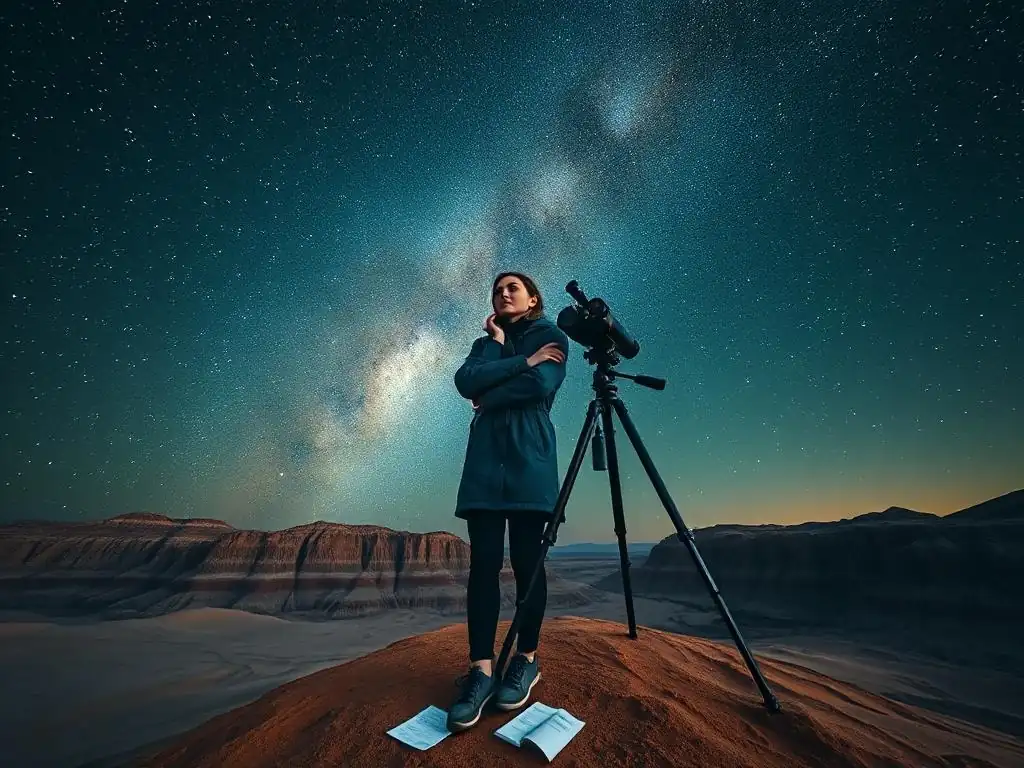
Welcome to WomenInScienceHistory.com!
Delve into the untold stories of remarkable women who shaped the scientific landscape. We're thrilled to explore the lives and legacies of pioneering female scientists. But what does it truly mean to thrive in astronomy today? Prepare to be inspired as we uncover the personal journeys and unwavering resilience of 21st Century Women Astronomers – a testament to their dedication in reaching for the stars and overcoming the challenges of modern space science. Curious to know how they're changing the face of astronomy? Read on!
- Introduction: Celebrating the Resilience of Women in 21st Century Astronomy
- Overcoming Obstacles: Common Challenges Faced by Contemporary Women Astronomers
- Case Studies: Profiles of Resilient 21st Century Women Astronomers
- The Impact of Resilient Women Astronomers on the Field
- Strategies for Promoting Resilience and Supporting Women in Astronomy
- The Future of Women in Astronomy: A Vision of Progress and Inclusion
- Conclusion: The Enduring Legacy of 21st Century Women Astronomers' Resilience
-
Frequently Asked Questions
- How does WomenInScienceHistory.com define "Resilience" in the context of 21st Century Women Astronomers?
- What are some common challenges faced by 21st Century Women Astronomers, as highlighted by WomenInScienceHistory.com?
- Why does WomenInScienceHistory.com focus specifically on 21st Century Women Astronomers?
- How does WomenInScienceHistory.com hope to impact the future of women in astronomy?
- What kind of impact does the website hope to have on the perception of women in science?
- Final Reflection: Illuminating Resilience
- Ignite Your Inner Astronomer: Journey Beyond the Article!
Introduction: Celebrating the Resilience of Women in 21st Century Astronomy
The vast expanse of the cosmos has always captivated humanity, driving curiosity and scientific inquiry. In the 21st century, the field of astronomy continues to push the boundaries of knowledge, from exoplanet discoveries to understanding the universe's earliest moments.
While the scientific landscape has evolved, the journey for women in this demanding discipline remains one often marked by unique challenges, making the concept of 21st Century Women Astronomers Resilience not just noteworthy, but essential to the progress of science itself. This article delves into the personal journeys of these pioneering women, highlighting their unwavering determination and the profound impact of their contributions.
Celebrating the resilience of women in astronomy is crucial, as their triumphs illuminate pathways for future generations and underscore the importance of diversity in scientific thought. Despite significant strides in gender equality, women astronomers in the 21st century still navigate systemic biases and societal expectations that can hinder their careers. Their stories of perseverance, innovation, and leadership offer invaluable lessons, demonstrating how sheer grit and an unyielding passion for the stars can overcome formidable obstacles, ultimately enriching our understanding of the universe.
Overcoming Obstacles: Common Challenges Faced by Contemporary Women Astronomers
Gender Bias in Astronomy: A Persistent Barrier
Despite advances in equity, gender bias remains a subtle yet pervasive barrier for women in astronomy, impacting career progression and recognition. Studies from the early 2010s, for instance, indicated that female scientists often face lower rates of success in grant applications or publication submissions compared to their male counterparts, even when blinded reviews are not consistently applied. This can manifest as unconscious bias in hiring committees, peer reviews, and even in the allocation of telescope time, subtly disadvantaging women who are striving to conduct groundbreaking research.
Moreover, women astronomers frequently report experiencing microaggressions, being overlooked for leadership roles, or facing skepticism regarding their expertise. A survey conducted around 2015 by a major astronomical society revealed that approximately 40% of women in astronomy had experienced some form of harassment or discrimination within their careers. These experiences, though sometimes subtle, contribute to a cumulative burden, making the display of 21st Century Women Astronomers Resilience a continuous, necessary act in their professional lives.
Balancing Work and Life: The Unique Challenges for Women in STEM
The demands of an astronomical career, which often include long hours, remote observations, and frequent travel for conferences and collaborations, present unique work-life balance challenges, particularly for women. Societal expectations often place a disproportionate burden of family responsibilities, such as childcare and elder care, on women. This can lead to difficult choices between career advancement and personal life, especially during critical career stages like post-doctoral research or tenure-track positions.
Academic institutions, while making efforts, still often lack sufficient support structures like on-site childcare, flexible work arrangements, or adequate parental leave policies that truly accommodate the unique needs of female scientists. This disparity can result in women taking longer to achieve career milestones or, in some cases, leaving the field altogether. The ability of 21st Century Women Astronomers to navigate these complex personal and professional landscapes while continuing to contribute significantly to their field is a testament to their profound resilience.
Lack of Mentorship: The Importance of Female Role Models in Astronomy
Historically, the underrepresentation of women in senior academic and leadership positions within astronomy has led to a scarcity of female mentors for aspiring women scientists. While mentorship is crucial for career development in any field, it is particularly vital in STEM, where navigating complex research environments and academic politics can be daunting. The absence of visible female role models can make it difficult for younger women to envision themselves in senior positions, or to find someone who understands the specific challenges they might face.
Informal networks and mentorship opportunities, which often arise organically, can also be less accessible to women dueating to historical exclusion from certain social circles or professional gatherings. This gap can leave emerging women astronomers feeling isolated or lacking the guidance needed to overcome career hurdles. The proactive efforts of many 21st Century Women Astronomers to establish formal and informal mentorship programs are crucial for fostering a more inclusive environment and ensuring that future generations benefit from the collective wisdom and experience of those who have paved the way.
Case Studies: Profiles of Resilient 21st Century Women Astronomers
Vera Rubin: Unveiling Dark Matter and Championing Women in Science
Early Life and Passion for Space Science
Vera Rubin (1928-2016) harbored an early and unwavering passion for the cosmos, a curiosity that defied the gender norms of her time. From a young age, she was fascinated by stars and planets, building her own telescope out of cardboard and studying celestial maps. Despite being told by a high school teacher to avoid science and become an artist, Rubin pursued her dream, earning her undergraduate degree in astronomy from Vassar College in 1948.
Her journey into graduate studies, however, highlighted the pervasive challenges women faced; she was initially denied admission to Princeton's graduate astronomy program solely because of her gender, a policy that remained until 1975. Undeterred, she enrolled at Cornell and later Georgetown University, demonstrating remarkable early resilience.
Her doctoral research at Georgetown, completed in 1954 under George Gamow, focused on the peculiar motions of galaxies, a topic considered highly controversial at the time. Rubin’s early work suggested that galaxies were not simply expanding uniformly but also rotating, and that there was significant mass unaccounted for. This nascent insight, while not fully understood at the time, laid the groundwork for her later revolutionary discoveries and underscored her independent thinking in a field resistant to new ideas.
Navigating a Male-Dominated Field: Limited access to telescopes, exclusion from prestigious institutions.
Rubin's career was marked by persistent challenges in a field heavily dominated by men, necessitating immense 21st Century Women Astronomers Resilience. In the early 1960s, she famously faced exclusion from the Palomar Observatory, which did not have women's restrooms, symbolizing the broader institutional barriers she encountered.
She often had to book telescope time through male colleagues or secure it through unconventional means, a stark reminder of the systemic biases that limited access for female researchers. Her experiences at the Carnegie Institution of Washington, where she worked for decades, though supportive in many ways, still saw her navigating a landscape where women were a distinct minority in research roles.
Even as her groundbreaking work gained traction, Rubin was often overlooked for the highest accolades. Despite her undeniable contributions, she was never awarded the Nobel Prize, a decision that many in the scientific community consider a significant oversight. This persistent lack of formal recognition for her seminal discovery, while simultaneously being lauded by her peers for her scientific rigor, exemplified the enduring recognition bias that many women in science, even those whose work has spanned into the 21st century, continue to face.
Groundbreaking Research and Contributions to Astronomy: Discovery of dark matter, challenging existing cosmological models.
Vera Rubin's most profound contribution to astronomy was her meticulous observation and subsequent discovery of compelling evidence for dark matter. Beginning in the 1970s, working with Kent Ford, she systematically studied the rotation curves of spiral galaxies, particularly the Andromeda galaxy. Her precise measurements showed that stars at the outer edges of these galaxies were orbiting much faster than predicted by the visible matter alone, defying Newtonian physics. This suggested that an invisible, non-luminous mass, which she termed "dark matter," must be present, exerting a gravitational pull that kept these galaxies from flying apart.
Her findings provided the most robust observational evidence for the existence of dark matter, a concept first theorized by Fritz Zwicky in the 1930s but largely dismissed. Rubin's work fundamentally altered cosmological models, demonstrating that approximately 27% of the universe's mass-energy content is comprised of this mysterious substance, far outweighing ordinary visible matter. Her persistent and rigorous data collection, often conducted in isolation from mainstream astronomical thought, revolutionized our understanding of galactic dynamics and the composition of the universe, setting the stage for future research into dark matter’s nature in the 21st century.
Lessons in Resilience: Persistence, unwavering belief in her research, advocacy for women in STEM.
Vera Rubin's career serves as a powerful testament to the power of persistence and an unwavering belief in one's research, embodying the spirit of 21st Century Women Astronomers Resilience. Despite facing gender discrimination, skepticism from peers, and a lack of access to resources, she steadfastly pursued her scientific inquiries. Her conviction in her anomalous galaxy rotation curves, even when they challenged established paradigms, ultimately led to one of the most significant discoveries in modern cosmology. She famously stated, "Science is not a game for the faint of heart; it’s a game for the tenacious."
Beyond her scientific achievements, Rubin was a passionate advocate for women in science, actively working to break down barriers for future generations. She served on numerous committees aimed at promoting diversity and inclusion, and she made a conscious effort to mentor and support young female astronomers. Her legacy extends beyond dark matter; it encompasses a profound commitment to making the scientific community more equitable, ensuring that the path she navigated with such difficulty would be smoother for those who followed, inspiring astronomers well into the 21st century.
Jocelyn Bell Burnell: Discovering Pulsars and Overcoming Recognition Bias
From Early Curiosity to Scientific Breakthroughs
Jocelyn Bell Burnell's (b. 1943) journey into astronomy began with an innate curiosity and a strong foundation in physics, despite facing a school system that initially barred girls from studying science. Her determination led her to defy these norms, eventually earning a physics degree from the University of Glasgow in 1965. Her scientific breakthrough occurred during her doctoral studies at the University of Cambridge, where she was tasked with building and operating a large radio telescope to study quasars, rapidly varying radio sources. This seemingly routine task would lead to one of the 20th century's most significant astronomical discoveries.
In 1967, while meticulously analyzing miles of paper charts from the newly built Interplanetary Scintillation Array, Bell Burnell noticed a peculiar, repeating signal – a "scruff" that didn't fit the expected pattern of quasars or terrestrial interference. This tiny, persistent anomaly, occurring every 1.3 seconds, was initially dubbed "LGM-1" (Little Green Men 1) in jest, reflecting the unprecedented nature of the signal. Her rigorous attention to detail and refusal to dismiss the unusual allowed her to identify what would later be confirmed as the first radio pulsar, a rapidly rotating neutron star.
Overcoming Institutional Barriers and Bias: Initial lack of recognition for pulsar discovery, navigating a male-dominated research environment.
The discovery of pulsars was a monumental event in astronomy, yet Jocelyn Bell Burnell's role in it was largely overlooked in the initial recognition. In 1974, the Nobel Prize in Physics was awarded to her supervisor, Antony Hewish, and Martin Ryle for their pioneering work in radio astrophysics and the discovery of pulsars.
While Hewish played a crucial role in the project, the decision to exclude Bell Burnell, who first detected and meticulously analyzed the signals, sparked widespread debate and controversy within the scientific community, highlighting a significant instance of recognition bias. This omission became a poignant example of the institutional barriers and biases that women in science, including 21st Century Women Astronomers, have historically faced.
Despite the initial lack of formal recognition, Bell Burnell navigated the male-dominated research environment with grace and continued dedication to her scientific pursuits. She went on to have a distinguished career, holding prestigious positions at the Royal Observatory Edinburgh, the Open University, and the University of Bath, and serving as President of the Royal Astronomical Society. Her steadfast commitment to science, even in the face of such a prominent oversight, powerfully illustrates 21st Century Women Astronomers Resilience and her enduring impact as an advocate for equity.
Significant Contributions to Radio Astronomy: Discovery of pulsars, revolutionizing our understanding of neutron stars.
Jocelyn Bell Burnell's discovery of pulsars fundamentally reshaped our understanding of stellar evolution and the extreme physics of neutron stars. Pulsars, now known to be rapidly rotating, highly magnetized neutron stars that emit beams of electromagnetic radiation, were an entirely new class of celestial objects. Their incredible rotational stability and precise timing made them invaluable cosmic clocks, enabling breakthroughs in fields ranging from gravitational wave detection to tests of general relativity. For instance, the Hulse-Taylor binary pulsar system, discovered in 1974, provided the first indirect evidence for gravitational waves, a prediction of Einstein's theory of general relativity.
Her meticulous work in identifying these signals opened up a new branch of astrophysics – pulsar astronomy – which continues to be a vibrant area of research in the 21st century. The study of pulsars has yielded insights into the densest forms of matter, the behavior of matter under extreme magnetic fields, and the formation of black holes. Bell Burnell's initial observation was not just a detection; it was a testament to her observational skill and analytical rigor that paved the way for countless subsequent discoveries and theories, truly revolutionizing radio astronomy.
Resilience Strategies and Personal Insights: Focus on the science, continued contributions to astronomy, advocacy for inclusivity.
Jocelyn Bell Burnell's response to the Nobel Prize omission epitomizes 21st Century Women Astronomers Resilience. Rather than dwelling on the injustice, she chose to focus on the scientific impact of her discovery and her ongoing contributions to astronomy. She often expressed philosophical acceptance, stating that "it's the supervisor who gets the credit" in such large collaborations, though she also acknowledged the systemic issues at play. Her personal insights highlight a profound dedication to the pursuit of knowledge over personal accolades, a perspective that has inspired many.
In recent years, Bell Burnell has become a vocal advocate for inclusivity and diversity in science, particularly for women and underrepresented groups. In 2018, she was awarded the Special Breakthrough Prize in Fundamental Physics for her discovery of pulsars, an award that came with a significant monetary prize.
She famously donated the entire £2.3 million prize to the Institute of Physics to fund grants for students from underrepresented groups to pursue physics degrees, thereby actively working to dismantle the very barriers she faced. Her actions demonstrate a powerful commitment to paying it forward, ensuring that her legacy is not only scientific but also deeply humanitarian, fostering resilience in the next generation.
Andrea Ghez: Probing the Galactic Center and Inspiring Future Scientists
Passion for Astronomy and Early Influences
Andrea Ghez (b. 1965) developed an early fascination with the night sky, driven by a childhood dream of becoming an astronaut. This initial interest evolved into a profound passion for astronomy, fueled by a natural aptitude for mathematics and physics. She pursued her undergraduate degree in physics at MIT, graduating in 1987, and then her Ph.D. in astrophysics from Caltech in 1992. Her doctoral research focused on understanding the formation of young stars, which required developing innovative observational techniques to peer through dense clouds of gas and dust.
During her graduate studies, Ghez was exposed to the cutting edge of infrared astronomy, a field that would become central to her groundbreaking work. Her early influences included pioneering figures in astrophysics and the rigorous academic environments of MIT and Caltech, which instilled in her a commitment to precision and innovation. This blend of early curiosity and a robust scientific education set the stage for her ambitious quest to unravel the mysteries at the heart of our own galaxy.
Challenges Faced in Research and Academia: Securing funding for innovative research, developing advanced observational techniques.
Andrea Ghez's career, particularly her work on the Galactic Center, has been characterized by immense technical and academic challenges, requiring significant 21st Century Women Astronomers Resilience. A primary hurdle was securing consistent, substantial funding for her ambitious research program, which relied on developing and deploying cutting-edge adaptive optics technology. This technology, essential for counteracting the blurring effects of Earth's atmosphere, was in its nascent stages when Ghez began her work, requiring massive investment and continuous innovation. Convincing funding bodies of the feasibility and importance of such a long-term, high-risk endeavor was a constant battle.
Furthermore, the development of these advanced observational techniques itself presented formidable scientific and engineering obstacles. Ghez and her team at UCLA’s Galactic Center Group had to push the limits of telescope capabilities, refine adaptive optics systems, and devise sophisticated data analysis methods to extract meaningful information from incredibly faint signals. This iterative process of technological development and scientific discovery spanned decades, demanding unwavering dedication, collaboration, and a deep well of perseverance to overcome repeated technical setbacks and refine their methodology.
Contributions to Infrared Astronomy and Public Outreach: Direct observation of stars orbiting the supermassive black hole at the Galactic Center.
Andrea Ghez is best known for her groundbreaking work providing the most definitive evidence for the existence of a supermassive black hole at the center of our Milky Way galaxy, known as Sagittarius A* (Sgr A*). Using advanced infrared adaptive optics at the Keck Observatory in Hawaii, Ghez and her team meticulously tracked the orbits of stars extremely close to the Galactic Center over more than two decades. Their observations revealed that one star, designated S2, completes an elliptical orbit around Sgr A* in just 16 years, moving at speeds up to 3% of the speed of light.
These precise orbital measurements allowed Ghez to calculate the mass of the invisible object at the center, confirming it to be approximately 4 million times the mass of our Sun, confined within a region no larger than our solar system. This provided irrefutable proof that Sgr A* is indeed a supermassive black hole, a discovery for which she shared the Nobel Prize in Physics in 2020.
Beyond her research, Ghez is also a dedicated advocate for public outreach, regularly engaging with the media and giving public lectures to share the wonders of astronomy and inspire future scientists, embodying the spirit of 21st Century Women Astronomers Resilience.
The Power of Perseverance: Continued innovation in observational techniques, dedication to public outreach and mentorship.
Andrea Ghez’s career exemplifies the profound power of perseverance in scientific discovery. Her decades-long commitment to observing the Galactic Center, despite the immense technical challenges and the slow, incremental nature of astronomical observations, ultimately led to a Nobel-winning breakthrough. She consistently pushed the boundaries of adaptive optics technology, transforming it from a nascent concept into a powerful tool that revolutionized ground-based astronomy. This continuous innovation, often requiring years of iterative development and refinement, is a testament to her unyielding dedication and the resilience required to pursue high-risk, high-reward research.
Beyond her research, Ghez is a vocal proponent of public engagement and a dedicated mentor to aspiring scientists, particularly women. She frequently emphasizes the importance of hard work, curiosity, and embracing challenges. Her visibility as a Nobel laureate and a leading figure in astrophysics provides a powerful role model, demonstrating to young individuals that a career in cutting-edge science is attainable. Her commitment to sharing her passion and knowledge underscores her belief in nurturing the next generation of astronomers, reinforcing the idea that 21st Century Women Astronomers Resilience is not just about personal triumph, but about collective progress.
The Impact of Resilient Women Astronomers on the Field

Advancing Astronomical Knowledge Through Diverse Perspectives
The presence and contributions of resilient women astronomers have undeniably enriched and advanced astronomical knowledge by introducing diverse perspectives and approaches to research. Historically, science has suffered from a lack of diversity, leading to potential blind spots or narrow interpretations of data. Women often bring unique insights, ask different questions, and approach problem-solving with varied methodologies, which can lead to novel discoveries. For example, the meticulous, long-term observational approach championed by Vera Rubin, or Jocelyn Bell Burnell's keen eye for anomalous data, exemplify how different cognitive styles can lead to breakthroughs.
This diversity of thought fosters a more comprehensive and robust scientific understanding. When a research team is composed of individuals from varied backgrounds and experiences, it is more likely to challenge assumptions, identify overlooked aspects of a problem, and develop more creative solutions. The increasing representation of women in astronomy, driven by their individual and collective resilience, ensures that the complex mysteries of the universe are approached from a wider array of viewpoints, ultimately leading to more accurate and complete scientific models.
Creating More Inclusive and Equitable Environments in Astronomy
The sustained presence and advocacy of resilient women astronomers have been instrumental in pushing for more inclusive and equitable environments within the astronomical community. Through their visibility, their leadership in professional organizations, and their willingness to speak out against bias, they have driven significant cultural shifts. For instance, the growing number of women in leadership roles, such as observatory directors or department chairs, sends a clear message that talent and merit, irrespective of gender, are valued. This shift is gradual, but tangible.
Furthermore, their efforts have led to concrete policy changes, such as the implementation of anti-harassment policies at conferences, the development of more equitable parental leave policies, and the adoption of double-blind review processes for grant applications and publications. While much work remains, the collective 21st Century Women Astronomers Resilience has transformed the conversation around diversity, equity, and inclusion from a peripheral concern to a central tenet of modern scientific practice, making astronomy a more welcoming and fair field for all.
Inspiring Future Generations of Women in STEM Fields
Perhaps one of the most profound impacts of resilient women astronomers is their power to inspire future generations of women to pursue careers in STEM. Visible role models are critical for young girls and women contemplating a path in science. When they see successful women like Andrea Ghez winning Nobel Prizes, or hear stories of perseverance from figures like Jocelyn Bell Burnell, it demystifies the field and makes it seem attainable. These narratives challenge outdated stereotypes about who can be a scientist and demonstrate that intelligence, passion, and resilience are the true prerequisites.
Educational initiatives, public outreach events, and media portrayals of these women further amplify their inspiring influence. By highlighting their achievements and the journeys of 21st Century Women Astronomers Resilience, these efforts provide tangible examples of success, encouraging young minds to explore their scientific curiosities without limitations. This ripple effect is essential for building a diverse and robust scientific workforce that can tackle the complex challenges of the future, ensuring that the pipeline of talent remains strong for generations to come.
Strategies for Promoting Resilience and Supporting Women in Astronomy
Mentorship Programs: Fostering Growth and Confidence
Structured mentorship programs are pivotal in fostering resilience and promoting the growth of women in astronomy. These programs pair experienced female astronomers with early-career scientists, providing invaluable guidance on navigating academic politics, securing funding, and balancing work-life demands. A key benefit is the opportunity to learn from someone who has already successfully navigated similar challenges, offering practical advice and emotional support that builds confidence. For example, many universities and astronomical societies have established formal mentorship networks, often including peer-to-peer mentoring groups, which create a safe space for sharing experiences and strategies.
Beyond formal structures, informal mentorship—where senior women actively reach out and support emerging talent—is equally crucial. These relationships often provide the most personalized advice and can lead to long-lasting professional connections. By ensuring that every woman entering the field has access to a supportive network of mentors, institutions can significantly enhance their capacity for 21st Century Women Astronomers Resilience, helping them overcome obstacles and thrive in their careers.
Addressing Gender Bias and Promoting Equality in Academia
Actively addressing gender bias and promoting equality requires systemic changes within academic institutions and research organizations. This includes implementing and enforcing strict anti-harassment policies, conducting regular unconscious bias training for hiring committees and faculty, and ensuring transparent and equitable promotion processes. For instance, some departments have adopted a "Rooney Rule" approach, ensuring that at least one qualified female candidate is interviewed for every senior position, to broaden the talent pool and challenge traditional hiring patterns.
Furthermore, promoting pay equity and providing adequate resources, such as equitable access to research facilities and competitive startup packages, are essential. Institutions must also critically review their tenure and promotion criteria to ensure they do not inadvertently penalize women who might take parental leave or have non-traditional career paths. These proactive measures are fundamental to dismantling systemic barriers and creating an environment where 21st Century Women Astronomers can achieve their full potential without facing undue discrimination.
Creating Supportive Networks for Women in Space Science
Building and strengthening supportive networks specifically for women in space science is vital for fostering a sense of community and shared experience. These networks can take many forms, from professional organizations like the American Astronomical Society's Committee on the Status of Women in Astronomy, to informal online forums, and local university groups. They provide platforms for women to connect, share resources, collaborate on research, and offer mutual support in navigating common challenges.
These networks are crucial for combating feelings of isolation that can arise in male-dominated fields and for providing a sense of belonging. They facilitate the exchange of practical advice on topics such as grant writing, negotiation, and career transitions, and also offer emotional support and encouragement. By fostering these strong, supportive communities, we empower 21st Century Women Astronomers to draw strength from one another, collectively reinforcing their resilience and driving forward the progress of space science.
The Future of Women in Astronomy: A Vision of Progress and Inclusion
Continued Efforts to Break Down Barriers and Promote Diversity
The future of women in astronomy is predicated on continued, concerted efforts to dismantle remaining barriers and vigorously promote diversity at all levels of the field. This involves not only addressing overt discrimination but also tackling subtle biases embedded in institutional structures and cultural norms.
Initiatives must focus on increasing representation in leadership roles, ensuring equitable access to resources like telescope time and funding, and creating truly inclusive academic environments where all voices are heard and valued. It also means actively recruiting and supporting women from underrepresented minority groups within STEM, recognizing that intersectional approaches are essential for true equity.
Furthermore, continuous monitoring and evaluation of diversity and inclusion programs are critical to ensure their effectiveness. Regular climate surveys, data collection on hiring and promotion rates, and transparent reporting can help identify persistent disparities and inform targeted interventions. The ongoing commitment to breaking down these barriers is essential for nurturing the 21st Century Women Astronomers Resilience and ensuring that the astronomical community reflects the rich diversity of human talent.
The Importance of Celebrating the Achievements of Women Astronomers
Celebrating the achievements of women astronomers is not merely an act of recognition; it is a strategic imperative for the future of the field. Highlighting their groundbreaking discoveries, their leadership, and their personal journeys of resilience provides powerful role models for aspiring scientists. Publicizing their successes through media, educational materials, and awards helps to normalize the presence of women in science and challenges outdated stereotypes. For example, the increasing visibility of female Nobel laureates in physics, like Andrea Ghez, sends a clear message that women are at the forefront of scientific discovery.
These celebrations also serve to correct historical omissions, ensuring that the contributions of pioneers like Vera Rubin and Jocelyn Bell Burnell are fully acknowledged and appreciated for their profound impact. By actively promoting the narratives of 21st Century Women Astronomers Resilience, we inspire confidence in young women, demonstrate the value of diverse perspectives, and cultivate a culture where scientific excellence is recognized regardless of gender.
Empowering the Next Generation of Female Space Scientists
Empowering the next generation of female space scientists is crucial for sustaining the momentum towards a truly equitable and innovative future in astronomy. This empowerment begins early, through STEM education initiatives that encourage girls to pursue science and mathematics, fostering their natural curiosity about the universe. It continues through undergraduate and graduate programs that provide robust academic support, mentorship opportunities, and a welcoming intellectual environment. Providing scholarships, research grants, and flexible career pathways can significantly reduce financial and systemic barriers.
Ultimately, empowering means giving young women the tools, confidence, and support they need to thrive, innovate, and lead. It involves creating a pipeline of talent that is not only diverse but also equipped with the deep well of 21st Century Women Astronomers Resilience needed to navigate the challenges of a demanding scientific career. By investing in and championing these future leaders, we ensure that the cosmic frontier will be explored with the fullest breadth of human ingenuity and perspective.
Conclusion: The Enduring Legacy of 21st Century Women Astronomers' Resilience
The journeys of 21st Century Women Astronomers, marked by profound resilience, have not only pushed the boundaries of our cosmic understanding but have also fundamentally transformed the landscape of science itself. From meticulously charting the invisible dark matter with Vera Rubin, to detecting the first pulsars with Jocelyn Bell Burnell, and meticulously unveiling the supermassive black hole at our galaxy's core with Andrea Ghez, these women have demonstrated an unyielding commitment to scientific truth in the face of significant obstacles. Their stories are powerful narratives of perseverance, innovation, and an unwavering passion for the stars.
The enduring legacy of 21st Century Women Astronomers Resilience extends far beyond their individual discoveries. It encompasses the profound impact they have had on fostering more inclusive environments, inspiring countless young minds, and proving that diversity is not just a moral imperative but a scientific strength. As we look to the future, the continued celebration and support of women in astronomy will be paramount, ensuring that the universe's greatest mysteries are explored by the brightest and most diverse minds, paving the way for a future where every aspiring astronomer can reach for the stars without limitation.
Frequently Asked Questions
How does WomenInScienceHistory.com define "Resilience" in the context of 21st Century Women Astronomers?
Resilience, for these astronomers, refers to their ability to overcome systemic barriers and personal setbacks within a field traditionally dominated by men. It highlights their perseverance in the face of adversity.
What are some common challenges faced by 21st Century Women Astronomers, as highlighted by WomenInScienceHistory.com?
These challenges often include gender bias, lack of mentorship opportunities, and difficulties balancing work and family responsibilities in a demanding field like astronomy. The site details personal accounts of these struggles.
Why does WomenInScienceHistory.com focus specifically on 21st Century Women Astronomers?
The focus is on providing contemporary examples of women succeeding in astronomy. By showcasing current role models, the website aims to inspire young women to pursue careers in science and technology.
How does WomenInScienceHistory.com hope to impact the future of women in astronomy?
The website aims to increase representation of women in astronomy and other scientific fields. By highlighting their contributions, it seeks to challenge stereotypes and promote inclusivity.
What kind of impact does the website hope to have on the perception of women in science?
The website seeks to correct historical omissions and celebrate the achievements of women scientists. The goal is to foster a more equitable and inclusive scientific community for future generations.
Final Reflection: Illuminating Resilience
The stories shared within this article, detailing the journeys of 21st Century Women Astronomers, resonate profoundly in a world still grappling with issues of equity and representation. These narratives are not just historical accounts; they are living testaments to the power of perseverance in the face of systemic challenges, offering invaluable lessons for aspiring scientists and anyone striving to overcome adversity.
The impact of these women extends far beyond their scientific contributions. Their resilience serves as a beacon, inspiring future generations to pursue their passions relentlessly, regardless of perceived limitations. We are all stardust, and we should all be shining brightly.
This quote, often attributed to various sources, perfectly encapsulates the spirit of these astronomers, reminding us that our potential is limitless and that our individual journeys contribute to the collective brilliance of humanity.
As you reflect on these remarkable stories, consider how you can embody the resilience of these women in your own life. What challenges are you facing, and how can you draw strength from their experiences? Let their unwavering commitment to their dreams inspire you to reach for your own stars, knowing that your journey, too, can illuminate the path for others.
Ignite Your Inner Astronomer: Journey Beyond the Article!
Thank you for exploring these inspiring stories of resilience! We hope you’ve discovered a renewed sense of possibility from the journeys of these remarkable women. Now, let's transform that inspiration into action.
Here are a few steps you can take to continue your exploration:
- Embrace the cosmos: Start a weekly stargazing journal. Record your observations, reflections, and newfound appreciation for the night sky, just like the women astronomers you've read about.
- Share the spark: Spark curiosity in others by sharing this article with your friends, family, or on social media. Let’s illuminate more paths in science!
- Unearth hidden figures: Delve deeper by researching other unsung heroines in science history. Discover more at WomenInScienceHistory.com
What small step will you take this week to bring more wonder and discovery into your own life?