
Lillian Gilbreth's Kitchen Revolution: Designing Efficiency with the FootPedal Trash Can

Welcome to WomenInScienceHistory.com!
Dive into the fascinating world where innovation meets perseverance as we celebrate the remarkable contributions of women in science. Ever wondered how a simple foot pedal on your trash can could be a testament to groundbreaking efficiency? This week, we explore Lillian Gilbreth's kitchen efficiency tips and her ingenious designs that revolutionized household spaces. Prepare to be inspired by her story and discover how her engineering prowess continues to shape our lives today. Curious to learn more? Let's step into Lillian Gilbreth's kitchen and uncover the secrets of her efficiency revolution!
- Introduction: Lillian Gilbreth - A Pioneer of Kitchen Efficiency and Ergonomics
- The Gilbreth Philosophy: Applying Scientific Management to the Home
- Lillian Gilbreth's Kitchen Design Innovations: A Focus on Efficiency
- The Foot-Pedal Trash Can: A Simple Invention, a Revolutionary Impact
- Lillian Gilbreth's Kitchen Efficiency Tips: Practical Advice for Modern Homes
- The Legacy of Lillian Gilbreth: Inspiring Future Generations of Engineers and Home Economists
- Conclusion: Celebrating Lillian Gilbreth's Kitchen Revolution and Her Footprint on Women in Science History
-
Frequently Asked Questions
- What was Lillian Gilbreth's main contribution to kitchen design?
- How did Lillian Gilbreth use time and motion studies in the kitchen?
- What is the significance of the foot-pedal trash can in relation to Gilbreth's work?
- What challenges did Lillian Gilbreth face as a woman in a male-dominated field?
- Why is it important to remember Lillian Gilbreth's contributions to kitchen design and scientific management?
- Final Reflection: Stepping into a More Efficient Future
- Redesign Your Life: Start with Your Kitchen!
Introduction: Lillian Gilbreth - A Pioneer of Kitchen Efficiency and Ergonomics
Highlighting Lillian Gilbreth's Contributions to Engineering and Home Management
Lillian Moller Gilbreth stands as a towering figure in the history of industrial engineering and organizational psychology, yet her profound impact on the domestic sphere, particularly the kitchen, is often less celebrated. As one of the earliest women to earn a Ph.D. in Management, which she received from Brown University in 1915, Gilbreth brought a rigorous scientific approach to fields traditionally dominated by men, and uniquely, to the daily lives of women. Her work, initially focused on factory efficiency alongside her husband Frank Gilbreth, seamlessly transitioned into optimizing the home, turning mundane chores into subjects of scientific inquiry.
Her pioneering efforts extended beyond academic theory; Gilbreth consulted for major corporations such as General Electric and Johnson & Johnson, applying her principles of time and motion studies to improve workplace efficiency. Simultaneously, she dedicated herself to understanding and alleviating the physical burdens on homemakers, recognizing the kitchen as a prime environment for applying her expertise. By analyzing the movements involved in cooking, cleaning, and organizing, she sought to reduce fatigue and wasted effort, thereby elevating the quality of life for millions.
The Overlooked Genius of Women in Science History: Lillian Gilbreth's Story
Lillian Gilbreth’s story is a compelling testament to the often-overlooked genius of women in science history. Operating in an era when women were largely excluded from scientific and engineering professions, she not only carved out a significant career but also redefined the scope of "engineering" itself to include the home. Her work on Lillian Gilbreth kitchen efficiency tips brought scientific management into an intimate, personal space, a concept revolutionary for its time.
Her contributions, while seemingly domestic, were deeply scientific and far-reaching. Gilbreth's dedication to improving the lives of homemakers through ergonomic design and efficient practices ultimately saved countless hours of labor, allowing women more time for personal pursuits, education, or leisure. Her narrative underscores the importance of acknowledging the diverse ways women have contributed to scientific and technological advancement, challenging traditional notions of what constitutes valuable scientific endeavor.
The Gilbreth Philosophy: Applying Scientific Management to the Home
Frank and Lillian Gilbreth's Time and Motion Studies: The Foundation of Efficiency
The bedrock of Lillian Gilbreth's work, both in industry and the home, was the innovative methodology of time and motion studies developed with her husband, Frank Gilbreth. This scientific approach involved meticulously analyzing every step and movement required to complete a task, with the aim of identifying and eliminating wasted effort and unnecessary motions. They famously broke down tasks into 18 fundamental motions, which they termed "therbligs" (Gilbreth spelled backward, with 'th' transposed), providing a universal language for analyzing human work.
A classic example of their industrial application involved bricklaying. Frank Gilbreth observed traditional bricklayers and, through meticulous motion study, devised a system that reduced the number of motions per brick from 18 to 4. This optimization dramatically increased productivity, enabling bricklayers to lay approximately 350 bricks per hour, a significant leap from the previous average of 120 bricks per hour. This foundational work provided the scientific rigor that Lillian would later apply to the equally complex environment of the home.
Beyond the Factory: Extending Efficiency Principles to the Kitchen
Lillian Gilbreth uniquely understood that the principles of efficiency and scientific management were not confined to the factory floor; they held immense potential for transforming the domestic sphere. She viewed the kitchen not merely as a room for cooking but as a "home workshop," a complex environment where numerous tasks were performed daily, often inefficiently and with considerable physical strain. Her vision was to apply the same analytical rigor used to optimize industrial production lines to everyday household chores.
She championed the idea that by studying the movements involved in tasks like dishwashing, food preparation, and laundry, significant improvements could be made in reducing fatigue and drudgery for homemakers. Her work demonstrated that a poorly designed kitchen could lead to excessive walking and bending, whereas an optimized layout could save miles of walking over a year. This extension of scientific principles to the home was a radical concept, positioning housework as a legitimate field for engineering innovation and directly influencing Lillian Gilbreth kitchen efficiency tips.
Lillian Gilbreth's Kitchen Design Innovations: A Focus on Efficiency
The U-Shaped Kitchen: Optimizing Workflow and Reducing Steps
Lillian Gilbreth's insights were instrumental in shaping modern kitchen layouts, with one of her most enduring contributions being the popularization and scientific validation of the U-shaped kitchen. This design creates a compact, efficient "work triangle" by positioning the three main workstations—the sink, stove, and refrigerator—in close proximity to each other. By minimizing the distances between these key areas, the U-shaped layout drastically reduces the number of steps and movements required during meal preparation and cleanup.
Studies conducted by Gilbreth and her contemporaries demonstrated that optimizing the work triangle could reduce walking distances in the kitchen by as much as 25% to 50% for typical meal preparation. For instance, a poorly designed kitchen might necessitate 150-200 steps to prepare a simple dinner, whereas an efficiently laid out U-shape could cut this down to 50-75 steps, significantly reducing physical exertion over time. This focus on minimizing motion and maximizing output became a cornerstone of Lillian Gilbreth kitchen efficiency tips.
The Importance of Counter Height and Storage Solutions in Gilbreth's Designs
Beyond the overall layout, Lillian Gilbreth meticulously analyzed the ergonomics of individual kitchen components, emphasizing the critical role of proper counter height and accessible storage solutions. She advocated for adjustable counter heights to accommodate users of different statures and to suit various tasks, from chopping vegetables to kneading dough, thereby reducing strain on the back and shoulders. While standard counter heights (around 36 inches) became common, Gilbreth championed the idea of customization and adaptability to the individual user.
Her designs prioritized accessible storage, moving away from deep, hard-to-reach cabinets. She promoted the use of pull-out shelves, revolving corner units, and wall-mounted cupboards that brought items within easy reach. Gilbreth also pioneered concepts like specific "landing zones" next to appliances for placing items directly after removal, further streamlining workflow. For example, she designed kitchens with adjustable sinks and countertops for individuals with disabilities, a groundbreaking step towards universal design in the home.
The Foot-Pedal Trash Can: A Simple Invention, a Revolutionary Impact
Origins of the Foot-Pedal Trash Can: Solving a Common Kitchen Problem
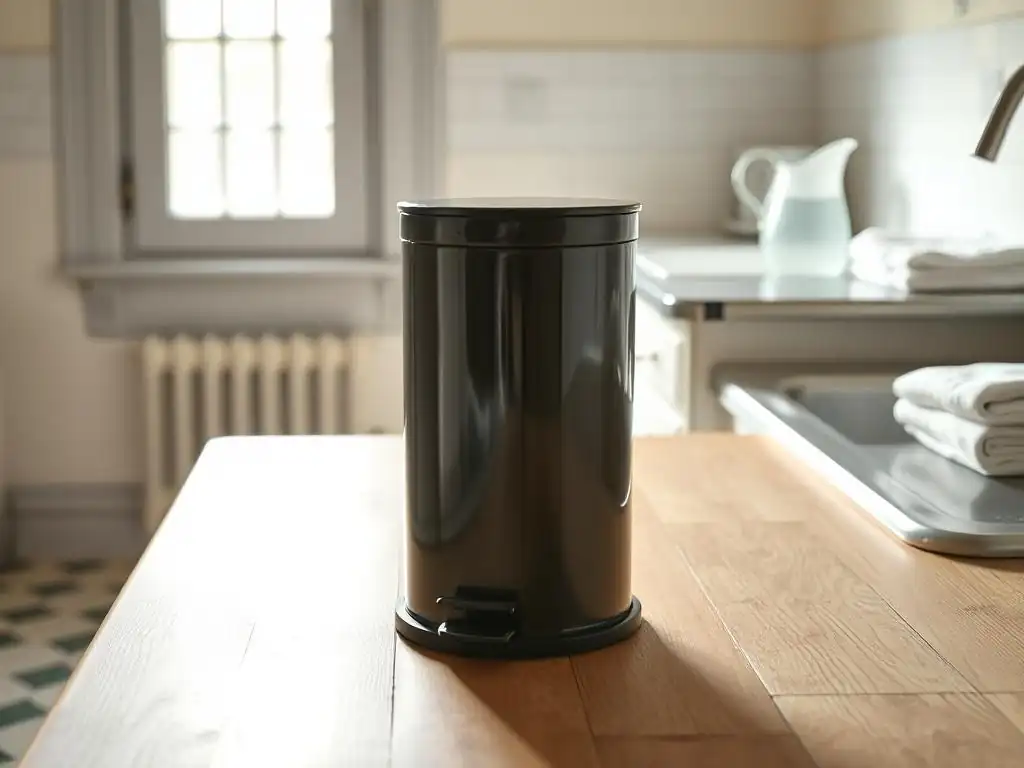
Among the numerous innovations that emerged from Lillian Gilbreth's relentless pursuit of efficiency and ergonomics in the home, the widespread adoption and refinement of the foot-pedal trash can stand out as a testament to her practical genius. Before its popularization, kitchen waste bins often required manual lifting of a lid, leading to unsanitary contact, unpleasant odors, and inconvenient interruptions during food preparation. Gilbreth recognized this seemingly minor inconvenience as a significant impediment to kitchen efficiency and hygiene.
While the precise moment of invention is debated, and early forms of pedal-operated bins existed, Lillian Gilbreth was instrumental in advocating for and integrating the foot-pedal trash can into her comprehensive kitchen designs. She championed its hands-free operation as a crucial element in creating a more fluid, sanitary, and less fatiguing kitchen workflow. This simple mechanism, which allows the user to open the lid with a gentle press of the foot, perfectly embodied her philosophy of eliminating unnecessary movements and improving user experience.
How the Foot-Pedal Trash Can Improved Kitchen Sanitation and Hygiene
The introduction and widespread adoption of the foot-pedal trash can brought about a significant revolution in kitchen sanitation and hygiene. By eliminating the need to touch the lid with hands, it drastically reduced the potential for cross-contamination, especially during food preparation when hands might be soiled or holding raw ingredients. This hands-free operation directly contributed to a cleaner and safer cooking environment.
Furthermore, the sealed nature of many foot-pedal bins, when properly closed, helps to contain odors more effectively than open bins or those with loosely fitting manual lids. This improvement in odor control enhanced the overall pleasantness of the kitchen space, making it a more inviting area for cooking and dining. The simple act of not having to touch a potentially germ-laden surface aligned perfectly with Lillian Gilbreth kitchen efficiency tips that prioritized both practical workflow and public health.
The Ergonomic Benefits: Reducing Strain and Promoting Better Posture
Beyond hygiene, the foot-pedal trash can offered substantial ergonomic benefits, directly addressing Lillian Gilbreth’s core concern for reducing fatigue and physical strain in the home. The hands-free operation meant users no longer had to bend down, stoop, or awkwardly maneuver a lid with their hands while disposing of waste. This seemingly minor change had a profound impact on repetitive movements.
By allowing individuals to remain upright or in a more natural posture while discarding items, the foot-pedal trash can significantly reduced strain on the back, wrists, and shoulders. Over the course of a day, week, or year, these small ergonomic improvements accumulate, contributing to a noticeable reduction in physical fatigue and discomfort for those spending considerable time in the kitchen. It exemplifies how Lillian Gilbreth kitchen efficiency tips were deeply rooted in human factors and physical well-being.
Lillian Gilbreth's Kitchen Efficiency Tips: Practical Advice for Modern Homes
Streamlining Meal Preparation: Gilbreth's Tips for Efficient Cooking
Lillian Gilbreth's foundational principles offer timeless Lillian Gilbreth kitchen efficiency tips for streamlining meal preparation in modern homes. One key piece of advice is to "batch" tasks and gather all necessary ingredients and tools before beginning to cook. For instance, instead of fetching items one by one as a recipe progresses, a Gilbreth-inspired approach involves pre-measuring spices, chopping vegetables, and having pots and pans within arm's reach before the cooking process even begins. This minimizes interruptions and unnecessary movements, creating a smoother workflow.
Another vital tip involves analyzing the sequence of tasks to ensure a logical flow. Gilbreth encouraged homemakers to think about the "path" of food from storage to preparation, cooking, and serving, minimizing trips between workstations. For example, if you often use a cutting board and knives near the sink, ensure your waste bin is conveniently located there too. By consciously grouping related activities and pre-positioning items, the time and effort spent on daily meal preparation can be significantly reduced.
Organizing Your Kitchen for Maximum Efficiency: Storage and Layout Solutions
Effective organization is paramount among Lillian Gilbreth kitchen efficiency tips. She advocated for the principle of "first-use, first-storage," meaning items used most frequently should be stored in the most accessible locations. For example, everyday dishes should be in lower cabinets or shelves near the dishwasher, while rarely used serving platters can reside on higher shelves. This approach eliminates wasted effort in searching for or reaching essential items.
Gilbreth also championed vertical storage solutions, like tiered shelves, drawer dividers, and wall-mounted racks, to maximize cupboard and drawer space and keep items visible and easily retrievable. Her emphasis on clear pathways and distinct zones for different activities—such as a dedicated baking zone with all necessary ingredients and tools, or a cleanup zone around the sink—ensures that each part of the kitchen serves its purpose efficiently. These layout solutions are designed to reduce clutter and promote a harmonious flow of work.
Lillian Gilbreth's Kitchen Workflow Optimization: Minimizing Movement and Maximizing Output
At the heart of Lillian Gilbreth kitchen efficiency tips is the optimization of workflow, focusing on minimizing unnecessary movement and maximizing output with the least effort. This means critically assessing every step taken and every motion made within the kitchen. The central concept of the "work triangle" (sink, stove, refrigerator) remains crucial, but Gilbreth's principles extend to the micro-level of individual tasks.
For example, when washing dishes, she would suggest placing the dish rack directly adjacent to the sink and the drying towels within an arm's reach to reduce bending and carrying. For food preparation, ensuring that the primary cutting surface is optimally lit and positioned near both the refrigerator for ingredient retrieval and the trash can for waste disposal creates a seamless workflow. By continuously analyzing and refining these small sequences of movements, Gilbreth’s methodology empowers individuals to transform their kitchens into highly productive and less fatiguing environments.
The Legacy of Lillian Gilbreth: Inspiring Future Generations of Engineers and Home Economists
Lillian Gilbreth's Impact on Modern Kitchen Design and Ergonomics
Lillian Gilbreth's pioneering work laid the groundwork for much of what we consider standard in modern kitchen design and ergonomics today. Her meticulous time and motion studies, initially applied to factories, were revolutionary when extended to the domestic sphere, transforming the kitchen from a place of drudgery into a scientifically optimized workspace. Her influence is evident in the ubiquitous work triangle concept, the emphasis on easily accessible storage solutions like pull-out drawers, and the thoughtful placement of appliances to reduce unnecessary movement.
Her advocacy for adjustable counter heights and specialized designs for individuals with disabilities also prefigured the principles of universal design, making kitchens more inclusive and functional for everyone. Many current kitchen design guidelines, including those promoted by industry organizations like the National Kitchen and Bath Association (NKBA), implicitly draw from Gilbreth's foundational work on workflow, human factors, and efficiency, ensuring that her legacy continues to shape the spaces where we prepare our meals.
Lillian Gilbreth's Publications: Shaping Management Theory and Home Economics
Lillian Gilbreth's intellectual contributions were not limited to practical designs; she was also a prolific writer whose publications profoundly shaped management theory and the nascent field of home economics. Her key works include Fatigue Study (1916), co-authored with Frank, which explored the psychological and physiological aspects of worker fatigue, and The Home-Maker and Her Job (1927), which applied scientific management principles directly to household tasks. She also authored Motion Study for the Handicapped (1933), demonstrating her commitment to making work accessible for all.
Through her over 50 books and articles, Gilbreth integrated psychology and human factors into the burgeoning field of industrial engineering, emphasizing the human element in efficiency. Her writings provided academic rigor to home economics, elevating it from a purely domestic pursuit to a scientific discipline focused on optimizing household management and improving quality of life. Her intellectual legacy continues to influence organizational psychology, industrial engineering, and consumer product design.
Women's Inventions Daily Life: The Enduring Relevance of Gilbreth's Principles
Lillian Gilbreth’s story is a powerful example of how women's inventions and scientific contributions, particularly those impacting daily life, have often been overlooked but possess enduring relevance. Her work on Lillian Gilbreth kitchen efficiency tips transformed the domestic landscape, making everyday tasks less burdensome and more productive. The foot-pedal trash can, while a seemingly simple invention, perfectly embodies her commitment to practical solutions rooted in scientific principles.
Her principles of efficiency, ergonomics, and human-centered design remain highly pertinent in contemporary society, from the layout of modern smart kitchens to the design of ergonomic office spaces and even the development of user-friendly software interfaces. Gilbreth's place in Women in Science History is secured not just by her academic achievements but by the tangible, lasting improvements she brought to the daily lives of millions, proving that scientific innovation can profoundly impact even the most intimate aspects of our existence.
Conclusion: Celebrating Lillian Gilbreth's Kitchen Revolution and Her Footprint on Women in Science History
Reflecting on Lillian Gilbreth's Lasting Contribution to Kitchen Efficiency and Design
Lillian Gilbreth’s "kitchen revolution" was nothing short of transformative, a testament to her unique ability to apply rigorous scientific methods to the seemingly mundane aspects of daily life. Her pioneering work in time and motion studies, when extended to the home, fundamentally reshaped how we conceive of and interact with our kitchens. From popularizing the efficient U-shaped layout to championing innovations like the foot-pedal trash can, Gilbreth’s contributions dramatically reduced physical strain, improved sanitation, and saved countless hours of labor for homemakers.
Her legacy extends far beyond specific inventions or layouts; it lies in establishing the kitchen as a legitimate subject for scientific inquiry and ergonomic design. The enduring relevance of Lillian Gilbreth kitchen efficiency tips underscores her profound and lasting impact on home management, demonstrating how a visionary engineer and psychologist could turn domestic drudgery into a field of scientific optimization, enriching the lives of millions.
Explore Further: Resources on Women in Engineering and Scientific Innovation
Lillian Gilbreth’s inspiring journey is but one chapter in the rich tapestry of women’s contributions to science and engineering throughout history. Her story highlights the often-unseen ingenuity and perseverance of women who, despite societal barriers, pushed the boundaries of knowledge and innovation. Understanding her profound impact on kitchen efficiency and design encourages us to delve deeper into the narratives of other remarkable women who have shaped our world. Their groundbreaking work, often overlooked in mainstream historical accounts, deserves recognition and celebration.
Frequently Asked Questions
What was Lillian Gilbreth's main contribution to kitchen design?
Lillian Gilbreth revolutionized kitchen design by applying scientific management principles to improve efficiency. Her focus was on reducing unnecessary movements and making tasks easier.
How did Lillian Gilbreth use time and motion studies in the kitchen?
She meticulously observed kitchen activities, using time and motion studies to identify inefficiencies. This analysis informed her redesigned layouts and appliance placements for optimal workflow.
What is the significance of the foot-pedal trash can in relation to Gilbreth's work?
The foot-pedal trash can is a direct result of her efforts to minimize bending and wasted motion. It's a simple but effective example of ergonomic design improving kitchen efficiency.
What challenges did Lillian Gilbreth face as a woman in a male-dominated field?
She faced significant challenges, including gender bias and a lack of recognition for her contributions. Her work was often overshadowed by her husband's, despite her equal, or even greater, involvement.
Why is it important to remember Lillian Gilbreth's contributions to kitchen design and scientific management?
Remembering Gilbreth helps correct historical omissions and inspires future generations, especially women, in STEM. It also highlights the value of applying scientific principles to everyday life.
Final Reflection: Stepping into a More Efficient Future
The principles of Lillian Gilbreth's kitchen efficiency tips remain profoundly relevant today, even as our kitchens have evolved beyond her wildest imagination. While technology has undoubtedly transformed the culinary landscape, the core concept of minimizing wasted motion and maximizing comfort, exemplified by her simple yet ingenious foot-pedal trash can, continues to resonate with anyone seeking a more streamlined and enjoyable cooking experience. Her work wasn't just about saving time; it was about enhancing the quality of life within the heart of the home.
The impact of Gilbreth's work extends far beyond the kitchen, influencing the broader field of ergonomics and human-centered design. Her dedication to understanding and optimizing human movement has shaped countless innovations, from office furniture to factory layouts. The greatest waste in the world is the difference between what we are and what we could become.
This quote encapsulates Gilbreth's unwavering belief in the potential for improvement and her commitment to empowering individuals through thoughtful design. Her legacy reminds us that even seemingly small changes can have a significant impact on our well-being and productivity.
As you consider Lillian Gilbreth's contributions, I invite you to reflect on your own spaces and routines. Where can you apply her principles of efficiency and ergonomics to create a more harmonious and productive environment? Embrace the spirit of innovation and experimentation, and discover how even small adjustments can lead to significant improvements in your daily life. Step into a more efficient future, one foot-pedal press at a time.
Redesign Your Life: Start with Your Kitchen!
Thanks for exploring the fascinating story of Lillian Gilbreth and her impact on kitchen design! We hope you’ve discovered new ways to appreciate the efficiency around you. Now, it's your turn to put those principles into action.
Here are a few simple steps to revolutionize your own space:
- Implement Gilbreth's principles: Observe your own kitchen routine for a day and identify one key task you can make more efficient using Gilbreth's methods (e.g., moving frequently used items closer, reorganizing for better flow).
- Dive deeper: Research other female innovators in kitchen design and share your findings on social media using the hashtag #WomenInScienceHistory.
- Think outside the box: Brainstorm a completely new kitchen gadget inspired by Gilbreth's emphasis on human factors. What simple problem could you solve with an innovative design?
What small change in your kitchen could make the biggest difference in your daily life? Share your ideas in the comments below!