
The Determined Dozen: Educating the First Wave of Women Engineers

Welcome to WomenInScienceHistory.com!
Delve into the fascinating world of women in science, where untold stories of brilliance and resilience await. Discover the groundbreaking contributions and often-overlooked narratives that have shaped our understanding of the world. Are you curious about the historical challenges faced by women blazing trails in engineering? Then join us as we explore the "Determined Dozen" and uncover the hurdles and triumphs of educating the first wave of women engineers. What obstacles did they overcome to make their mark? Read on to find out!
- Introduction: The Dawn of Women in Engineering (1900-1950)
- The "Determined Dozen": Identifying the Pioneers
- Overcoming Historical Challenges: Obstacles Faced by Early Women Engineers
- Educational Pathways: How These Women Became Engineers
- The Impact of Their Work: Contributions to Engineering and Technology
- Case Studies: Highlighting Individual Success Stories
- The Evolution of Women in Engineering: From Then to Now
- Conclusion: Celebrating the "Determined Dozen" and Their Enduring Impact
-
Frequently Asked Questions
- What were some of the historical challenges faced by the first women engineers?
- Why is it important to study the history of women engineers?
- What kind of education did the "Determined Dozen" receive, considering the societal norms of their time?
- In what ways did male dominance affect the career paths of early women engineers?
- How does understanding the historical challenges faced by women engineers help us today?
- Final Reflection: Honoring the Legacy of Pioneering Women Engineers
- Ignite Your Passion: Become an Advocate for Women in STEM!
Introduction: The Dawn of Women in Engineering (1900-1950)
Breaking Barriers: Context of Early 20th Century Engineering
The early 20th century marked a period of immense industrial growth and technological advancement, primarily driven by a burgeoning engineering profession. This era saw the construction of vast industrial complexes, expansive transportation networks, and modern urban infrastructures across the United States and Europe. Engineering, however, was overwhelmingly perceived as a male domain, a physically demanding and intellectually rigorous field unsuitable for women.
Societal norms dictated that women's roles were confined to the domestic sphere or, if they worked outside the home, to traditionally "feminine" professions such as teaching or nursing. This deeply ingrained cultural bias presented one of the most significant women engineers historical challenges for anyone daring to defy convention.
Despite these formidable barriers, the sheer scale of engineering projects and the demands of an evolving economy slowly began to create cracks in the established order. The need for diverse skills, particularly during wartime, would later highlight the untapped potential of women. However, for the first wave of women aspiring to become engineers, the initial landscape was one of profound skepticism and limited opportunities, making their pursuit of an engineering education an act of sheer determination against considerable odds.
A New Frontier: Women's Emerging Role in Technical Fields
Against this backdrop of entrenched gender roles, a handful of pioneering institutions and individuals began to envision a different future. While engineering remained a male-dominated bastion, some universities cautiously opened their doors to female students in technical fields, often starting with related disciplines like industrial chemistry or applied sciences before full engineering programs. This tentative acceptance was often driven by progressive academic leaders or the recognition of women's intellectual capabilities demonstrated in other academic areas.
The entry of women into technical fields was not a sudden flood but a gradual trickle, each woman representing a significant step in overcoming the women engineers historical challenges of the era. Their presence in university classrooms and laboratories, once exclusively male spaces, signaled a quiet but profound revolution. These early pioneers faced not only academic rigor but also the constant pressure of proving their competence in an environment largely unaccustomed to their presence, laying the groundwork for future generations of women in STEM.
The "Determined Dozen": Identifying the Pioneers
Purdue University: A Hub for Early Women Engineers
Purdue University stands out as a notable institution in the early history of women in engineering, becoming an unexpected hub for these pioneers. While the term "Determined Dozen" is symbolic rather than a precise count from a single class, Purdue graduated its first woman engineer, Mary Mathews, in 1904 with a degree in Home Economics Engineering, a program that integrated engineering principles with household management.
By 1920, the university had graduated 11 women in various engineering disciplines, including mechanical and chemical engineering, a significant number given the national landscape. This relatively progressive stance, perhaps due to its land-grant mission focused on applied sciences, offered a rare pathway for women to pursue technical education.
Purdue's willingness to admit women into its engineering programs, even if initially into specialized or less conventional fields, provided a critical launching pad. The university's strong ties to industry and its reputation for rigorous technical education meant that its female graduates, though few, carried the weight of a respected degree. This institutional support, however limited by modern standards, was instrumental in allowing these women to gain a formal engineering education, directly addressing one of the major women engineers historical challenges of access.
Recognizing the First Graduates: Profiles of Key Figures
Identifying the absolute "first" women engineers is complex, as their paths varied and records can be obscure, but figures like Nora Stanton Blatch Barney and Elsie Eaves exemplify this pioneering spirit. Nora Stanton Blatch Barney, granddaughter of suffragist Elizabeth Cady Stanton, graduated with a Civil Engineering degree from Cornell University in 1905, becoming one of the first women to earn such a degree in the United States. She later worked for the American Bridge Company and the New York City Public Service Commission.
Elsie Eaves, who earned her B.S. in Civil Engineering from the University of Colorado in 1920, became the first woman elected to full membership in the American Society of Civil Engineers (ASCE) in 1922, a remarkable achievement given the era's pervasive gender bias.
These early graduates often found themselves in unique positions, not only as engineers but as trailblazers. Their initial careers frequently involved roles that, while technical, might not have been direct design or construction, such as research, data analysis, or technical writing, due to the professional women engineers historical challenges they faced in securing traditional engineering positions. Nevertheless, their degrees and perseverance established a foundational presence for women in a field previously considered exclusively male.
Overcoming Historical Challenges: Obstacles Faced by Early Women Engineers
Societal Expectations and Gender Bias in STEM
The prevailing societal expectations of the early 20th century formed a formidable barrier for women aspiring to enter engineering. The notion that women lacked the intellectual capacity, physical stamina, or appropriate temperament for technical fields was deeply ingrained in public consciousness, family attitudes, and educational institutions.
Girls were rarely encouraged to pursue rigorous mathematics or science subjects, and the idea of a woman working in a factory or on a construction site was often met with ridicule or outright disapproval. This pervasive gender bias meant that simply declaring an interest in engineering required an extraordinary level of personal conviction and resilience.
This bias extended beyond societal views into the very fabric of academic and professional environments. Female students often faced skepticism from professors and male peers, who might question their seriousness or competence. Upon graduation, the women engineers historical challenges intensified, as many firms were unwilling to hire women for engineering roles, or relegated them to clerical or subordinate positions regardless of their qualifications. The constant need to prove their abilities in the face of such deep-seated prejudice was a daily reality for these pioneering engineers.
Limited Access to Education and Resources for Women
Beyond societal expectations, tangible limitations in educational access posed significant women engineers historical challenges. In the early 1900s, very few universities admitted women into their engineering programs, and those that did often had strict quotas or channeled them into specialized, less recognized engineering disciplines, such as home economics engineering. All-male institutions were common, and even co-educational universities often had separate facilities or social expectations that made it difficult for women to integrate fully into the engineering student body.
Furthermore, even when admitted, women often faced a scarcity of resources tailored to their needs. Scholarships for women in engineering were virtually nonexistent, and families might be reluctant to invest in a daughter's education for a field considered unsuitable. The lack of female role models or mentors within academic departments also meant that these students often navigated their rigorous studies in isolation, without the benefit of a visible path forward or a supportive community to share their unique struggles.
Upon graduation, the women engineers historical challenges transitioned from academic hurdles to professional roadblocks. The engineering profession was, by and large, an "old boys' club," with networks, hiring practices, and corporate cultures built around male camaraderie and exclusion. Many pioneering women engineers struggled to secure employment commensurate with their degrees, often facing outright rejection or being offered positions far below their skill level, such as drafting or technical assistant roles, rather than design or project management.
Those who did find engineering jobs often encountered isolation, being the sole woman in their department or on a project team. They had to contend with subtle and overt forms of discrimination, including unequal pay, lack of promotion opportunities, and professional skepticism from colleagues and clients. The need to constantly demonstrate their competence and overcome inherent biases was a significant burden. The formation of organizations like the Society of Women Engineers (SWE) in 1950 emerged directly from these persistent women engineers historical challenges, providing a much-needed professional network and advocacy platform for women in the field.
Educational Pathways: How These Women Became Engineers
Bachelor of Science in Engineering: A Groundbreaking Engineering Education
The journey to becoming an engineer in the early 20th century was rigorous, and for women, it was nothing short of groundbreaking. Despite the societal and institutional barriers, these determined individuals pursued and completed comprehensive Bachelor of Science in Engineering degrees. This meant mastering complex subjects like calculus, physics, mechanics, thermodynamics, and material science, often with extensive laboratory work and design projects. The curriculum was identical to that undertaken by their male counterparts, demonstrating their intellectual parity and unwavering commitment to the field.
Earning a formal engineering degree was a profound statement of capability and intent, directly challenging the prevailing stereotypes about women's intellectual limitations. It provided them with the foundational knowledge and problem-solving skills necessary to contribute meaningfully to the profession. The academic success of these women was a crucial step in dismantling the women engineers historical challenges related to credibility and competence, proving that given the opportunity, they could excel in demanding technical disciplines.
Mentorship and Support Systems: Fostering Success
While formal support systems for women in engineering were scarce, informal mentorship and personal networks played a critical role in fostering their success. In rare instances, a progressive male professor or an enlightened industry leader might recognize a woman's talent and provide crucial guidance, open doors, or offer encouragement when others doubted. These individual acts of support, though isolated, were invaluable in helping women navigate the complex academic and professional landscape.
Beyond individual mentors, the nascent networks among the handful of female engineering students or early graduates provided a vital source of mutual support. Sharing experiences, strategies for overcoming discrimination, and offering emotional encouragement helped these women persist in an often-unwelcoming environment. These informal support systems were essential for building resilience and combating the isolation that compounded the women engineers historical challenges faced by these pioneers.
The Importance of Early STEM Education for Women
The ability of these women to succeed in rigorous engineering programs often stemmed from exceptional foundational education in mathematics and sciences, typically gained before university. In an era where formal STEM pathways for girls were limited, this early exposure often came from supportive family environments, private tutoring, or particularly forward-thinking high school teachers who recognized and nurtured their intellectual curiosity. Many of these women showed an early aptitude for logical thinking, problem-solving, and mechanical understanding, which set them apart.
This strong early grounding in STEM subjects was paramount, as it equipped them with the necessary prerequisites and confidence to even consider a field as demanding as engineering. It allowed them to enter university programs with a solid base, enabling them to tackle the advanced coursework and compete effectively with their male peers. Without this crucial early education, the women engineers historical challenges would have been even more insurmountable, underscoring the enduring importance of fostering STEM interest from a young age.
The Impact of Their Work: Contributions to Engineering and Technology
Mechanical Engineering: Women's Innovations and Achievements
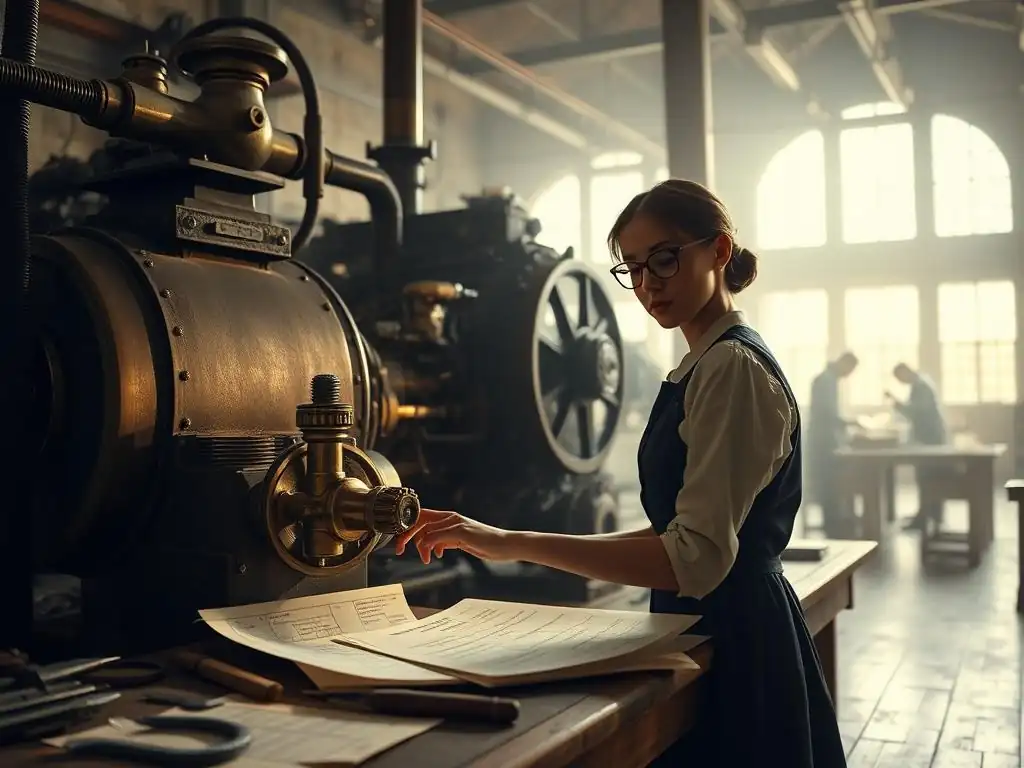
In mechanical engineering, a field crucial to industrial production and innovation, women made significant, albeit often uncredited, contributions. While direct design roles were rare, figures like Lillian Gilbreth, though primarily recognized for her work in industrial psychology, profoundly impacted mechanical and industrial engineering through her pioneering work in time-and-motion studies. She applied scientific management principles to optimize human effort in industrial settings, designing efficient workspaces and tools, and even contributing to the design of kitchen layouts and appliances for optimal use. Her patents included designs for an improved trash can and a shelf-door for refrigerators.
Gilbreth's work, often conducted alongside her husband Frank Gilbreth and continued independently after his death, revolutionized factory efficiency and ergonomic design. Her insights into reducing fatigue and improving productivity directly influenced mechanical engineering practices related to manufacturing processes and human-machine interaction. These contributions, though challenging the traditional definition of mechanical engineering at the time, were instrumental in shaping modern industrial practices and demonstrated how ingenuity could overcome the women engineers historical challenges of professional acceptance.
Civil Engineering: Pioneering Projects and Developments
Women in civil engineering also left an indelible mark, contributing to the foundational infrastructure of the nation. While direct roles in designing large-scale bridges or dams were uncommon for women due to persistent professional barriers, their contributions were vital to the industry. Elsie Eaves, a civil engineer, worked for Engineering News-Record and later for F.W. Dodge Corporation, where she compiled and analyzed critical construction data, market trends, and building statistics. Her meticulous work provided essential information for construction companies, urban planners, and government agencies, enabling the informed development of large-scale projects, including significant infrastructure like bridges and public buildings.
Nora Stanton Blatch Barney's early career included work on the American Bridge Company, where she performed structural calculations, and later for the New York City Public Service Commission, inspecting and designing infrastructure. These roles, while perhaps not highly visible, were integral to the planning, execution, and safety of major civil engineering endeavors. Their methodical and analytical contributions were indispensable, demonstrating that women could apply rigorous engineering principles to complex problems, gradually chipping away at the women engineers historical challenges that limited their professional scope.
Shaping the Future: Lasting Legacy of Early Women Engineers
The collective efforts and individual triumphs of these early women engineers created a lasting legacy that extended far beyond their immediate projects. Their sheer perseverance in pursuing and excelling in a field that actively discouraged them fundamentally challenged prevailing societal norms. By demonstrating their competence and intellectual prowess, they served as powerful, albeit often unsung, role models for future generations of women. Their presence in engineering programs and professional settings, however sparse, slowly but surely began to normalize the idea of women in technical roles.
Their work, whether in optimizing industrial processes, contributing to infrastructure data, or paving the way through sheer determination, laid crucial groundwork. Their very existence in the engineering profession was a catalyst for change, inspiring the gradual increase in women pursuing STEM degrees and careers in the decades that followed. The legacy of these pioneers is not just in their technical achievements, but in their courage to confront and chip away at the deeply embedded women engineers historical challenges, opening doors that had long been closed.
Case Studies: Highlighting Individual Success Stories
Lillian Gilbreth: A Profile in Industrial Engineering
Lillian Moller Gilbreth (1878-1972) stands as one of the most prominent figures among early women engineers, though her formal training was in psychology (Ph.D. from Brown University, 1915). Her genius lay in applying psychological principles to engineering management, effectively pioneering the field of industrial engineering and ergonomics.
Working initially with her husband, Frank Gilbreth, she developed "time-and-motion studies" to improve efficiency and reduce fatigue in industrial settings. After his sudden death in 1924, she continued their consulting firm, Gilbreth, Inc., and became a highly sought-after expert for major corporations like General Electric and Macy's, advising on everything from factory layouts to kitchen design.
Gilbreth was not only a prolific inventor, holding patents for appliances like the foot-pedal trash can, but also a respected academic, holding professorships at Purdue University (the first female professor in their engineering school) and Newark College of Engineering. She expertly navigated a field dominated by men, leveraging her unique interdisciplinary approach to solve complex industrial problems. Her ability to translate psychological insights into practical engineering solutions made her an undeniable force, demonstrating how intellect and perseverance could overcome the professional and societal women engineers historical challenges of her time.
Elsie Eaves: Contributions to Bridge Design
Elsie Eaves (1898-1983) exemplifies the quiet but profound impact of early women in civil engineering. Graduating from the University of Colorado in 1920 with a Bachelor of Science in Civil Engineering, she was one of the very few women of her era to earn such a degree. Her career path, however, reflected the women engineers historical challenges of direct employment in design firms. Instead of designing bridges directly, Eaves found a crucial niche in compiling and analyzing construction data, first for Engineering News-Record and later for F.W. Dodge Corporation, a leading provider of construction project information.
At F.W. Dodge, Eaves became the manager of the statistical department, where she meticulously tracked construction projects, market trends, and economic indicators. Her work provided essential data for engineers, contractors, and government agencies planning large-scale infrastructure, including roads, buildings, and, importantly, bridges.
She was instrumental in developing a system for forecasting construction activity, which became a vital tool for the industry. Eaves's election to full membership in the American Society of Civil Engineers (ASCE) in 1922 was a landmark achievement, marking her as the first woman to attain this status, a testament to her professional competence and resilience in the face of significant women engineers historical challenges.
Analyzing Their Success: Factors that Contributed to Their Achievements
The success of pioneering women engineers like Lillian Gilbreth and Elsie Eaves, and many others, can be attributed to a confluence of factors that allowed them to transcend the pervasive women engineers historical challenges. Foremost was their exceptional intellectual capability and an insatiable curiosity for problem-solving. They possessed a deep understanding of scientific and engineering principles, often coupled with an innovative, interdisciplinary approach that set them apart.
Beyond intellect, an unwavering determination and resilience were paramount. They faced constant skepticism, discrimination, and professional isolation, yet they persevered, driven by a profound belief in their abilities and the value of their work. Furthermore, the presence of supportive, albeit rare, mentors or family members who encouraged their unconventional career paths provided crucial emotional and practical backing. Their ability to adapt, find unconventional roles, and consistently deliver high-quality work ultimately forced recognition, demonstrating that talent, when coupled with relentless effort, could eventually break through the toughest barriers.
The Evolution of Women in Engineering: From Then to Now
Addressing Persistent Gender Gaps in STEM Fields
While the "Determined Dozen" shattered the initial glass ceiling, the journey towards full gender equity in engineering is far from complete. Significant gender gaps persist across STEM fields, particularly in engineering. As of recent years, women earn approximately 20-25% of all engineering bachelor's degrees in the United States, a considerable improvement from the early 20th century, but still disproportionately low compared to their representation in the overall population and university enrollment. In the engineering workforce, their representation is even lower, hovering around 15-18%, indicating persistent challenges in retention and career progression.
These persistent gaps are multifaceted, stemming from a complex interplay of factors including lingering unconscious biases in hiring and promotion, a lack of visible female role models in senior positions, and cultural norms within engineering workplaces that can sometimes be less inclusive. The women engineers historical challenges of acceptance and opportunity have evolved, but subtle forms of discrimination and systemic barriers continue to impact women's entry and advancement in the profession, highlighting that the work of equity is ongoing.
Initiatives Promoting Women's Participation in Engineering Today
Recognizing the continued gender disparities, numerous initiatives have emerged to promote women's participation and success in engineering today. Organizations like the Society of Women Engineers (SWE), founded in 1950, continue to play a vital role, offering professional development, networking opportunities, and advocacy. Many universities have established dedicated programs, such as Women in Engineering (WIE) centers, which provide mentorship, scholarships, and support services to female students.
Corporations are increasingly implementing diversity and inclusion programs, setting targets for female representation, and fostering inclusive workplace cultures. Outreach programs targeting K-12 girls, such as "Introduce a Girl to Engineering Day," aim to spark interest in STEM from a young age, directly addressing the pipeline issues that contribute to the gender gap. These collective efforts seek to dismantle the modern iterations of women engineers historical challenges, from attracting more girls to the field to ensuring equitable career progression for women engineers.
Inspiring Future Generations: The Legacy Continues
The stories of the "Determined Dozen" and other early women engineers remain profoundly inspiring and critically relevant today. Their struggles against immense societal and professional odds serve as powerful reminders of the progress that has been made and the resilience required to achieve it. By highlighting their groundbreaking achievements and the women engineers historical challenges they overcame, we provide contemporary young women with tangible role models who defied expectations and excelled in a demanding field.
This legacy continues to empower future generations by demonstrating that gender is not a barrier to intellectual capability or professional success in engineering. As the world faces increasingly complex challenges, the need for diverse perspectives and talents in engineering is more critical than ever. Continuing to celebrate and learn from the pioneers ensures that their spirit of determination and innovation lives on, inspiring more women to pursue engineering and contribute their unique insights to shaping a better future.
Conclusion: Celebrating the "Determined Dozen" and Their Enduring Impact
Reflecting on the Historical Significance of These Pioneers
The "Determined Dozen," a symbolic representation of the first wave of women engineers in the early 20th century, embodies a remarkable chapter in the history of science and technology. These pioneers possessed extraordinary courage and foresight to pursue a profession that was largely unwelcoming and even hostile to their presence. Their decision to enroll in rigorous engineering programs, often against societal expectations and limited institutional support, was a profound act of defiance and a testament to their intellectual drive.
Their achievements, whether in groundbreaking industrial efficiency, critical data analysis for infrastructure, or simply by persisting in their chosen fields, were not merely individual successes. They were collective triumphs that slowly but surely chipped away at the deeply entrenched women engineers historical challenges. Their very existence in the engineering world proved that women were capable, competent, and indispensable contributors, laying the essential groundwork for the greater inclusion that would follow in subsequent decades.
A Call to Action: Supporting Women in Engineering for a More Equitable Future
The legacy of the "Determined Dozen" serves as a powerful call to action for the present and future. While significant strides have been made, the journey towards full gender equity in engineering is ongoing. Persistent gender gaps in enrollment, retention, and leadership roles indicate that modern women engineers historical challenges still exist, albeit in different forms. It is imperative that we continue to actively support and advocate for women in STEM fields.
Fostering an inclusive environment where all talent can thrive is not just a matter of fairness; it is an imperative for innovation and progress. Diverse engineering teams lead to more creative solutions, better problem-solving, and products and services that cater to a broader population. By continuing to champion women in engineering, investing in their education, providing mentorship, and ensuring equitable opportunities, we can build upon the foundations laid by these extraordinary pioneers, creating a more equitable and technologically advanced future for all.
Frequently Asked Questions
What were some of the historical challenges faced by the first women engineers?
The early women engineers faced significant societal biases and limited access to educational opportunities. They also had to overcome professional discrimination in hiring and advancement.
Why is it important to study the history of women engineers?
Understanding their history helps us acknowledge their contributions to science, address ongoing gender disparities in STEM, and inspire future generations.
What kind of education did the "Determined Dozen" receive, considering the societal norms of their time?
They often had to pursue engineering degrees at newly formed technical institutions or overcome barriers to entry at traditionally male universities. Many relied on self-study and mentorship.
In what ways did male dominance affect the career paths of early women engineers?
Male-dominated workplaces often excluded women from key projects and leadership roles. They frequently faced lower pay and fewer opportunities for professional recognition.
How does understanding the historical challenges faced by women engineers help us today?
It provides context for ongoing efforts to promote diversity and inclusion in engineering. It also highlights the importance of mentorship and support for women in STEM fields.
Final Reflection: Honoring the Legacy of Pioneering Women Engineers
The stories of the "Determined Dozen" and their struggles, as highlighted throughout this article, are not just historical anecdotes; they are a powerful reminder of the persistent barriers women face in STEM fields today. While progress has been made, the underrepresentation of women in engineering remains a significant challenge, underscoring the continued relevance of understanding and addressing the historical obstacles these pioneers overcame.
The impact of these early women engineers extends far beyond their individual achievements. Their courage paved the way for future generations, challenging societal norms and demonstrating the invaluable contributions women bring to innovation and problem-solving. Their legacy serves as a constant source of inspiration, reminding us that true progress requires dismantling systemic biases and fostering inclusive environments. You educate a man; you educate a man. You educate a woman; you educate a generation.
- Brigham Young (While the origin and exact wording are debated, the sentiment perfectly captures the ripple effect of empowering women).
As we reflect on the "Determined Dozen" and the historical challenges faced by women engineers, let us not simply admire their resilience, but actively contribute to building a more equitable future. Consider how you can champion inclusivity in your own sphere of influence, whether by mentoring young women interested in STEM, advocating for policy changes that promote gender equality, or simply challenging unconscious biases. The future of engineering depends on embracing the talent and perspectives of all, and it is our collective responsibility to ensure that the path forward is paved with opportunity for everyone.
Ignite Your Passion: Become an Advocate for Women in STEM!
Thank you for exploring the inspiring stories of the first women engineers. You now understand the challenges they faced and the incredible contributions they made. It's time to carry their legacy forward.
Here are a few ways you can make a difference:
- Actively seek out and share the stories of contemporary women engineers and scientists on social media and in your own conversations to amplify their voices.
- Volunteer your time to mentor young women interested in STEM fields, providing guidance and support to the next generation of innovators.
- Consider making a donation to organizations that support women in STEM education and career advancement, ensuring these vital programs continue to thrive.
What small action will you take today to champion the cause of women in science and engineering?