
From SciFi to Reality: Pioneering Women in 21st Century Advanced Robotics

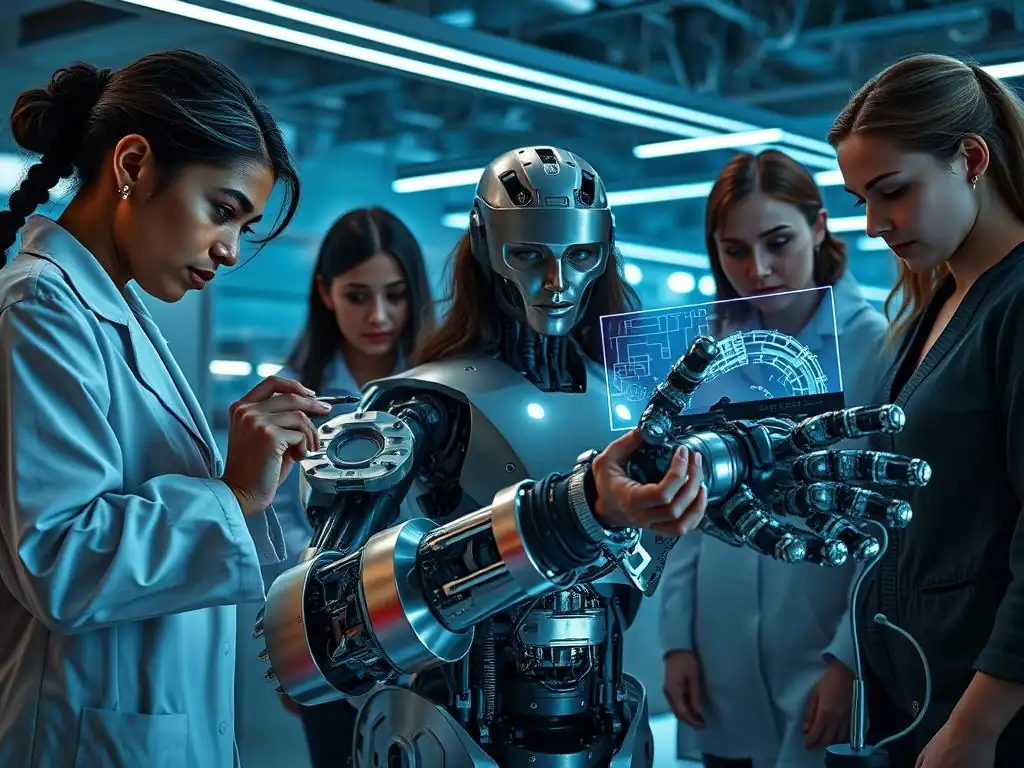
Welcome to WomenInScienceHistory.com!
Dive into the fascinating world of women who dared to innovate and reshape our understanding of science. Today, we're spotlighting the incredible Women in Robotics Engineering History, exploring their journey from early concepts to the advanced robotics we see today. Discover the untold stories of these brilliant minds and the groundbreaking contributions that paved the way for the future of robotics. What challenges did they overcome, and how did their vision shape the technological landscape? Let's unlock these secrets together...
- Introduction: The Rise of Women in Robotics Engineering
- Early Influences and Groundbreaking Contributions of Women Robotics Engineers
- 21st Century Trailblazers: Shaping the Future of Robotics
- Overcoming Challenges: The Journey of Women in Robotics Engineering
- The Future of Robotics: A Vision Led by Women
- Conclusion: Celebrating the Legacy of Women in Robotics Engineering
-
Frequently Asked Questions
- What specific contributions have women made to 21st-century advanced robotics?
- What challenges do women still face in the field of robotics engineering?
- Why is it important to study the history of women in robotics engineering?
- How does WomenInScienceHistory.com aim to inspire future generations of female roboticists?
- What resources are available for women interested in pursuing a career in robotics engineering?
- Final Reflection: Inspiring Futures in Robotics
- Ignite Your Inner Robot Pioneer!
Introduction: The Rise of Women in Robotics Engineering
Sci-Fi Dreams and Real-World Innovations: A New Generation of Female Roboticists
For decades, robotics existed primarily in the realm of science fiction, populating the pages of novels and the screens of cinemas with fantastical machines like Rosie the Robot or Isaac Asimov's positronic brains. Today, these futuristic visions are rapidly becoming a tangible reality, with robots integrated into industries, homes, and even personal lives. This transformation is driven by groundbreaking innovations in artificial intelligence, sensor technology, and mechanical engineering, and at the forefront of this new era is a diverse and increasingly prominent group of pioneering women robotics engineers.
The 21st century has seen an unprecedented acceleration in robotic capabilities, moving from industrial automation to sophisticated systems capable of complex interactions and autonomous decision-making. This evolution has opened doors for a new generation of female roboticists who are not just participating but leading the charge in developing the next wave of advanced robotic systems. Their intellectual prowess and innovative spirit are fundamentally reshaping what robots can do, pushing the boundaries of what was once considered impossible.
Celebrating the Contributions of Female Robotics Pioneers
The narrative of technological advancement often overlooks the critical contributions of women, a trend that the field of robotics is actively working to reverse. This article aims to shine a spotlight on the remarkable achievements of female robotics pioneers whose work is central to the "women robotics engineering history" of the 21st century. By highlighting their groundbreaking research, leadership, and entrepreneurial ventures, we can better understand the depth of their impact.
Recognizing these trailblazers is essential not only for giving them their deserved credit but also for inspiring future generations. Their stories demonstrate that excellence in engineering knows no gender, and that perseverance in the face of challenges can lead to world-changing innovations. Celebrating these figures is a vital step in ensuring that the rich history of women in science and technology is accurately and comprehensively recorded.
Early Influences and Groundbreaking Contributions of Women Robotics Engineers
Breaking Barriers: Early Female Figures in Robotics and Automation
While the term "robotics" as we understand it today is relatively modern, the foundational concepts of automation, control systems, and even early computing, which underpin all robotics, owe a debt to visionary women. Though often uncredited in mainstream narratives, women played crucial roles in the nascent stages of these fields. For instance, early programmers and "calculators" who laid the groundwork for automated processes were often women, meticulously developing the logical sequences that would later evolve into robotic algorithms.
The intellectual legacy of these early contributors, even when not directly building physical robots, paved the way for the sophisticated systems we see today. Their analytical rigor and problem-solving skills were instrumental in advancing the theoretical and practical underpinnings of automation. This early "women robotics engineering history" set a quiet but firm precedent for future generations to enter and excel in this complex domain.
Helen Greiner: Co-founder of iRobot and Pioneer in Consumer Robotics
Helen Greiner stands as a monumental figure in the commercialization of robotics, significantly shaping the "women robotics engineering history" landscape. As a co-founder of iRobot in 1990, alongside Rodney Brooks and Colin Angle, Greiner envisioned robots that could move beyond the factory floor and into everyday life. Her leadership was instrumental in the company's early success and its pivot towards consumer robotics.
iRobot's most famous creation, the Roomba robotic vacuum cleaner, launched in 2002, became a global phenomenon. Selling millions of units worldwide, the Roomba demystified robotics for the general public and proved that robots could be practical, user-friendly household appliances. Greiner's strategic vision and business acumen were critical in making iRobot a dominant force, transforming the perception of robots from complex industrial machines to accessible domestic helpers. After iRobot, she continued her entrepreneurial journey, founding CyPhy Works, a company focused on tethered drones for persistent aerial surveillance, further cementing her legacy as a pioneering woman in robotics.
Ayanna Howard: Leading Researcher in Human-Robot Interaction and Educational Robotics
Dr. Ayanna Howard is another luminary whose contributions are central to the story of "women robotics engineering history." Her distinguished career spans roles at NASA's Jet Propulsion Laboratory, where she worked on intelligent robotic systems for Mars exploration, to leading academic positions. Her research primarily focuses on human-robot interaction, assistive robotics, and artificial intelligence, with a particular emphasis on applications that benefit humanity.
One of Dr. Howard's significant contributions includes developing robots for children with motor impairments, enabling them to engage in physical therapy through interactive play. She also pioneered the "SnoMote" robots, autonomous systems designed to monitor glacier health in remote, challenging environments. Her work consistently bridges cutting-edge research with real-world, impactful applications.
Beyond her technical achievements, Dr. Howard is a passionate advocate for diversity in STEM, serving as the Dean of the College of Engineering at Ohio State University, making her the first woman to hold this position. Her leadership and research continue to inspire and shape the future of robotics.
21st Century Trailblazers: Shaping the Future of Robotics
Dr. Daniela Rus: Director of MIT CSAIL, Revolutionizing Distributed Robotics
Dr. Daniela Rus is a transformative figure in robotics, renowned for her groundbreaking work in distributed robotics and her leadership as the first female director of MIT's Computer Science and Artificial Intelligence Laboratory (CSAIL). Her research explores the fundamental principles of robotic systems, focusing on how large numbers of simple robots can achieve complex tasks through collective intelligence, often referred to as "robot farms." Rus envisions a future where robots are as ubiquitous and adaptable as computers, capable of performing diverse physical tasks with ease.
Her innovative approach often involves creating robots that can reconfigure themselves, adapting their shape and function to new environments or tasks. This vision pushes the boundaries of traditional robot design, moving towards highly versatile and resilient systems. Dr. Rus's work not only advances the theoretical understanding of robotics but also provides practical solutions that have real-world applications across various sectors, marking a significant chapter in "women robotics engineering history."
Key Innovations in Self-Reconfiguring and Modular Robots
Dr. Rus's laboratory has been at the forefront of developing modular, reconfigurable robots. One notable example is the "M-Blocks," small, cube-shaped robots that can climb over each other, jump, and assemble into various structures without external moving parts, using only inertia. Another innovation includes "Kilobots," a swarm of hundreds of tiny, low-cost robots designed to work together to achieve complex tasks like self-assembly or pattern formation, demonstrating collective intelligence on a micro-scale.
These innovations challenge conventional robotics by focusing on simplicity, modularity, and collective behavior rather than complex individual robots. The ability of these systems to change their form and function dynamically opens up unprecedented possibilities for adaptability and resilience in robotic deployment, making them ideal for unpredictable or changing environments.
Impact on Search and Rescue, and Environmental Monitoring
The practical implications of Dr. Rus's work are far-reaching, particularly in high-stakes fields like search and rescue and environmental monitoring. Her development of soft robots, made from compliant materials, allows them to navigate cramped, unstable, or dangerous environments, such as collapsed buildings or underwater caves, where rigid robots might fail. These soft robots can squeeze through narrow openings and withstand significant impacts, making them invaluable for locating survivors after disasters.
In environmental monitoring, her distributed robotic systems offer scalable and non-invasive solutions. For example, swarms of small, autonomous robots could be deployed to collect data on water quality in vast lakes or monitor delicate ecosystems without disturbing wildlife. This distributed approach provides a comprehensive and efficient way to gather information, contributing to critical conservation efforts and showcasing the diverse applications led by women in robotics engineering.
Professor Cynthia Breazeal is a foundational figure in the field of social robotics and human-robot interaction, leading the Personal Robots Group at the MIT Media Lab. Her pioneering work focuses on creating robots that can engage with humans in emotionally and socially intelligent ways, aiming to make robots intuitive and beneficial companions rather than mere tools. She envisions a future where robots can seamlessly integrate into daily life, offering support, education, and entertainment.
Breazeal's research has been instrumental in defining the parameters of social intelligence in machines, exploring how robots can understand human emotions, express their own, and build rapport. Her contributions have significantly influenced the design of robots that can learn from and adapt to human behavior, pushing the boundaries of what is possible in interactive robotics and solidifying her place in "women robotics engineering history."
Developing Socially Intelligent Robots for Education and Healthcare
Professor Breazeal's work has yielded remarkable applications in both education and healthcare. Her team developed robots like Jibo (a social robot for the home, though commercially challenging, it was a significant step) and Tega, which are designed to act as companions and tutors for children. These robots can adapt their teaching methods based on a child's engagement and learning style, offering personalized educational experiences. Research has shown that children interacting with these robots can exhibit increased motivation and improved learning outcomes, particularly in areas like language acquisition.
In healthcare, social robots are being explored as companions for the elderly, offering reminders for medication, encouraging physical activity, and providing social interaction to combat loneliness. These robots can enhance the quality of life for vulnerable populations by providing consistent, empathetic support, demonstrating the profound societal impact of her work.
Addressing Ethical Considerations in Social Robotics
The development of emotionally intelligent robots, while promising, also raises profound ethical questions. Professor Breazeal has been a leading voice in addressing these considerations, emphasizing the importance of responsible AI development. She actively explores issues such as the potential for emotional manipulation, privacy concerns related to data collection by companion robots, and the societal implications of human reliance on artificial companions.
Her research not only focuses on building capable social robots but also on establishing ethical guidelines for their deployment. Breazeal advocates for transparency in robot capabilities and limitations, ensuring that humans understand the nature of their interactions with these machines. Her foresight in grappling with these complex ethical dilemmas is a testament to the comprehensive approach taken by leading women in robotics engineering.
Fei-Fei Li: Leading AI Researcher, Advancing Computer Vision for Robotics
Dr. Fei-Fei Li is a preeminent figure in artificial intelligence, particularly renowned for her foundational work in computer vision. Her creation of ImageNet, a vast visual database, revolutionized how machines "see" and understand the world, a capability that is absolutely fundamental to the advancement of modern robotics. Without sophisticated computer vision, robots would be largely blind and unable to navigate, interact with objects, or understand their environment effectively.
As a professor at Stanford University and former Director of the Stanford AI Lab (SAIL), Dr. Li has championed human-centered AI, focusing on developing intelligent systems that augment human capabilities. Her contributions have propelled the field of AI forward, directly enabling many of the advanced robotic applications we see today, making her a crucial contributor to "women robotics engineering history."
Machine Learning and Robotics: A Synergistic Approach
The synergy between machine learning and robotics, largely driven by advances in computer vision spearheaded by researchers like Dr. Li, has been transformative. Datasets like ImageNet, comprising over 14 million annotated images, enabled the training of deep neural networks that could accurately identify objects, scenes, and even actions. This breakthrough allowed robots to move beyond pre-programmed movements to genuinely perceive and react to their surroundings.
For instance, robots in warehouses can now use advanced vision systems powered by machine learning to identify, sort, and retrieve items with remarkable speed and accuracy, significantly outperforming traditional methods. Autonomous vehicles rely entirely on sophisticated computer vision to interpret road signs, detect pedestrians, and navigate complex traffic scenarios, continuously learning from vast amounts of visual data to improve their performance.
Applications in Manufacturing, Healthcare, and Autonomous Driving
Dr. Li's work has profound implications across multiple industries. In manufacturing, robots equipped with advanced computer vision systems can perform intricate assembly tasks and conduct highly precise quality control inspections, identifying defects that are imperceptible to the human eye, thereby reducing error rates by significant percentages. This enhances efficiency and product quality.
In healthcare, vision-guided surgical robots, empowered by AI to interpret anatomical data, assist surgeons in minimally invasive procedures, leading to greater precision and faster patient recovery times. In the realm of autonomous driving, Fei-Fei Li's contributions are foundational. Her research underpins the ability of self-driving cars to accurately perceive their environment, from detecting other vehicles and pedestrians to understanding complex intersections and traffic patterns, ensuring safer and more reliable navigation.
Overcoming Challenges: The Journey of Women in Robotics Engineering
Addressing Gender Bias and Inequality in STEM Fields
Despite the remarkable contributions of women in robotics, the journey has been, and continues to be, fraught with challenges rooted in gender bias and inequality pervasive across STEM fields. Globally, women remain underrepresented in engineering and technology, with statistics often showing women holding only about 28% of STEM jobs in the United States, and even lower percentages in specialized areas like robotics engineering. This disparity is often attributed to implicit biases, lack of visible female role models, and persistent stereotypes that discourage girls from pursuing technical fields.
These biases manifest in various ways, from subtle microaggressions in academic settings to unequal opportunities for funding, promotion, and recognition in professional environments. Women in robotics often face skepticism regarding their technical competence, struggle to gain equal access to leadership roles, and may experience isolation in male-dominated teams. Overcoming these systemic barriers is crucial for a truly inclusive "women robotics engineering history."
Mentorship and Support Networks: Empowering Future Generations
To counteract these challenges, mentorship and robust support networks have proven invaluable for empowering women in robotics. Organizations like Women in Robotics, the Society of Women Engineers (SWE), and various university-based programs provide crucial platforms for networking, knowledge sharing, and advocacy. These networks offer a sense of community, allowing women to connect with peers and experienced professionals who can provide guidance, share insights, and offer sponsorship opportunities.
The impact of mentorship is profound; studies show that women who have mentors are more likely to stay in STEM careers and advance to leadership positions. Mentors can help navigate career paths, provide constructive feedback, and open doors to new opportunities, effectively shortening the learning curve and boosting confidence. These support systems are vital in sustaining the growth and influence of women in robotics engineering.
Strategies for Creating a More Inclusive Robotics Industry
Creating a truly inclusive robotics industry requires multi-faceted strategies that address systemic issues from early education to professional development. Promoting STEM education for girls from a young age, through engaging programs and visible role models, can spark early interest. In hiring, implementing practices like blind resume reviews and ensuring diverse hiring panels can reduce unconscious bias.
Furthermore, fostering inclusive workplace cultures that prioritize work-life balance, offer flexible work arrangements, and provide robust parental leave policies can significantly improve retention rates for women. Studies consistently demonstrate that diverse teams are more innovative, perform better, and are more resilient, with some research indicating a 20-30% increase in innovation outcomes for diverse groups. By actively implementing these strategies, the robotics industry can unlock its full potential, ensuring that the future of "women robotics engineering history" is one of equity and unparalleled innovation.
The Future of Robotics: A Vision Led by Women
Emerging Trends in Robotics and Automation
The field of robotics is on the cusp of unprecedented advancements, driven by several key emerging trends. Collaborative robots, or "cobots," are becoming increasingly common, designed to work safely alongside humans in industrial and service settings, enhancing productivity without fully replacing human labor. AI-driven autonomous systems are expanding beyond self-driving cars to delivery drones, agricultural robots, and even space exploration, performing complex tasks with minimal human intervention.
Further innovations include soft robotics, which utilize compliant materials for robots that can navigate fragile environments or interact more safely with humans, and bio-inspired robotics, drawing lessons from nature to create more agile and adaptable machines. These trends promise a future where robots are more versatile, intelligent, and integrated into every facet of society, from assisting in elder care to exploring the ocean depths.
Women's Role in Shaping Ethical and Sustainable Robotics Development
As robotics technology becomes more sophisticated and pervasive, the ethical implications become increasingly critical. Women are playing a pivotal role in shaping the discussions around responsible and sustainable robotics development. Their diverse perspectives are essential in identifying and mitigating biases in AI algorithms, ensuring that robotic systems are fair, transparent, and equitable for all users. For example, female researchers are often at the forefront of advocating for ethical guidelines regarding data privacy, algorithmic accountability, and the societal impact of automation on employment.
Furthermore, women are leading initiatives to ensure that robotics development is sustainable, considering environmental impacts and resource consumption. Their influence is helping to steer the industry towards creating technologies that not only advance human capabilities but also align with broader societal values and long-term ecological well-being. This proactive engagement is a cornerstone of the evolving "women robotics engineering history."
Inspiring the Next Generation of Female Robotics Engineers: Opportunities and Resources
The future of robotics holds immense promise, and it is imperative to inspire and empower the next generation of female robotics engineers to contribute to this exciting field. Opportunities for young women in robotics are rapidly expanding, from specialized university programs and research fellowships to burgeoning roles in industry, including startups and established tech giants. Programs like FIRST Robotics competitions encourage hands-on learning and teamwork, fostering interest in engineering from an early age.
Numerous scholarships and grants are now specifically targeting women in STEM, making higher education and research more accessible. Resources like online courses, mentorship platforms, and professional organizations provide invaluable support for those entering or advancing in the field. By actively promoting these opportunities and showcasing the incredible achievements of current female leaders, we can ensure a vibrant and diverse future for "women robotics engineering history," where innovation thrives through inclusivity.
Conclusion: Celebrating the Legacy of Women in Robotics Engineering
The Enduring Impact of Female Roboticists on Society
The journey from science fiction to the tangible reality of advanced robotics has been profoundly shaped by the ingenuity and perseverance of pioneering women. From the foundational work of early contributors to the 21st-century trailblazers like Helen Greiner, Ayanna Howard, Daniela Rus, Cynthia Breazeal, and Fei-Fei Li, their impact on society is enduring and pervasive. Their innovations have brought robots into our homes, revolutionized industries, enhanced healthcare, and expanded our understanding of human-robot interaction. These women have not only advanced the technological frontier but have also broken down significant barriers, proving that brilliance and leadership know no gender.
Their achievements are not merely technical feats; they are powerful statements about overcoming adversity, challenging norms, and pushing the boundaries of what is possible. The work of these female roboticists has transitioned robotics from a specialized niche to a field with broad societal implications, fundamentally improving quality of life and driving economic growth.
Continuing the Mission of Recognizing Women's Contributions to Science and Technology
The stories of these remarkable women in robotics engineering are a vital part of our collective scientific and technological heritage. It is crucial to continue the mission of recognizing, documenting, and celebrating their contributions to ensure that their legacies are not overlooked or forgotten. By highlighting their journeys, challenges, and triumphs, we provide essential role models for young girls and women considering careers in STEM.
The ongoing effort to acknowledge "women robotics engineering history" is more than just historical correction; it is an investment in the future. A future where diversity is not just an aspiration but a fundamental strength, leading to more inclusive, ethical, and groundbreaking innovations in robotics and beyond. Their enduring impact serves as a powerful reminder of the limitless potential when talent is recognized and nurtured, regardless of gender.
Frequently Asked Questions
What specific contributions have women made to 21st-century advanced robotics?
Women have made significant contributions in areas like robot design, control systems, and AI integration. They are also leading research in human-robot interaction and ethical considerations in robotics.
What challenges do women still face in the field of robotics engineering?
Despite progress, women in robotics engineering often face gender bias, a lack of representation in leadership roles, and difficulty accessing funding opportunities.
Why is it important to study the history of women in robotics engineering?
Understanding the history of women in robotics engineering helps address existing inequalities and provides role models for aspiring female engineers and scientists.
How does WomenInScienceHistory.com aim to inspire future generations of female roboticists?
The site highlights the achievements of pioneering female scientists and engineers, showcasing their contributions and the impact of their work on the field.
What resources are available for women interested in pursuing a career in robotics engineering?
Many organizations offer scholarships, mentorship programs, and networking opportunities specifically designed to support women in STEM fields, including robotics.
Final Reflection: Inspiring Futures in Robotics
The journey from science fiction fantasies of intelligent machines to the tangible reality of advanced robotics is undeniably breathtaking, but the true marvel lies in the pioneering women who are actively shaping this technological revolution. Their contributions, often overlooked in traditional narratives, are not just footnotes in history; they are the driving force behind innovation and progress in the field, proving that the future of robotics is inherently diverse and inclusive.
This exploration into the history of women in robotics engineering highlights not only their technical prowess but also their resilience and determination in overcoming systemic barriers. Their stories serve as powerful reminders that representation matters and that diverse perspectives are crucial for creating technologies that benefit all of humanity. You can't be what you can't see.
This quote, often attributed to Marian Wright Edelman, resonates deeply when considering the impact of these women on inspiring future generations to pursue careers in STEM.
As we stand on the cusp of even more profound advancements in robotics, let us remember the lessons learned from the past and actively champion the inclusion of women and other underrepresented groups in the field. Consider how you can contribute to creating a more equitable and innovative future for robotics. Whether it's mentoring a young woman interested in STEM, advocating for inclusive hiring practices, or simply amplifying the voices of female roboticists, your actions can help pave the way for a future where everyone has the opportunity to contribute to shaping the world of tomorrow.
Ignite Your Inner Robot Pioneer!
Thanks for exploring the incredible contributions of these groundbreaking women! Now it’s your turn to take inspiration from their stories and help shape the future of robotics. Let's turn vision into action.
- Boldly share this article to inspire the next generation of women in robotics.
- Dive deeper:Research a pioneering woman in robotics not mentioned in this article and share your findings with a local school or online forum.
- Unleash your creativity: Sketch out your own innovative robot design and imagine how it could change the world.
What small step will you take today to become a part of this exciting robotics revolution?