
Scripting the Future: What's Next for the Cultural Representation of Women in Science?


Welcome to WomenInScienceHistory.com!
Dive into the fascinating world of female scientific pioneers and explore the critical topic of women in science representation in our latest feature, “Scripting the Future: What's Next for the Cultural Representation of Women in Science?” How are these stories being told, and what impact does that have on inspiring the next generation? Uncover the insights and join the conversation as we delve into this crucial aspect of cross-disciplinary themes, shedding light on the past and shaping a more inclusive future.
- The Evolving Landscape of Women in Science Representation
- Analyzing Current Cultural Representations of Women in Science
- Challenges in Achieving Authentic Women in Science Representation
- The Future of Women in Science Representation: Trends and Opportunities
- Moving Beyond Stereotypes: Creating Nuanced and Realistic Portrayals
- The Importance of Accurate Historical Representation of Women in Science
- Strategies for Promoting Positive Women in Science Representation
- Conclusion: A Call to Action for Meaningful and Impactful Women in Science Representation
-
Frequently Asked Questions
- What is the main goal of WomenInScienceHistory.com?
- Why is Women in Science History important, especially concerning "Women in science representation"?
- What kind of information can I find on WomenInScienceHistory.com?
- What challenges did women in science often face historically?
- How does WomenInScienceHistory.com aim to inspire future generations?
- Final Reflection: Empowering Narratives in Science
- Empower Change: Amplify Women's Voices in Science!
The Evolving Landscape of Women in Science Representation
Historical Context: Underrepresentation and Erasure of Women Scientists
For centuries, the contributions of women to scientific discovery were largely overlooked, minimized, or entirely erased from historical narratives. This underrepresentation was not merely an oversight but a systemic issue rooted in societal biases that often barred women from formal education, professional scientific institutions, and recognition for their groundbreaking work. Consequently, the popular understanding of scientific progress often presented a male-dominated lineage, leaving out countless brilliant minds who worked tirelessly, sometimes anonymously, to advance human knowledge.
Consider the case of Rosalind Franklin, whose crucial X-ray diffraction images were pivotal to the discovery of the DNA double helix structure, yet her contributions were initially marginalized in favor of her male colleagues, James Watson and Francis Crick. Similarly, Lise Meitner, a physicist who provided the theoretical explanation for nuclear fission, was notoriously omitted from the Nobel Prize awarded to Otto Hahn, despite their significant collaborative work. These examples underscore a pervasive pattern where the women in science representation was either absent or significantly downplayed in historical accounts, leading to a skewed understanding of scientific history.
The Rise of Visibility: Increased Focus on Women in STEM in Media
In recent decades, there has been a noticeable shift towards increasing the visibility of women in STEM fields within mainstream media. This growing focus reflects a broader societal push for gender equality and a recognition of the need to inspire future generations of female scientists. From documentaries highlighting historical figures to fictional series featuring complex female lead scientists, the landscape of women in science representation is slowly but surely diversifying.
This rise in visibility is evident in various forms of media. For instance, biographical films and series about figures like Marie Curie, Ada Lovelace, and Katherine Johnson have brought their stories to a wider audience, revealing their struggles and triumphs. Contemporary television shows and films are also increasingly featuring female characters in prominent scientific roles, often portraying them as intelligent, capable, and integral to the plot, moving beyond tokenism to more substantive portrayals. This deliberate effort aims to correct past omissions and provide a more accurate and inspiring depiction of women's roles in scientific innovation.
Analyzing Current Cultural Representations of Women in Science
Common Tropes and Stereotypes in Media Portrayals of Women in Science
Despite progress, the cultural representation of women in science is still frequently plagued by persistent tropes and stereotypes. One common archetype is the "socially awkward genius," where a female scientist's intellectual prowess is often paired with a lack of social skills or an unkempt appearance, implicitly suggesting that brilliance comes at the cost of conventional femininity. Another pervasive trope is the "token woman," where a single female scientist is included in an otherwise all-male team, often without significant agency or character development, serving primarily to satisfy diversity quotas rather than offering genuine women in science representation.
These stereotypical portrayals can inadvertently reinforce harmful perceptions and discourage young girls from pursuing STEM careers. For example, if the only female scientists depicted are either eccentric recluses or secondary characters, it can create an unappealing or unrealistic image of what a career in science entails. Such narrow depictions fail to capture the diverse personalities and experiences of actual women in STEM, perpetuating a limited and often inaccurate view of their lives and contributions.
Positive Examples: Empowering and Accurate Depictions of Women in STEM
Fortunately, there is a growing trend towards more empowering and accurate depictions of women in STEM within popular culture. These positive examples showcase female scientists as multifaceted individuals with rich personal lives, intellectual curiosity, and professional competence, challenging conventional stereotypes. Such portrayals often emphasize their collaborative spirit, problem-solving skills, and resilience in the face of challenges.
Consider the character of Dr. Ellie Arroway in the film Contact, who embodies a dedicated and brilliant astrophysicist driven by a profound quest for knowledge. Her character's intelligence and perseverance are central, rather than her appearance or romantic entanglements.
Similarly, the historical drama Hidden Figures brought to light the true stories of Katherine Johnson, Dorothy Vaughan, and Mary Jackson, African American women whose mathematical brilliance was instrumental to NASA's early space missions. These narratives provide powerful role models, demonstrating that women of diverse backgrounds have always been, and continue to be, at the forefront of scientific discovery, significantly enhancing positive women in science representation.
The Impact of Representation on Aspiring Female Scientists
The quality and prevalence of women in science representation in media have a profound impact on aspiring female scientists. When young girls and women see themselves reflected in compelling and authentic scientific roles, it can significantly boost their confidence, validate their interests, and normalize the idea of pursuing a STEM career. Studies have indicated that exposure to positive female STEM role models in media can increase girls' interest in science by a measurable percentage, sometimes upwards of 15-20%, compared to those with limited exposure.
Conversely, a lack of diverse and positive representation can perpetuate the notion that science is a male-dominated field, leading to self-doubt or a perceived lack of belonging among young women. By showcasing women in science as intelligent, innovative, and successful, media can dismantle these barriers, fostering a sense of possibility and encouraging greater participation in STEM fields. This visual validation is crucial for inspiring the next generation of female leaders and innovators in science.
Challenges in Achieving Authentic Women in Science Representation
Gender Bias in Storytelling and Character Development
A significant challenge in achieving authentic women in science representation stems from deeply ingrained gender biases that often permeate storytelling and character development processes. Unconscious biases held by writers, directors, and producers can lead to female characters being less complex, less active, or less central to the narrative than their male counterparts. This bias often manifests in ways that diminish a female scientist's professional credibility, such as focusing excessively on her personal life struggles over her scientific achievements, or making her scientific breakthroughs contingent on male assistance or approval.
For instance, a common narrative trap is to present a female scientist primarily through the lens of her relationships or emotional struggles, rather than her intellectual journey or scientific contributions. This can inadvertently reduce her to a supporting role, even when she is ostensibly the lead. Overcoming this requires a conscious effort to challenge traditional narrative structures and ensure that female characters are developed with the same depth, agency, and focus on their professional capabilities as male characters, thereby fostering more equitable women in science representation.
Overcoming the "Male Gaze" in Science Narratives
Another critical hurdle is overcoming the "male gaze," a concept describing how women are often depicted in media from a masculine, heterosexual perspective, often objectifying or sexualizing them. In the context of science narratives, this can manifest as female scientists being unnecessarily sexualized through their attire, camera angles, or plotlines that prioritize their physical appearance over their intellectual contributions. This approach detracts from their professional credibility and presents an unrealistic and often demeaning image of women in STEM.
The "male gaze" undermines authentic women in science representation by shifting the audience's focus away from a character's scientific prowess and towards her physical attributes. For example, a female physicist might be shown in revealing clothing in a lab setting, or her scientific genius might be framed as an unexpected trait for someone "so attractive." To counteract this, creators must consciously adopt a more inclusive and respectful lens, ensuring that female scientists are portrayed primarily for their intellect, skills, and contributions to science, rather than their appeal to a presumed male audience.
The Need for Diverse Voices in Creating Women in Science Stories
The authenticity of women in science representation is profoundly shaped by the diversity of voices involved in the creative process. When writing rooms, production teams, and directorial roles are predominantly composed of individuals from similar backgrounds, particularly those with limited experience or understanding of women in STEM, the resulting portrayals can lack nuance, perpetuate stereotypes, or miss opportunities for truly groundbreaking narratives. A lack of diverse perspectives behind the scenes can lead to one-dimensional characters and predictable story arcs.
Conversely, involving women, people of color, and individuals from various scientific backgrounds in the creation of these stories can inject much-needed authenticity and depth. Female scientists, for example, can offer invaluable insights into the realities of their professions, the challenges they face, and the joys of scientific discovery. By actively seeking out and empowering diverse storytellers, the media industry can produce more realistic, relatable, and inspiring women in science representation, reflecting the true complexity and richness of women's experiences in STEM.
The Future of Women in Science Representation: Trends and Opportunities
Leveraging Technology for Inclusive Storytelling about Women in STEM
The advent of new technologies offers unprecedented opportunities for inclusive storytelling that can significantly enhance women in science representation. Artificial intelligence, interactive media, and sophisticated data visualization tools can be leveraged to create dynamic, engaging, and personalized narratives about women in STEM. These technologies can help transcend traditional limitations of linear storytelling, allowing for more immersive and customizable educational experiences.
For instance, interactive documentaries could allow users to delve deeper into the biographies of pioneering female scientists, exploring their research, personal challenges, and societal impact at their own pace. Educational games featuring historical or contemporary female scientists as protagonists could make learning about STEM more engaging for younger audiences. Furthermore, data visualization could be used to highlight the historical underrepresentation of women in scientific publications or awards, making the need for better women in science representation more tangible and immediate.
The Role of Women in Science Organizations in Shaping Narratives
Organizations dedicated to promoting women in science play an increasingly vital role in shaping future narratives and improving women in science representation. These groups often act as advocates, educators, and consultants, working to ensure that portrayals of female scientists in media are accurate, inspiring, and free from harmful stereotypes. Their expertise is invaluable in guiding content creators towards more authentic storytelling.
Many such organizations actively collaborate with film studios, television networks, and educational publishers. They might provide expert consultants to advise on scientific accuracy and character development, ensuring that fictional scientists behave and speak like real ones. Some organizations also host awards for positive media portrayals or create their own educational resources, such as online databases of female scientists or curriculum guides for schools. These concerted efforts are crucial for fostering a media landscape that accurately reflects the immense contributions of women in science.
Expanding STEM Role Models Through Virtual Reality
Virtual Reality (VR) stands as a transformative technology with immense potential to expand the scope and impact of STEM role models, particularly for women in science representation. VR experiences can offer unparalleled immersion, allowing users to step into the shoes of pioneering female scientists, participate in virtual experiments led by female mentors, or explore historical scientific breakthroughs from a first-person perspective. This level of engagement can create deeply impactful learning and inspirational experiences.
Imagine a VR simulation where users can work alongside Marie Curie in her laboratory, conducting experiments and understanding the challenges she faced, or a scenario where they can assist Katherine Johnson in calculating trajectories for space missions at NASA. Such experiences move beyond passive consumption of information, allowing individuals to actively engage with the stories and achievements of women in science. By making historical figures and their work tangible and interactive, VR can significantly enhance the accessibility and inspiration derived from women in science representation.
Moving Beyond Stereotypes: Creating Nuanced and Realistic Portrayals
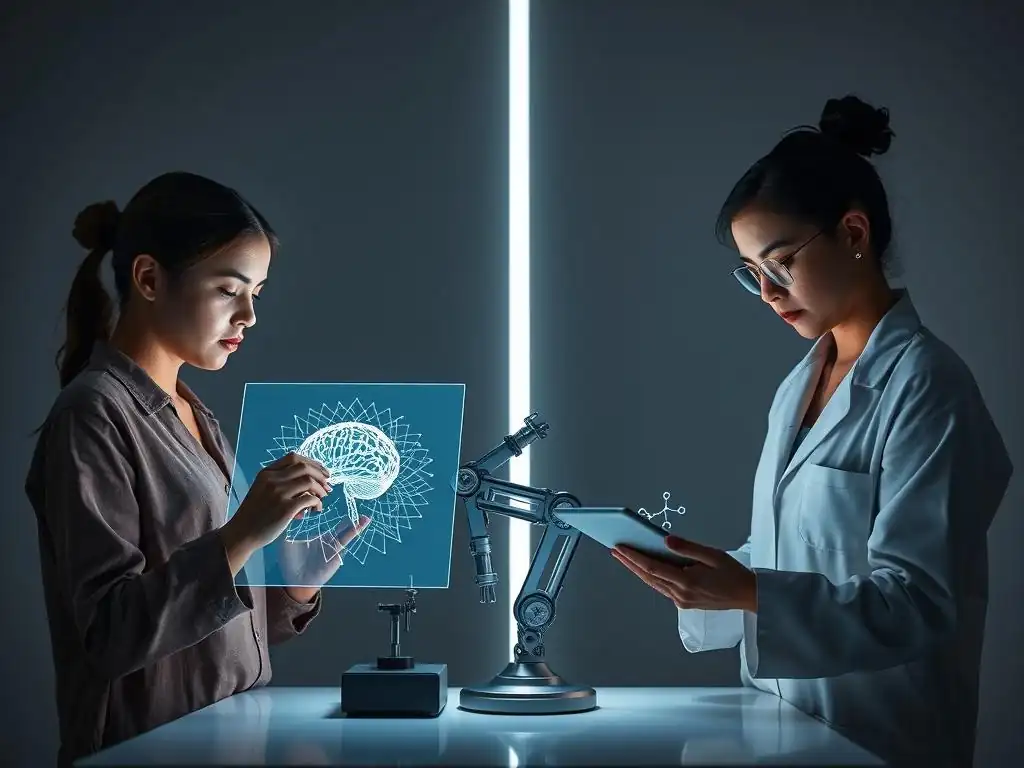
Emphasizing the Multifaceted Nature of Women in Science
To truly advance women in science representation, it is essential to move beyond one-dimensional stereotypes and emphasize the multifaceted nature of women in science. Real-life female scientists are not monolithic figures; they are diverse individuals with varied interests, hobbies, family lives, and personalities. Portraying them as complex human beings who happen to be brilliant scientists makes them more relatable and inspiring to a broader audience.
This means showing female scientists engaging in activities outside the lab, whether it's pursuing artistic passions, raising families, participating in sports, or maintaining vibrant social lives. For example, depicting a neuroscientist who is also a marathon runner, or a physicist who is a dedicated parent, breaks down the limiting stereotype that scientific pursuit requires sacrificing a rich personal life. Such nuanced portrayals demonstrate that women in STEM are whole individuals, reflecting the true diversity and humanity of the scientific community.
Highlighting the Collaborative and Interdisciplinary Aspects of Scientific Work
Another crucial step in creating realistic women in science representation is to highlight the collaborative and interdisciplinary aspects of modern scientific work. The popular image of the "lone genius" toiling away in isolation is largely outdated; most significant scientific breakthroughs today are the result of extensive teamwork, cross-disciplinary collaboration, and global networks of researchers. By showcasing female scientists working effectively in teams, sharing ideas, and collaborating across different fields, media can provide a more accurate and inspiring picture of scientific endeavor.
This approach not only reflects the reality of contemporary science but also encourages aspiring scientists to develop essential teamwork and communication skills. For instance, a narrative could depict a biologist collaborating with a data scientist, or a chemist working alongside an engineer to solve a complex problem. Such portrayals demonstrate that success in science often hinges on collective intelligence and diverse perspectives, offering a more inclusive and dynamic women in science representation.
Showcasing the Personal Lives and Challenges of Women in STEM
To foster truly authentic women in science representation, it is imperative to showcase the personal lives and challenges faced by women in STEM, in addition to their professional achievements. This includes exploring issues such as work-life balance, navigating gender bias and discrimination, overcoming imposter syndrome, and managing the demands of a rigorous career. By revealing these human aspects, characters become more relatable, resilient, and inspirational.
For example, a narrative could sensitively explore the struggles of a female researcher balancing her groundbreaking work with family responsibilities, or depict the resilience of a woman scientist who faces skepticism or outright discrimination in a male-dominated field. Such stories offer valuable insights into the realities of pursuing a scientific career, demonstrating that challenges are a part of the journey and can be overcome. This honest portrayal fosters empathy and provides a more comprehensive and empowering women in science representation.
The Importance of Accurate Historical Representation of Women in Science
Correcting Historical Inaccuracies and Filling Knowledge Gaps
Accurate historical representation of women in science is not merely an academic exercise; it is a fundamental step towards correcting past injustices and providing a more complete understanding of scientific progress. For too long, the contributions of countless female scientists have been omitted or misattributed in textbooks, popular histories, and media. This has created significant knowledge gaps, perpetuating a skewed narrative that diminishes women's roles in shaping our world.
Efforts to correct these inaccuracies involve rigorous archival research, re-evaluating historical records, and actively promoting the stories of overlooked figures. For instance, the work of Nettie Stevens, who independently discovered sex chromosomes in the early 20th century, was largely overshadowed by male contemporaries. Similarly, Alice Ball, an African American chemist, developed the most effective treatment for leprosy in the early 20th century, but her work was largely attributed to a male colleague after her untimely death. Bringing these stories to light is crucial for providing a truthful and empowering women in science representation.
Celebrating the Legacy of Pioneering Women Scientists
Beyond correcting historical records, actively celebrating the legacy of pioneering women scientists is vital for inspiring future generations and ensuring their rightful place in history. This involves more than just mentioning their names; it means commemorating their achievements through public monuments, educational initiatives, and widespread media coverage that highlights their groundbreaking discoveries and the challenges they overcame.
For example, the recent recognition of figures like Katherine Johnson, Dorothy Vaughan, and Mary Jackson through books, films, and even naming buildings after them, has significantly elevated their status from unsung heroes to celebrated pioneers. Similarly, the ongoing efforts to honor the contributions of physicists like Chien-Shiung Wu, whose experimental work confirmed parity violation, ensure that her legacy is not forgotten. Such celebrations are powerful tools for reinforcing positive women in science representation and demonstrating that scientific brilliance knows no gender.
Resources for Learning More About Women in Science History
For those eager to delve deeper into the rich and often untold history of women in science, a wealth of resources is increasingly available. Academic institutions and historical societies are continuously publishing new research and digitized archives that shed light on previously obscure figures and their contributions. Educational websites, dedicated documentaries, and biographical books are also making these stories more accessible to the general public.
Many online platforms now serve as comprehensive databases, cataloging the achievements of women across various scientific disciplines and historical periods. These resources provide detailed narratives, primary source materials, and connections to further research, allowing enthusiasts to explore the vast and often overlooked lineage of female scientific innovators. Engaging with these materials is essential for anyone seeking a more comprehensive understanding of women in science representation throughout history.
Strategies for Promoting Positive Women in Science Representation
Supporting Female Filmmakers and Storytellers in Science Communication
A crucial strategy for promoting positive women in science representation is to actively support and empower female filmmakers, writers, and storytellers working in science communication. When women are at the helm of creative projects, they bring unique perspectives and experiences that can lead to more nuanced, authentic, and inspiring portrayals of female scientists. Their insights can help dismantle ingrained biases and create narratives that truly resonate with diverse audiences.
This support can take many forms, including providing grants and funding for projects led by women, establishing mentorship programs to help female creators navigate the industry, and ensuring equitable representation in decision-making roles within media companies. By investing in female talent behind the camera, the industry can foster a more diverse range of stories that accurately reflect the realities and aspirations of women in STEM.
Encouraging the Development of Educational Resources Featuring Women Scientists
To cultivate a future where women in science representation is the norm rather than the exception, it is imperative to encourage the development and widespread adoption of educational resources prominently featuring women scientists. From early childhood education through university curricula, integrating the stories and achievements of female innovators can significantly shape perceptions and inspire young minds.
This means developing textbooks that include biographies of women like Hypatia, Maria Sibylla Merian, and Rosalind Franklin alongside their male counterparts. It also involves creating engaging online courses, interactive science kits, and classroom materials that highlight female role models and their contributions to various scientific fields. By normalizing the presence and impact of women in science from an early age, educational resources can effectively dismantle gender stereotypes and encourage girls to see themselves as future scientists.
Advocating for Greater Diversity and Inclusion in STEM Media
Systematic advocacy is essential for achieving greater diversity and inclusion in STEM media, thereby enhancing women in science representation. This involves a concerted effort from individuals, organizations, and industry stakeholders to hold media creators accountable and push for meaningful change. Advocacy can influence everything from casting decisions and script development to marketing campaigns.
Specific actions include urging production companies to hire diverse writers and directors, implementing "inclusion riders" in contracts to ensure diverse representation on screen and behind the scenes, and supporting initiatives that promote gender parity in STEM-related content. Furthermore, audiences can play a powerful role by supporting content that accurately portrays women in science and by voicing concerns about stereotypical or inaccurate depictions. Collective advocacy ensures that the push for better women in science representation remains a priority across the media landscape.
Conclusion: A Call to Action for Meaningful and Impactful Women in Science Representation
The Long-Term Benefits of Accurate and Empowering Portrayals
The journey towards truly meaningful and impactful women in science representation is ongoing, but its long-term benefits are profound and far-reaching. Accurate and empowering portrayals of women in STEM not only correct historical injustices by giving due recognition to overlooked pioneers but also serve as powerful catalysts for inspiring future generations. When girls and young women see diverse, intelligent, and capable female scientists in media, it validates their own aspirations and dismantles limiting stereotypes about who can pursue a career in science.
Ultimately, fostering a media landscape rich with authentic women in science representation contributes to a more equitable, inclusive, and innovative scientific community. It encourages a broader talent pool to enter STEM fields, leading to more diverse perspectives and, ultimately, more groundbreaking discoveries that benefit all of humanity. The continued commitment to telling these stories thoughtfully and accurately is an investment in both our past and our future.
Frequently Asked Questions
What is the main goal of WomenInScienceHistory.com?
The website aims to celebrate and highlight the contributions of women to science throughout history. It focuses on biographies, groundbreaking work, and the challenges they faced.
Why is Women in Science History important, especially concerning "Women in science representation"?
The site addresses the lack of representation by showcasing often overlooked narratives. This inspires future generations and promotes greater visibility for women's scientific achievements.
What kind of information can I find on WomenInScienceHistory.com?
You'll find biographies of pioneering female scientists, discussions on their scientific contributions, and historical context surrounding their struggles and triumphs.
What challenges did women in science often face historically?
Women frequently encountered discrimination and exclusion in male-dominated scientific fields. They often faced limited access to education and resources.
How does WomenInScienceHistory.com aim to inspire future generations?
By sharing the stories of successful female scientists, the platform provides role models and encouragement. It demonstrates that women can and do excel in science.
Final Reflection: Empowering Narratives in Science
The journey through the evolving landscape of women in science representation reveals a powerful truth: stories shape reality. The narratives we consume, whether on screen or in print, profoundly influence our perceptions and expectations. The progress we've witnessed, from stereotypical portrayals to nuanced and empowering characters, underscores the critical role media plays in inspiring future generations of female scientists and dismantling ingrained biases.
This exploration has highlighted the undeniable impact of diverse and authentic representation on the cultural landscape. Seeing oneself reflected in the scientific realm, not as an exception but as a vital contributor, is transformative. It fosters a sense of belonging and possibility, encouraging young women to pursue their passions without the weight of societal limitations. You can't be what you can't see.
This simple yet profound statement encapsulates the essence of why accurate and inspiring portrayals of women in science are so crucial.
As we look toward the future, let us all become active participants in scripting a more inclusive and equitable narrative. Consider the stories you consume and the messages they convey. Support creators who champion authentic representation and challenge limiting stereotypes. By amplifying the voices of women in science, both real and fictional, we can collectively cultivate a world where every young girl feels empowered to pursue her scientific dreams, knowing that her potential is limitless and her contributions are invaluable.
Empower Change: Amplify Women's Voices in Science!
Thank you for exploring the evolving narrative of women in science! We hope this article has inspired you to reflect on the importance of diverse representation and the ongoing journey toward inclusivity. Now, let’s translate that inspiration into action.
- Share this article widely to spark crucial conversations within your network and beyond, highlighting the need for better representation.
- Actively seek out and champion the stories of contemporary women in science by following their work, attending their talks, and supporting their initiatives.
- Engage in constructive dialogue about media portrayals of women scientists, offering your perspectives and encouraging balanced, nuanced depictions.
What specific steps will you take to contribute to a more equitable and accurate portrayal of women in science within your community?