
The Mathematical Matrix: How Women's Insights Shaped Modern Mathematics

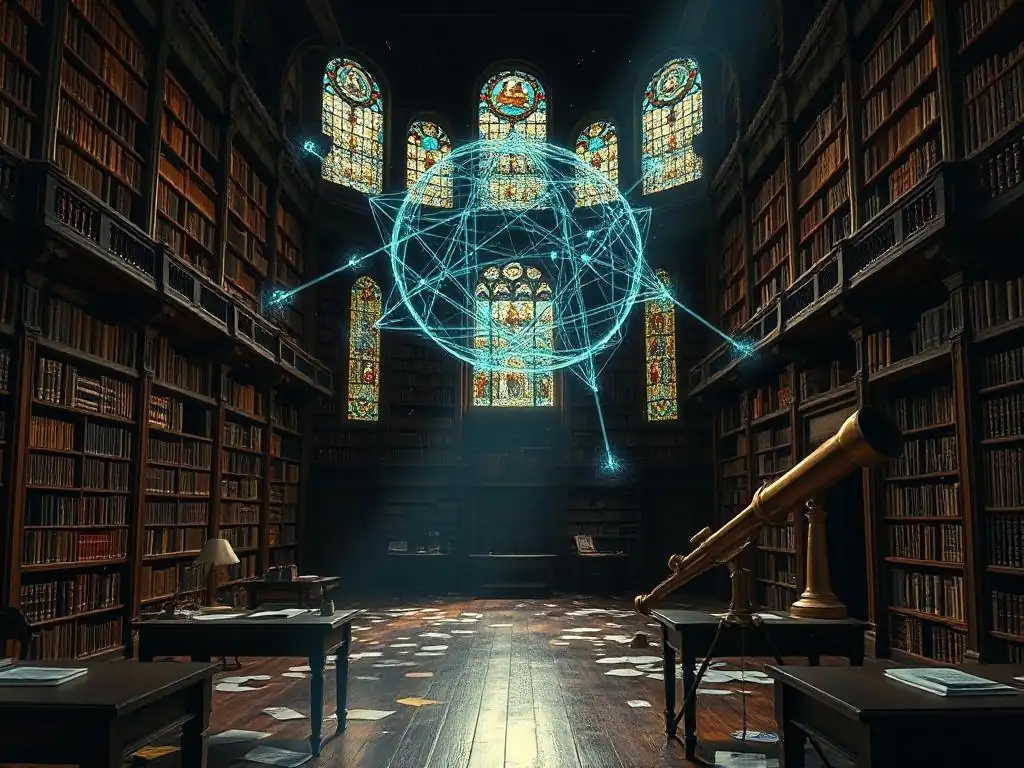
Welcome to WomenInScienceHistory.com!
Delve into the fascinating world where brilliance transcends gender, and uncover the often-hidden stories of female pioneers who revolutionized scientific thought. Ever wondered how women’s contributions to mathematics have shaped the world we know? Prepare to be amazed as we explore their groundbreaking work and the hurdles they overcame in a field historically dominated by men. Join us as we begin to unravel The Mathematical Matrix, revealing the profound and lasting impact of these extraordinary women.
- Introduction: Unveiling Women’s Contributions to Mathematics
- Early Pioneers: Laying the Foundation for Modern Math
- 19th Century Breakthroughs: Expanding the Boundaries of Mathematical Understanding
- 20th Century and Beyond: Shaping Contemporary Mathematics
- Women's Impact on Specific Mathematical Fields
- Overcoming Obstacles: The Challenges Faced by Women in Mathematics
- The Future of Mathematics: Inspiring the Next Generation of Female Mathematicians
- Conclusion: Celebrating Women’s Enduring Legacy in Mathematics
-
Frequently Asked Questions
- What are some examples of women's contributions to mathematics mentioned on the site?
- Why is it important to highlight women's contributions to mathematics?
- What challenges did women face in contributing to the field of mathematics?
- How does the site "WomenInScienceHistory.com" aim to inspire future generations through stories of women in mathematics?
- Where can I find more detailed information about specific women's contributions to mathematics on the website?
- Final Reflection: Illuminating the Unseen Architects of Mathematics
- Ignite Your Mathematical Curiosity!
Introduction: Unveiling Women’s Contributions to Mathematics
The Overlooked History of Women in Mathematics
For centuries, the narrative of scientific progress, particularly in fields as foundational as mathematics, has predominantly centered on male figures. This historical oversight stems from deeply ingrained societal norms, limited access to formal education for women, and systemic biases that often suppressed or simply ignored women’s contributions to mathematics. Many brilliant female minds, despite their profound insights and groundbreaking discoveries, found their work unacknowledged, attributed to male colleagues, or relegated to the footnotes of history.
This pervasive erasure has created a distorted view of mathematical development, suggesting a near absence of female intellect in a discipline where logic and innovation are paramount. Even when women managed to circumvent the formidable barriers to entry, their professional paths were fraught with challenges, from securing academic appointments to gaining recognition in male-dominated research circles. Consequently, the rich tapestry of women’s contributions to mathematics remained largely hidden, awaiting rediscovery and proper acknowledgment.
Why Recognizing Women Mathematicians Matters
Recognizing the pivotal women’s contributions to mathematics is not merely an act of historical correction; it is fundamental to understanding the true breadth and depth of human intellectual achievement. By bringing these stories to light, we gain a more complete and accurate picture of how mathematical thought evolved, revealing the diverse perspectives and innovative approaches that propelled the field forward across different eras and cultures. This acknowledgment enriches our collective scientific heritage and provides invaluable context for contemporary mathematical pursuits.
Furthermore, celebrating these pioneering women serves as a powerful source of inspiration for future generations. When young girls and aspiring female mathematicians see themselves reflected in the annals of mathematical history, it challenges prevailing stereotypes and encourages them to pursue their passions without limitation. Highlighting the enduring women’s contributions to mathematics is crucial for fostering inclusivity in STEM fields, ensuring that talent is recognized and nurtured regardless of gender, and ultimately strengthening the entire scientific community.
Early Pioneers: Laying the Foundation for Modern Math
Hypatia of Alexandria: A Beacon of Ancient Mathematical Knowledge
Hypatia of Alexandria, born around 350-370 AD and tragically killed in 415 AD, stands as one of the earliest documented female mathematicians whose influence permeated the intellectual landscape of the ancient world. As a prominent philosopher, astronomer, and mathematician, she taught at the Neoplatonic school in Alexandria, attracting a diverse student body from across the Roman Empire. Her expertise lay in the intricate realms of geometry and algebra, where she produced commentaries on foundational texts such as Apollonius's Conics and Diophantus's Arithmetica, preserving and advancing these crucial works.
Hypatia's intellectual prowess and dedication to knowledge were unparalleled for her time, making her a beacon of learning in a period of significant societal upheaval. While her original mathematical treatises are largely lost, her work through commentaries was instrumental in transmitting complex ancient mathematical ideas to future generations. Her life exemplifies an early, profound woman’s contribution to mathematics, demonstrating intellectual leadership and scholarly rigor in an era where such roles were virtually unheard of for women.
Maria Gaetana Agnesi (1718–1799) was an extraordinary Italian mathematician, philosopher, and theologian, whose most significant woman’s contribution to mathematics was her groundbreaking textbook, Instituzioni analitiche ad uso della gioventù italiana (Analytical Institutions for the Use of Italian Youth), published in 1748. This monumental two-volume work was one of the first comprehensive treatises on differential and integral calculus, meticulously organized and presented in Italian, making advanced mathematical concepts accessible to a wider audience beyond Latin scholars.
Agnesi's Analytical Institutions was lauded for its clarity, logical structure, and pedagogical approach, becoming a widely adopted textbook throughout Europe. It masterfully unified the methods of Isaac Newton and Gottfried Leibniz, offering a synthesis that was both rigorous and comprehensible. Her work also famously described the "Witch of Agnesi" curve (versiera), a cubic curve whose properties she explored, showcasing her deep analytical understanding. Her pioneering efforts in systematizing calculus left an indelible mark on mathematical education and represented a crucial contribution to mathematics from a female scholar.
19th Century Breakthroughs: Expanding the Boundaries of Mathematical Understanding
Ada Lovelace: The Visionary of Computer Programming
Ada Lovelace (1815–1852), the daughter of the poet Lord Byron, possessed an extraordinary mathematical mind that foresaw the future of computing long before its true advent. Her pivotal woman’s contribution to mathematics and technology stemmed from her collaboration with Charles Babbage on his Analytical Engine, a conceptual mechanical general-purpose computer. While Babbage focused on the machine's mechanical capabilities, Lovelace uniquely grasped its potential beyond mere numerical calculation.
In her extensive "Notes" appended to a translation of an article on the Analytical Engine, published in 1843, Lovelace articulated a vision of the machine's ability to manipulate symbols, not just numbers, and to follow a sequence of operations. Within these notes, she included what is widely regarded as the first algorithm specifically designed to be processed by a machine – a method for calculating Bernoulli numbers.
This profound insight into the non-numerical applications of computing, envisioning a machine capable of composing music or generating graphics, established her as the world's first computer programmer and underscored her visionary contribution to mathematics and computation.
Sofia Kovalevskaya: Pioneering Work in Partial Differential Equations and Mechanics
Sofia Kovalevskaya (1850–1891) was a brilliant Russian mathematician who overcame immense societal barriers to become a leading figure in her field. Denied formal university education in Russia due to her gender, she pursued her studies abroad, notably under the renowned mathematician Karl Weierstrass in Berlin. Her perseverance led to her eventual appointment as a professor at Stockholm University in 1889, making her the first woman in Northern Europe to hold such a prestigious academic position.
Kovalevskaya's most significant woman’s contribution to mathematics lies in her groundbreaking work on partial differential equations, particularly the Cauchy–Kovalevskaya theorem, which guarantees the existence and uniqueness of solutions for certain types of partial differential equations. She also conducted pioneering research in mechanics, famously winning the prestigious Prix Bordin from the French Academy of Sciences in 1888 for her work on the rotation of a rigid body around a fixed point. Her profound theoretical insights and ability to solve complex problems solidified her legacy as a formidable force in advanced mathematical analysis.
20th Century and Beyond: Shaping Contemporary Mathematics
Emmy Noether: Revolutionizing Abstract Algebra and Theoretical Physics
Emmy Noether (1882–1935), a German mathematician, is widely regarded as one of the most influential figures in 20th-century mathematics, revolutionizing abstract algebra and profoundly impacting theoretical physics. Her foundational work in ring theory, field theory, and ideal theory laid much of the groundwork for modern algebra, with concepts like Noetherian rings and modules becoming cornerstones of the discipline. Despite facing severe academic discrimination as a woman and later as a Jew in Nazi Germany, her intellectual contributions were immense.
Perhaps her most celebrated woman’s contribution to mathematics and physics is Noether's Theorem, published in 1918, which elegantly connects conservation laws in physics (like the conservation of energy or momentum) to the underlying symmetries of a system. This theorem provided a crucial mathematical framework for both Albert Einstein's theory of general relativity and the emerging field of quantum mechanics, solidifying her status as a mathematical giant whose insights continue to shape our understanding of the universe.
Grace Hopper: A Computing Pioneer and Mathematical Innovator
Grace Hopper (1906–1992) was an American computer scientist and U.S. Navy rear admiral, whose innovative spirit and practical applications of mathematical logic significantly advanced the field of computing. After earning her Ph.D. in mathematics from Yale University, she joined the Navy during World War II and became one of the first programmers of the Harvard Mark I computer. Her early work focused on deciphering mathematical equations into machine instructions, laying the groundwork for automated computation.
Hopper's most impactful woman’s contribution to mathematics and computer science was her pioneering work in developing compiler technology, which allowed programmers to write code in a human-readable language that could then be translated into machine code. She famously advocated for machine-independent programming languages, leading to the development of COBOL (Common Business-Oriented Language) in the late 1950s, one of the first high-level programming languages that transformed business data processing. Her vision democratized computing, making it accessible to a wider range of users and applications.
Katherine Johnson: Calculating the Path to Space
Katherine Johnson (1918–2020) was an African American mathematician whose extraordinary calculations of orbital mechanics were absolutely critical to the success of the early United States spaceflights. Working at NASA (then NACA) as a "human computer" in the segregated West Area Computers division, Johnson's precision and reliability were legendary. Her work in calculating trajectories, launch windows, and emergency return paths directly contributed to some of the most iconic moments in space exploration.
Among her most significant women’s contributions to mathematics in the aerospace field was her calculation of the trajectory for Alan Shepard's 1961 suborbital flight, America's first manned space mission. Crucially, in 1962, John Glenn specifically requested that Johnson personally verify the electronic computer's calculations for his orbital mission, highlighting the immense trust placed in her mathematical prowess. Her meticulous work ensured the safety of astronauts and the success of missions, proving indispensable to the nascent space program and inspiring generations.
Women's Impact on Specific Mathematical Fields

Contributions to Algebra: Noether's Legacy and Beyond
The field of algebra has been profoundly shaped by women’s contributions to mathematics, with Emmy Noether standing as an undisputed titan. Her revolutionary work in abstract algebra, particularly her development of the theory of rings, fields, and ideals, provided the foundational structures that underpin much of modern algebra. Concepts such as "Noetherian rings" and "Noetherian modules" are standard terminology, reflecting her lasting impact on the discipline. Her insights provided a unified framework for understanding various algebraic systems, moving beyond specific examples to general principles.
Beyond Noether, numerous other female mathematicians have made significant, though perhaps less publicized, contributions to mathematics in algebra. From the development of group theory and linear algebra to advancements in algebraic geometry and number theory, women have continually pushed the boundaries of abstract algebraic thought. Their work, often conducted amidst systemic barriers, has enriched the field with diverse perspectives and innovative problem-solving approaches, ensuring algebra's continued vitality and relevance in contemporary mathematics.
Women's Role in Geometry and Topology
Women’s contributions to mathematics in the fields of geometry and topology span centuries, from ancient theoretical insights to modern abstract frameworks. Hypatia of Alexandria, for instance, in the 4th century, contributed to the understanding of conic sections, a fundamental area of geometry. Later, in the 20th century, mathematicians like Mary Ellen Rudin made significant advancements in set-theoretic topology, constructing complex counterexamples that challenged existing theories and expanded the understanding of topological spaces.
More recently, Karen Uhlenbeck, the first woman to win the Abel Prize (2019), was recognized for her foundational work in geometric analysis and gauge theory, which has had a dramatic impact on mathematics and physics. Her contributions provided crucial analytical tools for understanding complex geometric structures, linking differential equations to geometry. These examples illustrate how female mathematicians have consistently pushed the boundaries of geometric and topological thought, from theoretical breakthroughs to powerful applications across various scientific disciplines.
Female Statisticians and Their Impact on Data Analysis
The critical role of women’s contributions to mathematics is particularly evident in the field of statistics and data analysis, which is foundational to nearly every modern scientific endeavor, from medicine and economics to social sciences and public health. One notable early example is Florence Nightingale, who, in the 19th century, innovatively used statistical diagrams and data visualization to demonstrate the devastating impact of unsanitary conditions on soldiers during the Crimean War, leading to significant reforms in healthcare.
In the 20th century and beyond, female statisticians have continued to make profound impacts, developing sophisticated methodologies for experimental design, inference, and machine learning. Their work has been instrumental in refining survey techniques, analyzing large datasets, and ensuring the rigor of scientific research. These women’s contributions to mathematics have not only advanced the theoretical underpinnings of statistics but have also provided indispensable tools for understanding complex phenomena and making data-driven decisions across diverse sectors.
Mathematical Logic and the Contributions of Julia Robinson
Mathematical logic, a field that explores the foundations of mathematics and reasoning, has also seen significant women’s contributions to mathematics. Among the most prominent figures is Julia Robinson (1919–1985), an American mathematician whose groundbreaking work was pivotal in solving one of Hilbert's famous 23 problems. Her research primarily focused on computability theory and decision problems, leading to a profound understanding of the limits of mathematical algorithms.
Robinson's most celebrated achievement was her crucial contribution to the negative solution of Hilbert's Tenth Problem, which asked for a general algorithm to determine whether a Diophantine equation has integer solutions. Her work in the 1950s and 1960s, particularly her development of the "Julia Robinson hypothesis," provided essential steps that ultimately led to Yuri Matiyasevich's final proof in 1970. Her rigorous and innovative approach to complex logical problems solidified her legacy as a leading figure in mathematical logic and computability theory, showcasing a profound woman’s contribution to mathematics.
Overcoming Obstacles: The Challenges Faced by Women in Mathematics
Gender Bias in Academia and Research
Despite their undeniable brilliance and profound women’s contributions to mathematics, female mathematicians have historically faced, and continue to face, significant gender bias within academia and research institutions. For centuries, formal education was largely inaccessible to women, and even when opportunities arose, they were often limited or segregated. Those who managed to pursue higher studies frequently encountered outright hostility, skepticism regarding their intellectual capabilities, and systemic barriers to professional advancement.
This bias manifested in various forms, from denial of admission to prestigious universities to being excluded from research teams, denied faculty positions, or receiving lower pay than male counterparts for equivalent work. Emmy Noether, for example, despite being a mathematical genius, struggled for years to gain an official professorship at the University of Göttingen, her male colleagues often resisting her appointment. These ingrained prejudices meant that many women’s contributions to mathematics went uncredited or were simply dismissed, hindering their careers and obscuring their impact.
The Struggle for Recognition and Opportunities
Beyond overt discrimination, women in mathematics have also grappled with a pervasive struggle for recognition and equitable opportunities. Their work was often undervalued, not published under their own names, or attributed to male mentors or collaborators. This lack of acknowledgment not only robbed them of deserved credit but also limited their ability to build professional reputations, secure funding, or access influential networks crucial for career progression in academia.
The "pipeline problem," where the representation of women decreases at higher academic and professional levels, is a direct consequence of these historical and ongoing challenges. Implicit biases, lack of mentorship, and an often unwelcoming environment have discouraged many talented women from pursuing or continuing careers in mathematics. Addressing these systemic issues is vital to ensure that future women’s contributions to mathematics are fully recognized and that the field can benefit from the full spectrum of human talent.
The Future of Mathematics: Inspiring the Next Generation of Female Mathematicians
Initiatives Promoting Women in STEM Fields
Recognizing the historical underrepresentation and challenges faced by women in mathematics, significant efforts are now underway globally to promote and support their participation in STEM fields. Numerous organizations, government bodies, and academic institutions have launched initiatives aimed at increasing female involvement from early education through professional careers. These programs include scholarships specifically for female students in mathematics, grants for women researchers, and mentorship networks designed to guide aspiring female mathematicians.
For instance, organizations like the Association for Women in Mathematics (AWM) actively work to encourage women and girls to study and have careers in the mathematical sciences, offering awards, travel grants, and professional development opportunities. Similarly, university outreach programs engage young girls in mathematics and computing through summer camps and workshops, aiming to spark interest and build confidence early on. These concerted efforts are crucial for fostering an inclusive environment where women’s contributions to mathematics can flourish unimpeded.
Role Models and Mentorship Programs
A vital component of inspiring the next generation of female mathematicians is the visibility of strong, successful role models. When young girls and aspiring students see accomplished women in mathematics who have navigated challenges and achieved excellence, it breaks down stereotypes and demonstrates that a career in mathematics is not only possible but also deeply rewarding. Celebrating the legacies of pioneers like Emmy Noether, Grace Hopper, and Katherine Johnson provides tangible evidence of the profound impact women have had and can continue to have.
Furthermore, formal and informal mentorship programs play an indispensable role in supporting women throughout their mathematical journeys. Experienced female mathematicians can offer invaluable guidance, share strategies for overcoming obstacles, and provide encouragement during challenging times. These mentorship relationships foster a sense of community, build confidence, and help aspiring women in mathematics navigate the complexities of academic and professional careers, ensuring a robust pipeline of diverse talent for the future.
Conclusion: Celebrating Women’s Enduring Legacy in Mathematics
The Ongoing Importance of Recognizing Women's Mathematical Achievements
The journey through the history of mathematics reveals an undeniable truth: women’s contributions to mathematics are not peripheral but fundamental to its evolution and current state. From ancient Alexandria to the cutting-edge computations of the modern era, female mathematicians have consistently pushed the boundaries of human understanding, developing groundbreaking theories, solving complex problems, and laying the groundwork for entire new fields. Their insights have been indispensable to advancements in algebra, geometry, logic, statistics, and countless other domains, profoundly shaping the mathematical matrix we navigate today.
Recognizing these achievements is more than an act of historical justice; it is about fostering a complete and accurate narrative of scientific progress. It underscores that brilliance knows no gender and that the exclusion or marginalization of any group diminishes the collective potential for innovation. By shining a light on the enduring women’s contributions to mathematics, we enrich our understanding of the discipline's past and present, ensuring that their legacies continue to inspire and inform.
Inspiring Future Generations to Pursue Mathematical Excellence
The powerful stories of women who defied societal norms and intellectual barriers to pursue their passion for mathematics serve as a beacon of inspiration for future generations. By celebrating their perseverance, ingenuity, and profound women’s contributions to mathematics, we send a clear message: the field welcomes and thrives on diverse perspectives. This celebration is crucial for dismantling persistent stereotypes and encouraging young girls and women to embrace their mathematical talents without hesitation.
As we look to the future, ensuring that mathematics remains a vibrant and inclusive discipline requires continued commitment to supporting female mathematicians. By providing equitable opportunities, fostering supportive environments, and highlighting the achievements of those who came before, we can inspire countless more women to pursue mathematical excellence. This investment in diversity will undoubtedly lead to new discoveries, innovative solutions, and a richer, more robust mathematical landscape for generations to come.
Frequently Asked Questions
What are some examples of women's contributions to mathematics mentioned on the site?
The site highlights numerous contributions, including algorithm development, statistical analysis, and breakthroughs in theoretical mathematics by female mathematicians.
Why is it important to highlight women's contributions to mathematics?
It's crucial because their work has often been overlooked or attributed to male colleagues. Highlighting their achievements helps create a more accurate historical record and inspires future generations.
What challenges did women face in contributing to the field of mathematics?
Women often faced discrimination, lack of access to education, and societal expectations that discouraged them from pursuing careers in STEM fields, thereby hindering their mathematical contributions.
How does the site "WomenInScienceHistory.com" aim to inspire future generations through stories of women in mathematics?
By sharing biographies and showcasing groundbreaking work, the site provides role models and demonstrates that women can excel in mathematics, encouraging young women to pursue mathematical careers.
Where can I find more detailed information about specific women's contributions to mathematics on the website?
You can browse the biographies section or use the search function to find information about specific female mathematicians and their mathematical achievements.
Final Reflection: Illuminating the Unseen Architects of Mathematics
The journey through the "Mathematical Matrix" reveals a truth often obscured: women's contributions to mathematics are not a footnote, but a foundational element of its very structure. From Ada Lovelace's visionary algorithms to Emmy Noether's revolutionary algebra, their insights have shaped the landscape of modern mathematics in profound and lasting ways, impacting fields from computer science to theoretical physics. Recognizing this is not just about historical accuracy; it's about understanding the full potential of mathematical thought when diverse perspectives are embraced.
The impact of these women extends far beyond the equations they solved. Their perseverance in the face of systemic barriers, their unwavering dedication to intellectual pursuits, and their groundbreaking discoveries have inspired generations of mathematicians, both male and female. Their stories serve as a powerful reminder that brilliance knows no gender. Mathematics knows no races or geographic boundaries; for mathematics, the cultural world is one country.
- David Hilbert, a strong advocate for Emmy Noether, highlighting the universal nature of mathematical truth and the importance of recognizing talent regardless of background.
As we close this exploration, let us carry forward a renewed appreciation for the women who have shaped the mathematical world. Let us actively seek out and celebrate their achievements, ensuring that their stories are no longer hidden in the shadows. Consider how you can contribute to a more inclusive and equitable mathematical community, one where every voice is heard and every mind is empowered to unlock the secrets of the universe. The future of mathematics depends on it.
Ignite Your Mathematical Curiosity!
Thanks for diving into the fascinating world of women in mathematics! We hope you've found inspiration in their stories and a renewed appreciation for their contributions. Now, let's put that newfound knowledge into action!
- Dive deeper: Choose one female mathematician highlighted in the article and research her life and work in detail. Present your findings in a creative format - a short video, an infographic, or even a fictional diary entry.:
- Share this article with three friends or colleagues who might be inspired by these stories and encourage them to explore more.
- Consider donating to a scholarship fund that supports women pursuing STEM degrees.
What specific mathematical concept, pioneered by a woman, are you most eager to explore further, and how do you plan to learn more about it?