
Ida Rhodes: The NIST Pioneer Who Designed Early Computer Systems and Translation Software

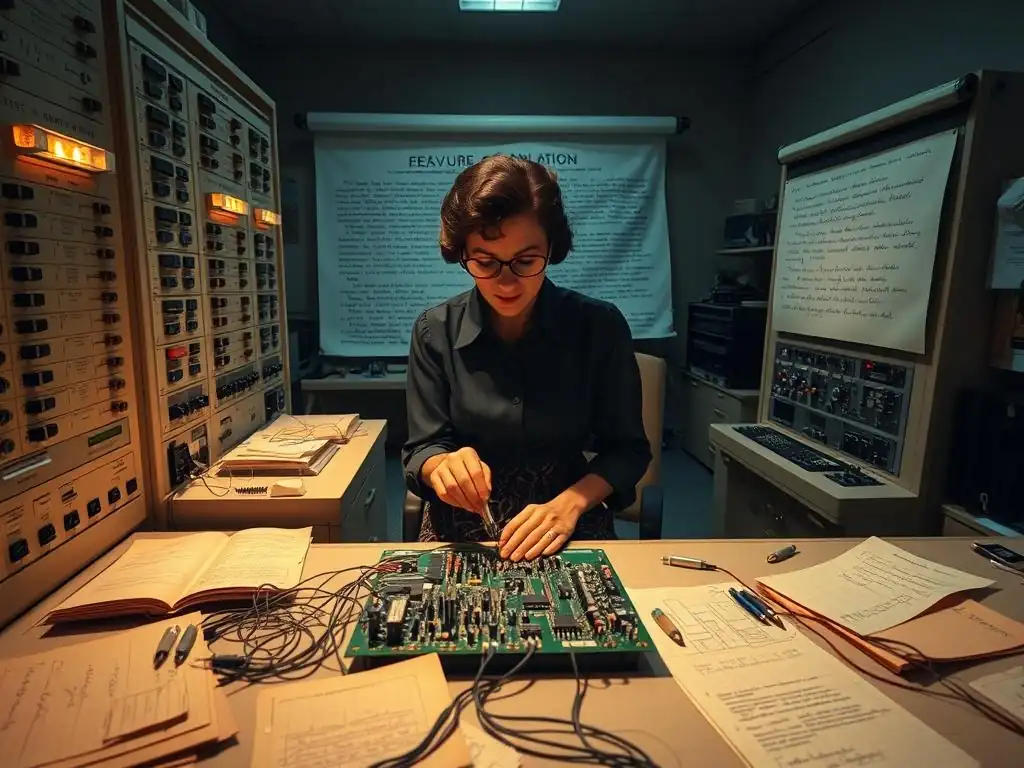
Welcome to WomenInScienceHistory.com!
Delve into the remarkable stories of women who shaped the world of science. Did you know that a brilliant mathematician at NIST, Ida Rhodes, played a pivotal role in the evolution of computer systems design? Her innovative work laid the groundwork for modern computing and even translation software. Discover her incredible journey and the lasting impact of her contributions to Computer Science, a story often untold, right here. Prepare to be inspired.
- Introduction: Celebrating Ida Rhodes' Legacy in Computer Science
- Early Life and Education of Ida Rhodes
- Ida Rhodes' Groundbreaking Work at NIST
- Key Contributions to Computer Programming Techniques
- Challenges Faced by Ida Rhodes as a Woman in Computer Science
- Ida Rhodes' Impact on Modern Computer Science
- Legacy and Honors for Ida Rhodes
- Conclusion: Ida Rhodes' Indelible Mark on Computer System Design and Automatic Translation
-
Frequently Asked Questions
- What was Ida Rhodes' main area of expertise?
- Where did Ida Rhodes work during her impactful career?
- What were some of the major challenges faced by women in science during Ida Rhodes' time?
- What is "WomenInScienceHistory.com" hoping to achieve?
- What is Ida Rhodes most known for in the field of computer science?
- Final Reflection: The Enduring Legacy of Innovation
- Ignite Your Inner Pioneer: Decode the Future!
Introduction: Celebrating Ida Rhodes' Legacy in Computer Science
Highlighting the Contributions of Women in Early Computer Science
The nascent field of computer science in the mid-20th century was a dynamic frontier, often portrayed as a domain exclusively shaped by male engineers and mathematicians. However, beneath the surface of well-publicized male achievements, countless women played pivotal, often uncredited, roles in laying the foundational bricks of modern computing. From the "human computers" who performed complex calculations by hand, to the pioneering programmers of machines like ENIAC, women were indispensable to the early triumphs of digital technology. Their intellectual prowess and meticulous dedication were crucial in transforming theoretical concepts into practical applications, yet their narratives have historically been overlooked.
Recognizing these foundational contributions is not merely an act of historical revisionism but an essential step in understanding the true collaborative nature of scientific progress. Figures like Ida Rhodes stand as testaments to the profound impact women had on shaping the digital age. Her work extended beyond mere programming; she was deeply involved in the very conceptualization and Ida Rhodes computer systems design, pushing the boundaries of what early machines could achieve. Her story illuminates a critical, often hidden, chapter in the evolution of computing.
Ida Rhodes: A Pioneer at the National Bureau of Standards (NIST)
The National Bureau of Standards (NBS), later renamed the National Institute of Standards and Technology (NIST), was a crucible of innovation in the post-war era, particularly in the burgeoning field of computer development. It was within this esteemed institution that Ida Rhodes carved out a distinguished career, becoming a central figure in the design and application of some of the nation's earliest electronic digital computers. Her tenure at NBS, spanning from 1947 until her retirement in 1971, marked a period of intense technological advancement, much of which bore her indelible stamp.
Rhodes' contributions at NIST were multifaceted, encompassing not only the logical architecture of computing machines but also the development of groundbreaking software applications. She was instrumental in the Ida Rhodes computer systems design for the SEAC and DYSEAC computers, which were among the first stored-program electronic computers in the United States. Furthermore, her pioneering efforts in automatic language translation laid critical groundwork for an entirely new domain of computational linguistics. Her unique blend of mathematical rigor and practical foresight solidified her status as a true pioneer in the field.
Early Life and Education of Ida Rhodes
Ida Rhodes' Journey to the United States
Ida Rhodes was born Ida Karaites in 1900 in a small Jewish village near Kamianets-Podilskyi, then part of the Russian Empire (modern-day Ukraine). Her early life was marked by the tumultuous political and social landscape of the early 20th century. Seeking greater opportunities and escaping the pervasive anti-Semitism of the era, her family made the courageous decision to immigrate to the United States. In 1913, at the age of 13, she arrived in the U.S., embarking on a new chapter that would profoundly shape her future and allow her intellectual talents to flourish.
The transition to life in America presented its own set of challenges, including adapting to a new language and culture. However, the U.S. offered a landscape of educational possibilities that were largely unavailable to women of her background in her native country. This move proved to be a pivotal moment, providing her with the environment and resources necessary to pursue a rigorous academic path, ultimately leading her to become a pivotal figure in the nascent field of computer science.
Academic Pursuits and Mathematical Foundations
Ida Rhodes' academic journey began with a strong inclination towards mathematics, a field in which she demonstrated exceptional aptitude. She enrolled at Cornell University, a prestigious institution, where she pursued her undergraduate studies. In 1923, she earned her Bachelor of Arts degree in Mathematics. Her thirst for knowledge did not stop there; she continued her studies at Cornell, completing her Master of Arts degree in Mathematics in 1925. This intensive period of mathematical training provided her with an unparalleled foundation in logical reasoning, algorithmic thinking, and abstract problem-solving—skills that would prove indispensable in her future career.
Following her graduate studies, Rhodes taught mathematics at Cornell and later at the University of Pennsylvania. This teaching experience further solidified her understanding of complex mathematical concepts and honed her ability to explain intricate ideas, which would later be invaluable when conceptualizing and communicating aspects of Ida Rhodes computer systems design. Her profound grasp of mathematical theory was the bedrock upon which she would build her groundbreaking contributions to the world of early computing, enabling her to approach the challenges of machine logic and data processing with unique insight.
Ida Rhodes' Groundbreaking Work at NIST
Designing Early Computer Systems: SEAC and DYSEAC
Ida Rhodes joined the National Bureau of Standards (NBS) in 1947, a critical period when the United States was investing heavily in electronic computing. Her expertise was quickly leveraged in the development of the Standards Eastern Automatic Computer (SEAC), which became operational in 1950. SEAC was one of the earliest large-scale, general-purpose electronic digital computers in the U.S. and was groundbreaking for its use of all-diode logic, making it remarkably compact and reliable for its time. Rhodes played a significant role in the logical Ida Rhodes computer systems design of SEAC, contributing to its architecture and operational efficiency. Her work ensured that the machine could effectively handle complex scientific and statistical computations for various government agencies.
Building on the success of SEAC, Rhodes was also deeply involved in the design and development of its successor, the DYnamic SEAC (DYSEAC), which became operational in 1954. DYSEAC was a mobile computer, designed to be transported by truck, and was a pioneering effort in creating real-time processing capabilities for field operations. Rhodes' contributions to DYSEAC's Ida Rhodes computer systems design focused on its input/output mechanisms and its ability to interact directly with various sensors and communication equipment. This innovative approach to mobile computing underscored her forward-thinking vision and her ability to translate complex theoretical concepts into practical, robust computer systems.
Ida Rhodes' Role in the Development of Early Programming Languages
While Ida Rhodes is not credited with inventing a specific programming language, her contributions were fundamental to the methodology and structure of early programming. She was a strong advocate for systematic and logical approaches to program development, a crucial aspect in the nascent days of computing when programming was often an ad-hoc art. Her work involved defining the precise logical steps and data structures required for a computer to perform a task, which effectively laid the groundwork for future programming language design principles. She understood the importance of clear, unambiguous instructions for machines.
Rhodes' focus on formalizing programming processes was evident in her emphasis on rigorous documentation and systematic analysis, which were vital for debugging and optimizing early, resource-intensive programs. She helped establish best practices for coding and problem decomposition, which are still cornerstones of modern software engineering. Her insights into how humans could effectively communicate with machines, translating complex problems into executable logic, were integral to the evolution of programming beyond simple machine code, influencing the very thought process behind Ida Rhodes computer systems design for software.
Pioneering Automatic Language Translation Software
Perhaps one of Ida Rhodes' most visionary contributions was her pioneering work in automatic language translation, a field that would later evolve into natural language processing (NLP) and artificial intelligence. Her efforts culminated in the GEORGETOWN-IBM experiment in 1954, which publicly demonstrated the first successful machine translation of Russian into English. Rhodes was instrumental in developing the algorithms and logical rules that enabled this groundbreaking achievement. She devised methods for analyzing sentence structure and vocabulary, translating these linguistic patterns into a format that the computer could process and output.
This early foray into machine translation was not without its challenges, requiring meticulous attention to grammatical rules and semantic ambiguities. Rhodes' work involved creating a system that could handle the complexities of language, a task that required both linguistic insight and a deep understanding of Ida Rhodes computer systems design to manage vast amounts of data and rules. The success of the GEORGETOWN-IBM experiment, largely due to her innovative algorithmic contributions, marked a significant milestone, proving the feasibility of using computers for tasks beyond pure numerical computation and opening doors to entirely new applications of computing power.
Key Contributions to Computer Programming Techniques
The Rhodes Method of Program Analysis
Ida Rhodes developed a systematic approach to analyzing data processing systems, which became informally known as "The Rhodes Method." This method involved breaking down complex computational problems into smaller, manageable logical units, ensuring that each step of a program was rigorously defined and understood. In an era where debugging was incredibly arduous and expensive, her method provided a structured framework for identifying potential errors and optimizing program flow before execution. It emphasized clear documentation, flowcharting, and a logical progression from problem statement to executable code.
This methodical approach was crucial for the reliability and efficiency of early computer systems like SEAC and DYSEAC. By applying The Rhodes Method, programmers could achieve greater accuracy and reduce the trial-and-error often associated with early software development. Her insistence on a systematic approach to Ida Rhodes computer systems design and programming greatly enhanced the maintainability and scalability of programs, setting a high standard for software engineering practices decades before the term became commonplace.
Contributions to Linear Programming and Optimization
Beyond her work on system architecture and machine translation, Ida Rhodes made significant contributions to the application of mathematical optimization techniques, particularly linear programming, using early computers. Linear programming is a mathematical method for determining a way to achieve the best outcome (such as maximum profit or lowest cost) in a given mathematical model, subject to some constraints. Rhodes recognized the immense potential of computers to solve these complex optimization problems, which were previously too cumbersome for manual calculation.
She applied her expertise in linear programming to various governmental and scientific challenges, such as resource allocation, logistics, and scheduling. Her work demonstrated how computers could be leveraged not just for scientific calculation but also for strategic decision-making and operational efficiency. By developing and implementing algorithms for these optimization tasks, she showed the practical utility of Ida Rhodes computer systems design in addressing real-world operational challenges, proving the immense value of computational methods beyond theoretical research.
Developing Algorithms for Machine Translation
Ida Rhodes' pioneering efforts in machine translation were underpinned by her meticulous development of specific algorithms designed to bridge the gap between human language and machine understanding. Her algorithms for the GEORGETOWN-IBM experiment focused on rule-based translation, where linguistic patterns, grammatical structures, and vocabulary were encoded as logical rules that the computer could apply. For instance, she devised methods to handle word order variations between languages and to identify the correct meaning of words based on context, a formidable challenge for early computing power.
These algorithms were iterative, evolving as more linguistic data became available and as the understanding of computational linguistics deepened. Her work laid the fundamental conceptual framework for what would become statistical machine translation and, eventually, neural machine translation in later decades. The foresight in her Ida Rhodes computer systems design for such a complex, human-centric task underscored her remarkable ability to blend rigorous mathematical logic with an intuitive understanding of language, setting the stage for future advancements in artificial intelligence and natural language processing.
Challenges Faced by Ida Rhodes as a Woman in Computer Science

Overcoming Gender Bias in a Male-Dominated Field
Ida Rhodes pursued her career in computer science during an era when STEM fields, particularly those involving advanced engineering and theoretical mathematics, were overwhelmingly male-dominated. While women were often employed in "human computer" roles or as early programmers, their contributions in leadership, Ida Rhodes computer systems design, and theoretical development were frequently undervalued or overlooked. Rhodes undoubtedly navigated a landscape where implicit biases and explicit barriers could hinder professional advancement and recognition. The prevailing societal norms often dictated that women's roles were secondary or supportive, rather than primary innovators.
Despite these systemic challenges, Rhodes' intellectual brilliance and unwavering dedication allowed her to not only enter but also excel in this demanding field. Her persistence in a male-centric environment speaks volumes about her resilience. While specific instances of bias against her might not be widely documented, the general climate meant that her achievements had to speak even louder to gain the respect and influence she deserved within the National Bureau of Standards and the broader scientific community. Her success serves as a powerful reminder of the determination required for women to break through established gender barriers in scientific pursuits.
Recognition and Legacy Within the NIST and Beyond
Within the National Bureau of Standards (NIST), Ida Rhodes' contributions were indeed recognized and valued. She held significant positions and was a key figure in the mathematical and computing divisions for over two decades. Her long tenure and consistent output of groundbreaking work, particularly in Ida Rhodes computer systems design and machine translation, earned her the respect of her colleagues and superiors. She was a testament to the fact that competence and innovation could, to some extent, transcend the gender biases prevalent at the time, particularly within a scientific institution focused on merit.
However, like many pioneering women in science, her broader public recognition came much later than that of her male counterparts. For decades, her name remained less prominent in popular histories of computing. Nevertheless, her work was foundational, influencing subsequent research and development within NIST and beyond. Her legacy, though initially understated, has steadily gained the recognition it deserves as historical accounts are being re-evaluated to include the often-overlooked narratives of women who shaped the digital world.
Ida Rhodes' Impact on Modern Computer Science
Influence on Subsequent Generations of Programmers
Ida Rhodes' methodical approach to Ida Rhodes computer systems design and programming had a profound, albeit often indirect, influence on subsequent generations of programmers. Her emphasis on systematic analysis, clear logical flow, and rigorous documentation, encapsulated in "The Rhodes Method," became foundational principles for good software engineering. While not formalized into a curriculum for decades, these practices were disseminated through her work and the training of her colleagues, slowly percolating into the broader computing community. She instilled a discipline that moved programming from an intuitive craft to a more structured, engineering-driven process.
Her insistence on breaking down complex problems into manageable components and thoroughly understanding data processing pathways laid critical groundwork for modular programming and structured programming paradigms that emerged in later decades. Programmers who followed her path, whether directly or indirectly, benefited from the intellectual rigor she brought to the field. Her foundational contributions to the very way we think about organizing and implementing computer logic continue to resonate in modern software development methodologies, ensuring that complex systems can be built reliably and efficiently.
The Enduring Relevance of Her Early Computer System Designs
While the physical SEAC and DYSEAC computers are now historical artifacts, the underlying principles of Ida Rhodes computer systems design that Ida Rhodes helped establish remain remarkably relevant. Her work on SEAC, one of the first stored-program computers, helped solidify the architectural concepts that define nearly every computer system today: the separation of memory, processing unit, and input/output. This foundational architecture, often attributed to von Neumann, was put into practical, operational form in machines like SEAC, with Rhodes playing a key role in its logical implementation.
Furthermore, DYSEAC's pioneering role as a mobile computer with real-time processing capabilities foreshadowed modern concepts like embedded systems and edge computing. The challenges she addressed in making computing power portable and responsive to immediate data inputs are still central to contemporary mobile devices, IoT (Internet of Things) applications, and autonomous systems. Her early contributions to Ida Rhodes computer systems design for real-time interaction and mobile deployment demonstrate a visionary understanding of computing's future trajectory, proving that foundational principles developed in the 1950s continue to influence cutting-edge technology today.
Legacy and Honors for Ida Rhodes
Awards and Recognition Received During Her Career
Throughout her distinguished career at the National Bureau of Standards (NBS), Ida Rhodes received several accolades that recognized her exceptional contributions to computer science and public service. Notably, in 1970, she was awarded the Department of Commerce Gold Medal for distinguished service. This prestigious award acknowledged her outstanding accomplishments in the field of electronic computing and her significant impact on the advancement of computer applications within the U.S. government. The Gold Medal is the highest honor granted by the Secretary of Commerce, underscoring the profound value placed on her work by her peers and the federal government.
Beyond this significant recognition, Rhodes also received special commendations for her pioneering efforts in machine translation and her contributions to the logical Ida Rhodes computer systems design of the SEAC and DYSEAC computers. These awards were a testament to her technical expertise, her leadership, and her ability to push the boundaries of what was possible with early computing machines. They affirmed her position as a leading authority in the nascent field of computer science during a critical period of its development.
Remembering Ida Rhodes: A True Pioneer
Ida Rhodes passed away in 1986, leaving behind an indelible legacy that continues to be celebrated within the history of computing. While her name may not be as widely recognized as some of her male contemporaries, her contributions are increasingly highlighted in scholarly works and historical accounts that aim to rectify the omissions of the past. She is remembered not only for her technical brilliance but also for her pioneering spirit and her unwavering dedication to advancing the field of computer science. Her work on Ida Rhodes computer systems design and automatic translation is now frequently cited as foundational to both hardware architecture and artificial intelligence.
Her story serves as an inspiration for future generations, particularly for women pursuing careers in STEM. Ida Rhodes demonstrated that with intellect, perseverance, and a methodical approach, it was possible to make profound and lasting contributions even in challenging, male-dominated environments. Her journey from a young immigrant to a leading figure at a national scientific institution exemplifies the power of education and determination in shaping scientific progress. She is rightfully remembered as a true pioneer whose innovative spirit helped lay the groundwork for the digital world we inhabit today.
Conclusion: Ida Rhodes' Indelible Mark on Computer System Design and Automatic Translation
Ida Rhodes stands as a towering figure in the early history of computer science, whose contributions to Ida Rhodes computer systems design and automatic language translation were nothing short of revolutionary. Her visionary work at the National Bureau of Standards, particularly with the SEAC and DYSEAC computers, helped define the very architecture of electronic computing. Beyond hardware, her systematic approach to program analysis and her pioneering algorithms for machine translation laid crucial groundwork for modern software engineering and artificial intelligence, demonstrating a remarkable foresight into the future applications of computing power.
Her legacy extends far beyond the technical innovations she spearheaded. Ida Rhodes' career serves as a powerful narrative of perseverance and intellectual excellence, highlighting the often-unacknowledged contributions of women in shaping scientific and technological progress. She navigated a male-dominated field to leave an indelible mark, influencing not only the machines and software of her time but also the very methodologies that continue to drive computer science today. Ida Rhodes' pioneering spirit ensures her rightful place as a foundational figure whose work continues to resonate in the vast digital landscape she helped create.
Frequently Asked Questions
What was Ida Rhodes' main area of expertise?
Ida Rhodes was a pioneer in computer systems design and translation software. She made significant contributions to the early development of computers.
Where did Ida Rhodes work during her impactful career?
Rhodes worked at the National Bureau of Standards (now NIST), where she spent decades contributing to computer development. This was a crucial time for technological advancement.
What were some of the major challenges faced by women in science during Ida Rhodes' time?
Women faced discrimination and limited opportunities in science. They often struggled to gain recognition for their groundbreaking work.
What is "WomenInScienceHistory.com" hoping to achieve?
The website aims to highlight the contributions of women in science, inspiring future generations. It seeks to correct the historical record and give women their due credit.
What is Ida Rhodes most known for in the field of computer science?
She is widely recognized for her work in early computer systems design. She also developed translation software, a vital step in computer language development.
Final Reflection: The Enduring Legacy of Innovation
The story of Ida Rhodes, a pioneer in computer systems design, resonates deeply today because her contributions laid the groundwork for the very technology that shapes our modern world. Her dedication to innovation, particularly in translation software and early computer systems, serves as a powerful reminder of the transformative potential of individual ingenuity and the importance of recognizing unsung heroes in STEM.
Ida Rhodes' influence extends far beyond the technical specifications of the systems she designed. It underscores the critical role women have played in shaping the digital landscape, often without receiving due recognition. Her work inspires us to look beyond the surface and acknowledge the diverse voices that have contributed to technological advancement. The best way to predict the future is to create it.
- Peter Drucker, a sentiment Ida Rhodes embodied throughout her career.
Let us, therefore, carry forward Ida Rhodes' spirit of innovation and dedication. Consider how you can contribute to a more inclusive and equitable future in technology, ensuring that the contributions of all individuals, regardless of background, are celebrated and valued. Embrace the challenge of designing systems that not only solve problems but also empower and connect people, just as Ida Rhodes envisioned.
Ignite Your Inner Pioneer: Decode the Future!
Thank you for delving into Ida Rhodes' inspiring story! You've now seen how her groundbreaking work shaped the world of computer science. Ready to make your own mark?
Here's how you can channel Ida's innovative spirit:
- Embrace a new coding challenge: Dedicate just one hour this week to exploring a coding language you've never tried before. You might discover your hidden talent!
- Dive deeper: Research the history of early programming languages like Short Code and see how Rhodes' work influenced their development.
- Share this article: Inspire others by sharing Ida's story on your favorite social media platforms and tag Women in Science History.
What seemingly impossible problem will you tackle next?