
Unsung Heroines of the Retort: The Women Assisting 18th Century Chemical Breakthroughs

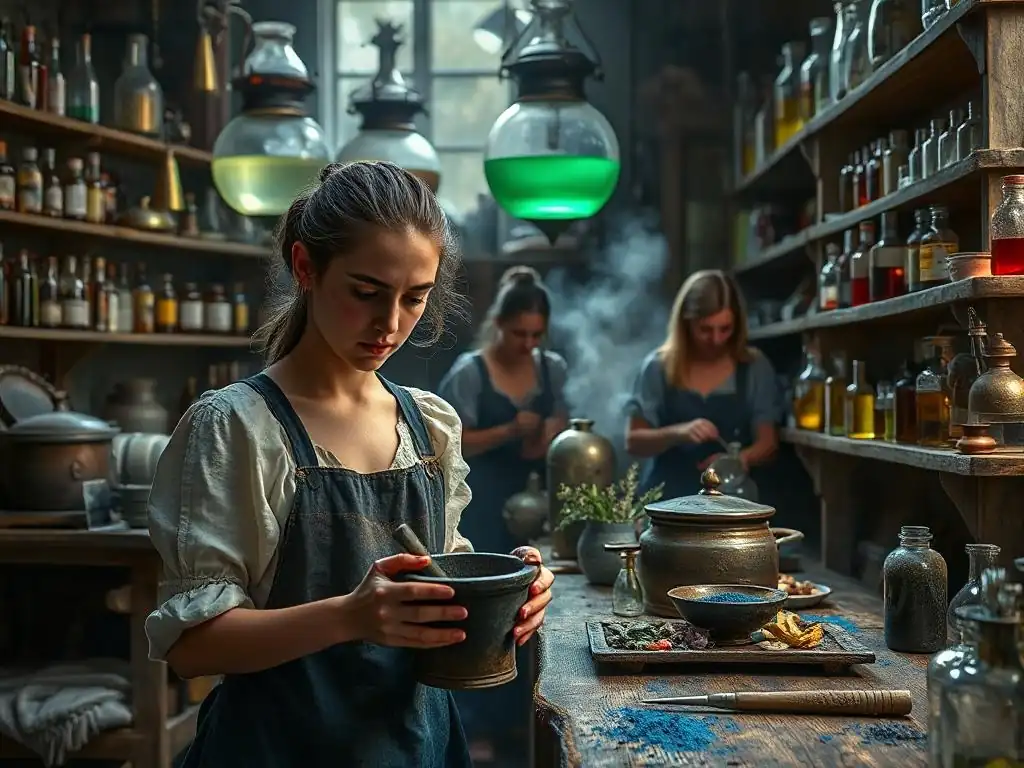
Welcome to WomenInScienceHistory.com!
Dive into the fascinating world of scientific discovery and uncover the untold stories of remarkable women. This month, we explore Women's Chemical Breakthroughs in the 18th Century, revealing the crucial, yet often uncredited, roles they played in shaping our understanding of chemistry. Prepare to be amazed by the ingenuity and resilience of these unsung heroines of the retort – their contributions might just surprise you. Intrigued? Read on to discover how these women defied expectations and left an indelible mark on science!
- Introduction: Recognizing Women's Role in 18th Century Chemistry
- The Laboratory Assistants: Hands Behind the 18th Century Chemical Discoveries
- Prominent Examples: Women's Chemical Breakthroughs 18th Century
- Skills and Expertise: What Women Brought to 18th Century Chemistry
- The Impact of Women's Assistance on 18th Century Chemical Progress
- Overcoming Obstacles: Challenges Faced by Women in the Chemical Sciences
- Legacy and Recognition: Reclaiming Women's Place in Chemical History
- Conclusion: Celebrating the Unsung Heroines of 18th Century Chemistry
-
Frequently Asked Questions
- What were some of the primary obstacles faced by women in chemistry during the 18th century?
- What role did women typically play in 18th-century chemical research?
- Can you name a specific example of a woman who contributed to chemical breakthroughs in the 18th century?
- Why is it important to highlight the contributions of women in 18th-century chemistry?
- How did the lack of formal recognition impact the careers and legacies of women in chemistry during this period?
- Final Reflection: Illuminating the Forgotten Flames
- Ignite Your Inner Chemist: Take Action Now!
Introduction: Recognizing Women's Role in 18th Century Chemistry
Highlighting the Invisible Contributions of Women in Early Chemistry
The narrative of 18th-century chemistry is often dominated by the names of male luminaries: Antoine Lavoisier, Joseph Priestley, Henry Cavendish. Yet, beneath the surface of official records and published works, a crucial network of female collaborators silently facilitated many of the foundational women’s chemical breakthroughs 18th century. These unsung heroines, often working in domestic laboratories or as intellectual partners, were instrumental in the practical execution, meticulous documentation, and broader dissemination of scientific knowledge. Their contributions, though frequently unacknowledged, formed the bedrock upon which the chemical revolution was built.
Indeed, understanding the true scope of 18th-century scientific progress requires a deliberate effort to uncover these hidden figures. From preparing reagents to translating complex scientific texts, women's involvement was pervasive. They were not merely passive observers but active participants whose skills and dedication directly impacted the experimental accuracy and theoretical developments that characterized this pivotal era in chemistry. Recognizing their roles offers a more complete and accurate historical account of women’s chemical breakthroughs 18th century.
The Societal Context: Barriers Faced by Women in 18th Century Science
The 18th century presented formidable societal barriers to women's formal participation in science. Universities were largely closed to female students, and prestigious scientific societies, such as the Royal Society of London or the Académie des Sciences in Paris, typically excluded women from membership or public presentation of their work. This institutional exclusion meant that women rarely held official scientific positions or received formal recognition for their intellectual endeavors.
Despite these limitations, women found alternative avenues for scientific engagement, often within the confines of their homes or through informal networks. Their education, if it occurred, was frequently self-directed, through private tutors, or within enlightened family circles. This domestic context, while restrictive in terms of public acknowledgment, paradoxically provided a unique space for practical involvement in scientific research, allowing for significant, albeit often uncredited, women’s chemical breakthroughs 18th century.
The Laboratory Assistants: Hands Behind the 18th Century Chemical Discoveries
Defining "Assistant": Roles Beyond the Official Record
In the context of 18th-century chemistry, the term "assistant" encompassed a broad spectrum of roles that extended far beyond a formal, salaried position. Many individuals, particularly women, engaged in scientific work as unpaid collaborators, family members, or even as skilled household staff. These assistants were the backbone of many early laboratories, performing the essential, often laborious, tasks that allowed principal researchers to focus on theoretical concepts and experimental design.
Their contributions were multifaceted and vital. These women were responsible for preparing and purifying chemical substances, meticulously cleaning delicate glassware, maintaining complex apparatus, and ensuring the smooth operation of experiments. Without their diligent efforts in these practical domains, many of the celebrated women’s chemical breakthroughs 18th century would have been logistically impossible to achieve.
Wives and Daughters: Domestic Partnerships in Chemical Research
A significant number of women participated in chemical research through domestic partnerships, often as wives or daughters of prominent male chemists. Their proximity to the home laboratory, which was common in this era, made their involvement natural and often indispensable. These women frequently managed the practical aspects of the laboratory, from ordering supplies to overseeing daily operations, effectively acting as laboratory managers.
Beyond logistical support, many wives and daughters engaged intellectually with the research. They participated in discussions, helped refine experimental procedures, and meticulously recorded observations. Figures like Marie-Anne Paulze Lavoisier exemplify this model, demonstrating how deeply intertwined domestic life and scientific pursuit could become, fostering significant women’s chemical breakthroughs 18th century within the family unit.
Paid Assistants and Servants: The Labor Force of the 18th Century Chemistry Lab
While less frequently documented for women than for men, paid assistants and household servants also played a role in 18th-century chemical laboratories. These individuals were typically employed for the more routine, often physically demanding, or dangerous tasks. Their work, though often perceived as menial, was absolutely essential for the functioning of any active chemical research space.
Tasks performed by these assistants included grinding raw materials, stirring mixtures, maintaining furnace temperatures for extended periods, and handling potentially toxic substances. Although their names rarely appear in historical accounts, their labor freed up the principal investigators to focus on analysis and interpretation, indirectly but fundamentally contributing to the overall progress and the realization of women’s chemical breakthroughs 18th century.
Prominent Examples: Women's Chemical Breakthroughs 18th Century
Madame Lavoisier: A Pioneer in Chemical Nomenclature and Illustration
Marie-Anne Paulze Lavoisier (1758–1836) stands as one of the most prominent, though still often underappreciated, figures in 18th-century chemistry. She was not merely the wife of Antoine Lavoisier but a highly educated and actively engaged intellectual partner whose contributions were integral to the chemical revolution. Fluent in English, Latin, and French, she possessed a keen intellect and artistic talent, which she applied directly to scientific endeavors.
Her participation in the Lavoisier laboratory was extensive and multifaceted. She managed the laboratory's finances, meticulously recorded experimental data, and hosted influential scientific salons that brought together leading thinkers of the Enlightenment. Her direct involvement in the rigorous, quantitative experiments that redefined chemistry was crucial for establishing the new paradigm, contributing directly to women’s chemical breakthroughs 18th century in France.
Madame Lavoisier's Contributions to Antoine Lavoisier's Research
Madame Lavoisier was an active participant in Antoine Lavoisier's groundbreaking experiments on combustion and respiration. She assisted in the precise measurements of gases, particularly oxygen, which were fundamental to disproving the phlogiston theory and establishing the law of conservation of mass. Her meticulous record-keeping during these experiments ensured the accuracy and reproducibility of results, a cornerstone of the new quantitative chemistry.
Furthermore, she played a critical role in translating key scientific texts from English into French for her husband. Notably, she translated Joseph Priestley's work on gases and Richard Kirwan's Essay on Phlogiston, which allowed Lavoisier to engage directly with and ultimately refute the prevailing phlogiston theory. This intellectual bridge was indispensable for the global dissemination and acceptance of the new chemistry, directly enabling women’s chemical breakthroughs 18th century in the field of chemical theory.
Illustrating and Translating Chemical Texts: Visualizing Scientific Progress
Beyond her laboratory assistance, Madame Lavoisier's artistic and linguistic skills were vital to the communication of the new chemistry. She produced highly accurate and detailed engravings for Lavoisier's seminal work, Traité Élémentaire de Chimie (Elementary Treatise of Chemistry, 1789). These illustrations were not mere decorative elements; they were essential for visually explaining complex experimental setups and apparatus, making the new chemical procedures understandable to a wider scientific audience.
Her translations were equally significant. By translating Kirwan's Essay on Phlogiston, she not only made the arguments accessible to French chemists but also added her own critical annotations, demonstrating a deep understanding of the chemical principles at stake. This comprehensive engagement, from practical experimentation to detailed illustration and critical translation, solidifies her place as a central figure in women’s chemical breakthroughs 18th century.
Jane Marcet: Popularizing Chemistry Through Education
Jane Marcet (1769–1858) was an English author and educator who, though not a laboratory researcher in the traditional sense, made profound contributions to chemistry through her pioneering efforts in popular science education. Born Jane Haldimand, she developed an early interest in science, particularly chemistry, through informal discussions and lectures, including those by Humphry Davy at the Royal Institution.
Recognizing the lack of accessible scientific literature, especially for women and children, Marcet embarked on a mission to demystify complex scientific concepts. Her work aimed to make chemistry engaging and understandable to a broader public, thereby fostering a greater appreciation for the subject and indirectly paving the way for future women’s chemical breakthroughs 18th century (and into the 19th).
Marcet's "Conversations on Chemistry": Making Science Accessible
Marcet's most influential work was Conversations on Chemistry, Intended More Especially for the Female Sex, first published anonymously in 1806. This book adopted a unique dialogue format between a knowledgeable instructor (Mrs. B) and two curious pupils (Caroline and Emily), making complex chemical principles relatable and engaging. It covered fundamental topics such as the properties of gases, acids, bases, salts, and the nature of combustion, all explained through clear language and practical examples.
The book was an extraordinary success, undergoing at least 16 editions in Britain and 23 in the United States, selling over 160,000 copies by 1853. Its immense popularity demonstrated a significant public appetite for scientific knowledge and proved that chemistry could be effectively communicated outside of academic institutions. This widespread dissemination of chemical understanding was a crucial contribution to women’s chemical breakthroughs 18th century by inspiring new generations.
Impact on Public Understanding and Encouraging Scientific Pursuits
Marcet's Conversations on Chemistry played a pivotal role in demystifying chemistry, transforming it from an esoteric subject into one accessible to a wide audience. It inspired countless individuals, including the renowned chemist Michael Faraday, who credited Marcet's book as a foundational influence on his scientific career. Her clear explanations and engaging style helped to cultivate a public understanding of chemical processes and their relevance to everyday life.
By making chemistry approachable and demonstrating its practical applications, Marcet's work indirectly encouraged scientific pursuits, particularly among women who had limited access to formal education. Her efforts helped to lay the groundwork for a more scientifically literate society, fostering an environment where future women’s chemical breakthroughs 18th century and beyond could flourish, even if her own contributions were primarily pedagogical rather than experimental.
Émilie du Châtelet: Bridging Physics and Chemistry
Gabrielle Émilie Le Tonnelier de Breteuil, Marquise du Châtelet (1706–1749), was an extraordinary intellectual figure of the French Enlightenment, renowned for her profound contributions to mathematics, physics, and philosophy. Though primarily known for her work in physics, her rigorous approach to scientific inquiry and her investigations into fundamental properties of matter had significant implications for the nascent field of chemistry. She was largely self-taught in advanced mathematics and science, a testament to her fierce intellect and determination.
Du Châtelet's intellectual curiosity extended across the scientific spectrum, encompassing everything from calculus to the nature of fire. Her personal laboratory and extensive library at her chateau at Cirey-sur-Blaise were centers of scientific discourse and experimentation, attracting leading thinkers like Voltaire, with whom she had a long-standing intellectual partnership. Her work represents a crucial, albeit often overlooked, aspect of women’s chemical breakthroughs 18th century.
Du Châtelet's Translations and Interpretations of Newtonian Physics
Du Châtelet's most monumental achievement was her translation and commentary of Isaac Newton's Philosophiæ Naturalis Principia Mathematica (Mathematical Principles of Natural Philosophy), published posthumously in 1759. This was not merely a linguistic translation but an extensive intellectual undertaking, including her own detailed mathematical derivations, explanations, and critical interpretations of Newton's complex theories. Her translation remains the standard French version of the Principia to this day.
Her work made Newtonian physics, with its emphasis on universal gravitation and the laws of motion, accessible to the French-speaking world. This intellectual endeavor profoundly influenced subsequent scientific thought, including the understanding of forces, matter, and energy, which are foundational concepts in chemistry. By clarifying and disseminating these ideas, she indirectly contributed to the intellectual framework necessary for women’s chemical breakthroughs 18th century.
Contributions to Understanding Fire and Heat
Beyond her work on Newton, Émilie du Châtelet conducted original research, particularly on the nature of fire and heat. In 1737, she submitted a dissertation, Dissertation sur la nature et la propagation du feu (Dissertation on the Nature and Propagation of Fire), to the French Academy of Sciences. In this work, she explored the properties of fire, proposing that it was not merely a phenomenon but a distinct substance, a view that resonated with contemporary ideas about caloric.
Her research involved both theoretical reasoning and experimental considerations, demonstrating her rigorous scientific methodology. She engaged with the prevailing theories of her time, including those of Leibniz and Newton, and attempted to quantify aspects of heat. Although some of her specific conclusions were later superseded, her systematic approach to studying fire and heat was pioneering, marking a significant intellectual contribution to the conceptual underpinnings of women’s chemical breakthroughs 18th century in the study of thermochemistry.
Skills and Expertise: What Women Brought to 18th Century Chemistry
Practical Skills: Distillation, Filtration, and Preparation of Chemical Substances
The practical execution of 18th-century chemical experiments demanded a high degree of precision, patience, and meticulousness. Women, often accustomed to the exacting demands of domestic tasks such as cooking, brewing, dyeing, and apothecary work, brought an inherent aptitude for these essential laboratory skills. They were adept at processes like distillation, crucial for purifying liquids and separating components, and filtration, vital for obtaining pure precipitates and solutions.
Their expertise extended to the careful preparation of chemical substances, which often involved grinding, mixing, and heating various compounds under specific conditions. These tasks, though seemingly mundane, were fundamental to ensuring the accuracy and reliability of experimental results. The proficiency of these "hands-on" assistants directly enabled the systematic collection of data that underpinned many women’s chemical breakthroughs 18th century.
Observation and Documentation: Detailed Records and Experimental Notes
In an era before standardized scientific instruments were widely available, the keen observational skills of laboratory assistants were invaluable. Women often excelled at noting subtle changes in color, texture, temperature, and states of matter during experiments. These detailed observations were critical for interpreting results and identifying new phenomena.
Furthermore, many women were responsible for the meticulous documentation of experimental procedures and outcomes. They transcribed dictated notes, maintained laboratory notebooks, and often drafted reports, ensuring that experiments could be replicated and findings disseminated. This rigorous record-keeping was indispensable for the scientific method and directly facilitated the intellectual development of women’s chemical breakthroughs 18th century.
Translation and Communication: Bridging Language Barriers in Scientific Exchange
The 18th century was a period of burgeoning international scientific exchange, with groundbreaking discoveries occurring across Europe. However, language barriers often impeded the rapid dissemination of knowledge. Many educated women, particularly those from aristocratic or intellectual backgrounds, were proficient in multiple languages, including Latin, French, English, and German.
This linguistic prowess made them invaluable translators of scientific texts, letters, and journals. By bridging these language divides, women enabled scientists to stay abreast of international developments, critique existing theories, and build upon each other's work. This vital role in scientific communication significantly accelerated the pace of discovery and the intellectual exchange that characterized women’s chemical breakthroughs 18th century.
The Impact of Women's Assistance on 18th Century Chemical Progress
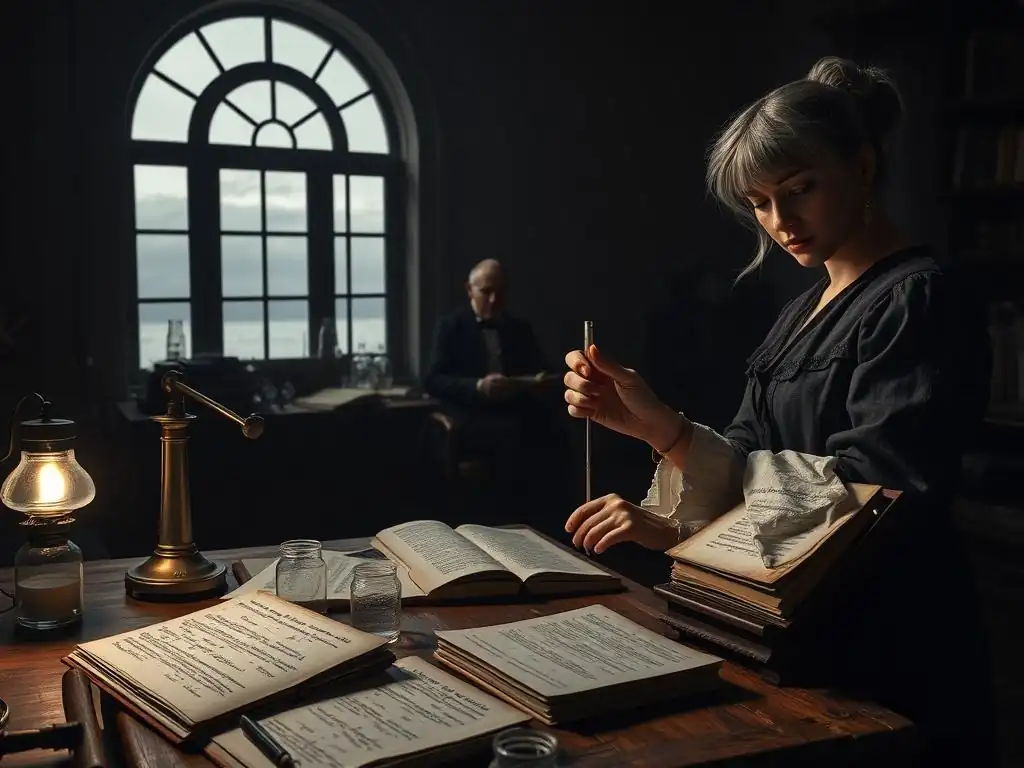
Enabling Larger-Scale Experiments and Data Collection
The presence of skilled assistants, often women, significantly expanded the scope and scale of chemical experimentation in the 18th century. With reliable hands to manage the practical aspects of the laboratory, leading chemists were freed from time-consuming manual tasks, allowing them to design more complex, multi-stage experiments. This division of labor enabled the execution of longer, more intricate studies involving numerous samples and extended periods of observation.
The ability to conduct larger-scale experiments directly translated into the collection of vast amounts of empirical data. This quantitative revolution in chemistry, exemplified by Lavoisier's precise measurements of mass in chemical reactions, would have been exceedingly difficult, if not impossible, without the dedicated support of these assistants. Their efforts directly contributed to the foundational data that underpinned many women’s chemical breakthroughs 18th century.
Facilitating the Development of New Chemical Theories
Beyond practical assistance, women often contributed intellectually to the development of new chemical theories. Their involvement in discussions, critical analysis of results, and translation of foreign works directly informed and shaped the emerging paradigms. By freeing male scientists from the drudgery of routine tasks, women enabled them to dedicate more intellectual energy to conceptualizing and articulating groundbreaking theories.
Moreover, in cases like Madame Lavoisier, their direct intellectual engagement in refuting established theories (such as phlogiston) and in developing new systems of nomenclature was paramount. This intellectual collaboration, even if uncredited, was a driving force behind the theoretical advancements that characterized the chemical revolution, directly contributing to the intellectual core of women’s chemical breakthroughs 18th century.
Accelerating the Pace of Scientific Discovery in the 18th Century
The cumulative effect of women's contributions—from practical laboratory management and meticulous documentation to critical translation and intellectual partnership—was a tangible acceleration in the pace of scientific discovery during the 18th century. Their presence allowed for greater efficiency, increased experimental output, and a more robust exchange of ideas within the scientific community.
Without these "unsung heroines," the rapid advancements in understanding combustion, the nature of elements, and the principles of quantitative analysis that defined the chemical revolution would have undoubtedly progressed at a significantly slower rate. Their collective efforts were indispensable in driving forward the scientific frontier, making many of the women’s chemical breakthroughs 18th century possible within their historical context.
Overcoming Obstacles: Challenges Faced by Women in the Chemical Sciences
Lack of Formal Education and Training Opportunities
One of the most significant obstacles faced by women in 18th-century chemistry was the widespread lack of formal educational and training opportunities. Universities and academic institutions were almost exclusively male domains, denying women access to structured scientific curricula, lectures, and laboratory facilities. This exclusion meant that women often had to rely on self-education, private tutors, or informal apprenticeships within family settings.
This absence of formal credentials and institutional backing severely limited women's ability to gain official recognition, secure independent research positions, or present their findings in public forums. Despite their actual contributions to women’s chemical breakthroughs 18th century, their lack of formal training often relegated them to auxiliary or uncredited roles, making it difficult to establish independent scientific careers.
Beyond educational barriers, pervasive social and cultural restrictions significantly hampered women's participation in science. Societal norms dictated that a woman's primary sphere was the home, and engaging in public intellectual or scientific pursuits was often deemed unfeminine or inappropriate. This pressure meant that even when women did participate in scientific work, it was typically confined to the domestic laboratory or private intellectual salons, away from public scrutiny.
These cultural expectations also limited their networking opportunities, as formal scientific societies and informal gatherings were largely male-only. The prevailing view that women lacked the intellectual capacity for rigorous scientific thought further marginalized their efforts, contributing to the historical invisibility of many women’s chemical breakthroughs 18th century.
Attribution Bias and the Erasure of Women's Contributions
Perhaps the most insidious challenge faced by women in 18th-century science was the pervasive attribution bias, often termed the "Matilda Effect." This phenomenon describes the systematic suppression or denial of the contributions of female researchers, whose work is frequently attributed to their male colleagues. In an era where scientific credit was paramount for recognition and career advancement, this bias effectively erased women from the historical record.
Numerous instances, like the uncredited assistance of Madame Lavoisier, illustrate how the intellectual and practical labor of women was subsumed under the name of their male partners. This systemic erasure meant that even when significant women’s chemical breakthroughs 18th century occurred with female involvement, the credit, and thus the historical legacy, disproportionately went to men, obscuring the true collaborative nature of scientific discovery.
Legacy and Recognition: Reclaiming Women's Place in Chemical History
The Importance of Acknowledging Women's Contributions to 18th Century Chemistry
Acknowledging the contributions of women to 18th-century chemistry is not merely an act of historical revisionism; it is an ethical and intellectual imperative. Recognizing these "unsung heroines" provides a more accurate, comprehensive, and nuanced understanding of how scientific progress actually occurred. It moves beyond a simplistic narrative of individual male genius to reveal the complex, collaborative, and often gendered dynamics of scientific discovery.
Furthermore, this acknowledgment enriches our understanding of the social history of science, highlighting the varied pathways through which knowledge was created and disseminated. By bringing to light the full scope of human ingenuity and effort, we can appreciate the true foundations upon which modern chemistry was built, including the often-overlooked women’s chemical breakthroughs 18th century.
Ongoing Research and Scholarship on Women in Science History
In recent decades, a vibrant field of scholarship dedicated to the history of women in science has emerged, actively working to uncover and analyze the roles of women across various scientific disciplines and historical periods. Researchers meticulously comb through primary sources—such as letters, diaries, household records, and obscure publications—to reconstruct the lives and scientific activities of these often-marginalized figures.
This ongoing research is steadily bringing to light more examples of women who made significant, though uncredited, contributions to chemistry. By challenging traditional narratives and employing new methodologies, scholars are continually revising our understanding of the past, ensuring that the stories of women’s chemical breakthroughs 18th century are finally given their rightful place in the annals of science.
Inspiring Future Generations of Women in STEM
Perhaps one of the most profound impacts of reclaiming women's place in chemical history is the inspiration it provides for future generations. By showcasing the resilience, intellect, and groundbreaking work of women like Madame Lavoisier, Jane Marcet, and Émilie du Châtelet, we offer powerful role models for young women considering careers in STEM fields today. These historical figures demonstrate that women have always been capable and integral to scientific discovery, despite immense societal obstacles.
Celebrating these unsung heroines helps to dismantle lingering stereotypes about who can be a scientist and fosters a more inclusive vision of scientific endeavor. By highlighting the enduring legacy of women’s chemical breakthroughs 18th century, we not only honor the past but also actively encourage greater diversity and equity in contemporary science, empowering a new generation of female innovators.
Conclusion: Celebrating the Unsung Heroines of 18th Century Chemistry
The Enduring Impact of Women's Chemical Breakthroughs 18th Century
The 18th century was a period of profound transformation in chemistry, moving from alchemical traditions to a rigorous, quantitative science. This revolution was not solely the work of a few celebrated male figures but was significantly propelled by the often-invisible contributions of women. From the practical precision of laboratory assistants to the intellectual rigor of translators, illustrators, and popularizers, women's efforts were multifaceted and indispensable.
Their enduring impact is evident in the very fabric of modern chemistry: the systematic data collection, the clear communication of complex ideas, and the intellectual frameworks that allowed for new theories to emerge. The women’s chemical breakthroughs 18th century were truly collaborative achievements, even if history has been slow to acknowledge the extent of their involvement.
A Call to Continue Uncovering and Recognizing Women's Contributions to Science
The journey to fully recognize the "unsung heroines" of 18th-century chemistry is ongoing. Many more stories likely remain buried in archives, awaiting discovery by dedicated scholars. It is imperative that we continue to invest in historical research that seeks to uncover these hidden narratives, ensuring that the full tapestry of scientific progress is brought to light.
By actively celebrating the intellectual and practical contributions of women to science, we not only correct historical inaccuracies but also create a more inclusive and inspiring vision of scientific endeavor for the future. Let us champion these pioneering women, whose significant women’s chemical breakthroughs 18th century laid crucial groundwork for the world we know today.
Frequently Asked Questions
What were some of the primary obstacles faced by women in chemistry during the 18th century?
Women faced limited access to education and were often excluded from formal scientific institutions. They also dealt with societal prejudices that questioned their intellectual capabilities in science.
What role did women typically play in 18th-century chemical research?
Women often worked as assistants and collaborators to male chemists, performing tasks like preparing samples and recording data. Their contributions were frequently unacknowledged or minimized in official publications.
Can you name a specific example of a woman who contributed to chemical breakthroughs in the 18th century?
While often unnamed, Marie Anne Lavoisier is a prominent example. She translated scientific texts, illustrated experiments, and actively participated in the laboratory work with her husband, Antoine Lavoisier.
Why is it important to highlight the contributions of women in 18th-century chemistry?
Highlighting these contributions helps to correct historical inaccuracies and provides a more complete understanding of scientific progress. It also inspires future generations of female scientists.
How did the lack of formal recognition impact the careers and legacies of women in chemistry during this period?
The lack of recognition hindered their ability to establish independent careers and receive deserved credit for their work. This often resulted in their contributions being erased from the historical record.
Final Reflection: Illuminating the Forgotten Flames
The stories we've unearthed highlight a critical truth: progress is rarely a solitary endeavor. While history often spotlights the lone genius, the unsung heroines of the 18th century chemical revolution remind us that breakthroughs are frequently built upon the collaborative efforts, quiet dedication, and often-unacknowledged contributions of many. Their assistance, though largely undocumented, was instrumental in shaping the scientific landscape we know today.
This exploration into the lives of these women underscores the persistent need to re-evaluate historical narratives and acknowledge the invisible hands that shaped them. It's a reminder that history is not just about the names etched in textbooks, but also about the countless individuals whose labor and intellect paved the way for innovation. The history of science is not a series of brilliant flashes in the dark, but a slow, often painful, and sometimes frustrating process of discovery.
- Thomas Kuhn
As we close this chapter on the unsung heroines of the retort, let us carry forward a renewed appreciation for the collaborative nature of progress and the importance of recognizing all contributors, regardless of their visibility. Consider how you can actively seek out and celebrate the often-overlooked individuals in your own field, community, and life. By shining a light on their contributions, we not only honor their legacy but also inspire a more inclusive and equitable future for all.
Ignite Your Inner Chemist: Take Action Now!
Thank you for delving into the untold stories of these pioneering women in 18th-century chemistry. Now that you've discovered their crucial contributions, it's time to channel that inspiration into action.
Here are a few ways you can keep their legacy alive:
- Dig deeper into one overlooked female chemist. Use academic databases or historical societies to find a woman whose contributions deserve more recognition and share your findings!
- Share this article with friends, family, and fellow science enthusiasts to spread awareness of these hidden figures in chemistry history.
- Visit your local science museum and inquire about any exhibits showcasing historical women in science – and if they are missing, suggest they add some!
What previously unknown story of a female scientist will you unearth and share next?