
Breaking Molds & Beakers: Defiant Women in MaleDominated 18th Century Chemistry

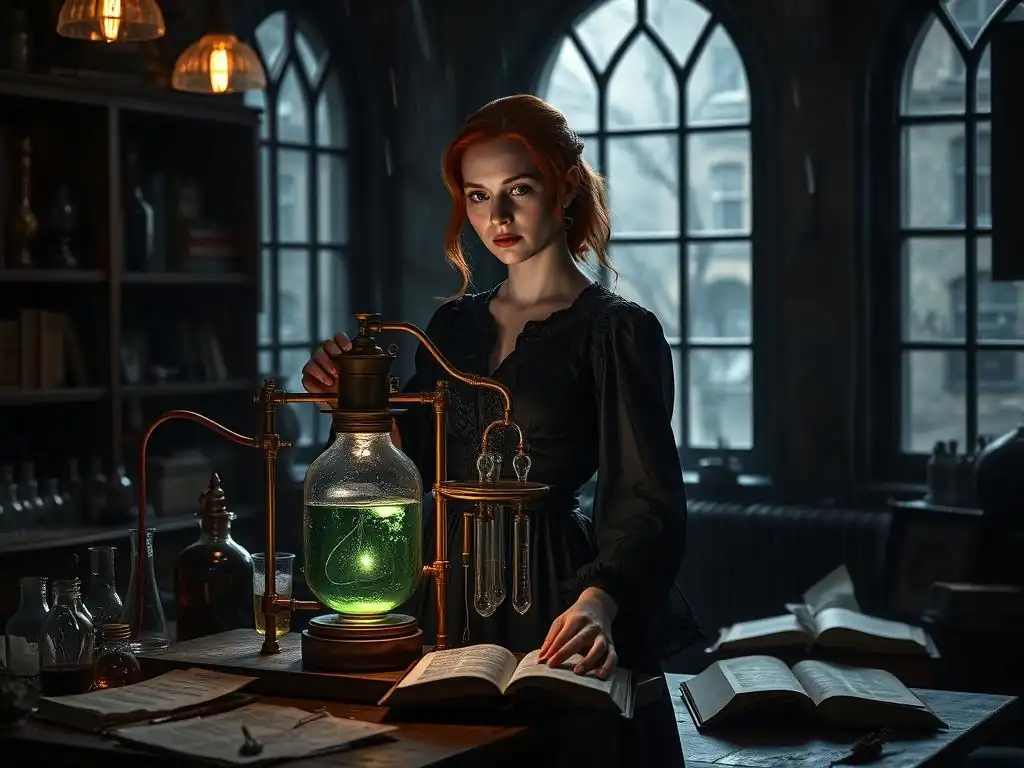
Welcome to WomenInScienceHistory.com!
Delve into the fascinating and often untold stories of women who dared to challenge the status quo and revolutionize science. This month, we shine a spotlight on the trailblazing women who defied societal expectations and made remarkable contributions to the world of chemistry during the 18th century. From laboratory assistants to independent researchers, discover how these determined individuals navigated male-dominated spaces and left an indelible mark on the field. What groundbreaking discoveries did they make, and what obstacles did they overcome? Prepare to be inspired as we explore the captivating lives of these forgotten pioneers...
- 18th Century Female Chemists: Challenging Scientific Norms
- Pioneering Women in 18th Century Chemistry: Profiles of Defiance
- The Importance of Salons and Informal Networks
- Contributions Often Overlooked: Examining the Hidden Labor of Women in Chemistry
- The Legacy of 18th Century Female Chemists: Inspiring Future Generations
- Resources for Further Research on 18th Century Women in Science
-
Frequently Asked Questions
- What were some of the major obstacles faced by 18th-century female chemists?
- Who is one notable example of a female chemist from the 18th century highlighted by WomenInScienceHistory.com?
- How did these women contribute to the field of chemistry despite societal limitations?
- Why is it important to study the history of 18th-century female chemists?
- Where can I find more information about these groundbreaking women and their work?
- Final Reflection: Igniting Curiosity and Challenging Conventions
- Ignite Your Inner Chemist: Carry the Torch of Discovery!
18th Century Female Chemists: Challenging Scientific Norms
The Societal Landscape for Women in 18th Century Science
The 18th century presented a formidable landscape for women aspiring to engage with science, characterized by pervasive societal norms that largely confined them to the domestic sphere. Formal education beyond basic literacy and accomplishments like needlework or music was rarely afforded to women, particularly those outside the highest echelons of aristocracy or wealth. Universities, the burgeoning centers of scientific inquiry, remained almost exclusively male domains, effectively barring women from accessing structured curricula, laboratories, and the burgeoning scientific communities of the era.
This exclusion was underpinned by deeply entrenched patriarchal views that questioned women's intellectual capacity for rigorous scientific thought and deemed public intellectual pursuits inappropriate for their gender. Consequently, women faced immense pressure to conform to roles as wives, mothers, and homemakers, with their contributions to society primarily valued within the confines of the family unit. Any woman daring to pursue scientific interests often did so against a tide of skepticism, ridicule, or outright obstruction, making the achievements of 18th Century female chemists all the more remarkable.
The Allure of Chemistry: Why Women Were Drawn to the Field
Despite the restrictive societal climate, chemistry held a particular allure for some women, often proving more accessible than other scientific disciplines like astronomy or physics, which required specialized equipment and institutional access. Chemistry, in its nascent stages, was intrinsically linked to practical applications that resonated with women's traditional roles within the household and in craft industries. From the preparation of medicines and herbal remedies to the intricacies of dyeing textiles, brewing, and cooking, chemical processes were an integral part of daily life, offering a tangible entry point into scientific observation and experimentation.
Moreover, the rise of private laboratories within aristocratic homes and the emergence of intellectual salons provided alternative spaces for learning and discussion that circumvented formal institutional barriers. These informal networks allowed curious women to engage with scientific ideas, conduct experiments, and interact with leading thinkers of the time. This confluence of practical relevance and alternative learning environments fostered an environment where a select number of determined 18th Century female chemists could cultivate their talents and make significant, albeit often uncredited, contributions to the field.
Pioneering Women in 18th Century Chemistry: Profiles of Defiance
Marie-Anne Pierrette Paulze Lavoisier: The Mother of Modern Chemistry
Marie-Anne Pierrette Paulze Lavoisier stands as a pivotal figure among 18th Century female chemists, whose contributions were instrumental in the chemical revolution that transformed alchemy into modern chemistry. While often remembered primarily as the wife of Antoine Lavoisier, her role was far more substantive, encompassing translation, illustration, and active participation in experimental work. Her privileged background, though not guaranteeing scientific education for women, provided her with the unique circumstances that allowed her intellectual curiosity to flourish alongside her husband's groundbreaking research.
Her legacy serves as a testament to the intellectual prowess of women in an era that largely denied them formal recognition. Without her meticulous efforts, many of Lavoisier's foundational works might not have achieved the clarity and dissemination they did, solidifying her position as an indispensable partner in the advancement of chemical science. Her story is a powerful reminder of the hidden labor and intellectual contributions of women in science history.
Early Life and Education: Accessing Scientific Knowledge Through Privilege
Born in 1758 into a wealthy and influential aristocratic family in Paris, Marie-Anne Pierrette Paulze enjoyed a level of privilege uncommon for women of her time, which inadvertently opened doors to scientific engagement. Her father, a co-owner of the Ferme Générale (a private tax-collecting company), ensured she received an education that, while not formally scientific, included English, Latin, and drawing – skills that would prove invaluable to her future endeavors.
At the young age of thirteen, she married Antoine Lavoisier, a prominent scientist and also a member of the Ferme Générale, a union that proved to be a profound intellectual partnership.
Her marriage plunged her directly into the heart of scientific inquiry. She quickly immersed herself in her husband's laboratory, learning the intricacies of experimental design, apparatus, and chemical theory. Her linguistic abilities allowed her to translate critical English scientific texts into French, while her drawing skills enabled her to meticulously illustrate the complex experimental setups and results, providing clear visual documentation for Lavoisier's publications. This unique confluence of background, marriage, and personal aptitude provided her with an unparalleled, albeit informal, scientific apprenticeship.
Key Chemical Contributions: Translation, Illustration, and Experimentation
Marie-Anne Lavoisier's contributions to chemistry were multifaceted and indispensable. Her most celebrated translational work involved Richard Kirwan's Essay on Phlogiston and the Constitution of Acids (1787), a pivotal text defending the phlogiston theory, which Lavoisier and his colleagues were actively disproving. Her translation, accompanied by her own critical annotations, allowed French chemists to directly engage with the arguments of a leading English opponent, facilitating the rapid adoption of Lavoisier's new oxygen theory of combustion. She also translated various other English scientific papers, ensuring that cutting-edge research from Britain was accessible to the French scientific community.
Beyond translation, Marie-Anne was a skilled illustrator, producing the highly detailed and precise engravings of the laboratory apparatus featured in Lavoisier's seminal Traité Élémentaire de Chimie (1789), which laid out the principles of modern chemistry. These illustrations were crucial for understanding the groundbreaking experiments and for replicating them, thereby aiding the dissemination of the new chemistry.
Furthermore, she actively participated in experiments, meticulously recording data in laboratory notebooks, preparing apparatus, and engaging in intellectual discussions with her husband's scientific colleagues, including leading figures like Joseph Priestley and Benjamin Franklin. Her intellectual engagement was such that she was described as an equal partner in the laboratory, a true collaborator rather than a mere assistant.
Facing Gender Bias: Erasure and Limited Acknowledgment
Despite her profound and undeniable contributions, Marie-Anne Lavoisier faced the inherent gender bias of the 18th century, which largely minimized or erased women's intellectual labor. Her name rarely appeared as a co-author on her husband's major publications, and her work was often implicitly or explicitly subsumed under his genius. While contemporaries acknowledged her presence and intellectual acumen in their salon and laboratory, formal recognition for her independent scientific contributions was virtually nonexistent.
After Antoine Lavoisier's execution during the Reign of Terror in 1794, Marie-Anne tirelessly worked to preserve and publish his unfinished memoirs, ensuring his scientific legacy endured. However, even in these efforts, her own significant role in the development of modern chemistry continued to be understated by historical accounts for centuries. It is only in recent decades that historians of science have begun to fully appreciate and articulate the depth of her partnership and the crucial, often uncredited, role she played as one of the most influential 18th Century female chemists.
Jane Marcet: Popularizing Chemistry Through Education
Jane Marcet, born in 1769, emerged as another prominent figure among 18th Century female chemists, though her primary contribution lay not in original research but in the groundbreaking popularization of scientific knowledge. Her most famous work, Conversations on Chemistry, published in 1806 but drawing heavily on the scientific discourse and discoveries of the late 18th century, played a crucial role in making complex chemical principles accessible to a broad audience, including women and young people who were largely excluded from formal scientific education.
Marcet's innovative approach to science communication, coupled with her deep understanding of the subject matter, established her as a pioneering educator. Her efforts significantly broadened the public's engagement with chemistry, influencing generations of budding scientists and lay readers alike. Her legacy underscores the vital importance of effective science communication in fostering scientific literacy and inspiring future innovators.
Navigating Limited Opportunities: Reaching a Wider Audience
Born into a prominent Swiss family residing in London, Jane Haldimand Marcet had access to a stimulating intellectual environment and private tutors, a privilege shared by few women of her era. She frequented scientific lectures, notably those given by Humphry Davy at the Royal Institution in London, where she absorbed the latest chemical theories and experimental demonstrations. Recognizing the scarcity of accessible scientific texts for the general public, particularly for women and children, she identified a crucial gap in scientific dissemination.
Driven by a desire to share her knowledge and demystify science, Marcet embarked on a mission to popularize chemistry. Her approach was revolutionary: rather than writing dense academic treatises, she opted for a conversational style, believing that an engaging narrative could make complex topics understandable and enjoyable. This strategic choice allowed her to bypass the formal academic institutions that largely excluded women, enabling her to reach a wider, often underserved, audience directly through published works.
Major Research and Publications: Conversations on Chemistry
Jane Marcet's seminal work, Conversations on Chemistry, Intended More Especially for the Female Sex, first published anonymously in 1806, became an instant success and a cornerstone of popular science education. The book adopted a pedagogical format of dialogues between a knowledgeable tutor, Mrs. B, and her two inquisitive pupils, Caroline and Emily. This conversational structure allowed Marcet to introduce chemical concepts, experiments, and theories in an accessible, step-by-step manner, addressing common questions and misconceptions.
The Conversations on Chemistry systematically covered fundamental chemical principles, including the nature of elements, states of matter, acids, bases, salts, and the principles of combustion and oxidation, often explaining Lavoisier's new chemical nomenclature. The book featured detailed descriptions of experiments that could be replicated at home with simple materials, further engaging her readers. Its clarity, accuracy, and engaging style ensured its enduring popularity, running through 16 editions in England and 15 in the United States over the next half-century, translating complex scientific ideas into comprehensible language for a broad readership.
Recognition and Legacy: Influencing Scientific Understanding
The impact of Jane Marcet's Conversations on Chemistry was profound and far-reaching, solidifying her place among influential 18th Century female chemists (whose influence extended into the 19th century). The book was widely read and highly praised, not only by lay readers but also by prominent scientists. Most famously, Michael Faraday, one of the greatest experimental physicists and chemists, credited Marcet's book as a crucial influence on his early scientific education. He stated that reading Conversations on Chemistry was a pivotal moment that sparked his interest in the field and provided him with a foundational understanding of chemical principles.
Marcet's pioneering work demonstrated the immense power of popular science literature in fostering scientific literacy. She successfully proved that complex scientific subjects could be made accessible without sacrificing accuracy, thereby inspiring countless individuals to pursue scientific interests. Her legacy extends beyond chemistry, establishing a model for science communication that continues to influence educational publishing today, and highlighting the vital role of educators in making science accessible to all.
Émilie du Châtelet: Integrating Physics and Chemistry in Scientific Thought
Gabrielle Émilie Le Tonnelier de Breteuil, Marquise du Châtelet, born in 1706, stands as a formidable intellectual figure of the Enlightenment, whose work on physics and mathematics profoundly influenced nascent chemical understanding. While not solely an 18th Century female chemist, her rigorous approach to experimental science, her deep engagement with the nature of matter and energy, and her translation and commentary on Isaac Newton’s Principia Mathematica provided a crucial framework for analyzing phenomena that would later be fully understood through chemical principles.
Du Châtelet's insistence on empirical observation and mathematical rigor, combined with her innovative interpretations of established scientific theories, significantly contributed to the intellectual climate that fostered the chemical revolution. Her life exemplifies the extraordinary intellectual capabilities of women who, despite societal constraints, pushed the boundaries of scientific thought.
Family Influences and Scientific Mentorship: Access Through Aristocracy
Émilie du Châtelet was born into a highly aristocratic and intellectually stimulating environment in Paris. Her father, Louis Nicolas le Tonnelier de Breteuil, a principal secretary to King Louis XIV, ensured that his daughter received an exceptional education, far beyond what was typical for girls of her era. She was tutored in Latin, Greek, German, and Italian, and showed an early aptitude for mathematics and science. This early exposure to a diverse range of subjects and the intellectual discussions within her family's salon laid the groundwork for her future scientific pursuits.
Her intellectual development was further propelled by her relationships with leading Enlightenment thinkers, most notably Voltaire, with whom she maintained a long-standing intellectual and personal partnership. Voltaire encouraged her scientific ambitions, and together they explored complex scientific ideas, often conducting experiments in their private laboratory. She also benefited from mentorship by other prominent mathematicians and physicists of the time, such as Pierre Louis Moreau de Maupertuis and Alexis Claude Clairaut, who recognized and fostered her prodigious talent, providing her with the advanced instruction typically reserved for male scholars.
Innovative Experimental Techniques: Applying Mathematics to Chemical Problems
Émilie du Châtelet's scientific contributions were characterized by her rigorous application of mathematical principles to experimental observations, particularly in the realm of physics, which had direct implications for chemistry. Her most monumental work was her translation and commentary on Isaac Newton's Philosophiæ Naturalis Principia Mathematica, completed shortly before her death in 1749. This translation, which remains the standard French version, included her extensive annotations and derivations, clarifying Newton's complex ideas and adding her own innovative insights, including the concept of kinetic energy (½mv²), which she correctly identified as proportional to the square of velocity, rather than just velocity itself.
Beyond her work on Newton, du Châtelet also conducted her own experimental investigations, most notably her Dissertation sur la nature et la propagation du feu (Dissertation on the Nature and Propagation of Fire), submitted to the Paris Academy of Sciences in 1738. In this work, she explored the properties of fire and light, examining phenomena like combustion and heat.
Her methodology involved careful experimentation and mathematical analysis, anticipating later chemical theories by considering the conservation of matter in processes involving heat and light. Her approach emphasized the empirical validation of theories, a critical step towards the modern scientific method that would define the chemical revolution.
Impact on 18th Century Chemical Understanding: Clarifying Scientific Principles
While Émilie du Châtelet is primarily recognized as a physicist and mathematician, her work had a significant, albeit indirect, impact on 18th century chemical understanding. Her Dissertation sur le feu directly challenged prevailing theories of fire and light, contributing to the intellectual ferment that ultimately led to Lavoisier's oxygen theory of combustion. By rigorously analyzing the properties of fire and its interaction with matter through experimentation and mathematical reasoning, she helped to dismantle older, less empirical concepts like phlogiston, which posited fire as a material substance.
Her emphasis on quantitative measurement and the interrelationship between physical and material properties provided a philosophical and methodological foundation upon which modern chemistry could be built. Her translation of Newton's Principia also disseminated the principles of mechanics and universal gravitation, which, while not directly chemical, provided a framework for understanding the forces and interactions between particles that are fundamental to chemical reactions. Thus, as one of the pioneering 18th Century female chemists (in spirit, if not in title), du Châtelet contributed to the intellectual clarity and empirical rigor necessary for chemistry to evolve into a distinct and quantifiable science.
The Importance of Salons and Informal Networks
Scientific Salons: Spaces for Women's Intellectual Exchange
In an era when formal scientific institutions largely excluded women, scientific salons emerged as vital intellectual hubs, providing indispensable spaces for women's engagement with scientific discourse. These private gatherings, often hosted by influential and intellectually curious salonnières in their Parisian homes, brought together leading scientists, philosophers, writers, and artists. Within these informal settings, women could not only listen to lectures and discussions but also actively participate, engaging in debates, presenting their own ideas, and networking with prominent male and female scholars.
These salons circumvented the rigid barriers of universities and academies, offering a more egalitarian environment where intellectual merit could, to some extent, trump gender. For aspiring 18th Century female chemists and other female intellectuals, salons provided the rare opportunity to access cutting-edge scientific knowledge, to observe experiments, and to receive informal mentorship and validation for their intellectual pursuits. They served as crucial alternative academies, fostering a vibrant intellectual life for women who were otherwise denied formal avenues for scientific learning and collaboration.
Correspondence and Collaboration: Building a Community of Female Scientists
Beyond the physical spaces of salons, correspondence played an equally vital role in building a nascent community of female scientists and facilitating intellectual exchange. For women who lived outside major intellectual centers or whose circumstances prevented regular attendance at salons, letter writing became the primary means of engaging with scientific ideas and collaborating with peers. Through extensive correspondence, women exchanged experimental results, debated theories, sought advice, and offered support to one another.
This epistolary network allowed women to participate in the scientific discourse of the time, even if from a distance. Prominent male scientists also engaged in correspondence with these intellectually curious women, further disseminating knowledge and providing opportunities for intellectual partnership. This informal system of communication was essential for circulating ideas, refining arguments, and maintaining intellectual connections, thereby fostering a sense of shared endeavor among women who were otherwise isolated in their scientific pursuits, including those who would become influential 18th Century female chemists.
Overcoming Exclusion from Formal Scientific Institutions
The pervasive exclusion of women from formal scientific institutions—such as universities, national academies, and professional societies—was a defining characteristic of the 18th century scientific landscape. Women were not permitted to enroll as students, hold faculty positions, or become full members of prestigious bodies like the Royal Society of London or the Académie Royale des Sciences in Paris. This systematic exclusion meant that women were denied access to formal training, laboratory resources, and the official recognition that came with institutional affiliation.
In response to these formidable barriers, women resourcefuly created and leveraged informal networks. The scientific salon, private tutoring, and extensive intellectual correspondence became crucial pathways for acquiring knowledge, conducting research, and gaining exposure within the scientific community. While these informal avenues could not replace the prestige and resources of formal institutions, they provided essential spaces for learning, collaboration, and the quiet, often uncredited, contributions of many 18th Century female chemists who would otherwise have been entirely silenced by the prevailing social order.

Assisting Male Scientists: The Uncredited Roles of Women
A significant, yet frequently overlooked, dimension of women's involvement in 18th century chemistry was their indispensable role as uncredited assistants to male scientists. Wives, daughters, and sisters often served as de facto laboratory partners, meticulously preparing apparatus, recording experimental data, and translating foreign scientific texts. Marie-Anne Lavoisier stands as the most prominent example, whose intellectual partnership with her husband Antoine Lavoisier was fundamental to the chemical revolution. She was not merely a copyist but an active participant, a translator of critical works like Kirwan's Essay on Phlogiston, and a meticulous illustrator of his groundbreaking Traité Élémentaire de Chimie.
However, countless other women, whose names are largely lost to history, performed similar crucial tasks in the domestic laboratories of their male relatives. These women's intellectual contributions, practical skills, and tireless labor were often absorbed into the male scientist's output, with their efforts rarely acknowledged in publications or official records. This hidden labor represents a vast, unquantified contribution of 18th Century female chemists and scientific collaborators, whose work enabled many of the celebrated discoveries of the era.
Pharmaceutical Preparations and Medical Knowledge
Women's traditional roles in healing and domestic health care provided another significant, albeit often unrecognized, avenue for their engagement with chemical principles. For centuries, women were the primary caregivers and healers within families and communities, responsible for preparing herbal remedies, tinctures, poultices, and other pharmaceutical compounds. This practical application of botanical and chemical knowledge was essential for public health, especially in an era before widespread formal medical training.
The preparation of these remedies required a sophisticated understanding of plant properties, extraction methods, and basic chemical reactions. Women experimented with various ingredients, observed their effects, and often passed down their knowledge through generations, contributing to a rich body of empirical medical and pharmaceutical understanding. These domestic "apothecaries" were, in essence, practicing early forms of chemistry, applying principles of extraction, distillation, and formulation, making them informal 18th Century female chemists in their own right.
The Application of Chemical Principles in Domestic Settings
Beyond medicine, women's daily domestic tasks frequently involved the application of complex chemical principles, even if they were not formally recognized as such. The chemistry of cooking, for instance, involved understanding heat transfer, fermentation (in bread-making or brewing), and the chemical transformations of ingredients. Similarly, textile dyeing was a highly technical process requiring knowledge of mordants, pigments, and the chemical reactions that fixed colors to fabrics. Soap making, candle making, and even cleaning involved a practical understanding of acids, bases, and emulsification.
These practical applications, while often dismissed as mere "household chores," demanded empirical observation, experimentation, and an intuitive grasp of chemical processes. Women engaged in these activities were effectively conducting experiments and applying chemical knowledge on a daily basis, contributing to the technological and practical advancements of the era. Their hands-on experience with chemical transformations in the domestic sphere represents a significant, yet often uncelebrated, contribution of 18th Century female chemists to the broader scientific landscape.
The Legacy of 18th Century Female Chemists: Inspiring Future Generations
Paving the Way for Increased Female Participation in Science
The courageous and often unacknowledged efforts of 18th Century female chemists, despite the formidable barriers they faced, laid crucial groundwork for future generations of women in science. Their persistence in pursuing intellectual endeavors, whether through private study, salon discussions, or uncredited laboratory assistance, demonstrated the intellectual capability and unwavering dedication of women to scientific inquiry. Though formal opportunities remained scarce for decades, their pioneering spirit slowly chipped away at prevailing prejudices.
Their very existence and the quiet impact of their work helped to gradually shift perceptions, creating a subtle but undeniable precedent for women's involvement in scientific pursuits. This slow but steady process contributed to the eventual, albeit gradual, opening of educational institutions and professional opportunities for women in the 19th and 20th centuries, proving that scientific brilliance was not a male prerogative.
The Ongoing Struggle for Recognition and Equality
Despite the groundbreaking contributions of 18th Century female chemists, the struggle for full recognition and equality in science has been a protracted and ongoing battle. For centuries, the narratives of these pioneering women were often marginalized, their achievements downplayed, or their roles attributed solely to their male counterparts. This historical erasure continues to impact perceptions of women's historical and contemporary roles in STEM fields.
Even in the modern era, women in science continue to face challenges, including gender bias in hiring and promotion, underrepresentation in leadership roles, and persistent pay gaps. The stories of figures like Marie-Anne Lavoisier and Jane Marcet serve as powerful reminders that the fight for equitable representation and full acknowledgment of women's contributions is far from over, highlighting the enduring need to actively seek out and celebrate these often-overlooked narratives.
Lessons from the Past: Empowering Women in STEM Today
The experiences of 18th Century female chemists offer invaluable lessons for empowering women in STEM fields today. Their reliance on informal networks, mentorship, and self-education underscores the importance of community building and accessible learning resources, particularly for those facing systemic barriers. Their defiance in pursuing their passions against societal norms serves as an enduring inspiration for women navigating male-dominated fields.
By studying their lives, we learn the critical importance of challenging bias, advocating for inclusive environments, and ensuring that all intellectual contributions are justly recognized, regardless of gender. The legacy of these pioneering women compels us to continue promoting diversity in STEM, fostering supportive ecosystems, and actively celebrating the achievements of all scientists, ensuring that no brilliant mind is overlooked or undervalued.
Resources for Further Research on 18th Century Women in Science
Frequently Asked Questions
What were some of the major obstacles faced by 18th-century female chemists?
Women faced significant social barriers and were often denied formal education and access to laboratories, making it difficult to pursue their scientific interests.
Who is one notable example of a female chemist from the 18th century highlighted by WomenInScienceHistory.com?
The website likely features figures like Marie-Anne Lavoisier, a pivotal figure who translated and illustrated scientific texts, significantly contributing to her husband's (Antoine Lavoisier) work.
How did these women contribute to the field of chemistry despite societal limitations?
Many women collaborated with male relatives, often uncredited for their contributions, while others conducted experiments and wrote books, defying convention to advance chemical knowledge.
Why is it important to study the history of 18th-century female chemists?
Understanding their stories helps rectify historical omissions, inspire future generations of women in STEM, and reveals the hidden figures who shaped scientific progress.
Where can I find more information about these groundbreaking women and their work?
Websites like WomenInScienceHistory.com provide biographies, articles, and resources dedicated to showcasing the achievements and challenges faced by women in science throughout history.
Final Reflection: Igniting Curiosity and Challenging Conventions
The stories of these 18th-century female chemists resonate powerfully today, reminding us that the pursuit of knowledge should know no gender. Their struggles against societal constraints and their unwavering dedication to scientific inquiry serve as a potent reminder that brilliance can flourish even in the most restrictive environments, and that their contributions, though often overlooked, have shaped the scientific landscape we inhabit.
The impact of these women extends far beyond the laboratory. Their defiance continues to inspire generations to challenge established norms and pursue their passions, regardless of societal expectations. The mind has no gender,
as countless trailblazers have implicitly declared through their actions, proving that intellectual curiosity and scientific prowess are not confined by arbitrary boundaries. Their legacy is a testament to the enduring power of resilience and the transformative potential of challenging the status quo.
Let us, therefore, carry forward the torch of these defiant women. Reflect on the barriers they faced, the obstacles they overcame, and the knowledge they gifted to the world. Embrace your own curiosity, challenge the limitations imposed upon you, and contribute your unique perspective to the ongoing pursuit of understanding. The world needs your voice, your intellect, and your unwavering spirit to break new molds and fill new beakers.
Ignite Your Inner Chemist: Carry the Torch of Discovery!
Thank you for diving into the fascinating world of defiant women who shaped 18th-century chemistry. You've witnessed their resilience, brilliance, and unwavering dedication to scientific exploration. Now, it's your turn to contribute to the legacy of women in science.
Here are a few ways you can continue the journey:
- Embrace your curiosity and conduct a simple chemistry experiment at home. Rediscover the thrill of discovery with readily available materials!
- Share this article with a friend or family member who might be inspired by these untold stories. Let's amplify their voices!
- Delve deeper into the lives of other groundbreaking women in STEM by exploring the archives at WomenInScienceHistory.com.
What small step will you take today to champion women in science and ignite your own passion for discovery?