
Balancing Lab Coats and Life: Untold Stories of Women Chemists (19001950)

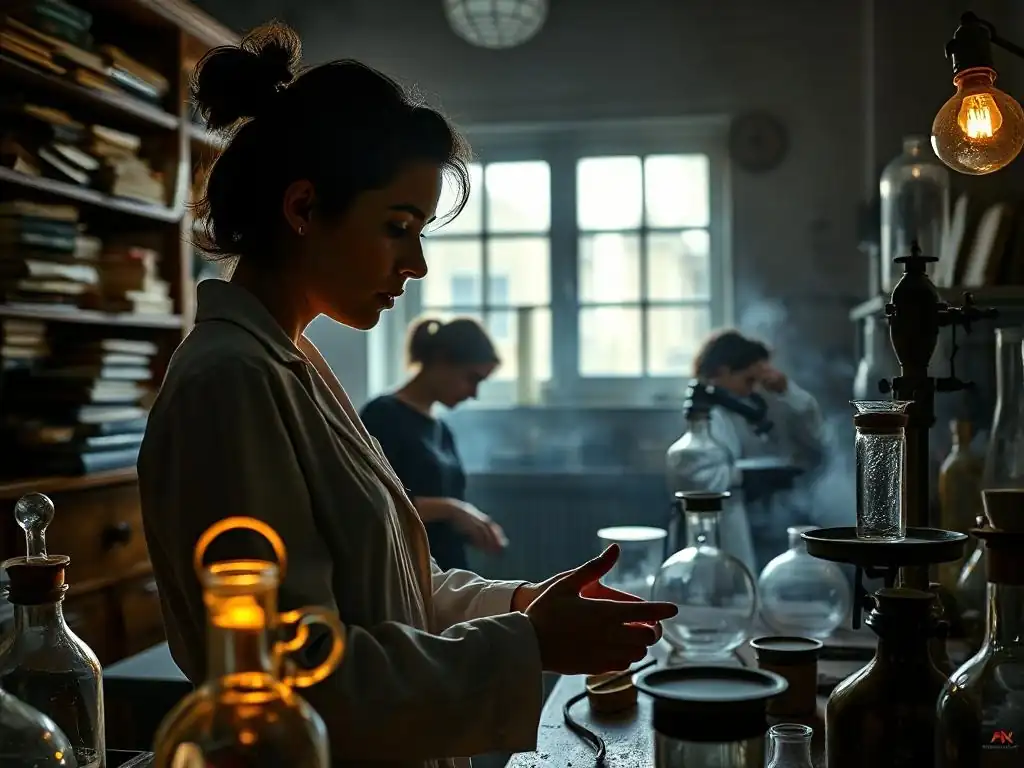
Welcome to WomenInScienceHistory.com!
Dive into a world where brilliance defied boundaries. In this captivating exploration, we uncover the untold stories of women chemists early 20th century, a period where scientific innovation collided with societal expectations. Their contributions shaped the very fabric of modern chemistry, yet their narratives remain largely hidden. Intrigued? Unearth the challenges and triumphs that defined their lives, and discover how these pioneering women balanced lab coats and life against all odds. Prepare to be inspired.
Introduction: Unveiling the Contributions of Early 20th Century Women in Chemistry
The early 20th century was a period of immense scientific discovery, yet the contributions of a significant group of pioneers often remain in the shadows: women chemists early 20th century. Despite facing formidable societal and institutional barriers, these remarkable individuals pursued their passion for chemical science, making groundbreaking advancements that shaped our understanding of the natural world and paved the way for future innovations. Their stories are not merely footnotes in history but central narratives of perseverance, intellectual brilliance, and unwavering dedication.
This article delves into the lives and legacies of these trailblazing women in chemistry during 1900-1950, exploring the unique challenges they navigated, the monumental discoveries they made, and the profound impact they had on various branches of chemistry. From theoretical breakthroughs to practical applications in medicine and industry, their work laid foundational stones for modern science, inspiring generations and challenging prevailing notions about gender roles in the scientific community.
The Landscape: Challenges Faced by Women in Chemistry (1900-1950)
The scientific landscape of the early 20th century was largely a male domain, with significant systemic barriers impeding the progress of women chemists early 20th century. Societal norms often dictated that a woman's primary role was domestic, making a professional scientific career seem unconventional, if not outright inappropriate. This pervasive cultural expectation translated into concrete institutional discrimination, limiting access to education, funding, and professional recognition for aspiring female scientists.
Even for those women who managed to secure positions, the professional environment was often unwelcoming. They frequently encountered skepticism regarding their intellectual capabilities, faced patronizing attitudes, and were excluded from informal networks crucial for career advancement. This era saw many talented women chemists early 20th century relegated to assistant roles, often performing critical research without receiving proper credit or commensurate compensation, a stark testament to the gender bias embedded within scientific institutions.
Limited Educational Opportunities for Female Chemists
Access to higher education for women in the early 1900s was severely restricted, particularly in fields like chemistry, which required specialized laboratory facilities and advanced theoretical instruction. While some institutions, particularly women's colleges, offered strong science programs, prestigious universities often imposed quotas or outright denied admission to female students in certain departments. Even when admitted, female chemists of the early 20th century might find themselves in segregated classes or denied access to specific equipment or research opportunities deemed "too strenuous" or "unsuitable" for women.
Moreover, financial aid and scholarships were predominantly geared towards male students, making the pursuit of advanced degrees an even greater challenge for women who often lacked independent means. This created a bottleneck, limiting the number of women in chemistry during 1900-1950 who could acquire the necessary credentials to lead independent research or hold faculty positions, forcing many to accept subordinate roles despite their intellectual prowess.
Overcoming Societal Expectations and Gender Bias in STEM
Beyond institutional hurdles, women chemists early 20th century grappled with deeply ingrained societal expectations that discouraged them from pursuing demanding scientific careers. The prevailing view was that women's intellectual capacities were better suited for roles in teaching or nursing, not rigorous laboratory research or theoretical chemistry. This bias manifested in subtle and overt ways, from dismissive comments by male colleagues to the implicit pressure to prioritize marriage and family over professional ambition.
Many female chemists of the early 20th century found themselves constantly justifying their presence in the lab, proving their competence repeatedly in environments where their male counterparts were assumed to be capable. This constant need to overcome gender stereotypes added an immense psychological burden, requiring extraordinary resilience and determination to persist in a field that often seemed intent on pushing them out.
The Struggle for Recognition in a Male-Dominated Field
Even when women chemists early 20th century produced significant research, obtaining proper recognition was an uphill battle. Publications often favored male authors, and opportunities for presenting at major conferences or joining prestigious scientific societies were scarce for women. Their contributions were frequently attributed to male supervisors or collaborators, or simply overlooked entirely in the historical record.
For instance, the work of a woman chemist early 20th century might be acknowledged in a minor way within a larger project led by a male colleague, effectively diminishing her individual impact. This systemic lack of recognition not only deprived individual women of deserved accolades but also obscured the true breadth of female contributions to chemistry during this transformative period, making it harder for subsequent generations to find role models.
- Introduction: Unveiling the Contributions of Early 20th Century Women in Chemistry
- The Landscape: Challenges Faced by Women in Chemistry (1900-1950)
- What were some of the biggest obstacles women chemists faced in the early 20th century?
- Can you name a prominent woman chemist from the early 20th century and what made her work significant?
- How did the social expectations of the time impact the careers of women chemists?
- What types of contributions did women chemists make during the early 20th century despite the challenges they faced?
- Where can I find more information about the lives and work of women chemists in the early 20th century?
Pioneering Figures: Profiles of Remarkable Women Chemists
Marie Curie's Enduring Influence on Female Scientists
Marie Skłodowska Curie stands as an unparalleled figure in the history of science, her achievements casting a long shadow of inspiration for women chemists early 20th century and beyond. Her groundbreaking research into radioactivity, conducted largely in a rudimentary laboratory in Paris, led to the discovery of polonium and radium.
Her receipt of the Nobel Prize in Physics in 1903 (shared with her husband Pierre Curie and Henri Becquerel) and an unprecedented second Nobel Prize in Chemistry in 1911 made her the first woman to win a Nobel and the only person to win Nobel Prizes in two different scientific fields. Her meticulous methodology and relentless pursuit of knowledge set a new standard for scientific rigor.
Curie's extraordinary success provided irrefutable proof that women were not only capable of excelling in the most demanding scientific disciplines but could also lead transformative discoveries. Her visibility as a Nobel laureate directly challenged the prevailing gender biases of the time, demonstrating that a woman could achieve the pinnacle of scientific recognition. For many women chemists early 20th century, her story served as a powerful motivator, a testament to the fact that dedication and intellectual prowess could overcome societal constraints, inspiring them to persist in their own scientific endeavors despite formidable odds.
Alice Ball - Breaking Barriers in Ester Research and Treatment for Leprosy
Early Life and Education
Alice Augusta Ball, born in Seattle, Washington, in 1892, demonstrated exceptional academic promise from an early age. She pursued her undergraduate education at the University of Washington, earning degrees in pharmaceutical chemistry in 1912 and pharmacy in 1914. Her intellectual curiosity and drive for advanced knowledge led her to the University of Hawaii, where she became the first African American and the first woman to earn a master's degree in chemistry from the institution in 1915. Her master's thesis focused on the chemical properties of Piper methysticum, or kava, showcasing her early aptitude for natural product chemistry.
Her rapid academic ascent was remarkable, given the prevailing racial and gender barriers of the era. Ball's dedication to her studies and her pioneering status at the University of Hawaii highlight the extraordinary determination required for women chemists early 20th century to achieve such educational milestones, particularly for women of color.
Groundbreaking Research and Contributions
At the University of Hawaii, Alice Ball was invited to research a treatment for leprosy, a devastating disease with no effective cure at the time. Traditional treatments involved injecting crude chaulmoogra oil, which was painful and had limited efficacy due to its insolubility in water. Ball, at just 23 years old, developed a revolutionary method to isolate the active chemical compounds from chaulmoogra oil and modify them into water-soluble ethyl esters. This innovation created the first injectable, absorbable form of chaulmoogra oil, known as the "Ball Method."
Her method transformed leprosy treatment, offering patients significant relief and, in many cases, recovery, becoming the most effective treatment available until the advent of sulphone drugs in the 1940s. The Ball Method saved countless lives and improved the quality of life for thousands suffering from leprosy worldwide, solidifying her legacy as a brilliant woman chemist early 20th century.
Overcoming Obstacles and Achieving Success
Tragically, Alice Ball died prematurely in 1916 at the age of 24, likely from chlorine poisoning sustained during her laboratory work. Her groundbreaking research was initially published by her mentor, Dr. Harry T. Hollmann, who ensured she received credit. However, the President of the University of Hawaii, Arthur Dean, later attempted to take credit for her discovery, renaming it the "Dean Method" and obscuring her contribution for decades. This act of appropriation is a stark reminder of the challenges women chemists early 20th century faced in receiving due recognition for their work.
It was only years later, through the efforts of Hollmann and others, that Ball's rightful place in scientific history was restored. Her story underscores the systemic issues of gender and racial bias that often denied female chemists of the early 20th century the credit they deserved, even in the face of life-saving discoveries.
Gerty Cori - A Leader in Carbohydrate Metabolism
Early Life and Education
Gerty Theresa Radnitz Cori, born in Prague in 1896, displayed a keen intellect from a young age. She initially faced resistance in pursuing a science-focused education but eventually gained admission to the German University of Prague, where she studied medicine. She earned her medical degree in 1920, graduating alongside Carl Cori, whom she married shortly after. The post-World War I economic and political turmoil, coupled with rising antisemitism in Europe, prompted the Coris to immigrate to the United States in 1922, seeking better opportunities for scientific research.
Their shared passion for biochemistry and their collaborative spirit laid the foundation for a scientific partnership that would redefine our understanding of metabolic processes. Gerty Cori’s early education in medicine provided her with a unique perspective on the physiological relevance of chemical reactions, which proved invaluable in her later groundbreaking work as a woman chemist early 20th century.
Groundbreaking Research and Contributions
Gerty Cori, working closely with her husband Carl, embarked on extensive research into carbohydrate metabolism, particularly how the body stores and utilizes energy. Their most significant contribution, for which they were awarded the Nobel Prize in Physiology or Medicine in 1947 (shared with Bernardo Houssay), was their elucidation of the pathway of glycogen breakdown and synthesis in the body.
They discovered the "Cori cycle," which describes how lactic acid produced in muscles is transported to the liver and converted back into glucose. They also identified and isolated glucose-1-phosphate, known as the Cori ester, and discovered the enzyme phosphorylase, which is crucial for glycogen metabolism.
Their work provided fundamental insights into how sugars are converted into energy, impacting fields from diabetes research to exercise physiology. Gerty Cori's meticulous experimental design and incisive analytical skills were critical to these discoveries, cementing her status as a leading woman chemist early 20th century in biochemistry.
Overcoming Obstacles and Achieving Success
Despite her immense scientific contributions, Gerty Cori faced considerable gender discrimination throughout her career. For many years, she was relegated to research assistant positions, even while her husband held professorships, and her salary was often significantly lower than that of her male colleagues, even when performing identical work. Universities were reluctant to offer faculty positions to married couples, especially when the wife was deemed to be in "support" of her husband's work.
Her persistence paid off when, in 1947, she was finally appointed a full professor at Washington University in St. Louis, the same year she received the Nobel Prize. This recognition, though belated, underscored her individual brilliance and her pivotal role in their joint discoveries. Gerty Cori's journey exemplifies the resilience required by women chemists early 20th century to achieve recognition and overcome the systemic biases that often undervalued their intellectual contributions.
Dorothy Hodgkin - Pioneering Work in X-ray Crystallography
Early Life and Education
Dorothy Mary Crowfoot Hodgkin, born in Cairo, Egypt, in 1910, developed an early fascination with chemistry and crystallography. She pursued her higher education at Somerville College, Oxford, where she studied chemistry. Her keen interest in X-ray crystallography led her to Cambridge University, where she worked with J.D. Bernal, a pioneer in the field. She earned her Ph.D. in 1937, laying the groundwork for her revolutionary work in determining the three-dimensional structures of complex biological molecules.
Her academic journey was marked by intellectual curiosity and a commitment to rigorous scientific inquiry. Hodgkin's foundational training in crystallography provided her with the specialized knowledge and techniques that would enable her to make some of the most significant structural determinations in chemistry.
Groundbreaking Research and Contributions
Dorothy Hodgkin revolutionized biochemistry by applying X-ray crystallography to determine the precise atomic structures of vital biological molecules. Her most celebrated achievements include the elucidation of the structure of penicillin in 1945, a critical step that facilitated its mass production during World War II and saved countless lives.
She also determined the structure of vitamin B12 in 1956, the most complex natural product structure known at the time. Her crowning achievement was the determination of the structure of insulin in 1969, a monumental task that took over 30 years of meticulous work and provided crucial insights into its biological function and the treatment of diabetes.
For her groundbreaking work, Hodgkin was awarded the Nobel Prize in Chemistry in 1964, becoming the third woman to win the Nobel in Chemistry. Her contributions were not just about solving structures; they provided fundamental insights into how these molecules functioned at a molecular level, profoundly impacting medicine and biology.
Overcoming Obstacles and Achieving Success
Dorothy Hodgkin faced lifelong health challenges, including severe rheumatoid arthritis from a young age, which progressively limited her mobility. Despite chronic pain and physical limitations, she maintained an extraordinary level of dedication and productivity in her demanding research. Her methodical approach to complex problems, often requiring years of painstaking analysis, showcased immense patience and intellectual fortitude.
Her perseverance in the face of personal adversity, coupled with the inherent challenges of being a woman chemist early 20th century in a male-dominated field, makes her achievements even more remarkable. Hodgkin's ability to combine a distinguished scientific career with raising a family also served as an inspiration, demonstrating that it was possible to navigate both personal and professional demands successfully.
The Impact of Women Chemists on Scientific Advancements (1900-1950)
Contributions to Organic Chemistry by Female Researchers
Women chemists early 20th century made significant, though often underappreciated, contributions to organic chemistry. Their work spanned various subfields, from the synthesis of new compounds to the elucidation of complex reaction mechanisms. Many female researchers were involved in the study of natural products, isolating and characterizing compounds from plants and animals, which later proved crucial for pharmaceutical development. For instance, some worked on the chemistry of dyes, explosives, and early plastics, contributing to the burgeoning industrial chemistry sector.
These contributions, though not always individually highlighted, collectively advanced the understanding of carbon-based molecules and their transformations. The meticulous experimental work performed by female chemists of the early 20th century in organic synthesis and analysis laid essential groundwork for the development of new drugs, materials, and agricultural chemicals that improved daily life and supported wartime efforts.
Advancements in Biochemistry Led by Women Scientists
Beyond the monumental work of Gerty Cori, numerous other women chemists early 20th century were instrumental in advancing the field of biochemistry. They delved into the intricacies of metabolic pathways, enzyme functions, and the chemical composition of living organisms. Their research often focused on understanding nutritional deficiencies, disease mechanisms, and the roles of vitamins and hormones. For example, some investigated the chemistry of blood, contributing to early diagnostic methods and understanding of blood disorders.
These biochemists often worked at the intersection of chemistry and medicine, providing critical insights into physiological processes. Their discoveries helped to establish biochemistry as a distinct and vital scientific discipline, contributing foundational knowledge that underpins much of modern medicine and biotechnology.
Women's Role in Developing New Analytical Techniques
The period from 1900 to 1950 saw significant advancements in analytical chemistry, and women chemists early 20th century played a crucial role in developing and refining many of these techniques. Their precision and attention to detail were invaluable in areas like quantitative analysis, where accurate measurements were paramount. They contributed to the development and application of early forms of spectroscopy, which allowed scientists to identify and quantify chemical substances based on their interaction with light.
Furthermore, many female chemists of the early 20th century were instrumental in perfecting titration methods, gravimetric analysis, and early chromatographic separations, which were essential for quality control in industry and purity assessment in research. Their contributions to these analytical methods provided the tools necessary for breakthroughs across all branches of chemistry and related sciences.
Contributions to Industrial Chemistry and Chemical Engineering
While often less visible, women chemists early 20th century also made important contributions to industrial chemistry and chemical engineering. Many worked in industrial laboratories, contributing to process optimization, product development, and quality control. Their work spanned diverse sectors, including food processing, textiles, pharmaceuticals, and materials science. For instance, some were involved in improving the stability of food products, developing new dyes for fabrics, or researching synthetic materials like rayon and nylon.
During both World Wars, women chemists early 20th century played a vital role in wartime production, working on everything from explosives and propellants to medicines and synthetic rubber. Their practical contributions in these industrial settings, though often in support roles, were critical for economic growth and national defense, demonstrating their versatility and adaptability as chemical professionals.
Balancing Personal Lives and Professional Pursuits: Stories of Resilience
For women chemists early 20th century, the decision to pursue a scientific career often came with the immense challenge of navigating societal expectations regarding marriage and family. Many brilliant female scientists either chose not to marry or married fellow scientists who understood the demands of their profession, often leading to collaborative partnerships as seen with Gerty and Carl Cori. However, even within supportive marriages, the primary responsibility for childcare and household management disproportionately fell on women, creating a "double burden."
Those who chose to have families often faced significant pressure to abandon their careers, or they had to find creative ways to integrate their professional lives with their domestic responsibilities. This frequently meant working part-time, conducting research from home, or relying heavily on domestic help if financially feasible. The stories of these female chemists of the early 20th century highlight an extraordinary resilience and dedication to their craft, demonstrating that passion for science could indeed coexist, albeit with great difficulty, with personal life.
The Support Networks and Mentorships That Empowered Women Chemists
Despite the prevailing isolation, many women chemists early 20th century found strength and encouragement through informal support networks and crucial mentorships. These networks often consisted of other pioneering women in science who shared similar struggles and could offer advice, collaboration, and emotional support. While formal female scientific societies were rare, informal groups or correspondence networks provided a sense of community.
Additionally, some male mentors, ahead of their time, recognized and championed the talent of their female students and colleagues. These mentors provided invaluable opportunities, advocated for their recognition, and offered guidance that might otherwise have been inaccessible. Such relationships were vital in helping women in chemistry during 1900-1950 overcome barriers and advance their research, proving that even small acts of support could have profound impacts on their careers.
Overcoming Isolation and Building Communities of Female Scientists
The pioneering nature of being a woman chemist early 20th century often meant working in isolation, sometimes as the only woman in a department or research group. This professional solitude was compounded by societal expectations that limited their social interactions within the scientific community. To counteract this, some female chemists of the early 20th century actively sought out or inadvertently formed small, informal communities.
These communities might have been built through shared experiences at women's colleges, through professional correspondence, or during brief encounters at scientific conferences. These connections, however fleeting, provided a vital lifeline, allowing them to share research ideas, discuss challenges, and affirm their shared commitment to science. Such efforts to build connections were crucial for sustaining their careers and fostering a sense of belonging in a field that often marginalized them.
The Legacy of Early 20th Century Women Chemists
Inspiring Future Generations of Female Scientists
The stories of women chemists early 20th century serve as powerful beacons of inspiration for future generations of female scientists. Their unwavering dedication, intellectual brilliance, and resilience in the face of significant adversity demonstrate that gender is no barrier to scientific excellence. By highlighting their achievements, we provide tangible role models for young women considering careers in STEM, showing them that it is possible to break through traditional boundaries and make profound contributions.
Learning about figures like Alice Ball, Gerty Cori, and Dorothy Hodgkin not only celebrates their historical impact but also empowers contemporary female students and researchers. Their narratives encourage aspiring female chemists to pursue their passions, reminding them that their potential is limitless, regardless of societal expectations or historical precedents.
The Ongoing Fight for Gender Equality in STEM Fields
The challenges faced by women chemists early 20th century underscore the historical roots of gender inequality in STEM fields, a struggle that continues, albeit in different forms, to this day. While overt discrimination may be less prevalent, subtle biases, lack of representation in leadership roles, and the persistent gender pay gap indicate that the fight for true equity is far from over. Understanding the historical context of these struggles provides crucial insights into the systemic issues that still need to be addressed.
By acknowledging the resilience and perseverance of these early women in chemistry during 1900-1950, we gain a deeper appreciation for the progress made and the work that remains. Their experiences remind us that vigilance and continued advocacy are necessary to ensure that all talented individuals, regardless of gender, have equal opportunities to contribute to scientific advancement.
Celebrating the Achievements of Women in Chemistry History
It is imperative that the groundbreaking achievements of women chemists early 20th century are not forgotten but actively celebrated and integrated into the broader narrative of scientific history. Their discoveries, ranging from life-saving medical treatments to fundamental insights into molecular structures, have irrevocably shaped our world. Recognizing their contributions corrects a historical imbalance and enriches our understanding of how scientific progress truly unfolds through diverse efforts.
Platforms dedicated to women in science history play a crucial role in ensuring that these narratives are brought to light, providing a comprehensive and accurate account of scientific development. Celebrating these female chemists of the early 20th century honors their legacy and ensures that their pioneering spirit continues to inspire and inform future generations, solidifying their rightful place in the annals of chemical science.
Conclusion: Recognizing the Enduring Impact of Women in Chemical Science
The period from 1900 to 1950 stands as a testament to the remarkable resilience and intellectual prowess of women chemists early 20th century. Despite systemic barriers, limited opportunities, and pervasive gender bias, these pioneering individuals carved out their own paths, making indispensable contributions to various branches of chemistry. Their stories are not just tales of individual success but collective narratives of perseverance that challenged the status quo and expanded the boundaries of scientific possibility.
From groundbreaking work in radioactivity and structural biology to vital advancements in biochemistry and industrial applications, the impact of these female chemists of the early 20th century resonates profoundly in modern science. Their legacy continues to inspire, reminding us of the enduring fight for gender equality in STEM and the critical importance of recognizing every voice in the pursuit of knowledge. The indelible mark left by these women in chemical science underscores their essential role in shaping the world we know today.
Frequently Asked Questions
What were some of the biggest obstacles women chemists faced in the early 20th century?
Women chemists often encountered gender bias in academic and professional settings. They struggled to gain equal access to education and faced limited opportunities for advancement compared to their male counterparts. This resulted in lower pay and less recognition for their contributions.
Can you name a prominent woman chemist from the early 20th century and what made her work significant?
Marie Curie, though active in the late 19th and early 20th centuries, significantly impacted the field. Her pioneering research on radioactivity not only led to groundbreaking discoveries but also paved the way for future generations of women scientists. Her work earned her two Nobel Prizes.
Societal norms often pressured women to prioritize domestic responsibilities over their professional aspirations. Balancing family life and scientific careers proved exceptionally challenging. Many women were forced to choose between marriage/motherhood and their scientific pursuits.
What types of contributions did women chemists make during the early 20th century despite the challenges they faced?
Women chemists contributed to various fields, including pharmaceutical research, industrial chemistry, and biochemistry. They often worked behind the scenes, making critical contributions to research and development. Their work helped advance scientific knowledge in numerous areas.
Where can I find more information about the lives and work of women chemists in the early 20th century?
Websites like WomenInScienceHistory.com offer biographies, articles, and resources dedicated to highlighting the achievements of women scientists. Look for primary source documents and scholarly articles that detail their experiences. Many university archives also hold relevant historical materials.
Okay, here's a final reflection crafted to fit your article "Balancing Lab Coats and Life: Untold Stories of Women Chemists (1900-1950)" and optimized for the keyword "Women chemists early 20th century," following the structure you provided:
Final Reflection: Echoes of Resilience
The stories we've explored, of women chemists navigating the early 20th century, are not just historical accounts; they are powerful reminders of the enduring fight for equality and recognition in STEM. Their struggles and triumphs resonate deeply today, as women continue to break barriers and challenge biases in scientific fields. These narratives highlight the unwavering dedication and sheer grit required to pursue scientific passions in a world often designed to exclude them.
The impact of these pioneering women extends far beyond their individual achievements. Their perseverance paved the way for future generations of female scientists, subtly but profoundly reshaping the cultural landscape of scientific inquiry. Their legacy serves as a constant source of inspiration, reminding us that progress is often built on the shoulders of those who dared to defy expectations. The most effective way to do it, is to do it.
- Amelia Earhart, a sentiment that perfectly encapsulates the spirit of these women.
As we close this chapter on the untold stories of women chemists in the early 20th century, let us carry their spirit of resilience and determination forward. Reflect on the obstacles they overcame, the sacrifices they made, and the lasting impact they had on the world. Consider how you can contribute to a more equitable and inclusive future for women in STEM, ensuring that their voices are not only heard but celebrated. Let their legacy inspire you to challenge the status quo and champion the pursuit of knowledge for all.
Unveil Your Inner Chemist!
Thank you for exploring the inspiring stories of these pioneering women! You've seen their struggles and triumphs, and now it's time to connect with their legacy and find your own path. What will you do next?
- Dive deeper: Research a woman chemist from this era and share her story on social media using #WomenInScienceHistory.: This is your primary action!
- Consider donating to organizations offering STEM education to young girls. Help create opportunities for future generations.
- Start a conversation: Discuss the challenges and opportunities facing women in STEM fields today with a friend, family member, or colleague.
What small experiment will you conduct this week to celebrate the spirit of these remarkable women?