Explore the Birthplaces of Women Mathematicians: A Journey Through History
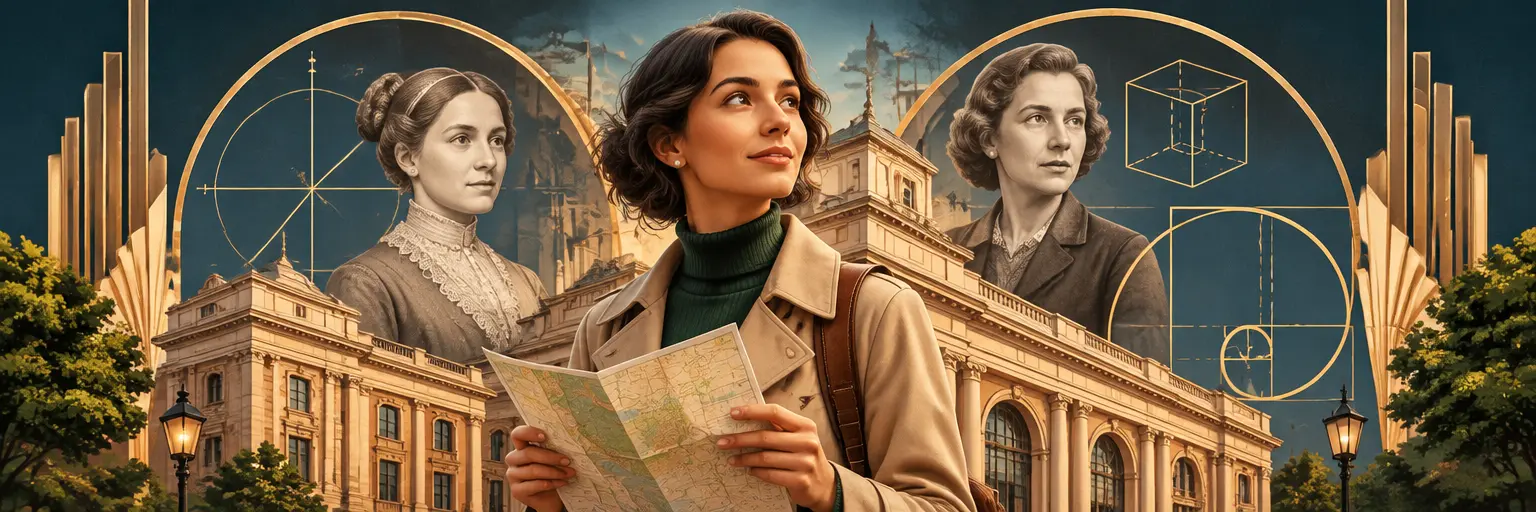
Step into the homes and birthplaces of the brilliant women who defied conventions and reshaped mathematics. This subcategory of Museums & Historical Sites on WomenInScienceHistory.com offers curated guides to the physical spaces where pioneers like Hypatia, Sofia Kovalevskaya, and Emmy Noether were born and raised. Whether you are planning a pilgrimage, studying historical context, or seeking virtual tours, these pages transform distant addresses into vivid stories of intellectual courage. Discover how geography, family, and education influenced their paths, and see the landscapes that witnessed their first calculations.
🏛️ Iconic Birthplaces You Can Visit Today
Many birthplaces of women mathematicians are now preserved as museums, heritage centers, or marked landmarks open to the public. From Hypatia’s Alexandria (though the exact house is lost, the city itself is a living monument) to Emmy Noether’s Erlangen, these sites offer plaques, exhibitions, and sometimes even reconstructions of childhood rooms. Expect to find curated displays of letters, early notebooks, and period furniture that set the emotional stage for their later breakthroughs. Visiting these locations provides a tangible link to the daily realities—often modest, sometimes privileged—that shaped their early curiosity.
For travelers, we recommend checking local tourism boards for opening hours and special guided tours. Some sites, like the Sofia Kovalevskaya Memorial Room in Moscow, host annual lectures and workshops. Even where original buildings no longer stand, many cities have erected interpretive panels or statues nearby. These stops enrich your understanding of how a specific street, a particular library, or a supportive family home could ignite a lifelong passion for numbers. Use our detailed profiles to plan an itinerary that connects multiple sites in one region, maximizing both historical depth and travel efficiency.
🧮 Academic Heritage Trails and University Archives
Beyond private homes, many birthplaces are linked to universities that have preserved archives, lecture halls, and memorial collections. For example, the University of Göttingen houses numerous documents related to Emmy Noether, while the University of Stockholm holds Sofia Kovalevskaya’s professorial records. These academic sites often feature rotating exhibitions on women in STEM, interactive displays of mathematical models, and digitized manuscripts accessible online. They serve as informal museums where you can trace the intellectual lineage from childhood home to university chair, often within walking distance of each other.
When exploring these trails, look for hidden gems like seminar rooms named after these mathematicians, busts in courtyard niches, or even benches with engraved quotes. Many universities offer self-guided walking tours that include both the birthplace and the campus, providing a seamless narrative of early promise and later achievement. For genealogists and history buffs, archives may also hold census records, family correspondence, and property deeds that add personal texture. Our guides highlight which archives require advance permission and which are freely accessible, saving you time and frustration during your research or visit.
🗺️ Virtual Tours for Remote Exploration
Not everyone can travel, but you can still stand virtually at the doorstep of history. Several birthplaces offer 360-degree virtual tours, high-resolution photo galleries, and narrated walkthroughs. For instance, the Hypatia Heritage Project provides a digital reconstruction of late Roman Alexandria, letting you wander through the Library and the Museion. Similarly, the Kovalevskaya Museum in Vilnius has an immersive online experience with room-by-room audio guides in multiple languages. These virtual resources are perfect for classroom use, remote research, or simply satisfying curiosity from your living room.
Beyond official sites, passionate historians and YouTubers have created detailed video essays that combine drone footage of birthplaces with archival photographs and animations of mathematical concepts. We curate these reliable sources into thematic playlists, so you can watch a documentary about Ada Lovelace’s London, then a short film on Mary Cartwright’s Oxford, all in one sitting. For educators, these virtual tours serve as powerful lesson hooks, allowing students to see where these women grew up before diving into their theorems. Each link is vetted for accuracy and visual quality, ensuring a rich yet manageable learning experience.
🏡 Family Homes, Childhood Landscapes, and Regional Influence
Understanding a birth place requires more than bricks and mortar; it demands an appreciation of the regional culture, climate, and societal norms. This subcategory examines how being born in a progressive city like Paris versus a rural estate like the Kovalevskaya family’s Palibino estate affected educational opportunities. We analyze local laws on girls’ schooling, the presence of private tutors, and the influence of nearby intellectual circles. For example, Sofia’s childhood in a Lithuanian manor, surrounded by liberal family discussions and foreign governesses, contrasted starkly with the more restrictive environments of her contemporaries.
Our profiles also delve into the natural and architectural surroundings—the gardens, libraries, and neighboring houses of relatives or mentors—that subtly encouraged mathematical play. Some sites have even preserved toys or early drawings that reveal nascent interests. By mapping these influences, we help you see how a specific birthplace was not incidental but integral to their development. Regional exhibitions, local historical societies, and even tourist offices often provide supplementary brochures and walking maps that deepen this context. Whether you are a sociologist, a traveler, or an aspiring mathematician, this layered perspective makes each location a microcosm of scientific history.
📅 Special Events, Anniversaries, and Commemorative Festivals
Many birthplaces host annual events celebrating the mathematicians’ birthdays or key anniversaries. These can include reenactments of childhood scenes, cake-cutting ceremonies with mathematical themes, and public lectures by contemporary female mathematicians. For instance, Erlangen celebrates Emmy Noether’s birthday every March with a week of workshops, while Moscow holds a yearly Kovalevskaya Symposium at her memorial site. These events transform a static visit into a dynamic experience, often with hands-on activities for children, interactive math puzzles, and temporary exhibitions that borrow artifacts from other museums.
If you cannot attend in person, many events are livestreamed or recorded, allowing you to participate virtually. We maintain a calendar of such events, noting which are free, which require registration, and which offer materials in multiple languages. Community-organized walking tours on International Women’s Day often include several birthplaces, combining stories of multiple pioneers in a single afternoon. For those planning travel, we recommend aligning your visit with these festivals to maximize cultural immersion and to support local heritage preservation. Check our updated listings each month to catch new additions and seasonal programs.
Frequently Asked Questions
Are the birthplaces of women mathematicians accessible to wheelchair users?
Accessibility varies significantly. Many modernized museum sites, like the Emmy Noether House, offer ramps and elevators. However, older buildings or modest homes may have stairs or narrow doorways. Always consult our accessibility notes, which are based on recent visitor reports and official site information, and consider contacting the venue directly for the most up-to-date details.
Do I need to book tickets in advance for these historical sites?
For popular locations such as the Hypatia celebration sites or the Kovalevskaya Memorial in Moscow, advance booking is strongly recommended, especially during festival seasons. Smaller birthplaces, like some regional landmarks, often accept walk-ins but may have limited hours. Our individual pages include direct links to official ticketing platforms and contact methods.
Are there any children’s activities or educational programs at these birthplaces?
Yes, many sites offer family-friendly scavenger hunts, puzzle trails, and mini-lectures designed to introduce mathematical concepts through history. For example, the Ada Lovelace birth site in London has a “Code Breaker Corner” with vintage-style activities. Check our detailed listings for age recommendations and booking requirements, as some programs require prior reservation.
Can I find original mathematical manuscripts or personal belongings at these sites?
Some birthplaces, especially those connected to universities, display original letters, drafts, and scientific instruments. However, due to preservation and security, many originals are held in locked archives or shown only during temporary exhibitions. Our guides note which items are usually on permanent display and which may require special permission to view.
Is it possible to take guided tours in languages other than English?
Many major sites offer audio guides in English, German, French, and sometimes Spanish or Japanese. For smaller or more rural locations, local guides may speak only the regional language. We list available languages on each profile, and we recommend using translation apps for less common languages or booking private multilingual guides in advance.