Explore the Travel Guide: Marie Curie Historical Landmarks
Dive into the footsteps of the first woman to win a Nobel Prize with our specialized travel guide dedicated to Marie Curie historical landmarks. This subcategory within our Museums & Historical Sites section is crafted for science enthusiasts, history buffs, and curious travelers alike. From her humble beginnings in Warsaw to her revolutionary laboratories in Paris, you’ll uncover the physical spaces where radioactivity was discovered and where a scientific legend lived, worked, and inspired generations of women in STEM. Optimize your next journey with curated itineraries, insider tips, and profound historical context that bring Curie’s legacy to life.
📍 Warsaw, Poland: Birthplace and Early Inspirations
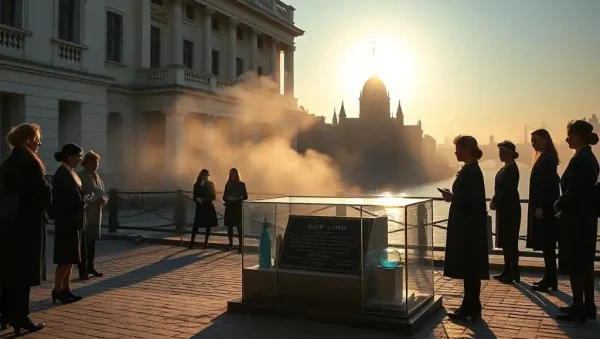
Begin your pilgrimage in the heart of Poland, where Maria Skłodowska was born in 1867. The Marie Curie Museum at Freta Street 16 is a must-visit, housed in the very building where she spent her early years. You’ll find authentic artifacts, personal letters, and interactive exhibits detailing her family’s struggle under Russian occupation and her clandestine education at the “Flying University.” This landmark offers a poignant glimpse into the resilience that fueled her future scientific breakthroughs.
Beyond the museum, stroll through the Old Town to see the Skłodowska-Curie Monument and the bench dedicated to her on Krakowskie Przedmieście. For a deeper connection, visit the University of Warsaw’s historical auditoriums where she initially studied mathematics and physics before moving to Paris. These sites are not just tourist stops; they are living testimonies to the cultural and political forces that shaped a young woman’s ambition to pursue science against all odds.
🧪 Paris, France: The Laboratory of Revolutionary Discovery
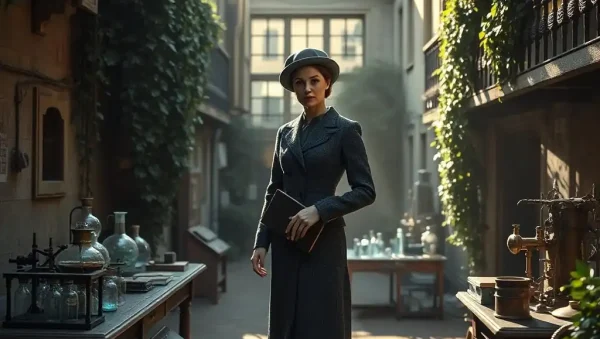
Paris is the epicenter of Curie’s scientific triumphs. The Curie Museum (Musée Curie) on Rue Pierre et Marie Curie, located in the former Radium Institute, preserves her original laboratory equipment, including the iconic wooden workbench and glass apparatus used for isolating polonium and radium. Visitors can walk through her office, view her Nobel Prize replica, and explore the garden where she often took brief moments of rest between relentless experiments.
Adjacent to the museum, the Sorbonne’s Campus and the Panthéon offer a solemn tribute. In 1995, Curie became the first woman honored with burial in the Panthéon for her own merits. Her tomb, lined with lead to protect against radioactivity, is a powerful symbol of sacrifice and brilliance. A self-guided audio tour is highly recommended to appreciate the architectural and historical layers of these central Parisian landmarks, perfect for both first-time visitors and returning science pilgrims.
🧬 The Radium Institute and Its Enduring Legacy
The Institut du Radium, now known as the Curie Institute, was established in 1914 and remains a leading cancer research center. Your travel guide highlights exclusive behind-the-scenes tours that, while sometimes limited, offer access to the original chemistry laboratory where Curie supervised groundbreaking work. This is where the concept of radioactivity as a therapeutic tool for cancer was pioneered—a direct legacy that saves millions of lives today. Expect to see historical patents, early radiation measurement devices, and photographs of the international team of “Curie’s girls” (female researchers) she mentored.
For those interested in architectural history, the building itself is a masterpiece of early 20th-century scientific design, with concrete walls and lead-lined floors specifically engineered to minimize radiation exposure. The guide also covers the pavilion’s tranquil courtyard and the on-site archives, which house over 6,000 documents, including her personal correspondence with Albert Einstein. This landmark is more than a museum; it’s a functioning institution where history and cutting-edge medical science converge.
🕯️ Commemorative Sites in Lesser-Known European Cities
Beyond Warsaw and Paris, several underrated landmarks deserve a spot on your itinerary. In Saint-Rémy-lès-Chevreuse, a suburb of Paris, lies the Maison de Marie Curie—her summer home where she sought refuge from the city’s pollution and continued writing scientific papers. Although privately owned and rarely open to the public, exterior views and a historical marker provide a poetic stop for devoted fans. Similarly, the Saint-Cyr-sur-Mer memorial plaque commemorates her summer visits and her love for the Mediterranean coast.
In Poland’s city of Lublin, a school named after her hosts a small permanent exhibition of student projects and historical photographs, showcasing how her legacy fuels modern Polish education. Furthermore, the University of Edinburgh in Scotland and the London’s Science Museum both feature permanent galleries dedicated to her work, including her 1903 Nobel Prize certificate from physics. These sites, often overlooked by mainstream tours, offer quieter, more reflective experiences away from crowds while adding geographical depth to your historical journey.
🚶 Practical Tips for Planning Your Self-Guided Tour
Maximize your experience with practical navigation advice: all major landmarks are accessible via public transportation. In Paris, metro line 10’s “Cardinal Lemoine” stop is a 5-minute walk to the Curie Museum, which offers free entry on the first Thursday of each month. For Warsaw, use tram lines 13 and 23 to reach the Old Town, and consider purchasing the Warsaw Pass for discounted entry to multiple heritage sites. Always check seasonal opening hours, as many French public museums close on Mondays and major holidays.
To enrich your visit, download the official “Women in Science History” mobile app (iOS/Android) which provides GPS-triggered audio narratives at each landmark, narrated by historians and biographers. Pack a notebook for reflections, as many visitors find the emotional weight of walking in Curie’s footsteps overwhelming. Lastly, book a guided walking tour that includes interactive demonstrations of early radioactivity experiments (using safe replicas). These practical tips ensure your journey is both educational and logistically smooth, regardless of your travel style.
Frequently Asked Questions
What is the best time of year to visit the Marie Curie landmarks?
The optimal window is late spring (May–June) or early autumn (September–October). During these months, weather is mild for walking tours, and crowds are thinner compared to summer peak season. Additionally, the Curie Museum in Paris hosts special exhibitions in April around International Women’s Day and in October for the anniversary of the Nobel Prize announcement, offering richer content.
Are the museums wheelchair accessible?
Yes, most major landmarks, including the Curie Museum in Paris and the Marie Curie Museum in Warsaw, have installed ramps and elevators. However, due to the historical nature of these buildings, some narrow corridors and basement areas may have restricted access. It is advisable to contact each venue at least 48 hours in advance to request specific accommodations and confirm route feasibility.
Can I see actual radioactive materials at these sites?
No. For public safety, all original radioactive substances (like radium samples) have been removed or stored in sealed, lead-lined containers not accessible to visitors. However, you can view replicas and early detection instruments, such as electroscopes and piezoelectrics, in secure display cases. The Curie Museum also features a radiation-safe exhibit explaining the history of safety protocols.
How much time should I allocate for a thorough tour?
Plan for at least 3–4 hours at the Paris Curie Museum, including the archive room and garden. In Warsaw, allocate a full half-day to combine the museum, monument, and Old Town walk. If you intend to combine both cities into one trip, budget 4–5 days total for travel and sightseeing, including a day for the suburban Saint-Rémy-lès-Chevreuse house exterior visit.
Are there guided tours specifically for children or students?
Yes, both the Warsaw and Paris museums offer educational workshops tailored for ages 8–16, including hands-on demonstrations of elementary physics principles using safe materials. The Curie Institute also provides free downloadable lesson plans for teachers. For university groups, advanced seminars on the ethics of radiation in medical use are available upon prior reservation, typically in English or French.