
Before They Were Famous: Exploring the Formative Environments of Women Mathematicians

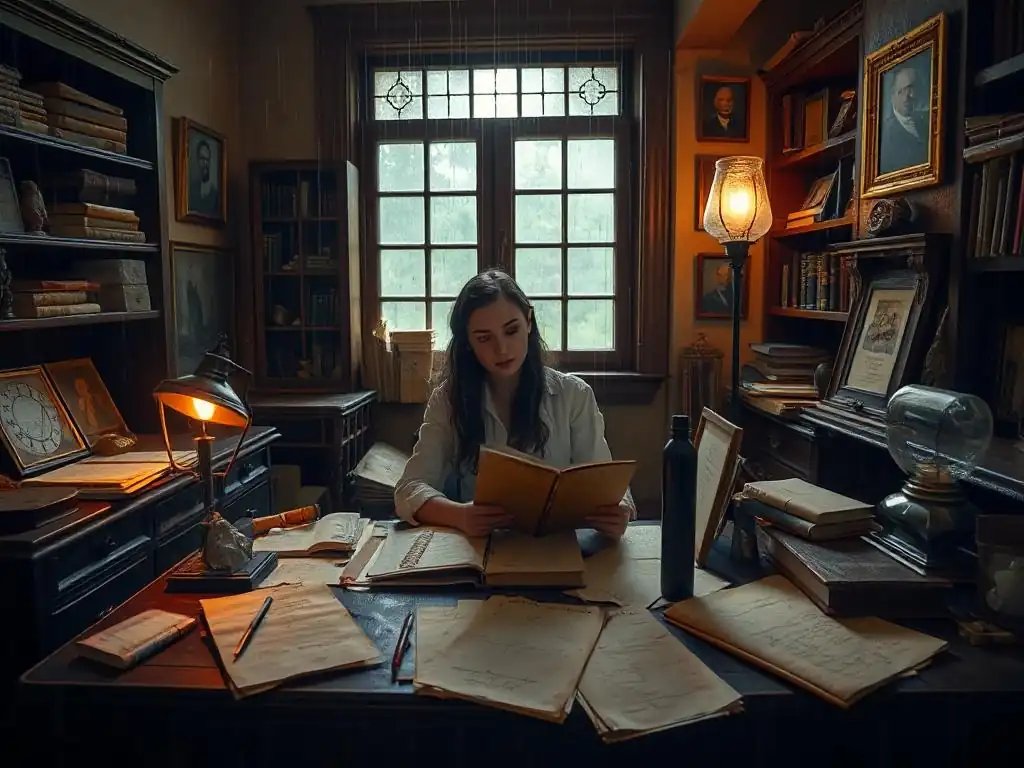
Welcome to WomenInScienceHistory.com, where we uncover the untold stories of groundbreaking female scientists! Have you ever wondered about the early environments that nurtured the minds of history's most brilliant female mathematicians? Before They Were Famous, these women navigated unique challenges and leveraged specific opportunities. Join us as we delve into the museums, historical sites, and formative experiences that shaped their paths, sparking a lifelong passion for numbers and ultimately leading to remarkable contributions to the field. Read on to discover the fascinating contexts that fueled their genius!
- Unveiling the Roots: Why Understanding Early Female Mathematicians' Environments Matters
- A Historical Tour: Tracing the Footsteps of Early Female Mathematicians
- Analyzing the Environments: Common Threads and Unique Circumstances
- Lessons for Today: Inspiring Future Generations of Female Mathematicians
- Conclusion: The Enduring Legacy of Early Female Mathematicians and Their Environments.
-
Frequently Asked Questions
- What were some common challenges faced by early female mathematicians in their formative years?
- How did family support or the lack thereof impact the development of early female mathematicians?
- Were there any specific educational institutions or environments that were more conducive to the success of early female mathematicians?
- How did the societal perception of women's roles affect the opportunities available to aspiring female mathematicians?
- What strategies did early female mathematicians employ to overcome the barriers they faced and make significant contributions to their field?
- Final Reflection: Seeds of Genius, Fields of Opportunity
- Rediscover Your Inner Math Magician!
Unveiling the Roots: Why Understanding Early Female Mathematicians' Environments Matters
The Importance of Context: How Formative Years Shaped Mathematical Genius
Understanding the formative years of any intellectual giant is crucial, but for early female mathematicians, their environments were exceptionally influential, often dictating the very possibility of their mathematical pursuits. Access to knowledge, whether through family libraries, private tutors, or enlightened parents, formed the bedrock of their intellectual development, particularly given the widespread exclusion from formal educational institutions. These early environments were not merely backdrops but active forces shaping their foundational skills and intellectual curiosity.
Consider the remarkable case of Sofia Kovalevskaya, whose childhood estate in Palibino, Russia, served as an unconventional, yet fertile, ground for her mathematical awakening. Her father, General Vasily Korvin-Krukovsky, though a military man, possessed a keen interest in mathematics and maintained an extensive library.
Anecdotally, one of her earliest exposures to advanced concepts came from the walls of her nursery, which were reportedly papered with lecture notes on differential and integral calculus, remnants from her father’s student days. This unique "early female mathematicians environment" provided an immersive, albeit accidental, introduction to complex mathematical ideas, fostering a precocious talent that would later flourish.
Overcoming Barriers: Societal Influences on Early Female Mathematicians
The societal environments in which early female mathematicians lived presented formidable, often insurmountable, barriers to their intellectual aspirations. Prevailing gender norms dictated that a woman's place was in the home, focused on domestic duties and family, rather than academic or professional pursuits. Educational opportunities for girls and women were severely limited, often restricted to subjects deemed appropriate for their domestic roles, such as needlework and basic literacy, with advanced sciences and mathematics largely excluded.
Emmy Noether, a towering figure in abstract algebra, provides a compelling example of navigating such a restrictive academic environment in early 20th-century Germany. Despite her father being a prominent mathematician at the University of Erlangen, she initially had to audit lectures unofficially, as women were not permitted to matriculate or earn degrees.
Even after earning her doctorate and becoming a Privatdozentin (an unsalaried lecturer), she faced immense resistance to securing a full professorship. Her early academic environment was characterized by persistent struggle against institutionalized sexism, yet her sheer brilliance and unwavering dedication allowed her to establish a revolutionary school of thought in mathematics, influencing generations despite the systemic obstacles.
A Historical Tour: Tracing the Footsteps of Early Female Mathematicians
Step 1: Preparing for Your Journey - Essential Resources and Guides
Embarking on a historical tour to understand the formative environments of early female mathematicians requires diligent preparation and access to reliable scholarly resources. Before physically or virtually visiting these significant locations, it's essential to immerse oneself in the historical context, the societal norms of the time, and the specific challenges and triumphs of these pioneering women. This preparatory phase ensures a deeper appreciation of their intellectual journeys and the unique "early female mathematicians environments" they inhabited.
To truly grasp the intellectual climate and personal struggles, leveraging established historical archives and biographical collections is invaluable. These resources provide the academic rigor necessary to move beyond anecdotal accounts and delve into primary source materials where available. They offer critical insights into the educational systems, social expectations, and scientific communities that either supported or hindered these women, painting a comprehensive picture of their early development.
Littlewood's Miscellany: A Starting Point
For a fascinating, albeit informal, glimpse into the academic and personal lives of mathematicians from the late 19th and early 20th centuries, Littlewood's Miscellany offers unique insights. Written by J.E. Littlewood, a prominent British mathematician and contemporary of many significant figures, the book provides a collection of anecdotes, observations, and mathematical musings.
While not a direct biographical work, it offers a window into the intellectual camaraderie, rivalries, and the broader atmosphere of mathematical inquiry that shaped the professional environments of some early female mathematicians and their male colleagues. It can illuminate the subtle dynamics of academia and the intellectual currents that flowed through these "early female mathematicians environments."
Utilizing Online Archives: The MacTutor History of Mathematics Archive for Primary Sources
The MacTutor History of Mathematics Archive, maintained by the University of St Andrews, is an indispensable online resource for anyone researching the lives and works of mathematicians, including early female mathematicians. This comprehensive archive features detailed biographies, historical timelines, and often includes excerpts from primary sources or links to digitized documents.
It allows researchers to explore the educational backgrounds, family circumstances, and professional trajectories of figures like Hypatia of Alexandria, Maria Gaetana Agnesi, and Sophie Germain, providing crucial context for understanding their "early female mathematicians environments" without needing to travel physically. Its accessibility makes it a cornerstone for preliminary research and deeper dives into historical data.
Step 2: Visiting Key Locations - Birthplaces and Educational Institutions
To truly grasp the essence of the environments that shaped early female mathematicians, a journey, whether physical or imaginative, to their birthplaces and educational institutions offers profound insights. These locations serve as tangible links to their past, allowing us to visualize the spaces where their intellectual sparks were ignited and nurtured, often against societal odds. Experiencing these sites helps connect the biographical facts with the lived reality of their "early female mathematicians environments."
These historical sites provide invaluable context, revealing the architectural, social, and cultural landscapes that influenced their early lives. From the quiet solitude of a family home turned into a private study to the bustling academic corridors of pioneering universities, each location tells a part of the story of how these women navigated and often transformed their surroundings to pursue their passion for mathematics.
The Birthplace of Sophie Germain: Paris, France - Exploring Her Intellectual Milieu
Sophie Germain, a self-taught mathematical prodigy, was born in Paris, France, in 1776, into a bourgeois family. Her early life unfolded amidst the turbulent backdrop of the French Revolution. The family home, located in a quiet Parisian neighborhood, became her sanctuary during the revolutionary turmoil, allowing her to delve into her father's extensive library.
Confined indoors, she devoured books on history, philosophy, and crucially, mathematics. This intensely personal and somewhat isolated environment, characterized by self-directed learning and access to forbidden texts, was the crucible for her foundational mathematical knowledge. Her "early female mathematicians environment" at home, without formal schooling for girls, necessitated this profound self-reliance, shaping her unique approach to number theory and elasticity theory.
The University of Göttingen and Emmy Noether: A Center of Mathematical Excellence
The University of Göttingen in Germany stands as a monumental landmark in the history of mathematics, and it played a pivotal, albeit challenging, role in Emmy Noether's development. In the early 20th century, Göttingen was a global epicenter for mathematical research, attracting brilliant minds like David Hilbert and Felix Klein. Noether, having completed her doctorate at Erlangen, moved to Göttingen in 1915.
Despite its reputation, the university initially resisted granting her a formal faculty position due to her gender. Her "early female mathematicians environment" at Göttingen was one of intellectual brilliance mixed with institutional prejudice. Nevertheless, working alongside and supported by Hilbert, she eventually secured a Privatdozentin position in 1919 and later gained recognition for her revolutionary work in abstract algebra, fundamentally shaping the field through her lectures and research group, often referred to as the "Noether school."
Sofia Kovalevskaya's Childhood Estate: Palibino, Russia - Understanding Her Privileged Education
Sofia Kovalevskaya's childhood estate, Palibino (now in Belarus), offered a uniquely privileged and intellectually stimulating "early female mathematicians environment." Born in 1850 into an aristocratic Russian family, her home was filled with intellectual discourse and cultural pursuits. Her father, General Vasily Korvin-Krukovsky, though a military officer, harbored a deep love for mathematics, and her uncle, Professor Pyotr Vasilievich Korvin-Krukovsky, also significantly influenced her.
The legend of her nursery walls being papered with mathematical lecture notes from her father's student days underscores the immersive, almost accidental, exposure to complex mathematical concepts she experienced. This rich domestic environment, combined with private tutoring from an early age, provided her with an exceptional foundation in mathematics, enabling her to later pursue higher education abroad, a rare opportunity for women of her time.
Step 3: Immersing Yourself in the Culture - Books, Films, and Educational Materials
Beyond visiting physical locations or poring over historical documents, immersing oneself in cultural representations can deepen the understanding of the challenges and triumphs faced by early female mathematicians. Books, films, and educational materials offer different lenses through which to appreciate their lives and contributions, providing narrative context and emotional resonance. These media can effectively convey the societal pressures and personal sacrifices that were integral to their "early female mathematicians environments."
Such cultural resources serve not only to inform but also to inspire. By bringing these stories to life, they make the struggles and breakthroughs of these historical figures more relatable, fostering empathy and encouraging contemporary audiences, especially young girls, to pursue their own passions in STEM fields. They bridge the gap between historical fact and lived experience, making the legacy of these women more impactful.
Hidden Figures: Visualizing the Challenges
The film Hidden Figures (2016) powerfully illustrates the systemic racial and gender discrimination faced by a group of African American female mathematicians working at NACA (later NASA) in the mid-20th century. While chronologically later than the "early female mathematicians" discussed elsewhere, the film vividly portrays the challenges of working in a male-dominated scientific environment, where talent was often overlooked or actively suppressed due to prejudice.
It highlights the perseverance, intellect, and collaborative spirit required to break through barriers and make indispensable contributions to space exploration. The film provides a compelling visual narrative of the kind of professional "early female mathematicians environments" that demanded extraordinary resilience.
Math Snacks: Interactive Learning for All Ages
Math Snacks are a collection of animated videos and interactive games designed by New Mexico State University's Learning Games Lab to make mathematical concepts engaging and accessible for learners of all ages. While not directly historical, these educational tools exemplify an approach to learning that champions curiosity and problem-solving, qualities that were undoubtedly essential for early female mathematicians who often had to teach themselves.
By making complex ideas digestible and fun, Math Snacks indirectly reflects the self-motivated learning spirit that characterized many of these historical figures, who, within their restrictive "early female mathematicians environments," found innovative ways to grasp advanced concepts.
Analyzing the Environments: Common Threads and Unique Circumstances

The Role of Mentors: Identifying Key Figures Who Supported Early Female Mathematicians
For many early female mathematicians, the presence of a supportive mentor was a critical, often indispensable, element in their intellectual development and professional advancement. In an era where formal institutions were largely closed to women, these mentors, often established male academics, provided not only intellectual guidance but also crucial advocacy, acting as gatekeepers to knowledge and opportunities. Their belief in a woman's potential could open doors that societal norms had firmly shut, making these relationships a defining feature of their "early female mathematicians environments."
Consider the profound impact of Karl Weierstrass on Sofia Kovalevskaya. Despite her exceptional talent, Kovalevskaya struggled to gain admission to universities in Germany, which did not admit women. Weierstrass, a renowned professor at the University of Berlin, recognized her extraordinary abilities and agreed to tutor her privately for several years.
He not only provided rigorous instruction but also tirelessly advocated for her, helping her eventually obtain a doctorate in absentia from the University of Göttingen and later securing her a professorship at Stockholm University, a groundbreaking achievement for a woman in mathematics. Similarly, Sophie Germain benefited from correspondence with leading mathematicians like Joseph-Louis Lagrange and Adrien-Marie Legendre, who, though initially unaware of her gender, recognized her mathematical insights and provided valuable feedback, shaping her research in number theory and elasticity. These mentorships were vital bridges across the chasm of institutional exclusion in their "early female mathematicians environments."
Socioeconomic Factors: How Class and Opportunity Influenced Mathematical Pursuits
Socioeconomic factors played an undeniable role in shaping the "early female mathematicians environments," often determining the very possibility of pursuing intellectual endeavors. Access to education, private tutors, and the leisure time required for deep study were largely privileges of the affluent. Women from wealthy or intellectually inclined families were significantly more likely to receive an education beyond basic literacy, enabling them to explore advanced subjects like mathematics.
For instance, Maria Gaetana Agnesi, an 18th-century Italian mathematician and philosopher, came from a wealthy and intellectually prominent Milanese family. Her father, a professor of mathematics at the University of Bologna, fostered an environment of learning and encouraged her prodigious talents, providing her with the best tutors and exposing her to scholarly discussions from a young age.
This privileged "early female mathematicians environment" allowed her to become fluent in multiple languages and master complex mathematical concepts, leading to her authorship of the groundbreaking calculus textbook, Instituzioni analitiche ad uso della gioventù italiana. In contrast, women from less affluent backgrounds faced immense hurdles, often needing to contribute to household income or manage domestic responsibilities, leaving little to no time or resources for academic pursuits.
The Power of Education: Access and Quality in Shaping Mathematical Careers
The power of education, both in terms of access and quality, was a paramount factor in shaping the careers of early female mathematicians. For most women, formal university education was either entirely forbidden or severely restricted, forcing them to seek alternative paths. This often meant relying on self-study, private tutors, or informal intellectual networks, fundamentally defining their "early female mathematicians environments." The quality of this alternative education, if available, was crucial for their development.
Consider the contrasting educational experiences. Ada Lovelace, born in 1815, daughter of Lord Byron, benefited from her mother's insistence on a rigorous, unconventional education focused on mathematics and science, a stark departure from the typical accomplishments-based education for girls of her era. Her private tutoring, particularly from the prominent mathematician Augustus De Morgan, provided her with a high-quality mathematical foundation that enabled her to collaborate with Charles Babbage on the Analytical Engine, leading to her pioneering work on algorithms.
Conversely, Emmy Noether, despite her exceptional intellect, initially gained access to university lectures only unofficially, as a "guest" student. Her persistence eventually allowed her to earn a doctorate and contribute profoundly to mathematics, but her path highlights the significant barriers to formal, high-quality education within the "early female mathematicians environments" of her time.
Lessons for Today: Inspiring Future Generations of Female Mathematicians
Creating Supportive Environments: Fostering Inclusion in STEM Fields
The historical struggles of early female mathematicians offer invaluable lessons for contemporary efforts to foster inclusion and create truly supportive environments in STEM fields. Understanding the systemic barriers they faced—from limited educational access to institutional discrimination—underscores the need for intentional strategies to dismantle modern-day obstacles. Fostering inclusion today means actively promoting equitable opportunities, challenging unconscious biases, and establishing robust support systems that empower women to thrive in mathematics and science.
Many modern initiatives are designed to cultivate such environments. Universities and research institutions are implementing targeted mentorship programs, flexible work arrangements, and parental leave policies to better support women in academic and research careers.
Additionally, diversity and inclusion training workshops are becoming more common, aiming to raise awareness of biases and promote more equitable hiring and promotion practices. These efforts are showing tangible results; for instance, the percentage of women earning bachelor's degrees in mathematics in the United States has steadily risen over the past decades, reaching approximately 48% in recent years, demonstrating progress in creating more welcoming "female mathematicians environments" at the undergraduate level.
Promoting Role Models: Highlighting the Achievements of Women in Mathematics
A critical lesson gleaned from the historical narratives of early female mathematicians is the profound impact of visible role models. For centuries, the contributions of women in science were often overlooked or attributed to male counterparts, creating a vacuum of inspiring figures for aspiring young girls. By actively promoting and celebrating the achievements of both historical and contemporary women in mathematics, we can challenge outdated stereotypes and demonstrate that mathematical excellence knows no gender.
Platforms like WomenInScienceHistory.com are vital in this endeavor, providing accessible biographies and stories that bring these pioneering figures to life. Initiatives such as Ada Lovelace Day, celebrated annually every October, globally highlight the achievements of women in STEM, inspiring young girls and challenging pervasive myths about gender and aptitude in mathematics. The widespread recognition of figures like Katherine Johnson, whose calculations were indispensable for NASA's early space missions, has significantly boosted public awareness of women's crucial, yet often unsung, contributions to mathematics and science, creating powerful and relatable role models for future generations.
Resources for Educators: Tools and Strategies for Encouraging Girls in Math
Educators play a pivotal role in shaping the next generation of mathematicians, and drawing lessons from the challenges faced by early female mathematicians can inform more effective strategies for encouraging girls in math today. Providing engaging materials, fostering a growth mindset, and introducing historical context can transform mathematics from an intimidating subject into an exciting exploration. Equipping educators with the right tools is paramount to creating equitable and inspiring learning environments.
Various organizations offer resources specifically designed to empower educators in this mission. These resources often include lesson plans that integrate the history of women in mathematics, making the subject more relatable and demonstrating its real-world impact. They also provide teaching strategies that address common barriers girls face in math, such as stereotype threat and lack of confidence.
Association for Women in Mathematics: Empowering Girls in STEM
The Association for Women in Mathematics (AWM) is a leading professional society dedicated to encouraging women and girls to study and have careers in the mathematical sciences. AWM offers a wealth of resources for educators, including grants for student chapters, travel grants for conferences, and mentorship opportunities.
They also provide materials like biographical sketches of prominent female mathematicians and educational outreach programs aimed at pre-college students. By highlighting the diverse contributions of women and offering practical support, AWM directly contributes to fostering supportive "female mathematicians environments" and inspiring young girls to pursue mathematical passions, ensuring that the legacy of early female mathematicians continues to thrive.
Conclusion: The Enduring Legacy of Early Female Mathematicians and Their Environments.
The journey through the formative environments of early female mathematicians reveals a complex tapestry woven with threads of extraordinary talent, profound societal barriers, and unwavering perseverance. From the quiet intellectual havens created within family homes to the fiercely contested battlegrounds of early universities, each "early female mathematicians environment" presented unique challenges and opportunities.
Figures like Sophie Germain, Emmy Noether, and Sofia Kovalevskaya, among many others, navigated worlds often hostile to their aspirations, yet managed to cultivate their genius and leave indelible marks on the field of mathematics. Their stories are not merely historical footnotes but powerful narratives of resilience against overwhelming odds.
By meticulously exploring these historical contexts, we gain more than just biographical data; we uncover crucial insights into the conditions that either stifled or fostered mathematical brilliance. Their enduring legacy transcends their individual achievements, serving as a beacon for current efforts to dismantle systemic barriers and cultivate truly inclusive environments in STEM.
Understanding the "early female mathematicians environments" provides a roadmap for inspiring future generations, reminding us that by recognizing and supporting talent regardless of gender, we can ensure that the next wave of mathematical pioneers can flourish without the historical constraints that limited their predecessors. Their contributions, forged in diverse and often difficult circumstances, continue to enrich our understanding of the universe and inspire the pursuit of knowledge.
Frequently Asked Questions
What were some common challenges faced by early female mathematicians in their formative years?
Early female mathematicians often faced social and institutional barriers, including limited access to education and a lack of mentorship opportunities in male-dominated environments. They also had to overcome gender stereotypes and societal expectations.
How did family support or the lack thereof impact the development of early female mathematicians?
Family support played a crucial role. Supportive families provided access to education and resources, while a lack of support could significantly hinder a woman's ability to pursue mathematics. Encouragement and belief in their abilities were also key.
Were there any specific educational institutions or environments that were more conducive to the success of early female mathematicians?
Some private schools or academies specifically for girls offered a better mathematical education than was generally available, providing crucial foundations. Also, some progressive universities that gradually opened doors to women played a pivotal role. Home schooling was also a key factor.
How did the societal perception of women's roles affect the opportunities available to aspiring female mathematicians?
The prevailing societal perception that mathematics was a "male" subject limited opportunities for women. This led to discrimination in academia and employment, and discouraged many from pursuing their mathematical interests. Limited career paths were also common.
What strategies did early female mathematicians employ to overcome the barriers they faced and make significant contributions to their field?
Many relied on self-study and independent research, often collaborating with male colleagues or mentors who recognized their talent. They also persevered despite discrimination and actively sought out opportunities to share their work and gain recognition. Networking with other female scientists was also important.
Okay, here's a final reflection designed to close your article, "Before They Were Famous: Exploring the Formative Environments of Women Mathematicians," optimized for the keyword "Early female mathematicians environments," and following the structure you provided:
Final Reflection: Seeds of Genius, Fields of Opportunity
The stories we've explored, detailing the formative environments of early female mathematicians, resonate profoundly today. Understanding the obstacles they overcame, the support they received, and the unique circumstances that fostered their brilliance is not just historical curiosity; it's a crucial lens through which we can examine and improve the pathways for aspiring mathematicians, especially women, in the present. Their struggles and triumphs illuminate the ongoing need for equitable access and nurturing environments in STEM fields.
The impact of these early pioneers extends far beyond their individual contributions to mathematics. Their resilience and ingenuity, often in the face of systemic barriers, have paved the way for generations of women to pursue their passions and challenge societal expectations. Their stories serve as a powerful reminder that potential is universal, but opportunity is not. The best proof is experience.
- Francis Bacon. This quote encapsulates the essence of their journeys; their lived experiences, both positive and negative, shaped their mathematical prowess and continue to inform our understanding of how to cultivate talent.
Let us not simply admire these remarkable women from afar, but instead, let their stories inspire us to action. Consider the environments you create, the opportunities you champion, and the voices you amplify. Are you fostering a space where all individuals, regardless of gender or background, can thrive mathematically? Let the legacy of these early female mathematicians be a catalyst for creating a more inclusive and equitable future, where every seed of genius has the chance to blossom.
Rediscover Your Inner Math Magician!
Thanks for diving into the fascinating stories of these incredible women! We hope you've found inspiration and a newfound appreciation for the diverse journeys that lead to mathematical brilliance. Now, let's put that inspiration into action:
- Embark on your own mathematical adventure by choosing one challenging problem or concept that intrigues you and dedicating 30 minutes each day to exploring it.
- Share this article with a friend or colleague who might also find inspiration in these stories, sparking conversations about the importance of diverse role models in STEM.
- Uncover the hidden mathematical gems in your own community by attending a local math club or lecture – you might be surprised by what you discover!
What small step will you take today to further explore the world of mathematics?