
Silent No More: Women Giving Voice to Endangered Species (19502000)

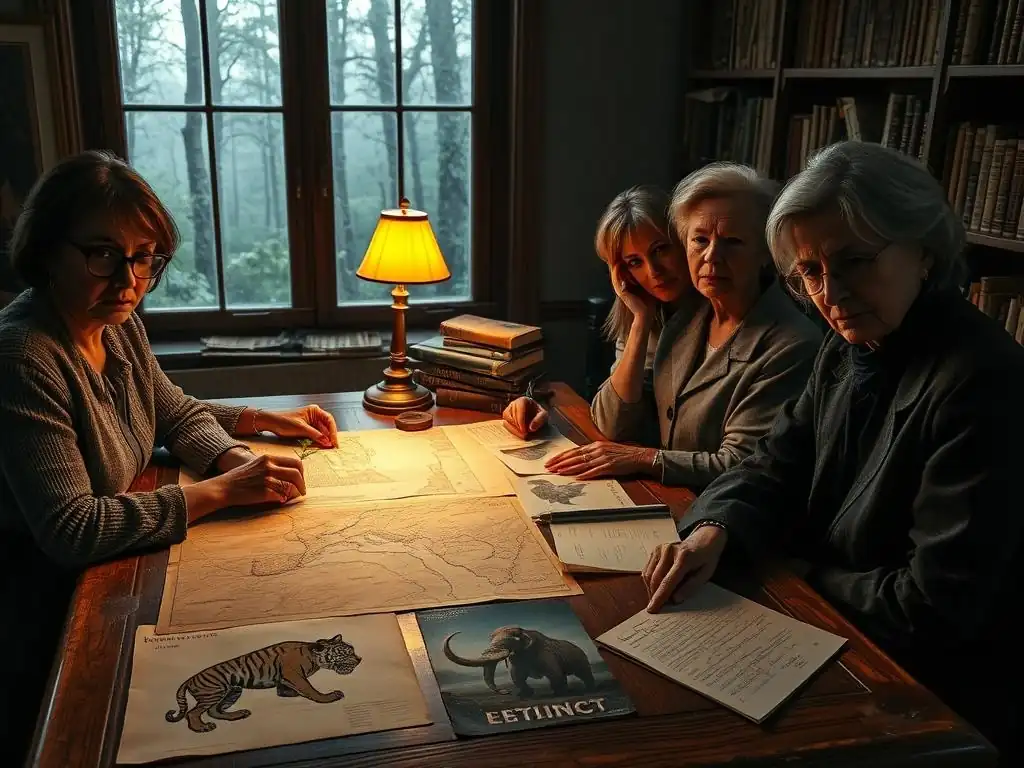
Welcome to WomenInScienceHistory.com, a place dedicated to illuminating the remarkable achievements of women in science throughout history.
Delve into the untold stories of resilience and innovation, starting with our featured piece: Silent No More: Women Giving Voice to Endangered Species (1950-2000). Discover how these dedicated women scientists championed the cause of endangered species, often facing immense obstacles to make their voices heard. What groundbreaking strategies did they employ, and what lasting impact did they have? Explore the article and uncover the crucial role these women played in shaping the field of environmental science.
- Introduction: The Rise of Women Scientists Championing Endangered Species (1950-2000)
- Early Advocates: Pioneering Women Scientists and Conservation Efforts
- Expanding Roles: Women's Contributions to Endangered Species Research and Advocacy
- Key Contributions: Specific Examples of Women's Impact on Endangered Species Conservation
- Overcoming Obstacles: Challenges Faced by Women Scientists in Conservation
- The Power of Voice: Women as Advocates for Endangered Species Protection
- Legacy and Impact: How These Women Shaped Endangered Species Conservation
- Conclusion: Celebrating the Enduring Legacy of Women Scientists and Endangered Species Advocacy
-
Frequently Asked Questions
- What is the main focus of WomenInScienceHistory.com regarding women scientists?
- What challenges did women scientists often face, as discussed on the website?
- What is the central theme of the "Silent No More" article on WomenInScienceHistory.com?
- Why is it important to highlight the stories of women scientists who worked with endangered species?
- How does WomenInScienceHistory.com aim to inspire future generations?
- Final Reflection: Amplifying Echoes of Conservation
- Amplify Their Voices: Become a Force for Change!
Introduction: The Rise of Women Scientists Championing Endangered Species (1950-2000)
Highlighting the Era: Mid-Late 20th Century Environmental Science and Female Pioneers
The period from 1950 to 2000 marked a pivotal shift in global environmental awareness. Initially, scientific understanding of ecological systems was nascent, but by the mid-20th century, growing concerns about pollution, habitat destruction, and species extinction began to galvanize public and scientific interest.
This era saw the nascent field of environmental science emerge from a blend of biology, ecology, and chemistry, with a new focus on human impact on natural systems. It was a time of significant legislative change, such as the passage of the Endangered Species Act in the United States in 1973, reflecting a global awakening to ecological fragility.
Against a backdrop of predominantly male-dominated scientific institutions, a formidable wave of female pioneers began to carve out their spaces in this burgeoning field. These women scientists endangered species voices often faced significant barriers, including limited access to funding, institutional sexism, and skepticism regarding their capabilities in rigorous fieldwork. Despite these obstacles, their unwavering dedication, unique perspectives, and profound commitment to understanding and protecting the natural world allowed them to make groundbreaking contributions, laying the foundation for modern conservation biology.
The Growing Concern: Endangered Species and the Call for Conservation Action
By the 1960s, the plight of various species became increasingly apparent, driven by agricultural expansion, industrial pollution, and unregulated hunting. Iconic species like the American bald eagle, severely impacted by DDT, or African elephants, decimated by poaching, became symbols of a global crisis. The scientific community and a nascent environmental movement began to recognize that many species were teetering on the brink of extinction, necessitating urgent and concerted conservation action.
This growing concern spurred a demand for rigorous scientific research to understand the causes of decline and develop effective conservation strategies. It was in this critical juncture that the analytical skills and passionate advocacy of women scientists endangered species voices became indispensable. They not only documented declines but also brought forward innovative research methodologies and compelling narratives that moved the public and policymakers alike towards acknowledging the severity of the threat and taking decisive steps to protect biodiversity.
Early Advocates: Pioneering Women Scientists and Conservation Efforts
Rachel Carson: A Landmark Voice for Environmental Awareness and Species Protection
Rachel Carson's seminal work, Silent Spring, published in 1962, irrevocably altered the course of environmental history. A marine biologist by training, Carson meticulously documented the devastating effects of synthetic pesticides, particularly DDT, on bird populations and broader ecosystems. Her accessible yet scientifically rigorous exposé revealed how these chemicals, through bioaccumulation, were causing widespread declines in species like the bald eagle, peregrine falcon, and osprey, whose populations had plummeted by as much as 90% in some regions due to DDT-induced eggshell thinning.
Carson's book was a powerful call to action, translating complex ecological concepts into a narrative that resonated with millions. Her scientific integrity and eloquent prose challenged the prevailing industrial narrative that chemicals were benign and necessary for progress. She effectively used her woman scientist endangered species voice to ignite public debate, leading to a nationwide ban on DDT in the United States by 1972 and inspiring the creation of the U.S. Environmental Protection Agency (EPA), profoundly shaping environmental policy and public consciousness regarding species protection.
Dian Fossey: Dedicated Research and Conservation Efforts for Mountain Gorillas
Dian Fossey embarked on her groundbreaking research with mountain gorillas in the Virunga Mountains of Rwanda in 1967, establishing the Karisoke Research Center. Under the guidance of Dr. Louis Leakey, Fossey immersed herself in the gorillas' habitat, pioneering non-invasive observation techniques that allowed her to gain the trust of these shy primates. Her long-term studies provided unprecedented insights into gorilla behavior, social structures, and individual personalities, challenging previous perceptions of gorillas as aggressive beasts. At the time, the mountain gorilla population was estimated to be fewer than 250 individuals globally, facing imminent extinction.
Fossey's dedication extended beyond research to fierce, hands-on conservation. She actively combated poaching, dismantling snares and confronting poachers directly, often at great personal risk. Her relentless efforts, documented in her book Gorillas in the Mist (1983), brought global attention to the critical plight of mountain gorillas and highlighted the urgent need for their protection. Her powerful woman scientist endangered species voice and unwavering commitment are credited with significantly slowing the decline of mountain gorillas in the Virungas, contributing to their population recovery to over 1,000 individuals today.
Expanding Roles: Women's Contributions to Endangered Species Research and Advocacy
Field Research and Data Collection: Women Documenting Endangered Species in the Wild
Throughout the mid-to-late 20th century, women scientists increasingly ventured into remote and challenging environments to conduct crucial field research. This work was fundamental to understanding the specific needs, behaviors, and population dynamics of endangered species. Researchers often spent years tracking elusive animals, collecting behavioral data, conducting population counts, and meticulously documenting habitat use, often enduring harsh conditions and isolation. For instance, Dr. George Schaller's early work on mountain gorillas laid a foundation, but it was women like Dian Fossey who then dedicated decades to continuous, immersive observation.
This long-term, on-the-ground data collection by these women scientists endangered species voices provided the empirical evidence necessary for effective conservation planning. Their findings revealed critical information about breeding patterns, dietary requirements, and the specific threats faced by different species, from the subtle shifts in insect populations to the migration routes of large mammals. This detailed understanding allowed conservationists to move beyond generic protection measures to implement targeted interventions, such as establishing protected areas or developing species-specific recovery plans, based on robust scientific data.
The Rise of Women in Ecology: Understanding Ecosystems and Species Interdependence
As the field of ecology matured, women played a significant role in shifting the focus from individual species to broader ecosystem-level understanding. Ecologists like Dr. Margie Macfadden, though lesser known than some primatologists, contributed to understanding complex food webs and the interconnectedness of species within their habitats. They investigated how human activities, such as deforestation or pollution, impacted entire ecosystems, not just isolated populations. This holistic approach recognized that protecting a single endangered species required safeguarding the entire web of life that supported it.
These women scientists endangered species voices emphasized the importance of preserving habitat integrity, understanding nutrient cycles, and analyzing the cascading effects of species loss. Their work helped to popularize concepts like biodiversity and ecosystem services, demonstrating that the health of one species is inextricably linked to the health of its environment and the countless other species within it. This comprehensive perspective was crucial for developing sustainable conservation strategies that addressed root causes of decline rather than merely treating symptoms.
Key Contributions: Specific Examples of Women's Impact on Endangered Species Conservation
Biruté Galdikas: Long-Term Studies and Advocacy for Orangutan Conservation in Borneo
Biruté Galdikas began her pioneering research on orangutans in the rainforests of Borneo in 1971, under the mentorship of Dr. Louis Leakey. She established Camp Leakey in what is now Tanjung Puting National Park, dedicating decades to the immersive study of these solitary great apes. Her groundbreaking work revealed intimate details about orangutan behavior, diet, social structures, and their critical role as seed dispersers in the rainforest ecosystem, information previously largely unknown to science. At the time, orangutan populations were rapidly declining due to deforestation and the illegal pet trade.
Beyond her scientific contributions, Galdikas became a tireless advocate for orangutan conservation. She initiated rehabilitation programs for orphaned orangutans, rescuing hundreds from captivity and preparing them for reintroduction into the wild. Her work brought global attention to the devastating impact of logging and the burgeoning palm oil industry on orangutan habitats. Through her efforts with the Orangutan Foundation International, Galdikas continues to use her powerful woman scientist endangered species voice to raise awareness and implement direct conservation actions, contributing significantly to the protection of these critically endangered primates.
Jane Goodall: Groundbreaking Research and Advocacy for Chimpanzee Conservation in Tanzania
Jane Goodall commenced her revolutionary research on wild chimpanzees at Gombe Stream National Park in Tanzania in 1960. Her unprecedented approach of living among the chimpanzees and observing them intimately, without imposing artificial barriers, led to astonishing discoveries. She documented tool use in chimpanzees, their complex social structures, and individual personalities, challenging the long-held belief that only humans manufactured tools. Her work, initially met with skepticism from some scientific circles for her unconventional methods, fundamentally redefined our understanding of primate behavior and human evolution.
Goodall's transition from pure research to global advocacy marked a significant turning point in her career and for conservation. In 1977, she established the Jane Goodall Institute, which focuses on chimpanzee research, conservation, and education. Her Roots & Shoots program, founded in 1991, empowers young people in over 60 countries to undertake environmental and humanitarian projects. Goodall's eloquent storytelling and unwavering dedication have made her one of the most recognized and influential women scientists endangered species voices, inspiring millions worldwide to take action for wildlife and habitat protection.
Overcoming Obstacles: Challenges Faced by Women Scientists in Conservation
Gender Bias in Scientific Institutions and Funding
Throughout the mid-to-late 20th century, women in science, particularly in fields requiring extensive fieldwork, frequently encountered deeply entrenched gender bias within academic and research institutions. Opportunities for permanent faculty positions, leadership roles, and access to significant research funding were disproportionately skewed towards men. Many pioneering women scientists endangered species voices struggled to secure grants, equipment, and institutional support, often operating with limited resources and facing skepticism about their capabilities in demanding environments. For instance, some found it easier to secure initial funding from international organizations or private benefactors than from traditional university departments.
This systemic bias meant that women often had to work harder to prove their competence and gain recognition for their contributions. Their groundbreaking discoveries were sometimes initially downplayed or attributed to male collaborators. Despite these barriers, their resilience and unwavering commitment to their research allowed them to persist, gradually chipping away at these institutional prejudices and paving the way for future generations of female scientists in conservation.
Balancing Fieldwork with Family Responsibilities
The demanding nature of long-term fieldwork, often in remote and challenging locations, presented unique obstacles for women scientists, particularly those with family responsibilities. Societal expectations regarding childcare and domestic duties often conflicted with the need to spend months or even years away in the field. Unlike many male counterparts, women often had to make difficult choices between career progression and personal life, or find innovative ways to integrate family into their demanding research schedules.
Some women scientists endangered species voices brought their young children to their field sites, adapting their living conditions to accommodate family needs, while others faced extended separations. The lack of institutional support for parental leave or flexible work arrangements in remote research contexts exacerbated these challenges. The profound personal sacrifices made by many of these women underscore their immense dedication to their research and their passion for endangered species conservation.
The Power of Voice: Women as Advocates for Endangered Species Protection
Using Science to Inform Policy and Public Opinion
The scientific rigor of the research conducted by these women provided an undeniable foundation for their advocacy. Their detailed observations and data collection were not merely academic exercises; they were critical tools for informing policy decisions and shaping public opinion. For example, Rachel Carson's data on pesticide effects directly influenced the U.S. government's decision to ban DDT. Similarly, the extensive ecological knowledge gathered by Dian Fossey and Jane Goodall provided crucial evidence for the establishment and expansion of national parks and protected areas in Rwanda and Tanzania, respectively.
These women scientists endangered species voices were adept at translating complex scientific findings into accessible narratives for broader audiences. They published influential books, delivered compelling lectures, and participated in documentaries, effectively mobilizing public support for conservation initiatives. Their ability to connect scientific facts with the emotional urgency of species loss was instrumental in shifting societal attitudes and pushing for stronger environmental legislation and international cooperation.
The Role of Women in Environmental Education and Outreach
Beyond direct policy influence, women played a vital role in fostering environmental literacy and inspiring future generations through education and outreach. Many pioneers recognized that long-term conservation success depended on cultivating a deeper appreciation for nature among the public, especially children. Jane Goodall's Roots & Shoots program, for instance, launched in 1991, empowers youth globally to engage in hands-on environmental projects, directly connecting scientific understanding with community action.
These women scientists endangered species voices often engaged directly with local communities surrounding protected areas, educating them about the value of biodiversity and promoting sustainable practices. Their efforts helped to build local stewardship, which is essential for the long-term protection of endangered species. Through workshops, school visits, and public awareness campaigns, they extended the reach of conservation beyond scientific circles, embedding environmental values into the cultural fabric of societies worldwide.
Legacy and Impact: How These Women Shaped Endangered Species Conservation
The Influence of Their Work on Future Generations of Scientists
The pioneering work of these women fundamentally transformed the landscape of environmental science and conservation, opening doors for future generations of researchers, particularly women. Their success in challenging gender norms within scientific institutions demonstrated that women could excel in demanding fieldwork and make profound intellectual contributions. Their methodologies, ethical approaches to studying animals in their natural habitats, and dedication to long-term research became models for aspiring scientists.
Numerous conservation organizations and university programs today bear the indelible mark of their influence. Mentorship opportunities and networks for women in science have grown, partly as a direct result of the trails blazed by these early pioneers. The unwavering dedication of these women scientists endangered species voices proved that passion, combined with rigorous scientific inquiry, could lead to monumental discoveries and tangible conservation outcomes, inspiring countless individuals to pursue careers in ecological research and advocacy.
Ongoing Conservation Efforts Inspired by Female Pioneers
The impact of these women extends far beyond their individual careers, shaping ongoing conservation efforts globally. The protected areas they championed, such as Gombe Stream National Park for chimpanzees and Tanjung Puting National Park for orangutans, continue to thrive as critical habitats for endangered species. The organizations they founded, like the Jane Goodall Institute and the Orangutan Foundation International, remain at the forefront of research, rehabilitation, and advocacy for these species, ensuring the continuation of their foundational work.
Moreover, their advocacy helped to establish a broader conservation ethic, influencing the development of international agreements and national policies aimed at protecting biodiversity. Their powerful women scientists endangered species voices continue to resonate, reminding us of the interconnectedness of all life and the urgent need for sustained efforts to combat habitat loss, climate change, and other threats. Their legacy is a testament to the enduring power of scientific inquiry combined with passionate advocacy in safeguarding our planet's most vulnerable inhabitants.
Conclusion: Celebrating the Enduring Legacy of Women Scientists and Endangered Species Advocacy
The Continued Importance of Women's Voices in Environmental Science
The mid-to-late 20th century witnessed the emergence of extraordinary women scientists endangered species voices who redefined conservation. Their unique perspectives, often emphasizing holistic ecological understanding and compassionate engagement with wildlife, proved invaluable. They brought an empathetic yet rigorous approach to studying and protecting species, highlighting the intrinsic value of biodiversity and the urgent need for human stewardship. Their contributions were not merely additive; they were transformative, challenging traditional scientific paradigms and broadening the scope of environmental action.
Today, as the planet faces unprecedented environmental crises, the insights and leadership of women in environmental science remain more critical than ever. Their ability to bridge scientific research with compelling storytelling and community engagement continues to be a powerful force for change, ensuring that conservation efforts are both scientifically sound and socially impactful. The legacy of these pioneers underscores the enduring importance of diverse perspectives in addressing complex global challenges.
Looking Ahead: Challenges and Opportunities for Women in Conservation Today
While significant progress has been made since the 1950s, women in conservation still face challenges, including persistent funding disparities, underrepresentation in senior leadership roles, and safety concerns in fieldwork. Despite these hurdles, new opportunities are continually emerging. Advances in technology, such as satellite monitoring and genetic analysis, offer innovative tools for conservation research, many of which are being pioneered by women. Furthermore, the growing recognition of indigenous knowledge and community-led conservation initiatives provides new avenues for women to lead and shape environmental policy.
The enduring legacy of the women scientists endangered species voices from the 20th century serves as a beacon of inspiration. Their courage, intellect, and unwavering dedication laid the groundwork for modern conservation. As we look ahead, empowering and amplifying the voices of women in environmental science will be crucial to overcoming current and future biodiversity challenges, ensuring a sustainable future for all species on Earth.
Frequently Asked Questions
What is the main focus of WomenInScienceHistory.com regarding women scientists?
The site primarily celebrates the contributions of women to science across history, featuring biographies and discussions of their groundbreaking work. It aims to inspire future generations and highlight their overlooked narratives.
What challenges did women scientists often face, as discussed on the website?
They often faced challenges in male-dominated arenas. The website sheds light on the gender biases and obstacles they overcame to pursue their scientific careers.
What is the central theme of the "Silent No More" article on WomenInScienceHistory.com?
The article focuses on women scientists who gave voice to endangered species between 1950 and 2000. It highlights their vital role in conservation efforts.
Why is it important to highlight the stories of women scientists who worked with endangered species?
These stories are crucial because they showcase the impact of women in a critical field and help to raise awareness about conservation. Their contributions were often undervalued or ignored.
How does WomenInScienceHistory.com aim to inspire future generations?
By showcasing the achievements and resilience of pioneering female scientists, the site encourages young people, especially girls, to pursue careers in science and conservation. They serve as role models and demonstrate what is possible.
Okay, here's a final reflection designed to close your article, "Silent No More: Women Giving Voice to Endangered Species (1950-2000)," optimized for the keyword "Women scientists endangered species voices," and following the structure you provided:
Final Reflection: Amplifying Echoes of Conservation
The stories recounted in this article, highlighting the groundbreaking work of women scientists between 1950 and 2000, resonate with a profound urgency today. The fight to protect endangered species remains a critical battle, and understanding the historical contributions of these pioneering women is essential to informing and inspiring future generations of conservationists. Their dedication, often in the face of societal barriers, serves as a powerful reminder of the impact individual voices can have on a global crisis.
The legacy of these women extends far beyond scientific data and research papers. Their unwavering commitment to giving voice to the voiceless has profoundly shaped our understanding of the interconnectedness of life and the ethical imperative to protect biodiversity. In the end, we will conserve only what we love; we will love only what we understand; and we will understand only what we are taught.
- Baba Dioum. This quote encapsulates the essence of their work: fostering understanding and empathy as the foundation for conservation action. Their efforts continue to inspire a more inclusive and compassionate approach to environmental stewardship.
As we reflect on the challenges and triumphs of these women scientists, let us be inspired to amplify their legacy. Consider how you can contribute to the ongoing effort to protect endangered species, whether through supporting conservation organizations, advocating for policy changes, or simply educating yourself and others about the importance of biodiversity. The voices of these women, once silenced or overlooked, now echo with a renewed urgency. Let us ensure that their message of hope and action resonates for generations to come.
Amplify Their Voices: Become a Force for Change!
Thank you for journeying with us through the powerful stories of women who championed endangered species. Now, it’s your turn to continue their legacy of advocacy and action.
Here's how you can make a difference:
- Actively support organizations dedicated to protecting endangered species. Your contribution, no matter the size, can help fund crucial conservation efforts.
- Explore the work of contemporary female scientists and conservationists. Learning about their current projects can inspire further action.
- Share this article and the stories of these incredible women with your network. Let’s amplify their voices and inspire others to join the cause.
What small but meaningful step will you take today to help protect our planet's endangered species?