
A Chain of Support: Tracing Generational Mentorship Among Women in Science History

Welcome to WomenInScienceHistory.com!
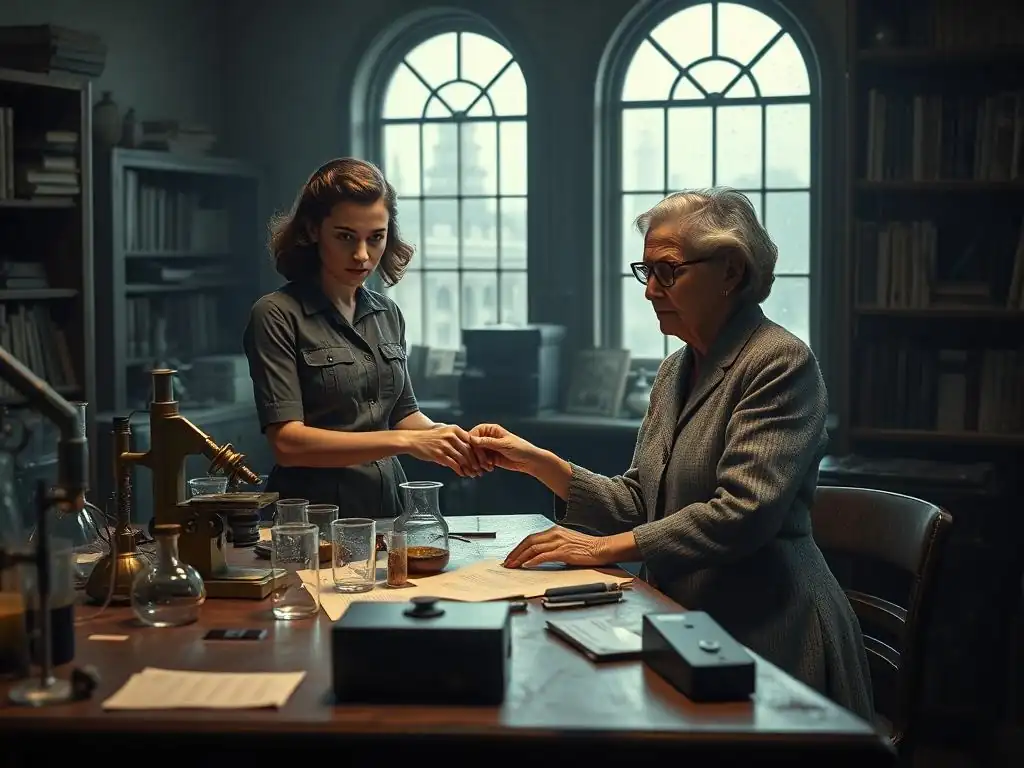
Dive into the compelling world of scientific discovery and resilience. Today, we explore a chain of support: uncovering the powerful legacy of women in science mentorship. How did pioneering female scientists navigate male-dominated fields and pave the way for future generations? Join us as we trace the intricate connections and invaluable guidance that fueled their groundbreaking work, leaving you pondering the enduring impact of mentorship and its crucial role in shaping the scientific landscape. Intrigued? Let's explore the stories that often go untold.
- Introduction: The Enduring Legacy of Women in Science Mentorship
- Early Pioneers: Laying the Foundation for Women in Science
- Mid-20th Century: Formalizing Women in Science Mentorship Programs
- Late 20th Century: Expanding Opportunities and Diversifying Mentorship
- 21st Century: The Evolution of Women in Science Mentorship
- Case Studies: Success Stories of Women in Science Mentorship
- The Power of Intergenerational Mentorship: Lessons Learned
- Fostering Future Generations of Women in Science Mentors
- Conclusion: The Ongoing Importance of Women in Science Mentorship
-
Frequently Asked Questions
- What is the main focus of WomenInScienceHistory.com?
- Why is "Women in science mentorship" an important topic for this website?
- What kind of information can I find about women in science mentorship on this site?
- What were some of the biggest challenges faced by women seeking or providing mentorship in science historically?
- How can learning about historical mentorship relationships inspire future generations of women in science?
- Final Reflection: Empowering Legacies in Science
- Ignite Your Own Legacy: Mentor, Connect, Thrive!
Introduction: The Enduring Legacy of Women in Science Mentorship
Highlighting the Importance of Mentorship for Women in STEM
Mentorship serves as an indispensable pillar in the professional development of individuals across all fields, but its significance is particularly pronounced for women in Science, Technology, Engineering, and Mathematics (STEM). Historically, women have navigated male-dominated environments, facing systemic biases, limited access to resources, and a scarcity of visible role models. In this context, effective mentorship provides crucial guidance, career advice, and emotional support, helping women overcome obstacles and establish themselves in rigorous scientific careers. It fosters confidence, hones professional skills, and illuminates pathways to success that might otherwise remain obscured.
The impact of robust women in science mentorship is demonstrable through various studies. Research consistently indicates that women in STEM fields who receive formal or informal mentorship are significantly more likely to persist in their careers, achieve promotions, and assume leadership roles. For instance, some studies suggest that retention rates for mentored women in STEM can be up to 20-30% higher than for those without a dedicated mentor, showcasing the tangible benefits of such relationships in combating attrition and fostering long-term engagement within the scientific community.
Setting the Stage: Exploring Generational Impact in Science
The concept of mentorship, particularly within the scientific community, extends beyond individual, one-on-one relationships; it embodies a profound generational impact. This "chain of support" involves the invaluable transfer of knowledge, experience, and wisdom from one generation of scientists to the next, often spanning decades. Early pioneers, through their groundbreaking work and sheer perseverance, laid foundational pathways, not just through their scientific discoveries but also by serving as indirect, and sometimes direct, inspirations for those who followed.
This generational aspect of women in science mentorship has profoundly shaped the trajectory of countless female scientists, enabling them to stand on the shoulders of giants. It highlights how the struggles and triumphs of women who broke barriers in the 19th and early 20th centuries created a slightly more permeable environment for mid-century scientists, who in turn paved the way for the diverse and globally connected scientific community of today. Understanding this historical progression reveals how each era's unique challenges and successes have contributed to the evolving landscape of support for women in science.
Early Pioneers: Laying the Foundation for Women in Science
Marie Curie and Her Mentoring Influence
Marie Curie stands as a towering figure in scientific history, not only for her revolutionary discoveries in radioactivity but also for her subtle yet profound mentoring influence. As the first woman to win a Nobel Prize and the only person to win Nobel Prizes in two different scientific fields (Physics in 1903, Chemistry in 1911), her very existence as a successful female scientist was a powerful form of inspiration and indirect mentorship for countless women globally. Her laboratory, though demanding, was a rigorous environment where scientific integrity and meticulous experimentation were paramount.
More directly, Marie Curie's impact on her daughter, Irène Joliot-Curie, exemplifies a powerful generational women in science mentorship. Marie personally oversaw Irène's early education and later her scientific training within the Radium Institute. This direct tutelage and shared scientific pursuit culminated in Irène and her husband Frédéric Joliot-Curie winning the Nobel Prize in Chemistry in 1935 for their discovery of artificial radioactivity. This mother-daughter legacy underscores how familial bonds, when imbued with shared scientific passion and rigorous training, can form an exceptionally strong chain of support.
For early women scientists, the landscape was fraught with immense barriers, ranging from outright exclusion from universities and professional societies to subtle biases that undermined their credibility and access to resources. In such an environment, formal mentorship programs were virtually nonexistent. Instead, women often relied on informal networks, the support of progressive male colleagues, or even self-directed learning enabled by access to libraries and scientific correspondence. These nascent forms of women in science mentorship, however rudimentary, were crucial for survival and progress.
Consider the example of Mary Somerville, a self-taught Scottish polymath of the 19th century. While she didn't have a formal mentor, her access to books and the encouragement of her husband and a few male academics who recognized her brilliance, allowed her to translate and popularize complex scientific works, making them accessible to a wider audience.
This indirect support, alongside her relentless intellectual curiosity, served as a vital form of "mentorship by proxy," enabling her to contribute significantly to mathematics and astronomy when formal paths were closed. These early, often informal, chains of support were essential for women to simply stay in the scientific arena.
Mid-20th Century: Formalizing Women in Science Mentorship Programs
The Rise of Women's Colleges and Their Impact on Scientific Mentorship
The mid-20th century witnessed a significant development in the support structure for women pursuing scientific careers: the proliferation and strengthening of women's colleges. Institutions like Vassar, Wellesley, Smith, and Bryn Mawr became critical incubators for female talent in STEM. Unlike co-educational universities where women often faced marginalization, these colleges provided dedicated laboratory spaces, passionate female faculty members, and a supportive environment where women were encouraged to excel in all disciplines, including the sciences.
Within these colleges, women in science mentorship flourished organically. Female professors, many of whom had faced their own struggles in academia, served as powerful role models and direct mentors, guiding students through challenging coursework, involving them in research, and actively encouraging them to pursue graduate studies and scientific careers. It's noteworthy that during this period, these women's colleges often produced a disproportionately high number of female graduates who went on to earn Ph.D.s in scientific fields, demonstrating the profound impact of these nurturing and academically rigorous environments on fostering the next generation of women in science.
The Radcliffe Institute for Independent Study and its Successes
A pioneering example of a formalized program dedicated to supporting women's intellectual and scientific pursuits was the Radcliffe Institute for Independent Study, established in 1961 (now the Radcliffe Institute for Advanced Study at Harvard University). This innovative institution recognized the unique challenges faced by highly educated women, particularly married women and mothers, who often experienced career interruptions or struggled to maintain their professional identities in an academic system not designed for them.
The Radcliffe Institute offered fellowships that provided women scientists, scholars, and artists with financial support, access to Harvard's extensive resources, and, crucially, a vibrant intellectual community. This environment fostered invaluable women in science mentorship opportunities, both formal and informal, among fellows and with Harvard faculty. By providing a dedicated space for research and collaboration, the Institute enabled numerous women to resume or advance their scientific work, publish groundbreaking research, and maintain their professional momentum during periods when traditional academic paths might have forced them out of their fields.
Late 20th Century: Expanding Opportunities and Diversifying Mentorship
Breaking the Glass Ceiling: Mentorship's Role in Leadership Positions
As more women entered STEM fields in the latter half of the 20th century, the focus of women in science mentorship began to shift from merely gaining entry to achieving advancement and leadership. The "glass ceiling" became a prominent metaphor for the invisible barriers preventing women from reaching top positions in academia, industry, and government. In this new landscape, mentorship, particularly from senior women who had navigated similar challenges or from enlightened male allies, became even more critical.
Mentors played a vital role in equipping mentees with the strategic insights needed to navigate institutional politics, secure funding, publish high-impact research, and effectively lead teams. They provided sponsorship, advocating for their mentees in promotion committees and leadership pipelines, thereby actively helping to break down systemic barriers. Many women who successfully ascended to leadership positions during this era, such as university deans or research directors, often made it a point to "lift as they climbed," actively establishing formal and informal women in science mentorship programs within their own institutions, creating a positive feedback loop for future generations.
Shirley Ann Jackson and her advocacy for diversity in STEM
Shirley Ann Jackson, a distinguished theoretical physicist, serves as a powerful example of a woman who not only shattered ceilings in her own career but also actively championed diversity and inclusion through her advocacy and implicit women in science mentorship. As the first African American woman to earn a Ph.D. in theoretical physics from MIT in 1973, and later as the first woman and first African American to chair the U.S. Nuclear Regulatory Commission, her career trajectory highlighted the immense talent that could be overlooked without deliberate efforts to foster diverse participation.
Jackson's subsequent role as president of Rensselaer Polytechnic Institute (RPI) further cemented her legacy as a champion of inclusive STEM environments. Under her leadership, RPI significantly increased the representation of women and minority faculty members and students, demonstrating a systemic commitment to creating opportunities. Her public speaking, policy work, and direct interactions with students and junior faculty served as a broad form of women in science mentorship, inspiring and guiding countless individuals from underrepresented groups to pursue and thrive in scientific and technological careers.
21st Century: The Evolution of Women in Science Mentorship

The Impact of Technology on Connecting Women in STEM Globally
The advent of the 21st century brought with it a technological revolution that profoundly reshaped the landscape of women in science mentorship. The internet, social media platforms, and specialized online professional networks have dismantled geographical barriers, enabling women in STEM to connect with mentors and mentees across continents. This global connectivity has democratized access to mentorship, allowing individuals in remote areas or those from underrepresented institutions to find guidance from leading experts they might never have encountered otherwise.
Virtual mentoring programs, online communities, and dedicated platforms (such as those hosted by professional scientific organizations) have become powerful tools for facilitating these connections. These digital spaces allow for flexible scheduling, diverse perspectives, and a broader range of expertise, fostering a rich ecosystem of women in science mentorship. The ability to engage in video calls, exchange documents, and participate in online forums means that mentorship can be more accessible and tailored to individual needs than ever before.
Addressing Contemporary Challenges: Intersectionality and Inclusive Mentorship
While progress has been made, the 21st century also demands a more nuanced approach to women in science mentorship, particularly in addressing the complexities of intersectionality. It is increasingly recognized that "women in science" is not a monolithic group; women from different racial, ethnic, socioeconomic, disability, and LGBTQ+ backgrounds face unique and compounding challenges within STEM fields. Effective mentorship must therefore be culturally sensitive, trauma-informed, and explicitly inclusive.
Contemporary women in science mentorship initiatives are now focusing on creating safe spaces and tailored support for these diverse groups. This includes training mentors to recognize and challenge unconscious biases, fostering an understanding of unique systemic barriers, and actively promoting equity within scientific institutions. By embracing an intersectional lens, mentorship programs aim to ensure that all women, regardless of their background, receive the specific guidance and support they need to thrive and contribute their full potential to the scientific community.
Case Studies: Success Stories of Women in Science Mentorship
Barbara McClintock and her impact on Maize Genetics through guiding students.
Barbara McClintock, a Nobel laureate for her discovery of transposable elements ("jumping genes") in maize, is often portrayed as a solitary genius. However, her impact on maize genetics extended significantly through her interactions and guidance of numerous students and colleagues. While she may not have engaged in formal mentorship programs as understood today, her profound dedication to scientific inquiry and her meticulous approach to research served as an unparalleled model for those who worked alongside her.
McClintock fostered an environment of rigorous scientific thinking, encouraging her students to observe, question, and independently explore complex biological phenomena. Her interactions, often characterized by deep intellectual discussions and hands-on guidance in the maize fields and laboratories, instilled a critical and analytical mindset. This practical, immersive form of women in science mentorship indirectly shaped the careers of many young geneticists, ensuring her innovative methodologies and insights were passed down and continued to influence the field long after her primary research contributions.
Lise Meitner's continued support and guidance to young physicists amidst adversity.
Lise Meitner, the Austrian-Swedish physicist who was central to the discovery of nuclear fission but unjustly overlooked for the Nobel Prize, exemplifies resilience and a quiet, yet powerful, commitment to women in science mentorship amidst immense adversity. Forced to flee Nazi Germany in 1938, she continued her groundbreaking collaboration with Otto Hahn via correspondence, demonstrating her intellectual generosity and dedication to science despite her exile.
Even in her later years, as a refugee in Sweden, Meitner maintained an active intellectual life and remained deeply engaged with the scientific community. She corresponded extensively with younger physicists, offering advice, critiques, and encouragement. Her nephew, Otto Robert Frisch, who collaborated with her on the theoretical explanation of nuclear fission, directly benefited from her rigorous intellectual guidance and unwavering support. Meitner's willingness to dedicate her time and intellect to guiding the next generation, even when personally facing hardship and professional slight, stands as a testament to the enduring spirit of mentorship.
Grace Hopper fostering innovation through intergenerational mentorship and computer science.
Rear Admiral Grace Hopper, a pioneering computer scientist and U.S. Navy officer, was a fervent advocate for innovation and an exemplary figure in intergenerational women in science mentorship. Credited with developing the first compiler for a computer programming language and popularizing the idea of machine-independent programming languages (leading to COBOL), Hopper was not just a brilliant mind but also a passionate educator.
Hopper was renowned for her approachable style and her commitment to fostering young talent, famously stating, "It's easier to ask forgiveness than it is to get permission." She actively mentored countless young programmers and naval officers, affectionately referring to them as "her kids." She encouraged them to challenge conventions, experiment with new ideas, and break new ground in the nascent field of computer science. Her direct, hands-on guidance, coupled with her infectious enthusiasm for technological advancement, created a powerful legacy of women in science mentorship that continues to inspire innovators in computing today.
The Power of Intergenerational Mentorship: Lessons Learned
The historical tapestry of women in science mentorship reveals the profound importance of sharing knowledge and experience across generations. This transfer goes far beyond formal academic curricula, encompassing tacit knowledge, practical skills, and invaluable insights into navigating the often-complex landscapes of scientific research and institutional politics. Senior women, drawing on their own journeys, can impart wisdom on everything from securing funding and publishing papers to managing work-life balance and confronting subtle biases.
This intergenerational exchange accelerates the learning curve for mentees, helping them avoid common pitfalls and providing them with a deeper understanding of their chosen field. It creates a continuous cycle where established scientists pass on their expertise, ensuring that hard-won lessons are not lost but rather built upon. This rich legacy of shared experience forms the bedrock of a thriving scientific community, strengthening the collective intelligence and resilience of women in science.
Building a Stronger Community of Women in Science
Beyond individual skill development, intergenerational women in science mentorship plays a crucial role in building a stronger, more cohesive community of women in science. By fostering connections between different age groups and career stages, it combats the isolation that many women in STEM have historically faced. Mentorship relationships cultivate a sense of belonging, solidarity, and mutual support, creating networks that can advocate for collective change.
This strengthened community empowers women to collectively address systemic issues, push for equitable policies, and challenge ingrained biases within scientific institutions. The shared experiences and collective voice of mentored women can lead to significant cultural shifts, making STEM fields more inclusive and welcoming for all. This collaborative spirit, nurtured through robust mentorship, is essential for ensuring that the scientific enterprise truly reflects and benefits from the diverse talents of all its members.
Fostering Future Generations of Women in Science Mentors
Encouraging Young Women to Embrace Mentorship Roles
The sustainability of the women in science mentorship chain depends not only on established scientists providing guidance but also on encouraging young women to embrace mentorship roles themselves, even early in their careers. Peer mentorship, near-peer mentorship, and even mentoring students younger than oneself can be incredibly beneficial for both the mentor and the mentee. This proactive engagement helps young women develop leadership skills, consolidate their own understanding of scientific principles, and contribute to the supportive ecosystem they themselves benefited from.
By actively promoting and recognizing these early mentoring efforts, institutions can cultivate a culture where giving back is seen as an integral part of professional development. Programs that train early-career scientists in effective mentorship techniques can equip them with the tools and confidence to guide others, ensuring that the pipeline of future women in science mentors remains robust and vibrant. This proactive approach ensures that the chain of support continues to grow stronger with each passing generation.
Creating Supportive Environments for Women to Thrive in STEM
While individual mentorship relationships are vital, their impact is magnified when supported by a broader institutional commitment to creating environments where women can truly thrive in STEM. This involves moving beyond ad-hoc initiatives to establishing systemic support structures that recognize, value, and reward mentorship efforts. Institutions have a responsibility to foster cultures that are not only inclusive but also actively promote and facilitate women in science mentorship.
This includes dedicated funding for formal mentorship programs, integrating mentorship as a criterion for faculty promotion and tenure, and implementing flexible work arrangements that support women at various career stages. Furthermore, addressing and dismantling systemic biases through diversity and inclusion training, and ensuring equitable access to resources and opportunities, are paramount. Only through such comprehensive, supportive environments can the full potential of women in science mentorship be realized, ensuring a lasting legacy of empowerment and scientific achievement.
Conclusion: The Ongoing Importance of Women in Science Mentorship
Reflecting on the Past, Present, and Future of Mentorship
Tracing the history of women in science mentorship reveals a compelling narrative of evolution and resilience. From the informal, often unacknowledged support networks of early pioneers to the formalized programs and global digital connections of today, mentorship has consistently been a vital force in empowering women to overcome barriers and contribute to scientific advancement. The enduring legacy of figures like Marie Curie, Barbara McClintock, Lise Meitner, and Grace Hopper underscores that the transfer of knowledge, encouragement, and advocacy has been a constant, albeit changing, thread throughout history.
In the present, women in science mentorship remains indispensable, navigating contemporary challenges such as intersectionality, work-life integration, and the persistent, though often subtle, biases that women still face in STEM. Looking to the future, the imperative is clear: to continue adapting and expanding mentorship initiatives, leveraging technology, and fostering inclusive practices to ensure that every woman with scientific aspirations has the support she needs to succeed.
Empowering Women in Science Through Continued Support and Guidance
Ultimately, the power of women in science mentorship lies in its profound ability to empower. It equips women with the confidence, skills, and networks necessary to navigate complex career paths, pursue groundbreaking research, and assume leadership roles. It transforms individual journeys into collective progress, fostering a sense of community and shared purpose that strengthens the entire scientific enterprise.
The journey of women in science is a testament to perseverance, brilliance, and the transformative power of connection. By actively investing in and championing comprehensive women in science mentorship initiatives, we ensure that the chain of support not only continues unbroken but grows ever stronger, enabling future generations of women to innovate, discover, and leave an indelible mark on the world of science.
Frequently Asked Questions
What is the main focus of WomenInScienceHistory.com?
The website celebrates the contributions of women in science history by featuring biographies, groundbreaking work, and the challenges they faced. It aims to inspire future generations by highlighting overlooked narratives.
Why is "Women in science mentorship" an important topic for this website?
Mentorship provides crucial support and guidance that helps women navigate male-dominated fields. Highlighting these relationships amplifies the impact of female scientists throughout history.
What kind of information can I find about women in science mentorship on this site?
You can discover stories of pioneering women who mentored others, and those who were mentored themselves. The site also explores the positive impact of these mentorship connections.
What were some of the biggest challenges faced by women seeking or providing mentorship in science historically?
Women often faced institutional barriers, lack of funding, and limited access to networks. Societal expectations also made it difficult for them to pursue scientific careers and mentor others.
How can learning about historical mentorship relationships inspire future generations of women in science?
Understanding the challenges and successes of past generations provides valuable lessons and encouragement. It empowers future scientists to seek and offer mentorship, building a stronger and more inclusive scientific community.
Final Reflection: Empowering Legacies in Science
The narratives explored within this article reveal a powerful truth: generational mentorship among women in science is not merely a historical footnote, but a vital and ongoing force shaping the future of scientific discovery. The echoes of Marie Curie's influence, Rosalind Franklin's perseverance, and countless other unsung heroines resonate today, inspiring a new generation to break barriers and pursue their scientific passions. This chain of support, forged in the face of adversity, continues to strengthen, creating a more inclusive and equitable landscape for women in STEM.
The impact of these mentorship relationships extends far beyond individual success stories. It has fundamentally altered the cultural landscape of science, fostering a sense of belonging and shared purpose. Witnessing the dedication and resilience of these women, both past and present, has profoundly shaped my own understanding of the importance of community and the power of lifting others up. You cannot be what you cannot see.
This quote, often attributed to Marian Wright Edelman, perfectly encapsulates the transformative effect of having visible role models and mentors who pave the way for future generations.
As we reflect on the legacies of these extraordinary women, let us consider our own roles in perpetuating this chain of support. How can we, in our own spheres of influence, actively mentor and encourage aspiring scientists, particularly women, to pursue their dreams? Let us strive to create a world where every woman in science feels empowered, supported, and equipped to make her unique contribution to the advancement of knowledge. The future of science depends on it.
Ignite Your Own Legacy: Mentor, Connect, Thrive!
Thank you for diving into the inspiring stories of mentorship among women in science! You've now witnessed the incredible power of connection and guidance across generations. Now, it's your turn to contribute to this legacy.
Here's how you can make a difference:
- Become a mentor or mentee: Identify someone in your field or area of interest who could benefit from your experience or guidance, or vice versa. Reach out and start building a meaningful connection. This is the MOST important action to consider to create a domino effect of Women Supporting Women.
- Share this article with someone who inspires you or who you believe would benefit from learning more about Women In Science History and the power of a good mentor.
- Explore the other remarkable stories on WomenInScienceHistory.com to discover more hidden figures and celebrate their achievements.
What small step will you take today to foster mentorship and support the next generation of women in science?