
Challenging the Canon: Rewriting History to Include Women's Scientific Awards

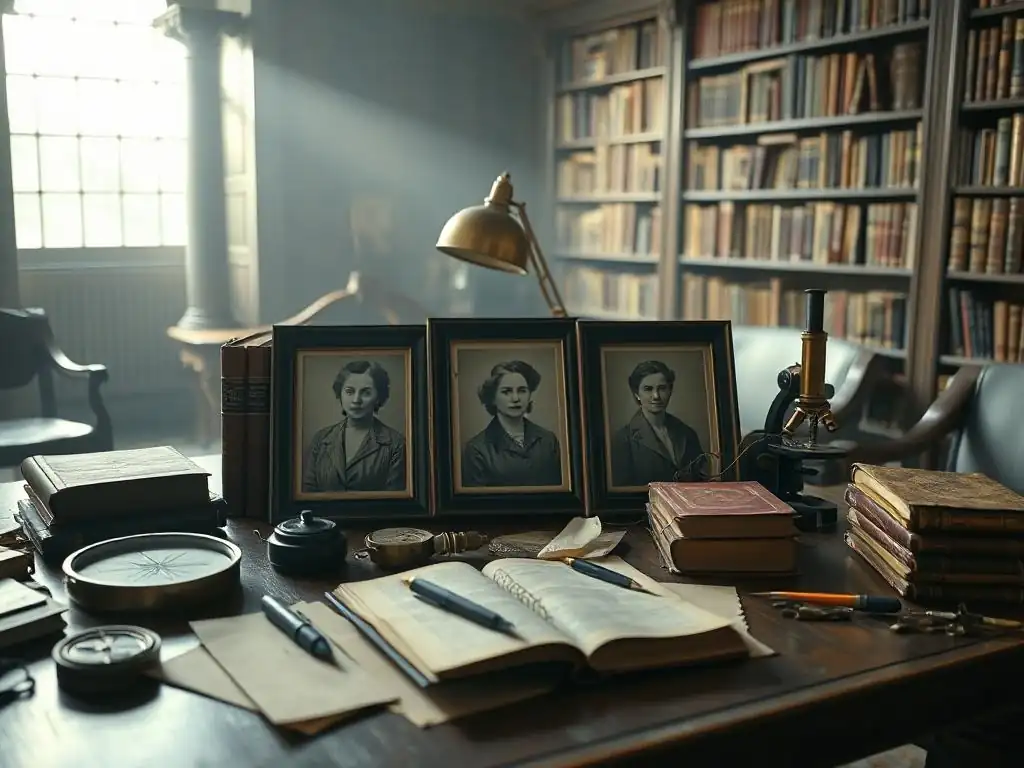
Welcome to WomenInScienceHistory.com!
Did you know that the landscape of scientific recognition has historically overlooked the groundbreaking achievements of women? Prepare to be enlightened as we delve into Women’s scientific awards history, revealing a complex narrative of exclusion and the ongoing fight for equitable acknowledgment. Explore the stories behind the awards, the women who deserved them, and the systemic biases that shaped the past - and continue to influence the future. What hidden truths will you uncover?
- Introduction: Recognizing Women's Contributions to Science
- The Historical Exclusion of Women from Scientific Awards
- Key Scientific Awards and the Underrepresentation of Women
- Pioneers Who Broke Barriers: Women Receiving Scientific Awards
- Rewriting History: Initiatives to Promote Women's Scientific Recognition
- The Impact of Women's Scientific Awards on Future Generations
- The Future of Women's Recognition in Science: Challenges and Opportunities
- Conclusion: Celebrating and Amplifying Women’s Scientific Awards History
-
Frequently Asked Questions
- What is the main goal of WomenInScienceHistory.com?
- Why is it important to document the history of women's scientific awards?
- What kinds of challenges did women face in receiving scientific awards historically?
- How does WomenInScienceHistory.com contribute to understanding "Women's scientific awards history"?
- How can learning about "Women's scientific awards history" inspire future generations?
- Final Reflection: Illuminating Untold Scientific Legacies
- Ignite Change: Champion Women in Science!
Introduction: Recognizing Women's Contributions to Science
The Overlooked History of Women in Science
For centuries, the narrative of scientific progress has predominantly highlighted the achievements of men, often sidelining or entirely omitting the groundbreaking contributions of women. This historical oversight has led to an incomplete and skewed understanding of how scientific knowledge has evolved, creating a canon that largely excludes a significant portion of intellectual endeavor. From early astronomers like Hypatia of Alexandria to 19th-century computing pioneers such as Ada Lovelace, countless women have advanced human understanding, yet their names and discoveries frequently remain absent from mainstream historical accounts and educational curricula.
This pervasive lack of recognition extends profoundly to women’s scientific awards history. While men were regularly honored with prestigious accolades, women, even when performing equivalent or superior work, often faced systemic barriers that prevented their nomination or selection. This selective memory not only diminishes the true breadth of scientific innovation but also deprives future generations of vital role models, perpetuating a cycle where women's contributions are undervalued and their rightful place in science is obscured.
The Importance of Acknowledging Women's Scientific Achievements
Acknowledging women's scientific achievements is crucial not only for historical accuracy but also for shaping a more equitable and inspiring future for science. When the full spectrum of contributions, including those by women, is celebrated, it provides a richer, more diverse tapestry of human ingenuity. This comprehensive view helps to dismantle long-held biases and promotes a more inclusive understanding of who can be a scientist and what constitutes scientific excellence.
By shining a light on women’s scientific awards history, we inspire young girls and women to pursue careers in STEM fields, showing them that their potential is limitless and that their intellectual pursuits are valued. Furthermore, recognizing these achievements validates the experiences and struggles of women who have historically navigated male-dominated fields, reinforcing the idea that perseverance and brilliance, regardless of gender, deserve the highest forms of recognition. This process of re-evaluation is essential for fostering a scientific community that truly reflects the diverse talents of all its members.
The Historical Exclusion of Women from Scientific Awards
Systemic Barriers Preventing Women's Recognition
Historically, women in science encountered a formidable array of systemic barriers that severely limited their opportunities for recognition, including prestigious scientific awards. These obstacles often began with restricted access to higher education and formal scientific training, as many universities and institutions either barred women entirely or confined them to limited, less rigorous programs. Even when women managed to gain an education, societal expectations frequently pushed them towards domestic roles, making it difficult to pursue demanding scientific careers.
Furthermore, women often faced professional discrimination, being denied faculty positions, research grants, or access to essential laboratory resources. The "Matilda effect," a phenomenon where women's scientific achievements are attributed to their male colleagues or overlooked entirely, was a pervasive issue. For instance, Lise Meitner's crucial theoretical work on nuclear fission was overlooked for the Nobel Prize awarded to Otto Hahn, illustrating how profound contributions by women were frequently devalued or credited to men, thereby erasing their potential presence in women’s scientific awards history.
Male-Dominated Institutions and Their Impact on Award Decisions
The institutions responsible for awarding scientific accolades were, for the vast majority of history, exclusively male-dominated. Scientific academies, university departments, and award committees were typically composed of men who often held deeply ingrained biases about women's intellectual capabilities and appropriate roles in society. This demographic imbalance meant that nomination pools were inherently skewed, as men tended to nominate other men, often those within their immediate professional networks.
For example, the Nobel Prize committees, particularly in their early decades, comprised individuals who operated within a scientific landscape where women were largely invisible or relegated to subordinate roles. This structural reality significantly impacted award decisions, leading to a profound underrepresentation of women among laureates for decades. The lack of diversity within these powerful gatekeeping bodies ensured that the existing power structures, which favored male scientists, remained unchallenged, thus perpetuating the sparse women’s scientific awards history.
Unveiling Bias in Award Criteria and Selection Processes
Beyond overt discrimination, subtle biases embedded within award criteria and selection processes also contributed to the historical exclusion of women from scientific awards. Criteria for awards often implicitly favored research conducted in prominent, well-funded laboratories or within established networks, areas from which women were frequently excluded. The emphasis on individual "genius" and sole authorship, prevalent in many award paradigms, often overlooked the collaborative nature of much scientific work or the contributions of women who might have served in supporting but critical roles.
Moreover, the subjective nature of peer review and evaluation processes meant that unconscious biases could easily influence judgments. Studies have shown that identical research papers or résumés are often rated lower when attributed to a female name compared to a male name. This systemic bias in evaluation, coupled with opaque selection processes that lacked accountability or diversity mandates, meant that even when women produced groundbreaking work, their contributions were less likely to be perceived as "award-worthy" by predominantly male committees, further marginalizing women’s scientific awards history.
Key Scientific Awards and the Underrepresentation of Women
Analyzing the Gender Disparity in Nobel Prize Winners
The Nobel Prize, widely regarded as the pinnacle of scientific achievement, starkly illustrates the profound gender disparity in historical scientific recognition. As of 2023, approximately 64 women have been awarded a Nobel Prize across all categories, compared to over 900 men. This represents a mere 6.5% of all laureates since the prize's inception in 1901. In the core scientific fields, the imbalance is even more pronounced: only 5 women have won the Nobel Prize in Physics, 8 in Chemistry, and 13 in Physiology or Medicine.
This statistical imbalance is not merely a reflection of fewer women pursuing science, but rather a testament to the historical and ongoing biases within the scientific community and award selection processes. The first woman to win a Nobel Prize in Physics, Marie Curie, received hers in 1903, but it took another 60 years for the second woman, Maria Goeppert Mayer, to be recognized in the same field. This slow trickle of recognition underscores the systemic challenges that have shaped women’s scientific awards history within the most prestigious of accolades.
Examining Women's Participation in Fields Medal Recipients
The Fields Medal, often dubbed the "Nobel Prize of mathematics," presents an even more striking picture of gender underrepresentation. Since its establishment in 1936, the medal has been awarded to 64 mathematicians, but only two of these recipients have been women. The first woman to receive the Fields Medal was Maryam Mirzakhani from Iran in 2014, recognized for her groundbreaking work in the dynamics and geometry of Riemann surfaces.
Her win was a monumental moment, breaking a 78-year male-only streak, and was followed by Maryna Viazovska from Ukraine in 2022, honored for her solution to the sphere packing problem in eight dimensions. While these two awards are significant milestones, the fact that only two women have been recognized out of dozens of laureates highlights the persistent barriers and biases within the highly competitive and historically male-dominated field of pure mathematics, further emphasizing the challenges in enriching women’s scientific awards history.
Investigating the Representation of Women in the Turing Award
The A.M. Turing Award, considered the highest honor in computer science and often referred to as the "Nobel Prize of computing," also reveals a significant gender gap. Since its inception in 1966, the award has recognized 77 individuals for their profound contributions to the field. However, only three of these recipients have been women: Frances Allen in 2006 for pioneering contributions to optimizing compiler technology, Barbara Liskov in 2008 for contributions to practical and theoretical foundations of programming language and system design, and Shafi Goldwasser in 2012 for transformative work in cryptography.
This minimal representation of women, less than 4% of all Turing laureates, underscores the historical exclusion and under-recognition of women in computer science, a field that has grown exponentially in recent decades. Despite significant contributions from women like Grace Hopper, who developed the first compiler, and Katherine Johnson, who calculated trajectories for NASA, their formal recognition through such top-tier awards has been disproportionately low. This pattern underscores the ongoing challenges in fully acknowledging and celebrating women’s scientific awards history within a rapidly evolving technological landscape.
Pioneers Who Broke Barriers: Women Receiving Scientific Awards
Spotlight on Marie Curie and Her Nobel Prizes
Marie Curie stands as an unparalleled icon in women’s scientific awards history, being the first woman ever to win a Nobel Prize and the only person to win Nobel Prizes in two different scientific fields. Her first Nobel, awarded in Physics in 1903 alongside her husband Pierre Curie and Henri Becquerel, recognized their "joint research on the radiation phenomena discovered by Professor Henri Becquerel." This monumental achievement marked a turning point, demonstrating that women could reach the absolute pinnacle of scientific recognition.
Her second Nobel Prize, awarded in Chemistry in 1911, was for her isolation of pure radium, an astonishing feat of chemical isolation. This individual recognition for her discovery of radium and polonium, and her study of their properties, solidified her legacy as a scientific giant. Despite facing widespread sexism and skepticism throughout her career, Curie's unwavering dedication and profound discoveries fundamentally reshaped our understanding of matter and energy, making her a beacon for all women in science.
Celebrating Rosalind Franklin's Contributions and Recognition (Posthumously)
Rosalind Franklin's invaluable contributions to the understanding of DNA structure remain a poignant example of how women's work can be under-recognized during their lifetime, only to gain widespread appreciation posthumously. Her meticulous X-ray diffraction images, particularly "Photo 51," provided critical insights into the helical structure of DNA, insights that were instrumental to James Watson and Francis Crick's groundbreaking model. Despite her pivotal role, she was not awarded the Nobel Prize in Physiology or Medicine in 1962, as the award is not given posthumously and she had died four years prior.
While she did not receive the Nobel, Franklin's legacy has been increasingly celebrated in recent decades, acknowledging her profound impact on molecular biology. Numerous posthumous honors, including the naming of scientific institutions, awards, and scholarships in her name, now highlight her brilliance and the injustice of her initial lack of recognition. Her story is a powerful reminder of the ongoing effort to ensure that all significant contributions, regardless of the scientist's gender or the timing of their recognition, are properly woven into women’s scientific awards history.
Highlighting Barbara McClintock's Contributions and Nobel Prize
Barbara McClintock's journey to Nobel recognition is a compelling narrative of perseverance and visionary insight, underscoring the challenges of introducing radically new scientific concepts. Her pioneering research on transposable elements, or "jumping genes," in maize in the 1940s and 1950s challenged the then-prevailing view of a static genome. Her findings, initially met with skepticism and even ridicule from the scientific establishment, were so far ahead of their time that they were largely dismissed.
Despite the initial lack of acceptance, McClintock continued her meticulous research, accumulating irrefutable evidence for her theory. Decades later, as molecular biology advanced, her revolutionary ideas were finally validated and embraced by the scientific community. This delayed recognition culminated in her receiving the Nobel Prize in Physiology or Medicine in 1983, nearly 30 years after her initial discoveries. Her triumph highlights not only her scientific genius but also the long, often arduous path to acceptance for groundbreaking ideas, particularly when presented by women in science, profoundly impacting women’s scientific awards history.
Rewriting History: Initiatives to Promote Women's Scientific Recognition
Advocacy Groups Championing Gender Equity in Science Awards
A crucial aspect of rewriting women’s scientific awards history involves the tireless efforts of advocacy groups dedicated to championing gender equity in science. Organizations like the Association for Women in Science (AWIS) and the European Women in Science (EuroScience) work proactively to identify talented female scientists, promote their achievements, and push for greater representation on award committees and nomination panels. These groups often conduct research into existing biases and develop strategies to dismantle them, ensuring that selection processes are fair and transparent.
Moreover, global initiatives such as the L'Oréal-UNESCO For Women in Science program have created a powerful platform for recognizing female researchers worldwide, providing both financial support and international visibility. By actively engaging with scientific institutions and funding bodies, these advocacy groups play a vital role in raising awareness, challenging the status quo, and holding the scientific community accountable for fostering a more inclusive and equitable environment where women's contributions are consistently celebrated.
Initiatives to Increase Nominations of Women for Scientific Awards
Recognizing that a primary barrier to women receiving awards is often a lack of nominations, various initiatives have emerged specifically to increase the nomination rate of qualified women. Many scientific societies and universities have launched campaigns encouraging their members and faculty to actively seek out and nominate deserving female colleagues. These programs often provide resources, workshops, and even mentorship to help potential nominators craft compelling applications that highlight the breadth and impact of a woman's scientific work.
For example, the "Raise Her Profile" campaigns within certain academic institutions aim to ensure that women are considered for every major award, from departmental honors to international prizes. Some organizations now require diverse nomination pools for internal awards, pushing committees to look beyond traditional networks. These proactive efforts to broaden the nomination pipeline are fundamental to correcting historical oversights and enriching women’s scientific awards history by ensuring that brilliant contributions are not overlooked due to systemic biases in recognition.
Creating New Awards Specifically for Women in Science
In response to the historical underrepresentation of women in prestigious scientific awards, a significant movement has emerged to create new awards specifically designed to honor and celebrate women's contributions. These awards not only provide much-needed recognition but also serve as powerful symbols of encouragement and inspiration for aspiring female scientists. Examples include the Pearl Meister Greengard Prize, established by Nobel laureate Paul Greengard, which annually recognizes outstanding women in biomedical research.
Another prominent example is the European Union Prize for Women Innovators, which celebrates women who have founded successful companies and brought innovations to market. These dedicated awards help to fill the recognition gap, ensuring that women's achievements receive dedicated platforms and visibility. By establishing new avenues for recognition, these initiatives directly contribute to diversifying women’s scientific awards history and fostering an environment where female excellence is systematically acknowledged and celebrated.
The Impact of Women's Scientific Awards on Future Generations
Inspiring Young Women to Pursue Careers in STEM
The recognition of women through scientific awards has a profound and measurable impact on inspiring future generations, particularly young women, to pursue careers in STEM (Science, Technology, Engineering, and Mathematics). When girls see accomplished women like Marie Curie, Barbara McClintock, or more contemporary figures like Emmanuelle Charpentier and Jennifer Doudna (Nobel Prize in Chemistry 2020 for CRISPR gene editing) receiving top honors, it provides tangible proof that a career in science is not only possible but also deeply rewarding. These visible role models dismantle stereotypes about who can be a scientist, showing that brilliance and innovation know no gender.
By highlighting women’s scientific awards history, we create a powerful narrative of achievement that resonates with aspiring scientists. The stories of perseverance, discovery, and eventual recognition encourage young women to overcome societal pressures and pursue their intellectual curiosity. This inspiration is critical for boosting female participation in STEM fields, ensuring that the scientific workforce of tomorrow is diverse, talented, and representative of the global population.
Increasing Visibility and Representation of Women in Science Textbooks
Awards play a crucial role in increasing the visibility and representation of women in science textbooks and educational materials, thereby correcting historical omissions. When a woman receives a major scientific award, her work and biography are more likely to be featured in academic curricula, general science texts, and popular science literature. This inclusion ensures that students learn about a more complete and accurate history of scientific discovery, one that properly credits women for their groundbreaking contributions.
For too long, science education has presented a predominantly male-centric view of scientific progress, inadvertently suggesting that women have played a minor role. By actively integrating the stories of women’s scientific awards history into educational resources, we provide students with diverse perspectives and a richer understanding of scientific collaboration and innovation. This increased visibility not only educates but also subtly shifts perceptions, fostering a more inclusive mindset among future scientists and the general public.
Fostering a More Inclusive and Equitable Scientific Community
The act of recognizing women through scientific awards contributes significantly to fostering a more inclusive and equitable scientific community overall. When women are celebrated for their achievements, it sends a clear message that their contributions are valued and that the scientific landscape is evolving to embrace diversity. This recognition helps to break down existing biases, challenge traditional hierarchies, and create a more welcoming environment for all underrepresented groups in science.
Awards act as powerful signals of merit and belonging, which can improve retention rates for women in scientific careers by affirming their professional worth and promoting a sense of inclusion. Furthermore, a more inclusive community is inherently more robust and innovative, as diverse perspectives lead to more creative problem-solving and a broader range of research questions. By amplifying women’s scientific awards history, we contribute to building a scientific enterprise that is not only excellent but also fair, just, and reflective of humanity's full potential.
The Future of Women's Recognition in Science: Challenges and Opportunities
Overcoming Persistent Bias and Discrimination in Award Processes
Despite significant progress in recent years, overcoming persistent bias and discrimination in scientific award processes remains a considerable challenge. Unconscious biases, where individuals unintentionally favor those who share similar backgrounds or characteristics, can still influence nomination and selection committees. These biases can lead to women's achievements being undervalued or their contributions being overlooked, even when explicit discriminatory practices have been removed.
Addressing this requires ongoing education, implicit bias training for committee members, and robust mechanisms for accountability and transparency in award selections. Ensuring diverse representation on all nomination and selection panels is paramount, as diverse perspectives can help mitigate individual biases. The future of women’s scientific awards history hinges on a continuous commitment to scrutinize and reform these processes, ensuring that merit alone dictates recognition.
Expanding the Definition of Scientific Achievement to Include Diverse Contributions
Traditionally, scientific awards have often focused on singular, groundbreaking discoveries or theoretical breakthroughs, sometimes overlooking other vital forms of scientific contribution. To fully recognize women's impact, there is an opportunity to expand the definition of scientific achievement to include a broader range of contributions. This could encompass excellence in collaborative research, leadership in large scientific projects, mentorship, significant contributions to scientific policy, or pioneering work in interdisciplinary fields.
Many women have excelled in these areas, but their work might not fit neatly into conventional award categories. By broadening criteria, awards can better reflect the multifaceted nature of modern science and acknowledge the diverse ways in which individuals contribute to knowledge. This evolution in perspective will ensure that women’s scientific awards history becomes more comprehensive and truly representative of the full spectrum of scientific excellence.
Ensuring Long-Term Sustainability of Gender Equity Initiatives
For the progress made in recognizing women in science to be enduring, ensuring the long-term sustainability of gender equity initiatives is critical. This requires more than just short-term projects or symbolic gestures; it demands systemic changes embedded within scientific institutions, funding bodies, and professional societies. Commitment must come from the top, with institutional leaders actively promoting diversity and inclusion as core values.
Sustainable initiatives include dedicated funding for programs that support women in science, mandatory diversity training, and regular audits of award processes to identify and rectify biases. Furthermore, fostering a culture of mentorship and sponsorship for women throughout their careers is essential to building a pipeline of future award nominees. Only through sustained, comprehensive efforts can we guarantee that women’s scientific awards history continues to grow and that future generations of female scientists receive the recognition they rightfully deserve.
Conclusion: Celebrating and Amplifying Women’s Scientific Awards History
The Ongoing Journey Towards Equitable Recognition
The journey towards equitable recognition for women in science is an ongoing and evolving process, characterized by both significant milestones and persistent challenges. While pioneers like Marie Curie broke initial barriers, the path for subsequent generations of women has been a continuous struggle against systemic biases, underrepresentation, and the subtle erasure of their contributions. The statistics across major scientific awards, such as the Nobel Prize, Fields Medal, and Turing Award, unequivocally demonstrate that while progress has been made, true parity remains a distant goal.
However, the increasing awareness of historical injustices and the proliferation of initiatives aimed at promoting gender equity offer immense hope. Advocacy groups, new dedicated awards, and proactive nomination campaigns are all working to rewrite the narrative of women’s scientific awards history, ensuring that future generations inherit a more accurate and inspiring account of scientific achievement. This collective effort is crucial for dismantling the legacy of exclusion and building a scientific community that truly values and celebrates all its members.
Call to Action: Supporting Women in Science and Their Achievements
To accelerate the journey towards equitable recognition, a collective call to action is essential. Individuals within the scientific community, from senior researchers to students, must actively participate in nominating qualified women for awards and positions of leadership. Institutions must commit to transparent and unbiased selection processes, diversifying their committees and fostering cultures that champion inclusion. Funding bodies should prioritize research into gender equity in science and support initiatives that address systemic barriers.
Beyond formal recognition, it is vital to amplify the voices and stories of women in science through mentorship, public discourse, and educational curricula. By actively seeking out, celebrating, and sharing the achievements of women scientists, we contribute to a richer, more accurate understanding of scientific progress and inspire countless aspiring minds. Supporting women’s scientific awards history is not just about correcting the past; it is about shaping a more brilliant and equitable future for science.
Frequently Asked Questions
What is the main goal of WomenInScienceHistory.com?
The main goal is to celebrate the contributions of women to science throughout history. It highlights biographies, groundbreaking work, and the challenges they faced in male-dominated fields. The site aims to inspire future generations.
Why is it important to document the history of women's scientific awards?
Documenting women's scientific awards helps rewrite history to include their accomplishments. It reveals the recognition (or lack thereof) they received and combats their historical erasure. This is important for fairness and representation.
What kinds of challenges did women face in receiving scientific awards historically?
Women faced significant challenges, including gender bias, limited access to resources and opportunities, and exclusion from networks. Often, their work was attributed to male colleagues.
How does WomenInScienceHistory.com contribute to understanding "Women's scientific awards history"?
The website features biographies that often mention awards won (or not won) by female scientists. It also includes discussions about the historical context surrounding these awards and the impact of gender on recognition.
How can learning about "Women's scientific awards history" inspire future generations?
By showcasing the achievements and resilience of female scientists, it inspires future generations to pursue STEM fields. It also highlights the importance of equity and inclusion in science, encouraging them to challenge biases and advocate for change.
Final Reflection: Illuminating Untold Scientific Legacies
The journey through the women’s scientific awards history reveals a profound truth: the narrative of scientific progress has been incomplete, obscuring the contributions of countless brilliant women. This erasure not only diminishes their achievements but also deprives future generations of vital role models and a more accurate understanding of scientific advancement. The ongoing effort to challenge the canon and rewrite history is not merely an academic exercise; it's a crucial step towards a more equitable and representative scientific landscape.
The impact of acknowledging and celebrating women's scientific awards extends far beyond simply correcting historical records. It's about fostering a culture of inclusivity and inspiring young girls and women to pursue their passions in STEM fields without the burden of feeling like outsiders. This shift in perspective is essential for unlocking the full potential of human ingenuity. You can't be what you can't see.
This quote, often attributed to Marian Wright Edelman, perfectly encapsulates the power of representation and the importance of making women's scientific achievements visible.
Now, consider the legacy you wish to leave. How will you contribute to ensuring that the stories of these pioneering women are not only remembered but also celebrated? Let us all commit to actively seeking out and amplifying the voices of women in science, past and present, so that future generations inherit a more complete and inspiring tapestry of scientific history. The future of science depends on it.
Ignite Change: Champion Women in Science!
Thank you for delving into the overlooked history of women's contributions to science! Now, it's time to actively reshape the narrative and ensure their achievements are recognized. Here's how you can make a difference:
- Nominate a pioneering woman scientist for a historical or contemporary award to amplify her legacy.
- Share this article with your network to spread awareness and inspire others to challenge the status quo.
- Research and uncover unsung female scientists in your own community and contribute their stories to WomenInScienceHistory.com.
What hidden stories of remarkable women in science will you help bring to light?