
Wangari Maathai: Nobel Laureate and the Green Belt Movement's Unstoppable Force

Welcome to WomenInScienceHistory.com!
Delve into the inspiring world of female scientific pioneers and uncover the stories that history often overlooks. Today, we're shining a spotlight on a remarkable woman whose impact resonates far beyond the laboratory. Ever wondered how one individual can transform a nation and inspire a global movement? Discover the incredible journey of Wangari Maathai, a Nobel Peace Prize laureate whose environmental activism reshaped Kenya and beyond. Read on to explore her groundbreaking work and unwavering commitment to a greener future.
- Introduction: Wangari Maathai, Pioneer of Environmental Activism
- Early Life and Education: Shaping an Environmental Visionary
- The Genesis of the Green Belt Movement: A Seed of Change
- Environmental Activism and Political Challenges: Fighting for Change
- The Nobel Peace Prize: Recognition of Environmental Stewardship
- Wangari Maathai's Scientific Contributions and Research
- Wangari Maathai's Impact on Women's Empowerment
- Wangari Maathai's Enduring Legacy: Inspiring Future Generations
- Conclusion: Celebrating Wangari Maathai's Unmatched Contributions to Environmental Science and Activism
-
Frequently Asked Questions
- How did Wangari Maathai contribute to environmental activism?
- What challenges did Wangari Maathai face as a woman in science and environmental activism?
- Why is Wangari Maathai considered a pioneering figure in science history?
- What is the Green Belt Movement and what are its primary goals?
- Where can I learn more about Wangari Maathai's biography and her impact?
- Final Reflection: A Legacy of Green Hope
- Ignite Your Inner Wangari: Plant Seeds of Change Today!
Introduction: Wangari Maathai, Pioneer of Environmental Activism
A Woman of Firsts: Introducing Wangari Maathai's Legacy
Wangari Maathai stands as an indelible figure in the annals of environmentalism and human rights, a true pioneer whose legacy continues to inspire. Born in rural Kenya in 1940, she blazed a trail by becoming the first African woman to be awarded the Nobel Peace Prize in 2004. Her groundbreaking work uniquely wove together environmental conservation, community development, and the struggle for democracy, demonstrating that these seemingly disparate fields are inextricably linked. Her life story is a testament to the power of grassroots action and a beacon for women in environmental science worldwide.
Maathai's distinction as a Nobel laureate not only recognized her profound contributions but also elevated the global discourse on environmental peacebuilding. Through her visionary leadership, she brought unprecedented attention to the critical role of ecosystems in sustaining peace and human well-being. Her unwavering commitment to reforestation and empowering marginalized communities, especially women, established a powerful model for sustainable development that resonated far beyond Kenya's borders.
Wangari Maathai's approach to environmentalism was profoundly holistic, recognizing that ecological degradation often stems from social and political injustices. Her work with the Green Belt Movement, for instance, wasn't merely about planting trees; it was a strategic intervention to address the root causes of poverty, disempowerment, and conflict that plagued rural Kenyan communities. She understood that a healthy environment was fundamental to human dignity and the realization of basic human rights, making her Wangari Maathai environmental activism a powerful force for comprehensive change.
Her scientific background, particularly in biological sciences and veterinary anatomy, provided a robust framework for her practical solutions. Maathai applied scientific principles to community-level problems, such as soil erosion and water scarcity, while simultaneously advocating for democratic governance and the rights of ordinary citizens. This integrated perspective, where environmental health was seen as inseparable from social justice and democratic freedom, became the hallmark of her transformative work and a central theme in her remarkable biography.
Early Life and Education: Shaping an Environmental Visionary
Wangari Maathai's Kenyan Roots and Formative Years
Wangari Muta Maathai was born on April 1, 1940, in Ihithe village, Nyeri, in the central highlands of Kenya. Her early childhood was spent in a lush, fertile landscape, surrounded by diverse indigenous trees and abundant streams, which deeply shaped her appreciation for nature. She observed traditional farming practices and the reverence her community held for the land, experiences that would later inform her understanding of ecological balance and the importance of sustainable resource management.
Her family's move to a tea plantation when she was eight years old exposed her to the initial signs of environmental degradation driven by commercial agriculture. Despite these changes, her formative years instilled in her a profound connection to the land and a growing awareness of the delicate relationship between human activity and natural ecosystems. These early observations laid the groundwork for her pioneering Wangari Maathai environmental activism.
Academic Pursuits: From Kenya to the United States
Maathai's academic journey began in Kenya, where she attended the Loreto Limuru Girls' School, excelling in her studies. Her exceptional performance earned her one of the prestigious "Kennedy Airlift" scholarships in the early 1960s, a program that allowed promising East African students to pursue higher education in the United States. This opportunity marked a pivotal moment in her life, broadening her horizons and exposing her to new scientific disciplines.
She enrolled at Mount St. Scholastica College in Atchison, Kansas, where she earned a Bachelor of Science degree in Biology in 1964. Following this, she pursued a Master of Science degree in Biological Sciences from the University of Pittsburgh in 1966. Upon returning to Kenya, Maathai continued her postgraduate studies at the University of Nairobi, achieving another significant milestone in her Wangari Maathai biography by becoming the first East African woman to earn a Ph.D. in veterinary anatomy in 1971.
Influences Shaping Maathai's Environmental Consciousness
Maathai's scientific training provided her with a critical lens through which to view the environmental challenges facing Kenya. Her doctoral research, which focused on the reproductive physiology of cattle, deepened her understanding of biological systems and their intricate interdependencies. However, it was her observations of the stark environmental decline in her home country — widespread deforestation, soil erosion, and desertification — that truly ignited her passion for environmental conservation.
Beyond her scientific background, Maathai's experiences as a woman navigating a largely patriarchal society in Kenya profoundly influenced her environmental consciousness. She recognized that rural women, often responsible for collecting firewood, water, and food, were disproportionately affected by environmental degradation. This realization led her to believe that empowering women was not only a matter of social justice but also a crucial strategy for successful environmental restoration and community development.
The Genesis of the Green Belt Movement: A Seed of Change
Addressing Deforestation in Kenya: The Initial Spark
In the 1970s, Kenya was facing a severe ecological crisis. Decades of unchecked deforestation, driven by agricultural expansion, logging, and demand for fuelwood, had led to widespread soil erosion, desertification, and a critical shortage of clean water. This environmental degradation directly impacted the livelihoods of rural communities, especially women who spent increasingly long hours searching for basic resources. Wangari Maathai witnessed this crisis firsthand, recognizing its detrimental effects on both the environment and human well-being.
As a member of the National Council of Women of Kenya, Maathai began to explore practical solutions to these pressing issues. She identified tree planting as a simple yet powerful intervention that could simultaneously combat deforestation, restore degraded lands, and provide essential resources for communities. This realization marked the conceptual birth of what would become her enduring legacy and the cornerstone of her Wangari Maathai environmental activism.
Establishing the Green Belt Movement: Planting Trees, Empowering Women
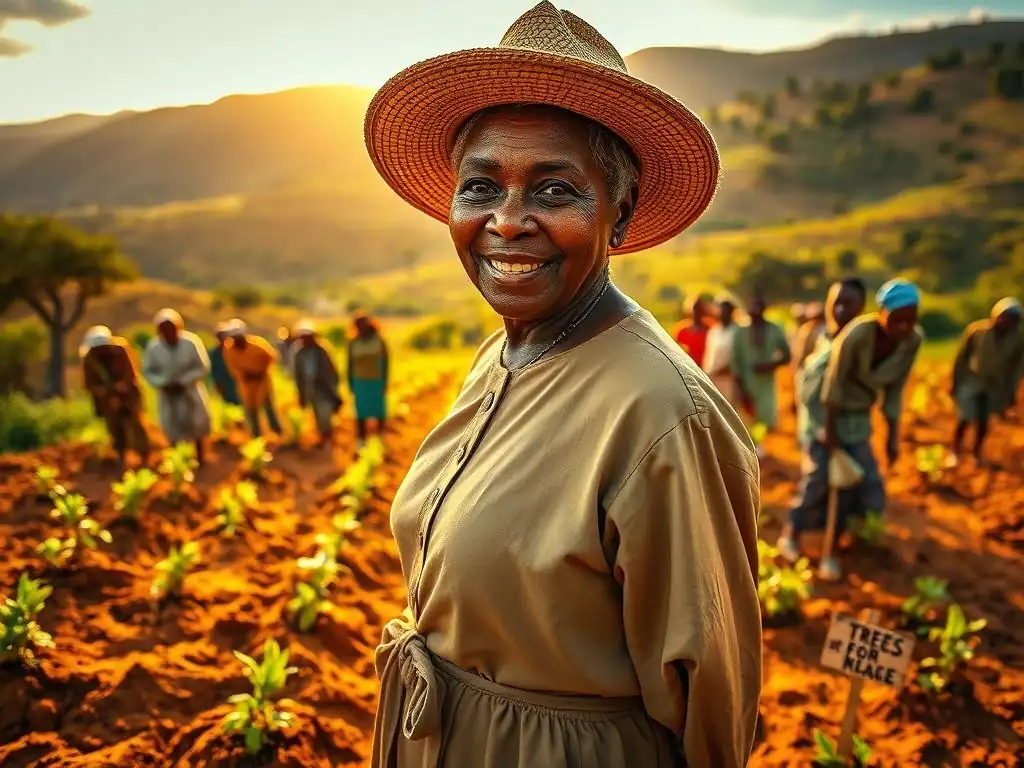
In 1977, Maathai founded the Green Belt Movement (GBM) under the auspices of the National Council of Women of Kenya. The initiative began with a straightforward objective: to encourage women to plant trees to address the critical need for fuel, fencing, and food. The GBM's unique approach involved establishing community-based tree nurseries and providing small financial incentives or food for women who successfully nurtured seedlings. This model directly linked environmental restoration with economic empowerment, especially for rural women.
The GBM's success quickly grew, demonstrating the profound impact of grassroots action. By empowering women to take ownership of the reforestation efforts, Maathai not only facilitated the planting of millions of trees but also fostered a sense of collective responsibility and agency among marginalized communities. This innovative strategy became a defining characteristic of her Wangari Maathai biography and her approach to sustainable development.
The Green Belt Movement's Core Principles and Objectives
The Green Belt Movement operated on several core principles that extended far beyond simply planting trees. Its foundational objective was to promote environmental conservation, particularly through reforestation and soil restoration, to improve the livelihoods of rural communities. However, Maathai envisioned the GBM as a vehicle for broader societal change, emphasizing community empowerment and sustainable development.
Beyond its environmental goals, the GBM sought to foster civic education, promote human rights, and advocate for democratic space. Maathai believed that environmental degradation was often a symptom of misgovernance and a lack of democratic accountability. Therefore, the movement also aimed to raise awareness about citizens' rights and responsibilities, encouraging communities to hold their leaders accountable for environmental stewardship and good governance.
Environmental Activism and Political Challenges: Fighting for Change
Confronting Political Opposition and Environmental Degradation
Wangari Maathai's unwavering commitment to environmental protection and social justice often put her at direct odds with the authoritarian regime of then-President Daniel arap Moi. Her persistent advocacy for conserving public lands and challenging corrupt development projects was seen as a direct threat to powerful political and business interests. A notable confrontation occurred in the late 1980s when Maathai led a highly publicized campaign against the construction of a 60-story skyscraper in Nairobi's Uhuru Park, a vital green space.
Despite facing severe intimidation, including threats, arrests, and physical assaults, Maathai refused to back down. Her principled stand against the Uhuru Park development garnered significant international attention and ultimately forced the government to abandon the project. This incident, among many others, highlighted the immense courage and resilience that characterized her Wangari Maathai environmental activism, as she consistently prioritized the public good over personal safety.
Imprisonment and Advocacy: Maathai's Unwavering Resolve
Maathai's activism frequently led to her arrest and imprisonment, particularly during the politically repressive 1990s in Kenya. She was often detained on fabricated charges, such as inciting public disturbance, simply for exercising her right to protest and advocate for environmental and human rights. On several occasions, she was brutally beaten by police during demonstrations, sustaining injuries that required medical attention.
Despite these harrowing experiences, her resolve only strengthened. Rather than being silenced, Maathai used her incarceration as a platform to draw further international attention to the plight of environmental defenders and the struggle for democracy in Kenya. Her unwavering spirit and refusal to yield to oppression earned her widespread admiration and support from human rights organizations and environmental groups globally, cementing her powerful image in her Wangari Maathai biography.
The Impact of the Green Belt Movement on Kenyan Society
The Green Belt Movement's impact on Kenyan society was profound and multifaceted. By 2004, the movement had facilitated the planting of over 30 million trees across Kenya, significantly contributing to reforestation efforts and combating desertification. This massive reforestation project directly improved soil health, increased water retention, and provided vital resources like fuelwood and fodder for rural communities.
Beyond the ecological benefits, the GBM empowered hundreds of thousands of women, providing them with a sense of agency, economic opportunities, and a platform for civic engagement. It fostered increased awareness of environmental issues among the general populace and encouraged greater civic responsibility. The movement's success demonstrated that grassroots initiatives, championed by individuals like Wangari Maathai, could indeed bring about tangible improvements in both environmental health and societal well-being, highlighting the enduring legacy of her Wangari Maathai environmental activism.
The Nobel Peace Prize: Recognition of Environmental Stewardship
Wangari Maathai's Nobel Peace Prize: A Historic Moment
In October 2004, the Norwegian Nobel Committee announced that Wangari Maathai had been awarded the Nobel Peace Prize. This was a truly historic moment, as she became the first African woman and the first environmentalist to receive the prestigious accolade. The news sent waves of excitement and pride across Africa and the global environmental community, recognizing decades of relentless struggle and visionary leadership.
The award elevated Maathai's platform immensely, transforming her from a regional environmental activist into a globally recognized symbol of peace, environmental stewardship, and human rights. This recognition allowed her to articulate her holistic vision to a much wider audience, emphasizing the interconnectedness of environmental health, democratic governance, and social justice. Her Nobel Peace Prize acceptance speech resonated with profound insights into the challenges and opportunities for a sustainable future.
The Nobel Committee's Justification: Linking Environment and Peace
The Nobel Committee's justification for awarding the prize to Wangari Maathai was groundbreaking, explicitly linking environmental degradation to conflict and peace. They cited her "contribution to sustainable development, democracy and peace," highlighting her unique approach that saw environmental conservation not as an isolated issue but as fundamental to human security and stability. The committee recognized that resource scarcity, often exacerbated by environmental destruction, can be a potent driver of conflict.
Maathai's work demonstrated that restoring ecosystems and ensuring equitable access to natural resources are crucial steps toward fostering peaceful coexistence. By empowering communities to manage their environment sustainably, she contributed to reducing tensions and building resilience. This innovative perspective, championed throughout her Wangari Maathai environmental activism, profoundly influenced the global discourse on environmental peacebuilding and sustainable development.
Global Impact and Recognition of Maathai's Work
The Nobel Peace Prize brought unprecedented international attention to Wangari Maathai and the Green Belt Movement. Her victory inspired similar grassroots environmental initiatives in other parts of the world, demonstrating the universality of her message and the effectiveness of her model. Governments, international organizations, and civil society groups began to pay closer attention to the nexus between environment, security, and development.
Beyond the Nobel Prize, Maathai received numerous other international accolades and served in significant global roles. She was appointed a United Nations Messenger of Peace in 2006 and was a co-founder of the Nobel Women's Initiative, a platform where female Nobel laureates collaborate for peace, justice, and equality. Her global recognition solidified her status as an iconic figure in the broader narrative of women in environmental science and a tireless advocate for a just and sustainable world.
Wangari Maathai's Scientific Contributions and Research
Maathai's Approach to Environmental Conservation: A Scientific Perspective
Wangari Maathai’s deep scientific background, particularly her expertise in biology and veterinary anatomy, provided a robust foundation for her environmental conservation strategies. While her work was profoundly grassroots and community-driven, it was also meticulously informed by scientific principles. She understood the intricate ecological processes at play in soil erosion, water cycles, and biodiversity loss, allowing her to devise effective and sustainable solutions.
Her approach to reforestation, for instance, wasn't just about planting any trees; it involved careful consideration of indigenous species, their role in local ecosystems, and their suitability for specific soil conditions. This scientific rigor ensured that the Green Belt Movement's efforts were not only impactful in the short term but also contributed to long-term ecological restoration, a critical aspect of her Wangari Maathai environmental activism.
The Green Belt Movement's Impact on Biodiversity and Ecosystems
The Green Belt Movement's extensive tree-planting initiatives had a tangible and measurable impact on biodiversity and local ecosystems in Kenya. By focusing on indigenous tree species and promoting diverse forests rather than monoculture plantations, the GBM helped to restore degraded habitats, providing vital cover and food sources for local wildlife. This led to a gradual return of birds, insects, and small mammals to areas that had been barren.
Furthermore, the trees planted by the GBM played a crucial role in soil conservation, preventing erosion and improving water retention, which in turn supported more diverse plant life. This restoration of hydrological cycles and soil fertility enhanced the overall resilience of ecosystems, demonstrating a direct scientific contribution of her work to ecological health and the invaluable insights offered by her Wangari Maathai environmental activism biography.
Integrating Traditional Knowledge with Scientific Practices
One of the most remarkable aspects of Wangari Maathai's scientific contribution was her ability to seamlessly integrate Western scientific knowledge with traditional African ecological wisdom. She recognized the profound understanding that local communities, particularly rural women, possessed about their environment, including knowledge of medicinal plants, soil types, and sustainable farming practices passed down through generations.
Maathai actively sought to incorporate this traditional knowledge into the Green Belt Movement's strategies, fostering a collaborative approach where scientific expertise complemented local wisdom. This integration not only made the conservation efforts more culturally appropriate and effective but also empowered communities by valuing their indigenous practices. Her unique synthesis of these knowledge systems provided a powerful model for culturally sensitive and scientifically sound environmental management, making her a leading figure in women in environmental science.
Wangari Maathai's Impact on Women's Empowerment
The Green Belt Movement as a Catalyst for Women's Leadership
From its inception, the Green Belt Movement intentionally focused on empowering rural women, recognizing their critical role in environmental management and community development. Maathai understood that environmental degradation disproportionately affected women, who were primarily responsible for fetching water, collecting firewood, and growing food. By involving them directly in tree planting and nursery management, the GBM provided women with a powerful platform for collective action and leadership.
Participation in the movement built women's confidence, enhanced their organizational skills, and fostered a strong sense of solidarity. They learned practical skills in forestry and conservation, but also gained a collective voice, enabling them to articulate their needs and advocate for change within their communities. This deliberate focus on women's leadership transformed the GBM into a potent force for social change, a cornerstone of her Wangari Maathai environmental activism.
Promoting Women's Rights and Economic Independence Through Environmental Action
The Green Belt Movement directly contributed to women's economic independence by providing them with opportunities to earn income. Women were often paid small stipends for each tree seedling they successfully nurtured, offering a vital source of income in cash-poor rural areas. This economic empowerment was not merely about money; it translated into increased agency for women within their households and communities.
As women gained financial autonomy, they were better positioned to make decisions about their families' welfare, access education for their children, and improve their overall living conditions. The environmental improvements, such as easier access to firewood and cleaner water, also reduced their daily burdens, freeing up time for other productive activities. This holistic approach underscored Maathai's belief that environmental action was inextricably linked to the advancement of women's rights and their economic well-being.
Maathai's Role as a Champion for Gender Equality
Wangari Maathai was an outspoken champion for gender equality throughout her life, consistently arguing that empowering women is essential for sustainable development and democratic governance. She observed that societies where women are marginalized often suffer from greater environmental degradation and social instability. Her work demonstrated that when women are given opportunities and a voice, they become powerful agents of positive change.
She consistently advocated for policies that would promote women's access to education, land ownership, and political participation. Maathai believed that women, as primary caregivers and resource managers within families, possessed unique insights and motivations for environmental stewardship. Her unwavering commitment to gender equality made her a towering figure, not just in environmental circles but also in the global movement for women's rights, defining a significant aspect of her Wangari Maathai environmental activism biography.
Wangari Maathai's Enduring Legacy: Inspiring Future Generations
Maathai's Influence on Environmental Policy and Conservation Efforts
Wangari Maathai's pioneering work profoundly influenced environmental policy and conservation efforts at both national and international levels. Her consistent advocacy for community-led conservation and the recognition of indigenous rights in resource management pushed for a paradigm shift in how environmental issues were addressed. She demonstrated that top-down approaches were often ineffective and that true conservation required the active participation and ownership of local communities.
Her arguments regarding the link between environmental degradation, poverty, and conflict became a cornerstone of global discussions on sustainable development and peacebuilding. Long before climate change became a mainstream concern, Maathai highlighted the importance of reforestation for carbon sequestration and climate resilience. Her foresight and tireless advocacy continue to shape environmental governance and climate action strategies worldwide, underscoring the enduring impact of her Wangari Maathai environmental activism.
The Continued Relevance of the Green Belt Movement Today
Decades after its founding, the Green Belt Movement continues to thrive and expand its vital work in Kenya, serving as a living testament to Wangari Maathai's vision. The movement has evolved to address contemporary challenges, including climate change adaptation, peacebuilding initiatives, and continued advocacy for democratic space and human rights. By 2018, the GBM had facilitated the planting of over 51 million trees across Kenya, a staggering achievement that continues to grow.
The Green Belt Movement remains a powerful model for grassroots environmental movements globally, demonstrating the immense potential of local action to achieve significant environmental and social impact. Its success in empowering communities, restoring ecosystems, and fostering civic engagement continues to inspire similar initiatives in diverse regions, proving the timeless relevance of Maathai's approach.
Remembering Wangari Maathai: A Symbol of Hope and Resilience
Wangari Maathai passed away in 2011, leaving behind a legacy that transcends national borders and disciplinary boundaries. Her passing was met with global mourning, but also with renewed determination to carry forward her mission. She remains a powerful symbol of hope, resilience, and unwavering commitment to justice and sustainability in the face of adversity.
Her life story, marked by extraordinary courage and profound vision, continues to motivate environmentalists, human rights advocates, and women leaders across the globe. Wangari Maathai's journey, from a rural Kenyan girl to a Nobel Peace Prize laureate, serves as a powerful reminder that one individual, armed with conviction and a scientific understanding of the world, can indeed change the course of history, solidifying her place as an iconic figure in women in environmental science.
Conclusion: Celebrating Wangari Maathai's Unmatched Contributions to Environmental Science and Activism
Wangari Maathai: A True Pioneer in Women in Environmental Science
Wangari Maathai stands as an unparalleled pioneer in the field of environmental science, demonstrating how rigorous scientific inquiry can be seamlessly integrated with grassroots activism and social justice. Her academic background in biology and veterinary anatomy provided the intellectual framework for her practical, community-based solutions to ecological crises. She applied scientific principles to address deforestation, soil erosion, and water scarcity, proving that environmental restoration requires both ecological understanding and human engagement.
Her unique contribution lies in her ability to bridge the gap between scientific knowledge and community action, empowering ordinary citizens, particularly women, to become agents of change. She showed that a deep understanding of ecosystems, combined with a commitment to human rights and democratic governance, is essential for truly sustainable development. Maathai's trailblazing path firmly establishes her as a leading figure in the history of women in environmental science.
Remembering her Environmental Activism Biography and Lasting Impact.
The Wangari Maathai environmental activism biography is a compelling narrative of courage, vision, and transformative impact. Through the Green Belt Movement, she not only facilitated the planting of millions of trees but also cultivated a profound sense of empowerment and civic responsibility among countless individuals. Her relentless fight against political oppression and her unwavering advocacy for human rights underscored her belief that environmental health is inextricably linked to social justice and democratic freedom.
Her legacy, cemented by the Nobel Peace Prize, continues to resonate globally, inspiring new generations of environmentalists, activists, and leaders. Wangari Maathai's life serves as a powerful testament to the idea that sustainable change begins at the community level and that the empowerment of women is crucial for a just and peaceful future. Her enduring influence ensures that her contributions to environmentalism, peace, and human rights will be remembered and celebrated for generations to come.
Frequently Asked Questions
How did Wangari Maathai contribute to environmental activism?
Wangari Maathai founded the Green Belt Movement, which empowered women to plant trees and combat deforestation in Kenya. This initiative addressed both environmental degradation and social issues such as poverty and lack of resources.
What challenges did Wangari Maathai face as a woman in science and environmental activism?
Maathai faced significant political opposition and gender discrimination throughout her career. Her work challenged established power structures and societal norms, leading to arrests and harassment.
Why is Wangari Maathai considered a pioneering figure in science history?
Maathai was the first African woman to win the Nobel Peace Prize, recognized for her environmental conservation efforts and commitment to democracy and human rights.
What is the Green Belt Movement and what are its primary goals?
The Green Belt Movement is a grassroots environmental organization that focuses on tree planting, environmental conservation, and community empowerment. It aims to combat deforestation, promote sustainable development, and improve the livelihoods of women.
Where can I learn more about Wangari Maathai's biography and her impact?
You can find detailed information on websites like WomenInScienceHistory.com, which features biographies of pioneering female scientists, or by reading her autobiography, "Unbowed: A Memoir". You can also explore resources from the Green Belt Movement's official website.
Final Reflection: A Legacy of Green Hope
The story of Wangari Maathai and the Green Belt Movement is not just a historical account; it's a vibrant testament to the power of individual action and community empowerment, resonating profoundly in our current climate crisis. Maathai's unwavering commitment to environmental conservation and social justice serves as a potent reminder that even the smallest seed of change can blossom into a forest of positive impact. Her work underscores the critical link between environmental degradation and societal well-being, a connection that demands urgent attention in today's world.
The impact of Maathai's vision continues to ripple through the cultural and social landscape, inspiring countless individuals and organizations to embrace sustainable practices and advocate for environmental protection. Her legacy transcends geographical boundaries, reminding us that environmental stewardship is a shared responsibility. You cannot protect the environment unless you empower people, you inform them, and you help them understand that these resources are their own, that they must protect them.
This quote encapsulates the core philosophy that drove Maathai's work and continues to guide the Green Belt Movement's efforts to empower communities and restore degraded ecosystems.
Let us all draw inspiration from Wangari Maathai's extraordinary life and unwavering dedication. Consider how you can cultivate your own "green belt" – whether it's through planting a tree, reducing your carbon footprint, or advocating for environmental policies. Embrace the spirit of Maathai's legacy and become an unstoppable force for positive change in your own community and beyond. The future of our planet depends on it.
Ignite Your Inner Wangari: Plant Seeds of Change Today!
Thank you for exploring Wangari Maathai's inspiring journey with us! You've now seen how one woman's vision can blossom into a powerful movement for environmental conservation and community empowerment. Now, let's take that inspiration and turn it into action!
Here's how you can continue Wangari's legacy:
- Get your hands dirty! Plant a tree, start a community garden, or support a local reforestation project. Make a tangible difference in your environment, no matter how small. This is the most direct action inspired by Wangari's work.
- Spread the word. Share Wangari Maathai's story and the Green Belt Movement's mission with your friends, family, and online networks. Help inspire others to take action and make a difference.
- Research a local environmental issue and write to your local representative advocating for change! Even small voices can come together to create something powerful.
What small act of environmental stewardship will you commit to this week, and how will you inspire others to join you?