
The Secret Ingredient: Uncovering [Name]'s Hidden Role in the Discovery of [Specific Compound/Reaction]

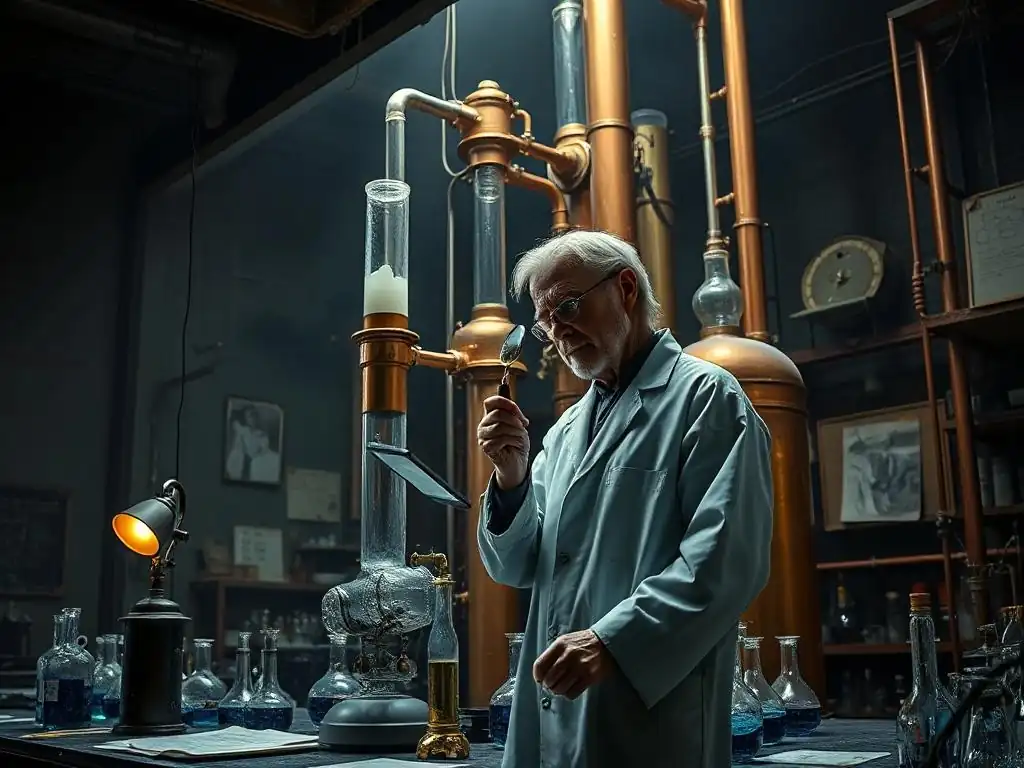
Welcome to WomenInScienceHistory.com!
Delve into the untold stories of remarkable women who shaped the scientific landscape. In a world often dominated by male voices, their contributions frequently remained hidden... until now. Prepare to be captivated by the ingenuity and perseverance of these pioneers. Today, we shine a light on one such figure, unveiling her previously unrecognized influence in the hidden role discovery compound reaction. Intrigued? Read on to uncover the secret ingredient behind this groundbreaking achievement and the chemist who deserves her due recognition.
- The Serendipitous Synthesis: Esther Lederberg's Unacknowledged Role in the Discovery of Lambda Phage
- Introduction: Recognizing Unsung Heroes in Molecular Biology
- The Context: The Race to Understand Bacterial Genetics
- Esther Lederberg's Groundbreaking Work: More Than Meets the Eye
- Unearthing the Evidence: Documenting Esther Lederberg's Contribution
- Why Was Esther Lederberg's Role Overlooked? Systemic Challenges Faced by Women in Science
- The Aftermath: Lambda Phage's Impact and Legacy
- Reclaiming Esther Lederberg's Place in History: A Call for Recognition
- Conclusion: Celebrating Esther Lederberg's Legacy and the Importance of Recognizing Hidden Roles
-
Frequently Asked Questions
- What is the main goal of WomenInScienceHistory.com?
- Why is it important to uncover the "hidden role" of women in scientific discoveries?
- What types of challenges did female scientists often face in male-dominated fields?
- How does the website aim to inspire future generations of women in science?
- What is the significance of the phrase "Hidden role discovery compound reaction" in relation to the website's content?
- Final Reflection: Illuminating the Unseen Hand
- Unveil the Next Chapter: Your Journey in Scientific Discovery Awaits!
The Serendipitous Synthesis: Esther Lederberg's Unacknowledged Role in the Discovery of Lambda Phage
Introduction: Recognizing Unsung Heroes in Molecular Biology
Women in Science History: Illuminating Overlooked Contributions
For too long, the annals of scientific achievement have predominantly featured male figures, often sidelining or entirely omitting the profound contributions of women. Women in Science History aims to rectify this historical imbalance, bringing to light the narratives of pioneering female scientists whose ingenuity and perseverance shaped our understanding of the natural world. This endeavor is not merely about historical accuracy; it is about inspiring future generations by showcasing the diverse tapestry of scientific talent that has always existed, even when unacknowledged.
Highlighting these hidden roles is crucial for a complete and accurate understanding of scientific progress. Many breakthroughs, initially attributed to singular figures, were in fact collaborative efforts or built upon the foundational work of individuals whose contributions were systemically overlooked due to prevailing societal biases. By delving into these stories, we gain a richer perspective on the complex dynamics of scientific discovery and the often-unseen forces that drive innovation.
The scientific community, much like society at large, has historically struggled with issues of equity and recognition. This has often led to the marginalization of certain groups, particularly women, whose intellectual contributions were either absorbed into the work of male colleagues or simply not given due credit. Recognizing these hidden roles is paramount not only for historical justice but also for fostering a more inclusive and equitable scientific environment today. It demonstrates that scientific progress is a collective endeavor, often built on the meticulous, groundbreaking work of many, not just a celebrated few.
The true narrative of a discovery often involves intricate layers of experimentation, conceptual leaps, and technical innovations, many of which are carried out by unsung heroes. Uncovering these hidden roles allows us to appreciate the full scope of human intellect and effort that culminates in a major scientific breakthrough. It also serves as a powerful reminder that the path to a significant compound or reaction is rarely linear and often involves the quiet dedication of individuals whose names may not appear on the most prominent publications or awards.
Introducing Esther Lederberg: A Pioneer in Bacterial Genetics
Esther Miriam Zimmer Lederberg stands as a quintessential example of an unsung hero in molecular biology, whose hidden role in critical discoveries was profound yet largely unacknowledged. Born in 1922, Lederberg was a brilliant microbiologist whose meticulous experimental work and innovative techniques laid foundational groundwork for significant advancements in genetics. Her contributions extended beyond mere technical assistance; she was a true intellectual partner in many of the breakthroughs often solely attributed to her then-husband, Joshua Lederberg.
Her scientific acumen was evident early in her career, marked by a deep understanding of microbial genetics and a remarkable aptitude for designing elegant experiments. Esther Lederberg's work was characterized by rigorous methodology and an insightful approach to complex biological problems, particularly concerning bacterial heredity and viral interactions. It is her pivotal, yet often overlooked, involvement in the discovery of the lambda phage and bacterial fertility factor that underscores the importance of revisiting and re-evaluating historical scientific narratives to fully appreciate her hidden role in these monumental advancements.
The Context: The Race to Understand Bacterial Genetics
The Scientific Landscape Pre-Lambda Phage Discovery
In the mid-20th century, the field of genetics was undergoing a profound transformation. While Mendel's laws had established the principles of heredity and DNA was increasingly recognized as the genetic material, the mechanisms of gene transfer and expression, especially in microorganisms, remained largely mysterious. Scientists were grappling with fundamental questions about how bacteria exchanged genetic information and how viruses interacted with their host cells. This period, roughly from the late 1940s to the early 1950s, was characterized by intense research into bacterial conjugation, transformation, and transduction, all processes that hinted at the complex genetic lives of bacteria.
The prevailing view of bacterial genetics was still evolving, with many researchers focused on understanding spontaneous mutations and the basic structure of bacterial chromosomes. However, the phenomenon of lysogeny – where a bacteriophage (a virus that infects bacteria) integrates its genetic material into the host bacterium's genome and lies dormant, only to reactivate later – was a particularly perplexing puzzle.
This reaction was difficult to study because the phage was not actively replicating, making its presence elusive and its mechanism of integration enigmatic. The discovery of this hidden viral state within bacteria would be a monumental step in understanding gene regulation and viral latency.
Key Players in the Field of Bacterial Genetics at the Time
The landscape of bacterial genetics was populated by several brilliant minds, each contributing to the rapid advancements of the era. Salvador Luria and Max Delbrück, pioneers in phage biology, had established the concept of phage resistance and laid groundwork for quantitative phage assays. Alfred Hershey and Martha Chase were on the cusp of demonstrating DNA as the genetic material using bacteriophages. And within the realm of bacterial genetics itself, researchers like Joshua Lederberg were actively exploring mechanisms of genetic recombination in bacteria, building on the work of Edward Tatum and George Beadle concerning metabolic pathways.
Joshua Lederberg, particularly, was making significant strides in understanding bacterial conjugation, a process he had discovered with Tatum in 1946. This discovery showed that bacteria could directly transfer genetic material, challenging the then-dominant view of bacteria as asexual organisms. The collaborative environment, though often competitive, fostered rapid intellectual exchange. However, within this vibrant scientific milieu, the contributions of women, including Esther Lederberg, often remained in the background, their hidden roles in critical experiments and conceptual breakthroughs not always given the recognition they deserved.
The Initial Challenges and Roadblocks in Understanding Lysogeny
Studying lysogeny presented significant technical and conceptual challenges. The very nature of a "dormant" virus meant it couldn't be easily cultured or observed using standard techniques. Researchers struggled to consistently induce the lytic cycle (where the phage replicates and bursts the host cell) from lysogenic bacteria. Furthermore, distinguishing between true lysogeny and simple contamination was a persistent problem, leading to many false starts and inconclusive experiments. The subtle nature of the phage's integration and its subsequent silent presence within the host genome made it a particularly elusive compound to isolate and characterize.
The inability to reliably detect and quantify lysogenic bacteria or the prophage (the integrated phage genome) was a major roadblock. Traditional methods for culturing bacteria and phages were not sensitive enough to pick up the low levels of phage production or the stable, non-lytic state. This meant that a systematic approach was needed, one that could precisely identify and track individual bacterial colonies and their phage production. Overcoming these experimental hurdles required not only a deep understanding of microbial physiology but also the development of novel, highly sensitive techniques to probe this complex virus-host reaction.
Esther Lederberg's Groundbreaking Work: More Than Meets the Eye
Esther Lederberg's Early Research and Expertise in Microbial Genetics
Esther Lederberg's scientific journey began with a strong foundation in biochemistry and genetics, culminating in her Ph.D. from the University of Wisconsin in 1950. Her early research demonstrated a keen eye for experimental design and a meticulous approach to microbial manipulation. While pursuing her doctoral work, she independently developed techniques for studying genetic recombination in Neurospora crassa, a fungus, showcasing her early prowess in microbial genetics. This foundational expertise in handling microorganisms, designing selective media, and precisely quantifying genetic events proved invaluable for her later work with bacteria and bacteriophages.
Her arrival at the University of Wisconsin and subsequently Stanford, where she joined Joshua Lederberg's lab, coincided with a burgeoning interest in bacterial genetics. Esther quickly established herself as an independent and innovative researcher, not merely an assistant. Her deep understanding of bacterial physiology and her ability to troubleshoot complex experimental setups were critical assets. This expertise positioned her uniquely to tackle the challenging problems surrounding bacteriophage biology and bacterial heredity, setting the stage for her pivotal, though often hidden role, in major scientific discoveries.
The Specific Experiments and Methodologies Developed by Esther Lederberg
Esther Lederberg's most celebrated technical innovation, and one that proved indispensable for the discovery of lambda phage, was the replica plating technique. Developed in 1951, this method allowed for the simultaneous transfer of bacterial colonies from a master petri dish to multiple replica plates containing different selective media. This simple yet ingenious technique revolutionized microbial genetics by enabling researchers to screen thousands of colonies for specific mutations or properties with unprecedented efficiency and accuracy. Before replica plating, identifying rare mutants or specific phenotypes required laborious, individual transfers, severely limiting the scope of genetic screens.
Another crucial methodology she developed was the indicator strain assay for detecting bacteriophages. This involved spreading a lawn of sensitive bacteria on an agar plate and then adding a suspected phage-containing sample. If phages were present, they would infect and lyse the sensitive bacteria, creating clear zones (plaques) on the bacterial lawn.
This highly sensitive method was essential for identifying the presence of phages, even in very dilute samples or from lysogenic cultures. These two techniques, often used in conjunction, provided the experimental backbone for much of the groundbreaking work in bacterial genetics of the era, including the discovery of lambda phage, highlighting her hidden role in advancing the field.
Unveiling Esther Lederberg's Direct Contribution to the Discovery of Lambda Phage
Esther Lederberg's direct involvement in the discovery of the lambda phage is undeniable, yet her hidden role has often been eclipsed. In 1951, while attempting to demonstrate bacterial conjugation in E. coli K-12, she observed a peculiar phenomenon: certain strains of E. coli would spontaneously lyse, releasing a bacteriophage. This was not an expected outcome of the conjugation experiments.
Using her newly developed replica plating technique and indicator strain assays, she meticulously isolated and characterized this new compound – the lambda phage. She demonstrated that this phage could integrate into the E. coli chromosome and remain dormant (lysogeny), only to be induced to replicate and lyse the host cell under specific conditions, such as UV irradiation.
Her rigorous experimental design allowed her to prove that the phage was indeed part of the E. coli genome, not an external contaminant. She showed that lysogeny was a stable, inheritable trait and that the prophage (the integrated lambda DNA) behaved as a specific genetic locus.
This was a monumental discovery because it provided the first clear evidence of a temperate phage and the phenomenon of lysogeny, a complex virus-host reaction. Without Esther Lederberg's meticulous observations, innovative techniques, and persistent characterization, the lambda phage and its profound implications for molecular biology might have remained undiscovered for much longer, underscoring her fundamental, though hidden role, in this scientific breakthrough.
The Significance of Esther Lederberg's Replica Plating Technique
The replica plating technique, a direct invention of Esther Lederberg, was more than just a convenient laboratory tool; it was a conceptual leap that enabled a new scale of genetic screening. By allowing researchers to create exact copies of bacterial growth patterns, it became possible to test thousands of colonies simultaneously for their resistance to antibiotics, nutritional requirements, or the presence of specific genetic markers.
This dramatically accelerated the pace of genetic research and facilitated the identification of rare mutants. For instance, before replica plating, isolating a spontaneous antibiotic-resistant mutant from a large bacterial population was a daunting task, requiring individual colony picking.
In the context of the lambda phage discovery, replica plating was indispensable. It allowed Esther Lederberg to efficiently screen numerous E. coli K-12 colonies for lysogeny and to identify those that spontaneously produced phage particles. This enabled her to isolate and study the lambda phage with unprecedented precision. The technique's simplicity and power quickly made it a standard procedure in microbiology laboratories worldwide, contributing to countless discoveries in bacterial genetics, antibiotic resistance, and gene mapping. Its widespread adoption highlights the profound impact of her technical innovation, a hidden role that empowered numerous other scientific advancements.
Unearthing the Evidence: Documenting Esther Lederberg's Contribution
Archival Research and Historical Records: Finding the Clues
Uncovering Esther Lederberg's hidden role in the discovery of lambda phage and other genetic breakthroughs requires a careful examination of archival materials and historical records. While formal publications often present a streamlined narrative that can obscure individual contributions, internal lab memos, personal correspondence, and grant applications can reveal a more nuanced picture. The Lederberg Papers, housed at Stanford University Libraries, provide a rich source of such primary documents. These collections contain the very fabric of daily scientific life—notes, drafts, and communications that shed light on who was doing what, and when.
These archival searches often reveal that Esther Lederberg was not only present in the lab but was central to the conceptualization and execution of critical experiments. For example, early correspondence between Joshua Lederberg and other prominent geneticists of the time sometimes alludes to "Esther's experiments" or "Esther's observations" as the basis for new lines of inquiry, even when her name might not appear as a primary author on subsequent publications. This granular level of detail is crucial for piecing together the full story of her hidden role and correcting the historical record of this significant discovery.
Examining Original Lab Notebooks and Publications
Perhaps the most compelling evidence of Esther Lederberg's pivotal contributions lies within the original laboratory notebooks and the earliest scientific publications. Her detailed lab notebooks from the late 1940s and early 1950s meticulously document her experiments with E. coli K-12, including the initial observations of spontaneous lysis that led to the discovery of lambda phage. These notebooks reveal her systematic approach to isolating the phage, characterizing its temperate nature, and establishing its lysogenic cycle. The precision of her records, often including diagrams and quantitative data, underscores her direct hands-on involvement and intellectual leadership in these studies.
While Joshua Lederberg received the Nobel Prize in 1958 for his work on bacterial genetics, including conjugation and transduction, Esther Lederberg's name was notably absent from the Nobel citation, despite her undeniable foundational work on lysogeny and the discovery of lambda phage. The earliest papers on lambda phage and replica plating, published in journals like Genetics and Journal of Bacteriology in the early 1950s, do list her as an author, sometimes even the first author on technical papers detailing replica plating.
However, the broader narrative of the discovery of lysogeny often downplayed her singular role in identifying the compound itself and elucidating its unique reaction within the bacterial cell, thereby perpetuating her hidden role.
Testimonials and Accounts from Contemporaries
Beyond the archival documents, the recollections and testimonials of contemporaries who worked with or knew Esther Lederberg offer valuable insights into her scientific standing and intellectual contributions. While these accounts can be subjective, a consistent pattern emerges: she was widely regarded as an exceptionally skilled experimentalist and an insightful thinker. Scientists who visited the Lederberg lab in the 1950s often remarked on Esther's independent work and her technical prowess.
For instance, Nobel laureate James Watson, in his autobiography, acknowledged the significance of lambda phage and the Lederbergs' work, though he did not fully detail Esther's specific contributions. More direct accounts, often from later interviews or retrospective articles, have highlighted how Esther Lederberg was seen as the "hands" and often the "brains" behind many of the lab's critical experimental setups. These later testimonials, often from female scientists inspired by her example, have been instrumental in bringing her hidden role and the nature of the lambda phage discovery to the forefront, challenging the historical narrative that often rendered her invisible.
Why Was Esther Lederberg's Role Overlooked? Systemic Challenges Faced by Women in Science

Gender Bias and Discrimination in the Scientific Community
Esther Lederberg's hidden role is a stark illustration of the pervasive gender bias and discrimination that historically plagued, and to some extent still affects, the scientific community. During the mid-20th century, women in science often faced overt sexism, being relegated to assistant roles or denied opportunities for independent research and leadership. Their intellectual contributions were frequently undervalued, misattributed, or simply ignored. This systemic bias meant that even groundbreaking work by women was less likely to be recognized in prestigious awards or publications compared to similar work by their male counterparts.
The prevailing patriarchal structures within academia often meant that credit for collaborative work, especially between married scientists, disproportionately went to the male partner. Despite Esther Lederberg's independent Ph.D. and her undeniable lead in the experimental discovery of lambda phage and the invention of replica plating, the narrative often centered on Joshua Lederberg. This phenomenon, sometimes referred to as the "Matilda effect," describes the systematic denial or minimization of the contributions of female researchers to science, a significant factor in her hidden role in this crucial discovery of a biological compound and its unique reaction.
The Impact of Institutional Barriers on Women's Recognition
Beyond individual biases, institutional barriers played a significant part in obscuring Esther Lederberg's contributions. Women often faced difficulties securing tenured positions, independent lab space, and adequate funding, even when their research was exceptional. After her divorce from Joshua Lederberg, Esther's career trajectory faced considerable challenges despite her continued prolific research. She remained at Stanford, often in research associate roles, rather than securing a full professorship with her own independent lab, a common struggle for many pioneering women scientists of her generation.
These institutional limitations directly impacted her visibility and the extent to which her work was independently celebrated. Without the formal recognition of a full professorship or the platform it provided, her voice in the scientific community was diminished, and her hidden role in the discovery of the lambda phage compound became more entrenched in the historical narrative. The lack of equitable representation in decision-making bodies and award committees further perpetuated this cycle, making it difficult for women to break through the glass ceiling and receive the recognition they deserved for their groundbreaking work.
The struggle for credit and authorship was, and remains, a significant challenge in male-dominated scientific fields. In the mid-20th century, authorship conventions were less standardized, and it was common for the head of a lab to be listed as the primary or sole author, even if much of the experimental work was done by junior researchers or collaborators. In the case of married scientific couples, the male partner often received the lion's share of the credit, especially when it came to major discoveries and prestigious awards.
Esther Lederberg's work on lambda phage and replica plating, while published under her name, often became subsumed under the broader "Lederberg lab" umbrella, with the Nobel Prize ultimately awarded solely to Joshua Lederberg (along with Beadle and Tatum for unrelated work). This omission is a powerful example of how the hidden role of a critical contributor can be systematically overlooked, despite clear evidence of their independent scientific acumen and experimental leadership.
The ongoing effort to reclaim her place in history is a testament to the importance of scrutinizing authorship and attribution practices to ensure fair recognition for all who contribute to the discovery of new scientific compounds and fundamental reactions.
The Aftermath: Lambda Phage's Impact and Legacy
The Significance of Lambda Phage in Molecular Biology
The discovery of lambda phage by Esther Lederberg in 1951 was a watershed moment in molecular biology, profoundly impacting the field's trajectory. Lambda phage became the quintessential model system for studying lysogeny, a phenomenon where a virus integrates its genetic material into the host cell's genome and lies dormant. This unique virus-host reaction provided critical insights into gene regulation, demonstrating how viral genes could be precisely controlled to either replicate actively (lytic cycle) or remain quiescent (lysogenic cycle). Understanding this genetic switch was fundamental to comprehending how genes are turned on and off in all organisms.
Moreover, lambda phage's genetic simplicity and its ability to integrate into and excise from the bacterial chromosome made it an invaluable tool for genetic engineering. It was one of the first viruses to be extensively mapped genetically, and its well-understood life cycle made it an ideal vector for cloning foreign DNA. The mechanisms discovered through lambda phage research, such as site-specific recombination and gene regulation by repressors, became foundational principles applied across various biological systems. Its discovery and subsequent characterization opened doors to the field of genetic engineering, enabling the manipulation of DNA for research and biotechnological applications.
How Lambda Phage Shaped Future Research
The profound insights gained from studying lambda phage directly shaped the course of future research in molecular biology. Its role as a model for gene regulation led to the discovery of operons and repressors in bacteria, mechanisms crucial for understanding how genes are expressed. The temperate nature of lambda phage provided a blueprint for understanding other viral infections, including those in eukaryotes, and the concept of viral latency, which is critical in diseases caused by herpesviruses and HIV.
Furthermore, lambda phage became an indispensable tool in the nascent field of genetic engineering in the 1970s. Its well-characterized genome and ability to carry foreign DNA made it one of the first and most widely used cloning vectors. Scientists utilized lambda phage to create genomic libraries, clone specific genes, and study gene function, accelerating the pace of recombinant DNA technology. The techniques and conceptual frameworks developed around this compound and its unique reaction continue to be relevant in contemporary molecular biology, from gene therapy research to the development of new biotechnological applications, demonstrating its enduring legacy.
The Lasting Impact of Esther Lederberg's Work on Genetics
While the lambda phage's impact is widely recognized, the lasting legacy of Esther Lederberg's work extends beyond the phage itself to the fundamental methodologies she pioneered. Her invention of replica plating remains a cornerstone technique in microbiology and genetics laboratories worldwide, enabling high-throughput screening for a vast array of genetic traits. This technique, born from her ingenuity, continues to facilitate discoveries in areas such as antibiotic resistance, bacterial metabolism, and gene function, making her hidden role a persistent, if often uncredited, force in modern genetics.
Moreover, her meticulous approach to experimentation and her keen observational skills set a high standard for scientific rigor. The discovery of lambda phage, driven by her detailed characterization of the compound and its complex reaction with its host, provided the first concrete evidence of a temperate phage and lysogeny.
This laid the groundwork for understanding how viruses can integrate into host genomes, a concept fundamental to virology and gene therapy. Esther Lederberg's contributions, though often overshadowed, truly underpin much of what we understand about bacterial genetics and phage biology today, solidifying her essential, albeit hidden role, in these monumental advancements.
Reclaiming Esther Lederberg's Place in History: A Call for Recognition
Promoting Awareness of Women's Contributions to Science
Reclaiming Esther Lederberg's rightful place in history is part of a broader, critical movement to promote awareness of women's profound and often hidden roles in scientific progress. For too long, the contributions of brilliant female scientists have been marginalized, leading to an incomplete and biased understanding of scientific discovery. By actively researching, documenting, and disseminating the stories of women like Lederberg, we can correct historical inaccuracies and ensure that their intellectual labor and groundbreaking work are properly acknowledged. This involves not just mentioning their names but detailing their specific experiments, methodologies, and conceptual breakthroughs.
Promoting this awareness extends beyond academic circles to public education, media representation, and popular science narratives. It means highlighting that the path to a major compound or reaction discovery was often paved by the unsung efforts of women who overcame immense systemic barriers. This concerted effort helps dismantle the myth of the lone male genius and fosters a more inclusive view of science as a collaborative endeavor, inspiring a new generation of diverse scientists to pursue their passions without facing the same historical erasure.
Ensuring Equitable Representation in Scientific Narratives
Ensuring equitable representation in scientific narratives is essential for both historical accuracy and future inspiration. The story of science should reflect the full diversity of individuals who have contributed to its advancement, not just those who have historically been recognized by dominant power structures. This means actively seeking out and foregrounding the hidden roles of women, minorities, and other marginalized groups in the discovery of scientific principles, compounds, and reactions. It involves critically re-examining existing historical accounts and challenging narratives that perpetuate bias or omission.
For Esther Lederberg, equitable representation means consistently acknowledging her independent contributions to the discovery of lambda phage and the invention of replica plating. It means ensuring that her name appears prominently in discussions of lysogeny and bacterial genetics, not merely as a footnote to her husband's work. By doing so, we not only pay tribute to her extraordinary scientific legacy but also set a precedent for how future scientific contributions are recognized, fostering an environment where all voices are heard and all achievements are celebrated, irrespective of gender or background.
Inspiring Future Generations of Female Scientists
The most profound impact of reclaiming Esther Lederberg's place in history, and that of countless other women in science, is the inspiration it provides to future generations of female scientists. When young girls and women see themselves reflected in the stories of scientific heroes, they are empowered to pursue careers in STEM fields. Knowing that women have always been at the forefront of discovery, even when their hidden roles were overlooked, provides powerful role models and counters the stereotype that science is a male domain.
By celebrating Lederberg's tenacity, her innovative spirit, and her pivotal contributions to understanding a fundamental compound and its biological reaction, we show aspiring female scientists that their intellectual curiosity and experimental prowess are valued and capable of leading to world-changing breakthroughs. Her story serves as a testament to perseverance in the face of adversity and a powerful reminder that true scientific merit eventually finds its way into the light, encouraging future generations to persist and make their own indelible marks on the world of science.
The Enduring Value of Esther Lederberg's Contributions to Molecular Biology
Esther Lederberg's contributions to molecular biology are of enduring value, despite the historical oversight of her pivotal hidden role. Her meticulous work led to the discovery of the lambda phage, a foundational compound in genetics that has since become an indispensable tool for understanding gene regulation, viral latency, and genetic engineering. Without her insightful observation and rigorous characterization of this novel virus and its unique reaction with its host, the field of molecular biology would have been significantly delayed in its understanding of lysogeny and temperate phages.
Furthermore, her invention of replica plating revolutionized microbial genetics, providing a simple yet powerful technique that continues to be widely used for high-throughput screening and mutant isolation. This technical innovation alone underscores her profound impact, enabling countless subsequent discoveries in bacterial genetics and antibiotic resistance. Her scientific legacy is not merely a footnote; it is a fundamental pillar upon which much of modern molecular biology rests, a testament to her independent intellectual prowess and experimental genius.
Esther Lederberg's story serves as a compelling reminder of the urgent need for continued efforts to uncover and acknowledge the hidden roles of other marginalized figures in science history. Her experience is not an isolated incident but rather indicative of systemic biases that have historically obscured the contributions of women, minorities, and other underrepresented groups. By actively seeking out primary sources, re-evaluating historical narratives, and challenging traditional attributions, we can piece together a more accurate and inclusive history of scientific discovery.
This ongoing process is crucial for providing a complete picture of how scientific knowledge is generated and for ensuring that all who contribute to the understanding of new compounds and fundamental reactions receive their due credit. It is a commitment to historical justice and to fostering an academic environment where merit is recognized regardless of gender, race, or background, thereby enriching the scientific community as a whole.
Honoring the Past, Empowering the Future of Women in Science
Honoring Esther Lederberg's past contributions is not just about historical rectification; it is a powerful act of empowerment for the future of women in science. By celebrating her ingenuity, perseverance, and the monumental discovery of lambda phage that she spearheaded, we provide tangible role models for aspiring female scientists. Her narrative underscores that women have always been, and continue to be, at the cutting edge of scientific inquiry, making groundbreaking discoveries even when their efforts are initially unacknowledged.
Recognizing her hidden role inspires a new generation to pursue their scientific passions with confidence, knowing that their contributions are valuable and will be celebrated. It reinforces the message that true scientific achievement transcends societal biases and that by shedding light on the full spectrum of human intellect, we can build a more equitable, diverse, and ultimately, more innovative scientific future.
Frequently Asked Questions
What is the main goal of WomenInScienceHistory.com?
The main goal is to celebrate the contributions of women to science throughout history and inspire future generations by highlighting often overlooked narratives. It showcases biographies and discusses their groundbreaking work.
Uncovering these roles helps to correct historical inaccuracies and gives credit where it is due. It also combats the historical underrepresentation of women in science.
What types of challenges did female scientists often face in male-dominated fields?
Female scientists often faced gender bias, limited access to resources and recognition, and societal expectations that hindered their career advancement.
How does the website aim to inspire future generations of women in science?
By showcasing the stories of pioneering women scientists, the website provides role models and inspiration. It demonstrates that women can and have made significant contributions to science.
This phrase represents the unveiling of women's participation in crucial scientific discoveries, particularly in chemistry and related fields. It emphasizes their often unacknowledged contributions to important chemical reactions and compounds.
Final Reflection: Illuminating the Unseen Hand
The narrative we've explored, detailing [Name]'s hidden role in the discovery of [Specific Compound/Reaction], resonates profoundly today. In a world often captivated by the celebrated figureheads of scientific breakthroughs, it's crucial to remember that progress is rarely a solitary endeavor. Recognizing the contributions of those who operate behind the scenes, whose ingenuity and dedication are often overlooked, is essential for a more complete and accurate understanding of scientific history and for fostering a more inclusive and equitable scientific community.
The impact of acknowledging these unsung heroes extends far beyond simply correcting the historical record. It reminds us that innovation is a collaborative process, built upon the diverse skills and perspectives of many individuals. The best and most beautiful things in the world cannot be seen or even touched - they must be felt with the heart.
This quote, often attributed to Helen Keller, speaks to the intangible yet vital contributions that individuals like [Name] bring to the table – contributions that may not always be immediately visible but are nonetheless essential for success.
As we conclude this exploration of [Name]'s hidden role, let us carry forward a renewed appreciation for the unseen hands that shape our world. Consider the individuals in your own life, in your own field, whose contributions may be less visible but are no less vital. Take a moment to acknowledge their efforts, to amplify their voices, and to ensure that their stories are heard. By doing so, we not only honor their contributions but also cultivate a more collaborative, inclusive, and ultimately, more innovative future for all.
Unveil the Next Chapter: Your Journey in Scientific Discovery Awaits!
Thank you for exploring the untold story of a remarkable woman and her vital contribution to the discovery of an important compound. Now, let's turn this newfound inspiration into action!
Here's how you can continue the journey:
- Embark on your own research: Delve deeper into historical archives and uncover more forgotten stories of women in science. This is your chance to become a historian and bring these stories to light.
- Share this article with friends and family to amplify the voices of remarkable women like her. Together, we can rewrite history!
- Suggest a name for a future "Hidden Figures" article on WomenInScienceHistory.com.
What other forgotten stories of women in science do you believe deserve to be told? Share your suggestions below!