
From Obscurity to Orbit: Unsung Women Astrophysicists Who Deserve the Spotlight

Welcome to WomenInScienceHistory.com!
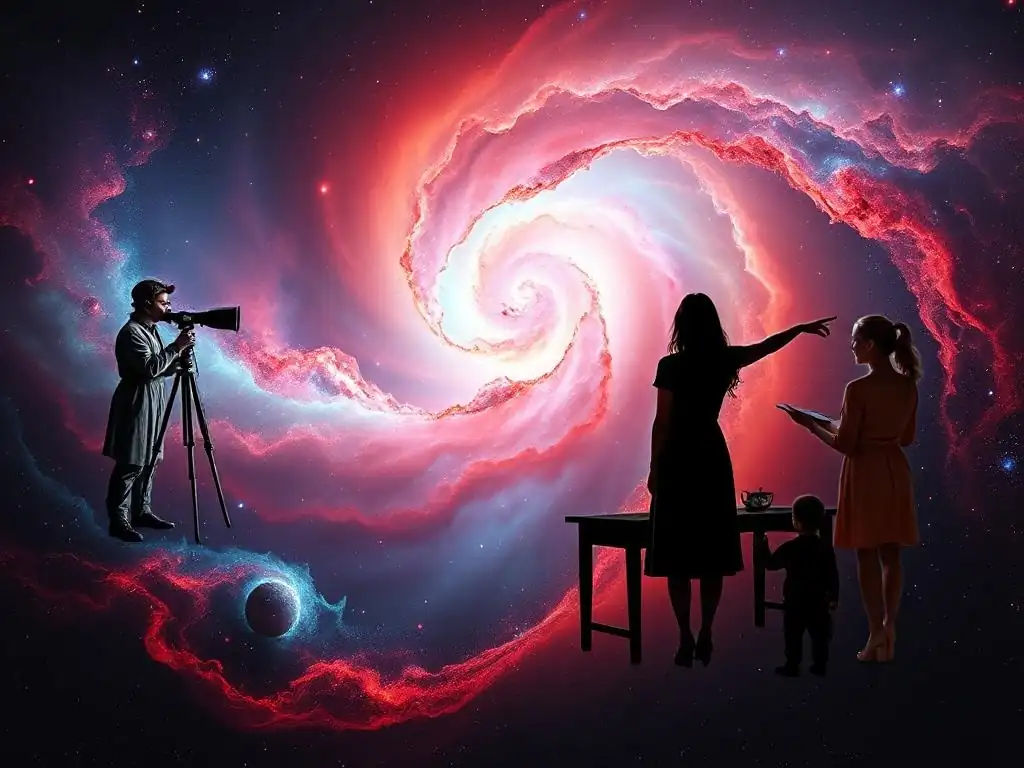
Dive into the cosmos with us as we illuminate the lives and legacies of unsung women astrophysicists. Their brilliance helped shape our understanding of the universe, yet their stories remain largely untold. Prepare to be inspired by their groundbreaking work and the immense obstacles they overcame, and discover why it's time these remarkable women finally receive the recognition they deserve. Ready to explore the stars through their eyes?
- Introduction: Recognizing the Overlooked Contributions of Women in Astrophysics
- Pioneering Women in Astrophysics: Breaking Barriers and Challenging Norms
- Unsung Women Astrophysicist Biographies: Profiles in Courage and Innovation
- The Impact of Unsung Women Astrophysicists on Space Science
- Why Unsung Women Astrophysicist Biographies Matter
- Resources for Learning More About Women in Astrophysics
- Conclusion: Celebrating the Legacy of Unsung Women Astrophysicists
-
Frequently Asked Questions
- What is the primary goal of WomenInScienceHistory.com?
- Why is it important to highlight the biographies of "unsung women astrophysicists"?
- What kind of challenges did women in astrophysics typically face historically?
- What type of information can I expect to find on WomenInScienceHistory.com regarding these astrophysicists?
- How does WomenInScienceHistory.com aim to inspire future generations of scientists?
- Final Reflection: Illuminating Hidden Stars
- Illuminate the Cosmos: Honor Their Legacy!
Introduction: Recognizing the Overlooked Contributions of Women in Astrophysics
Highlighting the Need for Unsung Women Astrophysicist Biographies
For centuries, the narrative of scientific discovery has predominantly featured men, often overshadowing the groundbreaking contributions of women. In the vast and complex field of astrophysics, this historical imbalance is particularly pronounced. Many women made pivotal discoveries, formulated revolutionary theories, and laid foundational groundwork, yet their names remain largely unknown to the public, and their work often went uncredited or was attributed to male colleagues. Rectifying this historical oversight is not merely an academic exercise; it is essential for a complete and accurate understanding of scientific progress.
The lack of prominent unsung women astrophysicist biographies in popular science and educational curricula perpetuates a skewed view of who can contribute to science. By shedding light on these hidden figures, we gain a more nuanced appreciation for the collaborative and diverse nature of scientific endeavor. These stories reveal not only the intellectual brilliance of these women but also the immense resilience required to pursue scientific careers in environments that were often hostile or dismissive of their talents.
Celebrating Women in Science History: A Focus on Astrophysics
WomenInScienceHistory.com is dedicated to celebrating the remarkable achievements of women in various scientific disciplines, and astrophysics offers a rich tapestry of such narratives. From deciphering the composition of stars to uncovering the mysteries of dark matter and discovering entirely new cosmic phenomena, women have been at the forefront of understanding our universe. Yet, their journeys were often fraught with systemic barriers, including limited access to education, exclusion from professional networks, and the constant struggle for recognition.
This article aims to bring some of these unsung women astrophysicist biographies into the well-deserved spotlight. By exploring their lives, their challenges, and their indelible scientific legacies, we hope to not only honor their contributions but also to inspire future generations. Understanding the profound impact these women had on our comprehension of space science is crucial for appreciating the full scope of human ingenuity and for fostering a more inclusive scientific community for tomorrow.
Pioneering Women in Astrophysics: Breaking Barriers and Challenging Norms
Early Female Pioneers in Astronomy: Laying the Foundation for Astrophysics
In the late 19th and early 20th centuries, as astronomy transitioned into modern astrophysics, women were often relegated to meticulous, labor-intensive tasks that were crucial but typically uncredited. At institutions like the Harvard College Observatory, a group of women, often referred to as "human computers," analyzed photographic plates, classifying stars and cataloging their properties. Williamina Fleming, for instance, discovered over 300 variable stars and 10 novae, and developed a standardized system for stellar classification. Annie Jump Cannon, another Harvard Computer, personally classified over 350,000 stars, developing the Harvard Spectral Classification system that is still largely in use today.
Perhaps one of the most significant, yet initially under-recognized, contributions from this era came from Henrietta Swan Leavitt. In 1912, while studying Cepheid variable stars in the Magellanic Clouds, she discovered the period-luminosity relationship: brighter Cepheids pulsate more slowly. This breakthrough provided astronomers with a crucial "standard candle" for measuring cosmic distances, fundamentally reshaping our understanding of the scale of the universe. Without her meticulous work, much of modern cosmology, including Edwin Hubble's discovery of the expanding universe, would not have been possible. These early unsung women astrophysicist biographies are testament to the indispensable groundwork laid by these women.
Overcoming Gender Bias: Challenges Faced by Women Astrophysicists
The path for women in astrophysics was, and often remains, steep. Beyond the sheer intellectual demands of the field, female scientists faced pervasive gender bias and institutional discrimination. Many were denied access to telescopes, considered the essential tools of their trade, being told they were too delicate or that their presence would be a distraction. Academic positions were scarce, and even when women secured roles, they were frequently in lower-paying, temporary, or research-only capacities, without the prestige or influence of their male counterparts. Cecilia Payne-Gaposchkin, despite her groundbreaking Ph.D. work, held non-faculty positions at Harvard for decades.
Beyond professional hurdles, women often encountered skepticism regarding their intellectual capabilities and leadership potential. They were frequently excluded from informal networks, collaborations, and discussions that were vital for career advancement. This systemic marginalization meant that their voices were often unheard, their ideas dismissed, and their discoveries overlooked or co-opted. The sheer perseverance and intellectual fortitude required to not only excel but also to make revolutionary discoveries in such an environment underscore the extraordinary nature of these unsung women astrophysicist biographies. Their success in the face of such adversity makes their stories even more compelling and vital to share.
Unsung Women Astrophysicist Biographies: Profiles in Courage and Innovation
Cecilia Payne-Gaposchkin: Unveiling the Composition of Stars
Early Life and Education: The Path to Astrophysics
Cecilia Helena Payne was born in Wendover, England, in 1900. Her early academic journey was marked by intellectual brilliance, leading her to Newnham College, Cambridge University, in 1919. There, she studied an array of subjects including botany, physics, and chemistry. Despite excelling in her studies and completing the requirements for a degree, Cambridge University did not grant degrees to women until 1948. This institutional discrimination, along with the limited opportunities for women in science in England, prompted her to seek educational and research avenues elsewhere.
In 1923, Payne received a fellowship to study at the Harvard College Observatory in the United States, an institution that, under the directorship of Harlow Shapley, was more open to women in astronomy than many European universities. This move proved pivotal. She pursued her doctoral studies at Radcliffe College (then affiliated with Harvard), becoming the first person to earn a Ph.D. in astronomy from Radcliffe in 1925. Her doctoral thesis would go on to fundamentally transform the field of astrophysics.
Key Contributions to Astrophysics: Stellar Atmospheres and Chemical Abundances
Payne-Gaposchkin's 1925 doctoral thesis, titled "Stellar Atmospheres; A Contribution to the Observational Study of High Temperature in the Reversing Layers of Stars," was nothing short of revolutionary. She applied newly developed theories of quantum mechanics to analyze the spectra of stars, demonstrating that stars are overwhelmingly composed of hydrogen and helium. This was a radical departure from the prevailing scientific consensus at the time, which held that stars had a similar elemental composition to Earth.
Initially, leading astronomers, including Henry Norris Russell, dismissed her findings, advising her to retract this conclusion. However, Payne-Gaposchkin's meticulous analysis showed that hydrogen constituted approximately a million times more of the stellar mass than calcium, and helium was about a quarter of a million times more abundant. Russell himself, just a few years later, published similar conclusions, acknowledging Payne-Gaposchkin's work and calling it "the most brilliant Ph.D. thesis ever written in astronomy." Her work laid the cornerstone for modern astrophysics, providing the fundamental understanding of what stars are made of and how they evolve.
Legacy and Impact: Inspiring Future Generations of Female Scientists
Despite her groundbreaking work, Cecilia Payne-Gaposchkin faced significant professional hurdles throughout her career. For decades, she held non-faculty "technical assistant" positions at Harvard, earning a fraction of what her male counterparts did. It wasn't until 1956 that she became the first woman to be appointed full professor in Harvard's Faculty of Arts and Sciences, and later, the first woman to chair a department at Harvard. Her resilience in the face of such systemic discrimination is a testament to her unwavering dedication to science.
Her life story, a quintessential unsung women astrophysicist biography, is a powerful source of inspiration. It highlights not only the immense intellectual contributions women have made to science but also the perseverance required to overcome societal and institutional barriers. Payne-Gaposchkin's legacy continues to encourage young women to pursue careers in astrophysics, demonstrating that intellectual courage and scientific rigor can lead to profound discoveries, even when the path is not easy.
Vera Rubin: A Trailblazer in Dark Matter Research
Research and Innovations: Advancing Our Understanding of Galactic Rotation Curves
Vera Rubin (1928-2016) was an American astronomer whose groundbreaking work provided compelling evidence for the existence of dark matter, one of the most profound mysteries in modern cosmology. In the 1970s, working closely with her colleague Kent Ford at the Carnegie Institution of Washington, Rubin meticulously studied the rotation curves of spiral galaxies. Using advanced spectrographs, they measured the velocities of stars and gas at varying distances from the galactic centers.
Their observations consistently showed that stars on the outer edges of galaxies were orbiting much faster than predicted by the gravitational pull of the visible matter alone. According to Newtonian dynamics, the orbital speeds of stars should decrease with increasing distance from the galactic center, much like planets in our solar system.
However, Rubin and Ford's data, primarily from the Andromeda galaxy and later from dozens of other spiral galaxies at Kitt Peak National Observatory, revealed that these rotation curves remained flat at large distances. This implied that there must be a significant amount of unseen, non-luminous mass—dark matter—exerting gravitational influence, accounting for approximately 90% of the mass in a typical galaxy.
Recognition and Awards: Achievements Often Overlooked
Despite the revolutionary nature of her findings, which fundamentally reshaped our understanding of the universe's composition, Vera Rubin was famously overlooked for the Nobel Prize in Physics. This omission sparked widespread criticism within the scientific community, particularly after the 2011 Nobel Prize was awarded for the discovery of the accelerating expansion of the universe, a field that intrinsically relies on the understanding of cosmic mass distribution. Many argue that her pivotal role in establishing the prevalence of dark matter made her highly deserving of the Nobel.
Nevertheless, Rubin received numerous other prestigious accolades during her lifetime. She was awarded the National Medal of Science in 1993, the highest scientific honor in the United States. In 1996, she became the second woman to receive the Gold Medal of the Royal Astronomical Society, following Caroline Herschel in 1828, for her lifetime of contributions.
She was also elected to the National Academy of Sciences. While these honors acknowledge her immense impact, the absence of a Nobel Prize from her otherwise illustrious list of achievements remains a powerful symbol of how even the most profound contributions can be overlooked, making her unsung women astrophysicist biography a poignant reminder of persistent biases.
The Importance of Her Story: Promoting Diversity in STEM
Vera Rubin's unwavering dedication to her research, her meticulous observational skills, and her intellectual courage to challenge established paradigms are profoundly inspiring. She not only provided the strongest evidence for dark matter but also became a vocal advocate for women in science, actively encouraging young women to pursue careers in astronomy and astrophysics. She famously said, "Science is for everyone."
Her story underscores the critical need for greater recognition of women's scientific achievements and for fostering truly inclusive environments in STEM fields. By celebrating figures like Vera Rubin, we champion the principle that scientific genius knows no gender. Her unsung women astrophysicist biography serves as a powerful testament to the fact that groundbreaking discoveries can emerge from anyone, anywhere, provided they are given the opportunity and recognition they deserve, thereby promoting essential diversity in science.
Jocelyn Bell Burnell: Redefining Radio Astronomy with the Discovery of Pulsars
Contributions to Radio Astronomy and Pulsar Research
Jocelyn Bell Burnell, born in 1943, was a graduate student at Cambridge University in 1967 when she made one of the most significant astronomical discoveries of the 20th century: the first radio pulsars. As part of her Ph.D. research, she was responsible for analyzing vast amounts of data from a new radio telescope array, which her supervisor Antony Hewish and his team had constructed to study quasars. While sifting through miles of paper charts, Bell Burnell noticed a peculiar, repeating signal—a "bit of scruff" as she called it—that didn't fit any known astronomical phenomenon or terrestrial interference.
She meticulously tracked this anomaly, which recurred with astonishing regularity, precisely every 1.337 seconds. Initially, the team playfully dubbed these signals "LGM-1" (Little Green Men 1), considering the remote possibility of extraterrestrial origin due to their extreme precision. However, further observations confirmed that these were rapidly rotating neutron stars, highly magnetized remnants of supernova explosions, which emit beams of radiation that sweep across Earth, creating the pulsed signal. Her persistence in investigating this faint, unusual signal led to the discovery of an entirely new class of celestial objects and opened up the field of pulsar astrophysics.
Facing Adversity: The Nobel Prize Controversy
In 1974, the Nobel Prize in Physics was awarded to Antony Hewish, her Ph.D. supervisor, and Martin Ryle for their pioneering work in radio astrophysics, specifically mentioning the discovery of pulsars. Jocelyn Bell Burnell, whose direct observation and initial recognition of the pulsars were indispensable to the discovery, was famously excluded from the award. This decision ignited considerable controversy within the scientific community and beyond, with many prominent astronomers and scientists arguing that it was a grave injustice and a clear example of a senior male scientist receiving credit for a junior female researcher's work.
Despite this historical injustice, Bell Burnell has maintained a remarkable degree of grace and humility. She has received numerous other prestigious accolades throughout her career, including the Special Breakthrough Prize in Fundamental Physics in 2018. In a profound act of generosity, she used the £2.3 million prize money to establish the Bell Burnell Graduate Scholarship Fund, administered by the Institute of Physics, to help women and underrepresented minority students pursue physics degrees. Her unsung women astrophysicist biography is a powerful narrative of resilience, intellectual integrity, and a profound commitment to promoting diversity in science.
Lasting Influence: Shaping the Future of Astrophysics
The discovery of pulsars revolutionized our understanding of stellar remnants, extreme physics, and the universe's most exotic objects. Pulsars are now used as cosmic clocks to test theories of general relativity, as probes for the interstellar medium, and as crucial tools in the search for gravitational waves. Bell Burnell's keen observational skills and unwavering dedication to scrutinizing data fundamentally reshaped the landscape of astrophysics, leading to a new subfield of research.
Her story also serves as a crucial reminder of the often-unacknowledged contributions of junior researchers and the persistent challenges faced by women in collaborative scientific endeavors. Bell Burnell's continued advocacy for inclusivity in science ensures that her legacy extends far beyond her groundbreaking discovery, shaping a more equitable and diverse future for astrophysics. By highlighting her unsung women astrophysicist biography, we emphasize the importance of recognizing all contributions, regardless of position or gender.
The Impact of Unsung Women Astrophysicists on Space Science
Advancing Astrophysical Knowledge: Significant Discoveries and Theories
The contributions of unsung women astrophysicists have been nothing short of transformative for our understanding of the cosmos. Cecilia Payne-Gaposchkin's revolutionary thesis on stellar composition, for example, provided the fundamental insight that stars are primarily made of hydrogen and helium, overturning long-held beliefs and laying the groundwork for modern stellar physics and theories of nucleosynthesis. Without her work, our understanding of how stars are born, live, and die would be vastly incomplete.
Similarly, Vera Rubin's meticulous observations of galactic rotation curves offered compelling evidence for dark matter, a mysterious substance that constitutes roughly 27% of the universe's mass. Her work profoundly altered our cosmological models, prompting a global search for this elusive component and shaping decades of research in particle astrophysics and cosmology. Jocelyn Bell Burnell's discovery of pulsars unveiled an entirely new class of celestial objects, enabling the study of extreme states of matter, gravitational waves, and fundamental physics in ways previously unimaginable. These unsung women astrophysicist biographies are not footnotes but foundational pillars of modern space science.
Contributions to Space Exploration: Pushing the Boundaries of Human Understanding
While much of astrophysics is theoretical or observational, the foundational knowledge provided by these unsung women has direct implications for space exploration and our broader human understanding of the universe. Understanding stellar composition, as illuminated by Payne-Gaposchkin, is crucial for designing instruments and missions that analyze the atmospheres of distant stars and exoplanets, informing our search for habitable worlds. The insights into dark matter from Rubin's work guide our theoretical models of galaxy formation and the large-scale structure of the universe, informing where future deep-space missions might focus their efforts.
The study of pulsars, initiated by Bell Burnell's discovery, has led to their use as incredibly precise cosmic clocks. Their stable periodic signals have potential applications in spacecraft navigation for deep-space missions, offering a potential alternative to atomic clocks. Furthermore, the understanding derived from these groundbreaking discoveries fuels the very questions that drive space exploration, pushing the boundaries of human knowledge and inspiring the development of new technologies to probe the universe's deepest secrets. The profound impact of these unsung women astrophysicist biographies extends far beyond their initial discoveries.
Inspiring Future Generations: Role Models in STEM
Perhaps one of the most enduring impacts of highlighting these unsung women astrophysicist biographies is their power to inspire. When young aspiring scientists, particularly girls and young women, learn about individuals like Cecilia Payne-Gaposchkin, Vera Rubin, and Jocelyn Bell Burnell, who overcame immense societal and institutional obstacles to achieve scientific greatness, it provides powerful motivation. These stories demonstrate that intellectual curiosity, perseverance, and groundbreaking discoveries are not exclusive to any gender.
These women serve as crucial role models, showing that a career in astrophysics is not only possible but also deeply rewarding. By seeing themselves reflected in the stories of past pioneers, young women are empowered to pursue challenging STEM fields. This visibility is vital for breaking down stereotypes, fostering self-belief, and encouraging a new generation of diverse talent to contribute to the advancement of space science, ensuring that the future of astrophysics is even more inclusive and innovative.
Why Unsung Women Astrophysicist Biographies Matter
Correcting Historical Imbalances: Acknowledging Overlooked Contributions
For too long, the historical narrative of scientific progress has been incomplete, disproportionately focusing on the achievements of men while often marginalizing or entirely omitting the vital contributions of women. Highlighting unsung women astrophysicist biographies is a crucial step towards correcting these historical imbalances. It's about setting the record straight, providing a more accurate and comprehensive account of who contributed to our understanding of the cosmos and how. This rectification is not merely an academic exercise; it's a matter of historical justice.
Acknowledging these overlooked contributions ensures that credit is given where it is due, preventing future generations from repeating the same omissions. It enriches our collective understanding of scientific history, revealing the true collaborative and diverse nature of discovery, and demonstrating that progress has always been a multifaceted human endeavor, not solely the domain of one gender. This more truthful narrative fosters a deeper appreciation for the complex tapestry of scientific achievement.
Encouraging Diversity and Inclusion in STEM Fields
Showcasing the lives and achievements of women in astrophysics actively promotes diversity and inclusion within STEM fields. When diverse role models are visible and celebrated, it sends a powerful message that science is a field open to everyone, regardless of gender, background, or identity. This visibility helps to dismantle stereotypes and unconscious biases that might discourage individuals from pursuing scientific careers. It broadens the perception of what a scientist looks like and what they can achieve.
Furthermore, a diverse scientific community is inherently a stronger, more innovative one. Different perspectives, experiences, and approaches lead to more robust research, more creative problem-solving, and a wider range of questions being asked. By emphasizing unsung women astrophysicist biographies, we contribute directly to building a more inclusive scientific ecosystem where all talent is recognized and nurtured, ultimately benefiting the entire scientific enterprise and society as a whole.
Empowering Young Women to Pursue Careers in Astrophysics
The inspirational power of these narratives is immense, directly empowering young women to envision and pursue careers in astrophysics. When young girls and women learn about the intellectual courage, perseverance, and groundbreaking discoveries of women like Cecilia Payne-Gaposchkin, Vera Rubin, and Jocelyn Bell Burnell, it provides tangible proof that a career in this challenging and rewarding field is not only achievable but also profoundly impactful. These stories serve as concrete examples of success against odds.
These biographies offer valuable lessons in resilience, critical thinking, and the importance of following one's passion despite obstacles. They demonstrate that despite historical barriers and biases, dedication to scientific inquiry can lead to profound achievements that shape our understanding of the universe. By celebrating these unsung women astrophysicist biographies, we actively motivate and equip the next generation of female scientists and researchers with the confidence and vision to make their own indelible marks on space science.
Resources for Learning More About Women in Astrophysics
Recommended Books and Articles on Female Astrophysicists
- The Invisible Cosmos: A History of Women in Astronomy
- Stellar Pioneers: Biographies of Women Who Mapped the Stars
- Beyond the Veil: Uncovering Women's Contributions to Astrophysics
Online Databases and Archives: Exploring Women's Contributions to Science
- University archives focusing on scientific history
- Digital collections of historical scientific societies
- Specialized online encyclopedias of women in STEM
Organizations Supporting Women in STEM: Building a More Inclusive Future
- Professional associations for women in science
- Mentorship programs for aspiring female scientists
- Advocacy groups promoting gender equity in STEM education
Conclusion: Celebrating the Legacy of Unsung Women Astrophysicists
The Ongoing Need to Highlight Women's Contributions to Astrophysics
The remarkable contributions of women to astrophysics, as exemplified by the unsung women astrophysicist biographies of Cecilia Payne-Gaposchkin, Vera Rubin, and Jocelyn Bell Burnell, have been foundational to our understanding of the universe. Yet, for too long, their pivotal roles have been marginalized or overlooked in historical accounts. Our journey to fully acknowledge and celebrate these extraordinary individuals is far from over. It requires continued dedication to historical research, public education, and conscious efforts to integrate their stories into the mainstream narrative of scientific achievement.
By consistently highlighting these figures, we not only pay homage to their intellectual prowess and perseverance but also ensure that the complete and accurate history of astrophysics is told. This ongoing effort is crucial for recognizing the true breadth of human ingenuity and for inspiring a more equitable future in science.
Inspiring Future Generations of Female Scientists and Researchers
The power of these unsung women astrophysicist biographies lies in their ability to inspire. For young women contemplating a career in science, these stories serve as beacons of possibility, demonstrating that profound discoveries are within reach, even when faced with significant challenges. Knowing the triumphs and struggles of pioneers like Payne-Gaposchkin, Rubin, and Bell Burnell provides invaluable courage and conviction.
This inspiration is vital for cultivating a new wave of diverse talent that will drive future discoveries and innovations in space science and beyond. By showing what is possible, we empower the next generation to break new ground and contribute their unique perspectives to the ever-unfolding mysteries of the cosmos.
Continuing the Journey: Ensuring Equal Opportunities in Space Science
While significant progress has been made in recognizing women's contributions to science, systemic biases and barriers still persist in many STEM fields, including astrophysics. The journey towards true equality in opportunity, recognition, and leadership is ongoing. It is incumbent upon all of us to continue advocating for inclusive policies, robust mentorship programs, and equitable access to resources for all aspiring scientists.
The celebration of unsung women astrophysicist biographies is a crucial step in this direction. By ensuring that the stories of these pioneering women are widely known and celebrated, we help to dismantle the invisible walls that once confined scientific talent. This commitment ensures that the next generation of female astrophysicists can reach their full potential, contributing to a future where scientific excellence is recognized and celebrated, regardless of gender.
Frequently Asked Questions
What is the primary goal of WomenInScienceHistory.com?
The primary goal is to celebrate the contributions of women in science history and inspire future generations by showcasing the often overlooked narratives of female scientists.
Why is it important to highlight the biographies of "unsung women astrophysicists"?
Highlighting these biographies is vital because it sheds light on their groundbreaking work and acknowledges their contributions which were often overshadowed in male-dominated fields.
What kind of challenges did women in astrophysics typically face historically?
They faced challenges such as gender bias, limited access to resources and opportunities, and a struggle for recognition in a predominantly male scientific community.
What type of information can I expect to find on WomenInScienceHistory.com regarding these astrophysicists?
You can expect to find biographies, discussions of their groundbreaking work, and insights into the challenges they overcame in their careers.
How does WomenInScienceHistory.com aim to inspire future generations of scientists?
By showcasing the stories of pioneering female scientists, the platform aims to inspire future generations and demonstrate that women can excel in any scientific field.
The stories we've explored in this article, the biographies of these unsung women astrophysicists, are not just historical accounts; they are vital reminders of the systemic biases that have long obscured brilliance. Their struggles and triumphs resonate powerfully today, as we continue to strive for greater equity and representation in STEM fields. By bringing their contributions to light, we challenge the narrative that has historically marginalized women and pave the way for a more inclusive future.
The impact of these women extends far beyond their scientific discoveries. Their perseverance and dedication serve as a powerful inspiration for aspiring scientists, particularly young women, who may doubt their own potential. Their stories demonstrate that brilliance knows no gender and that with unwavering determination, even the most formidable obstacles can be overcome. Look at the stars and not down at your feet. Try to make sense of what you see, and wonder about what makes the universe exist. Be curious, and however difficult life may seem, there is always something you can do, and succeed at. It matters that you don’t just give up.
- Stephen Hawking (While not directly about women in astrophysics, this quote encapsulates the spirit of perseverance these women embodied).
Now, consider the legacy of these remarkable women. How can you, in your own sphere of influence, champion inclusivity and amplify the voices of those who have been historically marginalized? Let their stories fuel your commitment to creating a world where every individual, regardless of gender, has the opportunity to shine brightly and contribute their unique talents to the advancement of knowledge. Let us all strive to ensure that no future generation of brilliant minds remains hidden in the shadows.
Illuminate the Cosmos: Honor Their Legacy!
Thank you for exploring the untold stories of these remarkable women astrophysicists. Now, let's ensure their groundbreaking contributions receive the recognition they deserve. Ready to amplify their voices?
- Most importantly, actively share their stories! Encourage schools, libraries, and organizations to include their biographies in educational materials and public lectures.
- Dive deeper: Explore the scientific publications of at least one of the women featured in the article, expanding your understanding of their specific contributions.
- Nominate one of these pioneering scientists for a posthumous award or recognition within your local scientific community.
Which woman astrophysicist's journey resonated most with you, and what specific action will you take to help illuminate her achievements?