
SkyHigh Ambitions: The First Women to Engineer Our Path to Space

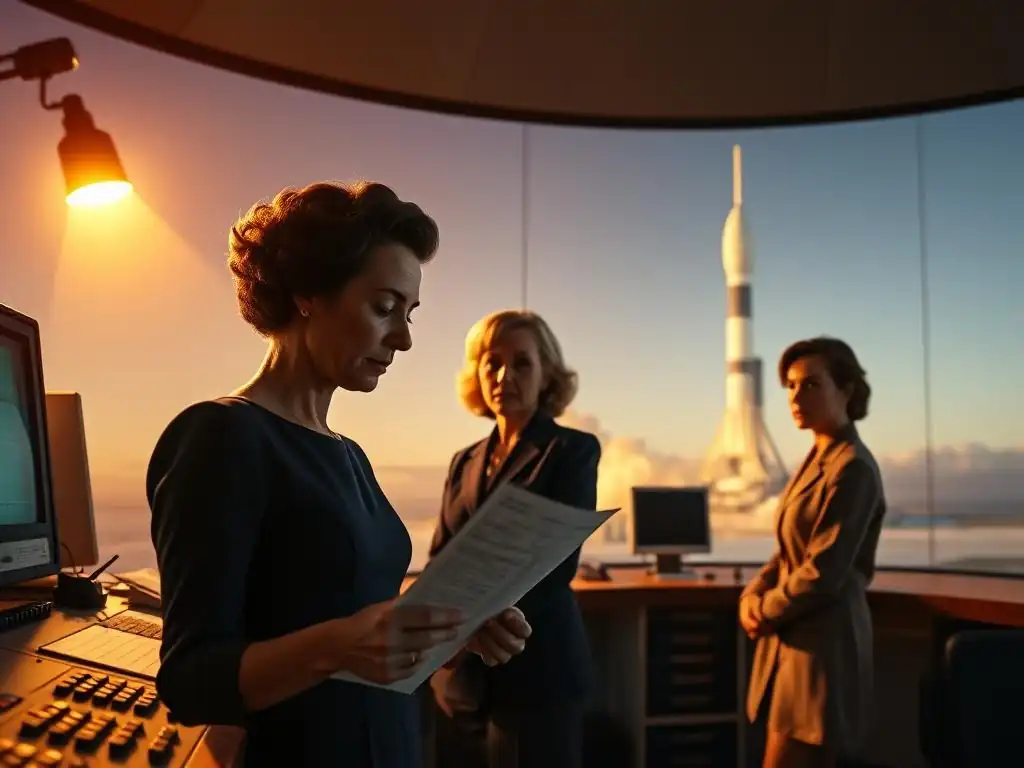
Welcome to WomenInScienceHistory.com!
Delve into the captivating, and often untold, stories of women who shaped the world of science. Are you ready to discover the SkyHigh Ambitions of the first women engineers in space exploration history? Their ingenuity propelled us beyond Earth's atmosphere, breaking barriers and forging pathways for generations to come. Prepare to be inspired by their resilience and groundbreaking contributions in our latest article and discover how they helped us reach for the stars!
- Introduction: Honoring the Pioneering Women Engineers of Space Exploration
- Early Pioneers: Breaking Barriers in Aerospace Engineering
- Key Contributions of Women Engineers to Spaceflight
- The "Human Computer" Era: Women's Crucial Role in Calculations
- The Next Generation: Inspiring Future Women in Aerospace
- The Legacy of Women Engineers in Space Exploration History
- Conclusion: Recognizing and Celebrating Women's Enduring Contributions to Space
-
Frequently Asked Questions
- What were some of the biggest obstacles faced by women engineers in the early days of space exploration?
- How did women engineers contribute to space exploration history despite facing these challenges?
- Can you name a few pioneering women engineers who played a key role in space exploration?
- How does WomenInScienceHistory.com help shed light on the role of women engineers in space exploration history?
- Why is it important to remember and celebrate the contributions of women engineers in space exploration history?
- Final Reflection: Reaching for the Stars Together
- Ignite Your Inner Rocket Scientist!
Introduction: Honoring the Pioneering Women Engineers of Space Exploration
Celebrating Women's Contributions to Aerospace Engineering History
The relentless pursuit of space exploration, from the earliest rocket tests to humanity's first steps on the Moon, has been a monumental collective endeavor. While the narratives often highlight prominent male figures, the bedrock of this achievement was significantly reinforced by the ingenious contributions of women engineers. These pioneering individuals, often working in the shadows of a male-dominated industry, designed, calculated, and innovated critical components that propelled humanity beyond Earth's atmosphere, fundamentally shaping "Women engineers space exploration history."
Recognizing these invaluable contributions is not merely an act of historical correction; it is essential for a complete and accurate understanding of how space exploration unfolded. Their work spanned diverse disciplines, from the chemistry of rocket fuels to the intricate logic of flight software, proving that intellectual prowess and engineering acumen know no gender. By shining a light on these often-overlooked stories, we can appreciate the full scope of human ingenuity that defined the early space age and continues to drive innovation.
The Underrepresented Narrative of Women in Early Space Programs
For decades, the historical accounts of early space programs largely omitted or downplayed the pivotal roles played by women. The societal norms of the mid-20th century often relegated women to supportive or clerical positions, even when their technical skills and engineering expertise were indispensable. This pervasive gender bias meant that many brilliant minds were either uncredited, miscredited, or simply invisible in the official records, leaving significant gaps in the narrative of "Women engineers space exploration history."
This underrepresentation has had profound implications, distorting our collective memory of scientific progress and depriving aspiring young women of crucial role models. It perpetuated the misconception that engineering, particularly in high-stakes fields like aerospace, was inherently a male domain. Unearthing and celebrating these hidden figures is therefore vital, not only to correct the historical record but also to inspire a new generation of female engineers and scientists by demonstrating that women have always been at the forefront of innovation.
Early Pioneers: Breaking Barriers in Aerospace Engineering
Mary Sherman Morgan: Overcoming Obstacles in Rocket Fuel Development
One of the most critical, yet often unsung, contributions to early American spaceflight came from Mary Sherman Morgan, a brilliant chemist who worked for North American Aviation's Rocketdyne Division. In the mid-1950s, under immense pressure from the burgeoning space race, Morgan was tasked with developing a new, more powerful liquid propellant for the Jupiter-C rocket, which was crucial for launching America's first satellite. She labored tirelessly, often sleeping at her desk, to meet the stringent deadlines.
Her groundbreaking work resulted in the development of "Hydyne," a high-energy liquid fuel that was significantly more potent than existing propellants. This innovative fuel became instrumental in the successful launch of Explorer 1 in January 1958, America's first orbital satellite, a mere three months after Sputnik 1. Morgan's engineering ingenuity in developing Hydyne was a direct and indispensable factor in the United States' entry into the space age, marking a critical milestone in "Women engineers space exploration history."
Margaret Hamilton: Designing Key Software for Apollo Spacecraft
The journey to the Moon would have been impossible without the pioneering work of software engineers, a field largely invented as the space program advanced. Leading the Software Engineering Division at the MIT Instrumentation Laboratory, Margaret Hamilton was at the forefront of this revolution. She was responsible for developing the on-board flight software for the Apollo command and lunar modules, an incredibly complex and unprecedented task given the nascent state of computer programming.
Hamilton's foresight and rigorous approach to software design proved critical during the Apollo 11 lunar landing in July 1969. As the lunar module descended, the guidance computer became overloaded with data, triggering alarm messages. Thanks to Hamilton's meticulously designed asynchronous executive and priority display, the computer was able to shed lower-priority tasks and prioritize the critical landing functions. This averted an abort, ensuring the successful touchdown of the Eagle, a testament to her foundational contributions to aerospace engineering and a defining moment in "Women engineers space exploration history."
The Societal Context: Challenges Faced by Women in STEM Fields
The groundbreaking achievements of women like Mary Sherman Morgan and Margaret Hamilton occurred within a challenging societal landscape where women in STEM fields faced pervasive gender bias and systemic obstacles. Despite possessing exceptional talent and academic qualifications, women were frequently denied equal opportunities, promotions, and recognition compared to their male counterparts. They often encountered skepticism regarding their capabilities and were expected to prioritize domestic responsibilities over professional ambitions.
These challenges manifested in various forms, from outright discrimination in hiring practices to subtle biases in the workplace that undermined their authority and contributions. Many women were relegated to lower-paying, less visible roles, even when their expertise was crucial to a project's success. The prevailing cultural narrative often suggested that engineering was not a suitable career for women, making it exceptionally difficult for female pioneers to establish themselves and gain the recognition they deserved in the evolving "Women engineers space exploration history."
Key Contributions of Women Engineers to Spaceflight
Designing and Testing Critical Systems for Human Spaceflight
The complex machinery and intricate systems required to send humans into space demanded meticulous design, rigorous testing, and unwavering attention to detail. Women engineers played vital roles across various disciplines, contributing to the structural integrity of spacecraft, the functionality of life support systems, and the reliability of environmental controls. They were involved in stress testing materials, analyzing aerodynamic forces, and ensuring the safety and habitability of crew compartments.
For instance, women engineers at companies like McDonnell Aircraft, responsible for the Mercury and Gemini capsules, meticulously analyzed stress points and material fatigue, ensuring the vehicles could withstand the extreme forces of launch and re-entry. Their expertise in fluid dynamics, thermodynamics, and structural analysis was crucial in preventing catastrophic failures and protecting the lives of astronauts. These behind-the-scenes contributions were indispensable to the success of America's early manned space missions, solidifying their place in "Women engineers space exploration history."
Precision navigation and guidance systems are the unsung heroes of spaceflight, enabling spacecraft to travel millions of miles and arrive at their intended destinations with pinpoint accuracy. Women engineers were deeply involved in the development of these complex systems, which required a profound understanding of orbital mechanics, celestial navigation, and control theory. They contributed to the algorithms that calculated trajectories, the design of inertial measurement units, and the integration of sensor data for real-time course correction.
Their work ensured that early satellites achieved stable orbits, that lunar missions precisely intercepted the Moon, and that re-entry capsules landed safely back on Earth. Errors in these calculations or system designs could have led to missions veering off course or burning up in the atmosphere. The meticulous efforts of these female engineers provided the critical intellectual infrastructure for successful space navigation, leaving an indelible mark on "Women engineers space exploration history."
Project Vanguard: A Triumph of Women's Engineering Expertise
While often overshadowed by the later successes of Project Mercury and Apollo, Project Vanguard, America's initial effort to launch a satellite, was a crucible of engineering innovation where women made significant, though often uncredited, contributions. Despite the project's early setbacks, the foundational engineering work laid by its teams, including many talented women, proved invaluable for future space endeavors. Women engineers at institutions like the Naval Research Laboratory were crucial in designing, testing, and analyzing various components of the Vanguard rocket and its satellite payload.
These women were involved in areas such as telemetry systems, ensuring that data from the satellite could be transmitted back to Earth, and propulsion systems, verifying the performance of rocket engines. They also played key roles in data reduction and analysis, interpreting the results of test flights to refine designs. Although Vanguard did not achieve the first American satellite launch, the engineering principles and methodologies developed by its diverse team, including its women engineers, directly informed and accelerated subsequent successful programs, underscoring their enduring legacy in "Women engineers space exploration history."
The "Human Computer" Era: Women's Crucial Role in Calculations

From Calculation to Coding: The Evolution of Women's Roles
Before the advent of powerful electronic computers, complex mathematical calculations essential for aerospace engineering were performed manually by highly skilled individuals known as "human computers." A significant proportion of these human computers were women, often with degrees in mathematics, physics, or related fields. They meticulously crunched numbers for rocket trajectories, aerodynamic stresses, orbital mechanics, and spacecraft re-entry paths, forming the computational backbone of early space efforts.
As electronic computers began to emerge in the 1950s and 1960s, many of these same women seamlessly transitioned from manual calculation to programming the new machines. Their deep understanding of the underlying mathematical principles and their experience with logical problem-solving made them ideal candidates for this nascent field. They essentially became some of the world's first computer programmers and software engineers, demonstrating a remarkable evolution of roles and continuous contribution to "Women engineers space exploration history."
Untold Stories: Recognizing the "Human Computers" of NASA
Thousands of women served as human computers across various facilities of the National Advisory Committee for Aeronautics (NACA) and later NASA, including Langley Research Center, Ames Research Center, and Lewis Research Center. Their daily work involved performing thousands of calculations, often with slide rules, mechanical calculators, and sheer mental prowess, to support every aspect of aeronautical and space research. From analyzing wind tunnel data to predicting flight paths, their precision and dedication were indispensable.
These women, often working in large groups, were the unsung intellectual engines behind many of the iconic achievements of the space race. Their work, though not always labeled "engineering," was fundamentally an application of scientific and mathematical principles to solve practical, complex problems in aerospace. Their collective efforts provided the critical data and verified the theoretical models that allowed engineers to design and build the rockets and spacecraft that defined the early chapters of "Women engineers space exploration history."
Katherine Johnson and the Impact of Her Calculations on Space Missions
Among the many brilliant human computers, Katherine Johnson stands out as a paramount example whose precise calculations directly impacted critical American space missions. A mathematician at NASA's Langley Research Center, Johnson was renowned for her extraordinary analytical skills and unwavering accuracy. She performed the trajectory analysis for Alan Shepard's 1961 suborbital flight, becoming the first American in space.
Her most famous contribution came in 1962, when John Glenn, prior to his historic orbital flight, famously requested that Johnson personally re-verify the electronic computer's calculations for his mission. Glenn trusted her computations implicitly, stating, "If she says they're good, then I'm ready to go." Her work was crucial for ensuring the safety and success of Glenn's flight, which marked a turning point in the space race. Katherine Johnson's engineering-level calculations were absolutely fundamental to the success of these early manned spaceflights, cementing her legacy in "Women engineers space exploration history."
The Next Generation: Inspiring Future Women in Aerospace
Role Models and Mentorship: Paving the Way for Future Success
The stories of pioneering women engineers in space exploration history are more than just historical accounts; they are powerful sources of inspiration for future generations. Seeing women like Mary Sherman Morgan, Margaret Hamilton, and Katherine Johnson break barriers and achieve extraordinary feats in challenging fields provides tangible role models for young girls and women considering STEM careers. These narratives demonstrate that despite historical obstacles, women have always been capable of excelling in engineering and scientific endeavors.
Beyond inspiration, effective mentorship plays a crucial role in paving the way for future success. Connecting aspiring female engineers with experienced women in aerospace provides invaluable guidance, practical advice, and emotional support. Mentors can help navigate academic challenges, career decisions, and workplace dynamics, fostering a sense of community and confidence that is essential for retaining women in STEM fields and ensuring a vibrant future for "Women engineers space exploration history."
Overcoming Gender Bias in Modern Aerospace Engineering
While significant progress has been made since the early days of space exploration, gender bias, both overt and subtle, continues to present challenges for women in modern aerospace engineering. Women may still encounter unconscious biases in hiring and promotion processes, experience microaggressions in the workplace, or face skepticism about their technical competence. These persistent biases can contribute to feelings of isolation and imposter syndrome, hindering career advancement and job satisfaction.
Addressing these issues requires proactive measures, including implementing diversity and inclusion training, establishing clear anti-harassment policies, and promoting equitable opportunities for leadership and project assignments. Fostering a truly inclusive culture that values diverse perspectives and contributions from all engineers, regardless of gender, is paramount. By dismantling these remaining barriers, the aerospace industry can fully harness the talents of all individuals, enriching the field and ensuring a more equitable future for "Women engineers space exploration history."
Resources and Opportunities for Women in STEM Today
Today, a growing ecosystem of resources and opportunities exists to support and empower women pursuing careers in STEM, particularly in aerospace engineering. Organizations such as the Society of Women Engineers (SWE), Women in Aerospace (WIA), and various university-based initiatives provide vital networking opportunities, professional development programs, and advocacy. These platforms offer a sense of community and support that was largely absent for earlier generations of women engineers.
Furthermore, numerous scholarships, grants, and internships are specifically designed to encourage female participation in STEM fields. These financial and experiential opportunities help alleviate barriers to entry and provide practical pathways into the aerospace industry. By leveraging these resources, aspiring women engineers can gain invaluable experience, build professional networks, and contribute to the ongoing advancements in space exploration, ensuring that "Women engineers space exploration history" continues to be written with diverse hands.
The Legacy of Women Engineers in Space Exploration History
Lasting Impact on Space Technology and Innovation
The foundational contributions of women engineers in the early days of space exploration have had a profound and lasting impact on space technology and innovation. Their work on rocket fuels, flight software, guidance systems, and complex calculations laid critical groundwork that continues to underpin modern aerospace advancements. The rigorous methodologies they established, the problem-solving approaches they pioneered, and the critical data they generated are integral to the design and operation of today's spacecraft and missions.
Their innovative spirit and determination in overcoming technical challenges set precedents for future engineering endeavors. For instance, the principles of robust software engineering championed by Margaret Hamilton are still relevant in complex systems development. The meticulous calculation methods of Katherine Johnson informed subsequent trajectory analyses. These contributions were not merely historical footnotes but essential building blocks, demonstrating the enduring influence of "Women engineers space exploration history."
Inspiring Future Generations of Female Scientists and Engineers
The narratives of pioneering women in space exploration serve as powerful beacons, inspiring countless future generations of female scientists and engineers. By highlighting their achievements, challenges, and resilience, these stories dismantle stereotypes and broaden perceptions of who can excel in STEM fields. They empower young girls to dream big, pursue their curiosities in science and mathematics, and envision themselves as future innovators in aerospace.
This inspiration translates into tangible action. As more visible role models emerge, more young women are encouraged to pursue STEM education, leading to a more diverse talent pipeline for the aerospace industry. A diverse workforce brings varied perspectives, fosters creativity, and enhances problem-solving capabilities, ultimately strengthening the entire field and ensuring a richer, more inclusive future for "Women engineers space exploration history."
A Call to Action: Continuing to Support Women in STEM
The journey of women in space exploration history is a testament to their brilliance and tenacity, but it is also a reminder that the work for gender equity in STEM is ongoing. To truly harness the full potential of human ingenuity in space exploration, it is imperative to continue supporting women in STEM at every stage of their education and careers. This includes advocating for equitable access to quality STEM education from early childhood, challenging unconscious biases in academic and professional settings, and fostering inclusive work environments.
It also means actively promoting and celebrating the achievements of contemporary women in aerospace, ensuring their contributions are fully recognized and valued. By investing in programs that support women's participation, providing mentorship opportunities, and creating pathways to leadership, we can ensure that the future of space exploration is built on the talents of all individuals, regardless of gender. This collective effort is crucial for continuing to enrich "Women engineers space exploration history" and pushing the boundaries of what is possible.
Conclusion: Recognizing and Celebrating Women's Enduring Contributions to Space
Acknowledging the Unsung Heroes of Space Engineering
The incredible journey of humanity into space was not solely the work of a few celebrated figures; it was the culmination of countless contributions from dedicated individuals, many of whom were women. These unsung heroes, often working in the background as engineers, mathematicians, and programmers, provided the critical intellectual and technical infrastructure that made spaceflight a reality. Their precise calculations, innovative designs, and tireless efforts were indispensable to every successful launch, orbit, and landing.
It is imperative that we continue to unearth and acknowledge these vital narratives, ensuring that the complete and accurate story of space engineering is told. By doing so, we not only correct historical omissions but also pay due respect to the brilliance and perseverance of these pioneering women. Their collective achievements form an integral part of the fabric of human space exploration, deserving of widespread recognition and profound appreciation.
Ensuring Equitable Representation in the Future of Space Exploration
Looking ahead, the future of space exploration promises even more ambitious endeavors, from lunar bases to crewed missions to Mars. To achieve these monumental goals, it is essential that the space industry actively works towards ensuring equitable representation for women at all levels – from engineering teams and research laboratories to leadership positions and astronaut corps. Diversity in thought, background, and perspective is a proven catalyst for innovation and problem-solving.
By fostering inclusive environments where women engineers feel valued, empowered, and have equal opportunities for advancement, the aerospace sector can tap into a broader talent pool and unlock new avenues for discovery. This commitment to equitable representation will not only make the industry more just but also more robust, resilient, and capable of overcoming the complex challenges of future space missions, thereby shaping a more inclusive "Women engineers space exploration history."
Women engineers space exploration history: A story of resilience and ingenuity.
The story of women engineers in space exploration history is a powerful testament to human resilience and ingenuity. It is a narrative of individuals who, despite facing significant societal and professional barriers, leveraged their intellect, determination, and innovative spirit to make indispensable contributions to one of humanity's greatest achievements. From developing groundbreaking rocket fuels to writing critical flight software and performing life-saving calculations, their impact is undeniable and enduring.
Their legacy extends beyond the technical achievements; it is a story of breaking down stereotypes, inspiring future generations, and demonstrating that the pursuit of scientific and engineering excellence knows no gender. As we continue to reach for the stars, the pioneering spirit of these women engineers remains a guiding light, reminding us that the full potential of space exploration can only be realized when all voices are heard, and all talents are harnessed.
Frequently Asked Questions
What were some of the biggest obstacles faced by women engineers in the early days of space exploration?
Many women engineers faced significant gender discrimination, limiting their access to opportunities, promotions, and recognition for their contributions. Societal expectations and biases often confined them to supporting roles rather than leadership positions in space exploration.
How did women engineers contribute to space exploration history despite facing these challenges?
Despite obstacles, women engineers made vital contributions to space exploration history through their expertise in mathematics, engineering design, and problem-solving. They worked on critical aspects like trajectory calculations, materials science, and the development of spacecraft systems.
Can you name a few pioneering women engineers who played a key role in space exploration?
While many names are often overlooked, examples include engineers like Mary Sherman Morgan, who developed the liquid propellant Hydyne, and Katherine Johnson, whose calculations were crucial for early space missions. Further research on WomenInScienceHistory.com will reveal more.
How does WomenInScienceHistory.com help shed light on the role of women engineers in space exploration history?
WomenInScienceHistory.com provides biographies, articles, and resources dedicated to highlighting the contributions of women in various scientific fields, including space exploration. It aims to bring visibility to their often-unrecognized achievements and inspire future generations.
Why is it important to remember and celebrate the contributions of women engineers in space exploration history?
Recognizing their contributions is crucial for creating a more inclusive and equitable understanding of scientific history. It helps to challenge stereotypes, inspire young women to pursue STEM careers, and acknowledge the diverse perspectives that drive innovation in space exploration.
Final Reflection: Reaching for the Stars Together
The stories of these pioneering women, once relegated to the footnotes of history, are now rightfully taking center stage. Their contributions to space exploration, often overlooked, are finally being recognized as foundational to our journey beyond Earth. This article serves not just as a historical record, but as a testament to the enduring power of perseverance and the vital importance of inclusivity in STEM fields.
The impact of these women extends far beyond the technical achievements they accomplished. Their courage and determination paved the way for future generations of women to pursue their passions in science and engineering, challenging societal norms and shattering glass ceilings. Their legacy continues to inspire young girls to dream big and believe in their potential to shape the future. The important thing is to never stop questioning.
- Albert Einstein (While not directly related to space, this quote embodies the spirit of inquiry these women possessed).
Let us carry forward the torch of progress ignited by these remarkable women. As you look up at the night sky, remember their names, their struggles, and their triumphs. Consider how you can contribute to a more equitable and inclusive future, where every individual, regardless of gender, has the opportunity to reach for the stars and contribute their unique talents to the advancement of humanity.
Ignite Your Inner Rocket Scientist!
Thank you for joining us on this inspiring journey through the lives of the pioneering women who engineered our path to the stars. Now, it's your turn to contribute to the future of STEM and celebrate these incredible legacies.
Here are a few ways to take action:
- Dig deeper and research a specific contribution made by one of these engineers, then share what you learned with a friend or family member. Their stories deserve to be celebrated!
- Support organizations that promote STEM education for girls and young women. Every contribution, big or small, helps level the playing field and inspire the next generation of innovators.
- Share this article with your network! Let's amplify the stories of these groundbreaking women and inspire others to explore the wonders of engineering and space exploration.
Which unsung female hero in STEM will you champion next?